Research Blog

Following the people and events that make up the research community at Duke

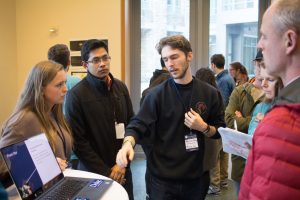
Students exploring the Innovation Co-Lab

What is a Model?

When you think of the word “model,” what do you think?

As an Economics major, 
the first thing that comes to my mind is a statistical model, modeling phenomena such as the effect of class size on student test scores. A
car connoisseur’s mind might go straight to a model of their favorite vintage Aston
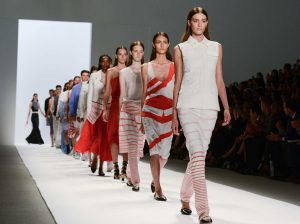
Martin. Someone else studying fashion even might imagine a runway model. The point is, the term “model” is used in popular discourse incredibly frequently, but are we even sure what it implies?

Annabel Wharton, a professor of Art, Art History, and Visual Studies at Duke, gave a talk entitled “Defining Models” at the Visualization Friday Forum. The forum is a place “for faculty, staff and students from across the university (and beyond Duke) to share their research involving the development and/or application of visualization methodologies.” Wharton’s goal was to answer the complex question, “what is a model?”

Wharton began the talk by defining the term “model,” knowing that it can often times be rather ambiguous. She stated the observation that models are “a prolific class of things,” from architectural models, to video game models, to runway models. Some of these types of things seem unrelated, but Wharton, throughout her talk, pointed out the similarities between them and ultimately tied them together as all being models.

The word “model” itself has become a heavily loaded term. According to Wharton, the dictionary definition of “model” is 9 columns of text in length. Wharton then stressed that a model “is an autonomous agent.” This implies that models must be independent of the world and from theory, as well as being independent of their makers and consumers. For example, architecture, after it is built, becomes independent of its architect.

Next, Wharton outlined different ways to model. They include modeling iconically, in which the model resembles the actual thing, such as how the video game Assassins Creed models historical architecture. Another way to model is indexically, in which parts of the model are always ordered the same, such as the order of utensils at a traditional place setting. The final way to model is symbolically, in which a model symbolizes the mechanism of what it is modeling, such as in a mathematical equation.

Wharton then discussed the difference between a “strong model” and a “weak model.” A strong model is defined as a model that determines its weak object, such as an architect’s model or a runway model. On the other hand, a “weak model” is a copy that is always less than its archetype, such as a toy car. These different classifications include examples we are all likely aware of, but weren’t able to explicitly classify or differentiate until now.

Wharton finally transitioned to discussing one of her favorite models of all time, a model of the Istanbul Hagia Sophia, a former Greek Orthodox Christian Church and later imperial mosque.(See Also: https://muze.gen.tr/muze-detay/ayasofya)

She detailed how the model that provides the best sense of the building without being there is found in a surprising place, an Assassin’s Creed video game. This model is not only very much resembles the actual Hagia Sophia, but is also an experiential and immersive model. Wharton joked that even better, the model allows explorers to avoid tourists, unlike in the actual Hagia Sophia.

Wharton described why the Assassin’s Creed model is a highly effective agent. Not only does the model closely resemble the actual architecture, but it also engages history by being surrounded by a historical fiction plot. Further, Wharton mentioned how the perceived freedom of the game is illusory, because the course of the game actually limits players’ autonomy with code and algorithms.

After Wharton’s talk, it’s clear that models are definitely “a prolific class of things.” My big takeaway is that so many thing in our everyday lives are models, even if we don’t classify them as such. Duke’s East Campus is a model of the University of Virginia’s campus, subtraction is a model of the loss of an entity, and an academic class is a model of an actual phenomenon in the world. Leaving my first Friday Visualization Forum, I am even more positive that models are powerful, and stretch so far beyond the statistical models in my Economics classes.


By Nina Cervantes

Game-Changing App Explores Conservation’s Future

In the first week of February, students, experts and conservationists from across the country were brought together for the second annual Duke Blueprint symposium. Focused around the theme of “Nature and Progress,” this conference hoped to harness the power of diversity and interdisciplinary collaboration to develop solutions to some of the world’s most pressing environmental challenges.

Scott Loarie spoke at Duke’s Mary Duke Biddle Trent Semans Center.

One of the most exciting parts of this symposium’s first night was without a doubt its all-star cast of keynote speakers. The experiences and advice each of these researchers had to offer were far too diverse for any single blog post to capture, but one particularly interesting presentation (full video below) was that of National Geographic fellow Scott Loarie—co-director of the game-changing iNaturalist app.

iNat, as Loarie explained, is a collaborative citizen scientist network with aspirations of developing a comprehensive mapping of all terrestrial life. Any time they go outside, users of this app can photograph and upload pictures of any wildlife they encounter. A network of scientists and experts from around the world then helps the users identify their finds, generating data points on an interactive, user-generated map of various species’ ranges.

Simple, right? Multiply that by 500,000 users worldwide, though, and it’s easy to see why researchers like Loarie are excited by the possibilities an app like this can offer. The software first went live in 2008, and since then its user base has roughly doubled each year. This has meant the generation of over 8 million data points of 150,000 different species, including one-third of all known vertebrate species and 40% of all known species of mammal. Every day, the app catalogues around 15 new species.

“We’re slowly ticking away at the tree of life,” Loarie said.

Through iNaturalist, researchers are able to analyze and connect to data in ways never before thought possible. Changes to environments and species’ distributions can be observed or modeled in real time and with unheard-of collaborative opportunities.

To demonstrate the power of this connectedness, Loarie recalled one instance of a citizen scientist in Vietnam who took a picture of a snail. This species had never been captured, never been photographed, hadn’t been observed in over a century. One of iNat’s users recognized it anyway. How? He’d seen it in one of the journals from Captain James Cook’s 18th-century voyage to circumnavigate the globe.

It’s this kind of interconnectivity that demonstrates not just the potential of apps like iNaturalist, but also the power of collaboration and the possibilities symposia like Duke Blueprint offer. Bridging gaps, tearing down boundaries, building up bonds—these are the heart of conservationism’s future. Nature and Progress, working together, pulling us forward into a brighter world.

Post by Daniel Egitto


How A Zebrafish’s Squiggly Cartilage Transforms into a Strong Spine

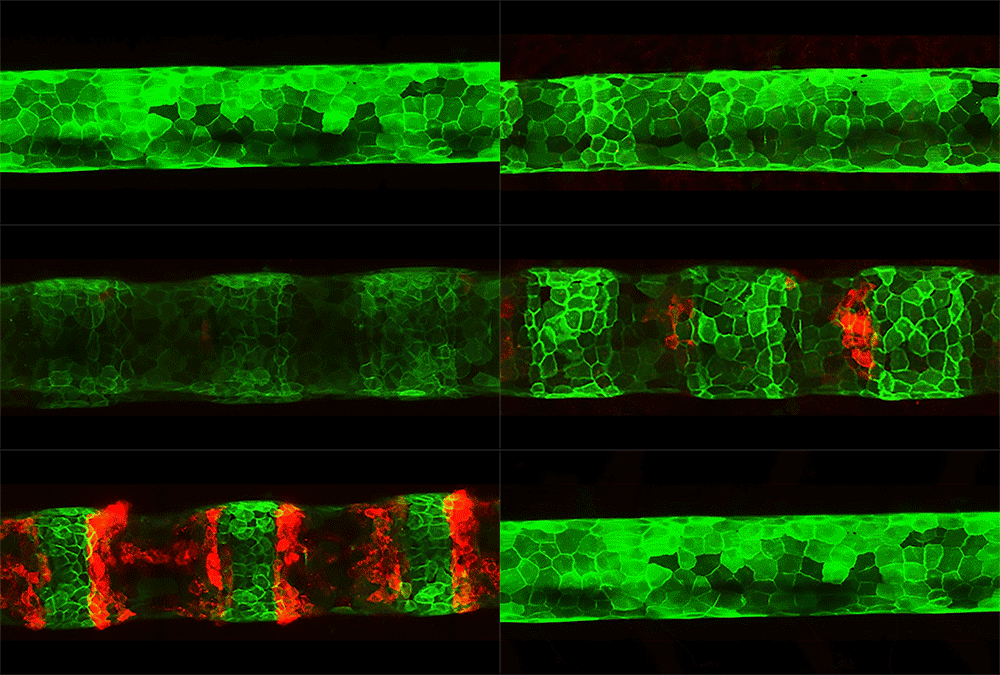
A column of green cartilage cells divides into an alternating pattern of green cartilage and red vertebra

Our spines begin as a flexible column called the notochord. Over time, cells on the notochord surface divide into alternating segments that go on to form cartilage and vertebrae.

In the womb, our strong spines start as nothing more than a rope of rubbery tissue. As our bodies develop, this flexible cord, called the notochord, morphs into a column of bone and cartilage sturdy enough to hold up our heavy upper bodies.

Graduate student Susan Wopat and her colleagues in Michel Bagnat’s lab at Duke are studying the notochords of the humble zebrafish to learn how this cartilage-like rope grows into a mature spine.

In a new paper, they detail the cellular messaging that directs this transformation.

It all comes down to Notch receptors on the notochord surface, they found. Notch receptors are a special type of protein that sits astride cell membranes. When two cells touch, these Notch receptors link up, forming channels that allow messages to rapidly travel between large groups of cells.

Notch receptors divide the outer notochord cells into two alternating groups – one group is told to grow into bone, while the other is told to grow into cartilage. Over time, bone starts to form on the surface of the notochord and works its way inward, eventually forming mature vertebrae.

X-ray images of four zebrafish spines

Meddling with cellular signaling on the notochord surface caused zebrafish spines to develop deformities. The first and third image show healthy spines, and the second and fourth image show deformed spines.

When the team tinkered with the Notch signaling on the surface cells, they found that the spinal vertebrae came out deformed – too big, too small, or the wrong shape.

“These results demonstrate that the notochord plays a critical role in guiding spine development,” Wopat said. “Further investigation into these findings may help us better understand the origin of spinal defects in humans.”

Spine patterning is guided by segmentation of the notochord sheath,” Susan Wopat, Jennifer Bagwell, Kaelyn D. Sumigray, Amy L. Dickson, Leonie F. Huitema, Kenneth D. Poss, Stefan Schulte-Merker, Michel Bagnat. Cell, February 20, 2018. DOI: 10.1016/j.celrep.2018.01.084

Post by Kara Manke

Student Ingenuity vs. Environmental Issues (like Cow Farts)

Lots of creative and potentially life changing ideas filled the Fitzpatrick CIEMAS atrium last weekend. From devices meant to address critical environmental issues such as global warming and lion fish invasiveness, to apps that help you become more sustainable, Duke’s Blueprint tech ideation conference showcased some awesome, good ol’ student-led ingenuity.

These bright students from around Durham (mostly from Duke) competed in teams to create something that would positively impact the environment. The projects were judged for applicability, daringness, and feasibility, among other things. During the Project Expo, all teams briefly presented to viewers like a school science fair.

One of the projects I liked a lot was called Entropy—a website with your own personal plant (I named mine “Pete”) that grows or dies depending on your sustainable actions throughout the day. The user answers simple yes or no questions, such as, “did you turn off the lights today?”

You can also complete daily goals to get accessories like a hat or mustache for your plant. The website connects to Facebook, so you can track your friends’ progress and see how green they’re living. Ultimately it’s just a good, fun way to keep your sustainability in check. Pete was looking super-cute after I spammed the yes button.

Another interesting innovation posed a solution to the difficulty of catching lion fish. Humans are a lion fish’s only predator, and we hunt them by spear fishing. Since lion fish are highly invasive, catching them en-masse could seriously benefit the biodiversity of the ocean (plus, they taste delicious). So one team came up with a canopy like contraption that attracts lion fish to hang out underneath it, and then snatches them all up at once like a net. Pretty neat idea, and if it was implemented on a large scale could be a huge benefit to the Earth’s oceans (and restaurants)!

After the expo, the top seven teams were selected and given three minutes to present to the judges and audience as a whole.

Every project was astounding. “Collide-o-scope” came up with a simple Arduino-based device to transmit elephant seismic activity to train drivers nearby in order to reduce the number of train-elephant collisions in India and Sri Lanka — currently a huge problem, for both us as humans and the elephant population.

Another team, “Manatee Marker,” proposed a system of solar powered buoys to detect manatees, with the hope of reducing frequent manatee-boat accidents. Considering that manatees are quiet, basically camouflaged, and thermally invisible, this was quite an ingenious task.

Perhaps my favorite project, “Algenie” stole the show. Methane gas is a huge factor to global warming — around twenty-five times more potent as a heat-trapping gas than Carbon Dioxide — and a lot of it comes from cow farts. However, we’ve recently discovered that putting seaweed in cow feed actually lowers methane emissions almost entirely! So this team came up with a vertical, three-dimensional way to grow algae — opposed to “two-dimensionally” growing across a pond — that would maximize production. Global warming is obviously a massive issue right now and Algenie is looking to change that. They ended up getting first place, and winning a prize of $1,000 along with GoPros for every team member.

Algenie’s prototype

At the end of the day, it wasn’t about the prize money. The competition was meant to generate creative and practical ideas, while promoting making a difference. After  attending the expo I felt more aware of all the environmental issues and influenced to help out. Even if you don’t feel like spending the time drafting up a crazy buoy manatee-detecting system, you can still do your part by living sustainably day to day.

Blueprint has done an awesome job of spurring young, enthusiastic students towards helping this planet — one cow fart at a time.

Post by Will Sheehan; Will SheehanPictures from Duke Conservation Tech
How A Bat’s Brain Navigates

Most of what we know about how the hippocampus, a region of the brain associated with memory formation and spatial representations, comes from research done on rodents. Rat brains have taught us a lot, but researchers in Israel have found an interesting alternative model to understanding how the hippocampus helps mammals navigate: Bats.

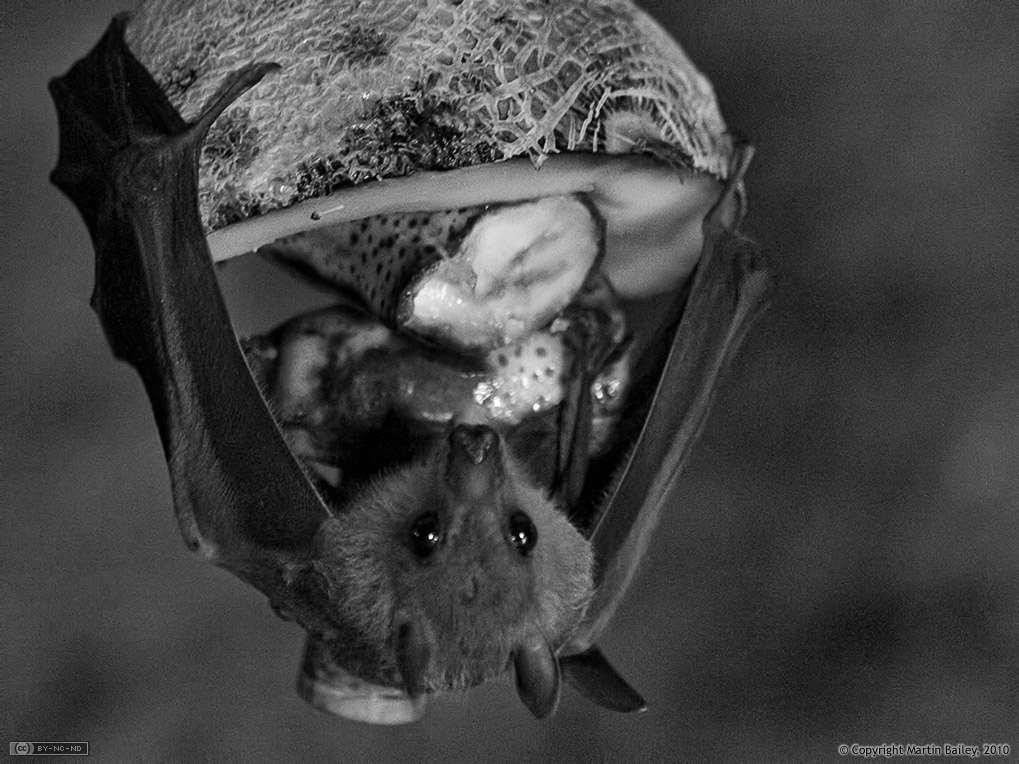
The Egyptian fruit bat proved the perfect subject for studies of mammalian navigation.

Weizmann Institute neurophysiologist Nachum Ulanovsky, PhD, and his team have looked to bats to understand the nuances of navigation through space. While previous research has identified specific cells in the hippocampus, called place cells, that are active when an animal is located in a specific place, there is not much literature describing how animals actually navigate from point A to point B.

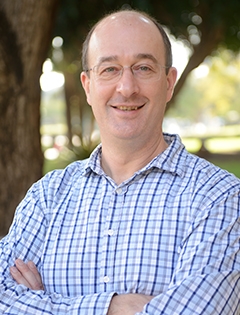
Nachum Ulanovsky

Ulanovsky believes that bats are an ingenious model to study mammalian navigation. While bats have the same types of hippocampal neurons found in rats, the patterns of bats’ neurons’ firings more closely match that of humans than rats do.

Ulanovsky sought to test how bats know where they are going. Using GPS tracking equipment, his team found that wild bats that lived in a cave would travel up to 20 kilometers to forage fruit from specific trees. Night after night, these bats followed similar routes past perfectly viable food sources to the same tree over and over again.

The understanding of hippocampal place cells firing at specific locations doesn’t explain the apparent guided travel of the bat night after night, and other explanations like olfactory input do not explain why the bats fly over good food sources to their preferred tree.

The researchers designed an experiment to test how bats encode the 3D information necessary for this navigation. By letting the bats fly around and recording brain activity, Ulanovsky and team found that their 3D models are actually spherical in shape. They also found another type of hippocampal cells that encode the orientation the bat is facing. These head direction cells operate in a coordinate system that allows for a continuity of awareness of its orientation as the animal moves through space.

http://www.cell.com/cms/attachment/2091916945/2076305003/gr1_lrg.jpg

Ulanovsky found bats relied on memory to navigate toward the goal.

To understand how the bats navigate toward a specific goal, the researchers devised another experiment. They constructed a goal with a landing place and a food incentive. The bat would learn where the goal was and find it. In order to test whether the bats’ ability to find the goal was memory-based, or utilized the hippocampus, the researchers then conducted trials where the goal was hidden from the bats’ view.

To test whether the bats’ relied on memory, the Ulvanosky team measured the goal direction angle, or the angle between the bat’s head orientation and the goal. After being familiarized with the location of the goal, the bats tended toward a goal-direction angle of zero, meaning they oriented themselves toward the goal even when the goal was out of sight.

Continued research identified cells that encode information about the distance the bat is from the goal, the final piece allowing bats to navigate to a goal successfully. These hippocampal cells selectively fire when the bat is within specific distances of the goal, allowing for an awareness of location over distance.

While Ulanovsky and his team have met incredible success in identifying new types of cells as well as new functions of known cells in the hippocampus, further research in a more natural setting is required.

“If we study only under these very controlled and sterile environments, we may miss the very thing we are trying to understand, which is behavior,” Ulanovsky concluded.

By Sarah Haurin

Growing “Mini Brains” To Understand Zika’s Effects

You probably remember what the Zika virus is because of the outbreak in 2015 that made global headlines.

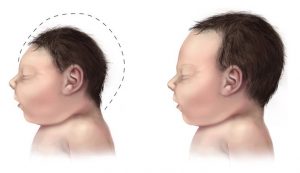
microcephaly illustration

An infant with microcephaly (left) with a reduced head circumference, as compared to an infant born with a regular head circumference (right) Picture credit: https://commons.wikimedia.org/w/index.php?curid=63278345

The serious nature of the virus was apparent when hundreds of infants across South America were born with microcephaly – a condition characterized by a very small head circumference as a result of abnormally slow brain growth.

The sudden outbreak of Zika in South America led to a panic of the possibility of spread into the United States as well as beyond – and thus, research into learning more about the disease mechanisms of Zika expanded. However, one of the problems in studying a disease like Zika is the difficulty of modeling a complex organ like the developing brain.

Until now, the current way to model the brain was with a brain organoid – a brain grown in a lab. Organoid structures attempt to mimic whole developing organs – however, current brain organoid technology required the use of a large spinning bioreactor to facilitate nutrient and oxygen absorption to mimic the function of the vascular system in our brains. Large spinning bioreactors are expensive to run and bulky—they require large volumes of expensive media that mimic brain fluid. The size and cost has meant that only a few organoids can be grown and studied at once.

Guo-li Ming, University of Pennsylvania

Dr. Guo-li Ming, a professor of neuroscience from the Perelman School of Medicine at the University of Pennsylvania, set out to work on finding a way to solve this problem. She came down to Duke University last week to give a talk on her findings.  As she spoke, I could feel the minds of the audience firmly captivated by her words. It was truly fascinating stuff – Ming was actually growing brains in the lab!

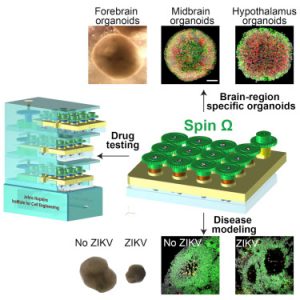
The work began by finding a way to take the large spinning reactor that the existing brain organoid required and make it smaller. Three clever high school students working in her lab used a 3D printer and a small motor that involved spinning 12 tiny interconnected paddles within 12 small cell culture wells. Each of the wells contain a paddle that is spun by one gear.  All of the individual gears connect to a continually rotating central gear driven by a motor.

Bioreactor schematic

The Spin bioreactor. Source: http://www.cell.com/cell/abstract/S0092-8674(16)30467-6

After many optimizations, the final design was called SpinW,  which ultimately required a mere 2 ml of media per well, resulting in a net 50-fold reduction in media consumption, as well as dramatically reduced incubator space. The large number of wells, combined with dramatically reduced cost of the apparatus and media consumption, allowed for optimal conditions to run multiple test scenarios with ease – essentially meaning that 12 “mini brains” could be tested at the same time.

The design of SpinW costed a mere $400, while the commercial design costs over $2,000, with the added burden of consuming 50 times more media. The success of the design only serves to prove that age doesn’t matter when it comes to great ideas!

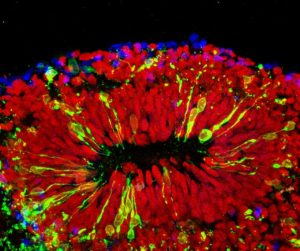
A brain organoid infected with Zika virus. ZIKV envelope protein is shown in green; neural progenitor cells marked by SOX2 are shown in red; neurons marked by CTIP2 are shown in blue.
CREDIT: Xuyu Qian/Johns Hopkins University

Dr. Ming and her team used the apparatus to model the Zika virus’s impact on the brain.

The findings indicate that Zika works by killing off neural stem cells, as well as causing a thinning of key brain structures. One of the observations was that, by day 18 of Zika infection of a brain organoid, there was an overall decrease in size, which points to the link of Zika causing microcephaly. The Zika infection of early-stage organoids corresponded to the first trimester of human fetal development.

The brain is the most complex organ in the body, and one of the least understood. The work Dr. Ming and her team has done goes a long way towards helping us understand the way the human brain develops and works, as well modeling its reaction to things like viruses. It was a pleasure and honor to hear Dr. Ming talk to us about her work –I am eager to hear about further developments in this field!

Post by Thabit Pulak

“I Heart Tech Fair” Showcases Cutting-Edge VR and More

Duke’s tech game is stronger than you might think.

OIT held an “I Love Tech Fair” in the Technology Engagement Center / Co-Lab on Feb. 6 that was open to anyone to come check out things like 3D printers and augmented reality, while munching on some Chick-fil-a and cookies. There was a raffle for some sweet prizes, too.

I got a full demonstration of the 3D printing process—it’s so easy! It requires some really expensive software called Fusion, but thankfully Duke is awesome and students can get it for free. You can make some killer stuff 3D printing, the technology is so advanced now. I’ve seen all kinds of things: models of my friend’s head, a doorstop made out of someone’s name … one guy even made a working ukulele apparently!

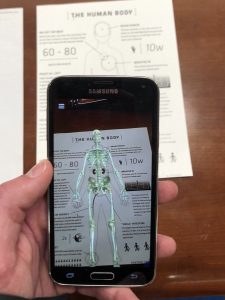
One of the cooler things at the fair was Augmented Reality books. These books look like ordinary picture books, but looking at a page through your phone’s camera, the image suddenly comes to life in 3D with tons of detail and color, seemingly floating above the book! All you have to do is download an app and get the right book. Augmented reality is only getting better as time goes on and will soon be a primary tool in education and gaming, which is why Duke Digital Initiative (DDI) wanted to show it off.

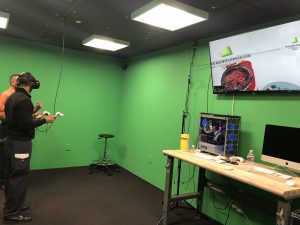
By far my favorite exhibit at the tech fair was  virtual reality. Throw on a headset and some bulky goggles, grab a controller in each hand, and suddenly you’re in another world. The guy running the station, Mark McGill, had actually hand-built the machine that ran it all. Very impressive guy. He told me the machine is the most expensive and important part, since it accounts for how smooth the immersion is. The smoother the immersion, the more realistic the experience. And boy, was it smooth. A couple years ago I experienced virtual reality at my high school and thought it was cool (I did get a little nauseous), but after Mark set me up with the “HTC Vive” connected to his sophisticated machine, it blew me away (with no nausea, too).

I smiled the whole time playing “Super Hot,” where I killed incoming waves of people in slow motion with ninja stars, guns, and rocks. Mark had tons of other games too, all downloaded from Steam, for both entertainment and educational purposes. One called “Organon” lets you examine human anatomy inside and out, and you can even upload your own MRIs. There’s an unbelievable amount of possibilities VR offers. You could conquer your fear of public speaking by being simulated in front of a crowd, or realistically tour “the VR Museum of Fine Art.” Games like these just aren’t the same were you to play them on, say, an Xbox, because it simply doesn’t have that key factor of feeling like you’re there. In Fallout 4, your heart pounds fast in your chest as you blast away Feral Ghouls and Super Mutants right in front of you. But in reality, you’re just standing in a green room with stupid looking goggles on. Awesome!

There’s another place on campus — the Bolt VR in Edens residence hall — that also has a cutting-edge VR setup going. Mark explained to me that Duke wants people to get experience with VR, as it will soon be a huge part of our lives. Having exposure now could give Duke graduates a very valuable head start in their career (while also making Duke look good). Plus, it’s nice to have on campus for offering students a fun break from all the hard work we put in.

If you’re bummed you missed out, or even if you don’t “love tech,” I recommend checking out the Tech Fair next time — February 13, from 6-8pm. See you there.

Post By Will Sheehan

Will Sheehan

Hearing Loss and Depression Are Connected

Jessica West is a PhD candidate in sociology.

Jessica West, a PhD student in sociology at Duke, has found that hearing loss creates chronic stress but that high levels of social support – from family, friends and others – can help alleviate depression. Given that hearing loss is a growing social and physical health problem, her study suggests a need for increased vigilance regarding hearing loss among older adults, West said.

Her study was published in the November issue of Social Science & Medicine and is available here.

Here, West discusses her research.

Your research examines the correlation between hearing loss and depression. That seems a logical connection: why study it in the way you did?

Despite how common hearing loss is, it is actually quite understudied. A handful of studies have looked at the relationship between hearing loss and mental health over time, but the results from these studies are mixed: some find a relationship between hearing loss and more depressive symptoms, while others do not. On top of the mixed findings, most studies have been based overseas, and studies based in the U.S. have tended to use state-specific datasets, like the Alameda County Study, which drew from Oakland and Berkeley, CA.

I use the Health and Retirement Study, which is nationally representative of adults aged 50 and older in the U.S., and therefore more generalizable to the U.S. population.

I frame hearing loss as a physical health stressor that can impact mental health, and that social support can alter this relationship by preventing a person from experiencing stress or reducing the severity of a reaction to it. To the best of my knowledge, this is the first paper to link hearing loss to health outcomes in this way.

What might surprise people about your findings?

More than one-fifth of the people in my sample have fair to poor hearing (23.12% or 1,405 people in the first wave). Hearing loss is really common in the U.S.

Also, I found that social support is most beneficial in easing the burden of hearing loss among people with significant hearing loss. Overall, this suggests that hearing loss is a chronic stressor in people’s lives and that responses to this stressor will vary by the level of social resources that people have available to them.

What does ‘social support’ mean in real terms? What can the family and friends do for a person with hearing loss to help them?

For people with hearing loss, it’s important that they feel able to lean on, talk to, and rely on family, friends, spouses or partners, and children. And going a step further, people with hearing loss need to know that these important people in their lives truly understand the struggles they face. What this means is that people with hearing loss can benefit quite a lot from having a network of people that they feel comfortable discussing things with or reaching out to when needed.

Do people with hearing loss have adequate mental health resources or care available to them?

My research shows that social support is really important for people with hearing loss. One suggestion I make in my paper is that audiologic – or hearing — rehabilitation programs could include educational training for significant others, like spouses or friends, to emphasize the importance of supporting people with hearing impairment. Audiologists, primary care physicians, family, and friends are all key resources that could be targeted in such rehabilitation programs.

 What is your next project related to hearing loss?

 I am currently working on several projects related to hearing loss. In one, I am looking at the relationship between an individual’s hearing loss and his/her spouse’s mental health outcomes. Few population-based studies have examined the relationship between hearing loss and spousal mental health longitudinally, so I hope this study will shed light on the experience of spousal disability within marriages.

Another project I am working on looks at hearing loss from a life course perspective. In other words, I am looking at people who self-reported hearing loss before the age of 16 and seeing how their hearing loss influenced their marriages, academics and careers. A better understanding of how early life hearing loss influences later life outcomes has implications for earlier identification of hearing loss and/or the use of assistive technology to help people remain socially, academically, and economically engaged.

CITATION: West, Jessica S. 2017. “Hearing Impairment, Social Support, and Depressive Symptoms among U.S. Adults: A Test of the Stress Process Paradigm.” Social Science & Medicine 192(Supplement C):94-101.

 Read the paper 

Guest post by Eric Ferreri, News and Communications

Can Science Explain Everything? An Exploration of Faith

The Veritas Forum, Feb. 1 in Penn Pavilion

I found out about this year’s Veritas Forum an hour before it started — a friend, who two years ago helped me explore Christianity (I grew up non-religious and was curious), mentioned it when we ran into each other at the Brodhead Center.

So, to avoid my academic responsibilities, I instead listened to Duke physics professor Ronen Plesser, a non-practicing Jew, Troy Van Voorhis, a Christian who teaches chemistry at MIT, and moderator Ehsan Samei, a professor of radiology and biomedical engineering at Duke. They discussed the God Hypothesis and how it fit in with their views as hard scientists.

Ehsan Samei

As someone who has relied on the scientific method instead of an omniscient, higher power to understand the natural world, I found it amazing how the speakers used relatable examples to demonstrate their belief that humans cannot explain everything. They started answering the classic question “Why is the sky blue?,” using more and more complex chemistry and physics as answers only led to more questions.

At some point, science-based explanations about how and why molecules move the way they do and where they come from didn’t suffice — at some point, it just seems like something, or someone, is responsible for the unexplainable.

Troy Van Voorhis of MIT

Something that Van Voorhis said particularly stuck in my mind. Reproducibility and objectivity form the “bedrock of science,” but are also it’s “grand limitations.” They are essential to corroborating the results of a scientific study or experiment, but can they really confirm something as scientific truth? When does reproducibility adequately overcome variation in data, and can something be defined as truly objective?

So, I sat there in the audience, thinking about alternatives to explaining morals, ethics, and the feeling of being human since, to paraphrase Plesser, science just doesn’t cut it in these cases. He elaborated on faith after branching off Van Voorhis’ point of view. Plesser’s explanation made the overlap of science and religion become more and more prominent. As someone who also does not practice a religion, I felt that his comparison of faith in science and faith in religion comforting.

Ronan Plesser

Even though I still struggle to fully accept Christ, I was aware of the similarities of the path to scientific and spiritual enlightenment. In science, incessant questioning of our surroundings is necessary to understand the Truths of our world (“otherwise we wouldn’t be publishing papers and we would be out of our jobs!”), as are the calls to God to come down and help people improve themselves. It is impossible, then, to avoid faith entirely since being human inherently involves belief in some sort of system.

I was wowed by the connections that the three men were making between the seemingly divergent areas. I was even more astonished, though, by their emphasis on humility. They exemplified the need for understanding and patience when describing scientific theories and religious ideologies. To be humble is to accept that people have differences and to acknowledge these differences is the only way to reduce conflicts between religion and science.

Post by Stella Wang

Duke Scholars Bridge Disciplines to Tackle Big Questions

A visualization showing faculty as dots that are connected by lines

This visualization, created by James Moody and the team at the Duke Network Analysis Center, links faculty from across schools and departments who serve together on Ph.D. committees. An interactive version is available here.

When the next big breakthrough in cancer treatment is announced, no one will ask whether the researchers are pharmacologists, oncologists or cellular biologists – and chances are, the team will represent all three.

In the second annual Scholars@Duke Visualization Challenge, Duke students explored how scholars across campus are drawing from multiple academic disciplines to tackle big research questions.

“I’m often amazed at how gifted Duke faculty are and how they can have expertise in multiple fields, sometimes even fields that don’t seem to overlap,” said Julia Trimmer, Director of Faculty Data Systems and Analysis at Duke.

In last year’s challenge, students dug into Scholars@Duke publication data to explore how Duke researchers collaborate across campus. This year, they were provided with additional data on Ph.D. dissertation committees and asked to focus on how graduate education and scholarship are reaching across departmental boundaries.

“The idea was to see if certain units or disciplines contributed faculty committee members across disciplines or if there’s a lot of discipline ‘overlap.’” Trimmer said.

The winning visualization, created by graduate student Matthew Epland, examines how Ph.D. committees span different fields. In this interactive plot, each marker represents an academic department. The closer together markers are, the more likely it is that a faculty member from one department will serve on the committee of a student in the other department.

Epland says he was intrigued to see the tight-knit community of neuroscience-focused departments that span different schools, including psychology and neuroscience, neurobiology, neurology and psychiatry and behavioral Sciences. Not surprisingly, many of the faculty in these departments are members of the Duke Institute for Brain Sciences (DIBS).

Duke schools appear as dots and are connected by lines of different thicknesses

Aghil Abed Zadeh and Varda F. Hagh analyzed publication data to visualize the extent to which faculty at different Duke schools collaborate with one another. The size of each dot represents the number of publications from each school, and thickness of each line represents the number of faculty collaborations between the connected schools.

Sociology Professor James Moody and the team at the Duke Network Analysis Center took a similar approach, creating a network of individual faculty members who are linked by shared students. Faculty who sit on committees in only one field are bunched together, highlighting researchers who bridge different disciplines. The size of each marker represents the extent to which each researcher sits “between” two fields.

The map shows a set of strong ties within the natural sciences and within the humanities, but few links between the two groups. Moody points out that philosophy is a surprising exception to this rule, lying closer to the natural sciences cluster than to the humanities cluster.

“At Duke, the strong emphasis on philosophy of science creates a natural link between philosophy and the natural sciences,” Moody said.

Duke graduate student Aghil Abed Zadeh teamed up with Varda F. Hagh, a student at Arizona State University, to create elegant maps linking schools and departments by shared authorship. The size of each marker represents the number of publications in that school or department, and the thickness of the connecting lines indicate the number of shared authorships.

“It is interesting to see how connected law school and public policy school are. They collaborate with many of the sciences as well, which is a surprising fact,” Zadeh said. “On the other hand, we see Divinity school, one the oldest at Duke, which is isolated and not connected to others at all.”

The teams presented their visualizations Jan. 20 at the Duke Research Computing Symposium.

Post by Kara Manke


Page 52 of 111

Powered by WordPress & Theme by Anders Norén