
Duke biologist Alejandro Berrio creates larger-than-life insect sculptures. This wooden mantis was exhibited at the Art Science Gallery in Austin, Texas in 2013.
On a recent spring morning, biologist Alejandro Berrio took a break from running genetic analyses on a supercomputer to talk about an unusual passion: creating larger-than-life insect sculptures.
Berrio is a postdoctoral associate in professor Greg Wray’s lab at Duke. He’s also a woodcarver, having exhibited his shoebox-sized models of praying mantises, wasps, crickets and other creatures in museums and galleries in his hometown and in Austin, Texas, where his earned his Ph.D.
The Colombia-born scientist started carving wood in his early teens, when he got interested in model airplanes. He built them out of pieces of lightweight balsa wood that he bought in craft shops.
When he got to college at the University of Antioquia in Medellín, Colombia’s second-largest city, he joined an entomology lab. “One of my first introductions to science was watching insects in the lab and drawing them,” Berrio said. “One day I had an ‘aha’ moment and thought: I can make this. I can make an insect with wings the same way I used to make airplanes.”

Beetle carved by Duke biologist Alejandro Berrio.
His first carvings were of mosquitoes — the main insect in his lab — hand carved from soft balsa wood with an X-Acto knife.
Using photographs for reference, he would sketch the insects from different positions before he started carving.
He worked at his kitchen table, shaping the body from balsa wood or basswood. “I might start with a power saw to make the general form, and then with sandpaper until I started getting the shape I wanted,” Berrio said.
He used metal to join and position the segments in the legs and antennae, then set the joints in place with glue.
“People loved them,” Berrio said. “Scientists were like: Oh, I want a fly. I want a beetle. My professors were giving them to their friends. So I started making them for people and selling them.”
Soon Berrio was carving wooden fungi, dragons, turtles, a snail. “Whatever people wanted me to make,” Berrio said.
He earned just enough money to pay for his lunch, or the bus ride to school.

Duke biologist Alejandro Berrio carved this butterfly using balsa wood for the body and legs, and paper for the wings.
His pieces can take anywhere from a week to two months to complete. “This butterfly was the most time-consuming,” he said, pointing to a model with translucent veined wings.
Since moving to Durham in 2016, he has devoted less time to his hobby than he once did. “Last year I made a crab for a friend who studies crustaceans,” Berrio said. “She got married and that was my wedding gift.”
Still no apes, or finches, or prairie voles — all subjects of his current research. “But I’m planning to restart,” Berrio said. “Every time I go home to Colombia I bring back some wood, or my favorite glue, or one of my carving tools.”

Insect sculptures by Duke biologist Alejandro Berrio.
Explore more of Berrio’s sculpture and photography at https://www.flickr.com/photos/alejoberrio/.

by Robin Smith


 Post by Lydia Goff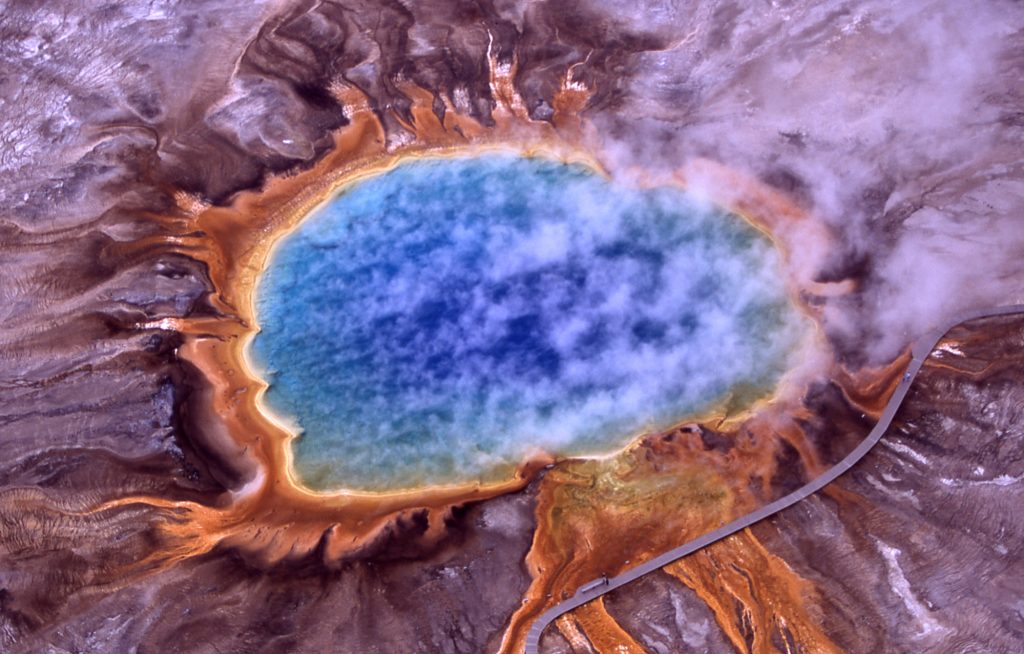


 Simple, right? Multiply that by 500,000 users worldwide, though, and it’s easy to see why researchers like Loarie are excited by the possibilities an app like this can offer. The software first went live in 2008, and since then its user base has roughly doubled each year. This has meant the generation of over 8 million data points of 150,000 different species, including one-third of all known vertebrate species and 40% of all known species of mammal. Every day, the app catalogues around 15 new species.
 It’s this kind of interconnectivity that demonstrates not just the potential of apps like iNaturalist, but also the power of collaboration and the possibilities symposia like Duke Blueprint offer. Bridging gaps, tearing down boundaries, building up bonds—these are the heart of conservationism’s future. Nature and Progress, working together, pulling us forward into a brighter world.
 Post by Daniel Egitto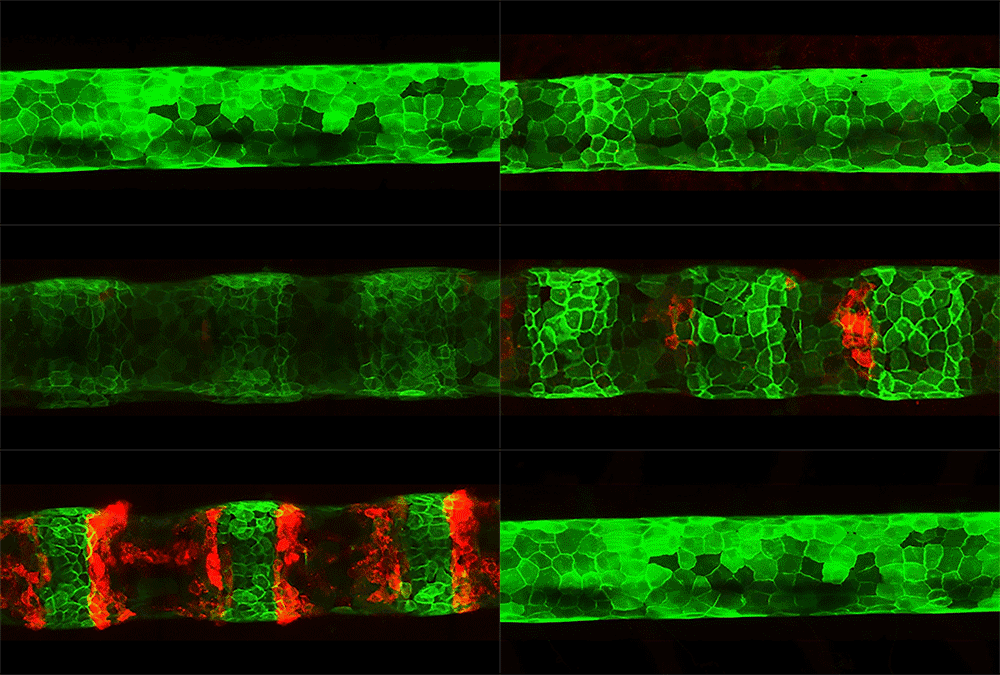


 Post by Thabit Pulak
 Guest post by Eric Ferreri, News and Communications
 Guest Post by Isaac Poarch, a senior at the North Carolina School of Science and Math
 What is morphogenesis? Morphogenesis examines the development of the living organisms’ forms.
 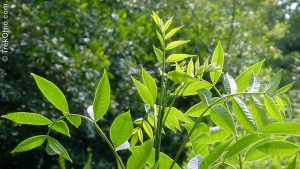 Can morphogenesis make sense of these differences? Through mathematical modeling, two stimuli for shoots’ shapes was determined: gravity and itself. Additionally, elasticity as a function of the shoots’ weight plays a role in the mathematical models of plant shoots’ shapes which appear in