Following the people and events that make up the research community at Duke

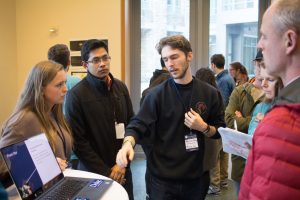
Students exploring the Innovation Co-Lab

Category: Animals Page 8 of 19

New Blogger: Victoria Priester Loves Animals and Books

Hi! My name is Victoria Priester, and I’m a sophomore at Duke and one of this year’s new Duke Research bloggers.

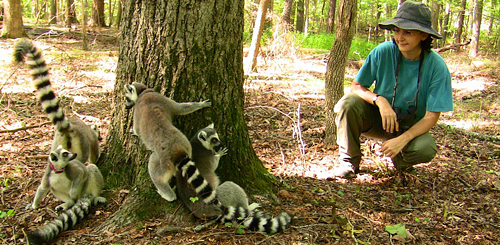
Victoria meeting a very intelligent mammal.

I’m pre-vet, but I’ve always been a bookworm and have a love for expressing myself through writing that has given me a strained relationship with word counts. I’ll try to keep this intro post brief!

I’m majoring in English in addition to taking pre-veterinary classes, so my time in the library so far this year has been spent alternating between drawing resonance structures for organic chemistry and reading Jane Eyre in the Gothic Reading Room, which is my favorite study spot on campus.

Effective puppy medicine includes hugging and kissing.

I grew up in the suburbs of Washington, D.C. and now I work in the veterinary department at Duke Lemur Center. I’m also an editor and opinion columnist for The Chronicle. My favorite part of the academic scene at Duke is that pursuing such different interests at the same time is encouraged.

This year, I’m a part of the Bass Connections team that is studying how using expressive writing for resilience can help cancer patients process their experiences during treatment. I love finding new ways to connect my passion for writing with my interest in science, conservation and zoology.

One of the reasons I want to be a veterinarian is because I think veterinarians can and do play a crucial role in species conservation in zoos and animal sanctuaries. However, there is still a lot left to be learned about the animal species they care for.

For example, there is a species of lemur that consistently develops dental problems in captivity that lead to tooth loss, so there must be something about its diet in captivity compared to its diet in Madagascar that affects the health of its teeth. I care a lot about research concerning animals, conservation and pets, in addition to the health benefits of cathartic writing.

Victoria REALLY likes books.

I follow National Geographic on Twitter and read their articles as often as I can, but I usually end up just telling all of the cool facts I just learned to my parents, close friends or anyone else who is close enough to me to feel a slight obligation to listen and feign interest.

Through blogging, I hope to find a platform to synthesize new scientific findings surrounding animals, marine life or cathartic writing and post them to a place where people who care about and want to read about these topics can find them.

Post by Victoria Priester

Medicine, Research and HIV

Duke senior Jesse Mangold has had an interest in the intersection of medicine and research since high school. While he took electives in a program called “Science, Medicine, and Research,” it wasn’t until the summer after his first year at Duke that he got to participate in research.

As a member of the inaugural class of Huang fellows, Mangold worked in the lab of Duke assistant professor Christina Meade on the compounding effect of HIV and marijuana use on cognitive abilities like memory and learning.

The following summer, Mangold traveled to Honduras with a group of students to help with collecting data and also meeting the overwhelming need for eye care. Mangold and the other students traveled to schools, administered visual exams, and provided free glasses to the children who needed them. Additionally, the students contributed to a growing research project, and for their part, put together an award-winning poster.
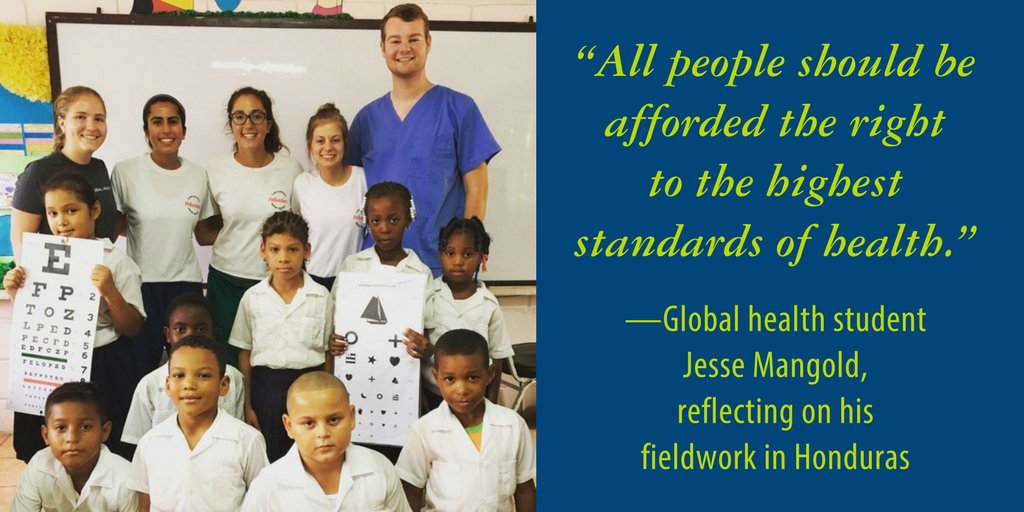
Mangold’s (top right) work in Honduras helped provide countless children with the eye care they so sorely needed.

Returning to school as a junior, Mangold wanted to focus on his greatest research interest: the molecular mechanisms of human immunodeficiency virus (HIV). Mangold found a home in the Permar lab, which investigates mechanisms of mother-to-child transmission of viruses including HIV, Zika, and Cytomegalovirus (CMV).

From co-authoring a book chapter to learning laboratory techniques, he was given “the opportunity to fail, but that was important, because I would learn and come back the next week and fail a little bit less,” Mangold said.

In the absence of any treatment, mothers who are HIV positive transmit the virus to their infants only 30 to 40 percent of the time, suggesting a component of the maternal immune system that provides at least partial protection against transmission.

The immune system functions through the activity of antibodies, or proteins that bind to specific receptors on a microbe and neutralize the threat they pose. The key to an effective HIV vaccine is identifying the most common receptors on the envelope of the virus and engineering a vaccine that can interact with any one of these receptors.
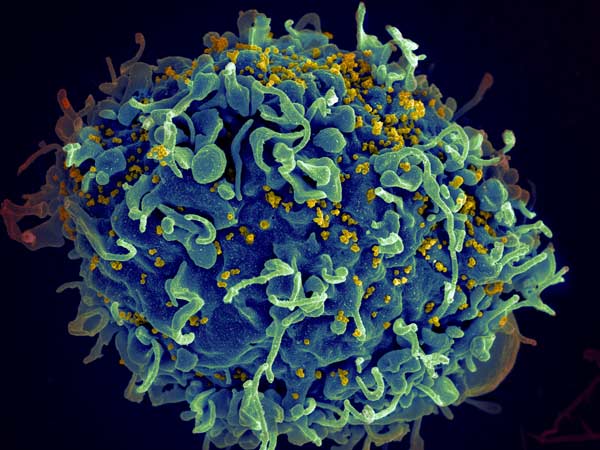
This human T cell (blue) is under attack by HIV (yellow), the virus that causes AIDS. Credit: Seth Pincus, Elizabeth Fischer and Austin Athman, National Institute of Allergy and Infectious Diseases, National Institutes of Health

This human T cell (blue) is under attack by HIV (yellow), the virus that causes AIDS. Credit: Seth Pincus, Elizabeth Fischer and Austin Athman, National Institute of Allergy and Infectious Diseases, National Institutes of Health

Mangold is working with Duke postdoctoral associate Ashley Nelson, Ph.D., to understand the immune response conferred on the infants of HIV positive mothers. To do this, they are using a rhesus macaque model. In order to most closely resemble the disease path as it would progress in humans, they are using a virus called SHIV, which is engineered to have the internal structure of simian immunodeficiency virus (SIV) and the viral envelope of HIV; SHIV can thus serve to naturally infect the macaques but provide insight into antibody response that can be generalized to humans.

The study involves infecting 12 female monkeys with the virus, waiting 12 weeks for the infection to proceed, and treating the monkeys with antiretroviral therapy (ART), which is currently the most effective treatment for HIV. Following the treatment, the level of virus in the blood, or viral load, will drop to undetectable levels. After an additional 12 weeks of treatment and three doses of either a candidate HIV vaccine or a placebo, treatment will be stopped. This design is meant to mirror the gold-standard of treatment for women who are HIV-positive and pregnant.

At this point, because the treatment and vaccine are imperfect, some virus will have survived and will “rebound,” or replicate fast and repopulate the blood. The key to this research is to sequence the virus at this stage, to identify the characteristics of the surviving virus that withstood the best available treatment. This surviving virus is also what is passed from mothers on antiretroviral therapy to their infants, so understanding its properties is vital for preventing mother-to-child transmission.

As a Huang fellow, Mangold had the opportunity to present his research on the compounding effect of HIV and marijuana on cognitive function.

Mangold’s role is looking into the difference in viral diversity before treatment commences and after rebound. This research will prove fundamental in engineering better and more effective treatments.

In addition to working with HIV, Mangold will be working on a project looking into a virus that doesn’t receive the same level of attention as HIV: Cytomegalovirus. CMV is the leading congenital cause of hearing loss, and mother-to-child transmission plays an important role in the transmission of this devastating virus.

Mangold and his mentor, pediatric resident Tiziana Coppola, M.D., are authoring a paper that reviews existing literature on CMV to look for a link between the prevalence of CMV in women of child-bearing age and whether this prevalence is predictive of the number of children suffer CMV-related hearing loss. With this study, Mangold and Coppola are hoping to identify if there is a component of the maternal immune system that confers some immunity to the child, which can then be targeted for vaccine development.

After graduation, Mangold will continue his research in the Permar lab during a gap year while applying to MD/PhD programs. He hopes to continue studying at the intersection of medicine and research in the HIV vaccine field.

Post by undergraduate blogger Sarah Haurin
Post by undergraduate blogger Sarah Haurin


Better Butterfly Learners Take Longer to Grow Up

Emilie Snell-Rood studies butterflies to understand the factors that influence plasticity.

The ability of animals to vary their phenotypes, or physical expression of their genes, in different environments is a key element to survival in an ever-changing world.

Emilie Snell-Rood, PhD, of the University of Minnesota, is interested in why this phenomena of plasticity varies. Some animals’ phenotypes are relatively stable despite varying environmental pressures, while others display a wide range of behaviors.

Researchers have looked into how the costs of plasticity limit its variability. While many biologists expected that energetic costs should be adequate explanations for the limits to plasticity, only about 30 percent of studies that have looked for plasticity-related costs have found them.

Butterflies’ learning has provided insight into developmental plasticity.

With her model of butterflies, Snell-Rood has worked to understand why these researchers have come up with little results.

Snell-Rood hypothesized that the life history of an animal, or the timing of major developmental events like weaning, should be of vital importance in the constraints on plasticity, specifically on the type of plasticity involved in learning. Much of learning involves trial and error, which is costly – it requires time, energy, and exposure to potential predators while exploring the environment.

Additionally, behavioral flexibility requires an investment in developing brain tissue to accommodate this learning.

Because of these costs, animals that engage in this kind of learning must forgo reproduction until later in life.

To test the costs of learning, Snell-Rood used butterflies as a subject. Butterflies require developmental plasticity to explore their environments and optimize their food finding strategies. Over time, butterflies get more efficient at landing on the best host plants, using color and other visual cues to find the best food sources.

Studying butterfly families shows that families that are better learners have increased volume in the part of the brain associated with sensory integration. Furthermore, experimentally speeding up an organism’s life history leads to a decline in learning ability.

These results support a tradeoff between an organism’s developmental plasticity and life history. While this strategy is more costly in terms of investment in neural development and energy investment, it provides greater efficacy in adaptation to environment. However, further pressures from resource availability can also influence plasticity.

Looking to the butterfly model, Snell-Rood found that quality nutrition increases egg production as well as areas of the brain associated with plasticity.

Understanding factors that influence an animal’s plasticity is becoming increasingly important. Not only does it allow us to understand the role of plasticity in evolution up to this point, but it allows us to predict how organisms will adapt to novel and changing environments, especially those that are changing because of human influence. For the purposes of conservation, these predictions are vital.

By Sarah Haurin

Researcher Turns Wood Into Larger-Than-Life Insects

Duke biologist Alejandro Berrio creates larger-than-life insect sculptures. This wooden mantis was exhibited at the Art Science Gallery in Austin, Texas in 2013.

Duke biologist Alejandro Berrio creates larger-than-life insect sculptures. This wooden mantis was exhibited at the Art Science Gallery in Austin, Texas in 2013.

On a recent spring morning, biologist Alejandro Berrio took a break from running genetic analyses on a supercomputer to talk about an unusual passion: creating larger-than-life insect sculptures.

Berrio is a postdoctoral associate in professor Greg Wray’s lab at Duke. He’s also a woodcarver, having exhibited his shoebox-sized models of praying mantises, wasps, crickets and other creatures in museums and galleries in his hometown and in Austin, Texas, where his earned his Ph.D.

The Colombia-born scientist started carving wood in his early teens, when he got interested in model airplanes. He built them out of pieces of lightweight balsa wood that he bought in craft shops.

When he got to college at the University of Antioquia in Medellín, Colombia’s second-largest city, he joined an entomology lab. “One of my first introductions to science was watching insects in the lab and drawing them,” Berrio said. “One day I had an ‘aha’ moment and thought: I can make this. I can make an insect with wings the same way I used to make airplanes.”

Beetle carved by Duke biologist Alejandro Berrio.

His first carvings were of mosquitoes — the main insect in his lab — hand carved from soft balsa wood with an X-Acto knife.

Using photographs for reference, he would sketch the insects from different positions before he started carving.

He worked at his kitchen table, shaping the body from balsa wood or basswood. “I might start with a power saw to make the general form, and then with sandpaper until I started getting the shape I wanted,” Berrio said.

He used metal to join and position the segments in the legs and antennae, then set the joints in place with glue.

“People loved them,” Berrio said. “Scientists were like: Oh, I want a fly. I want a beetle. My professors were giving them to their friends. So I started making them for people and selling them.”

Soon Berrio was carving wooden fungi, dragons, turtles, a snail. “Whatever people wanted me to make,” Berrio said.

He earned just enough money to pay for his lunch, or the bus ride to school.

Duke biologist Alejandro Berrio carved this butterfly using balsa wood for the body and legs, and paper for the wings.

His pieces can take anywhere from a week to two months to complete. “This butterfly was the most time-consuming,” he said, pointing to a model with translucent veined wings.

Since moving to Durham in 2016, he has devoted less time to his hobby than he once did. “Last year I made a crab for a friend who studies crustaceans,” Berrio said. “She got married and that was my wedding gift.”

Still no apes, or finches, or prairie voles — all subjects of his current research. “But I’m planning to restart,” Berrio said. “Every time I go home to Colombia I bring back some wood, or my favorite glue, or one of my carving tools.”

Insect sculptures by Duke biologist Alejandro Berrio.

Insect sculptures by Duke biologist Alejandro Berrio.

Explore more of Berrio’s sculpture and photography at https://www.flickr.com/photos/alejoberrio/.

by Robin Smith

by Robin Smith

How A Zebrafish’s Squiggly Cartilage Transforms into a Strong Spine

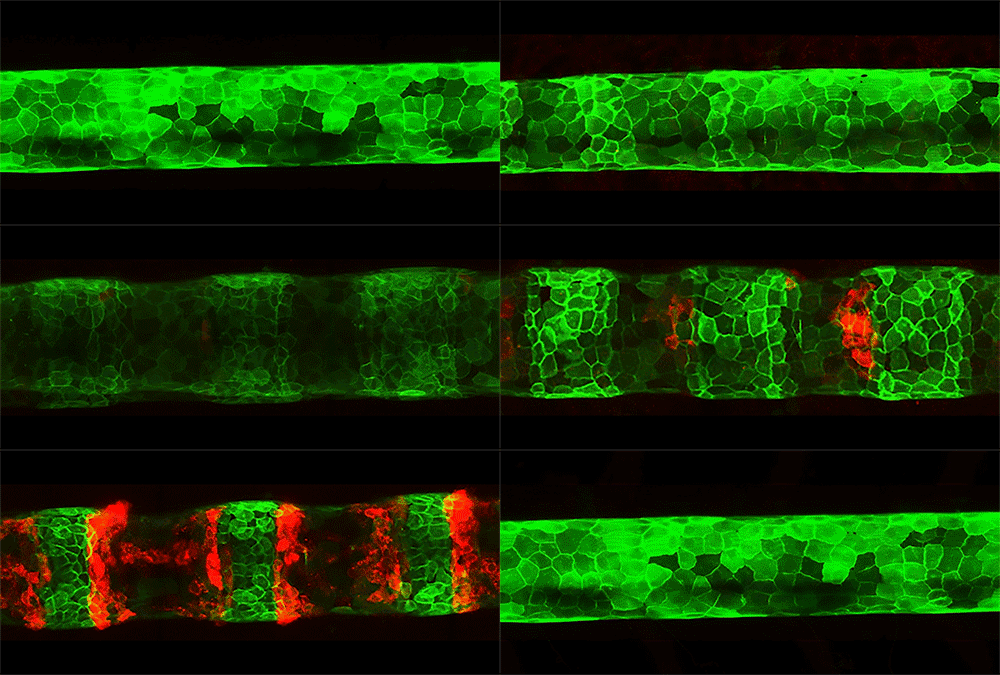
A column of green cartilage cells divides into an alternating pattern of green cartilage and red vertebra

Our spines begin as a flexible column called the notochord. Over time, cells on the notochord surface divide into alternating segments that go on to form cartilage and vertebrae.

In the womb, our strong spines start as nothing more than a rope of rubbery tissue. As our bodies develop, this flexible cord, called the notochord, morphs into a column of bone and cartilage sturdy enough to hold up our heavy upper bodies.

Graduate student Susan Wopat and her colleagues in Michel Bagnat’s lab at Duke are studying the notochords of the humble zebrafish to learn how this cartilage-like rope grows into a mature spine.

In a new paper, they detail the cellular messaging that directs this transformation.

It all comes down to Notch receptors on the notochord surface, they found. Notch receptors are a special type of protein that sits astride cell membranes. When two cells touch, these Notch receptors link up, forming channels that allow messages to rapidly travel between large groups of cells.

Notch receptors divide the outer notochord cells into two alternating groups – one group is told to grow into bone, while the other is told to grow into cartilage. Over time, bone starts to form on the surface of the notochord and works its way inward, eventually forming mature vertebrae.

X-ray images of four zebrafish spines

Meddling with cellular signaling on the notochord surface caused zebrafish spines to develop deformities. The first and third image show healthy spines, and the second and fourth image show deformed spines.

When the team tinkered with the Notch signaling on the surface cells, they found that the spinal vertebrae came out deformed – too big, too small, or the wrong shape.

“These results demonstrate that the notochord plays a critical role in guiding spine development,” Wopat said. “Further investigation into these findings may help us better understand the origin of spinal defects in humans.”

Spine patterning is guided by segmentation of the notochord sheath,” Susan Wopat, Jennifer Bagwell, Kaelyn D. Sumigray, Amy L. Dickson, Leonie F. Huitema, Kenneth D. Poss, Stefan Schulte-Merker, Michel Bagnat. Cell, February 20, 2018. DOI: 10.1016/j.celrep.2018.01.084

Post by Kara Manke

Student Ingenuity vs. Environmental Issues (like Cow Farts)

Lots of creative and potentially life changing ideas filled the Fitzpatrick CIEMAS atrium last weekend. From devices meant to address critical environmental issues such as global warming and lion fish invasiveness, to apps that help you become more sustainable, Duke’s Blueprint tech ideation conference showcased some awesome, good ol’ student-led ingenuity.

These bright students from around Durham (mostly from Duke) competed in teams to create something that would positively impact the environment. The projects were judged for applicability, daringness, and feasibility, among other things. During the Project Expo, all teams briefly presented to viewers like a school science fair.

One of the projects I liked a lot was called Entropy—a website with your own personal plant (I named mine “Pete”) that grows or dies depending on your sustainable actions throughout the day. The user answers simple yes or no questions, such as, “did you turn off the lights today?”

You can also complete daily goals to get accessories like a hat or mustache for your plant. The website connects to Facebook, so you can track your friends’ progress and see how green they’re living. Ultimately it’s just a good, fun way to keep your sustainability in check. Pete was looking super-cute after I spammed the yes button.

Another interesting innovation posed a solution to the difficulty of catching lion fish. Humans are a lion fish’s only predator, and we hunt them by spear fishing. Since lion fish are highly invasive, catching them en-masse could seriously benefit the biodiversity of the ocean (plus, they taste delicious). So one team came up with a canopy like contraption that attracts lion fish to hang out underneath it, and then snatches them all up at once like a net. Pretty neat idea, and if it was implemented on a large scale could be a huge benefit to the Earth’s oceans (and restaurants)!

After the expo, the top seven teams were selected and given three minutes to present to the judges and audience as a whole.

Every project was astounding. “Collide-o-scope” came up with a simple Arduino-based device to transmit elephant seismic activity to train drivers nearby in order to reduce the number of train-elephant collisions in India and Sri Lanka — currently a huge problem, for both us as humans and the elephant population.

Another team, “Manatee Marker,” proposed a system of solar powered buoys to detect manatees, with the hope of reducing frequent manatee-boat accidents. Considering that manatees are quiet, basically camouflaged, and thermally invisible, this was quite an ingenious task.

Perhaps my favorite project, “Algenie” stole the show. Methane gas is a huge factor to global warming — around twenty-five times more potent as a heat-trapping gas than Carbon Dioxide — and a lot of it comes from cow farts. However, we’ve recently discovered that putting seaweed in cow feed actually lowers methane emissions almost entirely! So this team came up with a vertical, three-dimensional way to grow algae — opposed to “two-dimensionally” growing across a pond — that would maximize production. Global warming is obviously a massive issue right now and Algenie is looking to change that. They ended up getting first place, and winning a prize of $1,000 along with GoPros for every team member.

Algenie’s prototype

At the end of the day, it wasn’t about the prize money. The competition was meant to generate creative and practical ideas, while promoting making a difference. After  attending the expo I felt more aware of all the environmental issues and influenced to help out. Even if you don’t feel like spending the time drafting up a crazy buoy manatee-detecting system, you can still do your part by living sustainably day to day.

Blueprint has done an awesome job of spurring young, enthusiastic students towards helping this planet — one cow fart at a time.

Post by Will Sheehan; Will SheehanPictures from Duke Conservation Tech

How A Bat’s Brain Navigates

Most of what we know about how the hippocampus, a region of the brain associated with memory formation and spatial representations, comes from research done on rodents. Rat brains have taught us a lot, but researchers in Israel have found an interesting alternative model to understanding how the hippocampus helps mammals navigate: Bats.

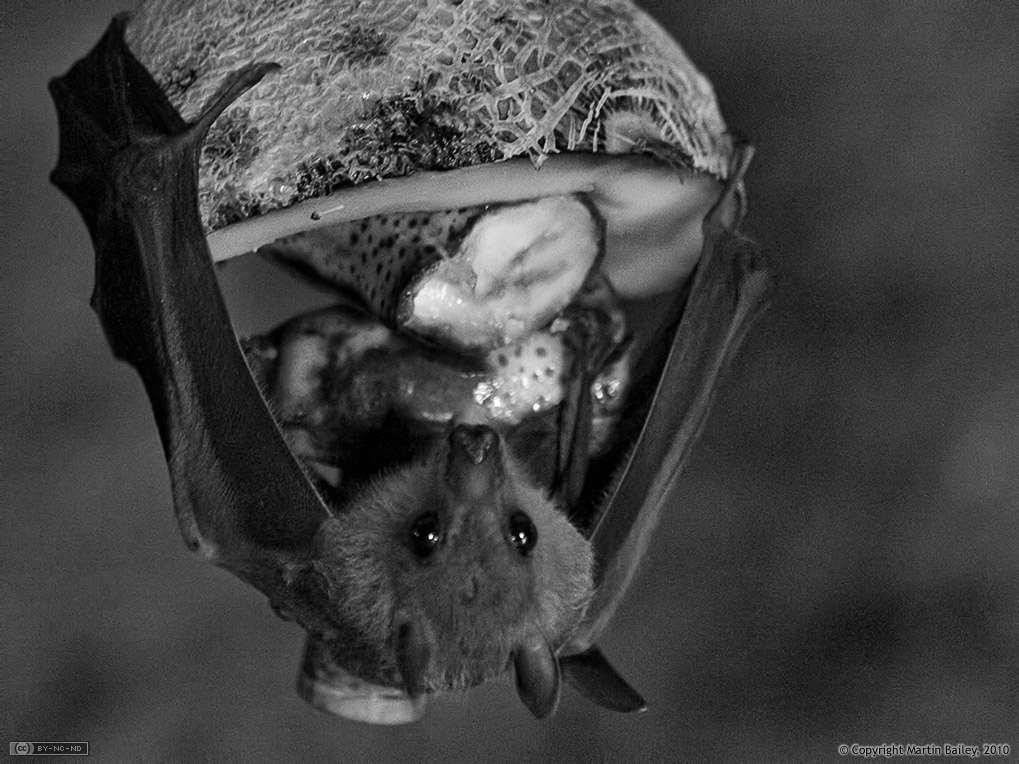
The Egyptian fruit bat proved the perfect subject for studies of mammalian navigation.

Weizmann Institute neurophysiologist Nachum Ulanovsky, PhD, and his team have looked to bats to understand the nuances of navigation through space. While previous research has identified specific cells in the hippocampus, called place cells, that are active when an animal is located in a specific place, there is not much literature describing how animals actually navigate from point A to point B.

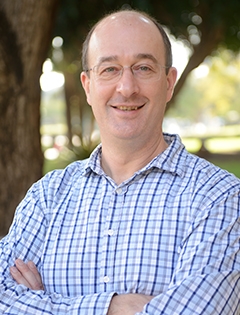
Nachum Ulanovsky

Ulanovsky believes that bats are an ingenious model to study mammalian navigation. While bats have the same types of hippocampal neurons found in rats, the patterns of bats’ neurons’ firings more closely match that of humans than rats do.

Ulanovsky sought to test how bats know where they are going. Using GPS tracking equipment, his team found that wild bats that lived in a cave would travel up to 20 kilometers to forage fruit from specific trees. Night after night, these bats followed similar routes past perfectly viable food sources to the same tree over and over again.

The understanding of hippocampal place cells firing at specific locations doesn’t explain the apparent guided travel of the bat night after night, and other explanations like olfactory input do not explain why the bats fly over good food sources to their preferred tree.

The researchers designed an experiment to test how bats encode the 3D information necessary for this navigation. By letting the bats fly around and recording brain activity, Ulanovsky and team found that their 3D models are actually spherical in shape. They also found another type of hippocampal cells that encode the orientation the bat is facing. These head direction cells operate in a coordinate system that allows for a continuity of awareness of its orientation as the animal moves through space.

http://www.cell.com/cms/attachment/2091916945/2076305003/gr1_lrg.jpg

Ulanovsky found bats relied on memory to navigate toward the goal.

To understand how the bats navigate toward a specific goal, the researchers devised another experiment. They constructed a goal with a landing place and a food incentive. The bat would learn where the goal was and find it. In order to test whether the bats’ ability to find the goal was memory-based, or utilized the hippocampus, the researchers then conducted trials where the goal was hidden from the bats’ view.

To test whether the bats’ relied on memory, the Ulvanosky team measured the goal direction angle, or the angle between the bat’s head orientation and the goal. After being familiarized with the location of the goal, the bats tended toward a goal-direction angle of zero, meaning they oriented themselves toward the goal even when the goal was out of sight.

Continued research identified cells that encode information about the distance the bat is from the goal, the final piece allowing bats to navigate to a goal successfully. These hippocampal cells selectively fire when the bat is within specific distances of the goal, allowing for an awareness of location over distance.

While Ulanovsky and his team have met incredible success in identifying new types of cells as well as new functions of known cells in the hippocampus, further research in a more natural setting is required.

“If we study only under these very controlled and sterile environments, we may miss the very thing we are trying to understand, which is behavior,” Ulanovsky concluded.

By Sarah Haurin

Researchers Get Superman’s X-ray Vision

X-ray vision just got cooler. A technique developed in recent years boosts researchers’ ability to see through the body and capture high-resolution images of animals inside and out.

This special type of 3-D scanning reveals not only bones, teeth and other hard tissues, but also muscles, blood vessels and other soft structures that are difficult to see using conventional X-ray techniques.

Researchers have been using the method, called diceCT, to visualize the internal anatomy of dozens of different species at Duke’s Shared Materials Instrumentation Facility (SMIF).

There, the specimens are stained with an iodine solution that helps soft tissues absorb X-rays, then placed in a micro-CT scanner, which takes thousands of X-ray images from different angles while the specimen spins around. A computer then stitches the scans into digital cross sections and stacks them, like slices of bread, to create a virtual 3-D model that can be rotated, dissected and measured as if by hand.

Here’s a look at some of the images they’ve taken:

See-through shrimp

If you get flushed after a workout, you’re not alone — the Caribbean anemone shrimp does too.

Recent Duke Ph.D. Laura Bagge was scuba diving off the coast of Belize when she noticed the transparent shrimp Ancylomenes pedersoni turn from clear to cloudy after rapidly flipping its tail.

To find out why exercise changes the shrimp’s complexion, Bagge and Duke professor Sönke Johnsen and colleagues compared their internal anatomy before and after physical exertion using diceCT.

In the shrimp cross sections in this video, blood vessels are colored blue-green, and muscle is orange-red. The researchers found that more blood flowed to the tail after exercise, presumably to deliver more oxygen-rich blood to working muscles. The increased blood flow between muscle fibers causes light to scatter or bounce in different directions, which is why the normally see-through shrimp lose their transparency.

Peer inside the leg of a mouse

Duke cardiologist Christopher Kontos, M.D., and MD/PhD student Hasan Abbas have been using the technique to visualize the inside of a mouse’s leg.

The researchers hope the images will shed light on changes in blood vessels in people, particularly those with peripheral artery disease, in which plaque buildup in the arteries reduces blood flow to the extremities such as the legs and feet.

The micro-CT scanner at Duke’s Shared Materials Instrumentation Facility made it possible for Abbas and Kontos to see structures as small as 13 microns, or a fraction of the width of a human hair, including muscle fibers and even small arteries and veins in 3-D.

Take a tour through a tree shrew

DiceCT imaging allows Heather Kristjanson at the Johns Hopkins School of Medicine to digitally dissect the chewing muscles of animals such as this tree shrew, a small mammal from Southeast Asia that looks like a cross between a mouse and a squirrel. By virtually zooming in and measuring muscle volume and the length of muscle fibers, she hopes to see how strong they were. Studying such clues in modern mammals helps Kristjanson and colleagues reconstruct similar features in the earliest primates that lived millions of years ago.

Try it for yourself

Students and instructors who are interested in trying the technique in their research are eligible to apply for vouchers to cover SMIF fees. People at Duke University and elsewhere are encouraged to apply. For more information visit https://smif.pratt.duke.edu/Funding_Opportunities, or contact Dr. Mark Walters, Director of SMIF, via email at mark.walters@duke.edu.

Located on Duke’s West Campus in the Fitzpatrick Building, the SMIF is a shared use facility available to Duke researchers and educators as well as external users from other universities, government laboratories or industry through a partnership called the Research Triangle Nanotechnology Network. For more info visit http://smif.pratt.duke.edu/.

Post by Robin Smith, News and Communications

Post by Robin Smith, News and Communications

Meet Africa’s Bird Master of Vocal Imitation

The red-capped robin-chat (Cossypha natalensis) can mimic the songs and calls of dozens of other bird species – even their duets, says Duke researcher Tom Struhsaker.

The red-capped robin-chat (Cossypha natalensis) can mimic the songs and calls of dozens of other bird species – even their duets, says Duke researcher Tom Struhsaker.

Singing a duet in a foreign language isn’t just for opera stars — red-capped robin-chats do it too. These orange-brown birds with grey wings can imitate the sounds of 40 other bird species, even other species’ high-speed duets.

The latter finding comes from Tom Struhsaker, adjunct professor of evolutionary anthropology at Duke. Struhsaker didn’t set out to study robin-chats. His interest in their vocal abilities developed while studying monkeys in Kibale Forest in Uganda, where he lived for nearly two decades from 1970 to 1988.

Their typical song “sounds like a long, rambling human-like whistle,” Struhsaker said. But during the 18 years he spent studying and living in Kibale, Struhsaker also heard these birds impersonate the tambourine-like courtship call of the crested guineafowl, the crow of a rooster, and the “puweepuweepuwee” of a crowned eagle, among others.

“The robin-chat’s ability to imitate is so good that many a bird watcher has looked skyward vainly searching for a crowned eagle performing its aerial display, when in fact the source of the eagle’s undulating whistle was a robin-chat in the nearby understory,” Struhsaker said.

He also noticed that if he whistled, eavesdropping robin-chats would approach and call back, and if he tweaked the pitch and sequence of notes in his whistle, the birds sometimes changed their reply.

This suggests red-capped robin-chats may be lifelong learners, unlike many other bird species that only learn songs during critical time windows, Struhsaker said.

But the robin-chat doesn’t stop at mimicking others’ solo performances. Notably, Struhsaker also heard them imitate the duet of the black-faced rufous warbler.

Black-faced rufous warblers sing a rapid-fire “seee-oooo-ee” duet with their mates. The two birds take turns such that the male sings the “seee,” the female chimes in with the “oooo” and the male fires back with the final “ee,” with no pauses between the three notes. The partners sing back and forth so seamlessly that they are often mistaken for a single bird.

“In order to do this, birds have an incredibly rapid reaction time, much greater than that of humans,” Struhsaker said.

On two occasions he heard single robin-chats sing both the male and female parts of the warbler duet by themselves. On another occasion he heard two robin-chats make music together as the warblers do, with one singing the male warbler’s part and the other singing the female part.

“This suggests these birds have an unusually high level of auditory perception and reaction time and cognitive ability,” Struhsaker said.

CITATION:  “Two Red-Capped Robin-Chats Cossypha Natalensis Imitate Antiphonal Duet of Black-Faced Rufous Warblers Bathmocercus rufus,” Thomas Struhsaker. Journal of East African Natural History, Dec. 2017. https://doi.org/10.2982/028.106.0201.


Some Lemurs are Loners, Others Crave Connection

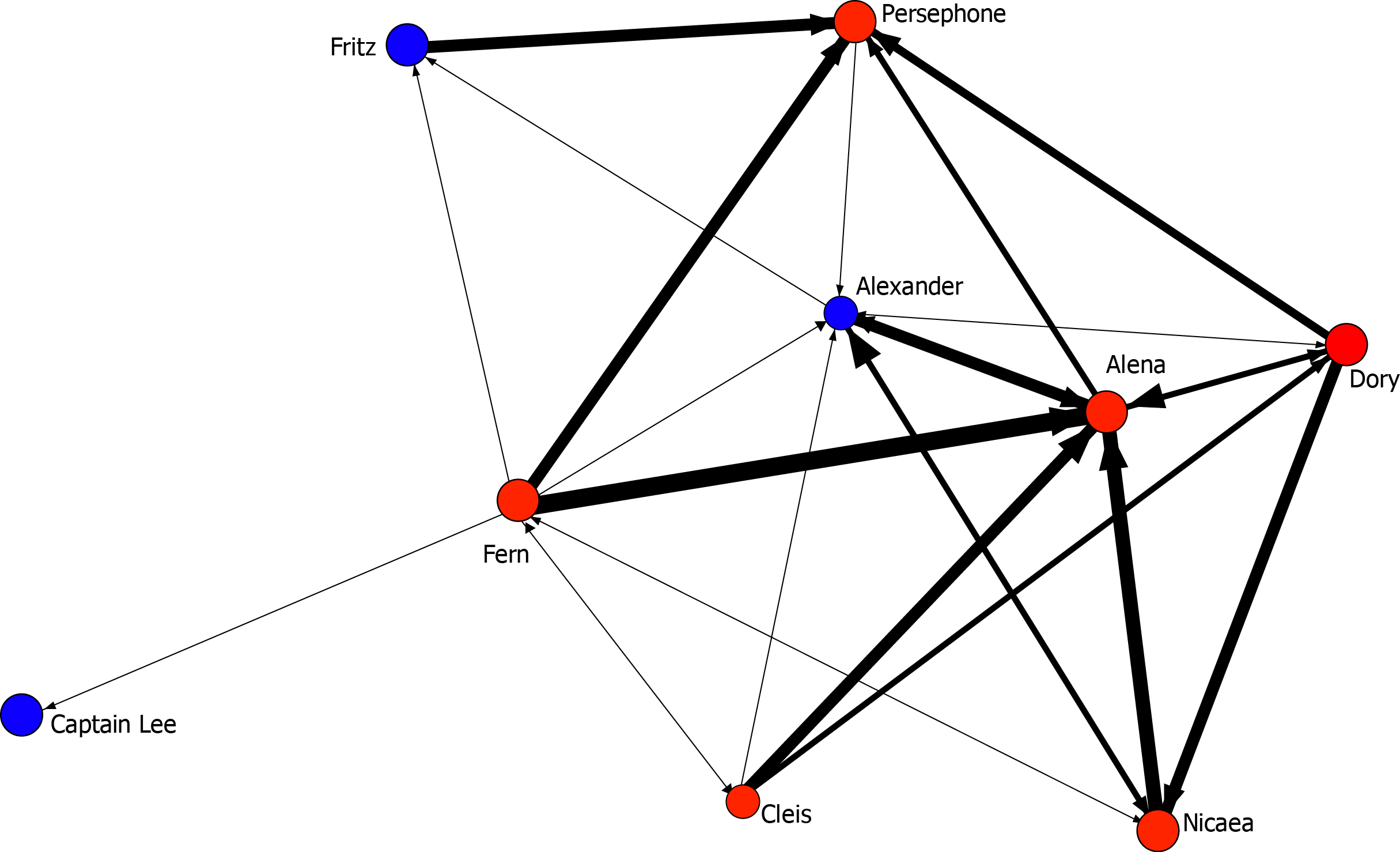
DURHAM, N.C. — If lemurs were on Facebook, Fern would have oodles of friends, liking and commenting on their posts. Captain Lee, on the other hand, would rarely send a friend request.

Best buddies Fern and Alena at the Duke Lemur Center in Durham, North Carolina. Photo by Ipek Kulahci.

Best buddies Fern and Alena at the Duke Lemur Center in Durham, North Carolina. Photo by Ipek Kulahci.

These are just two of the distinct personalities discovered in a recent study of group dynamics in ring-tailed lemurs, primate cousins that live in groups of up to two dozen on the island of Madagascar.

First author Ipek Kulahci spent several years studying ring-tailed lemurs housed at the Duke Lemur Center in North Carolina and the St. Catherines Island Lemur Program in Georgia. Along the way, she noticed a lot of variation in social behavior from one lemur the next. She observed socialite Fern, loner Captain Lee, best buddies Limerick and Herodotus and other lemur characters.

Some individuals seemed more outgoing than others. To try to quantify that, she followed four groups of ring-tailed lemurs over two consecutive years and recorded their behavior a minimum of four times a week for at least two months.

A social network of lemurs. Each circle represents an individual lemur, and lemurs who respond to each other’s calls are connected by arrows. Thicker arrows indicate lemurs who respond more frequently and have a stronger social bond.

A social network of lemurs. Each circle represents an individual lemur, and lemurs who respond to each other’s calls are connected by arrows. Thicker arrows indicate lemurs who respond more frequently and have a stronger social bond.

Using a method called social network analysis, she was able to measure how many connections each lemur had, with whom, and how strong those connections were. She was also able to figure out which lemurs were most influential in each group — either because they connected others, or because they had well-connected friends.

Kulahci and colleagues found that lemurs behaved consistently no matter what their age, sex or social situation. Some lemurs like Fern tended to seek connection; reinforcing social bonds by frequently picking through their friends’ fur and responding to other lemurs’ calls and scent marks.

Their interactions weren’t always amicable — the more socially active lemurs were also more likely to chase others or pick fights with individuals with whom they weren’t on friendly terms. “But they have a drive to interact with others, rather than be a loner,” said Kulahci, now a postdoctoral researcher at University College Cork in Ireland.

The researchers also found that lemurs, like us, don’t bond with just anyone. Whether they were extroverted or shy, all lemurs had an inner circle of groupmates they tended to groom, call back, or otherwise keep in touch with more than others.

Ipek Kulahci, postdoctoral researcher at University College Cork in Ireland.

Ipek Kulahci, postdoctoral researcher at University College Cork in Ireland.

“They essentially have buddies,” Kulahci said.

“This is important because social connectedness influences health, immunity, survival,” Kulahci said. “This is true for animals as well as humans.”

The results appeared online Dec. 9, 2017, in the journal Animal Behaviour.

Other authors on this study include Asif Ghazanfar and Daniel Rubenstein of Princeton University. This study was funded by grants from the Animal Behavior Society, American Society of Mammalogists, American Society of Primatologists and Princeton University.

CITATION:  “Consistent Individual Variation Across Interaction Networks Indicates Social Personalities in Lemurs,” Ipek Kulahci, Asif Ghazanfar and Daniel Rubenstein. Animal Behaviour, Dec. 9, 2017.  https://doi.org/10.1016/j.anbehav.2017.11.012

by Robin Smith

by Robin Smith

Page 8 of 19

Powered by WordPress & Theme by Anders Norén