Research Blog

Following the people and events that make up the research community at Duke

Students exploring the Innovation Co-Lab

Cheating Time to Watch Liquids do the Slow Dance

Colorful spheres simulating liquid molecules shift around inside a cube shape

The team’s new algorithm is able to simulate molecular configurations of supercooled liquids below the glass transition. The properties of these configurations are helping to solve a 70-year paradox about the entropy of glasses. Credit: Misaki Ozawa and Andrea Ninarello, Université de Montpellier.

If you could put on a pair of swimming goggles, shrink yourself down like a character from The Magic School Bus and take a deep dive inside a liquid, you would see a crowd of molecules all partying like it’s 1999.

All this frenetic wiggling makes it easy for molecules to rearrange themselves and for the liquid as a whole to change shape. But for supercooled liquids — liquids like honey that are cooled below their freezing point without crystallizing – the lower temperature slows down the dancing like Etta James’ “At Last.” Lower the temperature enough, and the slow-down can be so dramatic that it takes centuries or even millennia for the molecules to rearrange and the liquid to move.

Scientists can’t study processes that last longer than their careers. But Duke chemists and their Simons Foundation collaborators have found a way to cheat time, simulating the slow dance of deeply supercooled liquids. Along the way, they have found new physical properties of “aged” supercooled liquids and glasses.

A droplet rises above a surface of water

Credit: Ruben Alexander via Flickr.

To understand just how slow deeply supercooled liquids move, consider the world’s longest-running experiment, the University of Queensland’s Pitch Drop Experiment. A single drop of pitch forms every eight to thirteen years — and this pitch is moving faster than deeply supercooled liquids.

“Experimentally there is a limit to what you can observe, because even if you managed to do it over your entire career, that is still a maximum of 50 years,” said Patrick Charbonneau, an associate professor of chemistry and physics at Duke. “For many people that was considered a hard glass ceiling, beyond which you couldn’t study the behavior of supercooled liquids.”

Charbonneau, who is an expert on numerical simulations, said that using computers to simulate the behavior of supercooled liquids has even steeper time limitations. He estimates that, given the current rate of computer advancement, it would take 50 to 100 years before computers would be powerful enough for simulations to exceed experimental capabilities – and even then the simulations would take months.

To break this glass ceiling, the Charbonneau group collaborated with Ludovic Berthier and his team, who were developing an algorithm to bypass these time constraints. Rather than taking months or years to simulate how each molecule in a supercooled liquids jiggles around until the molecules rearrange, the algorithm picks individual molecules to swap places with each other, creating new molecular configurations.

This allows the team to explore new configurations that could take millennia to form naturally. These “deeply supercooled liquids and ultra-aged glasses” liquids are at a lower energy, and more stable, than any observed before.

“We were cheating time in the sense that we didn’t have to follow the dynamics of the system,” Charbonneau said. “We were able to simulate deeply supercooled liquids well beyond is possible in experiments, and it opened up a lot of possibilities.”

Two columns of blue and red spheres represent simulations of vapor-deposited glasses.

Glasses that are grown one layer at a time have a much different structure than bulk glasses. The team used their new algorithm to study how molecules in these glasses rearrange, and found that at low temperatures (right), only the molecules at the surface are mobile. The results may be used to design better types of glass for drug delivery or protective coatings. Credit: Elijah Flenner.

Last summer, the team used this technique to discover a new phase transition in low-temperature glasses. They recently published two additional studies, one of which sheds light on the “Kauzmann paradox,” a 70-year question about the entropy of supercooled liquids below the glass transition. The second explores the formation of vapor-deposited glasses, which have applications in drug delivery and protective coatings.

“Nature has only one way to equilibrate, by just following the molecular dynamics,” said Sho Yaida, a postdoctoral fellow in Charbonneau’s lab. “But the great thing about numerical simulations is you can tweak the algorithm to accelerate your experiment.”

Configurational entropy measurements in extremely supercooled liquids that break the glass ceiling.” Ludovic Berthier, Patrick Charbonneau, Daniele Coslovich, Andrea Ninarello, Misaki Ozawa and Sho Yaida. PNAS, Oct. 24, 2017. DOI: 10.1073/pnas.1706860114

The origin of ultrastability in vapor-deposited glasses.” Ludovic Berthier, Patrick Charbonneau, Elijah Flenner and Francesco Zamponi. PRL, Nov. 1, 2017. DOI: 10.1103/PhysRevLett.119.188002

Post by Kara Manke

Library’s Halloween Exhibit Fascinates and Thrills

Research is not always for the faint of heart.

scary doll_Duke Library

Screamfest V combed through centuries of Rubenstein materials to find the very spookiest of artifacts

At least, that’s what Rubenstein Library seemed to be saying this Halloween with the fifth installment of its sometimes freaky, always fascinating “Screamfest” exhibition. With everything from centuries-old demonology textbooks, to tarot cards, to Duke-based parapsychology studies, Screamfest V took a dive into the deep end of the research Duke has gathered throughout its long history.

There’s a lot to unpack about this exhibit, but one of the most unsettling parts has to be the 1949 written exchange between Duke parapsychologist Joseph Rhine and Lutheran Reverend Duther Schulze, speaking about a boy they thought could be demonically possessed.

“Now he has visions of the devil and goes into a trance and speaks a strange language,” Duther wrote.

Anything about that sound familiar? If so, that might be because this case was the basis for the 1973 horror classic The Exorcist. (And people say research isn’t cool!)

The Rubenstein also exhibited a pack of cards used by Rhine’s parapsychology lab to test for extrasensory perception. Inscribed with vaguely arcane symbols, one of these “Zener cards” would be flipped over by a researcher behind a screen, and a test subject on the other side would attempt to “sense” what card the researcher displayed.

Zener cards for ESP

A pack of “Zener cards” Duke researchers once used to test for ESP

Although the results of this test were never replicated outside of Duke and are today widely considered debunked, Rhine’s research did create a stir in some circles at the time. One of the most interesting things about this exhibit, in fact, was the way it showed how much methods and topics in science have changed over time.

A 1726 publication of the book Sadducismus triumphatus: or, A full and plain evidence concerning witches and apparitions, for example, was loaded with supernatural “research” and “findings” every bit as dense and serious as the title would suggest. The section this tome was opened to bore this subheading: “Proving partly by Holy Scripture, partly by a choice Collection of Modern Relations, the Real EXISTENCE of Apparitions, Spirits, & Witches.”

A similar book titled The Discoverie of Witchcraft, was also on display—only this one was printed over two centuries later, in 1930.

A Depression-era miniature of the Duke mascot, somewhat worse for wear.

Other historical gems the exhibit offered included an a threadbare ‘blue devil’ doll from the ‘30s; a book made up of a lengthy collection of newspaper clippings following the case of Lizzie Borden, a reported axe murderer from the 1890s; and an ad for the 1844 “Life Preserving Coffin … for use in doubtful cases of death.”

It’s not every day research will leave the casual viewer quaking in their boots, but Screamfest V was quick to live up to its name. Covering a broad swath of Duke materials from several centuries, this exhibit successfully pulled off vibes of education, spookiness, and Halloween fun, all at the same time.

Post by Daniel Egitto

Creative Solutions to Brain Tumor Treatment

Survival rates for brain tumors have not improved since the 1960s; NIH Image Gallery.

Invasive brain tumors are among the hardest cancers to treat, and thus have some of the worst prognoses.

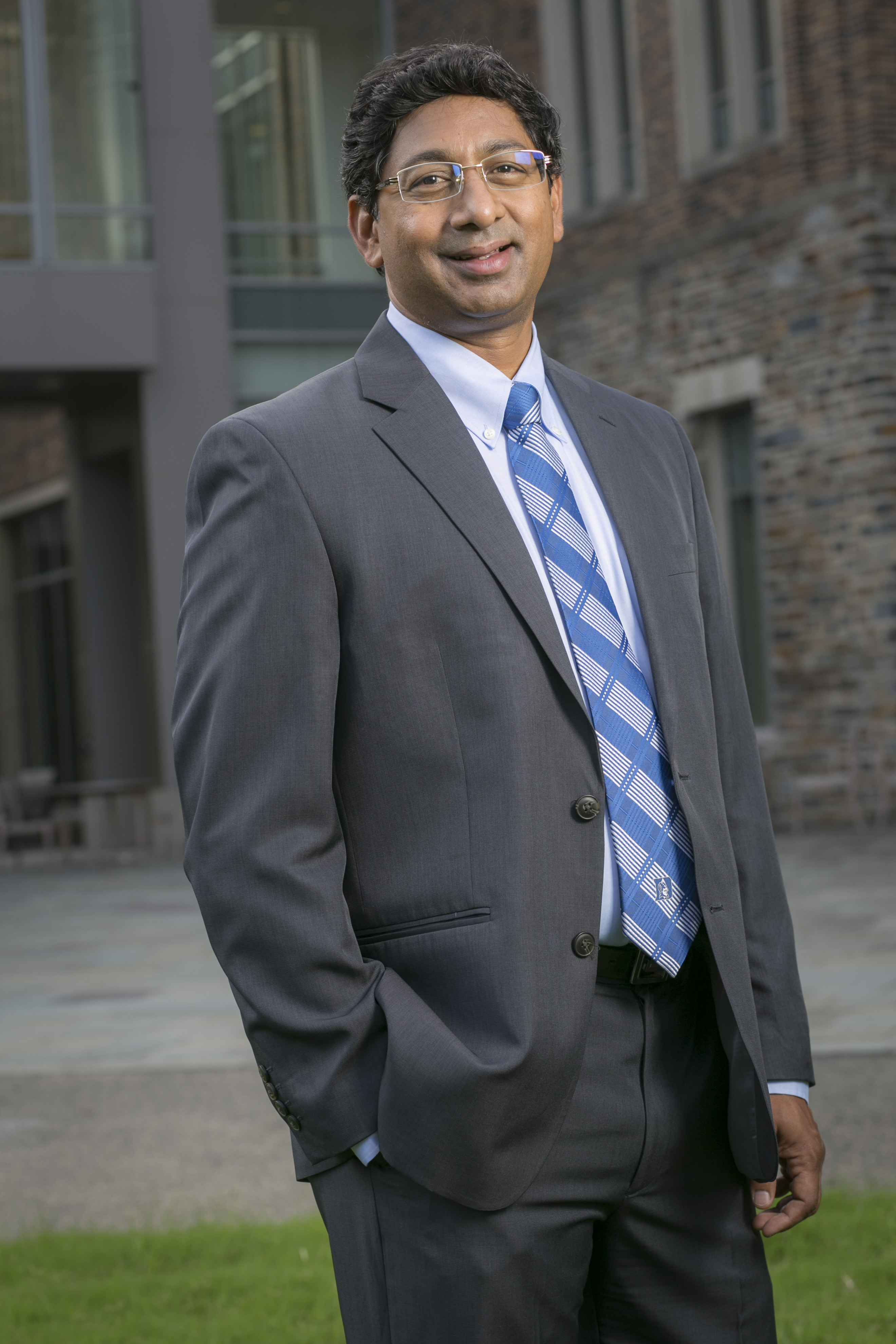
Dean of the Pratt School of Engineering, Ravi Bellamkonda, poses for his portrait inside and outside CIEMAS.

Displaying the survival rates for various brain tumors to the Genomic and Precision Medicine Forum on Thursday, Oct. 26, Duke professor Ravi Bellamkonda noted, “These numbers have not changed in any appreciable way since the 1960s.”

Bellakonda is the dean of the Pratt School of Engineering and a professor of biomedical engineering, but he is first a researcher. His biomedical engineering lab is working toward solutions to this problem of brain tumor treatment.

Unlike many other organs, which can sacrifice some tissue and remain functional, the brain does not perform the same way after removing the tumor. So a tumor without clearly defined boundaries is unsafe to remove without great risk to other parts of the patient’s brain, and in turn the patient’s quality of life.

Bellakonda hypothesized that brain tumors have characteristics that could be manipulated to treat these cancers. One key observation of brain tumors’ behavior is the tendency to form along white matter tracts. Put simply, tumors often spread by taking advantage of the brain’s existing structural pathways.

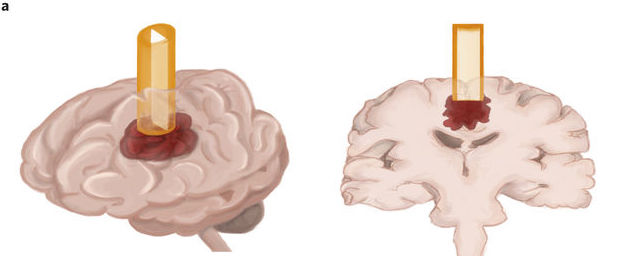
Bellakonda set out to build a device that would provide brain tumors a different path to follow, with the hope of drawing the tumor out of the brain where the cells could be killed.

The results were promising. Tests on rats and dogs with brain tumors showed that the device successfully guided out and killed tumor cells. Closer examination revealed that the cells killed were not cells that had multiplied as the tumor grew into the conduit, but were actually cells from the primary tumor.

The Bellamkonda lab’s device successfully guided and killed brain tumors in rats.

In addition to acting as a treatment device, Bellakonda’s device could be co-opted for other uses. Monitoring the process of deep brain tumors proves a difficult task for neurooncologists, and by bringing cells from deep within the tumor to the surface, this device could make biopsies significantly easier.

Although the device presents promising results, Bellakonda challenged his lab to take what they have learned from the device to develop a less invasive technique.

Another researcher in the Bellakonda lab, Tarun Saxena, engaged in research to utilize the body’s natural protection mechanisms to contain brain tumors. Creating scar tissue around tumors can trick the brain into treating the tumor as a wound, leading to immunological responses that effectively contain and suppress the tumor’s growth.

Visiting researcher Johnathan Lyon proposed utilizing electrical fields to lead a tumor to move away from certain brain regions. Moving tumors away from structures like the pons, which is vital for regulation of vital functions like breathing, could make formerly untreatable tumors resectable. Lyon’s 3D cultures using this technique displayed promising results.

Another Bellakonda lab researcher, Nalini Mehta, has been researching utilizing a surprising mechanism to deliver drugs to treat tumors throughout the brain: salmonella. Salmonella genetically engineered to not invade cells but to easily pass through the extracellular matrix of the brain have proven to be effective at delivering treatment throughout the brain.

While all of these therapies are not quite ready to be used to treat the masses, Bellakonda and his colleagues’ work presents reasonable hope of progress in the way brain tumors are treated.

By Sarah Haurin

The Internet of Things: Useful or Dangerous?

The Internet of Things has tons of possibilities and applications, but some of them could be malicious.

This week, the Duke Digital Initiative (DDI) held an open house in the Technology Engagement Center (TEC) where you could go in and check out the new equipment they’ve installed. They all have one central theme: the Internet of Things (IoT). What is the Internet of Things? It’s pretty simple. The Internet of Things “refers to the interconnectivity of devices on the internet.” In other words, if something can connect to things like wifi, social media, or your phone, it makes it an IoT device!

A classic example of an IoT device I’m sure you’re all familiar with is the Amazon Echo. You could ask it to order you something, look up a word, what the weather is like… you get the idea. Echo and Alexa are just one kind of IoT. We’re also talking lightbulbs, outlets, robots, thermostats…  Eventually your whole house might become an IoT device. The future is here!

Devices such as the Echo Dot, Philips Hue Smart Lightbulb, Samsung Smart Outlet, Meccano Robot, and Swipe-O-Matic are all showcased in the TEC. It’s part of the DDI’s “IoT Initiative” this year to give Duke faculty, staff, and students a better understanding of the power of IoT devices. As one expert on site said, “the devices are everywhere.”

The Co-Lab had actually hacked the Echo Dot and programmed in some of their own commands, so it was responding to questions like “Who is Maria?” and “Where is this place?”

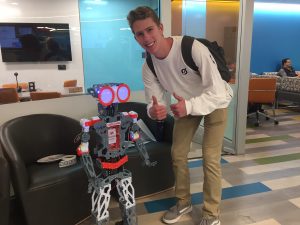
The Meccano Robot (named “Techy”) was fun to mess around with, and a big hit among attendees. He’s more of a consumer-friendly toy, but just by using voice-commands I got him to give me a high-five and even tango.

Me, cheesin’ with Techy

The smart lightbulb was low-key the coolest thing there. By using multiple lights you can customize different “environments” like a TV watching environment or party environment, and the lights will change color/brightness accordingly with just a tap on your phone. The smart outlets were cool, too. They can be controlled remotely from your phone and even have timers set.

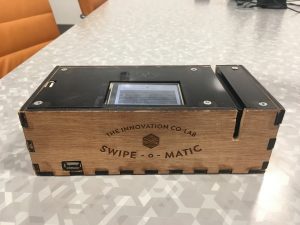
The student-built Swipe-O-Matic added me to the Co-Lab mailing list, just by swiping my Duke card.

One device — the “Swipe-O-Matic”—was actually invented by Duke students, and we used it to add my name to the Co-Lab mailing list just by swiping my Duke Card.

While these devices are all fun and useful, one expert I spoke with noted “there’s lots of consequences to using them—good, and bad.”

As they become more consumer available, if your machine is particularly vulnerable, bad people could hack into parts of your life. Think about a smart door lock. It’s super useful—you can create virtual keys for family members, let someone in remotely, or give your housekeepers access at certain times of the day. However, this could obviously go pretty badly if someone were to hack it and enter your house.

But don’t worry. As technology progresses, IoT devices will eventually be all around us. While security is an issue, these devices have way more good to them than bad. “Snapchat spectacles” are sunglasses that can record video and upload it straight to the Snapchat app. Someone at the TEC had the idea for “smart window blinds” that know when to open and close. Imagine a plant pot that sent you a notification when it needed to be watered. The uses are seemingly endless!

Will SheehanPost by Will Sheehan

Piloting Aviation Mental Healthcare

With more than 100,000 flights taking off per day, the safety of air travel is a far-reaching issue.

Air travel remains one of the safest forms of transportation, but are there things we can do to make it safer?

While air travel is by far the safest method of transportation — you are more likely to die from a car crash or even a shark attack than from an airplane crash — accidents do happen and can result in highly publicized fatalities.

Chris Kenedi is working with the ICAO to improve treatment of mentally ill pilots.

Auckland Hospital internist and psychiatrist Chris Kenedi, MD, MPH, is working with the International Civil Aviation Organization (ICAO) to improve safety of air travel by focusing on an issue that is usually only questioned in instances of tragedy: the mental health of pilots.

While screening procedures do currently exist, they are not enough for the extent of risk factors that are present in the pilot population.
Being a pilot is a high-stress job. It involves long hours, separation from family, and irregular sleep schedules, all of which can contribute to or exacerbate mental conditions.

Many pilots experiencing symptoms are unwilling to ask for help, because admitting mental illness can lead to a pilot’s license being revoked, which would not only affect financial circumstances but also be felt as a loss of identity.

Although data regarding aviation mental health is sparse, what is available suggests  mental health issues are among the greatest contributing factors to suicide and homicide-suicide incidents of plane accidents.

When Kenedi completed a systematic review of all data on the mental health of pilots and the current standard procedures, he found a deeply flawed system. Case studies of crashes caused by suicidal pilots showed that psychiatrists cleared them for flight even after episodes indicating a much deeper psychological imbalance.

One pilot who drove his car into a barrier, attempted to steal the car of a woman trying to help him, and slit his wrists so deeply that he required two years of rehabilitation before regaining all of his mobility, was diagnosed with a general anxiety disorder and cleared to fly without proper treatment.

In order to prevent further grave oversights, Kenedi suggests requiring the psychiatrist who assesses a pilot’s ability to fly to be separate from the treating psychiatrist. This separation prevents the assessing psychiatrist from having his or her judgement confounded by a relationship with the patient and thus becoming an advocate rather than an impartial assessor.

Kenedi said that alcohol and substance abuse treatments for pilots have been effective, however. Rather than relying on random drug and alcohol tests to disqualify impaired pilots, the system provides non-judgmental treatment and an opportunity to return to piloting.

Kenedi recommends a shift to treating mental illness in pilots in a similar way, so that individuals are not afraid to step forward and ask for help. Educating mental healthcare providers is also important, so that pilots are receiving the best care possible.

With proper resources and treatment, pilots with mental health concerns should be able to maintain their identity as pilots while gaining renewed resilience and support through the mental health system. This shift would hopefully help to prevent some of the small amount of air travel accidents that occur because of pilot issues.

By Sarah Haurin


How Climate Change Limits Educational Access

Regions with agricultural economies suffer greatly from climate change.

The effects of climate change can creep into nearly every aspect of life in heavy-hit areas. They may even limit children’s access to education, says Nicholas School of the Environment graduate Heather Randell.

“Investments in education are an important pathway out of poverty, yet lack of access remains a barrier,” Randall said in a presentation to Nicholas School students and faculty.

Randell became interested in the relationship between climate change and education when she visited Ethiopia before pursuing her doctorate. She noticed many school-age kids were working rather than pursuing an education, and began to wonder what factors influence children’s time use.

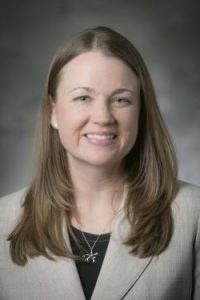
Heather Randell PhD is a sociologist and demographer for the National Socio-Environmental Synthesis Cener (SESYNC).

Although the UN’s Millennium Development Goals and Beyond 2015 aimed to ensure universal primary education for all school-age children, 20 percent of children in Sub-Saharan Africa were still out of school in 2017.

Using data from the Ethiopian Rural Household Survey, Randell found that when children experience milder temperatures and more ample rainfall during their early life, they are more likely to stay in school longer. This trend can be attributed to the close ties between the economy and climate in agricultural areas like those in rural Ethiopia.

Agricultural economies are inherently dependent on temperature and rainfall. Increased temperature and decreased rainfall lower crop yield, which in turn decreases individual families’ incomes.

Children in Ethiopia are less likely to continue their education if they experienced hotter temperatures and less rainfall in their early childhood.

With less disposable income, families are more likely to spend their money on necessities like food rather than on schooling fees. Families are also more likely to pull children out of school so kids can work and contribute to the diminished family income.

After finding these patterns in Ethiopia, Randell expanded her research to include regions in the tropics, including Central America, the Caribbean, South America, East Africa, West Africa and Southeast Asia. Each of these regions has variations in their typical rainfall and temperatures, but all are inherently susceptible to climate change because of their location near the equator.

From her research in Ethiopia, Randell found two mechanisms by which climate change influences educational outcomes.

Comparing standardized census and climate data from these regions, Randell found a similar pattern, with increased temperature and changes in rainfall being associated with decreased educational outcomes.

This study also found that climate change and its negative effects often outweigh typical advantages that improve educational access, such as parents who have had a longer schooling.

Randell concluded her talk by stating that true and lasting change to educational accessibility will only be brought about by policy change. School must be less expensive and more accessible, and more importantly, livelihood diversification must be taught and encouraged. Families must learn how to generate income in ways other than agriculture so that their income and familial decisions are more resilient to climate variability.

By Sarah Haurin

Smoking Weed: the Good, Bad and Ugly

DURHAM, N.C. — Research suggests that the earlier someone is exposed to weed, the worse it is for them.

Very early on in our life, we develop basic motor and sensory functions. In adolescence, our teenage years, we start developing more complex functions — cognitive, social and emotional functions. These developments differ based on one’s experience growing up — their family, their school, their relationships — and are fundamental to our growth as healthy human beings.

This process has shown to be impaired when marijuana is introduced, according to Dr. Diana Dow-Edwards of SUNY Downstate Medical Center.

Sure, a lot of people may think marijuana isn’t so bad…but think again. At an Oct. 11 seminar at Duke’s Center on Addiction & Behavior Change, Dow-Edwards enlightened those who attended with correlations between smoking the reefer and things like IQ, psychosis and memory.

(https://media.makeameme.org/created/Littering-and-SMOKIN.jpg)

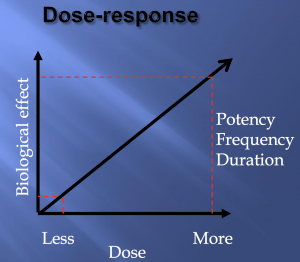
Dow-Edwards is currently a professor of physiology and pharmacology and clearly knows her stuff. She was throwing complicated graphs and large studies at us, all backing up her primary claim: the “dose-response relationship.” Basically the more you smoke (“dose”), the more of a biological effect it will have on you (“response”).

Looking at pot users after adolescence showed that occasionally smoking did not cause a big change in IQ, and frequently smoking affected IQ a little. However, looking at adults who smoked during adolescence correlated to a huge drop of around 7 IQ points for infrequent smokers and 10 points for frequent smokers. Here we see how both age and frequency play a role in weed’s effect on cognition. So if you are going to make the choice to light up, maybe wait until your executive functions mature around 24 years old.

Smoking weed earlier in life also showed a strong correlation with an earlier onset of psychosis, a very serious mental disorder in which you start to lose sense of reality. Definitely not good. I’m not trynna get diagnosed with psychosis any time soon!

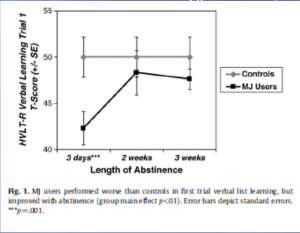
One perhaps encouraging study for you smokers out there was that marijuana really had no effect on long-term memory. Non-smokers were better at verbal learning than heavy smokers…until after a three week abstinence break, where the heavy smokers’ memories recovered to match the control groups’. So while smoking weed when you have a test coming up maybe isn’t the best idea, there’s not necessarily a need to fear in the long run.

(Hanson et al, 2010)

A similar study showed that signs of depression and anxiety also normalized after 28 days of not smoking. Don’t get too hyped though, because even after the abstinence period, there was still “persistent impulsivity and reduced reward responses,” as well as a drop in attention accuracy.

A common belief about weed is that it is not addicting, but it actually is. What happens is that after repetitively smoking, feeling high no longer equates to feeling better than normal, but rather being sober equates to feeling worse than normal. This can lead to irritability, reduced appetite, and sleeplessness. Up to 1/2 of teens who smoke pot daily become dependent, and in broader terms, 9 percent of people who just experiment become dependent.

In summary, “marijuana interferes with normal brain development and maturation.” While it’s not going to kill you, it does effect your cognitive functions. Plus, you are at a higher risk for mental disorders like psychosis and future dependence. So choose wisely, my friends.

By Will Sheehan

Will Sheehan

Engineering Design Pod: The Newest Innovation Center

You guys have to check out the brand new Engineering Design Pod! What used to be the Blue Express Cafe, this giant oval-shaped room with huge glass windows under the LSRC is now a space for creation.

Duke Engineering Design Pod entrance

Duke Engineering’s new Design Pod for students is in the Levine Science Research Center.

There’s essentially all the equipment in there that an engineer could ever want, organized ever so beautifully in labeled drawers and hung on walls: screwdrivers, nails, hammers, saws, pool noodles… plus, there are scientific-looking tables (a.k.a. workbenches), rolly-stools, extension chords that come down from the ceiling, even TVs… this place is frickin’ awesome!

worktables in Duke Engineering Design Pod

Everything in the Design Pod is on wheels for easy reconfiguration

The “Design Pod” was created alongside Duke’s new engineering design course in order to to foster learning through hands-on experience. Students have tested out the 3D printer to create items such as a skull and even chess pieces. There’s a massive laser printer, foam cutter, panel saw, and more to come. At one end of the  room there are lots of cubbies, used for holding backpacks so they don’t get in the way. In the future, team projects will be stored there, too. Several big whiteboards on wheels are scattered around the room, which students take advantage of to outline their work and draw up ideas. Almost everything is on wheels, in fact, because as Dr. Ann Saterbak explained to me, the pod is “designed to be a flexible space.” It really is a special place, carefully geared toward collaboration and innovation. Just being in there made me want to create something!

UNC chess board

Awkward! One student made a UNC-themed chessboard in Duke’s new Design Pod.

Kyra McDonald, a freshman currently taking the engineering design course, says it’s her favorite class. The class is split up into teams and each team picks from a list of projects that they will pursue for the whole semester — examples include things like a flexible lemur feeder and a drone water sampler. What she likes so much about the class is rather than a typical lecture where you listen and take notes the whole time, this design course is all about working in your team and applying what you know to real-world scenarios.

Dr. Saterbak further developed this point. Although this is her first year at Duke, in her experience students not only get a good sense of what engineers actually do, but also leave with a “concrete, practical thing” which they are proud of and can talk about at job interviews. All the cool features that make up the design pod — the tools, the room, the flexibility — are there so Dr. Saterbak’s previous experience can become a reality for Duke students.

Duke Engineering Design Pod

A 3D printed skull in the Design Pod

Because they’re still in the pre-design phase, the freshman in the class haven’t really needed to use the space to its full potential.

But that will come as soon as the physical creation starts happening. Students in the class will have special access to the design pod off-hours, so get ready because the innovation levels are about to be booming!

Story and Photos By Will Sheehan Will Sheehan

Designing Drugs Aimed at a Different Part of Life’s Code

Individual RNA molecules fluoresce inside a breast cancer cell.

Individual RNA molecules fluoresce inside a breast cancer cell. Credit: Sunjong Kwon, Oregon Health & Science University, via Flickr.

Most drugs work by tinkering with the behavior of proteins. Like meddlesome coworkers, these molecules are designed to latch onto their target proteins and keep them from doing what they need to do.

If a protein is responsible for speeding up a reaction, the drug helps slow the reaction down. If a protein serves as a gatekeeper to a cell, regulating what gets in and what stays out, a drug changes how many molecules it lets through.

But proteins aren’t the only doers and shakers in our bodies. Scientists are finding that strings of RNA — known primarily for their role in shuttling genetic information from nucleus-bound DNA to the cell’s protein-manufacturing machinery — can also play a major role in regulating disease.

A portrait of Amanda Hargrove

Amanda Hargrove is an assistant professor of chemistry at Duke University.

“There has been what some people are calling an RNA revolution,” said Amanda Hargrove, assistant professor of chemistry at Duke. “In some diseases, non-coding RNAs, or RNAs that don’t turn into protein, seem to be the best predictors of disease, and even to be driving the disease.”

Hargrove and her team at Duke are working to design new types of drugs that target RNA rather than proteins. RNA-targeted drug molecules have the potential help treat diseases like prostate cancer and HIV, but finding them is no easy task. Most drugs have been designed to interfere with proteins, and just don’t have the same effects on RNA.

Part of the problem is that proteins and RNA have many fundamental differences, Hargrove said. While proteins are made of strings of twenty amino acids that can twist into myriad different shapes, RNA is made of strings of only four bases — adenine, guanine, cytosine and uracil.

“People have been screening drugs for different kinds of RNA for quite a while, and historically have not had a lot of success,” Hargrove said. “This begged the question, since RNA has such chemically different properties than proteins, is there something different about the small molecules that we need in order to target RNA?”

To find out, graduate student Brittany Morgan and research associate Jordan Forte combed the scientific literature to identify 104 small molecules that are known interact with specific types of RNA. They then analyzed 20 different properties of these molecules, and compared their properties to those of collections of drug molecules known to interact with proteins.

The team found significant differences in shape, atomic composition, and charge between the RNA-active molecules and the protein-active molecules. They plan to use the results to compile a collection of molecules, called a library, that are chosen to better “speak the language” of the RNA-active molecules. They hope this collection of molecules will be more likely to interact with RNA in therapeutically beneficial ways.

“We found that there are differences between the RNA-targeted molecules and the protein-targeted drugs, and some of them are pretty striking,” Hargrove said. “What that means is that we could start to enrich our screening libraries with these types of molecules, and make these types of molecules, to have better luck at targeting RNA.”

Discovery of Key Physicochemical, Structural, and Spatial Properties of RNA-Targeted Bioactive Ligands.” Brittany S. Morgan, Jordan E. Forte, Rebecca N. Culver, Yuqi Zhang and Amanda Hargrove. Angewandte Chemie, Sept. 18, 2017. DOI: 10.1002/anie.201707641

Kara J. Manke, PhDPost by Kara Manke

Rare Cancers and Precision Medicine in Southeast Asia

Data collected through genomics research is revolutionizing the way we treat cancer. But a large population of cancer patients are being denied the benefits of this research.

Patrick Tan MD, PhD is a professor of cancer and stem cell biology at Duke-NUS Medical School in Singapore.

In 2016, less than one percent of all the existing genomic data came from the 60% of the world population living outside of the US, Europe, and Japan. Furthermore, 70% of patients who die from cancer this year will come from Asia, Africa and Central and South America.

Patrick Tan, M.D., Ph.D., and the Duke-National University of Singapore (Duke-NUS) Medical School are key players in an effort to rectify this discrepancy, specifically as it exists in Southeast Asia.

In his talk, sponsored by the Duke Center for Applied Genomics and Precision Medicine, Tan focused specifically on his work in northeast Thailand with cholangiocarcinoma (CCA), or bile duct cancer.

Liver fluke

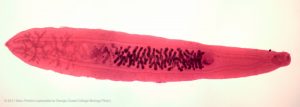
Liver flukes like this are parasites of fish that migrate to human hosts who eat the fish raw, leading to a form of bile duct cancer.

While CCA is rare in most of the world, it appears at 100 times the global rate in the region of Thailand where Tan and his colleagues work. Additionally, CCA in this region is of a separate and distinct nature.

CCA in this region is linked with a parasitic infection of the bile ducts called a liver fluke.  Residents of this area in Thailand have a diet consisting largely of raw fish, which can be infected by the liver fluke and transmitted to the person who eats the fish.

Because of the poverty in this area, encouraging people to avoid eating raw fish has proven ineffective. Furthermore, healthcare is not readily available, so by the time most patients are diagnosed, the disease has progressed into its later and deadly stage.

The life cycle of liver flukes. (Graphic U.S. Centers for Disease Control)

Tan’s genomic research has discovered certain factors at the gene level that make liver-fluke positive CCA different from other CCA. Thus genomic data specific to this population is vital to improve the outcomes of patients with CCA.

Duke-NUS Precision Medicine (PRISM) has partnered up with the National Heart Research Institute Singapore (NHRIS) in SPECTRA, a program designed to create a database of genomic data from the healthy Asian population. SPECTRA is sequencing the genomes of 5,000 healthy Asians in order to create a baseline to which they can compare the genomes of unhealthy individuals.

These and other programs are part of a larger effort to make precision medicine, or healthcare tailored to an individual based on factors like family history and genomic markers, accessible throughout southeast Asia.

By Sarah Haurin


Page 56 of 111

Powered by WordPress & Theme by Anders Norén