Research Blog

Following the people and events that make up the research community at Duke

Students exploring the Innovation Co-Lab

Pot Not So Harmless for Teens

Marijuana is becoming legalized and decriminalized to the point that more than 63 percent of Americans have access to medical and recreational cannabis. But researchers and policy experts still don’t know very much about the long-term health effects.

The 2019 annual symposium by Duke’s Center on Addiction & Behavior Change,  “Altered States of Cannabis Regulation: Informing Policy with Science,” provided some scientific answers. Madeline Meier, assistant professor of Psychology at Arizona State University and a former Duke post-doc, spoke about her longitudinal research projects that offer critical insights about the long-term effects of cannabis use.

Meier investigates the relationship between cannabis use and IQ in a 38-year-long study that has been collecting data on a group of 1,000 people born in New Zealand since birth. Longitudinal studies like this that follow the same group of individuals across their lifespan are vital to understanding the effects of extended cannabis use on the human body, but they are difficult to conduct and keep funded. The 95 percent retention rate of this study is quite impressive and provides much-needed data.

Madeline Meier of Arizona State University

The researchers had tested the babies’ IQ at early childhood, then conducted regular IQ and cannabis use assessments between the ages of 18 and 38. They found that participants who heavily used weed for extended periods of time experienced a significant IQ drop, as well as other impairments in learning and memory skills. Specifically, users who had three or more clinical diagnoses of cannabis dependency, defined as compulsive use despite physical, legal, or social problems caused by the drug, showed an average 6-point IQ drop over the years. Those who only tried the drug a few times showed no decline, and those who never used weed showed a 1-point IQ increase.

Notably, however, the results depended on age of onset and level of use. Meier emphasized that her results do not support the common misconception that any amount of weed use can immediately lead to IQ decline. To the contrary, Meier’s team found that short-term, low-level use did not have any effect on IQ; only heavy users suffered the negative effects. The age of onset of cannabis use was critical, too: Adolescents were more vulnerable to the drug’s harms, with study participants who started using as adolescents showing an 8-point drop in IQ points. Given what we know about adolescents’ affinity for risky behavior, specifically around experimentation with drugs, this finding is particularly worrisome.

In addition to causing cognitive impairment, persistent cannabis use jeopardizes people’s psychosocial functioning as well. The Dunedin longitudinal study has also revealed that people who continued to use weed despite multiple dependency diagnoses experienced downward social mobility, relationship problems, antisocial workplace behavior, financial difficulties, and even higher numbers of traffic convictions. In short, social life is likely to be perilous for heavy weed users.

While some have suggested that the harmful effects of weed might be caused not by the drug itself but by the reduced years of education, low socioeconomic status, mental health problems, or simultaneous use of tobacco, alcohol or other drugs among weed users, Meier and her team found that the impairments persisted even when these factors were accounted for. Cannabis alone was responsible for the effects reflected in Meier’s research. In fact, there is limited evidence for the opposite causational link: weed use may be the cause of mental health problems rather than being caused by them. One study found a weak correlation between years of marijuana use and depression, but Meier was careful to point out that it would take “a lot of cannabis use to lead to clinically diagnosed depression.”

Given this data, Meier called on the policy-makers in the room to focus their efforts on delaying the onset of cannabis use in youth and encouraging cessation (especially among adolescents). In appealing to the researchers, she underlined the need for additional longitudinal studies into the mechanisms and parameters of cannabis use that produce long-term impairments.

As public and political support of marijuana legalization grows, we must be careful not to underestimate the dangers of the drug. Without knowing the full extent of the risks and benefits of weed, policy-makers cannot effectively promote public health, safety, and social equity.

Guest Post by Deniz Ariturk

The Power of Bass Connections Teamwork

Does yoga improve emotional regulation? Why don’t youth vote in elections? Can regular exercise combat anxiety and depression? How do we encourage girls to pursue careers in STEM fields? These are some of the questions explored by Bass Connections teams at Duke this year. After a year of hard work, several teams presented their answers in 5-minute flash talks at the EHDx event on April 9, and their audience was very impressed by their research.

Karina Heaton and Caleb Cooke present on their Bass Connections project, Wired for Learning

Bass Connections is a program at Duke that allows students to engage with real world problems, and apply their classroom knowledge to solve problems in society. Accepted students spend a year or more working with an interdisciplinary team of faculty, undergraduates, and graduate students on a project within the five theme areas of Bass Connections: Brain & Society, Information, Society & Culture, Global Health, Education & Human Development, and Energy & Environment.

The eleven teams that presented at EHDx were part of the Education and Human Development theme, so they spent the year exploring questions related to advancing educational systems, or exploring other areas in support of positive life outcomes for youth. Each team selected representatives to speak for five minutes on the work they have accomplished this year, and the event became a competition when the moderators announced the audience would vote for the best talk at the end.

The winning talk was presented by Bruny Kenou, a Duke undergraduate

The winner of this competition was Bruny Kenou, presenting on behalf of the Virtual Avatar Coaches project. The goal of this team was to create a peer to peer coaching program to support college students struggling with mental health. This project aims to fight stigma with a platform that allows students to send an anonymous text and receive immediate help from a peer. Peer coaches will take a semester-long course to prepare for their role in the program, and the hope is for this to eventually improve the lives of many students suffering from a fear of stigmas and labels.

The talks were followed by a reception and poster session. The team that took the blue ribbon this time was Mindfulness in Human Development. The objective of this team is to improve the lives of middle school students in Durham with a yoga and mindfulness intervention during the school day. The team has found that taking a break for yoga in the middle of the day has had positive effects on empathy, emotional regulation, and body image on the young students. Did someone say namaste?

The winner of the poster contest was the Mindfulness in Human Development Team

Honestly, I didn’t vote — I couldn’t pick a favorite! From designing a new and inclusive curriculum for elementary schools and helping kids learn computer science to investigating educational policy in Brazil and promoting awareness of female philosophers throughout history, each presentation was so impressive. It was easy to see that all of these teams have all been hard at work to affect positive change in society. If they can do this much in under a year, who knows what these talented undergraduates will accomplish in a lifetime!

Post by Anne Littlewood, Trinity ’21

Don’t Drink the Tap

Have you ever questioned the quality of the water you drink every day? Or worried that cooking with tap water might be dangerous? For most of us, the answer to these questions is probably no. However, students from a Bass Connections team at Duke say we may want to think otherwise.

Image result for image of water

From bottle refilling stations to the tap, drinking water is so habitual and commonplace that we often take it for granted. Only in moments of crisis do we start worrying about what’s in the water we drink daily. The reality is that safe drinking water isn’t accessible for a lot of people.

Image result for pink hog farm water
Pig waste discoloring lagoon water

Images like this hog farm motivated the Bass Connections project team DECIPHER to take a closer look at the quality of water in North Carolina. On April 16 they presented their concerning findings from three case studies looking at lead contamination, coal ash impoundments, and aging infrastructure at the Motorco Music Hall.

Motorco in Durham. The talk was inside, though.

Nadratun Chowdhury, a Ph.D. student in Civil and Environmental Engineering, investigated lead contamination in water. Lead is an abundant and corrosion-resistant material, making it appealing for use in things like paint, batteries, faucets and pipes. While we’ve successfully removed lead from paint and gasoline, a lot of old water pipes in use today are still fashioned from lead. That’s not good – lead is very toxic and can leach into the water.

Just how toxic is it? Anything over a blood-lead level concentration of fifty parts per billion – fifty drops of water in a giant Olympic swimming pool – is considered dangerous. According to Duke graduate student Aaron Reuben, this much lead in one’s blood is correlated with downward social mobility, serious health concerns, diminished capacity to regulate thoughts and emotions, and hyperactivity. Lower income and minority areas are more at risk due to the higher likelihood of owning contaminated older homes.

Rupanjali Karthik, a Master of Laws student, conducted research on the intersection of water and aging infrastructure in Orange County. Breaks in water pipes are common and can result in serious consequences, like the loss of 9 million gallons of drinkable water. Sometimes it takes 8 or 9 months just to find the location of a broken pipe. In 2018, the UNC-Chapel Hill water main break caused a huge shortage on campus and at the medical center.

Excess fluoridation is also an issue caused by aging infrastructure. In February 2017, a combination of human and machine error caused an excessive fluoride concentration coming out of an Orange County Water Treatment Plant. People were advised not to use their water even to shower. A UNC basketball game had to move locations, and stores were completely swept of bottled water.

Another issue is that arsenic, a known carcinogen, is often used as the fluoridation agent. We definitely don’t want that in our drinking water. Fluoridation isn’t even that necessary these days when we have toothpaste and mouthwash that supports our dental health.

Tommy Lin, an undergraduate studying Chemistry and Computer Science, topped off the group’s presentation with findings surrounding coal ash in Belmont, NC. Coal ash, the residue after coal is burned in power plants, can pollute rivers and seep into ground water, affecting domestic wells of neighboring communities. This creates a cocktail of highly concentrated heavy metals and carcinogens. Drinking it can cause damage to your nervous system, cancer, and birth defects, among other things. Not so great.

The group’s presentation.

Forty-five plastic water bottles. That’s how much water it takes Laura, a Belmont resident, to cook her middle-sized family Thanksgiving. She knows that number because it’s been her family’s tradition the past three years. The Allen Plant Steam Station is a big culprit of polluting water with coal ash. Tons of homes nearby the station, like Laura’s, are told not to use the tap water. You can find these homes excessively stockpiled with cases on cases of plastic water bottles.

These issues aren’t that apparent to people unless they have been directly impacted. Lead, aging infrastructure, and coal ash all pose real threats but are also very invisible problems. Kathleen Burns, a Ph.D. student in English, notes that only in moments of crisis will people start to care, but by then it may be too late.

So, what can people do? Not much, according to the Bass Connections team. They noted that providing clean water is very much a structural issue which will require some complex steps to be solved. So, for now, you may want to go buy a Brita.

Will Sheehan
Post by Will Sheehan

How the Flu Vaccine Fails

Influenza is ubiquitous. Every fall, we line up to get our flu shots with the hope that we will be protected from the virus that infects 10 to 20 percent of people worldwide each year. But some years, the vaccine is less effective than others.

Every year, CDC scientists engineer a new flu virus. By examining phylogenetic relationships, which are based on shared common ancestry and relatedness, researchers identify virus strains to target with a vaccine for the following flu season.

Sometimes, they do a good job predicting which strains will flourish in the upcoming flu season; other times, they pick wrong.

Pekosz’s work has identified why certain flu seasons saw less effective vaccines.

Andrew Pekosz, PhD, is a researcher at Johns Hopkins who examines why we fail to predict strains to target with vaccines. In particular, he examines years when the vaccine was ineffective and the viruses that were most prevalent to identify properties of these strains.

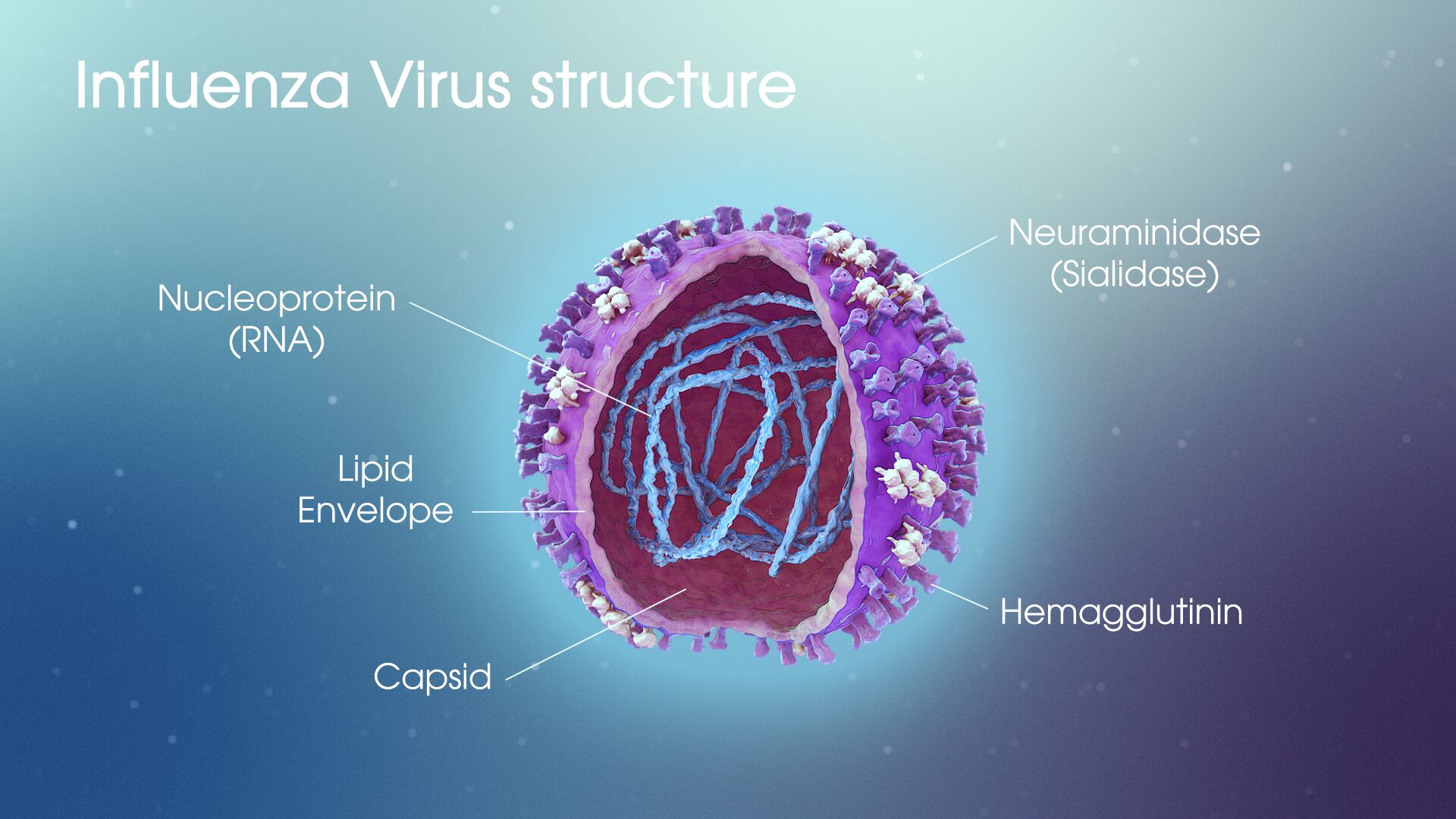
A virus consists of RNA enclosed in a membrane. Vaccines function by targeting membrane proteins that facilitate movement of the viral genome into host cells that it is infecting. For the flu virus, this protein is hemagglutinin (HA). An additional membrane protein called neuraminidase (NA) allows the virus to release itself from a cell it has infected and prevents it from returning to infected cells.  

The flu vaccine targets proteins on the membrane of the RNA virus. Image courtesy of scienceanimations.com.

Studying the viruses that flourished in the 2014-2015 and 2016-2017 flu seasons, Pekosz and his team have identified mutations to these surface proteins that allowed certain strains to evade the vaccine.

In the 2014-2015 season, a mutation in the HA receptor conferred an advantage to the virus, but only in the presence of the antibodies present in the vaccine. In the absence of these antibodies, this mutation was actually detrimental to the virus’s fitness. The strain was present in low numbers in the beginning of the flu season, but the selective pressure of the vaccine pushed it to become the dominant strain by the end.

The 2016-2017 flu season saw a similar pattern of mutation, but in the NA protein. The part of the virus membrane where the antibody binds, or the epitope, was covered in the mutated viral strain. Since the antibodies produced in response to the vaccine could not effectively identify the virus, the vaccine was ineffective for these mutated strains.

With the speed at which the flu virus evolves, and the fact that numerous strains can be active in any given flu season, engineering an effective vaccine is daunting. Pekosz’s findings on how these vaccines have previously failed will likely prove invaluable at combating such a persistent and common public health concern.

Post by undergraduate blogger Sarah Haurin


Chronicling Migrant Deaths Along the US-Mexico Border

Science, especially social science, is rarely apolitical. Nonetheless, researchers are often hesitant to engage with the political implications of their work. Striving to protect their objective, scientific stance, they leave the discussing and at times the fighting to the politicians and legislators.

University of Michigan anthropologist Jason de León is not one of those researchers. Politics is not merely implicated in his work, but rather drives it. De León studies undocumented migration between Mexico and the United States.

University of Michigan anthropologist Jason De León directs the Undocumented Migration Project.

University of Michigan anthropologist Jason De León directs the Undocumented Migration Project.

As director of the Undocumented Migration Project, De León studies what happens to the bodies of migrants crossing the desert to reach the U.S. using “any genre I can steal from,” he told an audience at Duke University on April 5. Using tools from archeology, forensics, photography, and ethnography, de León and his team have been providing novel insights into one of the most urgent political challenges currently facing the nation.

De León acknowledged the political reality of his work immediately by opening his talk with a quote from President Trump about building a “great wall.” However, he was quick to clarify that the problem of missing migrants is not partisan. Rather, it has a long history that he argues started with the 1993 immigration enforcement policy, “Prevention through Deterrence.” This policy’s aim was to redirect illegal immigration to the desert rather than to stop it. Politicians hoped that in the desert, where security is weak and the terrain treacherous, the natural terrain would serve as a border wall. Inherent in this policy is the assumption that migrant life is expandable.

In the wake of this policy, the human smuggling industry in northern Mexico experienced a swift influx and the number of known migrant deaths began to rise. Since the 1990s, over 600 migrant bodies have been recovered from the Sonoran Desert of Arizona where de León conducts his research. Until his team conducted the first forensic experiments on the site, people could only speculate as to what was happening to the bodies of missing loved ones hoping to make it across the border. Now, de León can offer some helpful if heartbreaking data.


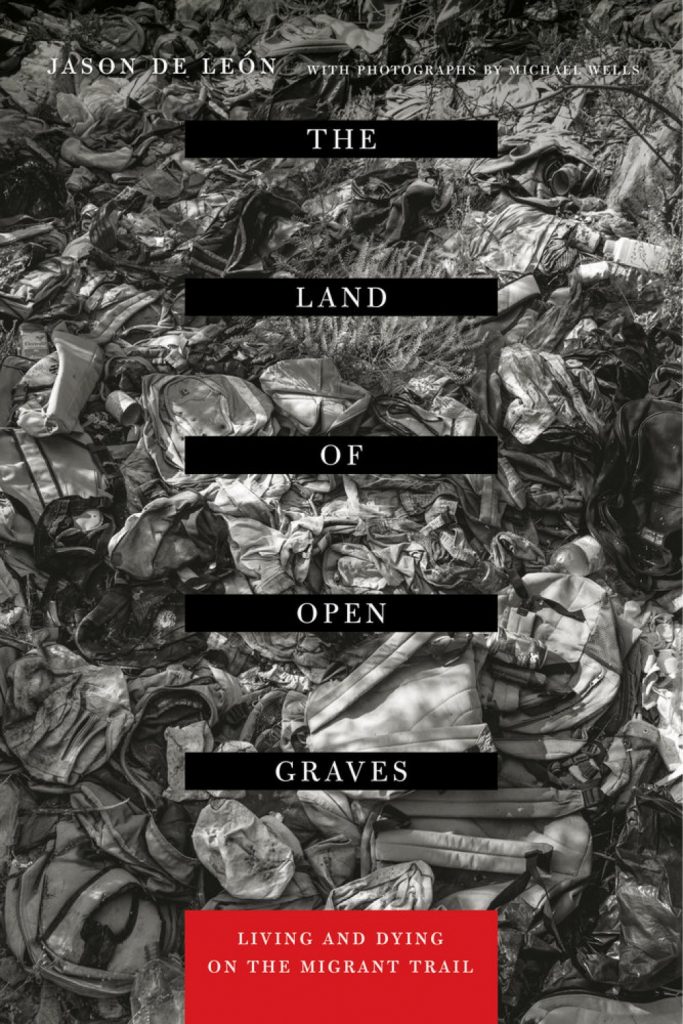
De León examines the human consequences of U.S. immigration policy in his book, “The Land of Open Graves”

De León’s archeological method, “desert taphonomy,” examines both the natural and cultural processes that determine what happens to a dead body. Anthropologists studying the body’s decomposition were initially interested only in natural factors like the climate and scavenging animals. Recently, they have realized that the decomposition process is as social as it is natural, and that the beliefs and attitudes of the agents involved affect what happens to human remains. According to this definition, a federal policy that leaves dead bodies to decompose in the Arizona desert is taphonomy, and so is the constellation of social, economic, and political factors that drive people to risk their lives crossing a treacherous, scorching desert on foot.

Guided by this new approach, de León studies social indicators to trace the roots of missing bodies, such as “migrant stations” made up of personal belongings left behind by migrant groups, which he says can at times be too big to analyze. De León and his team document these remnants with the same respect they pay to any traditional archeological trail. Items that many would dismiss as trash, such as gendered items including clothes and hygiene products, can reveal much needed information about the makeup of the migrant groups crossing the desert.

De León argues that human decomposition is a form of political violence, caused by federal policies like Prevention through Deterrence. His passion for his research is clearly not driven by mere intellectual curiosity; he is driven by the immense human tragedy of migrant deaths. He regularly conducts searches for missing migrants that families reach out to him about as a desperate last measure. Even though the missing individuals are often unlikely to be found alive, de León hopes to assuage the trauma of “ambiguous loss,” wherein the lack of verification of death freezes the grief process and makes closure impossible for loved ones.

The multifaceted nature of de León’s work has allowed him to inspire change across diverse realms. He has been impactful not only in academia but also in the policy and public worlds. His book, “The Land of Open Graves,” is accessible and poetic. He has organized multiple art exhibitions that translate his research to educate and empower the public. Through the success of these installations, he has come to realize that exhibition work is “just as valuable as a journal article.”

Backpacks left behind by undocumented immigrants in the exhibition,
“State of Exception.”

Hearing about the lives that de León has touched suggests that perhaps, all researchers should be unafraid to step outside of their labs to not only acknowledge but embrace the complex and critical political implications of their work.

Guest Post by Deniz Ariturk

The Adolescent Brain Isn’t so Bad, Really

Adriana Galván, PHD (Photo from the Duke Center for Cognitive Neuroscience Colloquium Series, DIBS)

More often than not, teenagers are portrayed in the media as troublesome, emotionally reactive, and difficult to deal with. They are widely considered to be risk-takers, and prone to making poor choices.

But is taking risks necessarily a bad thing? Should adolescents be seen as bad people? Adriana Galván, PHD, doesn’t think so.

Galván is a neuroscientist and professor at UCLA, where she studies sleep, emotion, learning, stress, and decision-making in the adolescent brain. She came to Duke on Friday, April 5 as part of the DIBS Center for Cognitive Neuroscience’s Colloquium Series.

Humans have an extended period of adolescence, because our brains take a very long time to complete development, Galván said. Adolescence is currently defined as the period between the onset of puberty and the end of developmental plasticity. During this time, teen brains are constantly changing, and these physical changes are linked to socioemotional changes in behavior.

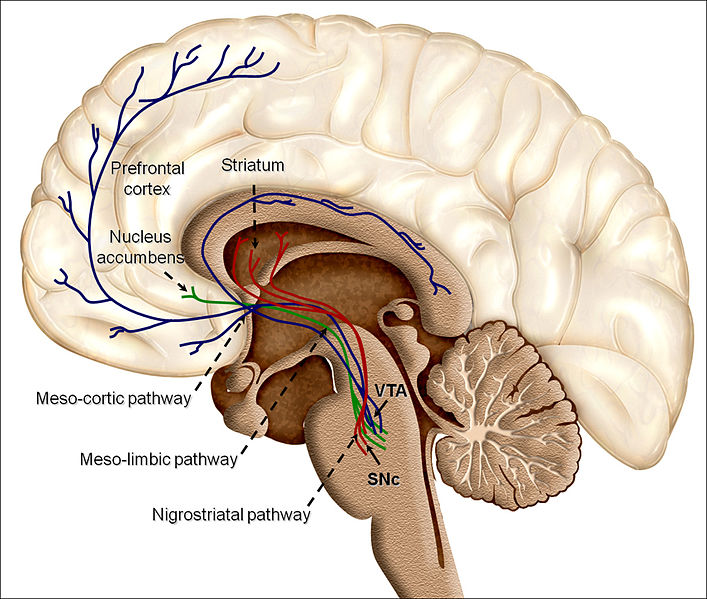
The Brain’s Reward System: meso-limbic pathway shown in green (Photo from WikiCommons: Oscar Arias-Carrión1, Maria Stamelou, Eric Murillo-Rodríguez, Manuel Menéndez-González and Ernst Pöppel)

One of the most prominent differences between adolescent and adult brains can be found in the brain’s reward system. Research has shown that adolescents have higher levels of activation in the mesolimbic system and ventral striatum regions of the brain, areas that are very important in reward processing.

Galván believes that this greater reward system excitability in teenagers may explain why they engage in more risky behavior than adults.

A study done by Galván and her former student, Emily Barkley-Levenson, investigated the stereotype of risk-taking in adolescents. Sure enough, when tested against adults in a gambling game, adolescents were more likely to take risks. However, a closer look at the data suggests that this might not be such a bad thing.

For disadvantageous and neutral gambles, adolescents didn’t differ from adults at all. But when it came to advantageous gambles, adolescents were far more likely than adults to accept the risk. This suggests that risk-taking behavior in teens might actually be adaptive, and put young people at an advantage when it comes to making the choices that lead to innovation and discovery.

Adolescents were also shown to exhibit better learning from outcomes than adults. Adolescence is a period of time where young people are constantly receiving feedback from their environment, and learning about the world around them from social interactions and relationships.

Another of Galván’s students, Kaitlyn Breiner, found that adolescents experienced high levels of emotional distress when their expectations of social feedback were violated. This was true regardless of whether the participants were receiving positive or negative unexpected feedback; they were just as distressed by an unexpected compliment as they were by an unexpected insult. Galván hypothesizes this is because relief is a very powerful emotion, and adolescent participants were looking to find comfort in a validation of their beliefs about their social relationships. It’s comforting to feel like your interpretation of the social world is correct, especially during the shifting world of adolescence.

Adolescents learn about their world through social interactions with friends (Photo from Wikimedia Commons: Glenn Waters)

Galván and her team have also investigated the role of mesolimbic activation in mediating distress.

Following the 2016 US Presidential election, participants in Los Angeles were asked if they felt personally affected by the election. The research team then measured the activation in their nucleus accumbens (a region of the mesolimbic system that plays a role in reward) and looked for symptoms of depression. Of those who reported feeling affected by the outcome of the election, Galván found that people with high activation in their nucleus accumbens had less depressive symptoms than those with low activation in this area. This suggests that high activation of the reward system plays a role in mediating depression. If adolescent brains experience these higher levels of reward system activation, might this protect them from depression?

The bottom line is, adolescents are not bad people, and they aren’t stupid either. In some ways, they may even be smarter than adults. Teens are better at learning from outcomes, more likely to take advantageous risks, and they experience higher levels of activation in their reward system, which could have important implications for resilience. The research shows that teenagers are far more capable – and smarter – than the world believes. Let’s give them a little more credit.

Post by Anne Littlewood, Trinity ’21

Building a Mangrove Map

“Gap maps” are the latest technology when it comes to organizing data. Although they aren’t like traditional maps, they can help people navigate through dense resources of information and show scientists the unexplored areas of research.

A ‘gap map’ comparing conservation interventions and outcomes in tropical mangrove habitats around the world turns out to be a beautiful thing.

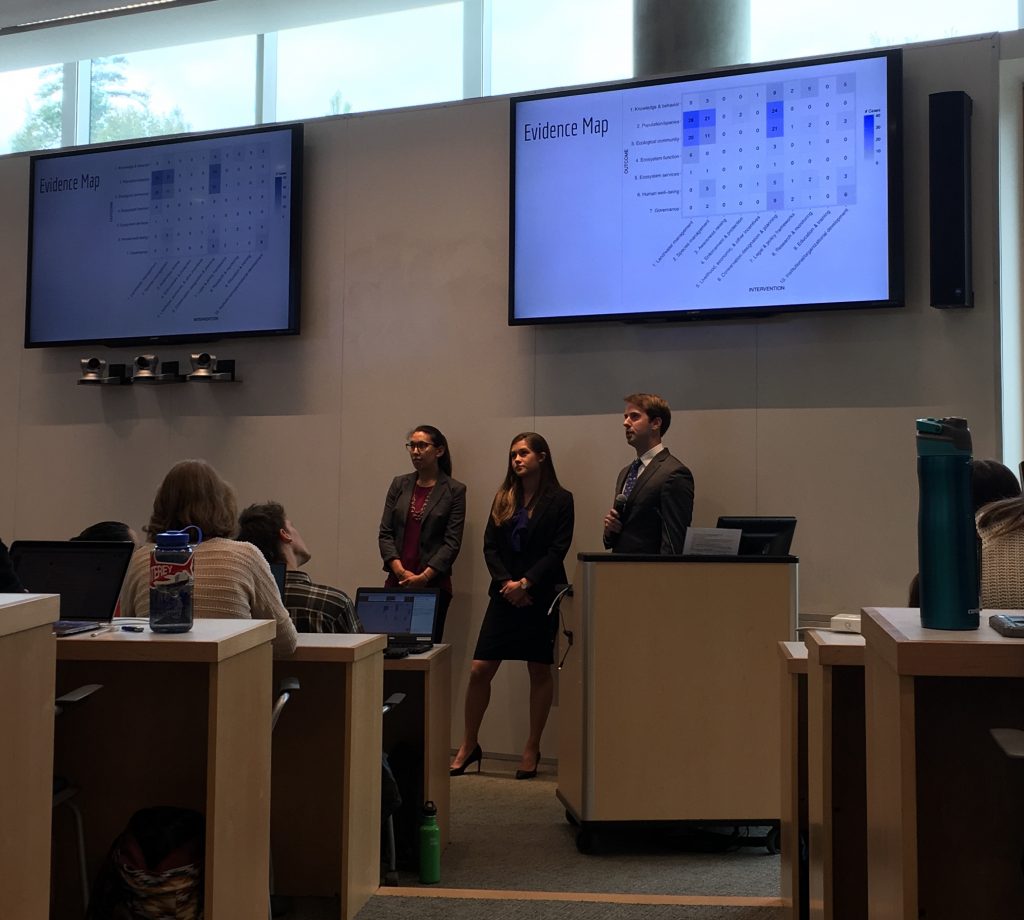
At Duke’s 2019 Master’s Projects Spring Symposium, Willa Brooks, Amy Manz, and Colyer Woolston presented the results of their year-long Masters Project to create this map.

You’d never know by looking at the simple, polished grid of information that it took 29 Ph.D. students, master’s students and undergraduates nearly a full year to create it. As a member of the Bass Connections team that has been helping to support this research, I can testify that gap maps take a lot of time and effort — but they’re worth it.

Amy Manz, Willa Brooks, and Colyer Woolston present their evidence map (or gap map) at the 2019 Master’s Projects Spring Symposium

When designing a research question, it’s important to recognize what is already known, so that you can clearly visualize and target the gaps in the knowledge.

But sifting through thousands of papers on tropical mangroves to find the one study you are looking for can be incredible overwhelming and time-intensive. This is purpose of a gap map: to neatly organize existing research into a comprehensive grid, effectively shining a light on the areas where research is lacking, and highlighting patterns in areas where the research exists.

In partnership with World Wildlife Fund, Willa, Amy, and Colyer’s team has been working under the direction of Nicholas School of the Environment professors Lisa Campbell and Brian Silliman to screen the abstracts of over 10,000 articles, 779 of which ended up being singled out for a second round of full-text screening. In the first round, we were looking for very specific inclusion criteria, and in the second, we were extracting data from each study to identify the outcomes of conservation interventions in tropical mangrove, seagrass, and coral reef habitats around the world.

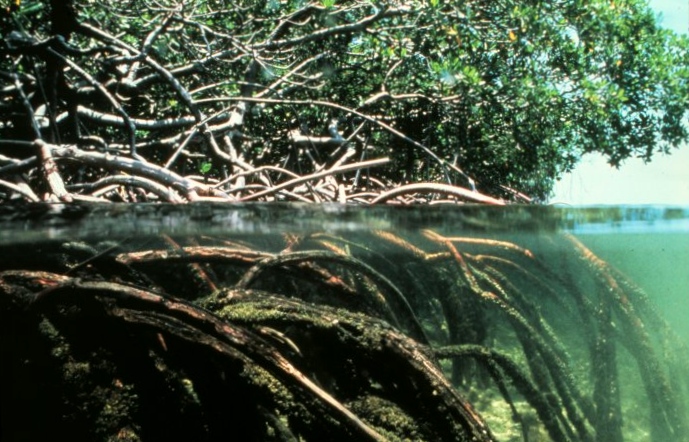
Coastal Mangroves (Photo from WikiCommons: US National Oceanic and Atmospheric Administration)

While the overall project looked at all three habitats, Willa, Amy, and Colyer’s Master’s Project focused specifically on mangroves, which are salt-tolerant shrubs that grow along the coast in tropical and subtropical regions. These shrubs provide a rich nursery habitat to a diverse group of birds and aquatic species, and promote the stability of coastlines by trapping sediment runoff in their roots. However, mangrove forests are in dramatic decline.

According to World Wildlife Fund, 35 percent of mangrove ecosystems in the world are already gone. Those that remain are facing intense pressure from threats like forest clearing, overharvesting, overfishing, pollution, climate change, and human destruction of coral reefs. Now more than ever, it is so important to study the conservation of these habitats, and implement solutions that will save these coastal forests and all the life they support. The hope is that our gap map will help point future researchers towards these solutions, and aid in the fight to save the mangroves.

This year’s team built a gap map that successfully mapped linkages between interventions and outcomes, indicating which areas are lacking in research. However, the gap map is limited because it does not show the strength or nature of these relationships. Next year, another Bass Connections team will tackle this challenge of analyzing the results, and further explore the realm of tropical conservation research.

Post by Anne Littlewood, Trinity ’21

A How-To Guide for Climate-Proof Cities

Roughly 400 miles separate Memphis and New Orleans. Interstate 55 connects the two cities, snaking south parallel to the Mississippi River. The drive is dull. There are few cars. The trees are endless.

South of the Louisiana border, the land turns flat, low, and wet. The air grows warmer, and heavy with moisture. I-55 cuts through the center of Maurepas Swamp, a 100,000-plus acre tract of protected wetlands. Groves of gumball and oak are rare here—instead, thin swamps of bald cypress and tupelo trees surround the highway on either side. At night, only their skeletal silhouettes are visible. They rise from the low water, briefly illuminated by passing headlights. Even in the dark, the trees are unmistakably dead.

*  *  *

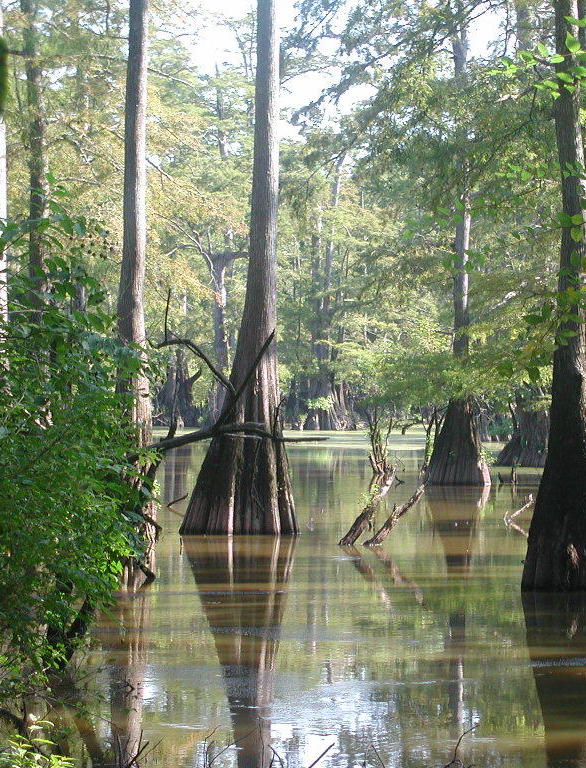
A healthy cypress swamp in Lake Martin, Louisiana (Source: U.S. Geological Survey)

Traditionally, Maurepas Swamp serves as a natural barrier against flooding that threatens New Orleans each year. Native flora soaks up the rainfall, spreading it across a network of cypress roots and cattail. But centuries of logging and canal construction have drastically altered the swamp’s ecological composition. The Mississippi levee system compounded the issue, isolating the swamp from vital sources of fresh water and nutrients. Flooded with saltwater, much of the existing cypress withered and died. Young trees, now, are few and scattered. 

Maurepas Swamp highlights the danger of even the most well-intentioned changes to the  environment. This problem is hardly unique to the wetlands. “Many of the issues that we are experiencing today were seen as solutions in the past,” says Nancy Grimm, a professor of ecology at Arizona State University. “What we want to do now is to think about the future, so that the solutions of today don’t become the problems of tomorrow.”

Nancy Grimm addresses urban sustainability at the 2019 Henry J. Oosting Memorial Lecture in Ecology. (Source: Nicholas School of the Environment)

Grimm is the co-director of the UREx Sustainability Research Network. UREx aims to climate-proof urban municipalities without sacrificing environmental stability. To do so, UREx has partnered with several cities across the United States and Latin America. Each city hosts a workshop geared towards municipal decision makers, such as government officials,  environmental NGOS, and more. Together, these participants design different “futures” addressing their cities’ most pressing concerns. 

Phoenix, Arizona is one of the nine initial cities partnering with UREx. One of the hottest cities in the United States, Phoenix is already plagued with extreme heat and drought. By 2060, Phoenix is projected to have 132 days above 100°F—a 44 percent increase from data collected in 2010.  

UREx doesn’t dwell too much on these statistics.  “We’re bombarded constantly by dystopian narratives of tomorrow,” says Grimm, with a slight smile. “Instead, what we want to think about are ways we can envision a more positive future.”

The Phoenix workshop produced five distinct visions of what the city could look like in sixty years. Some scenarios are more ambitious than others—“The Right Kind of Green,” for example, imagines a vastly transformed city defined by urban gardens and lush vegetation. But each vision of Phoenix contains a common goal: a greener, cooler city that retains its soul. 

A visualization accompanies each scenario. In one, a family walks about a small orchard. The sky is blue, and the sun is out. But no one seems bothered by the heat. The oranges are vibrant; the trees thick, and full. It’s an idyllic future. But it’s one within grasp.  

Post by Jeremy Jacobs

Starting Over in New Neighborhoods Helps Ex-Offenders Stay Out of Jail

Are prisoners who go back to their old neighborhoods upon release more or less likely to get arrested again than those who move? That’s the question
University of Oxford sociology professor David Kirk posed in a seminar he gave at Duke March 28. Recidivism is the tendency of a convicted criminal to re-offend, and Kirk wondered if the risk of recidivism might be lower when former prisoners reside in a geographic area different from where they lived prior to incarceration.

           To test his hypothesis, Kirk first designed a study in New Orleans following Hurricane Katrina. A full 72 percent of dwellings in New Orleans were damaged in some manner following the hurricane, but the neighborhoods that were hit the hardest tended to be areas that were socioeconomically disadvantaged and home to ethnic minorities. These also tended to be areas to which released prisoners would have returned. Realizing they would not be able to return because of the damage, Kirk designed a study to compare the likelihood of recidivism in people who moved to a different parish pre vs. post-Katrina. The results of the study showed that 50 percent of people were induced to move post-Katrina, compared to 25 percent before Katrina. Parolees who moved to a new neighborhood were less likely to be rearrested.

            Based on the Moving to Opportunity (MTO) project, a government-funded housing mobility program in the 1990’s for poor families in five cities, Kirk decided to build on his Katrina results to launch a pilot program in Maryland called MOVE, or Maryland Opportunity through Vouchers Experiment. In the first design, the treatment group received a six-month housing subsidy upon release, but it had to be used in a new jurisdiction. The control group received a six-month subsidy in their home jurisdiction. In the results for this experiment, no one in either group that received free housing was rearrested. However, in the control group where released prisoners received no free housing and returned to their old neighborhoods, 22 percent were rearrested.

           The second design gave no subsidy for staying in the home jurisdiction, but incentivized moving to a new city with free housing. In the Maryland experiment, the ‘home’ jurisdiction was Baltimore, and the treatment group housing subsidy was in Prince George’s County, about forty-five minutes away in neighboring Washington, D.C. The pilot implemented four prisons in the state of Maryland and male prisoners hailing from Baltimore were eligible, with the exception of sex offenders.

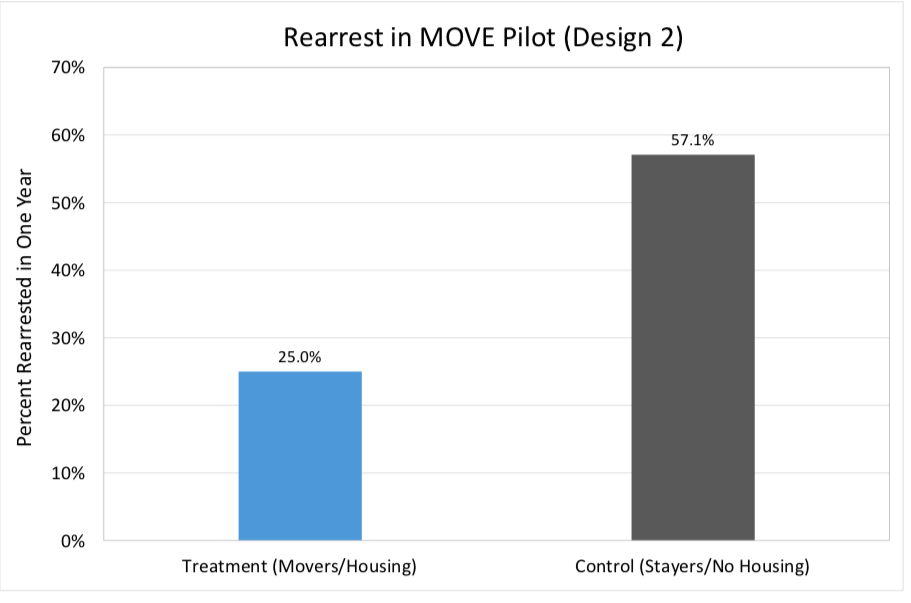
Graph courtesy of David Kirk, University of Oxford

In the second design where the treatment group got free housing in a new environment and the control group moved to their old communities with no free housing, 22 percent of the treatment group was rearrested compared to 57 percent of the control group. Kirk explained that this second design is more practical than the first because only one group has to receive subsidized housing, thus it is half the cost of the first design. However, since the treatment group gets free housing and moves in the second design, it is harder to tease out the exact reason for lower rearrest rates. Other general trends Kirk has found through his research are that younger individuals who have been imprisoned tend to benefit more from district changes than older individuals. There is also a much larger gap between ‘movers’ and ‘stayers’ in rearrest rates for women, so Kirk hopes to conduct future studies involving female released prisoners.

Post by Victoria Priester

Victoria Priester

‘Death is a Social Construct’

Of the few universal human experiences, death remains the least understood. Whether we avoid its mention or can’t stop thinking about it, whether we are terrified or mystified by it, none of us know what death is really like. Turns out, neither do the experts who spend every day around it.

Nobody who sees this guy reports back, so we can only guess.

This was the overarching lesson of Dr. Robert Truog’s McGovern Lecture at Trent Semans Center for Health Education, titled “Defining Death: Persistent Problems and Possible Solutions.”

Dr. Truog is this year’s recipient of the McGovern Prize, an award honoring individuals who have made outstanding contributions to the art and  science of medicine. Truog is a professor of medical ethics, anesthesiology and pediatrics and director of the center for bioethics at Harvard Medical School. He is intimately familiar with death, not only through his research and writings, but through his work as a pediatric intensive care doctor at Boston Children’s Hospital. Truog is also the author of the current national guidelines for end-of-life care in the intensive care unit.

In short, Truog knows a lot about death. Yet certain questions about the end of life remain elusive even to him. In his talk, he spoke about the biological, sociological, and ethical challenges involved in drawing the boundary between life and death. While some of these challenges have been around for as long as humans have, certain ones are novel, brought on by technological advancements in medicine that allow us to prolong the functioning of vital organs, mainly the brain and the heart.

The “irreversible cessation of function” of these organs results in brain and cardiac death, respectively. When both occur together, the patient is declared biologically dead. When they don’t, such as when all brain function except for those that support the patient’s digestive system is lost, for instance, the patient can be legally alive without any hope of recovery of consciousness.

Robert Truog teaching (Harvard photo)

According to Truog, it is in these moments of life after the loss of almost every brain function that we realize “death is a social construct.” This claim likely sounds counterintuitive, if not entirely nonsensical, as dying is the moment we have the least control over our biology. What Dr. Truog means, however, is that as technology continues to mend failures of biology that would have once been fatal, our social and philosophical understanding of dying, what he calls “person death” will increasingly separate from the end of the body’s biological function.  

Biologically, death is the moment when homeostasis, the body’s internal state of equilibrium including body temperature, pH levels and fluid balance, fails and entropy prevails.

Personhood, however, is not mere homeostasis. Dr. Truog cited Robert Veatch, ethicist at Georgetown University, in defining person death as the “irreversible loss of that which is essentially significant to the nature of man.” For those patients who are kept alive by ventilators and who have no hope of regaining consciousness, that essentially significant nature appears to have been lost.

Nonetheless, for loved ones, signs like spontaneous breathing, which can occur in patients in persistent vegetative state, intuitively feel like signs of life. This intuitive sign of life is what made Jahi McMath’s parents refuse an Oakland California hospital’s declaration that their daughter was dead. A ventilator kept the 13-year-old breathing, even though she had been declared brain-dead. After much conflict, McMath’s parents moved her to a hospital in New Jersey, one of just two states where families can reject brain death if it does not align with their religious beliefs. In the end, McMath had two death certificates that were five years apart.


Muslim cemetery at sunset in Marrakech Morocco.
(Mohamed Boualam via Wikimedia commons)

The emotional toll of such an ordeal is immense, as the media outcry around McMath made more than clear. There are more concrete, quantifiable costs to extending biological function beyond the end of personhood: the U.S. is facing an organ shortage. As people are kept on life support for longer periods, it is going to become increasingly difficult for patients who desperately need organs to find donors.

In closing, Dr. Truog reminded us that “in the spectrum between alive and dead, we set the threshold… Death is not a binary state, but a complex social choice.” People will likely continue to disagree about where we should set the threshold, especially as technology develops.

However, if we want to have a thoughtful discussion that respects the rights, wishes, and values of patients, loved ones, and everybody else who will one day face death, we need to first agree that there is a choice to be made.

Guest Post by Deniz Ariturk, Science & Society graduate student

Page 44 of 111

Powered by WordPress & Theme by Anders Norén