Research Blog

Following the people and events that make up the research community at Duke

Students exploring the Innovation Co-Lab

The Fashion Trend Sweeping East Campus

During the months of January and February, there was one essential accessory seen on many first-year Duke students’ wrists: the Jawbone. The students were participating in a study listed on DukeList by Ms. Madeleine George solely for first-year students regarding their lives at Duke. The procedures for the study were simple:

  1. Do a preliminary test involving a game of cyberball, a game psychologists have adapted for data collection.
  2. Wear the Jawbone for the duration of the study (10 days)
  3. Answer the questions sent to your phone every four hours. You will need to answer five a day. The questions are brief.
  4. Answer all the questions every day (you can miss one of the question times) and get $32.

About a hundred first-year Duke students participated.

Some of the questions on the surveys asked how long you slept, how stressed you felt, what time did you woke up, did you talk to your parents today, how many texts did you send, and so on. It truly did feel as though it were a study on the daily life of Duke students. However, there was a narrower focus on this study.
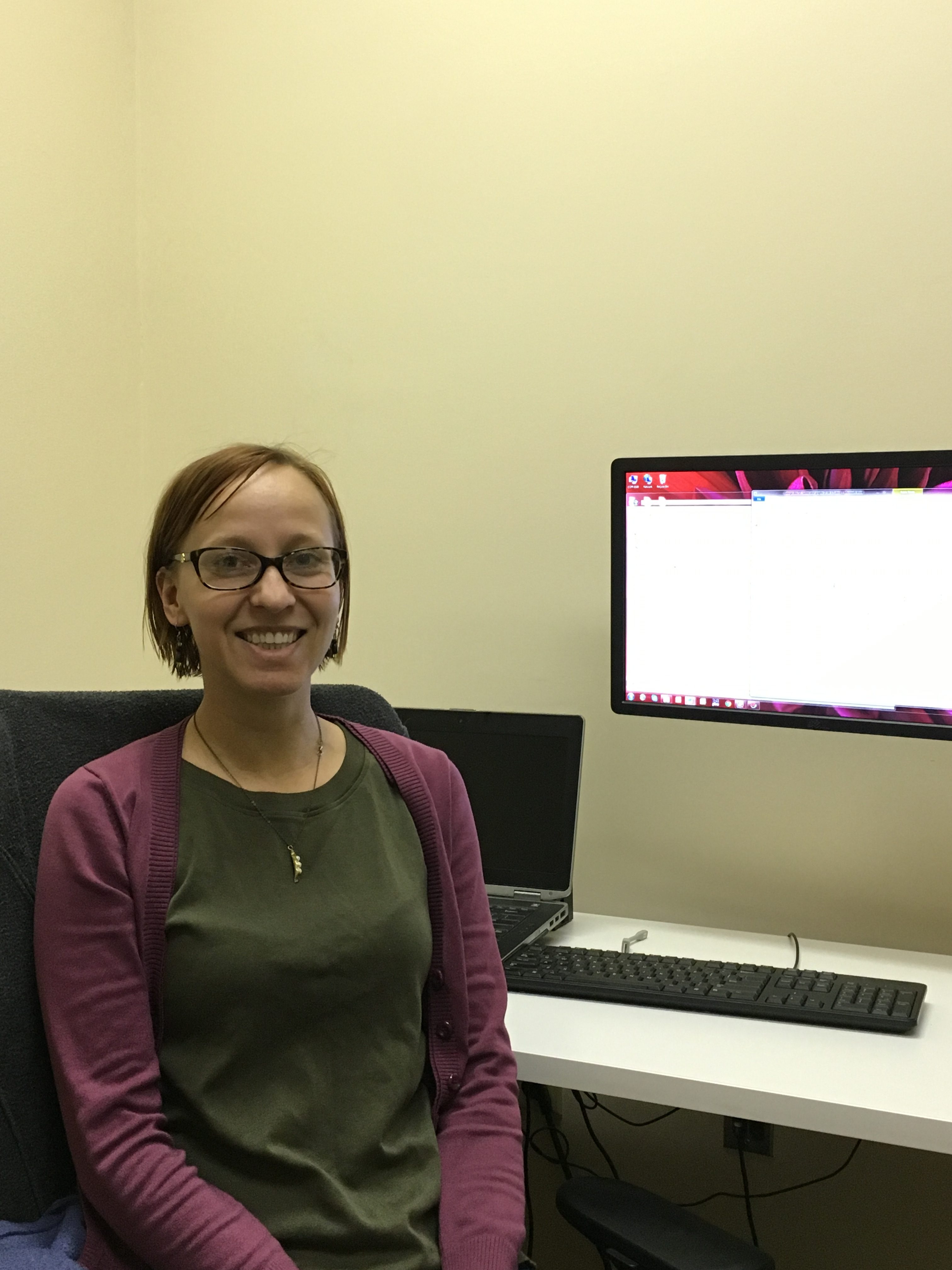
Ms. Madeleine George

Ms. George is a Ph.D. candidate in developmental psychology in her 5th year at Duke. She is interested in relationships and how daily technology usage and social support such as virtual communication can influence adolescent and young adult well-being.

Her dissertation is about how parents may be able to provide daily support to their children in their first year of college as face to face interactions are replaced by virtual communication through technology in modern society. This was done in three pieces.

The jawbone study is the third part. George is exploring why these effects occur, if they are uniquely a response to parents, or if people can simply feel better from other personal interactions. Taking the data from the surveys, George has been using models that allow for comparison between each person to themselves and basic ANOVA tests that allow her to examine the differences between groups. She’s still working on that analysis.

For her first test, she found that students who talked to their parents were feeling worse. But, on days students had a stressor, they were in a better mood after talking to their parents. In addition, based on the cyberball experiment where students texted a parent, stranger, or no one, George infers that texting anyone is better than no one because it can make people feel supported.

So far, George seems to have found that technology doesn’t necessarily take away relationship value and quality. Online relationships tend to reflect offline relationships. While talking with parents might not always make a student feel better, there can be circumstances where it can be beneficial.

Post by Meg Shieh.

What is Money Really Worth?

“Yesterday, I was at an event and I sat next to an economist,” Brian Hare told my class. “I asked him: how old is money? He was completely lost.”

I was in Hare’s class on a Monday at noon, laughing at his description of the interaction. We had so far been exploring the origins of humans’ particular ways of making sense of the world through his course in Human Cognitive Evolution and we were faced with a slide that established the industrial period as less than 200 years old. As compared to a hunting and gathering lifestyle, this stretch of time is minuscule on an evolutionary scale.

Slide from Dr. Hare’s class. Reproduced with permission.

Why then do so many studies employ money as a proxy for the measurement of human behaviors that have been shaped by hundreds of thousands of years? This kind of research is trying to get at “prosociality,” (the ability to be altruistic and cooperative towards others) or empathy and guilt aversion, just to name a few.

I had started to wonder about this months before as a summer intern at the University of Tokyo. As I listened to a graduate student describe an experiment employing money to understand how humans behaved cooperatively, I grew puzzled. I eventually asked: Why was money used in this experiment? The argument was made that money was enough of a motivator for this sample population of college students to generalize that if they chose to share it, it must mean something.

During a panel discussion about prosociality at the American Association for the Advancement of Science meeting in Boston last month, my chance came to ask the question again. Alan Sanfey, professor at the Donders Institute for Brain, Cognition and Behavior, used experimental paradigms that rewarded participants with money to tease out the particular effects of guilt on generous behavior.

“Is money a good proxy for understanding evolutionarily ancient behavior?” I asked. Robin Dunbar, professor of evolutionary psychology at Oxford University took a dig at my question and mentioned that the barter system would have likely been the best ancient representative of money. However, the barter system likely came to life during the agricultural period, which itself is less than 10,000 years old.

Dollar bills. Public domain.

Stephen Pluháček, an attendee at the event and a senior scholar at the University of New Hampshire, said in a followup email to me that he “was interested in [my] question to the panel and disappointed by their response — which I found indicative of the ways we can become so habituated to a way of looking at things that we find it difficult to even hear questions that challenge our foundational assumptions.”

“As I said in our brief conversation, I am not convinced that money can stand as a proxy for prosocial behavior (trust, generosity) in humans prior to the advent of agriculture,” Pluháček wrote. “And even barter or gift exchange may be limited in their applicability to early humans (as well as to modern humans prior to the cognitive revolution).” 

So, I’m not alone in my skepticism. However, in my discussion with Leonard White, my advisor and associate director for education in the Duke Institute for Brain Sciences, he pointed out:

“The brain is remarkably facile. We have this amazing capacity for proxy substitution.”

In essence, this would mean that our brain would be able to consider money as a reward just like any reward that might have mediated the evolution of our behavior over time. We would thus be able to test subjects with “modern” stimuli, it appears.

It is clear that an evolutionary narrative is important to creating a more complete picture of contemporary human behavior. But sometimes the proxies we choose to make these measures don’t fit very well with our long history.

By Shanen Ganapathee


The Road to a Tastier Tomato

This week, I discovered that I’ve lived life deprived of a good tomato.

As a tomato-lover, I was surprised to learn from Professor Harry Klee of the University of Florida that the supermarket tomatoes I’ve enjoyed throughout my 18-year existence are all flavorless compared to the tomatoes of the past. He spoke at Duke as a guest of the University Program in Genetics and Genomics on Feb. 28.

It turns out that commercial tomato growers, by breeding more profitable (i.e. higher-yield, redder-color, larger-fruit) tomato varieties over the past 50 years, inadvertently excluded what Klee believes is the most important tomato trait of all:

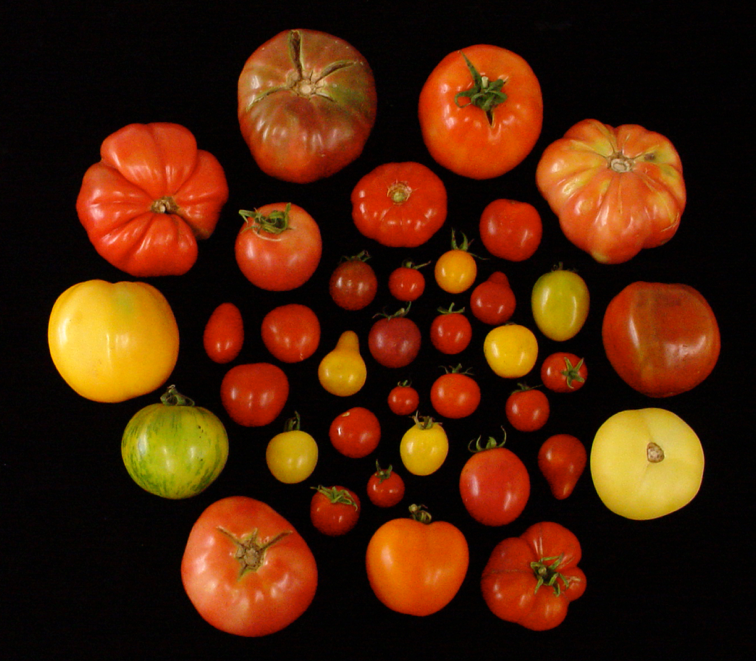
Commercial tomato growers have bred larger, redder tomatoes that are less flavorful than heirloom and older varieties. Image courtesy of Harry Klee.

Flavor.

Apparently, I was one of very few people unaware of this issue. The public outcry in response to the increasing flavorlessness of commercial tomatoes began over a decade ago, when Klee first began to study tomato genetics.

From his research, Klee has drawn several important, unexpected conclusions, chief among them:

1: Flavor has more to do with smell than taste;

2: Lesser-known biochemical compounds called “volatiles” influence the flavor of tomatoes more than sugars, acids, and other well-known, larger compounds;

3: These “volatiles” are less present in modern tomato varieties than in tastier, older, and heirloom varieties;

But fear not—

4: Tomatoes can be back-bred to regain the genes that code for volatile compounds.

In other words, Klee has mapped the way back to the flavorful tomatoes of the past. His work culminated in a cover story of the Jan. 27 issue of Science. The corresponding paper describing the analysis of over 300 tomato strains to identify the chemicals associated with “good” and “bad” tomatoes.

Dr. Harry Klee and collaborators in his lab at the University of Florida. Image courtesy of Harry Klee.

To prove that modern tomatoes have less of the compounds that make them tasty, Klee and his team recruited a panel of 100 taste-testers to rank 160 representative tomato varieties. According to Klee, the team “developed statistical models to explain the chemistry of ‘liking’ [tomatoes],” then narrowed down the list of compounds that correlated with “liking” from 400 to 26. After tracing these 26 compounds to genetic loci, they used whole-genome sequencing to show that these loci are less expressed in modern tomatoes than in “cerasiforme” (i.e. old) and heirloom tomato varieties.

Further studies showed that tomato weight is inversely correlated with sugar content—in other words, “a gigantic fruit doesn’t taste as good,” Klee said.

If Klee can convince tomato growers that consumers value flavor over size, color, and quantity, then he might just single-handedly put flavorful tomatoes back on the shelves. Nevertheless—and despite the publicity surrounding his work—Klee understands it make take a while before commercial tomato growers see the light.

Klee and his team of scientists have genetically mapped the way back to the tasty tomatoes of the past. Image courtesy of Harry Klee.

“Growers get no more money if the tomato tastes good or bad; they’re paid for how many pounds of red objects they put in a box…[but] we can’t just blame the modern breeders. We’ve been selecting bigger and bigger fruit for millennia, and that has come at the cost of reducing flavor,” Klee said.

Post by Maya Iskandarani

Venturing Out of the Lab to Defend Science

It’s 6 p.m. on a Wednesday and the grad students aren’t at their lab benches. IM softball doesn’t start till next week, what gives?

We’ve snuck out of our labs a bit early to take in a dose of U.S. policy for the evening.

Politics fall far outside our normal areas of expertise. I’m a biology Ph.D. student studying plants — even with my liberal arts education, politics isn’t my bread and butter.

Buz Waitzkin of Science & Society (blue shirt) gave grad students a highly accelerated intro to matters of science policy.

But the current political climate in the U.S. has many scientists taking a more careful look into politics. Being scholars who have a sense of the world around us has become more important than ever.

“Agency regulation, funding, it’s all decided by our branches of government,” says Ceri Weber, a 3rd year Ph.D. candidate in Cell Biology.

Weber, a budding “sci-pol” enthusiast and the general programming chair for the student group INSPIRE, feels passionately about getting scientists informed about policy.

So she organized this event for graduate scientists to talk with the deputy director of Duke Science & Society, Buz Waitzkin, who previously served as special counsel to President Bill Clinton, and now teaches science policy classes cross-listed between Duke’s Biomedical Science programs and the Law School.

Seated with food and drinks—the way to any grad student’s heart—we found ourselves settling in for an open discussion about the current administration and the impact its policies could have on science.

We covered a lot of ground in our 2-hour discussion, though there was plenty more we would love to continue learning.

We discussed: lobbying, executive orders, the balances of power, historical context, tradition, and civil actions, to name a few.

There were a lot of questions, and a lot of things we didn’t know.

Even things as simple as “what exactly is a regulation?” needed to be cleared up. We’ve got our own definition in a biological context, but regulation takes on a whole new meaning in a political one. It was neat having the chance to approach this topic from the place of a beginner.

We were floored by some of the things we learned, and puzzled by others. Importantly, we found some interesting places of kinship between science and policy.

When we discussed the Congressional Review Act, which impacts regulations—the main way science policy is implemented—we learned there is ambiguity in law just like there is in science.

One area on all of our minds was how we fit into the picture. Where can our efforts and knowledge as scientists and students can make a difference?

I was shocked to learn of the lack of scientists in government: only five ever in Congress, and three in the Cabinet.

But luckily, there is space for us as science advisors in different affiliations with the government. There are even Duke graduate students working on a grant to develop science policy fellowships in the NC state legislature.

At the end of the night, we were all eager to learn more and encouraged to participate in politics in the ways that we can. We want to be well-versed in policy and take on an active role to bring about change in our communities and beyond.

Hopefully, as the years go on, we’ll have more opportunities to deepen our knowledge outside of science in the world around us. Hopefully, we’ll have more scientists who dare to step out of the lab.

Guest Post by Graduate Student Ariana Eily

Linking Climate Change, Air Pollution and Public Health

We often view climate change and air pollution as two separate entities. But, the two issues are united by one common driving factor: human emissions. Nicholas School of the Environment Earth Sciences Professor Drew Shindell reminds us how interconnected these issues truly are, and how we must begin viewing them as such to create change.

Shindell argues that climate change and air pollution are often misrepresented. Air pollution is a problem that seems elusive to the individual, and yet it is the

Dr. Shindell with Marcelo Mena (far left), Vice Minister of the Environment of Chile, and Governor Jerry Brown (CA) at the COP21 in Paris.

number one cause of premature death. The problem is often polarized from us, and we forget that we are largely at fault for its increasing effect. We place the blame on the emissions of large corporations, when our own car emissions are just as detrimental. Shindell argues that it is the “othering” of these issues that makes it hard for us feel a need to create change.

But, by clearly linking climate change and air pollution together, and linking those two to human health, Shindell believes we will develop a greater sense of responsibility for our environment. He gives the example of Pakistan, where increased ozone levels due to human emissions have severely decreased the air quality. As a result, there has been a 36% decline wheat and rice production. This dent in Pakistan’s agricultural systems poses a great threat on food security for the entire nation, and could potentially create a wave of health issues.

But policy often blurs the line between air pollution, climate change and human health. Shindell says he doesn’t know of a single jurisdiction that explicitly mentions the scope of negative effects air pollution and climate change can have on our health (stroke, lung cancer, new disease vectors, to name a few). He suggests expanding our metrics and developing a broader-based impact analysis so that humans are well-informed of the interconnectedness of these issues.

Is it easier to blame a big factory for pollution than to look at your own travel habits?

If we included public health in our impact estimates for methane emissions, for example, the cost would be much larger than anticipated. But, Shindell highlights that to bring these emissions down requires a change that is not easy to ask of our energy-dependent, consumer-driven world. Decreasing our meat consumption by 48%, for example, would save us billions of dollars, but to trigger such a change would demand a desire from the public to alter their behavior, which time and time again has proven to be challenging.

At the end of the day, this scientific issue is a largely psychological one. We assume our contributions make a negligible difference, when in reality it is our consumer behavior that will drive the change we wish to see in our environment. But, how are we expected to feel the burden of air pollution on our health, when policy isn’t directly linking the two together? How can we see climate change as an issue that threatens the security of global agricultural systems when legislation fails to draw the two together explicitly? It is here where we must see a change.

Post by Lola Sanchez-Carrion


Cells Need Their Personal Space

One of the body’s first lines of defense against harmful pathogens is the skin. The constant maintenance of this epithelial cell layer which serves as a barrier to infection  is essential to fighting off disease.

Jody Rosenblatt, an Associate Professor in the Department of Oncological Sciences at the University of Utah School of Medicine, has made it her lab’s mission to study the function of epithelia as a barrier, how this barrier is maintained, and what happens when it goes awry.

Jody Rosenblatt, PhD is an investigator for the Huntsman Cancer Institute at the University of Utah School of Medicine and a Howard Hughes Medical Institute Faculty Scholar

Rosenblatt recently spoke at Duke’s Developmental & Stem Cell Biology Colloquium where she presented some extraordinary findings about how epithelia can squeeze out  both healthy and dying cells  to preserve the protective barrier.

Some c cells commit suicide via programed cell death and are forced out of the cell layer because they are no longer functional. But in the case of forcing out living cells, “cell extrusion is more like a homicide” said Rosenblatt. The fact that perfectly functional living cells are pushed out of a cell layer perplexed her group until they discovered it was happening as a response to cell overcrowding.

Rosenblatt explained that like people, cells tend to like their personal space, so when this is compromised, live cells are actively pushed out of the cell layer, restoring balanced cell numbers.

Rosenblatt’s lab took this discovery a step farther and pinpointed the pathway that likely induces the extrusion of live cells.

Piezo1, a stretch-activated calcium ion channel present in epithelial cells, senses crowding and activates sphingosine-1-phosphate (S1P), the driver of epithelial cell extrusion. When Piezo1 channels are inhibited and don’t sense stretching, cells cannot extrude.

Using zebrafish, Rosenblatt showed that when extrusion was blocked by compromising the S1P2 pathway, epidermal cells form masses that are resistant to chemotherapy drugs and signals for programmed cell death.

Rosenblatt explains the importance of regulating cell extrusion in the epithelium to maintain the tissue’s function as a protective barrier for our organs. Misregulation of this function can result in diseases such as metastatic cancers.

This finding lead them to examine samples of human pancreatic, lung, colon, and breast tumors. They found that in all of these cancers, S1P2 is significantly reduced. But if they restored S1P2 activity in cell lines of these cancers, the extrusion pathway was rescued and tumor size and metastases were greatly decreased!

Rosenblatt and her colleagues have shown that the importance of cell extrusion cannot be overstated. If extrusion is compromised, cells can begin to pile up and move beneath the cell layer, which can lead to invasion of the tissues beneath the epithelium and metastasis to other sites in the body.

Now that we are uncovering more of the pathways involved in tumor formation and metastasis, we can develop new drugs that may be the key to fighting these devastating diseases.

Guest Post by Amanda Cox, PhD candidate in biology


Young Scientists, Making the Rounds

“Can you make a photosynthetic human?!” an 8th grader enthusiastically asks me while staring at a tiny fern in a jar.

He’s not the only one who asked me that either — another student asked if Superman was a plant, since he gets his power from the sun.

These aren’t the normal questions I get about my research as a Biology PhD candidate studying how plants get nutrients, but they were perfect for the day’s activity –A science round robin with Durham eighth-graders.

Biology grad student Leslie Slota showing Durham 8th graders some fun science.

After seeing a post under #scicomm on Twitter describing a public engagement activity for scientists, I put together a group of Duke graduate scientists to visit local middle schools and share our science with kids. We had students from biomedical engineering, physics, developmental biology, statistics, and many others — a pretty diverse range of sciences.

With help from David Stein at the Duke-Durham Neighborhood Partnership, we made connections with science teachers at the Durham School of the Arts and Lakewood Montessori school, and the event was in motion!

The outreach activity we developed works like speed dating, where people pair up, talk for 3-5 mins, and then rotate. We started out calling it “Science Speed Dating,” but for a middle school audience, we thought “Science Round-Robin” was more appropriate. Typically, a round-robin is a tournament where every team plays each of the other teams. So, every middle schooler got to meet each of us graduate students and talk to us about what we do.

The topics ranged from growing back limbs and mapping the brain, to using math to choose medicines and manipulating the different states of matter.

The kids were really excited for our visit, and kept asking their teachers for the inside scoop on what we did.

After much anticipation, and a little training and practice with Jory Weintraub from the Science & Society Initiative, two groups of 7-12 graduate students armed themselves with photos, animals, plants, and activities related to our work and went to visit these science classes full of eager students.

First-year MGM grad student Tulika Singh (top right) brought cardboard props to show students how antibodies match up with cell receptors.

“The kids really enjoyed it!” said Alex LeMay, middle- and high-school science teacher at the Durham School of the Arts. “They also mentioned that the grad students were really good at explaining ideas in a simple way, while still not talking down to them.”

That’s the ultimate trick with science communication: simplifying what we do, but not talking to people like they’re stupid.

I’m sure you’ve heard the old saying, “dumb it down.” But it really doesn’t work that way. These kids were bright, and often we found them asking questions we’re actively researching in our work. We don’t need to talk down to them, we just need to talk to them without all of the exclusive trappings of science. That was one thing the grad students picked up on too.

“It’s really useful to take a step back from the minutia of our projects and look at the big picture,” said Shannon McNulty, a PhD candidate in Molecular Genetics and Microbiology.

The kids also loved the enthusiasm we showed for our work! That made a big difference in whether they were interested in learning more and asking questions. Take note, fellow scientists: share your enthusiasm for what you do, it’s contagious!

Another thing that worked really well was connecting with the students in a personal way. According to Ms. LeMay, “if the person seemed to like them, they wanted to learn more.” Several of the grad students would ask each student their names and what they were passionate about, or even talk about their own passions outside of their research, and these simple questions allowed the students to connect as people.

There was one girl who shared with me that she didn’t know what she wanted to do when she grew up, and I told her that’s exactly where I was when I was in 8th grade too. We then bonded over our mutual love of baking, and through that interaction she saw herself reflected in me a little bit; making a career in science seem like a possibility, which is especially important for a young girl with a growing interest in science.

Making the rounds in these science classrooms, we learned just as much from the students we spoke to as they did from us. Our lesson being: science outreach is a really rewarding way to spend our time, and who knows, maybe we’ll even spark someone who loves Superman to figure out how to make the first photosynthesizing super-person!

Guest post by Ariana Eily , PhD Candidate in Biology, shown sharing her floating ferns at left.
 

The Man Who Knew Infinity, and his biggest fan

Ken Ono, a distinguished professor of mathematics at Emory University, was visibly thrilled to be at Duke last Thursday, January 26. Grinning from ear to ear, he announced that he was here to talk about three of his favorite things: math, movies, and “one of the most inspirational figures in my life”: Srinivasa Ramanujan.

Professor Ken Ono of Emory University poses with a bust of Newton and one of Ramanujan’s legendary notebook pages. Source: IFC Films.

Ramanujan, I learned, is one of the giants of mathematics; an incontestable genius, his scrawls in letters and notebooks have spawned whole fields of study, even up to 100 years after his death. His life story continues to inspire mathematicians around the globe—as well as, most recently, a movie which Ono helped produce: The Man Who Knew Infinity, featuring Hollywood stars Dev Patel and Jeremy Irons.

I didn’t realize until much too late that this lecture was essentially one massive spoiler for the movie. Nevertheless, I got to appreciate the brains and the heart behind the operation in hearing Ono express his passion for the man who, at age 16, inspired him to see learning in a new light. Ramanujan’s story follows.

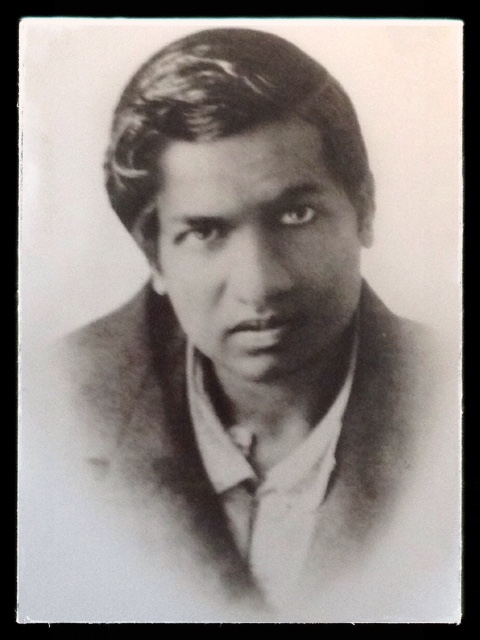
Ramanujan was born in Kambakunam, India in 1887, the son of a cloth merchant and a singer at a local temple. He was visibly gifted from a young age, not only an outstanding student, but also a budding intellectual: by age 13, he had discovered most of modern trigonometry by himself.

Ramanujan’s brilliance earned him scholarships to attend college, only for him to flunk out not once, but twice: he was so engrossed in mathematics that he paid little heed to his actual schoolwork and let his grades suffer. His family and friends, aware of his genius, supported him anyway.

Thus, he spent the daytime in a low-level accounting job that earned him barely enough income to live, and spent the night scribbling groundbreaking mathematics in his notebooks.

A photo portrait of Srinivasa Ramanujan, a brilliant Indian mathematician born in the late 19th century. Source: IFC Films.

Unable to share his discoveries and explain their importance to those around him, Ramanujan finally grew so frustrated that, in desperation, he wrote to dozens of prominent English mathematics professors asking for help. The first of these to respond was G. H. Hardy (for any Biology nerds, this is the Hardy of the Hardy-Weinberg equilibrium), who examined the mathematics Ramanujan included in his letters and was so astounded by what he found that, at first, he thought it was a hoax perpetrated by his friend.

Needless to say, it wasn’t a hoax.

Ramanujan left India to join Hardy in England and publish his discoveries. The meat of the movie, according to Ono, is “the transformation of the relationship between these two characters:” one, a devout Hindu with no formal experience in higher education; the other, a haughty English professor who happened to be an atheist.

The two push past their differences and manage to jointly publish 30 papers based on Ramanujan’s work. Overcoming impossible odds—poverty, World War I, and racism in particular—Ramanujan’s discoveries finally found the light of day.

Sadly, Ramanujan’s story was cut short: a lifelong vegetarian, he fell ill of malnutrition while working in England, returning to India for the last year of his life in the hopes that the warmer climate would improve his health. He died in 1920, at 32 years old.

He continued writing to Hardy from his deathbed, his last letter including revolutionary ideas, which, like much of his work, were so far ahead of his time that mathematicians only began to wrap their minds around them decades after his death.

“Ramanujan was a great anticipator of mathematics, writing formulas that seemed foreign or random at the time but later inspired deep and revolutionary discoveries in math,” Ono said.

Ono’s infatuation with Ramanujan began when he was 16 years old, himself the son of a mathematics professor at Johns Hopkins University. Upon receiving a letter from Ramanujan’s widow, Ono’s father—by Ono’s account, a very stoic, stern man—was brought to tears. Shocked, Ono began to research the origin of the letter, discovering Ramanujan’s story and reaching a turning point in his own life when he realized that there were aspects to learning that were far more important than grades.

That seems to have worked out quite well for Ono, considering his success and expertise in his own area of study—not to mention that he now has “Hollywood producer” under his belt.

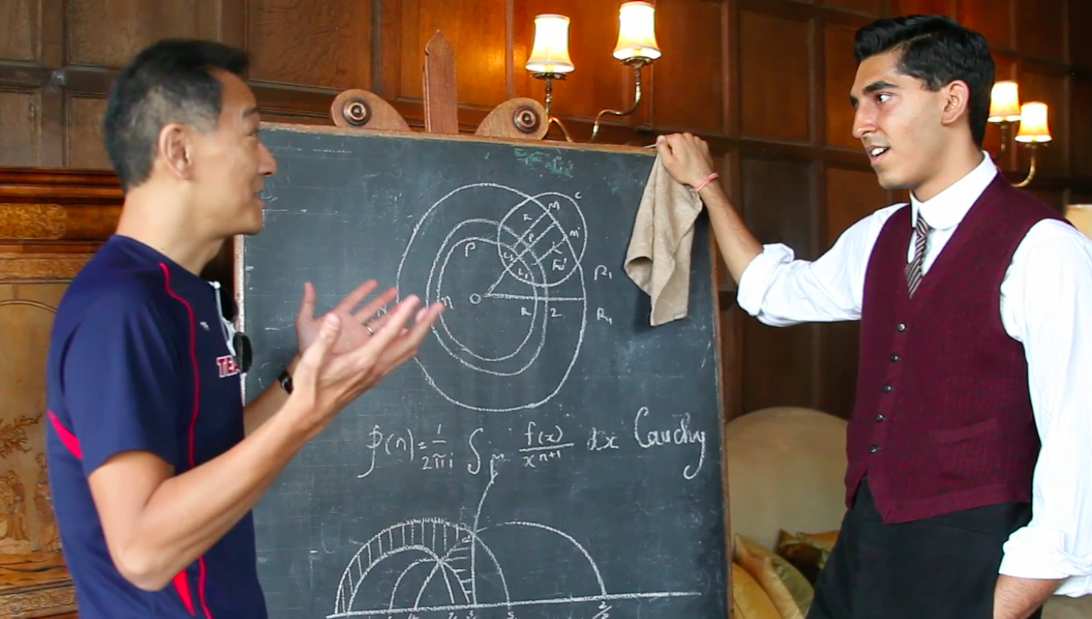
Professor Ken Ono chats with actor Dev Patel on the set of The Man Who Knew Infinity. Photo credit: Sam Pressman.


Post by Maya Iskandarani

Bass Connections and GHANDI – Understanding Disability from a Global Perspective

Duke prides itself on being a research institution that is not only intellectually curious, but also extremely interdisciplinary. Through Duke’s Bass Connections initiative, students and faculty come together in project teams that tackle complex issues using multiple disciplines and approaches. The program held its annual fair last week to showcase its work and to get new students connected with these exciting projects.

How does it work?

Graduate students, undergraduates, and faculty members apply for a research project in any of these five areas: Brain and Society, Information Society & Culture, Global Health, Education & Development, and Energy. Once accepted, group members work on a year-long research project, that often includes a field work component. One project in particular that combines many disciplines and interests to address an issue of global importance GANDHI, a Global Health project that studies disability from multiple cultural perspectives.

What is GANDHI?

GANDHI team members meet with Dr. Rune Simeonsson at UNC to discuss the WHO ICF-CY (International Classification of Functioning – Children and Youth), a document he helped co-write that provides a framework for diagnosing and addressing disability.

The Global Alliance on Disease and Health Innovation (GANDHI) was created in 2016 to support disabled individuals by providing them with the community reintegration tools necessary to live a healthy, comfortable life. Yukhai Lin, a Duke undergrad and GANDHI team member, shared that many hospital systems are not good at helping those the disabled reintegrate themselves in their community, and often forget about their patients after they are released. The research team recognized this flaw, and began a thorough data collection process to understand the reason for this lack of care. In the fall of 2016, team members took a seminar course, “Living with Disability Around the Globe”, in which they were paired with global partners in ten different countries to examine disability from a more specific context. In this interdisciplinary class, team members not only strengthened their knowledge of disability and its implications on global societies, but they were also able to develop strong research skills, for they ultimately synthesized their findings by creating a thorough comparison of disability in each of the countries studied.

The team also attended a conference in New Orleans to network with organizations that were conducting similar research. Lin said she interviewed doctors from The Netherlands, as well as leaders of influential health organizations to holistically understand the issues that come with helping the disabled. The team hopes to present their findings at a forum this spring, and, like many other Bass Connection projects, will continue throughout the 2017-2018 academic year. They encourage all to apply, and hope to broaden the scope of their research by adding countries in Southeast Asia and creating new opportunities for fieldwork. Some eager students have already showed interest in going to China to interview families with disabled members, says Lin.

Other Bass Connections projects at the fair spread across all disciplines, ranging from the development of effective chemotherapy drugs to the study of urban development in cities across the globe. But, what all projects share in common is a strong emphasis on research that is hands-on, collaborative, and relevant to society.


Post by Lola Sanchez-Carrion

Creating Technology That Understands Human Emotions

“If you – as a human – want to know how somebody feels, for what might you look?” Professor Shaundra Daily asked the audience during an ECE seminar last week.

“Facial expressions.”
“Body Language.”
“Tone of voice.”
“They could tell you!”

Over 50 students and faculty gathered over cookies and fruits for Dr. Daily’s talk on designing applications to support personal growth. Dr. Daily is an Associate Professor in the Department of Computer and Information Science and Engineering at the University of Florida interested in affective computing and STEM education.

Dr. Daily explaining the various types of devices used to analyze people’s feelings and emotions. For example, pressure sensors on a computer mouse helped measure the frustration of participants as they filled out an online form.

Affective Computing

The visual and auditory cues proposed above give a human clues about the emotions of another human. Can we use technology to better understand our mental state? Is it possible to develop software applications that can play a role in supporting emotional self-awareness and empathy development?

Until recently, technologists have largely ignored emotion in understanding human learning and communication processes, partly because it has been misunderstood and hard to measure. Asking the questions above, affective computing researchers use pattern analysis, signal processing, and machine learning to extract affective information from signals that human beings express. This is integral to restore a proper balance between emotion and cognition in designing technologies to address human needs.

Dr. Daily and her group of researchers used skin conductance as a measure of engagement and memory stimulation. Changes in skin conductance, or the measure of sweat secretion from sweat gland, are triggered by arousal. For example, a nervous person produces more sweat than a sleeping or calm individual, resulting in an increase in skin conductance.

Galvactivators, devices that sense and communicate skin conductivity, are often placed on the palms, which have a high density of the eccrine sweat glands.

Applying this knowledge to the field of education, can we give a teacher physiologically-based information on student engagement during class lectures? Dr. Daily initiated Project EngageMe by placing galvactivators like the one in the picture above on the palms of students in a college classroom. Professors were able to use the results chart to reflect on different parts and types of lectures based on the responses from the class as a whole, as well as analyze specific students to better understand the effects of their teaching methods.

Project EngageMe: Screenshot of digital prototype of the reading from the galvactivator of an individual student.

The project ended up causing quite a bit of controversy, however, due to privacy issues as well our understanding of skin conductance. Skin conductance can increase due to a variety of reasons – a student watching a funny video on Facebook might display similar levels of conductance as an attentive student. Thus, the results on the graph are not necessarily correlated with events in the classroom.

Educational Research

Daily’s research blends computational learning with social and emotional learning. Her projects encourage students to develop computational thinking through reflecting on the community with digital storytelling in MIT’s Scratch, learning to use 3D printers and laser cutters, and expressing ideas using robotics and sensors attached to their body.

VENVI, Dr. Daily’s latest research, uses dance to teach basic computational concepts. By allowing users to program a 3D virtual character that follows dance movements, VENVI reinforces important programming concepts such as step sequences, ‘for’ and ‘while’ loops of repeated moves, and functions with conditions for which the character can do the steps created!


Dr. Daily and her research group observed increased interest from students in pursuing STEM fields as well as a shift in their opinion of computer science. Drawings from Dr. Daily’s Women in STEM camp completed on the first day consisted of computer scientist representations as primarily frazzled males coding in a small office, while those drawn after learning with VENVI included more females and engagement in collaborative activities.

VENVI is a programming software that allows users to program a virtual character to perform a sequence of steps in a 3D virtual environment!

In human-to-human interactions, we are able draw on our experiences to connect and empathize with each other. As robots and virtual machines grow to take increasing roles in our daily lives, it’s time to start designing emotionally intelligent devices that can learn to empathize with us as well.

Post by Anika Radiya-Dixit

Page 61 of 111

Powered by WordPress & Theme by Anders Norén