Research Blog

Following the people and events that make up the research community at Duke

Students exploring the Innovation Co-Lab

Aging and Decision-Making

Who makes riskier decisions, the young or the old? And what matters more in our decisions as we age — friends, health or money? The answers might surprise you.
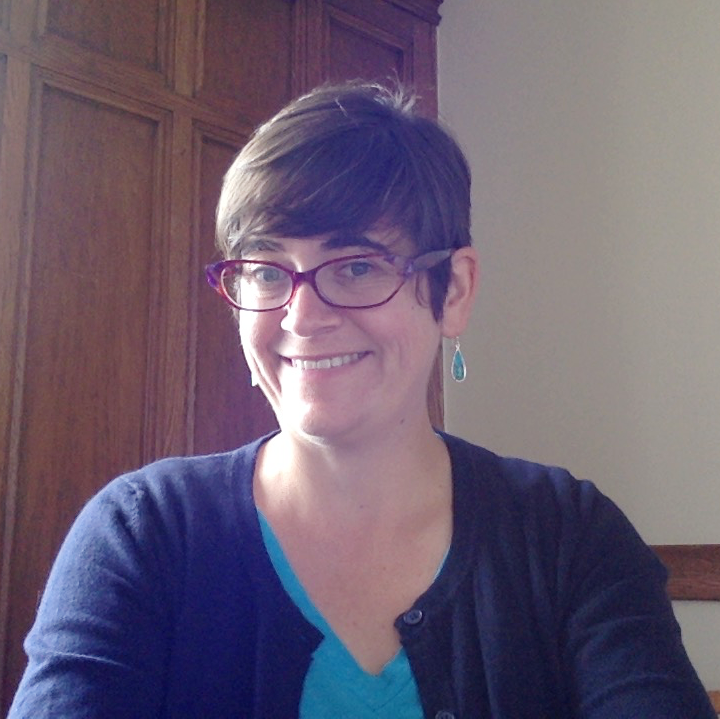
Kendra Seaman works at the Center for the Study of Aging and Human Development and is interested in decision-making across the lifespan.

Duke postdoctoral fellow Kendra Seaman, Ph.D. uses mathematical models and brain imaging to understand how decision-making changes as we age. In a talk to a group of cognitive neuroscientists at Duke, Seamen explained that we have good reason to be concerned with how older people make decisions.

Statistically, older people in the U.S. have more money, and additionally more expenditures, specifically in healthcare. And by 2030, 20 percent of the US population will be over the age of 65.

One key component to decision-making is subjective value, which is a measure of the importance a reward or outcome has to a specific person at a specific point in time. Seaman used a reward of $20 as an example: it would have a much higher subjective value for a broke college student than for a wealthy retiree. Seaman discussed three factors that influence subjective value: reward, cost, and discount rate, or the determination of the value of future rewards.

Brain imaging research has found that subjective value is represented similarly in the medial prefrontal cortex (MPFC) across all ages. Despite this common network, Seaman and her colleagues have found significant differences in decision-making in older individuals.

The first difference comes in the form of reward. Older individuals are likely to be more invested in the outcome of a task if the reward is social or health-related rather than monetary. Consequently, they are more likely to want these health and social rewards  sooner and with higher certainty than younger individuals are. Understanding the salience of these rewards is crucial to designing future experiments to identify decision-making differences in older adults.

A preference for positive skew becomes more pronounced with age.

Older individuals also differ in their preferences for something called “skewed risks.” In these tasks, positive skew means a high probability of a small loss and a low probability of a large gain, such as buying a lottery ticket. Negative skew means a low probability of a large loss and a high probability of a small gain, such as undergoing a common medical procedure that has a low chance of harmful complications.

Older people tend to prefer positive skew to a greater degree than younger people, and this bias toward positive skew becomes more pronounced with age.

Understanding these tendencies could be vital in understanding why older people fall victim to fraud and decide to undergo risky medical procedures, and additionally be better equipped to motivate an aging population to remain involved in physical and mental activities.

Post by undergraduate blogger Sarah Haurin
Post by undergraduate blogger Sarah Haurin

The Complicated Balance of Predators and Prey

If you knew there was a grizzly bear sitting outside the door, you might wait a while before going to fill up your water bottle, or you might change the way you are communicating with their other people in the room based on your knowledge of the threat.

Ecologists call this “predation risk,” in which animals that could potentially fall prey to a carnivore know this risk is present, and alter their habits and actions accordingly.

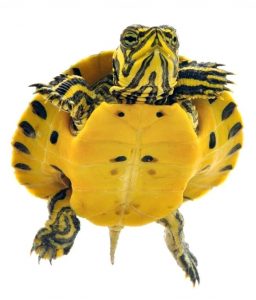
A yellow slider turtle.

A yellow slider turtle.

One way in which animals do this is through habitat use, such as a pod of dolphins that changes where they spend most of their time depending on the presence or absence of predators. Animals might also change their feeding habits and diving behavior because of predation risk.

Animals do this all of the time in the wild, but when predators are removed from ecosystems by hunting or over-fishing, the effect of their absence is felt all the way down the food chain.

For example, large amounts of algae growth on coral reefs can be traced back to over-fishing of large ocean predators such as sharks, who then don’t hunt smaller marine mammals like seals. As seal numbers increase, there are more of them to hunt smaller fish that feed on vegetation, which means fewer smaller fish or plankton to keep algal growth in check, and algae begins to grow unchecked.

Meagan Dunphy-Daly

Meagan Dunphy-Daly

This is a “trophic cascade” and it has large effects on ecosystems, Duke Marine Lab instructor Meagan Dunphy-Daly  t0ld the Sustainable Oceans Alliance last Thursday. She has performed research both in labs and in the field to study the effects that removing large predators have on marine ecosystems.

Dunphy-Daly discussed one lab experiment where 10 yellow-bellied slider turtle hatchlings were kept in tanks where they couldn’t see people or anything else on the outside. In real life, blue herons and other large birds prey on these turtle hatchlings, so the researchers made a model skull of a blue heron that they painted and covered with feathers.

Turtles are air-breathing, so each hatchling was given the option to sit where they could be at the surface of their tank and breathe, but this spot was also where the turtle hatchlings thought the bird beak might shoot down at any time to try to “eat” them.

Their options were to get air and risk getting hit by the bird beak, or diving down to the bottom of the tank to get food. During this experiment, Dunphy-Daly found that turtle hatchlings actually decreased their dive time and spent more time at the surface. If the turtles are continuously diving, they are expending lots of energy swimming back and forth between the surface and the bottom, she said, which means if the predator were to actually attack, they would have less energy left to use for a rapid escape.

Even when there is food at the bottom, when a predator is present, these turtles alter their activity by taking deep dives less frequently so as to not max out their aerobic limit before they actually need to escape a predator.

This is one way in which animals alter their behavior due to predation risk.

But let’s say that predators were disappearing in their real habitats, so turtles didn’t feel the need to build up these emergency energy reserves to escape them. They might dive down and feed more frequently, which would then decrease the amount of the vegetation they eat.

This in turn could have an effect on oxygen levels in the water because there would be fewer plants photosynthesizing. Or another species that feeds on the same plant could be out-competed by turtles and run out of food for their own populations.

The absence of large or small predators can have large impacts on ocean ecosystems through these complicated trophic cascades.

Victoria PriesterPost by Victoria Priester

Smart Phones Are the New Windows to the Soul

It’s one of those things that seems so simple and elegant that you’re left asking yourself, “Geez, why didn’t I think of that?”

Say you were trying to help people lose weight, prep for a surgery or take their meds every day. They’re probably holding a smartphone in at least one of their hands — all you need to do is enlist that ever-present device they’re staring at to bug them!

So, for example, have the health app send a robo-text twice a day to check in: “Did you weigh yourself?” Set up a group chat where their friends all know what they’re trying to accomplish: “We’re running today at 5, right?”

This is a screenshot of a Pattern Health app for pre-operative patients.

It’s even possible to make them pinky-swear a promise to their phone that they will do something positive toward the goal, like walking or skipping desert that day. And if they don’t? The app has their permission to lock them out of all their apps for a period of time.

Seriously, people agree to this and it works.

Two app developers on this frontier of personalized, portable “mHealth” told a lunchtime session  sponsored by the Duke Mobile App Gateway on Thursday that patients not only willingly play along with these behavioral modification apps, their behaviors change for the better.

The idea of using phones for health behavior came to pediatric hematologist Nirmish Shah MD one day while he attempted to talk to a 16-year-old sickle cell disease patient as she snapped selfies of herself with the doctor. Her mom and toddler sister nearby both had their noses to screens as well. “I need to change how I do this,” Shah thought to himself.

Pediatric hematologist Nirmish Shah MD

Pediatric hematologist Nirmish Shah MD is director of Duke’s sickle cell transition program.

Twenty health apps later, he’s running phase II clinical trials of phone-based interventions for young sickle cell patients that encourage them to stay on their medication schedule and ask them often about their pain levels.

One tactic that seems to work pretty well is to ask his patients to send in selfie videos as they take their meds each day. The catch? The female patients send a minute or so of chatty footage a day. The teenage boys average 13 seconds, and they’re grumpy about it.

Clearly, different activities may be needed for different patient populations, Shah said.

While it’s still early days for these approaches, we do have a lot of behavioral science on what could help, said Aline Holzwarth, a principal of the Center for Advanced Hindsight and head of behavioral science for a Durham health app startup called Pattern Health.

Aline Gruneisen Holzwarth

Aline Holzwarth is a principal in the Center for Advanced Hindsight.

“It’s not enough to simply inform people to eat better,” Holzwarth said. The app has to secure a commitment from the user, make them set small goals and then ask how they did, enlist the help of social pressures, and then dole out rewards and punishments as needed.

Pattern Health’s app says “You need to do this, please pick a time when you will.” Followed by a reward or a consequence.

Thursday’s session, “Using Behavioral Science to Drive Digital Health Engagement and Outcomes, was the penultimate session of the annual Duke Digital Health Week. Except for the Hurricane Florence washout on Monday, the week  has been a tremendous success this year, said Katie McMillan, the associate director of the App Gateway.

New Blogger: Victoria Priester Loves Animals and Books

Hi! My name is Victoria Priester, and I’m a sophomore at Duke and one of this year’s new Duke Research bloggers.

Victoria meeting a very intelligent mammal.

I’m pre-vet, but I’ve always been a bookworm and have a love for expressing myself through writing that has given me a strained relationship with word counts. I’ll try to keep this intro post brief!

I’m majoring in English in addition to taking pre-veterinary classes, so my time in the library so far this year has been spent alternating between drawing resonance structures for organic chemistry and reading Jane Eyre in the Gothic Reading Room, which is my favorite study spot on campus.

Effective puppy medicine includes hugging and kissing.

I grew up in the suburbs of Washington, D.C. and now I work in the veterinary department at Duke Lemur Center. I’m also an editor and opinion columnist for The Chronicle. My favorite part of the academic scene at Duke is that pursuing such different interests at the same time is encouraged.

This year, I’m a part of the Bass Connections team that is studying how using expressive writing for resilience can help cancer patients process their experiences during treatment. I love finding new ways to connect my passion for writing with my interest in science, conservation and zoology.

One of the reasons I want to be a veterinarian is because I think veterinarians can and do play a crucial role in species conservation in zoos and animal sanctuaries. However, there is still a lot left to be learned about the animal species they care for.

For example, there is a species of lemur that consistently develops dental problems in captivity that lead to tooth loss, so there must be something about its diet in captivity compared to its diet in Madagascar that affects the health of its teeth. I care a lot about research concerning animals, conservation and pets, in addition to the health benefits of cathartic writing.

Victoria REALLY likes books.

I follow National Geographic on Twitter and read their articles as often as I can, but I usually end up just telling all of the cool facts I just learned to my parents, close friends or anyone else who is close enough to me to feel a slight obligation to listen and feign interest.

Through blogging, I hope to find a platform to synthesize new scientific findings surrounding animals, marine life or cathartic writing and post them to a place where people who care about and want to read about these topics can find them.

Post by Victoria Priester

Combatting the Opioid Epidemic

The opioid epidemic needs to be combatted in and out of the clinic.

In the U.S. 115 people die from opioids every day. The number of opioid overdoses increased fivefold from 1999 to 2016. While increased funding for resources like Narcan has helped — the opioid overdose-reversing drug now carried by emergency responders in cities throughout the country — changes to standard healthcare practices are still sorely needed.

Ashwin A Patkar, MD, medical director of the Duke Addictions Program, spoke to the Duke Center on Addiction and Behavior Change about how opioid addiction is treated.

The weaknesses of the current treatment standards first appear in diagnosis. Heroin and cocaine are currently being contaminated by distributors with fentanyl, an opioid that is 25 to 50 times more potent than heroin and cheaper than either of these drugs. Despite fentanyl’s prevalence in these street drugs, the standard form and interview for addiction patients does not include asking about or testing for the substance.

Patkar has found that 30 percent of opioid addiction patients have fentanyl in their urine and do not disclose it to the doctor. Rather than resulting from the patients’ dishonesty, Patkar believes, in most cases, patients are taking fentanyl without knowing that the drugs they are taking are contaminated.

Because of its potency, fentanyl causes overdoses that may require more Narcan than a standard heroin overdose. Understanding the prevalence of Narcan in patients is vital both for public health and educating patients so they can be adequately prepared.

Patkar also pointed out that, despite a lot of research supporting medication-assisted therapy, only 21 percent of addiction treatment facilities in the U.S. offer this type of treatment. Instead, most facilities rely on detoxification, which has high rates of relapse (greater than 85 percent within a year after detox) and comes with its own drawbacks. Detox lowers the patient’s tolerance to the drug, but care providers often neglect to tell the patients this, resulting in a rate of overdose that is three times higher than before detox.

Another common treatment for opioid addiction involves using methadone, a controlled substance that helps alleviate symptoms from opioid withdrawal. Because retention rate is high and cost of production is low, methadone poses a strong financial incentive. However, methadone itself is addictive, and overdose is possible.

Patkar points to a resource developed by Julie Bruneau as a reference for the Canadian standard of care for opioid abuse disorder. Rather than recommending detox or methadone as a first line of treatment, Bruneau and her team recommend buprenorphine , and naltrexone as a medication to support abstinence after treatment with buprenorphine.

Buprenorphine is a drug with a similar function as methadone, but with better and safer clinical outcomes. Buprenorphine does not create the same euphoric effect as methadone, and rates of overdose are six times less than in those prescribed methadone.

In addition to prescribing the right medicine, clinicians need to encourage patients to stick with treatment longer. Despite buprenorphine having good outcomes, patients who stop taking it after only 4 to 12 weeks, even with tapering directed by a doctor, exhibit only an 18 percent rate of successful abstinence.

Patkar closed his talk by reminding the audience that opioid addiction is a brain disease. In order to see a real change in the number of people dying from opioids, we need to focus on treating addiction as a disease; no one would question extended medication-based treatment of diseases like diabetes or heart disease, and the same should be said about addiction. Healthcare providers have a responsibility to treat addiction based on available research and best practices, and patients with opioid addiction deserve a standard of care the same as anyone else.

Post by undergraduate blogger Sarah Haurin

Post by undergraduate blogger Sarah Haurin

Medicine, Research and HIV

Duke senior Jesse Mangold has had an interest in the intersection of medicine and research since high school. While he took electives in a program called “Science, Medicine, and Research,” it wasn’t until the summer after his first year at Duke that he got to participate in research.

As a member of the inaugural class of Huang fellows, Mangold worked in the lab of Duke assistant professor Christina Meade on the compounding effect of HIV and marijuana use on cognitive abilities like memory and learning.

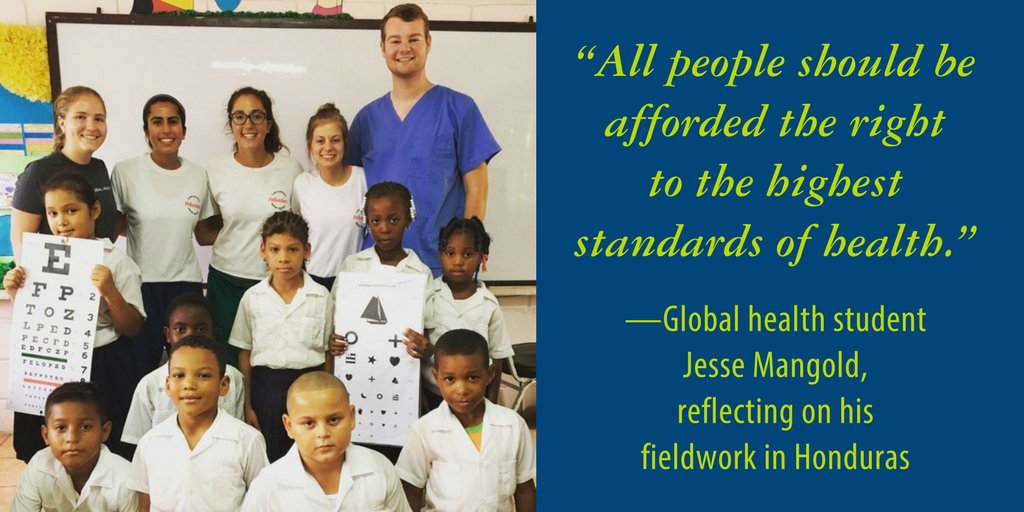
The following summer, Mangold traveled to Honduras with a group of students to help with collecting data and also meeting the overwhelming need for eye care. Mangold and the other students traveled to schools, administered visual exams, and provided free glasses to the children who needed them. Additionally, the students contributed to a growing research project, and for their part, put together an award-winning poster.

Mangold’s (top right) work in Honduras helped provide countless children with the eye care they so sorely needed.

Returning to school as a junior, Mangold wanted to focus on his greatest research interest: the molecular mechanisms of human immunodeficiency virus (HIV). Mangold found a home in the Permar lab, which investigates mechanisms of mother-to-child transmission of viruses including HIV, Zika, and Cytomegalovirus (CMV).

From co-authoring a book chapter to learning laboratory techniques, he was given “the opportunity to fail, but that was important, because I would learn and come back the next week and fail a little bit less,” Mangold said.

In the absence of any treatment, mothers who are HIV positive transmit the virus to their infants only 30 to 40 percent of the time, suggesting a component of the maternal immune system that provides at least partial protection against transmission.

The immune system functions through the activity of antibodies, or proteins that bind to specific receptors on a microbe and neutralize the threat they pose. The key to an effective HIV vaccine is identifying the most common receptors on the envelope of the virus and engineering a vaccine that can interact with any one of these receptors.

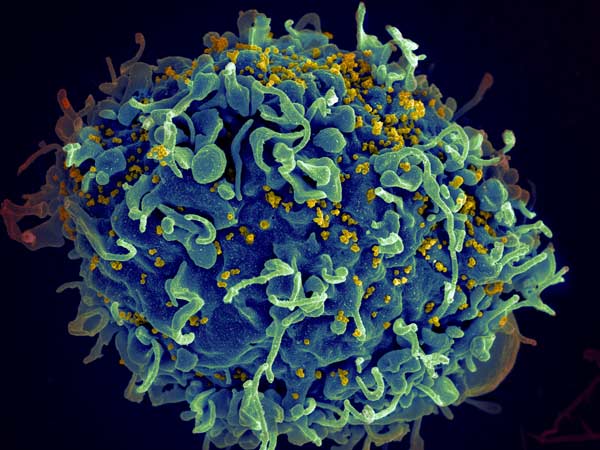
This human T cell (blue) is under attack by HIV (yellow), the virus that causes AIDS. Credit: Seth Pincus, Elizabeth Fischer and Austin Athman, National Institute of Allergy and Infectious Diseases, National Institutes of Health

This human T cell (blue) is under attack by HIV (yellow), the virus that causes AIDS. Credit: Seth Pincus, Elizabeth Fischer and Austin Athman, National Institute of Allergy and Infectious Diseases, National Institutes of Health

Mangold is working with Duke postdoctoral associate Ashley Nelson, Ph.D., to understand the immune response conferred on the infants of HIV positive mothers. To do this, they are using a rhesus macaque model. In order to most closely resemble the disease path as it would progress in humans, they are using a virus called SHIV, which is engineered to have the internal structure of simian immunodeficiency virus (SIV) and the viral envelope of HIV; SHIV can thus serve to naturally infect the macaques but provide insight into antibody response that can be generalized to humans.

The study involves infecting 12 female monkeys with the virus, waiting 12 weeks for the infection to proceed, and treating the monkeys with antiretroviral therapy (ART), which is currently the most effective treatment for HIV. Following the treatment, the level of virus in the blood, or viral load, will drop to undetectable levels. After an additional 12 weeks of treatment and three doses of either a candidate HIV vaccine or a placebo, treatment will be stopped. This design is meant to mirror the gold-standard of treatment for women who are HIV-positive and pregnant.

At this point, because the treatment and vaccine are imperfect, some virus will have survived and will “rebound,” or replicate fast and repopulate the blood. The key to this research is to sequence the virus at this stage, to identify the characteristics of the surviving virus that withstood the best available treatment. This surviving virus is also what is passed from mothers on antiretroviral therapy to their infants, so understanding its properties is vital for preventing mother-to-child transmission.

As a Huang fellow, Mangold had the opportunity to present his research on the compounding effect of HIV and marijuana on cognitive function.

Mangold’s role is looking into the difference in viral diversity before treatment commences and after rebound. This research will prove fundamental in engineering better and more effective treatments.

In addition to working with HIV, Mangold will be working on a project looking into a virus that doesn’t receive the same level of attention as HIV: Cytomegalovirus. CMV is the leading congenital cause of hearing loss, and mother-to-child transmission plays an important role in the transmission of this devastating virus.

Mangold and his mentor, pediatric resident Tiziana Coppola, M.D., are authoring a paper that reviews existing literature on CMV to look for a link between the prevalence of CMV in women of child-bearing age and whether this prevalence is predictive of the number of children suffer CMV-related hearing loss. With this study, Mangold and Coppola are hoping to identify if there is a component of the maternal immune system that confers some immunity to the child, which can then be targeted for vaccine development.

After graduation, Mangold will continue his research in the Permar lab during a gap year while applying to MD/PhD programs. He hopes to continue studying at the intersection of medicine and research in the HIV vaccine field.

Post by undergraduate blogger Sarah Haurin

Post by undergraduate blogger Sarah Haurin


What Happens When Data Scientists Crunch Through Three Centuries of Robinson Crusoe?

Reading 1,400-plus editions of “Robinson Crusoe” in one summer is impossible. So one team of students tried to train computers to do it for them.

Reading 1,400-plus editions of “Robinson Crusoe” in one summer is impossible. So one team of students tried to train computers to do it for them.

Since Daniel Defoe’s shipwreck tale “Robinson Crusoe” was first published nearly 300 years ago, thousands of editions and spinoff versions have been published, in hundreds of languages.

A research team led by Grant Glass, a Ph.D. student in English and comparative literature at the University of North Carolina at Chapel Hill, wanted to know how the story changed as it went through various editions, imitations and translations, and to see which parts stood the test of time.

Reading through them all at a pace of one a day would take years. Instead, the researchers are training computers to do it for them.

This summer, Glass’ team in the Data+ summer research program used computer algorithms and machine learning techniques to sift through 1,482 full-text versions of Robinson Crusoe, compiled from online archives.

“A lot of times we think of a book as set in stone,” Glass said. “But a project like this shows you it’s messy. There’s a lot of variance to it.”

“When you pick up a book it’s important to know what copy it is, because that can affect the way you think about the story,” Glass said.

Just getting the texts into a form that a computer could process proved half the battle, said undergraduate team member Orgil Batzaya, a Duke double major in math and computer science.

The books were already scanned and posted online, so the students used software to download the scans from the internet, via a process called “scraping.” But processing the scanned pages of old printed books, some of which had smudges, specks or worn type, and converting them to a machine-readable format proved trickier than they thought.

The software struggled to decode the strange spellings (“deliver’d,” “wish’d,” “perswasions,” “shore” versus “shoar”), different typefaces between editions, and other quirks.

Special characters unique to 18th century fonts, such as the curious f-shaped version of the letter “s,” make even humans read “diftance” and “poffible” with a mental lisp.

Their first attempts came up with gobbledygook. “The resulting optical character recognition was completely unusable,” said team member and Duke senior Gabriel Guedes.

At a Data+ poster session in August, Guedes, Batzaya and history and computer science double major Lucian Li presented their initial results: a collection of colorful scatter plots, maps, flowcharts and line graphs.

Guedes pointed to clusters of dots on a network graph. “Here, the red editions are American, the blue editions are from the U.K.,” Guedes said. “The network graph recognizes the similarity between all these editions and clumps them together.”

Once they turned the scanned pages into machine-readable texts, the team fed them into a machine learning algorithm that measures the similarity between documents.

The algorithm takes in chunks of texts — sentences, paragraphs, even entire novels — and converts them to high-dimensional vectors.

Creating this numeric representation of each book, Guedes said, made it possible to perform mathematical operations on them. They added up the vectors for each book to find their sum, calculated the mean, and looked to see which edition was closest to the “average” edition. It turned out to be a version of Robinson Crusoe published in Glasgow in 1875.

They also analyzed the importance of specific plot points in determining a given edition’s closeness to the “average” edition: what about the moment when Crusoe spots a footprint in the sand and realizes that he’s not alone? Or the time when Crusoe and Friday, after leaving the island, battle hungry wolves in the Pyrenees?

The team’s results might be jarring to those unaccustomed to seeing 300 years of publishing reduced to a bar chart. But by using computers to compare thousands of books at a time, “digital humanities” scholars say it’s possible to trace large-scale patterns and trends that humans poring over individual books can’t.

“This is really something only a computer can do,” Guedes said, pointing to a time-lapse map showing how the Crusoe story spread across the globe, built from data on the place and date of publication for 15,000 editions.

“It’s a form of ‘distant reading’,” Guedes said. “You use this massive amount of information to help draw conclusions about publication history, the movement of ideas, and knowledge in general across time.”

This project was organized in collaboration with Charlotte Sussman (English) and Astrid Giugni (English, ISS). Check out the team’s results at https://orgilbatzaya.github.io/pirating-texts-site/

Data+ is sponsored by Bass Connections, the Information Initiative at Duke, the Social Science Research Institute, the departments of Mathematics and Statistical Science and MEDx. This project team was also supported by the Duke Office of Information Technology.

Other Duke sponsors include DTECH, Duke Health, Sanford School of Public Policy, Nicholas School of the Environment, Development and Alumni Affairs, Energy Initiative, Franklin Humanities Institute, Duke Forge, Duke Clinical Research, Office for Information Technology and the Office of the Provost, as well as the departments of Electrical & Computer Engineering, Computer Science, Biomedical Engineering, Biostatistics & Bioinformatics and Biology.

Government funding comes from the National Science Foundation.

Outside funding comes from Lenovo, Power for All and SAS.

Community partnerships, data and interesting problems come from the Durham Police and Sheriff’s Department, Glenn Elementary PTA, and the City of Durham.

Videos by Paschalia Nsato and Julian Santos; writing by Robin Smith

Can’t Decide What Clubs to Join Outside of Class? There’s a Web App for That

With 400-plus student organizations to choose from, Duke has more co-curriculars than you could ever hope to take advantage of in one college career. Navigating the sheer number of options can be overwhelming. So how do you go about finding your niche on campus?

Now there’s a Web app for that: the Duke CoCurricular Eadvisor. With just a few clicks it comes up with a personalized ranked list of student clubs and programs based on your interests and past participation compared to others.

“We want it to be like the activity fair, but online,” said  Duke computer science major Dezmanique Martin, who was part of a team of Duke undergrads in the Data+ summer research program who developed the “recommendation engine.”

“The goal is to make a web app that recommends activities like Netflix recommends movies,” said team member Alec Ashforth.

The project is still in the testing stage, but you can try it out for yourself, or add your student organization to the database, at https://eadvisorduke.shinyapps.io/login/

A “co-curricular” can be just about any learning experience that takes place outside of class and doesn’t count for credit, be it a student magazine, Science Olympiad or community service. Research shows that students who get involved on campus are more likely to graduate and thrive in the workplace post-graduation.

For the pilot version, the team compiled a list of more than 150 student programs related to technology. Each program was tagged with certain attributes.

Students start by entering a Net ID, major, and expected graduation date. Then they enter all the programs they have participated in at Duke so far, submit their profile, and hit “recommend.”

The e-advisor algorithm generates a ranked list of activities recommended just for the user.

The e-advisor might recognize that a student who did DataFest and HackDuke in their first two years likes computer science, research, technology and competitions. Based on that, the Duke Robotics Club might be highly recommended, while the Refugee Health Initiative would be ranked lower.

A new student can just indicate general interests by selecting a set of keywords from a drop-down menu. Whether it’s literature and humanities, creativity, competition, or research opportunities, the student and her advisor won’t have to puzzle over the options — the e-advisor does it for them.

The tool comes up with its recommendations using a combination of approaches. One, called content-based filtering, finds activities you might like based on what you’ve done in the past. The other, collaborative filtering, looks for other students with similar histories and tastes, and recommends activities they tried.

This could be a useful tool for advisors, too, noted Vice Provost for Interdisciplinary Studies Edward Balleisen, while learning about the EAdvisor team at this year’s Data+ Poster Session.

“With sole reliance on the app, there could be a danger of some students sticking with well-trodden paths, at the expense of going outside their comfort zone or trying new things,” Balleisen said.

But thinking through app recommendations along with a knowledgeable advisor “might lead to more focused discussions, greater awareness about options, and better decision-making,” he said.

Led by statistics Ph.D. candidate Lindsay Berry, so far the team has collected data from more than 80 students. Moving forward they’d like to add more co-curriculars to the database, and incorporate more features, such as an upvote/downvote system.

“It will be important for the app to include inputs about whether students had positive, neutral, or negative experiences with extra-curricular activities,” Balleisen added.

The system also doesn’t take into account a student’s level of engagement. “If you put Duke machine learning, we don’t know if you’re president of the club, or just a member who goes to events once a year,” said team member Vincent Liu, a rising sophomore majoring in computer science and statistics.

Ultimately, the hope is to “make it a viable product so we can give it to freshmen who don’t really want to know what they want to do, or even sophomores or juniors who are looking for new things,” said Brooke Keene, rising junior majoring in computer science and electrical and computer engineering.

Video by Paschalia Nsato and Julian Santos; writing by Robin Smith

Data+ is sponsored by Bass Connections, the Information Initiative at Duke, the Social Science Research Institute, the departments of Mathematics and Statistical Science and MEDx. This project team was also supported by the Duke Office of Information Technology.

Other Duke sponsors include DTECH, Duke Health, Sanford School of Public Policy, Nicholas School of the Environment, Development and Alumni Affairs, Energy Initiative, Franklin Humanities Institute, Duke Forge, Duke Clinical Research, Office for Information Technology and the Office of the Provost, as well as the departments of Electrical & Computer Engineering, Computer Science, Biomedical Engineering, Biostatistics & Bioinformatics and Biology.

Government funding comes from the National Science Foundation.

Outside funding comes from Lenovo, Power for All and SAS.

Community partnerships, data and interesting problems come from the Durham Police and Sheriff’s Department, Glenn Elementary PTA, and the City of Durham.

Teaching a Machine to Spot a Crystal

A collection of iridescent crystals grown in space

Not all protein crystals exhibit the colorful iridescence of these crystals grown in space. But no matter their looks, all are important to scientists. Credit: NASA Marshall Space Flight Center (NASA-MSFC).

Protein crystals don’t usually display the glitz and glam of gemstones. But no matter their looks, each and every one is precious to scientists.

Patrick Charbonneau, a professor of chemistry and physics at Duke, along with a worldwide group of scientists, teamed up with researchers at Google Brain to use state-of-the-art machine learning algorithms to spot these rare and valuable crystals. Their work could accelerate drug discovery by making it easier for researchers to map the structures of proteins.

“Every time you miss a protein crystal, because they are so rare, you risk missing on an important biomedical discovery,” Charbonneau said.

Knowing the structure of proteins is key to understanding their function and possibly designing drugs that work with their specific shapes. But the traditional approach to determining these structures, called X-ray crystallography, requires that proteins be crystallized.

Crystallizing proteins is hard — really hard. Unlike the simple atoms and molecules that make up common crystals like salt and sugar, these big, bulky molecules, which can contain tens of thousands of atoms each, struggle to arrange themselves into the ordered arrays that form the basis of crystals.

“What allows an object like a protein to self-assemble into something like a crystal is a bit like magic,” Charbonneau said.

Even after decades of practice, scientists have to rely in part on trial and error to obtain protein crystals. After isolating a protein, they mix it with hundreds of different types of liquid solutions, hoping to find the right recipe that coaxes them to crystallize. They then look at droplets of each mixture under a microscope, hoping to spot the smallest speck of a growing crystal.

“You have to manually say, there is a crystal there, there is none there, there is one there, and usually it is none, none, none,” Charbonneau said. “Not only is it expensive to pay people to do this, but also people fail. They get tired and they get sloppy, and it detracts from their other work.”

Three microscope images of protein crystallization solutions

The machine learning software searches for points and edges (left) to identify crystals in images of droplets of solution. It can also identify when non-crystalline solids have formed (middle) and when no solids have formed (right).

Charbonneau thought perhaps deep learning software, which is now capable of recognizing individual faces in photographs even when they are blurry or caught from the side, should also be able to identify the points and edges that make up a crystal in solution.

Scientists from both academia and industry came together to collect half a million images of protein crystallization experiments into a database called MARCO. The data specify which of these protein cocktails led to crystallization, based on human evaluation.

The team then worked with a group led by Vincent Vanhoucke from Google Brain to apply the latest in artificial intelligence to help identify crystals in the images.

After “training” the deep learning software on a subset of the data, they unleashed it on the full database. The A.I. was able to accurately identify crystals about 95 percent of the time. Estimates show that humans spot crystals correctly only 85 percent of the time.

“And it does remarkably better than humans,” Charbonneau said. “We were a little surprised because most A.I. algorithms are made to recognize cats or dogs, not necessarily geometrical features like the edge of a crystal.”

Other teams of researchers have already asked to use the A.I. model and the MARCO dataset to train their own machine learning algorithms to recognize crystals in protein crystallization experiments, Charbonneau said. These advances should allow researchers to focus more time on biomedical discoveries instead of squinting at samples.

Charbonneau plans to use the data to understand how exactly proteins self-assemble into crystals, so that researchers rely less on chance to get this “magic” to happen.

“We are trying to use this data to see if we can get more insight into the physical chemistry of self-assembly of proteins,” Charbonneau said.

CITATION: “Classification of crystallization outcomes using deep convolutional neural networks,” Andrew E. Bruno, et al. PLOS ONE, June 20, 2018. DOI: 10.1371/journal.pone.0198883


Post by Kara Manke

Heating Up the Summer, 3D Style

While some students like to spend their summer recovering from a long year of school work, others are working diligently in the Innovation Co-Lab in the Telcom building on West Campus.

They’re working on the impacts of dust and particulate matter (PM) pollution on solar panel performance, and discovering new technologies that map out the 3D volume of the ocean.

The Co-Lab is one of three 3D printing labs located on campus. It allows students and faculty the opportunity to creatively explore research through the use of new and emerging technologies.

Third-year PhD candidate Michael Valerino said his long term research project focuses on how dust and air pollution impacts the performance of solar panels.

“I’ve been designing a low-cost prototype which will monitor the impact of dust and air pollution on solar panels,” said Valerino. “The device is going to be used to monitor the impacts of dust and particulate matter (PM) pollution on solar panel performance. This processis known as soiling. This is going to be a low-cost alternative (~$200 ) to other monitoring options that are at least $5,000.”

Most of the 3D printers come with standard Polylactic acid (PLA) material for printing. However, because his first prototype completely melted in India’s heat, Valerino decided to switch to black carbon fiber and infused nylon.

“It really is a good fit for what I want to do,” he said. “These low-cost prototypes will be deployed in China, India, and the Arabian Peninsula to study global soiling impacts.”

In a step-by-step process, he applied acid-free glue to the base plate that holds the black carbon fiber and infused nylon. He then placed the glass plate into the printer and closely examined how the thick carbon fiber holds his project together.

Michael Bergin, a professor of civil and environmental engineering professor at Duke collaborated with the Indian Institute of Technology-Gandhinagar and the University of Wisconsin last summer to work on a study about soiling.

The study indicated that there was a decrease in solar energy as the panels became dirtier over time. The solar cells jumped 50 percent in efficiency after being cleaned for the first time in several weeks. Valerino’s device will be used to expand Bergin’s work.

As Valerino tackles his project, Duke student volunteers and high school interns are in another part of the Co-Lab developing technology to map the ocean floor.

The Blue Devil Ocean Engineering team will be competing in the Shell Ocean Discovery XPRIZE, a global technology competition challenging teams to advance deep-sea technologies for autonomous, fast and high-resolution ocean exploration. (Their mentor, Martin Brooke, was recently featured on Science Friday.)

The team is developing large, highly redundant carbon drones that are eight feet across. The drones will fly over the ocean and drop pods into the water that will sink to collect sonar data.

Tyler Bletsch, a professor of the practice in electrical and computer engineering, is working alongside the team. He describes the team as having the most creative approach in the competition.

“We have many parts of this working, but this summer is really when it needs to come together,” Bletsch said. “Last year, we made it through round one of the competition and secured $100,000 for the university. We’re now using that money for the final phase of the competition.”

The final phase of the competition is scheduled to be held fall 2018.
Though campus is slow this summer, the Innovation Co-Lab is keeping busy. You can keep up-to-date with their latest projects here.

Post by Alexis Owens


Page 49 of 111

Powered by WordPress & Theme by Anders Norén