Research Blog

Following the people and events that make up the research community at Duke

Students exploring the Innovation Co-Lab

Finding Success in Science and the Economic Brain

How can we understand how humans make decisions? How do we measure the root of motivation?

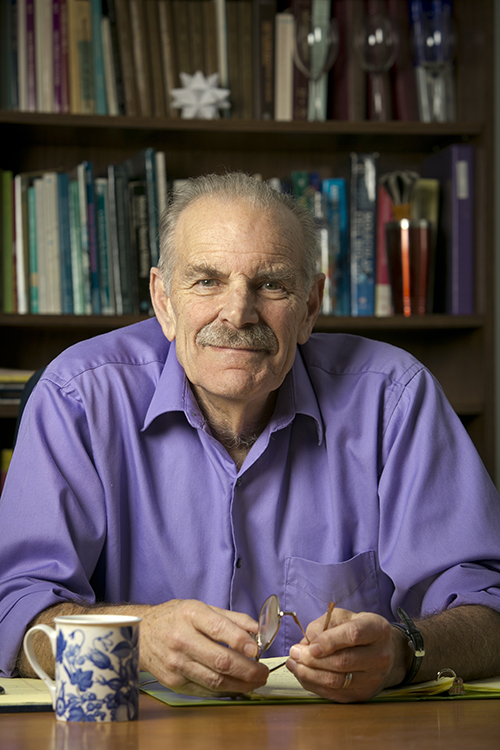
Gregory Samanez-Larkin, an assistant professor in Psychology & Neuroscience at Duke, uses neuroeconomic and neuromarketing approaches to seek answers to these questions. He combines experimental psychology and economics with neuroimaging and statistical analysis as an interdisciplinary approach to understanding human behavior.

Gregory Samanez-Larkin 

From studying the risk tendencies in different age groups to measuring the effectiveness of informative messages in health decision-making,Samanez-Larkin’s diverse array of research reflects the many applications of neuroeconomics.

He finds that neuroeconomic and neurofinance tools can help spot vulnerabilities and characteristics within groups of people.

Though his Motivated Cognition & Aging Brain Lab at Duke, he would like to extend his work to finding interventions that would encourage healthier or optimal decision-making. Many financial organizations and firms are interested in these questions.

While Samanez-Larkin has produced some very influential research in the field, the path to his career was not a straightforward one.Raised in Flint, Michigan, he found that the majority of people around him were not very career-oriented. He found a passion for wakeboarding, visual art, and graphic design.

As an undergraduate at the University of Michigan-Flint, he was originally on a pre-business track. But after taking various psychology courses and assisting in research, Samanez-Larkin was captivated by the excitement and the advances in brain imaging at the time.

However, misconceptions about the field caused him to question whether or not going into research was the right fit, leading him to seek jobs in marketing and advertising instead. But in job interviews, he ended up questioning the methods and the ways companies explained the appeal of different ways of advertising. Realizing that he really enjoyed asking questions and evaluating how things work, he reconsidered pursuing science.

After a series of positive experiences in a research position in San Francisco, Samanez-Larkin began his graduate studies at Stanford University. The growing field of neuroeconomics — which combined his diverse set of interests in neuroscience, psychology, and economics — continued the “decade-long evolution” of Samanez-Larkin’s career.

Samanez-Larkin’s experiences in his career journey are reflected strongly in his approach to teaching.

“I feel like my primary responsibility is to help people become successful,” he says, as we sit comfortably on the sofas in his office.“Everything I do is for that.”

In his courses, Samanez-Larkin emphasizes the need to think critically and evaluate information, consistently asking questions like, “How do we know something works or not? How do I know how to evaluate if it works or not? How can I become a good consumer of scientific information?”

In his teaching, Samanez-Larkin hopes to set students up with usable, translatable skills that are applicable to any field.

Samanez-Larkin also hopes to support his students in the same way he received support from his previous mentors. “It’s cool to learn about how the brain works, but ultimately, I’m just trying to help people do something.”

Guest Post by Ariba Huda, NCSSM 2019

Tiny Bubbles of Bacterial Mischief

Margarethe (Meta) Kuehn studies vesicles — little bubbles that bud off bacterial membranes. All sorts of things may be tightly packed into these bubbles: viruses, antigens, and information a bacterium will need to make cells vulnerable to infection.

But why do bacteria produce these small membrane vesicles in the first place? Why not spread out to nearby cells themselves?

Jenny and Meta met last month on the Duke campus.

“The short answer is that we don’t know yet,” explains Kuehn, an associate professor of biochemistry at Duke. “But we speculate that it is due to their small size. These vesicles, which serve as delivery ‘bombs,’ can pass through pores that are too small for bacteria to fit through.”

Originally a chemistry major, Kuehn always had an interest in biochemistry. As an undergraduate, she worked in protein purification and then in the infectious disease division of a children’s hospital. There, she learned about pathogenic bacteria and how they secrete proteins to give themselves access to host cells.

Kuehn’s lab studies the mysterious world of bacterial vesicle production,focusing on the genetic, biochemical, and functional features of vesicles. So far, they have identified specific proteins and genes involved in the vesiculation process.

With a fine filter, they showed that vesicles can fit through holes to reach mammalian cells where a bacterium cannot.

Kuehn wonders why the bacteria don’t just use soluble proteins, which are even smaller than vesicles. They must have some reason for preferring the cell’s vesicles. Currently, they believe that vesicles can serve as nice packages — a whole bolus of information delivered together.

Basic anatomy of a vesicle, a bubble-like  membrane-bound package used by cells to move things around.

Not only will this new insight into extracellular vesicles of gram-negative bacteria aid in identifying new medicines, vesicles are also being used for vaccine delivery.

“They are really good antigen vehicles,” reveals Kuehn, “The more we know how they are made, the better we can design effective vaccines for humans.”

According to Kuehn, the amazing part about studying these pathogens is that, “You are never done. You never know it all. Every single pathogen, they each do things differently.” What keeps Kuehn going, she explains, is that the search never ends.

“There is never really a defined end point; you have to come to grips with the fact that you will never know that whole answer.”

Guest Post by Jenny Huang, NCSSM 2019

Biology by the Numbers

Michael C. Reed was trained as a pure mathematician, but from the start, he was, as he explained to me, a “closet physiologist.” He’s a professor of mathematics at Duke, but he’s always wondered how the body works.

Michael Reed in his office

Reed explains an example to me: women have elbows that are bent when their arms are straightened, but men do not. He rationalized his own explanation: women have wide hips and narrow shoulders; their bodies are designed so their arms don’t knock into their sides when they walk. (That basically ended up being the answer.)

Still, Reed never really explored his interest in physiology until he was 40 years old, when he realized that if he wanted to explore something, he should just do it. Why not? He had tenure by that point, so it didn’t really matter what his colleagues thought. He was interested in physiology, but was a mathematician. The obvious answer was mathematical biology.

Now he uses mathematics to find out how various physiological systems work.

In order to decide on a research project, he works with a biologist, Professor Fred Nijhout. They meet for two hours every day and work together. They have lots of projects, but they also just talk science sometimes. That’s how they get their ideas, mainly focusing on things in cell metabolism that have to do with important public health questions.

Reed has been investigating dopamine and serotonin metabolism in the brain, in a collaborative project with Nijhout and Dr. Janet Best, a mathematician at The Ohio State University.

Maybe better math is going to help us understand the human brain

As he explained to me, the brain isn’t like a computer; you don’t know how it works and there are a lot of systems in play. Serotonin is one of them. Low serotonin concentration is thought to be one of the causes of depression. There’s a biochemical network that synthesizes, packages, and transfers serotonin in the brain.

He told me that his work consists of making mathematical models for systems like this that consist of differential equations for concentrations of different chemicals. He then experiments with the system of differential equations to understand how the system works together. It’s not really something you can learn by having it explained to you, he told me. You have to learn through practice.

In a way, biology doesn’t seem like it would be the most compatible science, especially with math. But as Reed explained to me, “Math is easy because it’s very orderly and organized. If you work hard enough, you can understand it.” Biology, on the other hand, “is a mess.”

Everything in biology is linked to everything else in a system of connectedness that ends up all tangled together, and it can be hard to identify how something happens in the human body. But Reed applies math – an organized construct – to understand biological systems.

In the end, Reed does what he does because it’s how we — as human beings — work. He has no regrets about the choices he’s made at all.Mathematical biology seems to be his calling — he’s more interested in understanding how things work, and that’s what he does when he works.

Or rather, he doesn’t really work; because, as he told me,“try to find something to do that you really like, and are passionate about,because if you do, it won’t seem like work.” Reed doesn’t see coming into work as a struggle. He’s excited about it every single day and “it’s because you want to do it, it’s fun.”

Guest Post by Rachel Qu, NCSSM 2019

Gene-Editing Human Embryos: What, How, Why?

Every seat full. Students perched on the aisle stairs and lining the back walls.

What topic could possibly pull so many away from their final exams? Not “How to Stop Procrastinating” nor “How to Pass Life After Failing Your Exams” but rather “Gene-Editing Human Embryos: Unpacking the Current Controversy” on the Duke campus.

Since Chinese researcher He Jiankui announced at the Second International Summit on Human Genome Editing in Hong Kong that he made the world’s first genetically engineered babies, a debate on the ethical implications has raged on social media.

On December 6, the University Program in Genetics and Genomics and the Molecular Genetics and Microbiology department co-hosted a panel responding to He’s claims. Charles A. Gersbach from the Biomedical Engineering department lead the discussion of what exactly happened and then joined the panel which also contained Misha Angrist, a senior fellow in the Science & Society initiative;  Heidi Cope, a genetic counselor; Giny Fouda, an assistant professor in pediatrics; and Vandana Shashi, a genetic counselor.

Dr. He Jiankui announced he had used CRISPR to edit genes in twin embryos that were then born at full term.

But what exactly has He potentially done to these twin girls? Can they fly? Breathe underwater? Photosynthesize? Not exactly. He said he deleted a gene called CCR5 to increase their HIV resistance. Two percent of Northern Europeans naturally have a mutation that removes the CCR5 gene from their DNA and as a result do not display any traits other than increased HIV resistance.

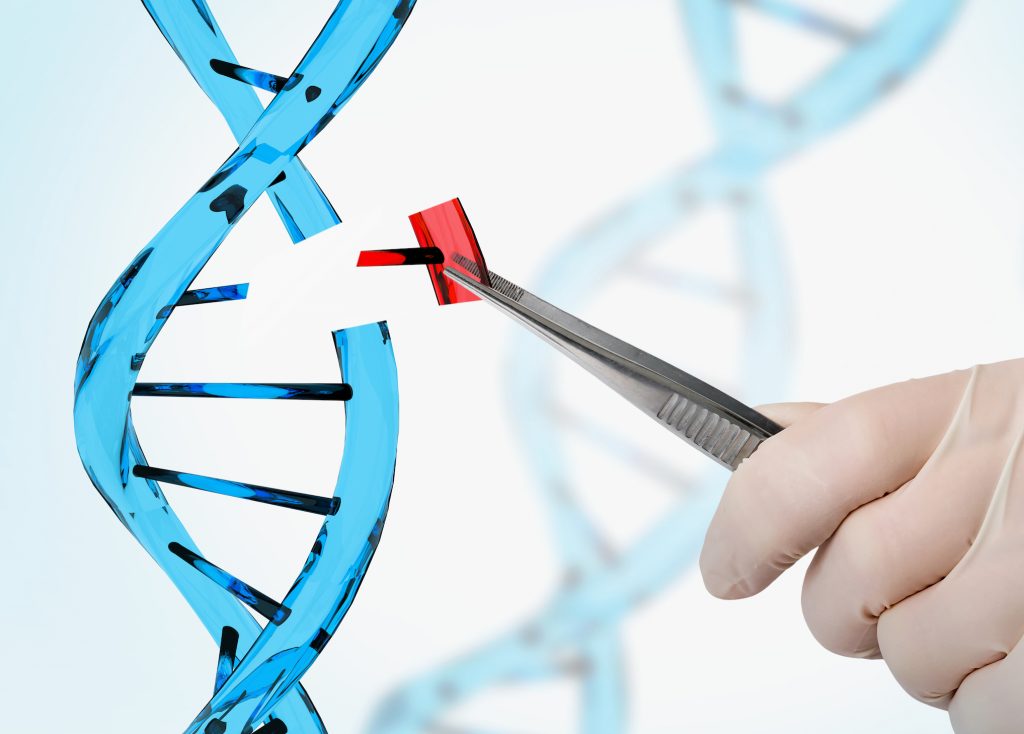
Many researchers have explored blocking CCR5 activity as a potential HIV treatment. Using CRISPR-Cas9, a genetic engineering technology that can cut and paste specific sequences in the DNA, He targeted CCR5 during in vitro fertilization. According to his tests, he successfully removed both copies of the CCR5 gene in one of the girls. However, in the other girl, the CCR5 remained normal on one chromosome and on the other, CRISPR had deleted more than intended.  The effects of that additional deletion are unknown. 
Both the girls are mosaics, meaning the genetic change occurred in some of their cells and not in others, leading to still more uncertainties.

Researchers have conducted genetic engineering experiments on both somatic cells and human embryo cells that were never brought to term. (Somatic cells constitute all parts of the body other than the eggs and sperm.) But because He altered the twin girls as embryos and then they grew to full term, their children could inherit these changes. This alters their family line, not just a single individual, increasing the ethical implications.

According to Shashi, He’s experiment becomes difficult to justify. Additionally, embryos have not consented to these changes in their genetics, unlike a patient undergoing genetic therapy.

Many doctors, scientists, and journalists have also questioned He’s lack of transparency because he hid this work until his grand announcement, which caused China to arrest him. In addition, as Cope explained, “it is not typically the PI who does the informed consent process” as He did with these parents.

While He defends his work by saying that the girls’ father carries HIV and wished to increase the girls’ safety, the twins were not actually at great risk for HIV. Their father’s medical history does not increase their chances of contracting the virus, and the overall risk for HIV in China is low. As Fouda emphasized in the panel, “there was no justification for this experiment.” While He discussed the potential for genetic engineering to help society, for these two individuals, no medical need existed, and that increases the ethical dilemma.

A final concern of researchers is the current inability to ensure technical competency and accuracy. As seen by the additional deletion in one of the girls,  CRISPR-Cas9 still makes errors. Thus using it to alter not only a human being but all of that individual’s progeny would demand a much higher standard, something close to a life-or-death scenario.

But, the panelists also noted, if it hadn’t been He, it would have been somebody else. Perhaps somebody else may have done it more ethically with more transparency and a more traditional consent process, Angrist said.

While He’s claims have yet to be proven, the fact that they could reasonably be true has many concerned. The World Health Organization has announced that they will begin greater oversight of genetic engineering of the human germline.

On campus over the last weeks, I’ve heard mixed reviews on He’s work with some joking about future superhero babies while others have reacted with fear. The technology does live among us; however, the world is working on writing the guidebook and unrolling the yellow tape.

Post by Lydia Goff

New Blogger Jeremy Jacobs: What’s in a Name?

Surviving my first snow day at Duke

Let’s start with my name: Jeremy Abraham Jacobs. It’s a surprisingly Biblical one,
a name that draws more from the Judeo-Christian tradition than my
Indian roots. Jeremy, derived from the prophet Jeremiah and the depths of my mother’s imagination. Abraham, both the name of my father’s father and the patriarch of Judaism. And Jacobs, the latest Americanization of my family name Yakob, Chacko, then Jacob.

At the heart of my name is language, the offspring of a million-year synthesis of firing neurons, geography, and culture. I too grew up a child of intersection, living a blend of the Indian tradition my parents brought over with them and the rich culture of the Deep South that’s flavored ever moment of my life.

I’m a freshman here at Duke, with all the uncertainties—and possibilities—of an undeclared major. But my passion lies in the crossroads that has defined my life. I want to understand the inseparable intertwining of linguistics and neuroscience. And communication enthralls me, from the individual cells that make up the tongue to the Spanish pluperfect subjunctive.

Who knows if, after four years, organic chemistry will have knocked me off the pre-med track, or if English will still hold my interest as tightly as it does today? But for now, at least, mysteries like the power of a name still keep me invested in the intricate interplay of science and language.

Move-in day featuring an injured arm!

What cascading forces of nature and nurture brought my mother to a small hospital in Tupelo, Mississippi, where I came into the world kickin’ and screaming’ one hot July morning? Was there some memory burned into her hippocampus that caused her to choose the name “Jeremy” in a sea of Chad’s, Luke’s, or Matt’s? And how different would my life have been if my name were not Jeremy Abraham Jacobs but rather Aakash Bola, or Harley Covington Pike III?

It took generations of missteps, chance encounters, and biological improbabilities for this name to fall to me, for this name to be mine. Perhaps one day I’ll understand every aspect of my unlikely existence, every factor that led to the genetically unique organism currently typing up this article. More likely, though, is that I’ll spend my life exploring the unknown, learning more about my own place in the mechanisms of the world.

But I know, at least, that intersection follows me, even here at the Duke Research Blog. I’m thrilled to infuse my own mix of science, writing, and culture into each article I produce, so I can ignite the passions of others students of science who seek their own common ground.

Post by Jeremy Jacobs

HIV Can Be Treated, But Stigma Kills

Three decades ago, receiving an HIV diagnosis was comparable to being handed a death sentence. But today, this is no longer the case.

Advances in HIV research have led to treatments that can make the virus undetectable and untransmittable in less than six months, a fact that goes overlooked by many. Treatments today can make HIV entirely manageable for individuals.

However, thousands of Americans are still dying of HIV-related causes each year, regardless of the fact that HIV treatments are accessible and effective. So where is the disconnect coming from?

On the 30th anniversary of World AIDS Day, The Center for Sexual and Gender Diversity at Duke University hosted a series of events surrounding around this year’s international theme: “Know Your Status.”

One of these events was a panel discussion featuring three prominent HIV/AIDS treatment advocates on campus, Dr. Mehri McKellar, Dr. Carolyn McAllaster, and Dr. Kent Weinhold, who answered questions regarding local policy and current research at Duke.

From left to right: Kent Weinhold, Carolyn McAllaster, Mehri McKellar and moderator Jesse Mangold in Duke’s Center for Sexual and Gender Diversity

The reason HIV continues to spread and kill, Dr. McKellar explained, is less about accessibility, and more about stigma. Research has shown that stigma shame leads to poor health outcomes in HIV patients, and unfortunately, stigma shame is a huge problem in communities across the US.

Especially in the South, she said, there is very little funding for initiatives to reduce stigma surrounding HIV/AIDS, and people are suffering as a result.

In 2016, the CDC reported that the South was responsible for 52 percent of all new HIV diagnoses and 47 percent of all HIV-related deaths in the US.

If people living with HIV don’t feel supported by their community and comfortable in their environment, it makes it very difficult for them to obtain proper treatment. Dr. McKellar’s patients have told her that they don’t feel comfortable getting their medications locally because they know the local pharmacist, and they’re ashamed to be picking up HIV medications from a familiar face.


HIV/AIDS Diagnoses and Deaths in the US 1981-2007 (photo from the CDC)

In North Carolina, the law previously required HIV-positive individuals to disclose their status and use a condom with sexual partners, even if they had received treatment and could no longer transmit the virus. Violating this law resulted in prosecution and a prison sentence for many individuals, which only enforced the negative stigma surrounding HIV. Earlier this year, Dr. McAllaster helped efforts to create and pass a new version of the law, which will make life a lot easier for people living with HIV in North Carolina.

So what is Duke doing to help the cause? Well, In 2005, Duke opened the Center for AIDS Research (also known as CFAR), which is now directed by Dr. Kent Weinhold. In the last decade, they have focused their efforts mainly on improving the efficacy of the HIV vaccine. The search for a successful vaccine has been long and frustrating for CFAR and the Duke Human Vaccine Institute, but Dr. Weinhold is optimistic that they will be able to reach the realistic goal of 60 percent effectiveness in the future, although he shied away from predicting any sort of timeline for this outcome.

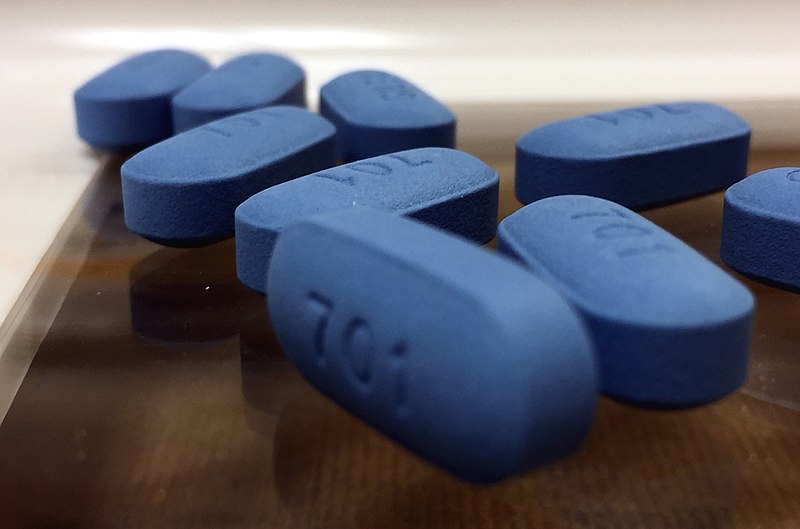
Pre-exposure prophylaxis or PrEP (photo from NIAID)

Duke also opened a PrEP Clinic in 2016 to provide preventative treatment for individuals who might be at risk of getting HIV. PrEP stands for pre-exposure prophylaxis, and it is a medication that is taken before exposure to HIV to prevent transmission of the virus. Put into widespread use, this treatment is another way to reduce negative HIV stigma.

The problem persists, however, that the people who most need PrEP aren’t getting it. The group that has the highest incidence of HIV is males who are young, black and gay. But the group most commonly receiving PrEP is older, white, gay men. Primary care doctors, especially in the South, often won’t prescribe PrEP either. Not because they can’t, but because they don’t support it, or don’t know enough about it.

And herein lies the problem, the panelists said: Discrimination and bias are often the results of inadequate education. The more educated people are about the truth of living with HIV, and the effectiveness of current treatments, the more empathetic they will be towards HIV-positive individuals.

There’s no reason for the toxic shame that exists nationwide, and attitudes need to change. It’s important for us to realize that in today’s world, HIV can be treated, but stigma kills.

Post by Anne Littlewood

Math on the Basketball Court

Boston Celtics data analyst David Sparks, Ph.D, really knew his audience Thursday, November 8, when he gave a presentation centered around the two most important themes at Duke: basketball and academics. He gave the crowd hope that you don’t have to be a Marvin Bagley III to make a career out of basketball — in fact, you don’t have to be an athlete at all; you can be a mathematician.

David Sparks (photo from Duke Political Science)

Sparks loves basketball, and he spends every day watching games and practices for his job. What career fits this description, you might ask? After graduating from Duke in 2012 with a Ph.D. in Political Science, Sparks went to work for the Boston Celtics, as the Director of Basketball Analytics. His job entails analyzing basketball data and building statistical models to ensure that the team will win.

The most important statistic when looking at basketball data is offensive / defensive efficiency, Sparks told the audience gathered for the “Data Dialogue” series hosted by the Information Initiative at Duke. Offensive efficiency translates to the number of points per possession while defensive efficiency measures how poorly the team forced the other offense to perform. These are measured with four factors: effective field goal percentage (shots made/ shots taken), turnover rate, successful rebound percentage, and foul rate. By looking at these four factors for both offensive and defensive efficiency, Sparks can figure out which of these areas are lacking, and share with the coach where there is room for improvement. “We all agree that we want to win, and the way you win is through efficiency,” Sparks said.

Since there is not a lot of room for improvement in the short windows between games during the regular season, a large component of Sparks’ job involves informing the draft and how the team should run practices during preseason.

David Sparks wins over his audience by showing Duke basketball clips to illustrate a point. Sparks spoke as part of the “Data Dialogue” series hosted by the Information Initiative at Duke.

Data collection these days is done by computer software. Synergy Sports Technology, the dominant data provider in professional basketball, has installed cameras in all 29 NBA arenas. These cameras are constantly watching and coding plays during games, tracking the locations of each player and the movements of the ball. They can analyze the amount of times the ball was touched and determine how long it was possessed each time, or recognize screens and calculate the height at which rebounds are grabbed. This software has revolutionized basketball analytics, because the implication of computer coding is that data scientists like Sparks can go back and look for new things later.

The room leaned in eagerly as Sparks finished his presentation, intrigued by the profession that is interdisciplinary at its core — an unlikely combination of sports and applied math. If math explains basketball, maybe we can all find a way to connect our random passions in the professional sphere.

The Importance of Evidence in Environmental Conservation

What counts as good evidence?

In medical research, a professional might answer this question as you would expect: evidence can be trusted if it is the result of a randomized, controlled, double-blind experiment, meaning the evidence is only as strong as the experiment design. And in medicine, it’s possible (and important) to procure this kind of strong evidence.

But when it comes to conservation, it’s a whole different story.

Dr. David Gill (photo from The Nicholas School)

The natural world is complicated, and far beyond our control. When studying the implications of conservation, it’s not so easy to design the kind of experiment that will produce “good” evidence.

David Gill, a professor in Duke’s Nicholas School for the Environment, recently led a study featured in the journal Nature that needed to  define what constitutes good evidence in the realm of marine conservation. Last Wednesday, he made a guest appearance in my Bass Connections meeting to share his work and a perspective on the importance of quality evidence.

Gill’s research has been centered around evaluating the effectiveness of Marine Protected Areas (or MPAs) as a way of protecting marine life. Seven percent of the world’s oceans are currently designated as MPAs, and by 2020, the goal is to increase this number to 10 percent. MPAs arguably have massive effects on ecosystem health and coastal community functioning, but where is the evidence for this claim?

Although past investigations have provided support for creating MPAs,  Gill and his team were concerned with the quality of this evidence, and the link between how MPAs are managed and how well they work. There have historically been acute gaps in study design when researching the effects of MPAs. Few experiments have included pre-MPA conditions or an attempt to control for other factors. Most of these studies have been done in hindsight, and have looked only at the ecological effects within the boundaries of MPAs, without any useful baseline data or control sites to compare them to.

As a result of these limitations, the evidence base is weak. Generating good evidence is a massive undertaking when you are attempting to validate a claim by counting several thousand moving fish.

Gill’s measure of ecosystem health includes counting fish. (Photo from Avoini)

So is there no way to understand the impacts of MPAs? Should conservation scientists just give up? The answer is no, absolutely not.

To produce better evidence, Gill and his team needed to design a study that would isolate the effects of MPAs. To do this, they needed to account for location biases and other confounding variables such as the biophysical conditions of the environment, the population density of nearby human communities, and the national regulations in each place.

The solution they came up with was to compare observations of current conditions within MPAs to “counterfactual” evidence, which is defined as what would have happened had the MPA not been there. Using statistical matching of MPAs to nearby non-MPA and pre-MPA sites, they were able to obtain high-quality results.

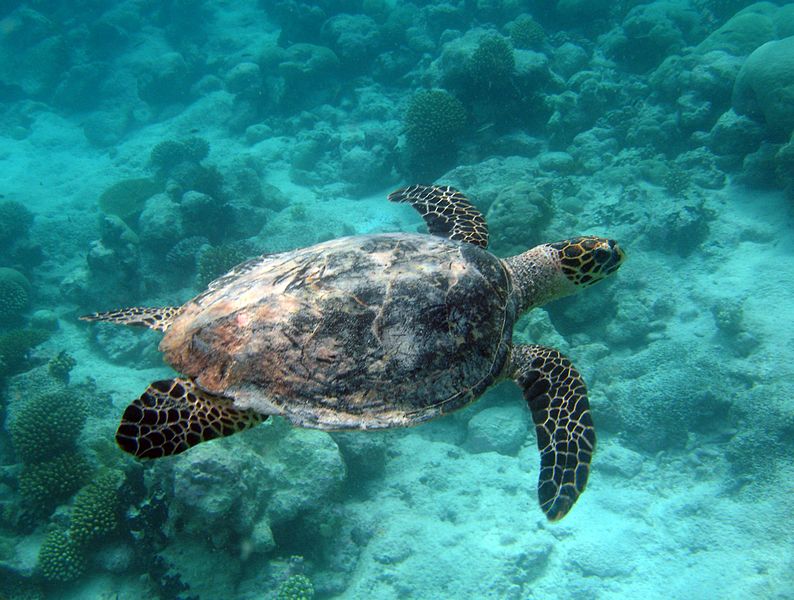
A happy sea turtle pictured in a marine protected area (photo from English Foreign and Commonwealth Office.)

The research showed that across 16,000 sampled sites, MPAs had positive ecological impacts on fish biomass in 71 percent of sites. They also discovered that MPAs with adequate staffing had far greater ecological impacts than those without, which is a pretty interesting piece of feedback when it comes to future development. It’s probably not worth it to create MPAs before there is sufficient funding in place to maintain them.

Gill doesn’t claim that his evidence is flawless; he fully admits to the shortcomings in this study, such as the fact that there is very little data on temperate, coldwater regions — mostly because there are few MPAs in these regions.

The field is ripe for improvement, and he suggests that future research look into the social impacts of MPAs and the implications of these interventions for different species. As the evidence continues to improve, it will be increasingly possible to maximize the win-wins when designing MPAs.

Conservation science isn’t perfect, but neither is medicine. We’ll get there.

Energy Week Kicks Off With Electric Bikes, Buses and More

Global warming is becoming a bigger issue every day. But have no fear – “Energy Week at Duke’ is here! The 2018 event featured everything from electric mountain bikes to the world’s most fuel-efficient vehicle.

To kick off the exciting week, eBike Central and Proterra founder Dale Hill rolled up to the Chemistry parking lot on Sunday to inform everyone about today’s latest tech that’s helping our planet become more sustainable.

eBike Central had a whole fleet of electric bikes, or “e-bikes,” on display for people to try out: mountain bikes, commuter bikes, cargo bikes and more. I tried out one of the mountain bikes and took it off-roading up a steep hill nearby (which I never would’ve been able to make up without the electric assist). Then just to mess around I tried out the “Packster 40,” which was equipped with a child seat in front of the handle bars. It was surprisingly maneuverable and went really fast.

Instead of having a throttle, these e-bikes work through pedal assist, meaning each time you pedal, the bike outputs additional power to the wheels. You can select from five different modes, ranging from “eco” (a 25 percent additional assist), to “turbo” (an extra 300 percent). You can reach top speeds of around 28 miles per hour without even breaking a sweat. What was really cool about the Packster 40 was that it could shift gears at a standstill, and you could add up to three seats if you’ve got triplets!

As you can see, e-bikes are a very eco-friendly and convenient mode of transportation. They allow for longer, faster commutes while also helping out the environment. The mountain bikes are appealing to a variety of riders, whether they have bad knees or just want the energy to do more laps per session. The batteries take about 4-6 hours to get a charge that lasts for 70 miles. Just within this past year, the mile range has increased by 30 percent, and that number is only growing. As the price for e-bikes goes down and their functionality improves, we’ll be seeing a lot more of them around.

E-bikes aren’t the only cool electric vehicle rising in popularity. Dale Hill gave an inspiring a talk on how his company Proterra is bringing positive change to public transit through their electrically powered buses. (pic: Duke Today)

Proterra decided to get involved with public transit because buses are ideal candidates for implementing battery electric vehicles. Buses operate on continuous routes, so it’s easy to watch them and monitor their performance. They come back to a common maintenance facility, operated on by a professional staff. And obviously they drive tons of people around every day, so cutting out fossil fuels for such a heavily used service could make a large-scale impact in the long run.

As the world’s urban density rapidly rises, it simply isn’t feasible for everyone to have cars. More and more people will need to turn to alternative methods, like the bus. By 2030, the majority of the world’s vehicles will be battery electric. Good thing is, not only are they more reliable than diesel ones, but they require much less maintenance . On top of that, they save a ton of money on gas. So not only are electric buses sustainable, but also a smart investment! It makes sense why Boston, New York City, San Francisco, Los Angeles and Austin have already all committed to having 100 percent electric bus fleets within the coming decades. And Proterra is playing a huge part in that. They currently account for 60 percent of all electric bus sales.

Duke itself is hopping on this electric vehicle train – by 2024 students will be riding a fully battery powered C1 between East and West Campus. This is another one of the sustainable steps Duke has been taking towards carbon neutrality.

The Duke Electric Vehicles team was also at the kickoff event, showcasing their vehicle that holds the Guinness World Record for most fuel-efficient vehicle. They did a couple of laps around the parking lot in the “hydrogen fuel cell car,” which gets the equivalent of 14,573 miles per gallon.

I encourage you guys to do your part in living sustainably. Maybe you could buy an electric bike, and effortlessly leave your friends dumbfounded in the dust on your way to school.

Will SheehanPost by Will Sheehan


Meet Dr. Sandra K. Johnson, Engineering “Hidden Figure”

When Dr. Sandra K. Johnson first tried her hand at electrical engineering during a summer institute in high school, she knew that she was born to be an electrical engineer. Now, as the first African-American woman to receive a Ph.D. in computer engineering in the United States, Johnson visited Duke to share her story as a “hidden figure” and inspire not just black women, but all students not to be discouraged by obstacles they may face in pursuit of their passion.

Though she did discuss her achievements, Johnson’s talk also made it clear that more than successes, it was the opposition she faced that most motivated her to persevere in electrical engineering. While pursuing a Master’s degree at Stanford, she met Dr. William Shockley, who in his free time was conducting research he believed would prove that African Americans were intellectually inferior to other races. Johnson had originally been planning on just finishing her program with a Master’s and then going into the workforce, but after hearing what this man was trying to prove, she decided she would prove to him that she was capable of doing anything that the non-black students in the same program could do. She finished the program with a Ph.D. in electrical engineering. She continued to make this declaration to anyone who didn’t believe she was capable: “before I leave this place, I will make a believer out of you.”

Dr. Johnson is the founder, CTO and CEO of Global Mobile Finance, Inc., a finance and tech startup based in Research Triangle Park, NC. Photo from BlackComputeHER.

While mapping out her own path to pursuing her goals, Johnson also firmly believed in making the path easier for other black people pursuing advanced degrees. When asked what the current generation of students could be doing to help themselves, she said to find mentors and to mentor others. Johnson shared an anecdote of sitting in a lab at Stanford waiting to begin an experiment when a man walked up to her and said she was in the wrong place. After talking to him for several minutes and showing him that she knew even more about the subject than he did and was in the right place, she told him that the next time someone who looked like her walked into the lab, not to be so sure of himself. Johnson went on to become an IBM Fellow, an IEEE Fellow, and a member of the prestigious Academy of Electrical Engineers. At the end of her talk, Johnson discussed what she believes is the best way to expedite change — to have people of color as founders and CEOs of major corporations that have the power to increase minority representation in their workforce. This is what she intends to do with her own company, Global Mobile Finance, Inc. If her current track record is any indication, there is no doubt her company will become a major corporation in the years to come, opening more doors for black women and other minorities pursuing their passions.

Post by Victoria Priester

Page 47 of 111

Powered by WordPress & Theme by Anders Norén