Research Blog

Following the people and events that make up the research community at Duke

Students exploring the Innovation Co-Lab

Using Genetic Clues to Reform Cardiac Care

Experiencing cardiac arrest can be compared to being in a hot air balloon in a room that is rapidly filling with water. You are trapped, desperately aware of the danger you are in, and running out of time.

Andrew Landstrom, PHD, MD, shared this metaphor with his audience in the Duke Medicine Pavilion last Thursday, and a wave of empathy flooded through his listeners. He works as an Assistant Professor of Pediatrics in Duke University’s School of Medicine, and devotes his time and energy to studying the genetic and molecular causes of sudden cardiac death in the young.

Andrew Landstrom, PHD, MD (Photo from Duke Center for Applied Genomics and Precision Medicine)

For families of children who have died suddenly and unexpectedly, the worst thing of all is hearing their doctors say, “we have no idea why.” A third of sudden death cases in children have negative autopsies, which means these children die with no explanation.

When faced with an inconclusive autopsy, everyone wants answers. Why did these children die? How do we know it’s a problem with the heart? What can be done about it? What does it mean for the siblings of the child who died?

It has since been discovered that many of these unexplained deaths are actually the result of cardiac channelopathies, which are DNA mutations that cause ion channel defects in heart cell proteins. These mutations can mess up the electrical activity of the heart and cause a heart to beat in an irregular rhythm, which can have fatal consequences. Since this is a molecular problem, and not a structural one, it cannot be identified with a conventional autopsy, and requires a deeper level of genetic and molecular analysis.

One type of channelopathy is a condition known as CPVT, which is short for catecholaminergic polymorphic ventricular tachycardia. This potentially life-threatening genetic disorder is the result of a point mutation in the genome, which means that one tiny nucleotide being changed in the DNA can lead to the single most fatal arrhythmia (irregular heart rhythm) known.

Sixty percent of children suffering from CPVT have a mutation in their RYR2 gene. This gene encodes for a protein that is found in cardiac muscle, and is a key player in how calcium is processed in heart cells. The mutated version of this gene results in proteins that let way too much calcium flood the cell, which can cause fatal changes in heart rhythm.

Dr. Landstrom has been using genome research to identify and explain sudden cardiac death in children, but the human genome doesn’t always provide straightforward answers. The problem is, a mutation in the RYR2 gene doesn’t always mean a person will have CPVT, and having an incidental RYR2 gene is much more common than being diagnosed with CPVT. Dr. Landstrom is studying this gene to try to figure out which variants are pathologic, and which are physiological.

“The human genome is a lot more confusing than I think I gave it credit for, and we’re just learning to deal with that confusion now,” he admitted to his audience Feb. 14.

The Components of the Human Genome (photo from NHS National Genetics and Genomics Education Centre)

If a variant is falsely identified as pathologic, a patient will be given incorrect therapies, and suffer through unnecessary procedures. However, if a variant is falsely identified as physiological, and the patient isn’t given the necessary treatment, there will be no mitigation of the patient’s life threatening disease. Neither of these are good outcomes, so it’s very important to get it right. The current models for predicting pathogenicity are poor, and Dr. Landstrom is looking to design new model that will be able to avoid the personal, subjective opinions of human doctors and determine if a variant is pathologic or not.

Could serotonin levels be used to predict an infant’s vulnerability to SIDS? (photo from Elmedir, Wikimedia Commons)

Another area that is of interest to Dr. Landstrom is the problem of Sudden Infant Death Syndrome (SIDS), which affects about six in every 10,000 infants, and cannot be diagnosed before death. He is on the search for a biomarker that would be able to predict an infant’s vulnerability to SIDS, and thinks that these deaths may be related to elevated levels of serotonin. Finding a marker like this would allow doctors to save many healthy infants from unexplained death. Dr. Landstrom knows its not easy research and admitted “we have to fail — we are meant to fail,” on the path to success. He is very aware of both the ethical complexity and the exciting implications of genome research at Duke, and committed to converting his research into patient care.

Post by Anne Littlewood


Bias in Brain Research

Despite apparent progress in achieving gender equality, sexism continues to be pervasive — and scientists aren’t immune.  

In a cyber talk delivered to the Duke Institute for Brain Sciences, professor Cordelia Fine of the University of Melbourne highlighted compelling evidence that neuroscientific research is yet another culprit of gender bias.

Fine says the persistent idea of gender essentialism contributes to this stagnation. Gender essentialism describes the idea that men and women are fundamentally different, specifically at a neurological level. This “men are from Mars, women are from Venus” attitude has spread from pop culture into experimental design and interpretation.

However, studies that look for sex differences in male and female behavior tend to show more similarities than differences. One study looked at 106 meta-analyses about psychological differences between men and women. The researchers found that in areas as diverse as temperament, communication styles, and interests, gender had a small effect, representing statistically small differences between the sexes.

Looking at fMRI data casts further doubt on how pronounced gender differences really are. A meta-analysis of fMRI studies investigating functional differences between men and women found a large reporting bias. Studies finding brain differences across genders were overrepresented compared to those finding similarities.

Of those small sex differences found in the central nervous system, Fine points out how difficult it is to determine their functional significance. One study found no difference between men and women in self-reported emotional experience, but found via fMRI that men exhibited more processing in the prefrontal cortex, or the executive center of the brain, than women. Although subjective experience of emotion was the same between men and women, the researchers reported that men are more cognitive, while women are more emotional.

Fine argues that conclusions like this are biased by gender essentialism. In a study she co-authored, Fine found that gender essentialism correlates with stronger belief in gender stereotypes, that gender roles are fixed, and that the current understanding of gender does not need to change.

When scientists allow preconceived notions about gender to bias their interpretation of results, our collective understanding suffers. The best way to overcome these biases is to ensure we are continuing to bring more and more diverse voices to the table, Fine said.

Fine spoke last month as part of the Society for Neuroscience Virtual Conference, “Mitigating Implicit Bias: Tools for the Neuroscientist.” The Duke Institute for Brain Sciences (@DukeBrain) made the conference available to the Duke community.  

Post by undergraduate blogger Sarah Haurin

Meet New Blogger Anna Gotskind: Science and Gilmore Girls

Hello! My name is Anna Gotskind. I’m a first year originally from Chicago. I plan to double major in biochemistry and environmental science and policy with a certificate in innovation and entrepreneurship (I know it’s a mouthful).

I fell in love with science in seventh grade, inspired by a great teacher named Mark A. Klein. He wore a different tie every day of the year, had tarantulas as pets and frequently refused to say anything but “9” until 9:00 am. He also taught me to appreciate research and discovery, guiding me as I conducted my first independent experiment on the caffeine content in tea which helped me win my middle school science fair.

One of my other role models is Rory Gilmore from the T.V. show Gilmore Girls (yes, I am aware that she is a fictional character). Inspired by watching her write for the Yale Daily News I decided to join the Duke Chronicle when I got to campus. I quickly learned that I loved writing for a publication but more specifically that I loved writing about science. It was incredibly exciting for me to read a study, interview the researchers who conducted it and then translate the information into a story that was understandable to the public. Beyond this, it was also incredible to be exposed to groundbreaking research that had real-world impacts. Essentially, it made me feel like a “Big Girl” and when you’re only 5’0” tall, sometimes that’s necessary.

Rory Gilmore

My love for science does not end in the classroom. My greatest passion is travel and I’ve been fortunate enough to travel around the world with my family exploring some of nature’s greatest wonders. We’ve hiked Bryce Canyon in Utah, Ali San in Taiwan and Masada in Israel. In December 2018 we ventured to the Galapagos, which as an aspiring environmentalist was an incredible experience. We go to see tortoises, iguanas, penguins, sharks and sea lions mere feet away. Right now I’m working with Duke Professor Stuart Pimm on a Big Cats Conservation Initiative sponsored by SavingSpecies, analyzing camera trap data of species in Sumatra, Brazil, and Ecuador. So who knows, I may be off there next. For more pictures check out my Instagram page @annagotskind (shameless plug).

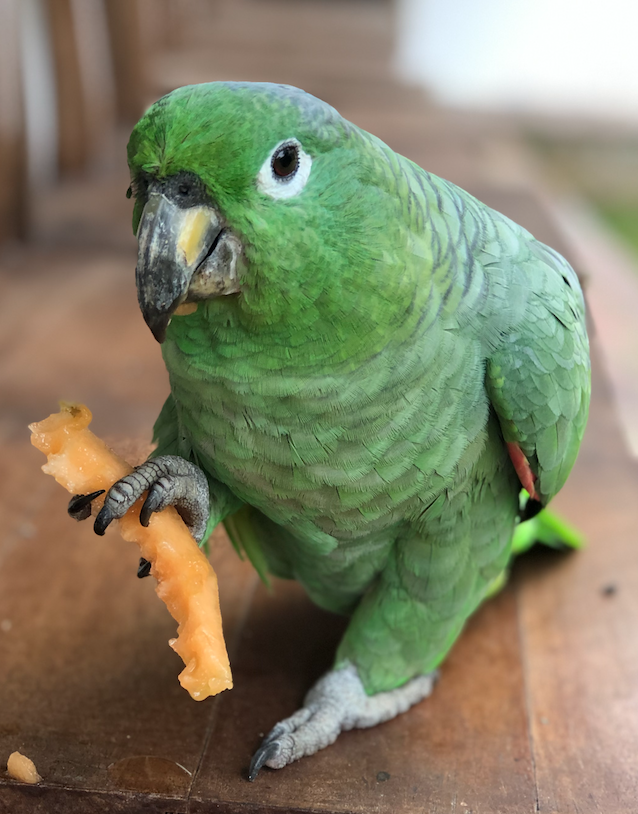
A Parrot my little brother Avi photographed in the Amazon Rainforest in Ecuador

I’m very excited to continue exploring and writing about the research being done on Duke’s campus!

By Anna Gotskind

The Importance of Moms

Emily Bray, Ph.D., might have the best job ever. Since earning her bachelor’s at Duke in 2012, she has been researching cognitive development in puppies, which basically means she’s spent the last seven years playing with dogs. If that’s not success, I don’t know what is.

Last Friday marked the 10th birthday of Duke’s Canine Cognition Center, and the 210th birthday of Charles Darwin. To celebrate, Brian Hare, Ph.D., invited former student Bray back to campus to share her latest research with a new generation of Duke undergraduates. The room was riveted — both by her compelling findings and by the darling photos of labs and golden retrievers that accompanied each slide.

Dr. Emily Bray shows photos of her study participants

During her Ph.D. program at the University of Pennsylvania, Bray worked with Robert Seyfarth, Dorothy Cheney, and James Serpell to investigate the effects of mothering on puppy development. For her dissertation, she studied a population of dog moms and their puppies at The Seeing Eye, Inc. The Seeing Eye is one of the oldest and largest guide dog schools in the U.S. They have been successfully raising and training service dogs for the blind since 1929, but like most things, it is still an imperfect science. Approximately half of the puppies bred at The Seeing Eye fail out of program. A dog that completes service training at The Seeing Eye represents two years of intensive training and care, and investing so much time and money into a dog that might eventually fail is problematic. Being able to predict the outcomes of puppies would save a lot of wasted time and energy, and Emily Bray has been doing just this.

What makes a good dog mom? (Photo from Dirk Vorderstraße, from Wikimedia Commons)

Through her work at The Seeing Eye, Bray found that, similar to humans, dogs have several types of mothering styles. She discovered that dog moms tend to fall somewhere on the spectrum from low to high maternal involvement. Some of the moms were very involved with their puppies, and seldom left their side. These hovering moms had high levels of cortisol, and became quite stressed when separated briefly from a puppy. They coddled their children, and often nursed from a laying down position, doing everything they could to make life easy for their babies. On the other side of the spectrum, Bray also observed moms that displayed much more relaxed mothering. They often took personal time, and let their puppies fend for themselves. They were more likely to nurse while sitting or standing up, which made their children work harder to feed. They were less stressed when separated from a puppy, and also just had generally lower levels of cortisol. Sound like bad parenting? Believe it or not, this tough love actually resulted in more successful puppies.

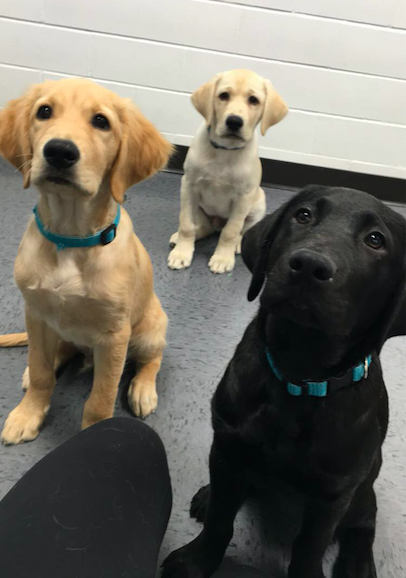
Duke’s very own assistance dogs in training!

As the puppies matured, Bray conducted a series of cognitive and temperament tests to determine if maternal style was associated with a certain way of thinking in the puppies. Turns out, dogs who experienced high maternal care actually performed much worse on the tests than dogs who were shown tough love when they were young. At The Seeing Eye graduation, it was also determined that high maternal care and ventral nursing was associated with failure. Puppies that were over-mothered were more likely to fail as service dogs.

Her theory is that tough love raises more resilient puppies. When mom is always around, the puppies don’t get the chance to experience small stressors and learn how to deal with challenge. The more relaxed moms actually did their kids a favor by not being so overbearing, and allowed for much more independent development.

Bray is now doing post-doctoral research at the University of Arizona, where she is working with Canine Companions for Independence (CCI) to determine if maternal style has similar effects on the outcomes of dogs that will be trained to assist people with a wide range of disabilities. She is also now doing cognition and temperament tests on moms pre-pregnancy to determine if maternal behavior can be predicted before the dogs have puppies. Knowing this could be a game changer, as this information could be used for selective breeding of better moms.

Me snuggling Ashton, one of the Puppy Kindergarten dogs

If you got the chance to hang out with puppies Ashton, Aiden, or Dune last semester, you have an idea of how awesome Bray’s day-to-day work is. These pups were bred at CCI, and sent to Duke to be enrolled in Duke Puppy Kindergarten, a new program on campus run through Duke’s Canine Cognition Center. Which of these three will make it to graduation? I’ve got money on Ashton, but I guess we’ll have to wait and see.

The bottom line according to Bray? “Mothering matters, but in moderation.”

When policy changes opportunities — intentionally and unintentionally

Assistant professor Deondra Rose researches the intersection between political history and policymaking. Photo from Duke Sanford School of Public Policy.

The intent of the National Defense of Education Act in 1958 was not to expand the rights for women in higher education. But it happened.

That’s something Duke Sanford assistant professor Deondra Rose called “accidental egalitarianism” in her talk at The Regulator Bookshop in Durham on Jan. 29. Rose discussed citizenship from the lens of historical policy research.

During the 1950s, the Soviet Union and the United States were in fierce competition to be the first country in space. This was the push the US government needed to start putting more funding towards higher education for a greater subset of the population. The 1944 GI Bill was the beginning of government-funded need-based financial aid for higher education, but until this point, aid had only been given to white men.

In Congress at this time, southern Democrats did not want to pass any legislation that would affect segregation, but at the same time, policymakers also needed to produce a policy that would be approved by northerners, who would not pass any policy that appeared discriminatory. They made the wording of the National Defense of Education Act intentionally vague to please both sides, and as a result it greatly expanded provisions for scholarships and loans to all kinds of students in higher education.

Much of professor Rose’s talk, entitled “Citizens by Degree” after her book, was centered around breaking down the idea of citizenship into different degrees of afforded opportunities. “First class citizens” — usually white Americans — are generally afforded all of the rights that come with being an American citizen without opposition, she said. Second class citizens, usually minorities and women, can miss out on opportunities for advancement afforded to others because of their minority status.

Rose also discussed how we can re-define the implications of certain terms such as “welfare state” to be used positively. Government assistance is not simply temporary assistance to new families, families with children or food stamps, but also includes Pell Grants and need-based financial aid. Similarly, “regulation” sometimes carries negative connotations, but Title IX can be thought of “regulation” that ensures women equal access in higher education.

Photo from Annual White House Summit on Historically Black Colleges and Universities (whitehouse.gov).

Rose’s latest research focuses on the relationship between policy, citizenship and education, and her next book is about historically black colleges and universities (HBCUs). In her political history research, she found that Title III is all about HBCUs, and the wording of the act suggests we as a nation ought to support and prize these institutions.

Rose wants to learn more about the role the US government has played in empowering HBCUs, and the role of HBCUs in restructuring political power — for example, 60 percent of black judges in the US have at least one degree from an HBCU.

At one point in history, the obstacle to higher education for second class citizens was access, then affordability, but have those two obstacles been completely overcome? What are new obstacles to higher education?

Rose believes that policies have the power to reshape politics by reshaping citizens, and we must keep finding and tackling obstacles to higher education.

By Victoria Priester

Overcoming Judgment Biases in STEM

Beginning in childhood we all develop unconscious stereotypes that influence how we see ourselves and others – including what careers we choose, and who we choose to recruit, hire or promote in the workplace.

Researchers discussed the origins and effects of these judgement biases during a virtual conference titled Mitigating Implicit Bias: Tools for the Neuroscientist, which was put on by the Society for Neuroscience and screened by DIBS at Duke on Jan. 23 and 24.

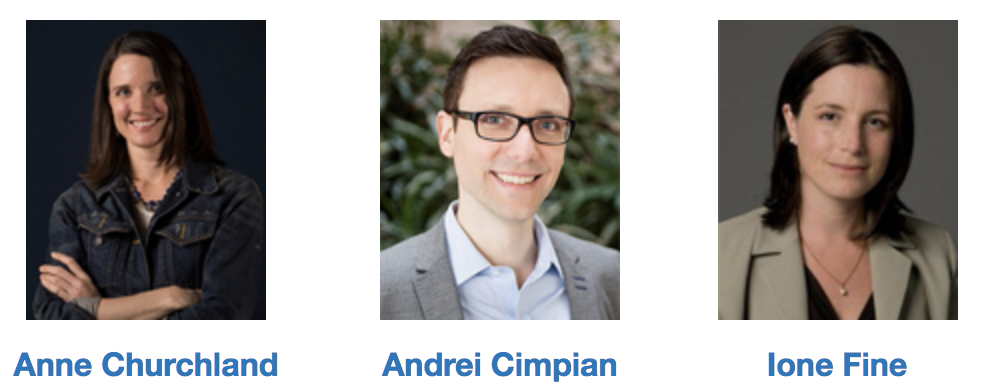
Associate professor of neuroscience Anne Churchland of Cold Spring Harbor Laboratory proposed several ideas for overcoming gender bias in the workplace, especially for women in STEM or other male-dominated domains. Asking questions, speaking with authority (particularly about one’s own work), finding a way to communicate with senior colleagues, trying risky experiments, making one’s achievements known, sending one’s work to high-level journals, and applying to awards and grants are her main suggestions. Above all these strategies, she recommends finding good friends and colleagues to help. As research shows, when women are successful in arenas that are viewed as distinctly male, both women and men like them less. These negative reactions can be discouraging and even career-affecting, and any support system will help to overcome that struggle.

The ‘Brilliance Barrier ‘ is a judgement bias explored by Andrei Cimpian’s research at New York University. One study shows that for every ten parents who searched on Google, “Is my daughter talented?”, twenty-five parents looked up “Is my son talented?”

Another study describes the gendered reviews on ratemyprofessor.com. Men are two to three times more likely to be called genius than women. Women though are more likely to be portrayed as warm or caring.

Cimpian uses these studies to develop the Field-specific Ability Beliefs hypothesis (FAB). FAB attributes women’s underrepresentation to a combination of the idolized brilliance/genius and the “brilliance” equals men stereotype. The higher the FAB in a field, the greater the emphasis on brilliance in it. When graphing the percentage of women with PhDs and the FAB for a specific field such as philosophy or physics, higher FABs are associated with a lower number of PhDs. African American representation also decreases as the FAB increases. Cimpian classifies one potential mechanism of this trend as minorities having less interest in fields with high FABs. In addition, increased bias, discrimination, and imposter syndrome could explain why minorities appear to avoid getting PhDs in high FAB fields.

Cimpian also demonstrates how susceptible children are to judgement biases. At age five, the percentage of girls who pick their own gender as “really, really smart” and the percentage of boys who do the same are similar. When children reach seven though, the percentage of boys choosing men exceeds the girls picking women. He suggests de-emphasizing brilliance, genius, and gifted in favor of work ethic because minorities are more likely to be recommended when the job description asks for commitment than when it asks for intelligence. Language has the potential to change the amount of representation in high FAB fields, such as STEM.

Image result for jackie fleming cartoons
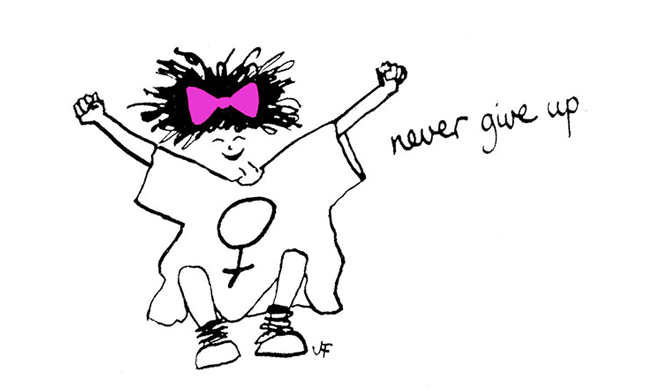
Never Give Up – Cartoon by Jackie Fleming

Lastly, psychology professor Ione Fine at the University of Washington talked about the hiring process in her lab and how she reduces bias by laying out and weighting criteria beforehand. Instead of focusing on objective criteria like GPA and GRE scores, she advocates for more interviews with set lists of questions and a paper discussion. She also recommends calling the recommendation letter writers. After selecting a diverse group of research assistants, Fine then makes sure they have the proper support and mentoring. Reinforcing that they were chosen for their potential and that she is their advocate helps them feel empowered to succeed in her lab. Through mentoring and supporting diversity, anyone can help minorities overcome the judgement biases surrounding them.   

Nature vs. Nurture and Addiction

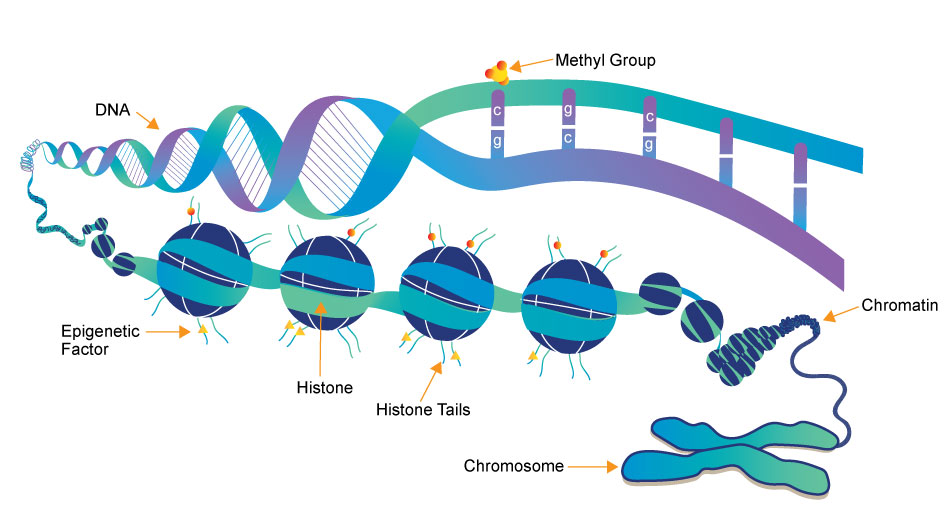
Epigenetics involves modifications to DNA that do not change its sequence but only affect which genes are active, or expressed. Photo courtesy of whatisepigenetics.com

The progressive understanding of addiction as a disease rather than a choice has opened the door to better treatment and research, but there are aspects of addiction that make it uniquely difficult to treat.

One exceptional characteristic of addiction is its persistence even in the absence of drug use: during periods of abstinence, symptoms get worse over time, and response to the drug increases.

Researcher Elizabeth Heller, PhD, of the University of Pennsylvania Epigenetics Institute, is interested in understanding why we observe this persistence in symptoms even after drug use, the initial cause of the addiction, is stopped. Heller, who spoke at a Jan. 18 biochemistry seminar, believes the answer lies in epigenetic regulation.

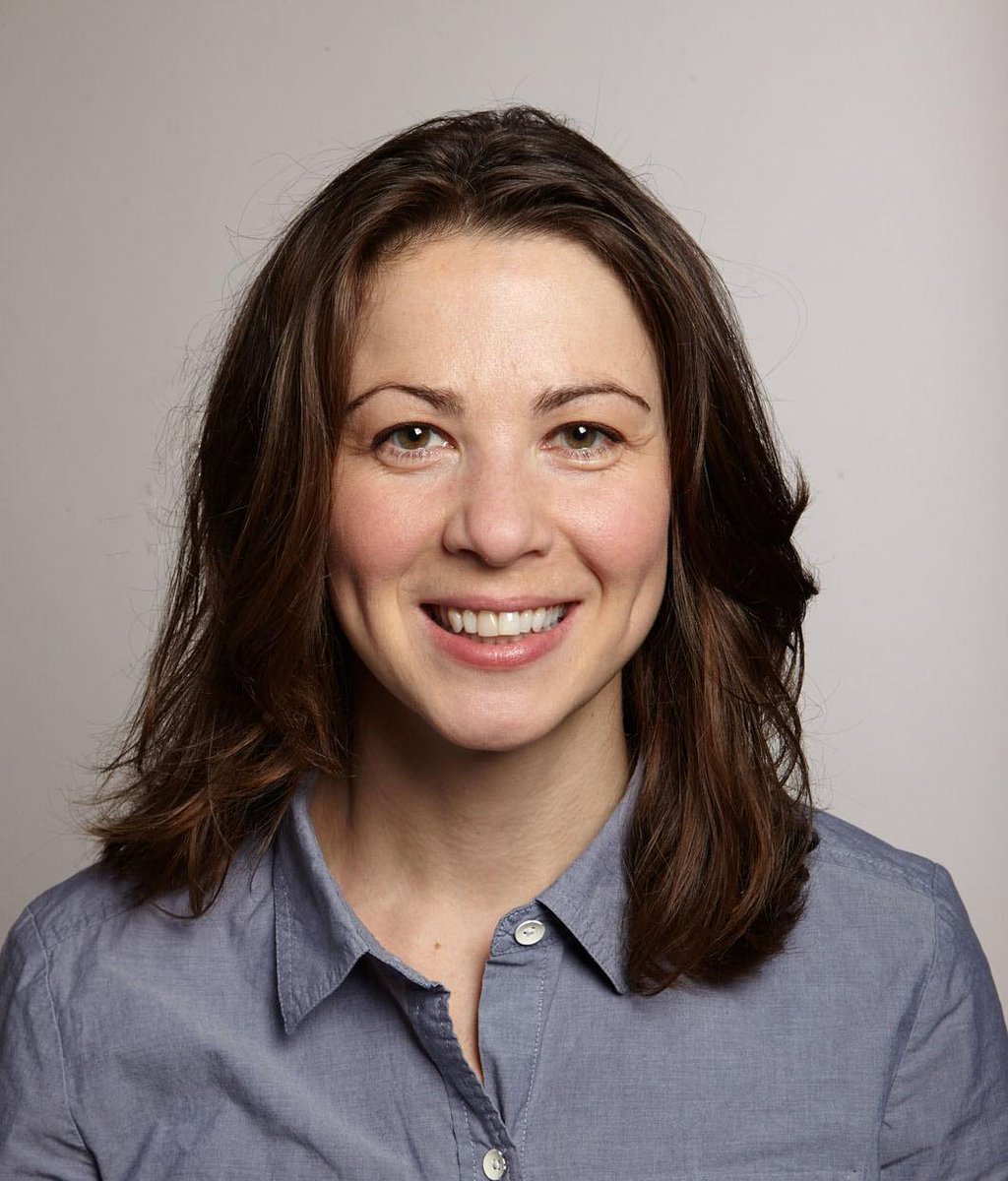
Elizabeth Heller is interested in how changes in gene expression can explain the chronic nature of addiction.

Epigenetic regulation represents the nurture part of “nature vs. nurture.” Without changing the actual sequence of DNA, we have mechanisms in our body to control how and when cells express certain genes. These mechanisms are influenced by changes in our environment, and the process of influencing gene expression without altering the basic genetic code is called epigenetics.

Heller believes that we can understand the persistent nature of the symptoms of drugs of abuse even during abstinence by considering epigenetic changes caused by the drugs themselves.

To investigate the role of epigenetics in addiction, specifically cocaine addiction, Heller and her team have developed a series of tools to bind to DNA and influence expression of the molecules that play a role in epigenetic regulation, which are called transcription factors. They identified the FosB gene, which has been previously implicated as a regulator of drug addiction, as a site for these changes.

Increased expression of the FosB gene has been shown to increase sensitivity to cocaine, meaning individuals expressing this gene respond more than those not expressing it. Heller found that cocaine users show decreased levels of the protein responsible for inhibiting expression of FosB. This suggests cocaine use itself is depleting the protein that could help regulate and attenuate response to cocaine, making it more addictive.

Another gene, Nr4a1, is important in dopamine signaling, the reward pathway that is “hijacked” by drugs of abuse.  This gene has been shown to attenuate reward response to cocaine in mice. Mice who underwent epigenetic changes to suppress Nr4a1 showed increased reward response to cocaine. A drug that is currently used in cancer treatment has been shown to suppress Nr4a1 and, consequently, Heller has shown it can reduce cocaine reward behavior in mice.

The identification of genes like FosB and Nr4a1 and evidence that changes in gene expression are even greater in periods of abstinence than during drug use. These may be exciting leaps in our understanding of addiction, and ultimately finding treatments best-suited to such a unique and devastating disease.   

Post by undergraduate blogger Sarah Haurin

Post by undergraduate blogger Sarah Haurin

Understanding the Universe, Large and Small

From the miniscule particles underlying matter, to vast amounts of data from the far reaches of outer space, Chris Walter, a professor of physics at Duke, pursues research into the great mysteries of the universe, from the infinitesimal to the infinite.

Chris Walter is a professor of physics

As an undergraduate at the University of California at Santa Cruz, he thought he would become a theoretical physicist, but while continuing his education at the California Institute of Technology (Caltech), he found himself increasingly drawn to experimental physics, deriving knowledge of the universe by observing its phenomena.

Neutrinos — miniscule particles emitted during radioactive decay — captured his attention, and he began work with the KamiokaNDE (Kamioka Nucleon Decay Experiment, now typically written as Kamiokande) at the Kamioka Observatory in Hida, Japan. Buried deep underground
in an abandoned mine to shield the detectors from cosmic rays and submerged in water, Kamiokande offered Walter an opportunity to study a long-supposed but still unproven hypothesis: that neutrinos were massless.

Recalling one of his most striking memories from his time in the lab, he described observing and finding answers in Cherenkov light – a ‘sonic boom’ of light. Sonic booms are created by breaking the sound barrier in air.  However, the speed of light changes in different media – the speed of light in water is less than the speed of light in a vacuum — and a particle accelerator could accelerate particles beyond the speed of light in water.  Walter described it like a ring of light bursting out of the darkness.

In his time at the Kamioka Observatory, he was a part of groundbreaking neutrino research on the mass of neutrinos. Long thought to have been massless, Kamiokande discovered the property of neutron oscillation – that neutrinos could change from flavor to flavor, indicating that, contrary to popular belief, they had mass. Seventeen years later, in 2015, the leader of his team, Takaaki Kajita, would be co-awarded the Nobel Prize for Physics, citing research from their collaboration.

Chris Walter (left) and his Duke physics collaborator and partner, Kate Scholberg (right), on a lift inside the Super-Kamiokande neutrino detector.

Neutrinos originated from the cosmic rays in outer space, but soon another mystery from the cosmos captured Walter’s attention.

“If you died and were given the chance to know the answer to just one question,” he said, “for me, it would be, ‘What is dark energy?’”

Observations made in the 1990s, as Walter was concluding his time at the Kamioka Observatory, found that the expansion of the universe was accelerating. The nature of the dark energy causing this accelerating expansion remained unknown to scientists, and it offered a new course of study in the field of astrophysics.

Walter has recently joined the Large Synoptic Survey Telescope (LSST) as part of a 10-year, 3D survey of the entire sky, gathering over 20 terabytes of data nightly and detecting thousands of changes in the night sky, observing asteroids, galaxies, supernovae, and other astronomical phenomena. With new machine learning techniques and supercomputing methods to process the vast quantities of data, the LSST offers incredible new opportunities for understanding the universe. 

To Walter, this is the next big step for research into the nature of dark energy and the great questions of science.

A rendering of the Large Synoptic Survey Telescope. (Note the naked humans for scale)

Guest Post by Thomas Yang, NCSSM 2019

Pursuing Smell as a Path Into the Brain

Although the mystery of how the brain works and grows is a massive puzzle to figure out, the hope is that piece by piece, we can start to work towards a better understanding.

A person’s (or fly’s) sense of smell, or their olfactory system, is one of these pieces.

Though olfaction may not be the first part of the nervous system to cross someone’s mind when it comes to how we understand the brain, it is actually one of the most complex and diverse systems of an organism, and there’s a lot to understand within it, says Pelin Volkan, an assistant professor of biology and neurobiology and investigator in the Duke Institute for Brain Sciences.

Pelin Volkan in her lab.

Volkan and her lab have been working with fruit flies to try to unfold the many layers of the olfactory system, or the, “giant hairball,” as Volkan calls it.

Though she has been doing this work for years, she didn’t begin with an interest in neuroscience. Volkan was more interested in genetics in college and didn’t really start exploring neurobiology and development until her master’s degree at a Turkish university, when she worked with rats.

Not keen on working with rodents as model organisms but sticking with them anyway, she moved from Turkey to UNC to get her PhD, where she strayed away from neuroscience into molecular biology and development. Eventually, she realized she had a stronger passion for neuroscience, and ended up doing a postdoc at a Howard Hughes Medical Institute lab at UCLA for six years.

There, she became interested in receptors and neuronal wiring in the brain, propelling her to come to Duke and continue research on the brain’s connections and development.

One of the main reasons she loves working with the olfactory system is the many different scientific approaches that can be used to study it. Bouncing between using genetics, evolution, development, molecular biology,and other areas of study to understand the brain, her work is never static and she can take a more interdisciplinary approach to neuroscience where she is able to explore all the topics that interest her.

 Volkan says she has never had to settle on just one topic, and new questions are always arising that take her in directions she didn’t expect, which is what makes her current work particularly enjoyable for her.

“You have your stories, you close your stories, but then new questions come into play,” Volkan says. “And you have no choice but to follow those questions, so you just keep on going.”

And isn’t that what science is all about?

Guest Post by Angelina Katsanis, NCSSM 2019

An Indirect Path to Some Extreme Science

Dr. Cynthia Darnell’s path to becoming a postdoctoral researcher in the Amy Schmid Labat Duke University was, in her words, “not straightforward.”

Dr. Cynthia Darnell is a Postdoc at Duke, studying ‘extremophiles.’

At the start of her post-high school career, Darnell had no clue what she wanted to do, so she went to community college for the first two years while she decided. She had anticipated that she was going to go to college as an art major, but had always enjoyed biology.

While at community college she took a couple biology courses. She transferred to another college where she took a course in genetics and according to her, “it blew my mind.” While at the college she took a variety of different biology courses. Her genetics professor’s wife was looking for a lab technician in the microbiology lab she ran. After Darnell worked there for two years, she decided to go to graduate school and had a whole list of places/universities she could attend.

However, after going to a conference in Chicago and meeting her future graduate advisor, Darnell made the decision to go to Iowa for six years of Graduate school. She ended up in the Schmid Lab at Duke University for her “postdoc” after her boss had recommended the lab to her.

Previously, Darnell had done research on the connectedness of genetic pathways in halophilic extremophiles — bacteria that lived in extremely salty conditions. She developed projects to understand the how their genetic network sends and receives signals.

Darnell is continuing that research at Duke while also looking at the effects of different environmental factors on growth and the genetic network using mutant halophilic extremophiles.

Darnell with some plated archaebacteria in her Duke lab

There are generally three different paths Darnell’s day in the lab can take. The first path is a bench day. During a bench day, she will be doing experiments looking at growth curves, microscopes or RNA extracts. The second path is a computational day in which she will do sequencing to look at gene expression. The third option is a writing day in which she spends a majority of her time writing up grants, papers, and applications.

Dr. Darnell wishes to open up her own lab in the future and serve underprivileged students in underserved areas. She wishes to do more research in the area of archaebacteria because of how under researched and underrepresented it is in the scientific community. Dr. Darnell hopes to study more about the signaling networks in archaebacteria in her own lab someday.

She especially wishes to be able to open her lab up to underprivileged students, exposing them to the possibilities of research and graduate programs.

Guest Post by Tejaswi Siripurapu, NCSSM 2019

Page 46 of 111

Powered by WordPress & Theme by Anders Norén