Research Blog

Following the people and events that make up the research community at Duke

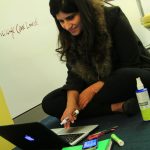
Students exploring the Innovation Co-Lab

Science Bracketology Runs Amok

By Karl Leif Bates

Okay, this bracket thing might be getting out of hand.

In addition to the men’s basketball tournament — where nearly 20 percent of the surviving teams are from our fair Triangle — and the women’s basketball tournament, in which both Duke and UNC are still alive — there have been a wave of science-related me-too brackets hoping to garner some social media love.

But hey, we have some big dogs in all of those fights too, so we’ll play along.
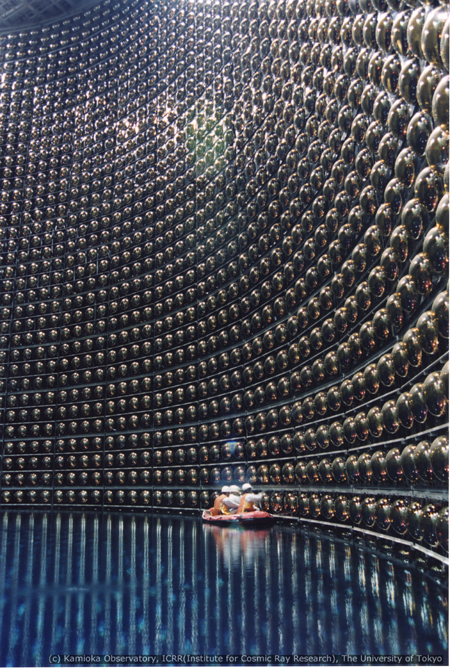
Maintenance workers inside the Super Kamiokande neutrino detector float on a rubber raft atop superpure water. (Kamioka Observatory, Institute for Cosmic Ray Research, The University of Tokyo)

Maintenance workers inside the Super Kamiokande neutrino detector float on a rubber raft atop superpure water. (Kamioka Observatory, Institute for Cosmic Ray Research, The University of Tokyo)

The particle physics folks at Symmetry magazine rolled out a bracket this week that pits sixteen of the coolest big machines in experimental physics against each other in head-to head-fashion.

Round one of their pair-wise elimination tournament pits an underground dark matter detector called LUX (The Large Underground Xenon dark-matter detector, naturally) against Swiss media darling, the Large Hadron Collider.

We’re going to stay on the sidelines for this one, as both experiments involve Duke people: Neutrino hunter Kate Scholberg, a professor of physics, works with LUX . And the LHC — specifically the ATLAS experiment — has dozens of Duke folks involved, most notably Mark Kruse, the Fuchsberg-Levine Professor of physics and head of ATLAS outreach in the U.S.

The fifth match in the physics bracket pits the Super-Kamiokande neutrino detector in Japan against something called DEAP in Canada which is looking for WIMPS. (We’re not making that up; it stands for Weakly Interacting Massive Particles.)

Kate Scholberg is a professor of physics at Duke.

Kate Scholberg is a professor of physics at Duke.

DEAP is probably a piece of junk though, because Super K has Scholberg and Associate Professor Chris Walter in its corner. And by the way, they’re already at work on Hyper-Kamiokande, which we’re sure the Canadians could only match with what, hyper wimps?

Go ahead and vote before 3 a.m. March 27, if you’re a fan of giant, expensive physics machines. We know we are!

UPDATE: April 7, 2015: The Dark Energy Camera, a big boy at the top of a Chilean mountain, topped the Large Hadron Collider in the final. Read the results here. We can’t believe there wasn’t some concerted ballot-stuffing going on.

Meanwhile, the good folks at ThomsonReuters have once again put out a bracket pitting the 64 universities in the men’s basketball tournament against each other on the strength of their academic publishing stats.

Last year, you’ll recall, the Blue Devils lost a heartbreaker in the final round to some California team that has like, a dancing tree for a mascot? What the Fir is up with that?

The ThomsonReuters contest is waged over h-indices, citation impact, international collaborations and other measures of research publishing rigor.

The California tree-huggers’ ballers didn’t make the basketball tournament this year, so maybe we have a clear shot to the finals again. Wisconsin and Harvard might give us a scare coming from the other side of the bracket, though.

UPDATE – April 7, 2015: We did indeed have a clear shot to the final contest, where Harvard beat us. This marks our second consecutive final-round disappointment. Read the disappointing news from Thomson Reuters. 

By the way, Duke won the dang basketball tournament at least!
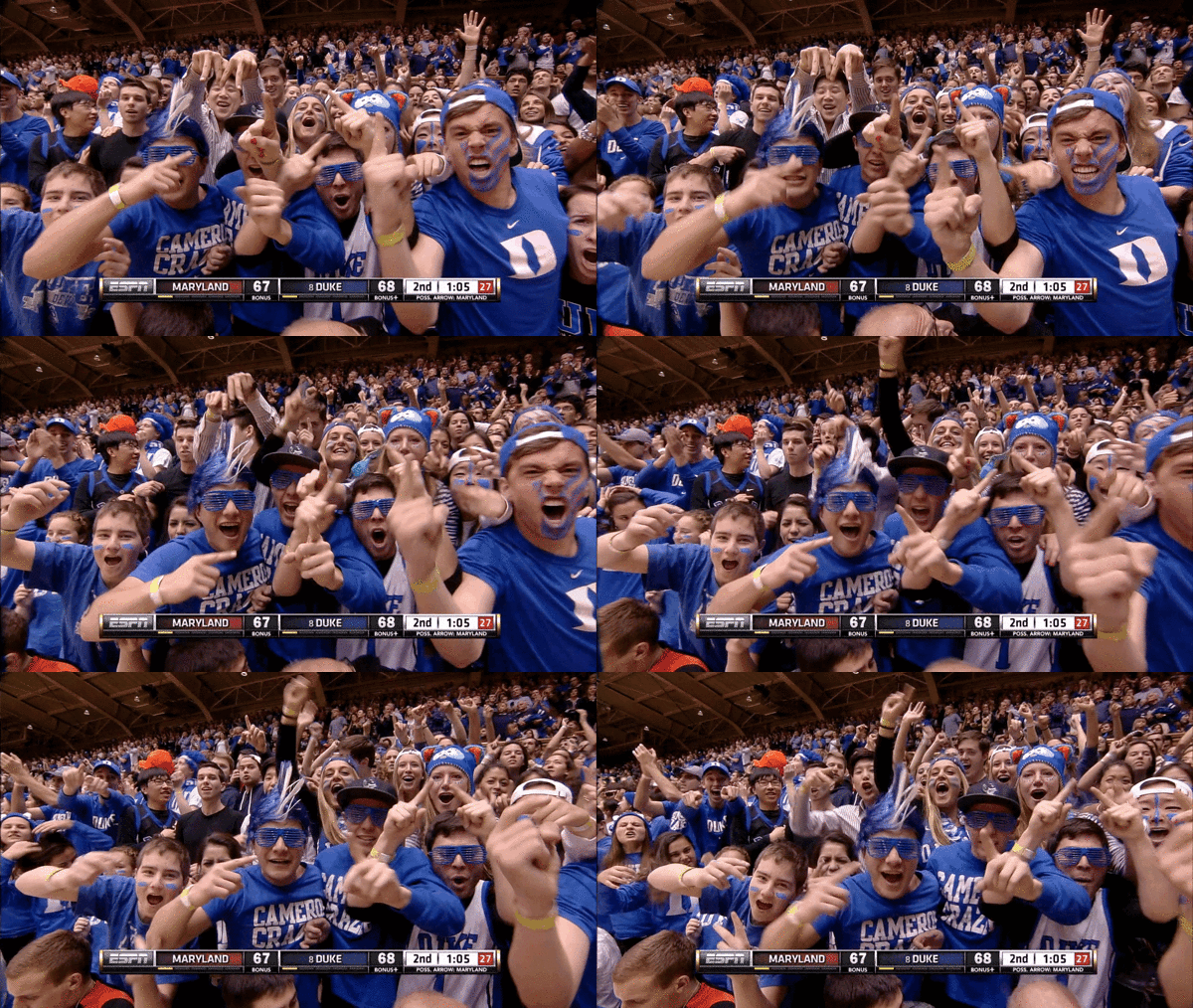
Cameron Crazies are rooting for our scientists too!

Cameron Crazies are rooting for our scientists too!

Science-Inspired Art

If you’ve ever walked into a biological or medical research lab you might have seen test tubes, pipettes, latex gloves and other gear. Artist and Duke graduate Jessica Johnson walks in and sees… beauty. Her art exhibit “Translating the Exome,” created in collaboration with professor Simon Gregory, PhD, is now on display in the Bryan Center through April 17.

Got Data? 200+ Crunch Numbers for Duke DataFest

Photos by Rita Lo; Writing by Robin Smith

While many students’ eyes were on the NCAA Tournament this weekend, a different kind of tournament was taking place at the Edge. Students from Duke and five other area schools set up camp amidst a jumble of laptops and power cords and white boards for DataFest, a 48-hour stats competition with real-world data. Now in its fourth year at Duke, the event has grown from roughly two dozen students to more than 220 participants.

Teams of two to five students had 48 hours to make sense of a single data set. The data was kept secret until the start of the competition Friday night. Consisting of visitor info from a popular comparison shopping site, it was spread across five tables and several million rows.

“The size and complexity of the data set took me by surprise,” said junior David Clancy.

For many, it was their first experience with real-world data. “In most courses, the problems are guided and it is very clear what you need to accomplish and how,” said Duke junior Tori Hall. “DataFest is much more like the real world, where you’re given data and have to find your own way to produce something meaningful.”

“I didn’t expect the challenge to be so open-ended,” said Duke junior Greg Poore. “The stakeholder literally ended their ‘pitch’ to the participants with the company’s goals and let us loose from there.”

As they began exploring the data, the Poke.R team discovered that 1 in 4 customers spend more than they planned. The team then set about finding ways of helping the company identify these “dream customers” ahead of time based on their demographics and web browsing behavior — findings that won them first place in the “best insight” category.

“On Saturday afternoon, after 24 hours of working, we found all the models we tried failed miserably,” said team member Hong Xu. “But we didn’t give up and brainstormed and discussed our problems with the VIP consultants. They gave us invaluable insights and suggestions.”

Consultants from businesses and area schools stayed on hand until midnight on both Friday and Saturday to answer questions. Finally, on Sunday afternoon the teams presented their ideas to the judges.

Seniors Matt Tyler and Justin Yu of the Type 3 Errors team combined the assigned data set with outside data on political preferences to find out if people from red or blue cities were more likely to buy eco-friendly products.

“I particularly enjoyed DataFest because it encouraged interdisciplinary collaboration, not only between members from fields such as statistics, math, and engineering, but it also economics, sociology, and, in our case, political science,” Yu said.

The Bayes’ Anatomy team won the best visualization category by illustrating trends in customer preferences with a flow diagram and a network graph aimed at improving the company’s targeting advertising.

“I was just very happily surprised to win!” said team member and Duke junior Michael Lin.

Blake Wilson: Pioneer of the Modern Cochlear Implant

By Anika Ayyar

Despite severe hearing difficulties, William H. Gates Sr. sat listening to his son, Bill Gates, deliver an acceptance speech after winning a Lasker Award for Public Service in 2013. He was able to participate in this momentous occasion thanks to his cochlear implant, an electronic device that simulates the functions of the cochlea (a cavity in the inner ear) by transmitting sound signals to the brain.

Coincidentally, three of the masterminds behind this very device were also present at the same ceremony, as they themselves were being awarded Lasker Awards for their work developing the modern cochlear implant. Blake Wilson, one of these scientists, noted during his speech at Duke last week that it was quite an experience for them to watch a device they had pioneered transform a personal interaction between William Gates Sr. and his son, right before their eyes.

Blake Wilson displays a cochlear implant.

Blake Wilson displays a cochlear implant.

Rewind 50 years, and few people would have paused to even consider the possibility of such a device that could capture sound signals and make them audible to individuals whose ears were damaged. Physiologist Merle Lawrence stated in 1964 that stimulation of auditory nerves would never result in perception of speech, while Rainer Klinke, a German neurophysiologist, went as far as to claim that “from a physiological point of view, cochlear implants [would] not work”.

Luckily, Blake Wilson thought differently. Starting in the 1980’s, he worked with teams across the globe, from the US, to Belgium, to Australia, to develop an innovative device that was able to process sound waves. As of 2015, this innovation has restored hearing capabilities to more than 450,000 individuals.

The path to generating an effective cochlear implant was characterized by continuous discovery and improvement. The first step in the process was simply to build a safe electronic device that had a lifespan of many years. This device was engineered to generate artificial electrical stimuli that triggered neurons in deaf individuals, whose sensory cells do not respond to the body’s chemical signals.

Diagram of cochlear implant in the human ear.

Diagram of cochlear implant in the human ear.

As the diagram on the right shows, both external (radio receiving and transmitting coils, processing chip) and internal (an array of electrodes around the helical structure of the inner ear) components work together in a cochlear implant to allow for speech recognition and hearing capabilities without the functionality of the cochlea’s natural functions.

Once scientists successfully engineered a device that stimulated the inner ear without causing any harm, teams in Palo Alto, Vienna, and Melbourne worked to enhance the implant by utilizing the tonotopic arrangement of the human auditory system. Stanford Professor Blair Simmons discovered that cadence, in addition to place of stimulation, was an important aspect of auditory signals, and he spearheaded experiments that sent different pulses to different electrodes in order to create a variety of perceptions of pitch.

By 1988, the NIH said that 1 in 20 patients who had received cochlear implants were able to carry out normal conversations without lip reading- a phenomenal accomplishment. The Consensus Statement also suggested that multichannel implants might be more effective than single-channeled ones, an idea that brought Wilson from Palo Alto to Duke in 1989, where he began to research multilateral stimulation. With support from the Research Triangle Institute, as well as members of the Duke community such as Dean Katsouleas of the Pratt School, Wilson was able to provide bilateral electrical stimulation to patients, by combining electric and acoustic methods for people who had residual, low frequency hearing. He also worked with colleagues to compress the range of sounds in the environment to a narrower range that could be transmitted to patients, by using filters to divide sounds into different frequencies.

Screen Shot 2015-03-11 at 5.26.26 PM

Blake Wilson converses with a user of a cochlear implant. The joy in the individual’s face is clear- and she is able to understand Wilson clearly!
Together, these prominent advances as well as numerous others fueled the evolution of the modern cochlear implant, which is projected to reach more than one million deaf and hearing-impaired individuals by 2020.

Listening to Wilson describe the history and progress of the project made it clear that the modern cochlear implant is not only a revolutionary creation in itself, but also that it holds enormous potential as a model for further development of other neural processes, such as restoration of vision and balance. Perhaps the most inspirational part of Wilson’s presentation however, was his description of the profound joy experienced by patients, doctors, and families whenever a cochlear implant restores auditory capability to an individual who otherwise never dreamt it possible to be able to hear.

Blake Wilson can be contacted at blake.wilson@duke.edu

To learn more about the event, please visit this page.

View the entire lecture, with introductions by Provost Sally Kornbluth and Dean Tom Katsouleas of the Pratt School of Engineering. (1:08)

Mouse Lemur Quandary Stumps Researchers

By Sheena Faherty, Ph.D. Candidate in Biology

What does famous lemur researcher, Dame Alison Richard, do when she has a burning question she can’t answer?

She visits Duke and appeals to a room full of lemur enthusiasts to help out.

Richard’s question concerns the curious case of the mouse lemurs at Beza Mahafaly in southwestern Madagascar, where she has been involved in a wildlife-monitoring program since the mid-1990s.

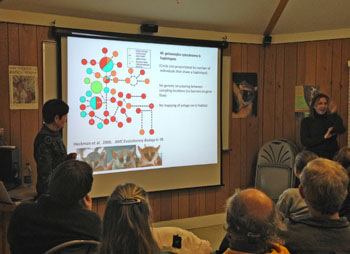
Alison Richard (left) and Lemur Center Director Anne Yoder (right) lead a discussion in the 'Beach House' at DLC.

Alison Richard (left) and Lemur Center Director Anne Yoder (right) lead a discussion in the ‘Beach House’ at DLC.

“What do I know about mouse lemurs?” she questioned a group that gathered at the Duke Lemur Center on March 3 as the first of three talks she held at Duke this week as part of the Von der Heyden Fellows Program. “Probably less than you do. But I am incredibly interested in what is going on with them at Beza Mahafaly.”

Everywhere else in Madagascar, mouse lemurs that look indistinguishable are classified as different species due to big variations at the genetic level. But at Beza Mahafaly, Richard is finding that mouse lemurs with major deviations in appearance are genetically the same.

Dame Alison Richard (Photo: HHMI)

Dame Alison Richard (Photo: HHMI)

For a long time, the general view was that there were two species of mouse lemur in the forests of Beza Mahafaly : the gray-brown mouse lemur and the gray mouse lemur (both being exceptionally adorable).

A few studies in the mid-1990s and early 2000s compared the shapes of certain features such as jawbone shape and leg length, and confirmed this view. Then, researchers started noticing a few trapped animals that had very noticeable differences in coat coloration. These animals were redder than the other two known species. Was this a possible third species?

In 2006, Duke Lemur Center Director, Anne Yoder, and her former Ph.D. student Kellie Heckman examined this same population of mouse lemurs from a genetic standpoint. Comparing sequences of DNA they expected to find major genetic differences between the two known species, and possibly confirm the existence of a third species.

“The genetic data was a disaster for the mouse lemurs,” Richard said.

All the samples collected from animals at Beza Mahafaly, regardless of the animal’s outward appearance, sorted together and seemed to be one species.

Dame Alison and the bedeviled mouse lemur of Beza Mahafaly

Dame Alison and the bedeviled mouse lemur of Beza Mahafaly

“There’s a part of me that’s very distressed about this, but there’s a part of me that thinks this is great,” Richard said. “At Beza Mahafaly we swim upstream. We’re contrarians,” she said laughing. “But we still don’t know how to best explain the diversity that we do see.”

She offered up some suggestions: A glimpse of an ongoing process of change? A replacement by one species over another? The beginning of a new species?

Flashing a picture of a mouse lemur displaying ominous eye shine from a headlamp, she said: “The mouse lemurs are waiting with an evil gleam in their eye to be told the truth about themselves. The question is how should we take this forward?”

Seed Grants Pair Scientists at Duke and RTI International

The original intent of Funds Launching Alliances for Research Exploration (FLARE) had been to provide seed funding to one research project that joins Duke University scientists with those at RTI International, a global non-profit research institution in the Research Triangle Park.

In the end, the proposals were so good that Duke Vice Provost for Research Larry Carin and RTI President and CEO Wayne Holden decided they had to fund two.

The goal of the seed funding, which was announced last week, is to create new collaborations that would be attractive to federal funding. Each team will receive $100,000 in seed funding.

Kirsten Corazzini of the Duke School of Nursing and Michael Lepore of RTI will co-lead a project on improving nursing home care.

Kirsten Corazzini of the Duke School of Nursing and Michael Lepore of RTI will co-lead a project on improving nursing home care.

One of the winning ideas is a team combining Duke’s department of sociology and School of Nursing with RTI’s public health and health policy researchers. They’ll be examining methods to improve nursing home care through patient-directed  planning. After a year of theoretical framing and data collection, the group hopes to pursue an R21 application with the National Institute of Nursing Research (NINR).

This group will be led by Duke’s Kirsten Corazzini, PhD, an Associate Professor of Nursing, and Michael Lepore, PhD, Senior Health Policy & Health Services Researcher at RTI.

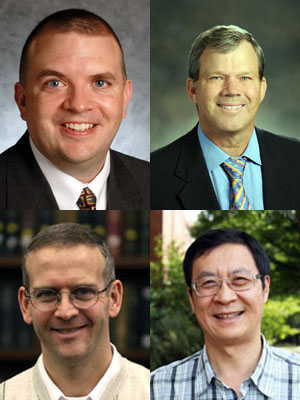
(Clockwise from upper left) RTI's Brooks Depro and William Studabaker will join Duke's Jim Zhang and Christopher Timmins in a study about air quality around fracking operations.

(Clockwise from upper left) RTI’s Brooks Depro and William Studabaker will join Duke’s Jim Zhang and Christopher Timmins in a study about air quality around fracking operations.

The second winning proposal will do air quality assessments before shale gas fracking operations have begun in a local area. This combines Duke economist Christopher Timmins, Ph.D. and Jim Zhang, Ph.D. of the Nicholas School of Environment with RTI economist Brooks Depro, Ph.D. and research chemist William Studabaker, Ph.D.

They plan to apply data visualization and an exploration of correlations with identifiable sources of local air pollution (especially toxics, VOC’s and particulates) and characteristics of local populations. Documenting ambient pollution before fracking starts will be critical to accurately measuring the air quality effects of the practice. This group intends to approach NIH for funding after the pilot program.

Madagascar's Conservation Superhero to Visit Campus

Guest Post By Sheena Faherty, Ph.D. Candidate in Biology

Dame Alison Richard is the epitome of someone who puts her money where her mouth is. And her dedication is directed precisely where it’s needed most.

Richard, a protector of lemurs, artisanal salt entrepreneur and endless optimist, is not just doing something about Madagascar’s conservation crisis. She’s doing everything about it.

Alison Richard (Photo: HHMI)

Alison Richard (Photo: HHMI)

She’ll visit Duke March 3-5 to give three-part lecture series discussing her role in over forty years of community-based conservation efforts in Madagascar.

Members of the Duke community know all too well that our beloved lemurs— many of which can only be found at the Duke Lemur Center or in Madagascar—are in dire straights.

Their plight has been a life’s work for Richard, who is best known for her research on sifakas in the spiny forests of Madagascar.  But she also lays claim to having been the first female vice-chancellor at Cambridge. She has now returned to Yale, where she spent most of her career, as a senior research scientist and professor emerita.

“Sometimes I think that because I’m covering so many bases, I end up doing nothing very well,” Richard said. “But it’s what I do and I can’t imagine not doing any of them—so it’s too bad,” she said laughing.

Richard is a conservationist who understands that without considering the local people’s well-being, all attempts to save wildlife habitats will fail.

“There are a variety of ways in which we are trying to facilitate socio-economic enhancements to people’s lives,” Richard said. “[On a recent trip to Madagascar] I met with the association of women salt producers, who are producing artisanal salt by techniques that have been in place for hundreds of years.”

In collaboration with a start-up company that is highly focused on sustainability, she recently shipped the first 500 kilos of the Madagascan salt to the U.S.

Verreaux's Sifaka, a favorite of Richard's in Southwestern Madagascar. (Credit: Flickr user nomis-simon, CC)

Verreaux’s Sifaka, a favorite of Richard’s in Southwestern Madagascar. (Credit: Flickr user nomis-simon, CC)

Taking time away from protecting the lemurs and enhancing the lives of the Malagasy people, Richard said her Duke lectures will have broad appeal for anyone interested in conservation, or for those who just enjoy seeing adorable pictures of lemurs.

She hopes to focus on writing a book, the topic of which will draw from her public lecture on March 5 at 6:00 pm at the Great Hall of the Mary Duke Biddle Trent Semans Center for Health Education. This lecture is set to explore how an array of different sciences has changed our understanding of Madagascar’s history.

And the conservationist who said she does everything has some advice for conserving her own mental sanity.

“One thing I need to do going forward is to find things to stop doing,” she admits. “And I’m not good at that because they are all too interesting and seemingly too important,” she said.

So, what’s next for Alison Richard?

“More of doing everything!” she said.

Richard's installation as vice chancellor of Cambridge in November 2009 was occasioned by a visit from  her Majesty Queen Elizabeth II, who's husband, Prince Philip, is the chancellor.

Richard’s installation as vice chancellor of Cambridge in November 2009 was occasioned by a visit from her majesty Queen Elizabeth II, who’s husband, Prince Philip, is the chancellor.

Joining the Team: Anika Ayyar

By Anika Ayyar

Hi! My name is Anika Ayyar and I am currently a Duke freshman. I grew up in warm, lovely Saratoga, California, where I picked up my love for long distance running, organic farming, and the ocean. When I was 14, I moved to across the country to Exeter, New Hampshire to attend a boarding high school, and here I developed a deep interest in biology and medicine. Exeter’s frost and snow were far from the Cali weather I was used to, but my fascinating classes, caring teachers, and wonderful friends more than made up for the cold.

My sophomore semester abroad program at The Island School, on an island called Eleuthera in the Bahamas, certainly provided a welcome change to East coast weather as well. At the Island School I studied marine biology and environmental conservation, earned my SCUBA certification, and spent time with the local middle schoolers refurbishing a library and stocking it with books. I was also part of a research team that studied species richness and diversity on patch reefs off the coast of the island.

Dissecting fruit fly larvae under the microscope at the Seung Kim Lab at Stanford.

Dissecting fruit fly larvae under the microscope at the Seung Kim Lab at Stanford.

My marine research stint in the Bahamas drove me to join a molecular biology lab the summer after I returned; a decision that transformed my passion for science. At the Seung Kim Lab for Pancreas Development at Stanford University, I worked on a project that used binary systems to study the expression of specific genes related to insulin production and diabetes in fruit flies. I soon grew so immersed in my work that I wanted to share the project with others in the scientific community at Exeter, and my research mentors, biology professors, and I worked to create a novel course where other students could take part in the project as well. This unique research collaboration, called the “StanEx” project, proved to be a huge success, allowing other students to experience the trials and joys of real-world research while also generating Drosophila fly strains that were useful to the larger scientific community. If you are interested in reading more, check out my website about the StanEx project!

While my current interests lie more at the intersection of technology and medicine, I hope to be involved in equally compelling and fulfilling research here at Duke. Hearing about the various projects my professors are working on, and reading about the discoveries made in labs on campus, I have no doubt that this will be the case.

Outside of classes and research, I enjoy being part of the Duke Debate team, and Lady Blue, one of Duke’s all-female a cappella groups. You can often find me on the trails on a long run, or trying out a new dessert recipe I found on Pinterest. I am beyond excited to be a part of the research blogging team, and can’t wait to start attending talks and interviewing research personalities whose stories I can share with our readers!

Grave Effects of the Great Migration

Sometimes a great move can have grave consequences — particularly when that move is a massive migration. In the 20th Century, millions of African-Americans relocated from the Deep South to search for greater quality of life in an exodus known as the Great Migration. However, the gains many made were clouded by higher mortality rates in old age. Despite having access to greater opportunities for work and education, Duke economist Seth Sanders found that men and women who relocated to the North and West were more likely to die before reaching their 70s than their counterparts who remained in the rural South. Here’s a glimpse at how city living took a late-life toll on migrants:

grave-effects-great-migration_infographic
You can read the full story on Duke Today.

Origami-Inspired Chemistry Textbook Brings Molecules To Life

by Anika Radiya-Dixit

Your college textbook pages probably look something like the picture below – traffic jams of black boats on a prosaic white sea.

blackAndWhiteText

Textbook without illustrations.

But instead of reading purely from static texts, what if your chemistry class had 3D touch-screens that allowed you to manipulate the colors and positions of atoms to give you visual sense of how crystal and organic structures align with respect to each other? Or what if you could fold pieces of paper into different shapes to represent various combinations of protein structures? This is the future of science: visualization.

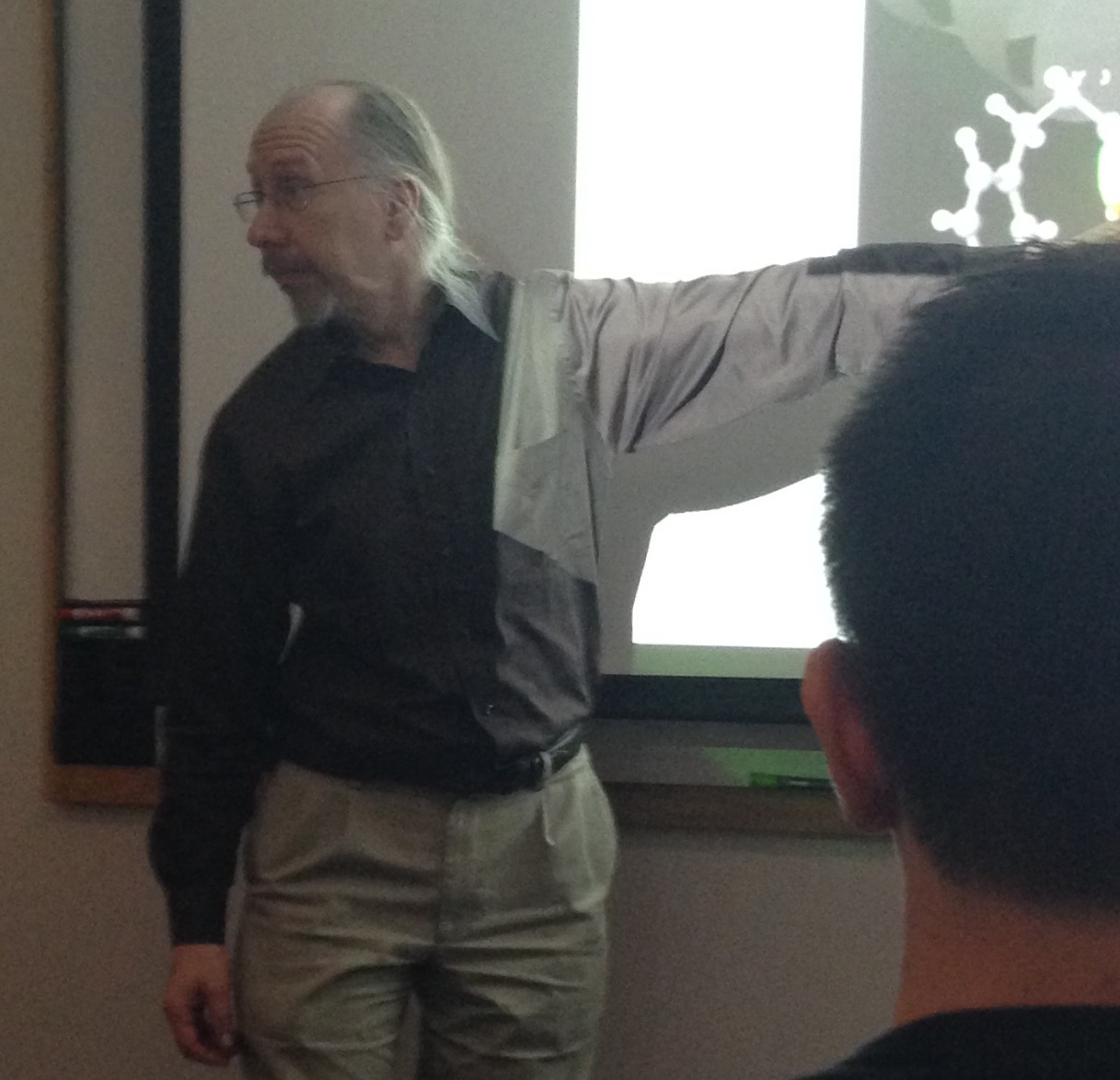
Duke students and staff gathered in the Levine Science Research Center last week to learn more about visualizing chemical compounds while munching on their chili and salad. Robert Hanson, Professor in the Department of Chemistry at St. Olaf College, was enthusiastic to present his research on new ways to visualize and understand experimental data.

Exhibition poster of “Body Worlds”


Hanson opened his talk with various applications of visualization in research. He expressed a huge respect for medical visualization and the people who are able to illustrate medical procedures, because “these artists are drawing what no one can see.” Take “Body Worlds,” for example, he said. One of the most renowned exhibitions displaying the artistic beauty of the human body, it elicited a myriad of reactions from the audience members, from mildly nauseated to animatedly pumped.

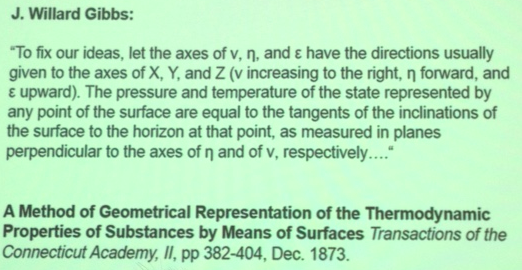
Hanson also spoke about the significance of having an effective visualization design. Very simple changes in visualization, such as a table of numbers versus a labeled graph, can make a “big difference in terms of ease of the audience catching on to what the data means.” For example, consider the excerpt of a textbook by J. Willard Gibbs below. One of the earliest chemists to study the relationship between pressure and temperature, Gibbs wrote “incredibly legible, detailed, verbatim notes,” Hanson said. Then he asked the audience: Honestly, would one read the text fervently, and if so, how easy would it be to understand these relationships?

Gibbs'Text

Excerpt of J. Gibbs’ text.

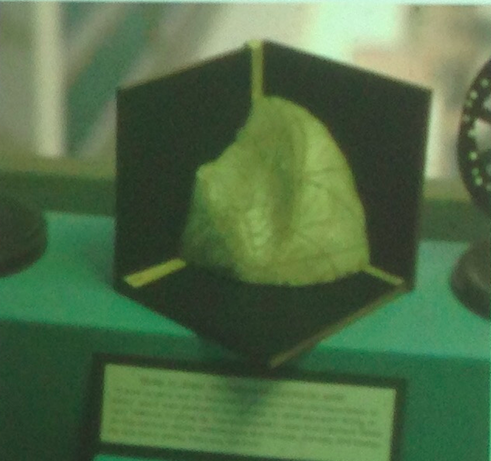
Not very, according to James C. Maxwell, a distinguished mathematician and physicist, who attempted to design a simpler mechanism with his inverted 3D plaster model.

Maxwell'sPlaster

Maxwell’s plaster model of Gibbs’ surface

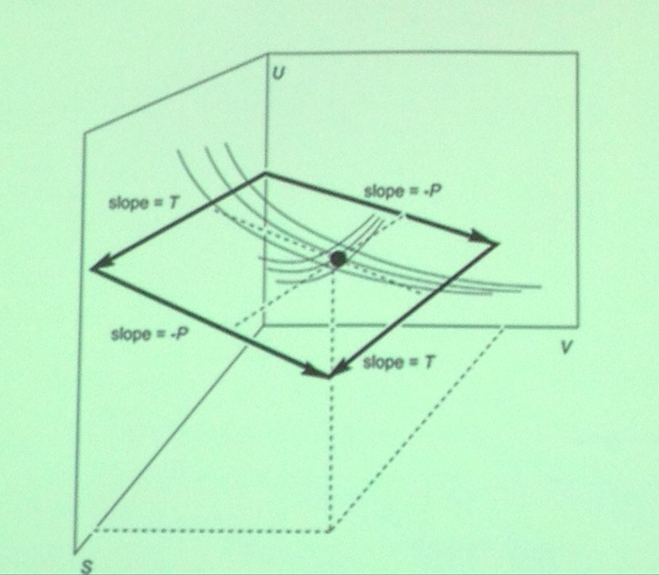
Subsequent scientists created the graph shown below to represent the relationships. Compared to the text, the diagram gives several different pieces of information about entropy and temperature and pressure that allow the reader to “simply observe and trace the graph to find various points of equilibrium that they couldn’t immediately understand” from a block of black and white text.

Graph

Graphical view of Gibbs’ theory on the relation between temperature and pressure.

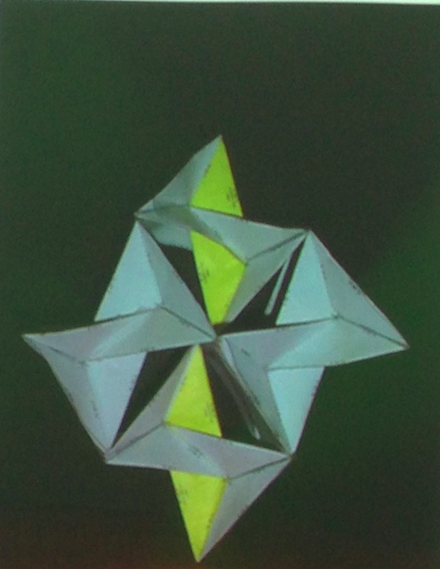
Hanson went further in his passion to bring chemistry to the physical realm in his book titled “Molecular Origami.” The reader photocopies or tears out a page from the book, and then folds up the piece of paper according to dotted guidelines in order to form origami molecular “ornaments.” The structures are marked with important pieces of information that allow students to observe and appreciate the symmetry and shapes of the various parts of the molecule.

origami

3D origami model of marcasite (scale: 200 million : 1)


One of his best moments with his work, Hanson recounted, was when he received a telephone call from some students in a high school asking him for directions on how to put together a 3D model of bone. After two hours of guiding the students, he asked the students what the model finally looked like – since he had knowledge of only the chemical components – and was amused to hear a cheeky “He doesn’t know.” Later that year, Hanson was rewarded to see the beautiful physical model displayed in a museum, and was overjoyed when he learned that his book was the inspiration for the students’ project.

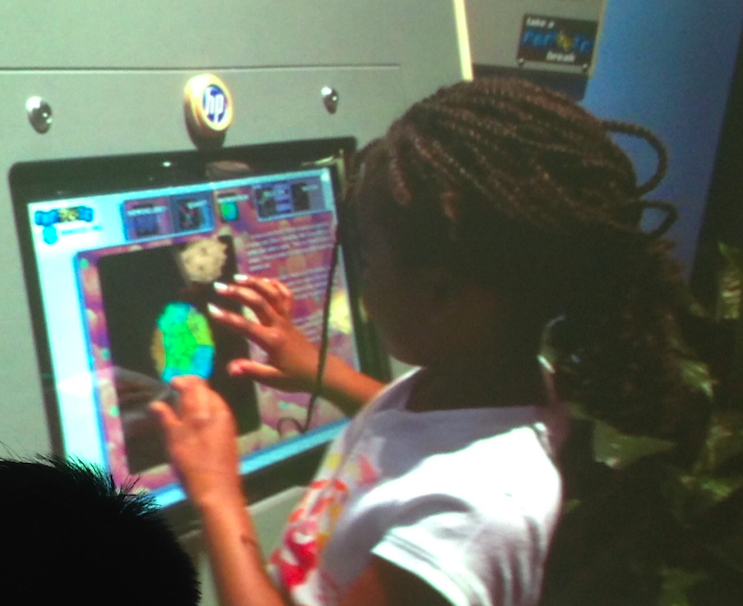
More recently, Hanson has worked on developing virtual software to view compounds in 3D complete with perspective scrolling. One of his computer visualizations is located in the “Take a Nanooze Break” exhibition in Disneyland, and allows the user to manipulate the color and location of atoms to explore various possible compounds.

TouchAMolecule

“Touch-A-Molecule” is located in the Epcot Center in Disneyland.

By creating images and interactive software for chemical compounds, Hanson believes that good visualization can empower educators to gain new insights and make new discoveries at the atomic level. By experimenting with new techniques for dynamic imagery, Hanson pushes not only the “boundaries of visualization,” but more importantly, the “boundaries of science” itself.

Hanson

Professor Hanson explains how to visualize points of interaction on a molecule.


Contact Professor Hanson at hansonr@stolaf.edu

Read more about the event details here.

View Hanson’s book on “Molecular Origami” or buy a copy from Amazon.

Page 77 of 111

Powered by WordPress & Theme by Anders Norén