Research Blog

Following the people and events that make up the research community at Duke

Students exploring the Innovation Co-Lab

X-mas Under X-ray

If, like me, you just cannot wait until Christmas morning to find out what goodies are hiding in those shiny packages under the tree, we have just the solution for you: stick them in a MicroCT scanner.
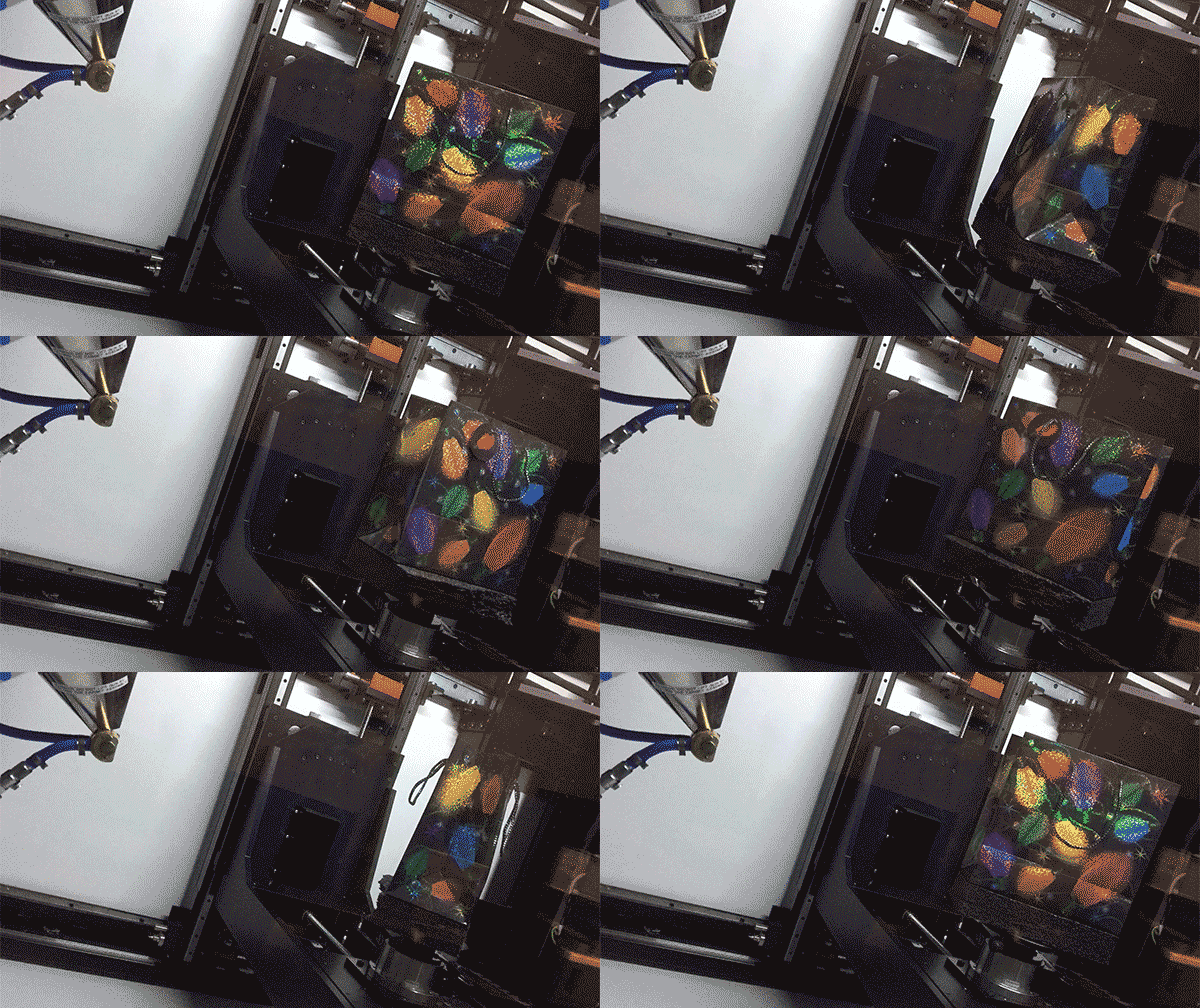
A christmas present inside a MicroCT scanner.

Our glittery package gets the X-ray treatment inside Duke’s MicroCT scanner. Credit Justin Gladman.

Micro computed-tomography (CT) scanners use X-ray beams and sophisticated visual reconstruction software to “see” into objects and create 3D images of their insides. In recent years, Duke’s MicroCT has been used to tackle some fascinating research projects, including digitizing fossils, reconstructing towers made of stars, peaking inside of 3D-printed electronic devices, and creating a gorgeous 3D reconstruction of organs and muscle tissue inside this Southeast Asian Tree Shrew.

x-ray-view

A 20 minute scan revealed a devilish-looking rubber duck. Credit Justin Gladman.

But when engineer Justin Gladman offered to give us a demo of the machine last week, we both agreed there was only one object we wanted a glimpse inside: a sparkly holiday gift bag.

While securing the gift atop a small, rotating pedestal inside the device, Gladman explained how the device works. Like the big CT scanners you may have encountered at a hospital or clinic, the MicroCT uses X-rays to create a picture of the density of an object at different locations. By taking a series of these scans at different angles, a computer algorithm can then reconstruct a full 3D model of the density, revealing bones inside of animals, individual circuits inside electronics – or a present inside a box.

“Our machine is built to handle a lot of different specimens, from bees to mechanical parts to computer chips, so we have a little bit of a jack-of-all-trades,” Gladman said.

Within a few moments of sticking the package in the beam, a 2D image of the object in the bag appears on the screen. It looks kind of like the Stay Puft Marshmallow Man, but wait – are those horns?

Blue devil ducky in the flesh.

Blue devil ducky in the flesh.

Gladman sets up a full 3D scan of the gift package, and after 20 minutes, the contents of our holiday loot is clear. We have a blue devil rubber ducky on our hands!

Blue ducky is a fun example, but the SMIF lab always welcomes new users, Gladman says, especially students and researchers with creative new applications for the equipment. For more information on how to use Duke’s MicroCT, contact Justin Gladman or visit the Duke SMIF lab at their website, Facebook, Youtube or Instagram pages.

Kara J. Manke, PhD

Post by Kara Manke

When Art Tackles the Invisibly Small

Huddled in a small cinderblock room in the basement of Hudson Hall, visual artist Raewyn Turner and mechatronics engineer Brian Harris watch as Duke postdoc Nick Geitner positions a glass slide under the bulky eyepiece of an optical microscope.

To the naked eye, the slide is completely clean. But after some careful adjustments of the microscope, a field of technicolor spots splashes across the viewfinder. Each point shows light scattering off one of the thousands of silver nanoparticles spread in a thin sheet across the glass.

“It’s beautiful!” Turner said. “They look like a starry sky.”

AgAlgae_40x_Enhanced3

A field of 10-nanometer diameter silver nanoparticles (blue points) and clusters of 2-4 nanoparticles (other colored points) viewed under a dark-field hyperspectral microscope. The clear orbs are cells of live chlorella vulgaris algae. Image courtesy Nick Geitner.

Turner and Harris, New Zealand natives, have traveled halfway across the globe to meet with researchers at the Center for the Environmental Implications of Nanotechnology (CEINT). Here, they are learning all they can about nanoparticles: how scientists go about detecting these unimaginably small objects, and how these tiny bits of matter interact with humans, with the environment and with each other.

img_2842

The mesocosms, tucked deep in the Duke Forest, currently lay dormant.

The team hopes the insights they gather will inform the next phases of Steep, an ongoing project with science communicator Maryse de la Giroday which uses visual imagery to explore how humans interact with and “sense” the nanoparticles that are increasingly being used in our electronics, food, medicines, and even clothing.

“The general public, including ourselves, we don’t know anything about nanoparticles. We don’t understand them, we don’t know how to sense them, we don’t know where they are,” Turner said. “What we are trying to do is see how scientists sense nanoparticles, how they take data about them and translate it into sensory data.”

Duke Professor and CEINT member Mark Wiesner, who is Geitner’s postdoctoral advisor, serves as a scientific advisor on the project.

“Imagery is a challenge when talking about something that is too small to see,” Wiesner said. “Our mesocosm work provides an opportunity to visualize how were are investigating the interactions of nanomaterials with living systems, and our microscopy work provides some useful, if not beautiful images. But Raewyn has been brilliant in finding metaphors, cultural references, and accompanying images to get points across.”

img_2872

Graduate student Amalia Turner describes how she uses the dark-field microscope to characterize gold nanoparticles in soil. From left: Amalia Turner, Nick Geitner, Raewyn Turner, and Brian Harris.

On Tuesday, Geitner led the pair on a soggy tour of the mesocosms, 30 miniature coastal ecosystems tucked into the Duke Forest where researchers are finding out where nanoparticles go when released into the environment. After that, the group retreated to the relative warmth of the laboratory to peek at the particles under a microscope.

Even at 400 times magnification, the silver nanoparticles on the slide can’t really be “seen” in any detail, Geitner explained.

“It is sort of like looking at the stars,” Geitner said. “You can’t tell what is a big star and what is a small star because they are so far away, you just get that point of light.”

But the image still contains loads of information, Geitner added, because each particle scatters a different color of light depending on its size and shape: particles on their own shine a cool blue, while particles that have joined together in clusters appear green, orange or red.

During the week, Harris and Turner saw a number of other techniques for studying nanoparticles, including scanning electron microscopes and molecular dynamics simulations.

steepwashing-cake-copy-23

An image from the Steep collection, which uses visual imagery to explore how humans interact with the increasingly abundant gold nanoparticles in our environment. Credit: Raewyn Turner and Brian Harris.

“What we have found really, really interesting is that the nanoparticles have different properties,” Turner said. “Each type of nanoparticle is different to each other one, and it also depends on which environment you put them into, just like how a human will behave in different environments in different ways.”

Geitner says the experience has been illuminating for him, too. “I have never in my life thought of nanoparticles from this perspective before,” Geitner said. “A lot of their questions are about really, what is the difference when you get down to atoms, molecules, nanoparticles? They are all really, really small, but what does small mean?”

Kara J. Manke, PhD

Post by Kara Manke

José Jerónimo – Innovations in Cervical Cancer Screening

José Jerónimo and his team are transforming the face of cervical cancer screening. Jerónimo is a physician and senior advisor for the women’s cancers branch of PATH, an international nonprofit organization that uses innovative technologies to improve health outcomes in developing countries. Jerónimo, who’s work at PATH has facilitated the prevention and treatment of cervical cancer for thousands in the developing world, spoke at the Duke Institute for Global Health on Dec. 2.

Cervical cancer testing has been a point of conflict in the medical community for quite some time now, for the pap smear — for many years, the only test available to detect cervical cancer — is not very sensitive to abnormal tissue. Since skepticism with the pap smear arose a few decades ago, doctors like Jerónimo have been working tirelessly to find more effective screening strategies.

José Gerónimo, Peruvian physician and public health advocate, received his specialty training in gynecologic oncology at the National Cancer Institute in Peru.

José Jerónimo, Peruvian physician and public health advocate, received his specialty training in gynecologic oncology at the National Cancer Institute in Peru.

Cervical cancer can be acquired through the presence of HPV (human papilloma virus). Chronic infections of HPV have been proven to increase the likelihood of contracting cervical cancer, so developing primary prevention initiatives to avoid developing HPV to begin with are essential to decrease the prevalence of cervical cancer. HPV testing, unlike the pap smear, can be self-collected and does not require the complex, expensive machinery that the pap smear does. Initial self-sampling studies in India, Uganda, and Nicaragua indicated a willingness by the female community to self-test, so long as sanitary and private conditions were provided.

Studies in the Jujuy province of Argentina indicated that community health workers played a key role in facilitating the self-sampling process. When the health workers differed locals to clinics or sent them to facilities for testing, only 20 percent actually went. But, when they brought the self-sampling tests to locals’ homes directly, testing was above 80 percent. The easy accessibility of self-sampling, along with encouragement by local health volunteers, clearly showed that self-sampling was much more effective.

A group of female community health workers in Lima, Peru, educating the community about HPV testing.

Jerónimo’s current work focuses on strengthening government screening systems for HPV that are already in place. By helping ministries introduce and scale up the testing, he and others at PATH hope to decrease HPV and cervical cancer rates.

But, it goes beyond testing. Jerónimo emphasizes the need for evaluation and follow-up mechanisms after testing positive. Although testing efforts have improved significantly, the treatment provided after for those who have tested positive is still lagging. Jerónimo claims that much of this is due to minimal efforts by the local governments to really follow through beyond the testing phase.

PATH is looking for innovative ways to treat HPV that are inexpensive and effective. They recently developed their own version of the thermal coagulator, a probe that treats infected tissue using heat. Their design runs on a battery, rather than needing constant electricity, and uses a progressive heating mechanism that is only activated upon touching the cervix. There is still progress to be made, in both testing and treatment of HPV and cervical cancer, but through efforts by both local and international communities, Jerónimo shows us that is possible.

lola_sanchez_carrion_100hedPost by Lola Sanchez-Carrion

I Know What You Did Last Summer…

From June to August 2016, four Duke students: Emma Heneine, Casey MacDermod, Maria Perez, and Noor Tasnim, packed their bags and traveled to Guatemala. They were participants in the Student Research Training (SRT) Program, studying “indoor air quality, cooking, and bathing habits in Indigenous Mayan households in six villages surrounding Lake Atitlan in Guatemala.”

The poster they presented on their project recently won first place in the Global Health Undergraduate Research Fair.

img_2741

Maria Perez (left) and Casey MacDermod (right)

The Duke Research Blog caught up with student researchers Maria Perez and Casey MacDermod after the conference. Maria Perez is a senior majoring in International Comparative Studies (ICS) and Global Health; she had research experience prior to traveling to Guatemala. Casey MacDermod is a junior majoring in Cultural Anthropology; she had no research experience in high school or at Duke prior to this experience. MacDermod knew what type of research she was interested in, so she looked through faculty members who did that type, found Dr. David Boyd, met with him, and learned about his SRT team.

Boyd told the students what the focus of the research should be, and the students, “as a team… came up with the questions and how [to] do the research…” Perez said. In order to monitor indoor air pollution, the team measured the small and large particulate matter with an instrument known as Dylos and the carbon monoxide levels with a carbon monoxide monitor.

From January until June, the team conducted background research on air pollution in Durham. At the beginning of June, they traveled to Guatemala and “had about a week of orientation,” said Perez. During this time, they met with on-site assistants who taught them on how to give questionnaires and conduct interviews.

Mostly, the team was self-directed; that was part of the challenge. MacDermod said that, although Boyd was with them “about the first three or four days…” and there were translators (Micaela and Carolina) that “gave us all the information we needed and were with us every step of the way throughout the research,” the student researchers needed to be flexible and able to think on their feet.

Every day, the team of four would split up into two groups with one translator each, then go to a village and do research. They would meet up for lunch and then either head back to their living site or go back into the villages to conduct more research. Based on her observations, MacDermod infers that using wood-burning stoves and temescales, or sweatlodges, caused the particulate matter to be “off the charts.”

The SRT program is part of the Duke Global Health Institute and the students were under the guidance and support of Dr. Boyd, Dr. Craig Sinkinson, Mayan Medical Aid, the primary schools in the municipalities and Bass Connections.

Although their winning poster included some graphs, Perez and MacDermod emphasized that these charts were produced automatically by the apparatus used to monitor air pollution. Further analysis of their data will occur next term.

meg_shieh_100hedPost and photo by Meg Shieh

Starting Your Own Business in Social Entrepreneurship? Lessons from Four Founders

Interested in starting your own jazz festival? Or creating hydrogen-rich water to boost your circulation and improve muscle recovery?

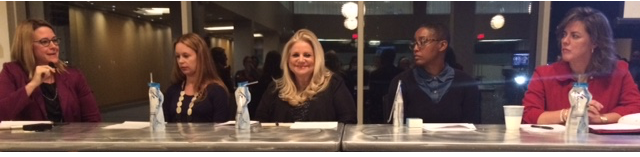
These are the accomplishments of Cicely Mitchell and Gail Levy, who were among four inspiring leaders at the evening panel discussion in the Fuqua School of Business this past Wednesday. Excited students and faculty gathered in the Kirby Reading room to learn about the leaders’ unique perspectives as founders of non-profit and for-profit solutions to various social impact and sustainability issues.

socEntrep1

Students and faculty gathered for dinner and networking before the panel discussion.

Organized by the Duke Innovation & Entrepreneurship Initiative and the Center for the Advancement of Social Entrepreneurship (CASE), the panel served to enlighten the audience about the challenges the women have faced and the lessons they learned in starting and scaling their social ventures. Panel moderator Erin Worsham, the Executive Director of CASE, opened the discussion with a few statistics.

In the non-profit sector, women make up 75% of the workforce, but in leadership positions, this ratio drops to 45%. As of 2013 in the for-profit sector, only 2.7% of venture capital investments went to fund companies with a female CEO. While black women own 1.5 million businesses in the U.S., they receive only 0.2% of venture funding. Undoubtedly, Worsham concluded, there is a lot of work to do in terms of women getting funded and represented as leaders.

Erin Worsham opened up the panel with statistics about women in the workforce. Worsham is the Executive Director of the award-winning CASE based at Duke University’s Fuqua School of Business

To commence the discussion, Worsham asked the panelists to speak about the gender discrimination they faced while starting their own companies. Gail Levy, founder of H Factor Water, a health-focused company producing hydrogen-infused water in environmentally friendly packaging, answered with a time she was challenged to a drinking match in order to close a deal. “The lesson I learned is to not go and drink your way into making a deal,” Levy joked. “But more importantly, you need to have grit and tenacity. Let our presence be known, because eventually we will be heard.”

Gail

Gail Levy was the founder of the White House Millennium Green Committee under the Clinton Administration in 1999. She is passionate about advocating for women worldwide and is also the founder of H Factor Water.

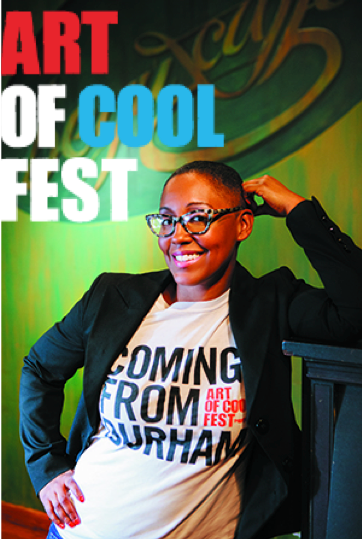
Founder of The Art of Cool, a Durham nonprofit promoting music education to Durham-area youth, Cecily Mitchell remarked that she would be charged significantly more money than a male counterpart to work with the same artist.

Cicely Mitchell is co-founder of The Art of Cool, a Durham nonprofit promoting music education to Durham-area youth

Cicely Mitchell is co-founder of The Art of Cool, a Durham nonprofit promoting music education to Durham-area youth

Rebecca Ballard, lawyer and founder of Maven Women, a sustainability-focused fashion company dedicated to making professional wear for women, noted that “we live in a visual world, but we need to start looking at a person’s character rather than solely focusing on how they look.” Based on her experience with her medical real estate development company ACCESS Medical Development, angel investor Stephanie Wilson expanded on the comment, adding that the best thing to do about the prejudice against women is to know that it’s there and fight for it.

image6

Rebecca Ballard told the audience, “The most challenging thing about being a working woman is that appearance is considered ‘relevant.’” She started her career as a public interest lawyer and was previously the Executive Director of Social Impact 360.

I asked the founders to share their experiences in building a successful customer base. Wilson noted that to institute her company, she “determined who was the top real estate agent in our area and sought them out. I discussed my idea with them and asked for their advice on segueing into the market.” She suggested sending handwritten thank you notes to build relationships with your customers.

Stephanie Wilson founded ACCESS Medical Development and is also the co-founder of MillennialsMovingMillions.org.

Stephanie Wilson founded ACCESS Medical Development and is also the co-founder of MillennialsMovingMillions.org.

Mitchell added that The Art of Cool held the first few concerts for relatives and friends, and later partnered up with other small entrepreneurs. “Make sure what you do connects with people enough that they want to go and tell other people about what you’re doing,” she advised.

Cecily Mitchell talked about her experience with The Art of Cool. She handles the booking, contracts, networking, pitching for sponsorships and assisting in writing grants for the company.

Maven Woman founder Rebecca Ballard commented on the importance getting support from women in other sustainable industries, since “you are all driven by the same mission in the social entrepreneurship space.”

Rebecca

Rebecca Ballard is the founder of Maven Women, a sustainability-focused fashion company dedicated on making professional wear for women.

Worsham’s final question for the panel asked for any last pieces of advice. Ballard concluded the conversation with a reason why she started her company: “Social entrepreneurship exists because the status quo is not okay. There are externalities happening and people being treated badly; the status quo doesn’t have to be the way it is.”

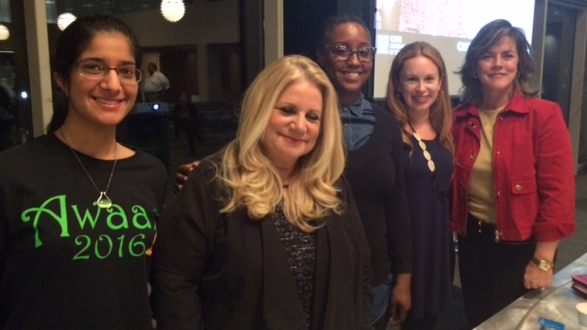
From left to right:

Posing with the panelists! From left to right: Anika Radiya-Dixit (author), Gail Levy, Cecily Mitchell, Rebecca Ballard, and Stephanie Wilson.

By Anika Radiya-Dixit

Anika_RD_hed100_2

Would You Expect a 'Real Man' to Tweet "Cute" or Not?

There’s nothing cute about stereotypes, but as a species, we seem to struggle to live without them.

In a clever new study led by Jordan Carpenter, who is now a postdoctoral fellow at Duke, a University of Pennsylvania team of social psychologists and computer scientists figured out a way to test just how accurate our stereotypes about language use might be, using a huge collection of real tweets and a form of artificial intelligence called “natural language processing.”

Wordclouds show the words in tweets that raters mistakenly attributed to Female authors (left) or Males (right).

Word clouds show the words in tweets that raters mistakenly attributed to Female authors (left) or Males (right). The larger the word appears, the more often the raters were fooled by it. Word color indicates the frequency of the word; gray is least frequent, then blue, and dark red is the most frequent. <url> means they used a link in their tweet.

Starting with a data set that included the 140-character bon mots of more than 67,000 Twitter users, they figured out the actual characteristics of 3,000 of the authors. Then they sorted the authors into piles using four criteria – male v. female; liberal v. conservative; younger v. older; and education (no college degree, college degree, advanced degree).

A random set of 100 tweets by each author over 12 months was loaded into the crowd-sourcing website Amazon Mechanical Turk. Intertubes users were then invited to come in and judge what they perceived about the author one characteristic at a time, like age, gender, or education, for 2 cents per rating. Some folks just did one set, others tried to make a day’s wage.

The raters were best at guessing politics, age and gender. “Everybody was better than chance,” Carpenter said. When guessing at education, however, they were worse than chance.

Jordan Carpenter is a newly-arrived Duke postdoc working with Walter Sinnott-Armstrong in philosophy and brain science.

Jordan Carpenter is a newly-arrived Duke postdoc working with Walter Sinnott-Armstrong in philosophy and brain science.

“When they saw the word S*** [this is a family blog folks, work with us here] they most often thought the author didn’t have a college degree. But where they went wrong was they overestimated the importance of that word,” Carpenter said. Raters seemed to believe that a highly-educated person would never tweet the S-word or the F-word. Unfortunately, not true! “But it is a road to people thinking you’re not a Ph.D.,” Carpenter wisely counsels.

The raters were 75 percent correct on gender, by assuming women would be tweeting words like Love, Cute, Baby and My, interestingly enough. But they got tricked most often by assuming women would not be talking about News, Research or Ebola or that the guys would not be posting Love, Life or Wonderful.

Female authors were slightly more likely to be liberal in this sample of tweets, but not as much as the raters assumed. Conservatism was viewed by raters as a male trait. Again, generally true, but not as much as the raters believed.

Youthful authors were correctly perceived to be more likely to namedrop a @friend, or say Me and Like and a few variations on the F-bomb, but they could throw the raters for a loop by using Community, Our and Original.

And therein lies the social psychology takeaway from all this: “An accurate stereotype should be one with accurate social judgments of people,” but clearly every stereotype breaks down at some point, leading to “mistaken social judgement,” Carpenter said. Just how much stereotypes should be used or respected is a hot area of discussion within the field right now, he said.

The other value of the paper is that it developed an entirely new way to apply the tools of Big Data analysis to a social psychology question without having to invite a bunch of undergraduates into the lab with the lure of a Starbucks gift card. Using tweets stripped of their avatars or any other identifier ensured that the study was testing what people thought of just the words, nothing else, Carpenter said.

The paper is “Real Men Don’t Say “Cute”: Using Automatic Language Analysis To Isolate Inaccurate Aspects Of Stereotypes.”  You can see the paper in Social Psychology and Personality Science, if you have a university IP address and your library subscribes to Sage journals. Otherwise, here’s a press release from the journal. (DOI: 10.1177/1948550616671998 )

Karl Leif BatesPost by Karl Leif Bates

Depression Screening Questions Seem to Miss Men

Women may be more likely to be diagnosed and treated for anxiety and depression not because they are, but because they’re more willing than men to honestly answer the questions used to diagnose mental health problems, a new Duke study finds.

man drinking - Wellcome Images

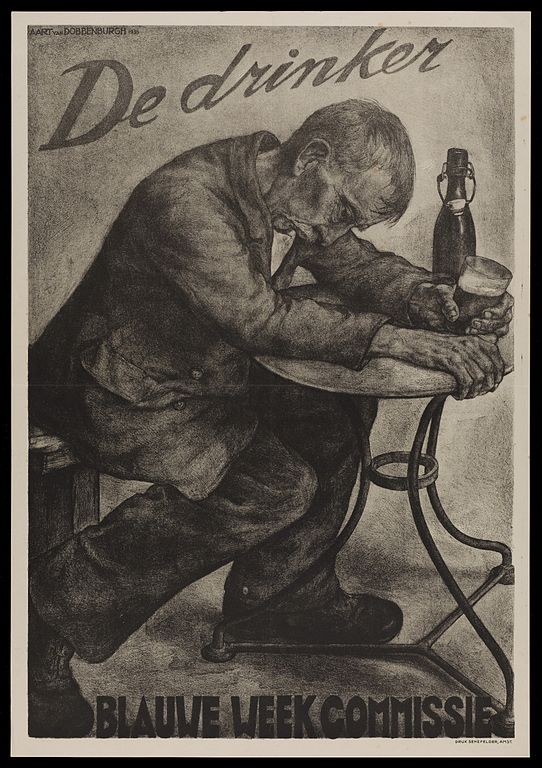
Asking men about their drinking might identify more cases of the blues like this guy. (Blauwe Week 1936 advertisement against alcohol. From Wellcome Images via Wikimedia Commons)

Jen’nan Read, a Duke sociologist and lead-author of the study, said men seem to adhere to a societal stigma to remain “macho” and are less likely to open up about their feelings. Her findings appear in Sociological Forum available online now and will appear in print in December.

Read’s study examines connections between mental and physical health in both men and women and suggests that the criteria used to examine mental health should be expanded beyond depression to include questions on substance abuse, which is another form of expressing mental distress, and more common among men.

The study finds that while depression is often how women express problems with mental health, men do so by drinking alcohol. The Duke study found that questioning men about alcohol use is a better way to diagnose both mental and physical health problems.

“Depression gives a lopsided picture,” Read said. “It makes mental health look like a women’s issue.”

A common set of questions include asking how often people have trouble getting to sleep or staying asleep, felt sad, lonely or like ‘you couldn’t shake the blues.’

Jen'nan Read is a Duke sociologist

Jen’nan Read is a Duke sociologist

“It’s more acceptable for women to answer affirmatively to these questions,” Read said. “Men are less likely to say they have feelings of anxiety. Issues of masculinity lead many to mask their problems.”

The result is often missed diagnoses of mental health problems in men.

The study crunches data from the Aging Status and Sense of Control Survey, in which people answer questions about their mental and physical health, diet, family situation, access and use of health care and other life factors. The average of women surveyed is about 54, and the average age of men was about 51.

Read’s study found that both men and women suffering from poor mental health are likely to suffer physical problems as well, like high blood pressure, diabetes and other issues.

The study was conducted by Read, Jeremy R. Porter, a sociologist with the City University of New York – Brooklyn College, and Bridget K. Gorman, a sociologist at Rice University.

Eric FerreriGuest Post by Eric Ferreri, Duke News and Communications
Mapping the Brain With Stories

alex-huth_

Dr. Alex Huth. Image courtesy of The Gallant Lab.

On October 15, I attended a presentation on “Using Stories to Understand How The Brain Represents Words,” sponsored by the Franklin Humanities Institute and Neurohumanities Research Group and presented by Dr. Alex Huth. Dr. Huth is a neuroscience postdoc who works in the Gallant Lab at UC Berkeley and was here on behalf of Dr. Jack Gallant.

Dr. Huth started off the lecture by discussing how semantic tasks activate huge swaths of the cortex. The semantic system places importance on stories. The issue was in understanding “how the brain represents words.”

To investigate this, the Gallant Lab designed a natural language experiment. Subjects lay in an fMRI scanner and listened to 72 hours’ worth of ten naturally spoken narratives, or stories. They heard many different words and concepts. Using an imaging technique called GE-EPI fMRI, the researchers were able to record BOLD responses from the whole brain.

Dr. Huth explaining the process of obtaining the new colored models that revealed semantic "maps are consistent across subjects."

Dr. Huth explaining the process of obtaining the new colored models that revealed semantic “maps are consistent across subjects.”

Dr. Huth showed a scan and said, “So looking…at this volume of 3D space, which is what you get from an fMRI scan…is actually not that useful to understanding how things are related across the surface of the cortex.” This limitation led the researchers to improve upon their methods by reconstructing the cortical surface and manipulating it to create a 2D image that reveals what is going on throughout the brain.  This approach would allow them to see where in the brain the relationship between what the subject was hearing and what was happening was occurring.

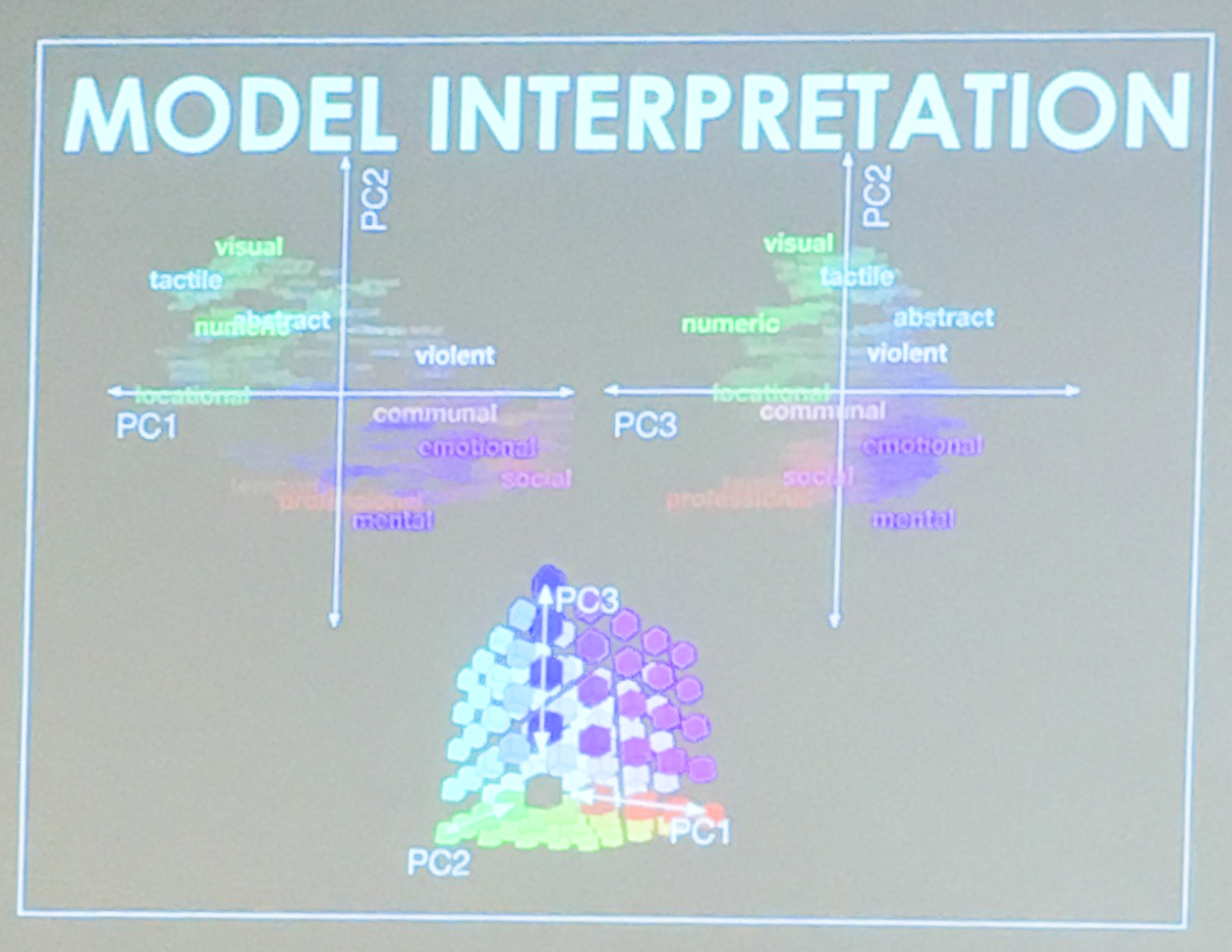
A model was then created that would require voxel interpretation, which “is hard and lots of work,” said Dr. Huth, “There’s a lot of subjectivity that goes into this.” In order to simplify voxel interpretation, the researchers simplified the dimensional subspace to find the classes of voxels using principal components analysis. This meant that they took data, found the important factors that were similar across the subjects, and interpreted the meaning of the components. To visualize these components, researchers sorted words into twelve different categories.

img_2431

The Four Categories of Words Sorted in an X,Y-like Axis

These categories were then further simplified into four “areas” on what might resemble an x , y axis. On the top right was where violent words were located. The top left held social perceptual words. The lower left held words relating to “social.” The lower right held emotional words. Instead of x , y axis labels, there were PC labels. The words from the study were then colored based on where they appeared in the PC space.

By using this model, the Gallant could identify which patches of the brain were doing different things. Small patches of color showed which “things” the brain was “doing” or “relating.” The researchers found that the complex cortical maps showing semantic information among the subjects was consistent.

These responses were then used to create models that could predict BOLD responses from the semantic content in stories. The result of the study was that the parietal cortex, temporal cortex, and prefrontal cortex represent the semantics of narratives.

meg_shieh_100hedPost by Meg Shieh

Does Digital Healthcare Work?

Wearable technologies like Fitbit have been shown to provide a short-term increase in physical activity, but long-term benefits are still unclear, even if recent studies on corporate wellness programs highlight the potential healthcare savings.

Headshot of Luca Foschini

Luca Foschini, PhD is a co-founder and head of data science at Evidation Health, and a visiting research scientist at UCSB. Source: Network Science IGERT at UCSB.

To figure out the effects of these technologies on our health, we need ways to efficiently mine through the vast amounts of data and feedback that wearable devices constantly record.

As someone who has recently jumped on the Fitbit “band” wagon, I have often wondered about what happens with all the data collected from my wrist day after day, week after week.

Luca Foschini, a co-founder and head of data science at Evidation Health, recently spoke at Duke’s Genomic and Precision Medicine Forum where he explained how his company uses these massive datasets to analyze and predict how digital health interventions — Fitbits and beyond — can result in better health outcomes.

California-based Evidation health uses real-life data collected upon authorization from 500,000-plus users of mobile health applications and devices. This mobile health or “mHealth” data is quickly becoming a focus of intense research interest because of its ability to provide such a wealth of information about an individual’s behavior.

Foschini and Evidation Health have taken the initiative to design and run clinical studies to show the healthcare field that digital technologies can be used for assessing patient health, behavioral habits, and medication adherence, just to name a few.

Foschini said that the benefits of mobile technologies could go far beyond answering questions about daily behavior and lifestyle to formulate predictions about health outcomes. This opens the door for “wearables and apps” to be used in the realm of behavior change intervention and preventative care.

Foschini speaks at Duke’s Genomic and Precision Medicine Forum

Foschini explains how data collected from thousands of individuals wearing digital health trackers was used to find a associations between activity tracking patterns and weight loss.

Evidation Health is not only exploring data based on wearable technologies, but data within all aspects of digital health. For example, an interesting concept to consider is whether devices create an opportunity for faster clinical trials. So-called “virtual recruiting” of participants for clinical studies might use social media, email campaigns and online advertising, rather than traditional ads and fliers. Foschini said a study by his firm found this type of recruitment is up to twelve times faster than normal recruitment methods for clinical trials (Kumar et al 2016). 

While Foschini and others in his field are excited about the possibilities that mHealth provides for the betterment of healthcare, he acknowledges the hurdles standing in the way of this new approach. There is no standardization in how this type of data is gathered, and greater scrutiny is needed to ensure the reliability and accuracy of some of the apps and devices that supply the data.

amanda_cox_100 Post by Amanda Cox

Nature vs. Nurture: Predicting Our Futures

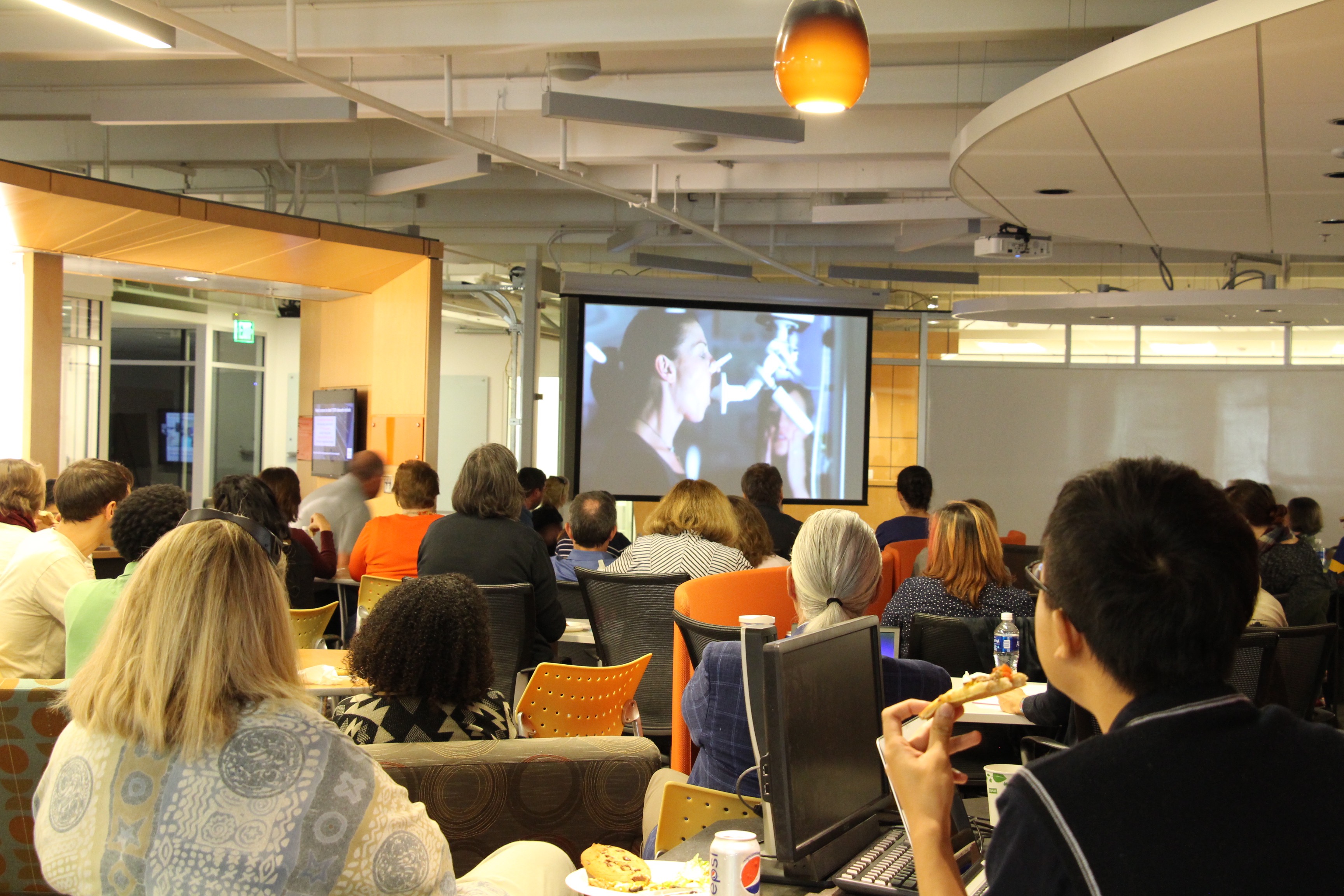
Sitting in The Connection at the Social Science Research Institute in Gross Hall was intimidating. I was surrounded by distinguished people: professors, visiting professors from distinguished universities, researchers, and postdocs, all of whom had gathered together to view a showing of the documentary, Predict My Future: The Science of Us.

moffit_temi_people

Dr. Terrie Moffitt, a Duke professor. Image courtesy of Moffitt and Caspi.

avshalom_caspi3_comp_sm

Dr. Avshalom Caspi, a Duke professor. Image Courtesy of Moffitt and Caspi.

Predict My Future documents the work of Terrie Moffitt and Avshalom Caspi, two Duke professors who study people in Dunedin, New Zealand. They have followed the lives of all the children born within a year in Dunedin for the last 40 years to measure genetics, personal habits, environment, jobs, physical attributes, and etc.  The Dunedin Longitudinal Study is the largest study of its kind and offers deep insights into how children become adults.

The episode, “The Early Years,” first posed the questions, “Why do some people become successful and others become outcasts? Why are we the way that we are?” By tracking all of these personal factors and some  behaviors, including risky sexual activities, criminal activities, and drinking and smoking habits, the Dunedin Longitudinal Study can answer these questions. The researchers can tell which children are likely to become “problem children,” “geniuses,” and so on, based on the child’s personality type.

30437237750_f6bf4f577f_o

Q&A Session After the Viewing of the Documentary. Image Courtesy of Duke SSRI and Taken By Shelbi Fanning.

The study first identified five different personality types in young children, and researchers discovered that the children’s’ personality types did not change in adulthood. The three personality types that are typically associated with doing well in life, having better health, having friends, and being more successful are: “well-adjusted,” “reserved,” and “confident.” The two personality types associated with having poorer quality of life in adulthood are “inhibited” and “undercontrolled.”

Then, the study identified other factors that lead to serious consequences later in life or simply predict futures. Children who experienced delays in walking and in talking were likely to have issues with brain development. Boys with these traits typically disliked school, did poorly in school, and were more likely to be involved in criminal activity.

30621009122_7a1db6d4e5_o

The full house watching the documentary. Image Courtesy of Duke SSRI and Taken by Shelbi Fanning.

The amount of sleep children received between the ages of five and eleven would determine obesity in adulthood. Adults who received the least amount of sleep as children tended to be obese by age 32.

Schizophrenia, researchers discovered, starts developing in young children, not just adults as had previously been thought. About half of the 11-year-olds in the study who said they had seen or heard things that weren’t there had developed schizophrenia two decades later.

Watching more TV was associated with a higher likelihood of smoking and having anxiety. Regardless of IQ or environment, children who watched more TV were more likely to leave school without qualifications.

The important lesson the documentary emphasized was that having a good childhood is important. Warm, sensitive, stimulating, family-feeling invoking environments are great protective factors to risk factors.

Overall, this was a brilliant, stimulating, easy-to-understand documentary.

meg_shieh_100hedPost by Meg Shieh

Page 63 of 111

Powered by WordPress & Theme by Anders Norén