Research Blog

Following the people and events that make up the research community at Duke

Students exploring the Innovation Co-Lab

Move Your Eyes and Wiggle Your Ears

This is the fourth of eight blog posts written by undergraduates in PSY102: Introduction to Cognitive Psychology, Summer Term I 2019.

Research by Duke University neuroscientists has uncovered that the eardrums move when the eyes do. Even without sound, simply moving your eyes side to side causes the eardrums to vibrate.

Because the vibrations and eye movements seem to start simultaneously, it seems as if both processes are controlled by the same parts of the brain, suggesting the same motor commands control both processes, according to senior author Jennifer Groh of psychology and neuroscience.
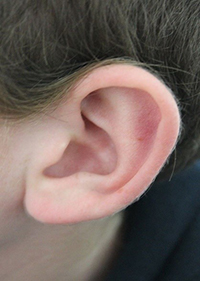
A human ear.

Her team used rhesus monkeys and humans in an experiment that has given us new understanding of how the brain pairs hearing and seeing.

This research could help shed light on the brain’s role in experiencing outside stimuli, such as sounds or lights, or even in understanding hearing disorders. Scientists still don’t understand the purpose of eardrum movement, however.

The experiment fitted sixteen participants with microphones small enough to fit into the ear canals, but also sensitive enough to pick up the eardrums’ vibrations. It is known that the eardrum can be controlled by the brain, and these movements help control the influx of sound from the outside and also produce small sounds called “otoacoustic emissions.” Thus, it is important to measure vibrations, as this would signify the movement of the eardrum.

LED lights were presented in front of the participants and they were asked to follow the lights with their eyes as they shifted side to side.

Rhesus monkeys move their eardrums too!

This experiment was also replicated in three rhesus monkeys, using five of the six total ears between them. These trials were conducted in the same way as the humans.

The researchers concluded that whenever the eyes move, the eardrums moved together to shift focus to the direction of sight. Vibrations began shortly before and lasted slightly after the eye movements, further suggesting the brain controls these processes together. As eye movements get bigger, they cause larger vibrations.

These relationships highlight an important void in previous research, as the simultaneous and even anticipatory action of nearly 10 milliseconds of eardrum vibrations show that the brain has more control in making the systems work together, using the same motor commands. The information being sent to the eardrums, therefore, likely contains information received from the eyes.

Perhaps immersive headphones or movie theaters could also take advantage of this by playing sounds linked to the movements of eyes and eardrums to create a more “realistic” experience.

While the relationship between side to side eye movements was analyzed for their effect on eardrum movement, the relationship between up and down eye movements has yet to be discovered. Hearing disorders, like being unable to focus on a specific sound when many are played at once, are still being investigated. Scientists hope to further understand the relationship the brain has with the audio and visual systems, and the relationship they have with each other.

Guest post by Benjamin Fiszel, Class of 2022.

Your Brain Likes YOU Most

This is the third of eight blog posts written by undergraduates in PSY102: Introduction to Cognitive Psychology, Summer Term I 2019.

Imagine you’re at a party. You have a few friends there, but the rest of the people you don’t know. You fiddle with the beaded bracelet around your wrist, take a breath, relax your arms, and walk in. You grab some pretzels and a drink, and talk to this guy named Richard. He has a daughter, or a niece, or something like that. His moustache looked weird.

Okay, now quick question: would you remember if he was wearing a bracelet or not? Odds are you wouldn’t unless he had a bracelet like yours. In fact, it turns out that we recall things far better when those things concern ourselves.

Research has shown us that when it comes to what we notice, the quickest thing to grab our attention will be something we relate to ourselves, such as a picture of your own face compared to a picture of any other face. What still remains unknown however, is to what extent our prioritization of self plays an internal role in our processes of memory and decision making.

I am. Therefore I selfie.

To explore this, an international team of researchers led by Duke’s Tobias Egner analyzed the degree to which we prioritize self-related information by looking at how efficiently we encode and actively retrieve information we have deemed to concern ourselves.

They did this with a game. Research participants were shown three different colored circles that represented self, friend, and stranger. A pair of colored circles would appear in various locations on the screen, then vanish, followed by a black circle which appeared in the same or different location as one of the colored circles.

Participants were then asked if the black circle appeared at the same location where one of the colored circles had been. The responses were quite revealing.

People responded significantly quicker when the black circle was in the location of the circle labeled self, rather than friend or stranger. After variations of the experiment, the results still held. In one variation, the black circle would appear in the location of the self-circle only half as often as it did the others. But participants still recalled the quickest when the black circle appeared where their self-circle had been.

If the light blue dot is “you,” will you get the answer quicker?

With nothing but perception and reaction time, the process demonstrated that this is not a conscious decision we make, but an automatic response we have to information we consider our own.

The experiment demonstrated that when it comes to holding and retrieving information on demand, the self takes precedence. The interesting thing in this study however, is that the self-related stimulus in this experiment was not a picture of the person, or even the circle of their preferred color, it was simply the circle that the researchers assigned to the participant as self, it had nothing to do with the participants themselves. It was simply the participant’s association of that circle with themselves that made the information more important and readily available. It seems that to associate with self, is to bring our information closer.

The fact that we better recall things related to ourselves is not surprising. As creatures intended mostly to look after our own well-being, this seems quite an intuitive response by our working memory. However, if there is anything to take away from this experiment, it’s the significance of the colored circle labeled self. It was no different than any of the others circles, but merely making it ‘self’ improved the brain’s ability to recall and retrieve relevant information.

Simply associating things with ourselves makes them more meaningful to us.

Guest post by Kenan Kaptanoglu, Class of 2020.
Vulci 3000: Technology in Archaeology

This is Anna’s second post from a dig site in Italy this summer. Read the first one here.

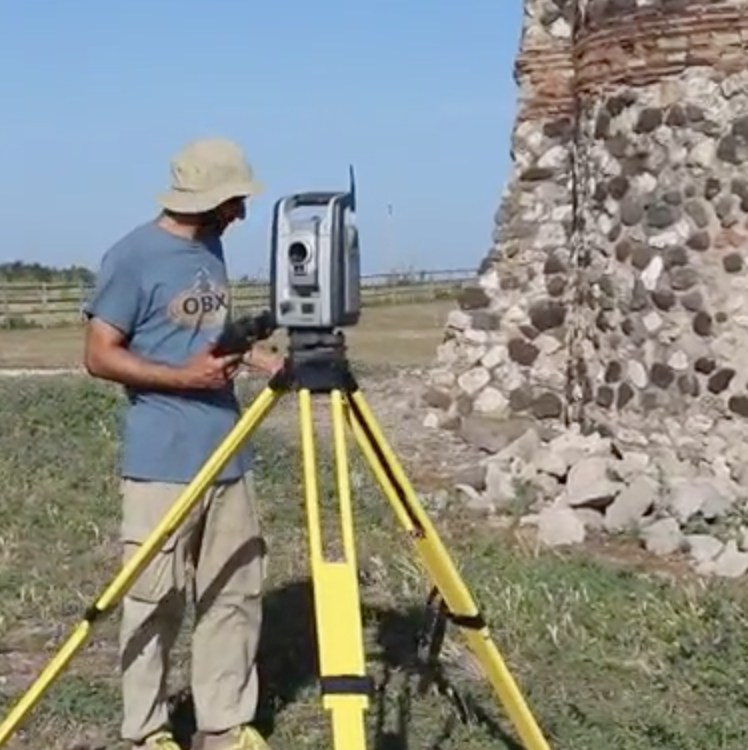
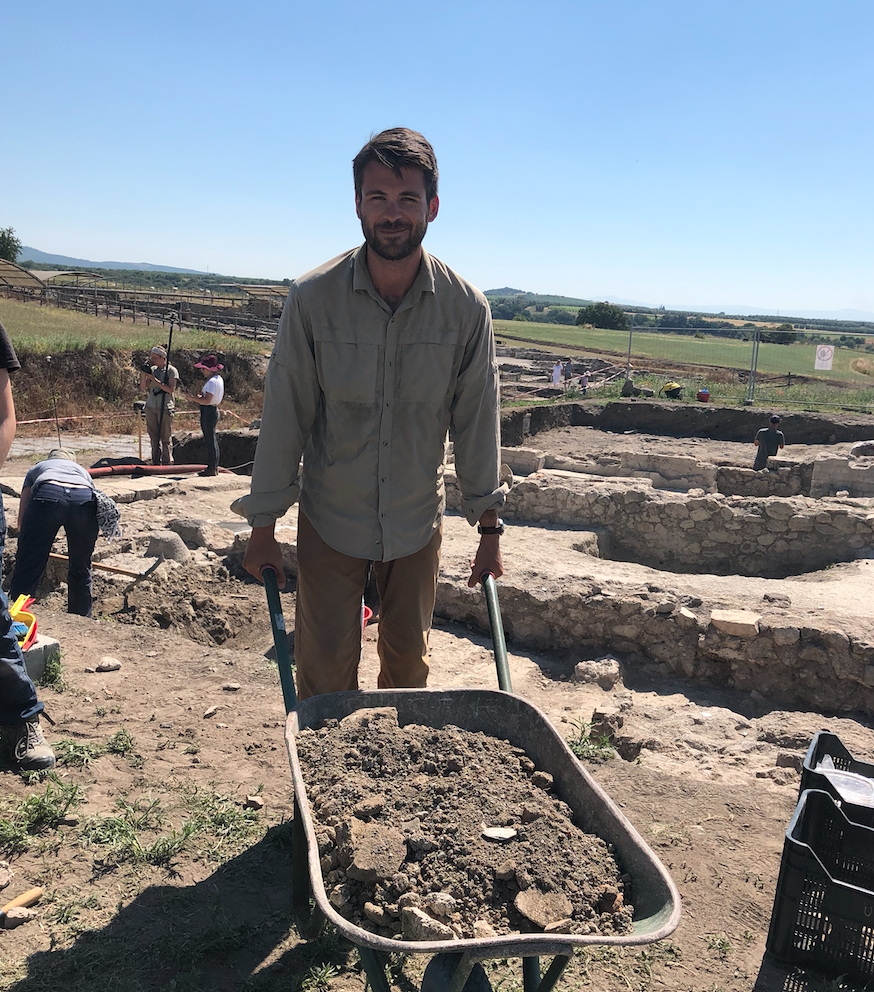
Duke PhD Candidate Antonio LoPiano on Site

Once home to Etruscan and Roman cities, the ruins found at Vulci date to earlier than the 8th century B.C.E.

As archaeologists dig up the remains of these ancient civilizations, they are better able to understand how humans from the past lived their daily lives. The problem is, they can only excavate each site once.

No matter how careful the diggers are, artifacts and pieces of history can be destroyed in the process. Furthermore, excavations take a large amount of time, money and strenuous labor to complete. As a result, it’s important to carefully choose the location.

Map of the Vulci Landscape Created Using GIS Technology

In response to these challenges Dr. Maurizio Forte decided to supplement the excavation of ancient Vulci sites by using innovative non-invasive technologies. 

Considering that it once housed entire cities, Vulci is an extremely large site. To optimize excavation time, money, and resources, Dr. Forte used technologies to predict the most important urban areas of the site. Forte and his team also used remote sensing which allowed them to interpret the site prior to digging. 

Georadar Imaging
Duke Post Doc Nevio Danelon Gathering Data for Photogrammetry

Having decided where on the site to look, the team was then able to digitally recreate both the landscape as well as the excavation trench in 3D. This allowed them to preserve the site in its entirety and uncover the history that lay below. Maps of the landscape are created using Web-GIS (Geographic Information Systems). These are then combined with 3D models created using photogrammetry to develop a realistic model of the site.

Forte decided to make the excavation entirely paperless. All “paperwork”  on site is done on tablets. There is also an onsite lab that analyzes all of the archaeological discoveries and archives them into a digital inventory.

This unique combination of archaeology and technology allows Forte and his team to study, interpret and analyze the ancient Etruscan and Roman cities beneath the ground of the site in a way that has never been done before. He is able to create exact models of historic artifacts, chapels and even entire cities that could otherwise be lost for good.

3D Model Created Using Photogrammetry

Forte also thinks it is important to share what is uncovered with the public. One way he is doing this is through integrating the excavation with virtual reality applications.

I’m actually on site with Forte and the team now. One of my responsibilities is to take photos with the Insta360x which is compatible with the OculusGo, allowing people to experience what it’s like to be in the trench with virtual reality. The end goal is to create interactive applications that could be used by museums or individuals. 

Ultimately, this revolutionary approach to archaeology brings to light new perspectives on historical sites and utilizes innovative technology to better understand discoveries made in excavations.

By: Anna Gotskind ’22

Putting Your Wandering Mind on a Leash

This is the second of eight blog posts written by undergraduates in PSY102: Introduction to Cognitive Psychology, Summer Term I 2019.

What should I eat for dinner? What do I need to do when I return home? What should I do this weekend? All three questions above are questions we frequently ask ourselves when we begin to mind-wander in class, at work, and even at home.

Mind-wandering has commonly been defined and recognized as the unconscious process of getting distracted from a task at hand. Thus, mind-wandering has garnered a fairly negative connotation due to it being viewed as an uncontrollable phenomenon. But what if I told you that recent research shows that not only can we control our mind wandering with the presence of an upcoming task, but we can do so on a moment-to-moment basis as well?

         Illustration by Charlie Taylor @c.e.b.t. (http://www.mylittleplaceofcalm.com/the-wonderings-of-a-wandering-mind/)

And if we can indeed modulate and directly control our minds, can we find ways to mind-wander that would ultimately optimize our productivity? Could we potentially control our off-topic thoughts without seeing a loss in overall performance of a task?

To answer these questions, Harvard postdoc Paul Seli, who is now an assistant professor of psychology and neuroscience at Duke, and his team conducted a fascinating experiment. They knew from earlier work that our minds tend to wander more while completing easier tasks than difficult ones. Why? Because we simply need to use fewer executive resources to perform easy tasks and thus we can freely mind-wander without noticing a loss in performance. In fact, one could say that we are optimizing our executive functions and resources across a variety of different tasks instead of just one.

Seli hypothesized that people could control their mind wandering on the basis of their expectations of upcoming challenges in a task. To test this, he had research participants sit in front of a computer screen that showed a large analog clock. Researchers told each participant to click on the spacebar every time the clock struck 12:00. Seems simple right? Even simpler, the clock struck 12:00 every 20 seconds and thus it was completely predictable. To incentivize the participants to click the spacebar on time, a bonus payment was awarded for every correct response.

Paul Seli studies…
What were we talking about?

During some of the 20-second intervals, the participants were presented with what are called “thought probes.” These popped up on the screen to ask the participants whether or not their mind had just been wandering.

The participants were assured that their responses did not affect their bonus payments and the probes were presented above a paused clock face so that the participants still saw where the hand of the clock was while answering the question. Participants could either respond by clicking “on task” (meaning that they were focusing on the clock), “intentionally mind-wandering” (meaning that they were purposely thinking about something off-topic), or “unintentionally mind-wandering.” After a response was given, the question disappeared, and the clock resumed.

By using the thought probes to track the mind-wandering of participants on a second-by-second basis, Seli found that the participants tended to decrease their levels of mind-wandering as the clock approached 12:00. In other words, participants would freely mind-wander in the early stages of the hand’s rotation and then quickly refocus on the task at hand as the clock approached 12:00.

Seli showed that we have some ability to control a wandering mind. Instead of mind-wandering being solely dependent on the difficulty of the task, Seli found that we can control our mind-wandering on a moment-to-moment basis as the more difficult or pressing aspect of the task approaches.

Even if we are distracted, we have the ability to refocus when the task at hand becomes pressing. However, there is a time and place for mind-wandering and multitasking, and we should certainly not get too confident with our mind-wandering abilities.

Take mind-wandering and distracted driving for example. Approximately nine Americans are killed each day due to distracted driving and more than 1,000 people are injured. Therefore, just because you are overly familiar with a task does not mean that it’s not crucial and demanding. Thus, we shouldn’t undervalue the amount of executive resources and attention we need to focus and stay safe.    

So, the next time you catch yourself thinking about your upcoming weekend, chances are that the task your completing isn’t too pressing, because if it were, you’d be using up all of your executive resources to focus.

Guest post by Jesse Lowey, Trinity 2021
Just The Way You Say It Can Make Something ‘True’

This is the first of eight blog posts written by undergraduates in PSY102: Introduction to Cognitive Psychology, Summer Term I 2019.

We’ve all accepted a lie that we’ve heard before. For example, “vitamin C prevents the common cold” is a statement that rings true for many people. However, there is only circumstantial evidence supporting this claim, and instead, many researchers agree that the evidence in fact reveals that vitamin C has no effect on the common cold.

So why do we end up believing things that are not true? One reason is known as the “illusory truth effect” which claims that the more “fluent” a statement is or feels, the more likely it is to be remembered as true.

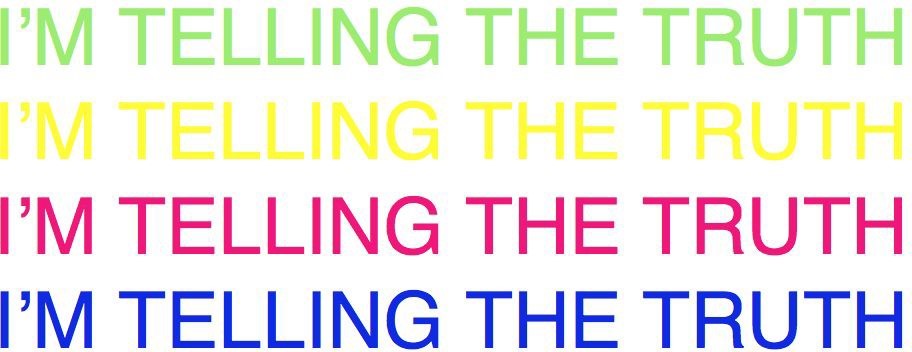
Fluency in this case refers to how easily we can later recall information. Fluency can increase in a variety of ways; it could be due to the size of the text in which the fact was presented, or how many times you have heard the statement. Fluency can even be influenced by the color of the text that we read. As an example, if we were only presented with the blue-text version of the four statements shown in the picture above, it would be easier for us to remember — compared to if we were only shown the yellow-text version — and thus easier for us to recall later. Similarly, if the text was larger, or the statements were repeated more frequently, it would be easier for us to recall the information.

This fluency can be useful if we are constantly told accurate facts. However, in our current day and age, truth and lies can become muddled, and if we end up hearing more lies than truths, this illusory truth effect can take over, and we soon begin to accept these falsehoods.

Vanderbilt University psychologist Lisa Fazio studied this during graduate school at Duke. Her aim was to explore this illusory truth effect.

Eighty Duke undergraduates participated in her studies. For the first part, participants were shown factual statements — both true and false — and asked to rate how interesting they were.

For the second part, participants were shown statements — some of which came from the first part of the study — and told that some would be true and some false. They were then asked to rate how truthful the statements were, on a scale from one to six, with one being definitely false, and six being definitely true.

Fazio and her colleagues found that the illusory truth effect is not only a powerful mental mechanism, but that it is so powerful, it can override our personal knowledge.

For example, if presented with the question “what is the name of the skirt that Scottish people sometimes wear?” most people would correctly respond with “a kilt.” However, if you were shown the false statement “a sari is the skirt worn by Scottish people,” you would be more likely to later report this statement as being truthful, even though you knew the correct answer before reading that false statement.

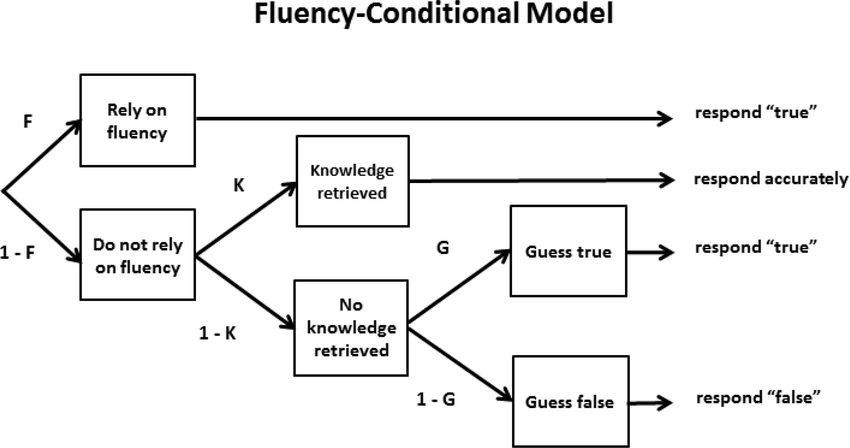
Fazio’s paper also proposed a model for how fluency and knowledge may interact in this situation. Their model (shown below) suggests that fluency is the main deciding factor on the decisions that we make. If we cannot easily remember an answer, then we rely on our prior knowledge, and finally, if our knowledge fails, then we resort to a guess. This model makes an important distinction from their other model and the underlying hypothesis, which both suggest that knowledge comes first, and thus could override the illusory truth effect.

All of this research can seem scary at first glance. In a world where “fake news” is on the rise, and where we are surrounded by ads and propaganda, how can we make sure that the information we believe to be true is actually true? While the paper does not fully explore the

Lisa Fazio’s model of the illusory truth effect.

effectiveness of different ways to train our brains to weaken the illusory truth effect, the authors  do offer some suggestions.

The first is to place yourself in situations where you are going to rely more on your knowledge. Instead of being a passive consumer of information, actively fact-check the information you find. Similar to a reporter chasing down a story, someone who actively thinks about the things they hear is not as likely to fall victim to this effect.

The second suggestion is to train oneself. Providing training with trial-by-trial feedback in a situation similar to this study could help people understand where their gut reactions fall short, and when to avoid using them. The most important point to remember is that the illusory truth effect is not inherently bad. Instead, it can act as a useful tool to reduce mental work throughout one’s day. If ten people say one thing, and one person says another, many times, then ten will be right, and the one will be wrong. The real skill is learning when to trust the wisdom of the crowds, and when to reject it.

Kevyn Smith Guest Post by Kevyn Smith, a third-year undergraduate majoring in Electrical and Computer Engineering and Computer Science, and minoring in Psychology.

Vulci 3000: A High-Tech Excavation

This summer I have the incredible opportunity to work with the Vulci 3000 Bass Connections team. The project focuses on combining archaeology and innovative technology to excavate and understand an ancient Etruscan and Roman site. Over the next several weeks I will be writing a series of articles highlighting the different parts of the excavation. This first installment recounts the history of the project and what we plan to accomplish in Vulci.

Covered in tall grasses and grazing cows it’s hard to imagine that the Vulci Archaeology Park was ever something more than a beautiful countryside. However, in reality, it was home to one of the largest, most important cities of ancient Etruria. In fact, it was one of the biggest cities in the 1st millennium BCE on the entire Italian peninsula. Buried under the ground are the incredible remains of Iron Age, Etruscan, Roman, and Medieval settlements.

Duke’s involvement with the Vulci site began in 2015 when Maurizio Forte, the William and Sue Gross Professor of Classical Studies Art, Art History, and Visual Studies visited the site. What was so unique about the site was that most of it was untouched.

One of the perils of archaeology is that any site can only be physically excavated once and it is inevitable for some parts to be damaged regardless of how careful the team is. Vulci presented a unique opportunity. Because much of the site was still undisturbed, Forte could utilize innovative technology to create digital landscapes that could be viewed in succession as the site was excavated. This would allow him and his team to revisit the site at each stage of excavation. In 2015 he applied for his first permit to begin researching the Vulci site.

In 2016 Forte created a Bass Connections project titled Digital Cities and Polysensing Environments. That summer they ventured to Italy to begin surveying the Vulci site. Because Vulci is a large site it would take too much time and money to excavate the city. Instead, Forte and his team decided to find the most important spots to excavate. They did this by combining remote sensing data and procedural modeling to analyze the various layers underground. They collected data using magnetometry and ground-penetrating radar. They also used drones to capture aerial photography of the site.

These technologies allowed the team to locate the urban areas of the site through the discovery of large buildings and streets revealed by the aerial photographs, radiometrically-calibrated orthomaps, and 3D point cloud/mesh models.

Anne-Lise Baylé Cleaning a Discovered Artifact on Site

The project continued into 2017 and 2018 with a team returning to the site each summer to excavate. Within the trench were archaeologists ranging from undergrads to postdocs digging, scraping and brushing for months to discover what lay beneath the surface. As they began to uncover rooms, pottery, coins, and even a cistern, groups outside the trench continued to advanced technology to collect data and improve the understanding of the site.

Nevio Danelon Releasing a Drone

One unit focused on drone sensing to digitally create multispectral imagery as well as high-resolution elevation models. This allowed them to use soil and crop marks to better interpretation and classify the archaeological features.

By combining traditional archaeology and innovative technology the team has been able to more efficiently discover important, ancient artifacts and analyze them in order to understand the ancient Etruscan and Roman civilizations that once called Vulci their home.

Photo Taken Using the Insta360 Camera in “Planet” Mode

This year, archaeologists return to the site to continue excavation. As another layer of Vulci is uncovered, students and faculty will use technology like drones, photogrammetry, geophysical prosecutions and GIS to document and interpret the site. We will also be using a 360 camera to capture VR compatible content for the OculusGo in order to allow anybody to visit Vulci virtually.

By Anna Gotskind

800+ Teams Pitched Their Best Big Ideas. With Your Help, This Duke Team Has a Chance to Win

A Duke University professor says the time is ripe for new research on consciousness, and he needs your help.

More than 800 teams pitched their best “big ideas” to a competition sponsored by the National Science Foundation (@NSF) to help set the nation’s long-term research agenda. Only 33 are still in the running for the grand prize, and a project on the science of consciousness led by Duke artificial intelligence expert Vincent Conitzer is among them!

You can help shape the NSF’s research questions of the future by watching Conitzer’s video pitch and submitting your comments on the importance and potential impact of the ideas at https://nsf2026imgallery.skild.com/entries/theory-of-conscious-experience.

But act fast. The public comment period ends Wednesday, June 26. Winners will be announced and prizes awarded by October 2019. Stay tuned.

Watch all the video pitches until June 26 at nsf2026imgallery.skild.com.

Overdiagnosis and the Future of Cancer Medicine

For many years, the standard strategy for fighting against cancer has been to find it early with screening when the person is still healthy, then hit it with a merciless treatment regimen to make it go away.

But not all tumors will become life-threatening cancers. Many, in fact, would have caused no issues for the rest of the patients’ lives had they not been found by screening. These cases belong to the category of overdiagnosis, one of the chief complaints against population-level screening programs.

Scientists are reconsidering the way to treat tumors because the traditional hit-it-hard approach has often caused the cancer to seemingly go away, only to have a few cells survive and the entire tumor roar back later with resistance to previously effective medicine.

Dr. Marc Ryser, the professor who gave this meaty talk

In his May 23 talk to Duke Population Health, “Cancer Overdiagnosis: A Discourse on Population Health, Biologic Mechanism and Statistics,” Marc Ryser, an assistant professor at Duke’s Departments of Population Health Sciences and Mathematics, walked us through how parallel developments across different disciplines have been reshaping our cancer battle plan. He said the effort to understand the true prevalence of overdiagnosis is a point of focus in this shift.

Past to Future: the changing cancer battle plan
Credit: Marc Ryser, edit: Brian Du

Ryser started with the longstanding biological theory behind how tumors develop. Under the theory of clonal sweeps, a relatively linear progression of successive key mutations sweeps through the tumor, giving it increasing versatility until it is clinically diagnosed by a doctor as cancer.

Clonal sweeps model, each shade is a new clone that introduces a mutation credit: Sievers et al. 2016

With this as the underpinning model, the battle plan of screen early, treat hard (point A) makes sense because it would be better to break the chain of progression early rather than later when the disease is more developed and much more aggressive. So employing screening extensively across the population for the various types of cancer is the sure choice, right?

But the data at the population level for many different categories of cancers doesn’t support this view (point B). Excluding the cases of cervical cancer and colorectal cancer, which have benefited greatly from screening interventions, the incidence of advanced cases of breast cancer and other cancers have stayed at similar levels or actually continued to increase during the years of screening interventions. This has raised the question of when screening is truly the best option.

Scientists are thinking now in terms of a “benefit-harm balance” when mass-screening public health interventions are carried out. Overdiagnosis would pile up on the harms side, because it introduces unnecessary procedures that are associated with adverse effects.

Thinking this way would be a major adjustment, and it has brought with it major confusion.

Paralleling this recent development on the population level, new biological understanding of how tumors develop has also introduced confusion. Scientists have discovered that tumors are more heterogeneous than the clonal sweeps model would make it appear. Within one tumor, there may be many different subpopulations of cancer cells, of varying characteristics and dangerousness, competing and coexisting.

Additional research has since suggested a more complex, evolutionary and ecological based model known as the Big Bang-mutual evolution model. Instead of the “stepwise progression from normal to increasingly malignant cells with the acquisition of successive driver mutations, some cancers appear to evolve more like a Big Bang, where the malignant ability is already concentrated in the founder cell,” Ryser said.

As the first cell starts to replicate, its descendants evolve in parallel into different subpopulations expressing different characteristics. While more research has been published in favor of this model, some scientists remain skeptical.

Ryser’s research contributes to this ongoing discussion. In comparing the patterns by which mutations are present or absent in cancerous and benign tumors, he obtained results favoring the Big Bang-mutual evolution model. Rather than seeing a neat region of mutation within the tumor, which would align with the clonal sweeps model, he saw mutations dispersed throughout the tumor, like the spreading of newborn stars in the wake of the Big Bang.

How to think about mutations within a tumor
credit: NASA

The more-complicated Big Bang-mutual evolution model justifies an increasingly nuanced approach to cancer treatment that has been developing in the past few years. Known as precision medicine (point C), its goal is to provide the best treatment available to a person based on their unique set of characteristics: genetics, lifestyle, and environment. As cancer medicine evolves with this new paradigm, when to screen will remain a key question, as will the benefit-harm balance.

There’s another problem, though: Overdiagnosis is incredibly hard to quantify. In fact, it’s by nature not possible to directly measure it. That’s where another area of Ryser’s research seeks to find the answers. He is working to accurately model overdiagnosis to estimate its extent and impact.

Going forward, his research goal is to try to understand how to bring together different scales to best understand overdiagnosis. Considering it in the context of the multiscale developments he mentioned in his talk may be the key to better understand it.

Post by Brian Du

Kicking Off a Summer of Research With Data+

If the May 28 kickoff meeting was any indication, it’s going to be a busy summer for the more than 80 students participating in Duke’s summer research program, Data+.

Offered through the Rhodes Information Initiative at Duke  (iiD), Data+ is a 10-week summer program with a focus on data-driven research. Participants come from varied backgrounds in terms of majors and experience. Project themes range  from health, public policy, energy and environment, and interdisciplinary inquiry.

“It’s like a language immersion camp, but for data science,” said Ariel Dawn, Rhodes iiD Events & Communication Specialist. “The kids are going to have to learn some of those [programming] languages like Java or Python to have their projects completed,” Dawn said.

Dawn, who previously worked for the Office of the Vice Provost for Research, arrived during the program’s humble beginnings in 2015. Data+ began in 2014 as a small summer project in Duke’s math department funded by a grant from the National Science Foundation. The following year the program grew to 40 students, and it has grown every year since.

Today, the program also collaborates with the Code+ and CS+ summer programs, with  more than 100 students participating. Sponsors have grown to include major corporations such as Exxonmobil, which will fund two Data+ projects on oil research within the Gulf of Mexico and the United Kingdom in 2019.

“It’s different than an internship, because an internship you’re kind of told what to do,” said Kathy Peterson, Rhodes iiD Business Manager. “This is where the students have to work through different things and make discoveries along the way,” Peterson said.

From late May to July, undergraduates work on a research project under the supervision of a graduate student or faculty advisor. This year, Data+ chose more than 80 eager students out of a pool of over 350 applicants. There are 27 projects being featured in the program.

Over the summer, students are given a crash course in data science, how to conduct their study and present their work in front of peers. Data+ prioritizes collaboration as students are split into teams while working in a communal environment.

“Data is collected on you every day in so many different ways, sometimes we can do a lot of interesting things with that,” Dawn said.  “You can collect all this information that’s really granular and relates to you as an individual, but in a large group it shows trends and what the big picture is.”

Data+ students also delve into real world issues. Since 2013, Duke professor Jonathan Mattingly has led a student-run investigation on gerrymandering in political redistricting plans through Data+ and Bass Connections. Their analysis became part of a 205-page Supreme Court ruling.

The program has also made strides to connect with the Durham community. In collaboration with local company DataWorks NC, students will examine Durham’s eviction data to help identify policy changes that could help residents stay in their homes.

“It [Data+] gives students an edge when they go look for a job,” Dawn said. “We hear from so many students who’ve gotten jobs, and [at] some point during their interview employers said, ‘Please tell us about your Data+ experience.’”

From finding better sustainable energy to examining story adaptations within books and films, the projects cover many topics.

A project entitled “Invisible Adaptations: From Hamlet to the Avengers,” blends algorithms with storytelling. Led by UNC-Chapel Hill grad student Grant Class, students will make comparisons between Shakespeare’s work and today’s “Avengers” franchise.

“It’s a much different vibe,” said computer science major Katherine Cottrell. “I feel during the school year there’s a lot of pressure and now we’re focusing on productivity which feels really good.”

Cottrell and her group are examining the responses to lakes affected by multiple stressors.

Data+ concludes with a final poster session on Friday, August 2, from 2 p.m. to 4 p.m. in the Gross Hall Energy Hub. Everyone in the Duke Community and beyond is invited to attend. Students will present their findings along with sister programs Code+ and the summer Computer Science Program.

Writing by Deja Finch (left)
Art by Maya O’Neal (right)

How Many Neuroscientists Does it Take to Unlock a Door?

Duke’s Summer Neuroscience Program kicked off their first week of research on June 4 with a standard morning meeting: schedules outlined, expectations reiterated, students introduced. But that afternoon, psychology and neuroscience professor Thomas Newpher and undergraduate student services coordinator Tyler Lee made the students play a very unconventional get-to-know-you game — locking them in a room with only one hour to escape.

Not the usual team building activity: Students in Duke’s 8-week Summer Neuroscience Program got to know each other while locked in a room.

Bull City Escape is one of a few escape rooms in the Triangle, but the only one to let private groups from schools or companies or families to come and rent out the space exclusively. Like a live-in video game, you’re given a dramatic plot with an inevitably disastrous end: The crown jewels have been stolen! The space ship is set to self-destruct! Someone has murdered Mr. Montgomery, the eccentric millionaire! With minutes to go, your rag-tag bunch scrambles to uncover clues to unlock locks that yield more clues to yet more locks and so on, until finally you discover the key code that releases you back to the real world.

This summer’s program dips into many subfields, in hopes of pushing the the 16 students (most of them seniors) toward an honors thesis. According to Newpher, three quarters of the senior neuroscience students who participated in the 2018 SNP program graduated with distinction last May.

From “cognitive neuro” that addresses how behavior and psychology interacts with your neural network, to “translational neuro” which puts neurology in a medical context, to “molecular and cellular neuro” that looks at neurons’ complex functions, these students are handling subjects that are not for the faint of heart or dim of mind.

But do lab smarts carry over when you’re locked in a room with people you hardly know, a monitor bearing a big, red timer, blinking its way steadily toward zero?

Apparently so. The “intrepid team of astronauts” that voyaged into space were faced with codes and locks and hidden messages, all deciphered with seven minutes left on the clock, while the “crack-team of detectives” facing the death of Mr. Montgomery narrowly escaped, with less than a minute to spare. At one point, exasperated and staring at a muddled bunch of seemingly meaningless files, a student looked at Dr. Newpher and asked, “Is this a lesson in writing a methods section?”

The Bull City Escape website lists creative problem-solving, focus, attention to detail, and performance under pressure as a few of the skills a group hones by playing their game — all of which are relevant to this group of students, many of whom are pre-med. But hidden morals about clarity and strength-building aside, Newpher picked the activity because it allows different sides of people’s personalities to come out: “When you’re put in that stressful environment and the clock is ticking, it’s a great way to really get to know each other fast.”

By Vanessa Moss
By Vanessa Moss

Page 43 of 111

Powered by WordPress & Theme by Anders Norén