Research Blog

Following the people and events that make up the research community at Duke

Students exploring the Innovation Co-Lab

Wellness and the Ritual of Baking Challah

People find lots of different ways to cope with the stress of everyday life. One day Beth Ricanati, an internist at the Cleveland Clinic and the mother of three young children, was particularly overwhelmed. A friend of hers suggested that she make challah for the Jewish New Year,  Rosh Hashana

Challah is a traditional braided bread eaten on Shabbat, the Jewish sabbath as well as major Jewish holidays. It is customary to bake a round challah on Rosh Hashanah to symbolizes the year coming to a close and a new one beginning. 

A Traditional Loaf of Challah

Ricanati decided to take her friend’s advice. That Friday, before the sun went down signifying the start of Shabbat, she carved out thirty minutes to bake a loaf of Challah. 

Ricanati explained, “It was the most transformative experience because I just stopped.”

The talk was sponsored by Duke’s Forum for Scholars & Publics, a weekly forum where local, national, and global scholars can interact with the Duke community to generate greater exchange between the university and the broader world. It was facilitated by Duke Professor Kelly Alexander who brought the students in her first-year seminar “How ideas about food circulate across cultures and across film.”
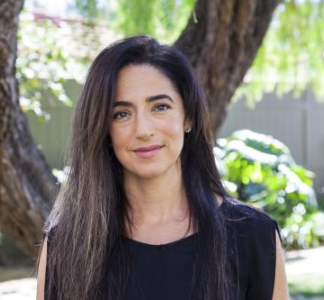

Beth Ricanati
Kelly Alexander

Baking challah is a cultural and ritualistic practice. Ricanati explained that the first step of the recipe is to stop and think. When baking challah, it’s important to have an intention, to consider “why am I here and in whose merit am I making this bread?” This intention can be for others or for yourself. After the bread has risen the baker blesses it and takes a small piece off which represents the offerings that used to be made at the temple in Jerusalem. 

Ricanati is a women’s health expert and medical professional. She had never really baked before this. “Challah is not necessarily about the end product, about making a perfect challah. It is about the process.”

There are 613 mitzvot or commandments in the Jewish tradition and only three of them are specifically designated for women. Baking Challah is one of them. Challah is special because it is intended to nourish us both physically and spiritually.

Ricanati added, “When I took the challah out of the oven that day my house became a home.”

She enjoyed this experience so much that she decided to continue baking challah every Friday. Not only did it create thirty minutes a week for her to stop and reflect but it brought wellness into her life. As a result, she ended up writing a book titled Braided: a journey of 1000 challahs. The book focused on thinking about food as medicine and how to create wellness in one’s life. 

“To be well is more than just physical,” Ricanati said. Wellness is about both the mind and the body; it’s about a holistic treatment of the whole person. “Making challah, for me, is a way to embrace stress management.”

As a medical professional, Ricanati also explained the idea of Neuroplasticity, the ability of the brain to change continuously throughout one’s life. Our behaviors aren’t fixed and new behaviors have to be enjoyable in order to be sustainable. 

“The more I made the bread, the easier it became and the easier it became the more I made the bread,” she said.

After publishing her book, Ricanati got to meet others who had been inspired to start the ritual of baking challah in there own homes. Similarly, they too felt that the ritual brought unexpected wellness into their lives. Beyond this, Challah has the ability to strengthen a community — not only does baking lend itself to being a group event but there are people baking challah on Fridays all over the world.

“It is a gift to bake Challah because it feeds both your soul and your tummy.”

Post by Anna Gotskind

Understanding and Addressing Vaccine Hesitancy

In the midst of increasing outbreaks of vaccine-preventable disease, Duke global health researcher Lavanya Vasudevan (PhD, MPH, LPH) is investigating the reasons for vaccine hesitancy with focus on America and Tanzania.

Vaccine hesitancy refers to the refusal of or delay in accepting vaccinations, despite their availability. Vasudevan hopes to figure out what interventions will change the minds of target populations on such a heated topic.

She presented at Duke’s Global Health Institute on November 15th about her “big 5 research areas:” identification of sub-optimal vaccine uptake, contextualization of barriers to uptake, measuring parental concern, debunking misinformation, and developing and testing strategies aimed at addressing vaccine hesitancy.

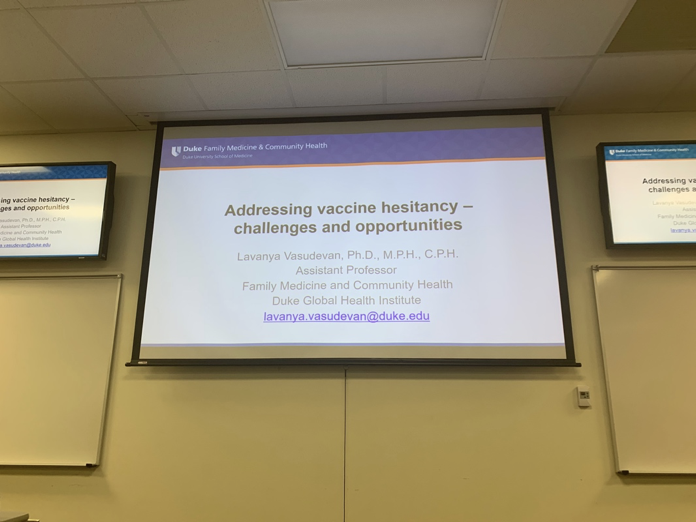
Lavanya Vasudevan presenting at Duke’s Global Health Institute.

Globally, Vasudevan says that there are too many kids playing catch-up with their vaccines, meaning that even when children are getting vaccinated, the vaccinations they receive are not on time with the scheduled progression of immunizations, putting them at risk for contracting disease. Different countries measure vaccination coverage in different ways and on different timelines, which makes it harder to understand where sub-optimal vaccine uptake is happening. A better standard for assessing timeliness of vaccines is crucial. Vasudevan is working to confront this issue to gain better understanding of who and where hesitancy is coming from.

Identification of specific regions of vaccine hesitancy is crucial to navigating interventions, she added. Vasudevan wants to be able to pinpoint areas and understand the context-specific issues that vary across time, place, and vaccine type in order to be most effective.

She said that her work in Tanzania has provided insight to the problem of geographic accessibility and lack of proper supplies in the country, prompting delayed and missed vaccinations among 72% of children, according to self-reporting by their mothers. Tanzanian mothers expressed their frustrations during interviews. They frequently arrange to go to a clinic where vaccinations are offered on specific dates and travel long distances to get there. However, if there are not enough kids who come to be vaccinated, the facilities just won’t vaccinate those who did manage to show up for immunizations.  

Though the qualitative data gained through extensive interviewing and group discussions has been extremely useful and rich, Vasudevan says there is a need for quantitative tools that can rapidly screen for parent’s concerns when it comes to the vaccination of their children. Qualitative data is simply not informative on a large scale.

A review of pre-existing measures evaluated 159 studies, but the quantitative scales found were often complex and context-specific, as well as designed and validated for high-income settings. On this basis, Vasudevan and her larger research team decided to design a scale for use in Tanzania because of its specificity in addressing the contexts of the region. Tailored counseling is also being used to address the local concerns and issues.

Another parallel research project that Vasudevan is involved with aims to identify common vaccine myths, creating a taxonomy to tag these myths and developing and testing an intervention that will highlight and debunk misinformation found on the internet. The current end-goal for the work being done is a “vaccine fact-checker” that could be used on web browsers to identify the myths in vaccine-related information found online.

A common example of needles and vials containing immunization products (Creative Commons).

In closing, Vasudevan identified three main areas for developing and testing intervention strategies. She says these are behavioral nudges, educational strategies, and vaccination policy and legislation.

There is a need for parent-focused strategies that recognize parental concern for their child’s safety on all sides of the vaccination issue, she said. Stringent policies are likely to alienate hesitant parents rather than increasing vaccine uptake. This is why Vasudevan is so focused on understanding and contextualizing issues specific to hesitancy among parents. It seems that increase of vaccinations and improvement of immunization timeliness lies in hearing and reconciling with parental apprehensions and underlying root causes of these hesitations.

One area of focus that Vasudevan feels is underutilized is pre-natal care. Reduction of the divide between obstetrician/gynecologists (OBGYNs) and pediatric care may be a crucial component to educate parents and enrich their understanding about vaccinations following the birth of the child.

Beyond everything else, she said, building trust is essential; simply providing information to parents is not enough. It takes time and empathy to be enable parents to make healthy vaccination choices. Providing credible resources in a safe environment while tuning in to the causes of hesitancy may be the next step to the reduction of vaccine-preventable disease, a current top ten threat to global health.

Post by Cydney Livingston

Responding to the Climate Crisis Through Dance

Kimerer LaMothe began her talk in an unconventional way, by singing a song. As she reached the refrain she repeated the words “everybody dances” and invited the audience to join her. 

She then posed an intriguing question: How can dance be a response to the climate crisis? In the western world, dance is usually seen as a recreational activity and here LaMothe was asking how it could be used as a tool or even as the solution to one of the largest issues of our time. I was definitely a little skeptical. 

Image by Geoffry Gee

The talk was a part of Duke’s Ruby Fridays organized by the staff of Duke Arts and the Rubenstein Arts Center. LaMothe was invited to contribute to the series which features casual art talks with the intention of connecting art across a multitude of disciplines.

Her response to the climate crisis began with a discussion about the body. LaMothe explained that for three and a half billion years after the planet was formed, there were no complex bodies on the planet, just microbes. She said they developed multicellular bodies because they needed to move.

“We build our knowledge of the world through the bodily movements we make,” she said.

The idea is that a body’s ability to move and interact with the world around it is a form of dance. This is especially demonstrated by how human babies interact with their caregivers. Human babies, unlike many other animals, are extremely reliant on their caregivers and must find a way to communicate with them. Thus, they use movement to garner attention. They have an impulse to connect and use patterns of movement like a smile or a snuggle to make sure they are taken care of. What results is something like a dance.

LaMothe described it as, “A vital human expression of kinectivity.”

Using movement and dance as a way to connect or interact, however, is important to human life past infancy. Many different cultures around the world use dance as the primary ritual of their community.

One example LaMothe gave was the healing dance practiced by the Bushmen of the African Kalahari. They use dance to “stir energy” and understand any pain. As the dancing intensifies the energy grows. 

LaMothe explained that this allows them to “enter what they call first creation, a perception of reality where everything is changed and everything is changing.”

Through this, the healer can see the capacity of that pain to change and help the members release the pain. The idea is that to dance is to heal both themselves and the earth. 

Still, the question remains: How does dance heal the earth? The earth that is facing ecosystem collapse, species extinction, and overexploitation. The past five hundred years have exponentially brought us to the brink of the climate crisis. These are the same centuries that Europeans traveled around the world colonializing and overtaking native lands. One of the main ways colonists tried to make native people civilized was by stopping them from dancing.

LaMothe stated, “Native communities were told to stop dancing and instead make “progress towards civilization.”

In many places, it actually became a crime to dance. In fact, until 1932 it was against the law for native people to engage in ceremonial dances in the United States. Furthermore, in efforts to “civilize” people, a focus was placed on learning through reading and forsaking movement as a way to gain knowledge. This “civilized” culture also abandoned the awareness and respect native communities showed towards the environment around them. Dance not only allowed them to connect with each other but with the earth. This connection was reflected in the other parts of their life resulting in sustainable living and caring for the earth.

In LaMothe’s words, “dance can catalyze a sensory awareness of our own movement making.” 

An Image from LaMothe’s Presentation Featuring People Participating in
Climate Conscious Dance

She explained that through climate-conscious dance we can reconnect ourselves with the environment and help restore the earth.

One example she gave of how to do this is through events like Global Water Dances where people can participate in events all over the world to dance and raise consciousnesses about how to protect water.

In 2005 after teaching at both Brown and Harvard, LaMothe moved to a farm with her family so she could write and dance in an environment closer to nature. She has written six books, created several dance concerts and even a full-length musical titled “Happy If Happy When.” She spends her time writing, singing, dancing, and tending to the farm alongside her family.

Post by Anna Gotskind

Scientists Made a ‘T-Ray’ Laser That Runs on Laughing Gas

‘T-Ray’ laser finally arrives in practical, tunable form. Duke physicist Henry Everitt worked on it over two decades. Courtesy of Chad Scales, US Army Futures Command

It was a Frankenstein moment for Duke alumnus and adjunct physics professor Henry Everitt.

After years of working out the basic principles behind his new laser, last Halloween he was finally ready to put it to the test. He turned some knobs and toggled some switches, and presto, the first bright beam came shooting out.

“It was like, ‘It’s alive!’” Everitt said.

This was no laser for presenting Powerpoint slides or entertaining cats. Everitt and colleagues have invented a new type of laser that emits beams of light in the ‘terahertz gap,’ the no-man’s-land of the electromagnetic spectrum between microwaves and infrared light.

Terahertz radiation, or ‘T-rays,’ can see through clothing and packaging, but without the health hazards of harmful radiation, so they could be used in security scanners to spot concealed weapons without subjecting people to the dangers of X-rays.

It’s also possible to identify substances by the characteristic frequencies they absorb when T-rays hit them, which makes terahertz waves ideal for detecting toxins in the air or gases between the stars. And because such frequencies are higher than those of radio waves and microwaves, they can carry more bandwidth, so terahertz signals could transmit data many times faster than today’s cellular or Wi-Fi networks.

“Imagine a wireless hotspot where you could download a movie to your phone in a fraction of a second,” Everitt said.

Yet despite the potential payoffs, T-rays aren’t widely used because there isn’t a portable, cheap or easy way to make them.

Now Everitt and colleagues at Harvard University and MIT have invented a small, tunable T-ray laser that might help scientists tap into the terahertz band’s potential.

While most terahertz molecular lasers take up an area the size of a ping pong table, the new device could fit in a shoebox. And while previous sources emit light at just one or a few select frequencies, their laser could be tuned to emit over the entire terahertz spectrum, from 0.1 to 10 THz.

The laser’s tunability gives it another practical advantage, researchers say: the ability to adjust how far the T-ray beam travels. Terahertz signals don’t go very far because water vapor in the air absorbs them. But because some terahertz frequencies are more strongly absorbed by the atmosphere than others, the tuning capability of the new laser makes it possible to control how far the waves travel simply by changing the frequency. This might be ideal for applications like keeping car radar sensors from interfering with each other, or restricting wireless signals to short distances so potential eavesdroppers can’t intercept them and listen in.

Everitt and a team co-led by Federico Capasso of Harvard and Steven Johnson of MIT describe their approach this week in the journal Science. The device works by harnessing discrete shifts in the energy levels of spinning gas molecules when they’re hit by another laser emitting infrared light.

Their T-ray laser consists of a pencil-sized copper tube filled with gas, and a 1-millimeter pinhole at one end. A zap from the infrared laser excites the gas molecules within, and when the molecules in this higher energy state outnumber the ones in a lower one, they emit T-rays.

The team dubbed their gizmo the “laughing gas laser” because it uses nitrous oxide, though almost any gas could work, they say.

Duke professor Henry Everitt and MIT graduate student Fan Wang and colleagues have invented a new laser that emits beams of light in the ‘terahertz gap,’ the no-man’s-land of the electromagnetic spectrum.

Everitt started working on terahertz laser designs 35 years ago as a Duke undergraduate in the mid-1980s, when a physics professor named Frank De Lucia offered him a summer job.

De Lucia was interested in improving special lasers called “OPFIR lasers,” which were the most powerful sources of T-rays at the time. They were too bulky for widespread use, and they relied on an equally unwieldy infrared laser called a CO2 laser to excite the gas inside.

Everitt was tasked with trying to generate T-rays with smaller gas laser designs. A summer gig soon grew into an undergraduate honors thesis, and eventually a Ph.D. from Duke, during which he and De Lucia managed to shrink the footprint of their OPFIR lasers from the size of an axe handle to the size of a toothpick.

But the CO2 lasers they were partnered with were still quite cumbersome and dangerous, and each time researchers wanted to produce a different frequency they needed to use a different gas. When more compact and tunable sources of T-rays came to be, OPFIR lasers were largely abandoned.

Everitt would shelf the idea for another decade before a better alternative to the CO2 laser came along, a compact infrared laser invented by Harvard’s Capasso that could be tuned to any frequency over a swath of the infrared spectrum.

By replacing the CO2 laser with Capasso’s laser, Everitt realized they wouldn’t need to change the laser gas anymore to change the frequency. He thought the OPFIR laser approach could make a comeback. So he partnered with Johnson’s team at MIT to work out the theory, then with Capasso’s group to give it a shot.

The team has moved to patent their design, but there is still a long way before it finds its way onto store shelves or into consumers’ hands. Nonetheless, the researchers — who couldn’t resist a laser joke — say the outlook for the technique is “very bright.”

This research was supported by the U.S. Army Research Office (W911NF-19-2-0168, W911NF-13-D-0001) and by the National Science Foundation (ECCS-1614631) and its Materials Research Science and Engineering Center Program (DMR-1419807).

CITATION: “Widely Tunable Compact Terahertz Gas Lasers,” Paul Chevalier, Arman Armizhan, Fan Wang, Marco Piccardo, Steven G. Johnson, Federico Capasso, Henry Everitt. Science, Nov. 15, 2019. DOI: 10.1126/science.aay8683.

The Anthropology of “Porkopolis”

Alex Blanchette, cultural anthropologist and lecturer in anthropology and environmental studies at Tufts University, is a scholar of pork production.

As America’s pork industry is continually pushed to ever greater production, so are the human beings who labor to breed, care for, and slaughter these animals.

Blanchette, who gave a talk hosted by the Ethnography Workshop at Duke on November 4th, said there is an intimate relationship between pig and person. The quality of the factory farm worker’s life is tied to that of the porcine species.

Alex Blanchette of Tufts University

Blanchette’s current work will be published in the 2020 ethnographic book – Porkopolis: American Animality, Standardized Life, and the “Factory” Farm. The book is focused on the consequences of human labor and identity that are bound to the pig – an animal which has become more industrialized over time due to corporations’ goal of a mass produced, standardized pig predictable in nature, uniform in existence, and easy to slaughter.

A common practice in factory farming is the ‘runting’ of litters, genetically making piglets smaller to increase the number each sow produces. But this practice has propelled a fundamental shift in the need for human workers to act as neonatal nurses, what Blanchette calls “external prosthetics,” to care for the newborns. Blanchette described one extraordinary worker responsible for taking care of piglet litters, saving the weak and deformed after birth. She has taken measures so drastic as to give a piglet mouth-to-mouth, incubate them in her pockets, and quickly form body-casts out of duct-tape for the small creatures. This worker has had the chance to study over 400,000 piglets in her seven-year career, encountering conditions of the pig body that no scientist has seen in real life.

Blanchette explained the active engagement required in any portion of the factory production. For example, people working with pregnant sows have to be extremely conscious of the way that the pigs are perceiving them to keep the sensory state of the mother pigs balanced. This means avoiding touching them unless work requires it, not wearing perfumes on the job, and taking overall care and precision in every motion throughout the workday. The danger is the risk of causing mass miscarriages and spontaneous abortions within a barn of sows because of their genetically engineered weakness and inability to handle stresses.

Piglets nursing in a device known as a farrowing crate.

Blanchette said one worker could be seen standing in the exact same place over the course of 1,000 compiled picture frames. He developed this habit to prevent large hogs in open pens from knocking him down and biting his legs while he was working. This is something that Blanchette said he couldn’t manage for more than a few minutes even though he too has worked within the pork industry before.

Workers on slaughter and “disassembly” lines are responsible for making the same exact cut or slice 9,500 times a day.

And finally, the conformation of human labor to the precisions of the factory pig often does not stop at the end of the work shift. In rural factory farming areas, corporations try to re-engineer the human communities in which their workers live to further regulate the human body outside of work because of potential impacts on the pigs. For example, workers’ socialization has been monitored by companies in some cases due to the threat of communicable disease reaching the hogs through human kinship.

No worker knows the pig from birth to death, but for the individual portion of the pig’s life for which they are responsible, they are bound intimately and intricately to the hog, Blanchette said. These people are also disproportionately people of color and immigrant workers who are underpaid for how strenuous, demanding, and encapsulating this labor is. Workers in factory farms often have little protections, and Blanchette’s work gives new life to the consequences of industrial capitalism in America as the pig has become a product of vertical integration in rural communities.

We have long been moving at the speed limits of human physiology in the pork industry,  Blanchette said. In 2011, one company’s annual effort to improve their corporation was to build a new human clinic on the jobsite to treat cuts and injuries acquired on the slaughter lines. This clinic was also responsible for assessing new hires in order to match the strongest part of their body to a place on the line where they would be most productive.

The interior of a typical confined animal feeding operation (CAFO).

Factory farms are actively searching for new money to be found in the pig and to have a closed-loop system which uses every aspect of its life and death for profit. This has caused a deep integration of the “capital swine” into everyday human life for the laborers and communities sustained by these economic ventures.

The Trump administration recently removed standards for pork slaughter line speeds and ultimately reduced overall regulations. People like Blanchette are already considering something you too might be wondering, What happens next? Where does pork and the human labor behind it go from here?

Post by Cydney Livingston

Stalking Elusive Ferns Down Under

Graduate student Karla Sosa (left) photographs and presses newly collected ferns for later analysis while Ashley Field (in truck) marks the GPS location of the find.

In Queensland, Australia, early March can be 96 degrees Fahrenheit. It’s summer in the Southern Hemisphere, but that’s still pretty hot.

Although hot, dry Australia probably isn’t the first place you’d think to look for ferns, that’s precisely why I’m here and the sole reason we’ve hit the road at 6 a.m. Our schedule for the day: to drive as far south as we can while still letting us come home at the end of the day.

My local colleague, Ashley Field, grew up just the next town over. A skinny, speedy man, he works at James Cook University in Cairns and knows most of northern Queensland like the back of his hand.

Cairns is on the coast at the upper right, where the little green airplane is.

The ferns I’m looking for today are interesting because some species can move from their original home in Australia to the tiny islands in the Pacific. But some cannot. Why? Understanding what makes them different could prove useful in making our crops more resilient to harsh weather, or preventing weeds from spreading.

We’ve been driving for four hours before we turn off onto a dirt road. If you haven’t been to Australia, it’s worth noting that four hours here is unlike any four hours I’ve experienced before. The roads are fairly empty, flat, and straight, meaning you can cover a lot of terrain. Australia is also incredibly big and most of the time you’re travelling through unpopulated landscapes. While it may be only four hours, your mind feels the weight of the distance.

Here’s the one they were looking for!
Cheilanthes tenuifolia with lots of little spore babies on the undersides of its leaves.

The dirt road begins to climb into the mountains. We are leaving behind low scrub and big granite rocks that sit on the flat terrain. Ashley knows where we can find the ferns I’m looking for, but he’s never driven this road before. Instead, we’re trusting researchers who came before us. When they explored this area, they took samples of plants that were preserved and stored in museums and universities. By reviewing the carefully labelled collections at these institutions, we can know which places to revisit in hopes of finding the ferns.

Often, however, having been collected before there was GPS, the location information on these samples is not very precise, or the plants may no longer live there, or maybe that area got turned into a parking lot, as happened to me in New Zealand. So, despite careful planning, you may drive five hours one way to come up empty handed.

As we move higher up the mountain, the soil turns redder and sparse eucalyptus forests begin to enclose us. We locate the previous collections coordinates, an area that seems suitable for ferns to grow. We park the truck on the side of the road and get out to look.

We comb 300 feet along the side of the road because these ferns like the edges of forest, and we find nothing. But as we trudge back to the truck, I spot one meager fern hiding behind a creeping vine! It’s high up off the road-cut and I try to scramble up but only manage to pull a muscle in my arm. Ashley is taller, so he climbs partway up a tree and manages to fetch the fern. It’s not the healthiest, only 6 inches tall for a plant that usually grows at least 12 to 14 inches. It’s also not fertile, making it less useful for research, and in pulling it out of the ground, Ashley broke one of its three leaves off. But it’s better than nothing!

This delicate beauty has no name yet. Karla has to compare it to other ferns in the area to know whether it’s just an odd-looking variant or possibly … a new species!

Ashley excels at being a field botanist because he is not one to give up. “We should keep looking,” he says despite the sweat dripping down our faces.

We pile back in and continue up the road. And who could have predicted that just around the bend we would find dozens of tall, healthy looking ferns! There are easily fifty or so plants, each a deep green, the tallest around 12 inches. Many others are at earlier stages of growth, which can be very helpful for scientists in understanding how plants develop. We take four or five plants, enough to leave a sample at the university in Cairns and for the rest to be shipped back to the US. One sample will be kept at Duke, and the others will be distributed amongst other museums and universities as a type of insurance.

The long hours, the uncertainty, and the harsh conditions become small things when you hit a jackpot like this. Plus, being out in remote wilderness has its own soothing charm, and chance also often allows us to spot cool animals, like the frilled lizard and wallaby we saw on this trip.

Funding for this type of fieldwork is becoming increasingly rare, so I am grateful to the National Geographic Society for seeing the value in this work and funding my three-week expedition. I was able to cover about 400 miles of Australia from north to south, visiting twenty-four different sites, including eight parks, and ranging from lush rainforest to dry, rocky scrub. We collected fifty-five samples, including some that may be new species, and took careful notes and photographs of how these plants grow in the wild, something you can’t tell from dried-up specimens.

Knowing what species are out there and how they exist within the environment is important not only because it may provide solutions to human problems, but also because understanding what biodiversity we have can help us take better care of it in the future.

Guest Post by graduate student Karla Sosa

Malaria Hides In People Without Symptoms

It seems like the never-ending battle against Malaria just keeps getting tougher. In regions where Malaria is hyper-prevalent, anti-mosquito measures can only work so well due to the reservoir that has built up of infected humans who do not even know they carry the infection.

In high-transmission areas, asymptomatic malaria is more prevalent than symptomatic malaria. Twenty-four percent of the people in sub-Saharan Africa are estimated to harbor an asymptomatic infection, including 38 to 50 percent of the school-aged children in western Kenya. Out of the 219 million malaria cases in 2017 worldwide, over 90%  were in sub-Saharan Africa.  

Using a special vacuum-like tool, Kelsey Sumner, a former Duke undergraduate now completing her Ph.D. at UNC-Chapel Hill, collected mosquitoes in households located in rural western Kenya. These weekly mosquito collections were a part of her pre-dissertation study on asymptomatic, or invisible, malaria. She visited Duke in September to catch us up on her work in Data Dialogue event sponsored by the mathematics department.

Sumner and colleague Verona Liao, in front of a sticky trap for mosquitoes

People with asymptomatic malaria carry the infection but have no idea they do because they do not have any indicators. This is incredibly dangerous because without symptoms, they will not get treated and can then infect countless others with the disease. As a result, people with an asymptomatic infection or infections have become a reservoir for malaria — a place for it to hide. Reservoirs are a group that is contributing to transmission at a higher rate or proportion than others.

Sumner’s study focused on examining the effect of asymptomatic malaria on malaria transmission as well as whether asymptomatic malaria infections would protect a person against future symptomatic infections from the same or different malaria infections. They were particularly looking into Plasmodium falciparum malaria. In Kenya, more than 70% of the population lives in an area with a high transmission of this potentially lethal parasite.

“P. falciparum malaria is very diverse in the region,” she said. “It’s constantly mutating, which is why it’s so hard to treat. But because of that, we’re able to actually measure how many infections people have at once.” 

The researchers discovered that many study participants were infected with multiple, genetically-distinct malaria infections. Some carried up to fourteen strains of the parasite.

Participants in the study began by filling out an enrollment questionnaire followed by monthly questionnaires and dried blood spot collections. The project has collected over nearly 3,000 dried blood spots from participants. These blood spots were then sent to a lab where DNA was extracted and tested for P. falciparum malaria using qPCR

“We used the fact that we have this really diverse falciparum species in the area and sequenced the DNA from falciparum to actually determine how many infections people have,” Sumner said. “And then, if there’s a shared infection between humans and mosquitoes.”

Sumner and her team also visited symptomatic participants who would fill out a behavioral questionnaire and undergo a rapid diagnostic test. Infected participants were able to receive treatment. 

While people in the region have tried to prevent infection through means like sleeping under insecticide-treated nets, malaria has persisted. 

One of the Kenyan staff members hanging a CDC light trap for mosquitoes

Sumner is continuing to analyze the collected DNA to better understand asymptomatic malaria, malarial reservoirs and how to best intervene to help stop this epidemic. 

“We’re basically looking at how the number of shared infections differ between those that have asymptomatic malaria versus those that have symptomatic malaria.”

She and her team hypothesize that there are more asymptomatic infections that would result in and explain the rapid transmission of malaria in the region.

Post by Anna Gotskind

How Small is a Proton? Smaller Than Anyone Thought

The proton, that little positively-charged nugget inside an atom, is fractions of a quadrillionth of a meter smaller than anyone thought, according to new research appearing Nov. 7 in Nature.

Haiyan Gao of Duke Physics

In work they hope solves the contentious “proton radius puzzle” that has been roiling some corners of physics in the last decade, a team of scientists including Duke physicist Haiyan Gao have addressed the question of the proton’s radius in a new way and discovered that it is 0.831 femtometers across, which is about 4 percent smaller than the best previous measurement using electrons from accelerators. (Read the paper!)

A single femtometer is 0.000000000000039370 inches imperial, if that helps, or think of it as a millionth part of a billionth part of a meter. And the new radius is just 80 percent of that.

But this is a big — and very small — deal for physicists, because any precise calculation of energy levels in an atom will be affected by this measure of the proton’s size, said Gao, who is the Henry Newson professor of physics in Trinity College of Arts & Sciences.

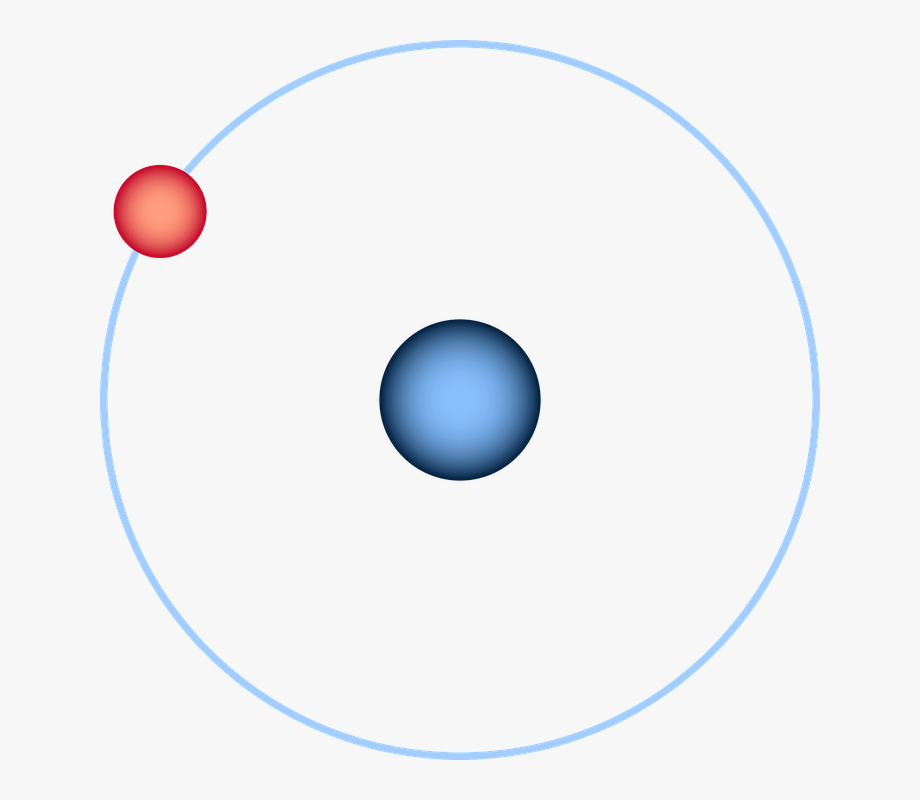
Bohr model of Hydrogen. One proton, one electron, as simple as they come.

What the physicists actually measured is the radius of the proton’s charge distribution, but that’s never a smooth, spherical point, Gao explained. The proton is made of still smaller bits, called quarks, that have their own charges and those aren’t evenly distributed. Nor does anything sit still. So it’s kind of a moving target.

One way to measure a proton’s charge radius is to scatter an electron beam from the nucleus of an atom of hydrogen, which is made of just one proton and one electron. But the electron must only perturb the proton very gently to enable researchers to infer the size of the charge involved in the interaction. Another approach measures the difference between two atomic hydrogen energy levels. Past results from these two methods have generally agreed.

Artist’s conception of a very happy muon by Particle Zoo

But in 2010, an experiment at the Paul Scherrer Institute replaced the electron in a hydrogen atom with a muon, a much heavier and shorter-lived member of the electron’s particle family. The muon is still negatively charged like an electron, but it’s about 200 times heavier, so it can orbit much closer to the proton. Measuring the difference between muonic hydrogen energy levels, these physicists obtained a proton charge radius that is highly precise, but much smaller than the previously accepted value. And this started the dispute they’ve dubbed the “proton charge radius puzzle.”

To resolve the puzzle, Gao and her collaborators set out to do a completely new type of electron scattering experiment with a number of innovations. And they looked at electron scattering from both the proton and the electron of the hydrogen atom at the same time. They also managed to get the beam of electrons scattered at near zero degrees, meaning it came almost straight forward, which enabled the electron beam to “feel” the proton’s charge response more precisely.

Voila, a 4-percent-smaller proton. “But actually, it’s much more complicated,” Gao said, in a major understatement.

The work was done at the Department of Energy’s Thomas Jefferson National Accelerator Facility in Newport News, Virginia, using new equipment supported by both the National Science Foundation and the Department of Energy, and some parts that were purpose-built for this experiment. “To solve the argument, we needed a new approach,” Gao said.

Gao said she has been interested in this question for nearly 20 years, ever since she became aware of two different values for the proton’s charge radius, both from electron scattering experiments.  “Each one claimed about 1 percent uncertainty, but they disagreed by several percent,” she said.

And as always in modern physics, had the answer not worked out so neatly, it might have called into question parts of the Standard Model of particle physics. But alas, not this time.

“This is particularly important for a number of reasons,” Gao said. The proton is a fundamental building block of visible matter, and the energy level of hydrogen is a basic unit of measure that all physicists rely on.

The new measure may also help advance new insights into quantum chromodynamics (QCD), the theory of strong interaction in quarks and gluons, Gao said. “We really don’t understand how QCD works.”

“This is a very, very big deal,” she said. “The field is very excited about it. And I should add that this experiment would not have been so successful without the heroic contributions from our highly talented and hardworking graduate students and postdocs from Duke.”

This work was funded in part by the U. S. National Science Foundation (NSF MRI PHY-1229153) and by the U.S. Department of Energy (Contract No. DE-FG02-03ER41231), including contract No. DE-AC05-06OR23177 under which Jefferson Science Associates, LLC operates Thomas Jefferson National Accelerator Facility.

CITATION: “A Small Proton Charge Radius from An Electron-Proton Scattering Experiment,”  W. Xiong, A. Gasparian, H. Gao, et al. Nature, Nov. 7, 2019. DOI: 10.1038/s41586-019-1721-2 (ONLINE)

Dreams of Reality: Performing Dementia

White Lecture Hall’s auditorium is a versatile space. It hosts classes, speakers, and student organizations. And this Wednesday, White 107 was an institution for the elderly, an elementary school classroom, a lake, and an old blue house.

On October 23, Duke welcomed solo artist Kali Quinn to the stage to perform her now 13-year-old, one-woman show, Vamping. Vamping is an artistic and humanistic rendition of dementia, inspired by Quinn’s personal experience with a grandmother who moved into an institution just as Quinn was leaving for college on the other side of the country. It tells the story of 91-year-old Eleanor Butler, who drifts in and out of old memories, joys, and regrets as she experiences dementia in an elderly care facility.

Eleanor undergoing a PET scan

Throughout the hour-long performance, the physicality of the stage remains constant. There is one actor, Quinn herself, accompanied by a few props: a projector, a wheelchair, a blanket, a voice recorder. Yet each of these, Quinn included, shapeshift constantly. Quinn plays not only Eleanor, but also a caregiver, a granddaughter, and Eleanor’s younger selves at different stages of life.

That’s what dementia is like, Quinn explains. It’s experiencing a hundred different things all at once. 

“I don’t know what’s dream and what’s awake,” says an elderly Eleanor as she returns from an old memory and just before she’s immersed into another one.

Vamping captures the existence of identity and personhood in diagnosis, according to Jessica Ruhle, Director of Education at the Nasher Museum of Art. While the story has no clear plot and no clear resolution, it flows in a way that is real and personal. At 91, Eleanor re-experiences her elementary school spelling bee, her 16-year-old flirtationship with the boy who would become her husband, the birth of her first child, her regret at not being a better wife and mother and grandmother, and so much more. She doesn’t particularly succeed in making sense of it all, but neither does she try. The resolution is simply an acceptance of life’s complexity.

A series of memories, materialized through pieces of film, are held over a 91-year-old Eleanor. This is the last scene of the performance.

Janelle Taylor, a medical anthropologist at the University of Toronto and one of the panelists following the performance, explained that this complexity is what differentiates pure medicine from an anthropological approach. “I do kind of the opposite of what medicine does,” she said. “Medicine makes sense of things by excluding possible causes and contexts. Anthropology seeks to bring it all together.”

The entanglement of all these different possible factors perhaps explains why Quinn’s performance also offers glimpses into the lives of caregivers, family members, and others who share in the experience of dementia. In many cases, a single diagnosis affects a far larger network than just the diagnosed patient.

And though that’s true in Vamping as well as the panelists’ experiences with dementia, they acknowledge that other stories of the same condition often go untold. “We’re very alike in our whiteness, our economic condition and ability to afford professional care,” said Ruhle, referring to herself and Quinn. After all, Eleanor experiences dementia within a care institution—which, according to Eleanor in the play itself, costs about $85,000 per year.

Taylor added that she was searching for more data on diagnosed persons who have no healthcare or no family. Unfortunately, there isn’t much existing research on such people, and the data are difficult to find. And adding onto that, there are many cases of dementia that are never formally diagnosed at all.

But even so, Quinn’s performance is important to share. Vamping doesn’t attempt to do the impossible by telling a universal narrative of aging and dementia; instead, it gives an immensely personal and humanistic story of one patient’s experience of life.

Even the cold realities play into its personal nature as well. As Eleanor exclaims at one point in the performance, more money is spent yearly on Viagra and breast implants than on Alzheimer’s. The implication is clear: there’s a need for more research, and there’s a need for more humanness.

By Irene Park

Meet the New Blogger: Meghna Datta

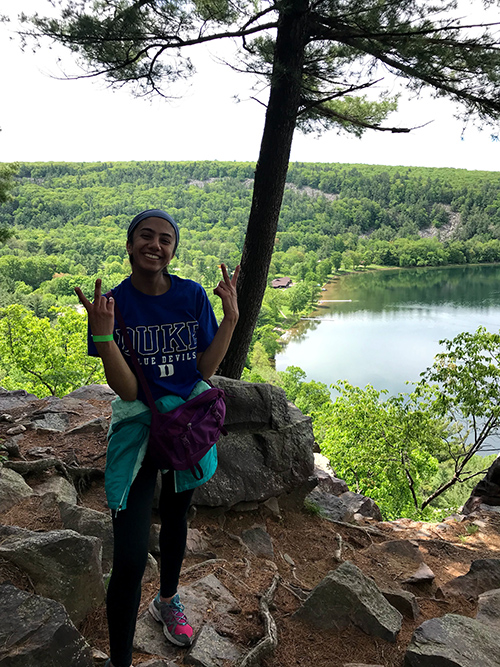
Hi! My name is Meghna Datta, and I’m a freshman. I’m from Madison, Wisconsin, so North Carolina weather has been quite the adjustment. Apart from the humidity, though, I’m so excited to be at Duke! I’m an aspiring pre-med student with absolutely no idea what I want to major in. And it’s funny that I’ve grown to love science as much as I do. Up until tenth grade, I was sure that I would never, ever work in STEM.

My first love was the humanities. As a child I was hooked on books (still am!) and went through four or five a week. In high school, I channeled my love for words into joining my school’s speech and debate team and throwing myself into English and history classes, until being forced to take AP Biology my sophomore year completely changed my trajectory.

Science had always bored me with its seemingly pointless intricacies. Why would I want to plod through tedious research when I could be covering a groundbreaking story or defending justice in a courtroom instead? But the lure of biology for me was in its societal impact. Through research, we’ve been able to cure previously incurable diseases and revolutionize treatment plans to affect quality of life.

Meghna Datta repping the Devils

In AP Bio, understanding the mechanisms of the human body seemed so powerful to me. Slowly, I began to entertain the notion of a career in medicine, one of many scientific fields that works to improve lives every day.

Now, the research going on at Duke doesn’t cease to amaze me. Specifically, I’m interested in science for social good. Be it sustainable engineering, global health, or data-driven solutions to problems, I love to see the ways in which science intersects with social issues. As I have learned, science does not need to be done in isolation behind pipettes. Science is exciting and indicative of society’s shared sense of humanity. At Duke, there’s no shortage of this environment.

As a blogger I’m so excited to see the inspiring ways that peers and faculty are working to solve problems. And because science isn’t a traditionally “showy” field, I am looking forward to shining the spotlight on people at Duke who tirelessly research behind the scenes to impact those at Duke and beyond. The research community at Duke has so much to celebrate, and through blogging I’m excited to do just that!

Page 39 of 111

Powered by WordPress & Theme by Anders Norén