How does parenting change when infant and child mortality affects every family in society? Recent history may provide an answer. For the entirety of the 19th Century, child mortality was ubiquitous. In the year 1880, nearly 35% of children born in the United States passed away in their first five years. The medical literature that explores the common diseases and public health inadequacies, though expansive, often fails to address the central humanistic questions surrounding such widespread death. How were these children mourned? How did grieving families move on? And how has this mourning changed in the context of the past hundred years of medical advancement?
These guiding questions drove Dr. Perri Klass, Professor of Journalism and Pediatrics at NYU, to pen her recently published book, “The Best Medicine: How Science and Public Health Gave Children a Future.” A distinguished clinician, author, and medical historian, Klass explored prominent art and literary works from this era of high infant and child mortality at the recent Trent Humanities in Medicine Lecture at the Duke School of Medicine, titled “One Vacant Chair: Remembering Children”.
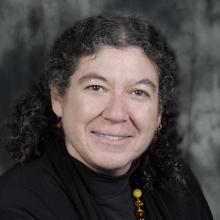
Dr. Perri Klass, MD
Throughout the lecture, Klass guided the audience through famous portraits, poems, and prose produced in the 18th Century that memorialized children who had died at a young age. Perhaps the most famous fictional account of childhood death in the 19th century emerged in Uncle Tom’s Cabin by Harriet Beecher Stowe. The emotionally wrenching death scene of young Eva, who succumbed to tuberculosis, struck a chord with virtually all those who read the novel. Published in 1852, Uncle Tom’s Cabin would go on to be reproduced in theaters across the country for several decades, the death scene becoming a ubiquitous anchor that often brought the audience to tears. Klass further described how Beecher Stowe drew from her personal experience, the death of her son Charlie from cholera only a few years prior to the writing of the book, to create this powerful literary scene.
“Uncle Tom’s Cabin.” Published in 1852 by Harriet Beecher Stowe.
Beecher Stowe was not the only author whose personal experience impacted their art. Charles Dickens, deeply impacted by the death of his children, had created a slew of sentimental yet mortal child characters in his stories. One of the most prominent examples, young Nell from “The Old Curiosity Shop,” was published in installments and developed a strong following. Dickens ended the series with the death of twelve-year old Nell, much to the outrage of international readers.
Perhaps it’s no surprise that parents chose to memorialize their deceased children through literature and art. Wealthy families would often contract famous portrait artists were often contracted to depict their dead children. Some, including the Rockefellers and the Stanfords, channeled the deaths of their children and grandchildren into resourced academic institutions.
For grief to drive philanthropy and art is not a new phenomenon, but the sources of grief that drive such artistic and financial overtures today have changed considerably. Klass sought to bridge this knowledge gap and pull closer the history to which society has the privilege of being oblivious. Maybe, even, it would even inform how we cope with the mortality of young people today.
“How do we situate ourselves in a world where infant and child mortality is so low?” Klass asked at the beginning of her presentation.
The past does not reveal one clear answer, but it does provide a tapestry of options, many lost in our modern collective memory, for mourning, for celebrating, and for memorializing.
When engineering student Katie Drinkwater signed up for the Machine Shop Tools Mastery Unit for her Engineering 101 class, she was completely unsure about what to expect. As a freshman with no prior experience, she felt intimidated by the prospect of stepping foot into a place with such powerful and potentially dangerous machinery. Now a senior in Pratt and a member of Duke Motorsports, Drinkwater has since become much more comfortable spending time around lathes, bandsaws and other power equipment. Along with many other members of the Duke community, she attributes much of her positive experience to the guidance and support of Duke Machine Shop Manager, Steve Earp.
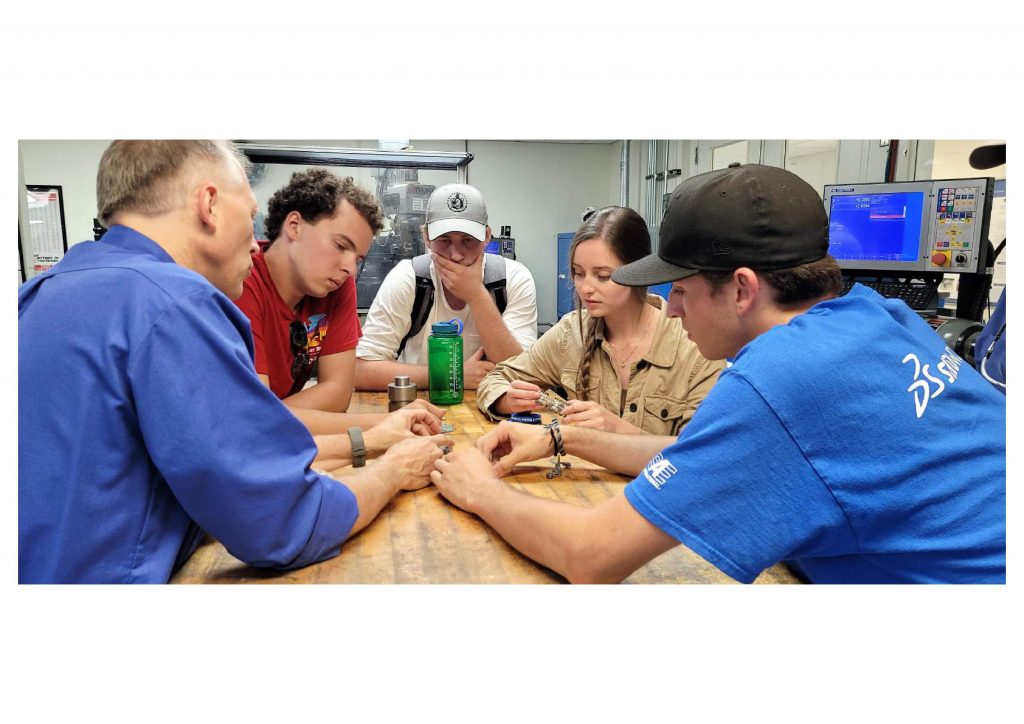
The Welcome Night at the Student Machine Shop is an open-house event early in the semester that introduces new students into all that the Duke student machine shop has to offer.
“When I went in to make my first part, I was very nervous and intimidated,” Drinkwater says. “I thought that I would be expected to know how to use the machines, but this couldn’t have been farther from the truth. Steve helped my partner and me with every step but didn’t infringe on our ownership of the project. I always feel free to ask questions and check in with Steve, but I am still expected to do my own work.”
Drinkwater isn’t alone. “Steve is definitely a friendly face you can rely on in the Pratt student shop. His vast skills and experience are one thing, but being able to teach people new to the shop in such an engaging way sets him apart. Steve has helped me make custom tools, solve problems that seemed impossible, and has helped me learn something new every time I walk into the shop,” says John Smalley, ME ‘23 and president of Duke Aero Society.
Managing the Student Shop for nearly 15 years, Earp is a vital and beloved mentor to all students that frequent the shop. Not only responsible for the set-up, organization, and operation of the shop, Earp also ensures that thorough safety practices are properly established and upheld. Part of this dedication to safety involved spearheading a brand new initiative: The Student Shop Managers Consortium.
Steve Earp (left), Jennifer Ganley, Connor Gregg, Alexandra Gray, Greg Bumpass, Josh Klinger (right) gather to show new students around the machine shop during the Welcome Night.
In 2013, following a tragic accident at Yale University that involved the death of a student using the student machine shop, Earp became determined to take action to ensure no such incidents ever occur again. “I started investigating, and trying to find other people that do my job at other universities,” he explained. After sending out an email to dozens of other engineering schools, Earp was left with no responses. However, he refused to let this deter him. “I had to drill down over the next two years and find that one guy or gal that operates and manages that shop,” he recalls. One by one, Earp built a network across the country, eventually organizing and hosting the first conference here at Duke University in 2015 with about 65 student shop managers. Earp recalls the positive feedback from all the attendees, revealing that this was the first time these individuals with the same job had been able to communicate with those in similar positions: “nobody ever knew that there was somebody like them somewhere else.” Since then, the conference has occurred on an annual basis, hosted by different universities from Yale to Washington University in St. Louis, and even virtually during the pandemic. Most importantly, this network has allowed for more conversation and accountability in making student safety a priority. Demonstrating his passion for student shops and commitment to student safety, Earp was recently named the President of this organization.
The emphasis on safety is something Drinkwater has experienced since the first time she stepped in the shop to complete her Tools Mastery assignment. “A machine shop can be a very dangerous environment — something Steve knows from personal experience — so he and Greg take safety training very seriously,” she explains. “They want every student to respect the environment without being afraid of it.” After completing the very thorough online and in-person components of the safety training, Drinkwater felt proud to pick up her shop badge. In a sentiment echoed by all of the engineering community, Drinkwater concludes, “I feel very lucky to have Steve as our shop manager. His wealth of experience, genuine interest in students’ learning, and good-humored disposition are extremely valuable additions to the Pratt community.”
As a senior at Duke University in 2010, Dr. Quinn Wang was simply Quinn, an undergraduate English major on the pre-med track, wondering how to combine her love for medicine with her love for English. This is how her senior thesis was conceived – Through the Lens of Medicine: Landscapes of Violence in Cormac McCarthy’s Blood Meridian (1985), All the Pretty Horses (1992), and No Country for Old Men (2005) – which ended up winning the English department’s award for “Most Original Honors Thesis.”
Dr. Quinn Wang
Fast forward 12 years, and Wang can now call herself a double Dukie, having completed medical school here. She went on to complete ophthalmology residency at UCSF and this past Saturday, November 5, came back to her alma mater as part of the Duke Medical Ethics Journal’s Medicine, Humanities, and Business celebration to talk to an eager audience at Schiciano Auditorium about her path from Duke until now.
She began her story during the infamous year of 2020, when she was forced to stop seeing patients at her private practice in California’s Bay Area due to COVID-19. Restless and anxious about how her patients were doing, she tried to keep up with them as best she could, but of course there were limitations. And then, a few months in, one of her patients went blind.
This tragic moment sparked a frustrating realization by Wang that in the tech capital of the world – San Francisco – there was still no good way to test people’s eyesight from home to prevent what should have been preventable. She decided to put together something herself, guided by the one question she thought was most important to answer until COVID-19 abated and people could come into clinics again – “how do we make sure people don’t go blind?”
Wang took common visual eye-testing tools used in clinics, and with some simple Photoshop editing and a little bit of code, turned them into a series of easy multiple-choice questions that could be answered from home. This simple but powerful transformation turned into Quadrant Eye, a start-up she co-founded with software engineer Kristine Hara.
A common visual tool used to test eyesight is the Snellen chart
The Quadrant Eye journey has taken her from running a private practice as an ophthalmologist to taking the plunge into business by applying to and getting selected for Y Combinator, which calls itself a “graduate school for startups”. YC invests $500,000 into a selection of early-stage startups twice a year. Then, for three intense months, they provide support to get startups off the ground and in good shape to present to investors for funding. At YC, Hara worked on turning Quadrant Eye into an app, and Wang renewed hundreds of prescriptions.
Quadrant Eye
Ultimately, though, the most significant place Quadrant Eye has led Wang to is a journey of self-mastery that applies to any human endeavor, from building a startup to doing research to just getting up every morning. As she describes, startup life entails always learning new things and always messing up – which, for someone who professes that “I don’t like to do things I’m not good at” – can be challenging. She candidly admitted that she, like everyone, has bad days, when sometimes all she can do is throw in the towel and end work early. “I have more doubts than I care to admit,” Wang says, but at the end of the day, “we’re all climbing our own mountains”. Pushing through requires “superhuman effort” but it’s worth it.
And as for that English thesis? Wang describes how Quadrant Eye’s very first investor – “let’s call him Charlie” – asked her all the requisite questions investors ask early-stage startups (think Shark Tank). But he also asked her for something non-traditional – all fifty or so pages of her undergraduate honors thesis she had written ten years back. Apparently, he had seen a mention of it on LinkedIn and was intrigued. A few weeks later, Wang received a phone call that he was interested in investing – and he admitted that her thesis had played a part. To him, the uniqueness and quality of her thesis showed that Wang could problem-solve, communicate well, and think creatively, and Wang herself agrees. “My English thesis showed me that I can do hard things,” she said, and if Quadrant Eye is any indication, clearly, she can.
“After COVID-19,” senior Cynthia Dong (T’23) remarks, “so much of what was wrong with the medical system became visible.”
Duke undergraduate Cynthia Dong, Class of 2023
This realization sparked an interest in how health policy could be used to shape health outcomes. Dong, who is pursuing a self-designed Program II major in Health Disparities: Causes and Policy Solutions, is a Margolis Scholar in Health Policy and Management. Her main research focus is telehealth and inequitable access to healthcare. Her team looks at patient experiences with telehealth, and where user experience can be improved. In fact, she’s now doing her thesis as an offshoot of this work, researching how telehealth can be used to increase access to healthcare for postpartum depression.
Presenting research on telehealth
In addition to her health policy work, however, Dong also works as a research assistant in the neurobiology lab of Dr. Anne West, and her particular focus is on the transcription mechanism of the protein BDNF, or brain-derived neurotrophic factor.
While lab research can be clearly visualized by most people (think pipettes, rows of benches littered with bottles and plastic tubes, blue rubber gloves everywhere), health policy research is perhaps a little more abstract. When asked what the process of research through Margolis is like, Dong says that “it’s not team-based or individual – it’s a lot of both.” This looks like individual research on specific topics, talking to different stakeholder groups and people with certain expertise, and then convening for weekly team meetings.
With other Margolis Scholars
For Dong, research has been invaluable in teaching her to apply knowledge to something tangible. Doing that, you’re often “forced to understand that not everything is in my control.” But on the flip side, research can also be frustrating for her because so much of it is uncertain. “Will your paper get published? Is what you’re doing relevant to the research community? Will people invest in you?”
In that vein, research has humbled her a lot. “What it means to try to solve a societal problem is that it’s not always easy, you have to break it down into chunks, and even those chunks can be hard to solve.”
After graduation, Dong plans on taking a couple of gap years to be with family and scribe before ultimately pursuing an MD-MPH. Because research can be such a long, arduous process, she says that “It took me a long time to realize that the work we do matters.” In the future, though, she anticipates that her research through Margolis will directly inform her MPH studies, and that “with the skills I’ve learned, I can help create good policy that can address the issues at hand.”
This is part two of a two-part series; last week we looked at what biblical research is and why it matters—this week we’re looking at how it’s conducted.
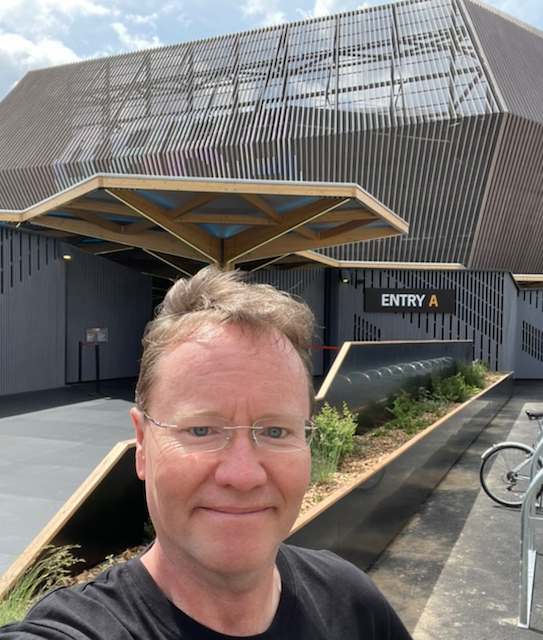
“Sometimes I have to take a running start to the word ‘religion,'” says Mark Goodacre, chair of the religious studies department at Duke.
A beautiful sentiment.
He corrects himself: “That is, I have trouble saying the word itself. I often have to stop and think so I don’t stumble over it.”
A considerate pause: “Department of…Re-lig-ious Studies*.* There we go.”
Goodacre has a podcast about the New Testament. His students have admitted to using his calming British timbre to lull themselves into a sense of peace. When I met with him over Zoom, he was back in Cambridge visiting his brand-new granddaughter. Other than being one of the world’s most forefront New Testament scholars, he is also an ABBA superfan.
Professor Mark Goodacre
Goodacre consulted on the Gospel of Matthew for the New Revised Standard Version Updated Edition—the most modern scholarly edition of the Bible. He argued to the board that the commonly translated “leper” should be considered “person with leprosy” and “deaf-mute” as “person who could neither see nor hear.”
Goodacre is one of hundreds of New Testament scholars around the world who are working towards a greater understanding of historical and theological Christianity.
Coming from outside the world of biblical research, it may be difficult to understand the relationship between religious texts and academia. You can think of it like this: in an academic setting, the Bible is heavily seasoned with nuance, slow-roasted for decades at a time, pulled apart, chopped into little chunks of knowledge, placed in boiling vats of outside context, and served objectively with a fresh garnish of analysis.
“You’re taking the tools you have in the arts and sciences, and you’re not treating religious texts any differently,” Goodacre says. “People often think you have to treat sacred things differently, but they are still the product of human beings in specific contexts at specific points in history. Subject them to proper scrutiny— like you would to any modern writer.”
Last week, we looked at why biblical research matters. But perhaps that relationship goes both ways; researchers are constantly inspired by the world of arts and sciences, the conversations they have with students—and more than that, current events. Today, as much as in any decade, the Bible is a central topic of debate in public policy and ethical issues that affect people all over the world. Goodacre gives us some examples:
“For example, take slavery in America; sometimes the same passage in the Bible would be referred to by both abolitionists and slave owners. Modern scholars are able to provide context to those passages and truly defend the arguments of abolitionists.”
As a Brit, Goodacre finds the American separation of church and state an interesting concept. As a scholar, he is able to provide context and voice to arguments made on both sides.
“It is healthy for our politics and culture to have people who can have intelligent discussions about the Bible in issues in our courts like marriage, divorce, sexuality, abortion.”
Goodacre makes sure to teach historical analysis tools in his classes. Among those tools include the ability to view texts from different perspectives; beyond being able to step away from politics to provide an outside view, scholars also need to be able to get even closer to the text. Different views on the text have been the consensus at different points in history, and often scholars find reasons to visit and revisit translations and interpretations for different analyses.
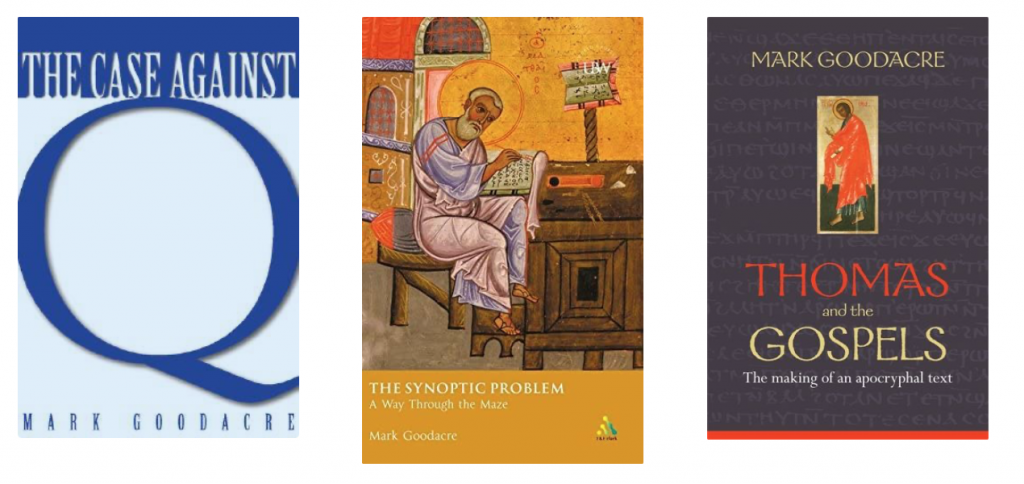
Some books written by Goodacre, images courtesy of Google Books.
For example, Goodacre teaches a class at Duke called Jesus and Film, and in the class he repeatedly revisits the issue of the persistent white, European Jesus depiction in even modern art. Since graduating from Oxford years ago, he has revisited the same material he once studied with a feminist perspective despite being taught it in a male-dominated space.
“For someone like me who went to grad school a few decades ago,” he says, “it’s a liberating thing to take feminist and racial perspectives with the weight they deserve.”
What does this have to do with us non-religious studies folks? Perhaps some of us follow the scientific method to conduct our experiments, others the engineering method and even others use literary analysis or investigation methods or whatever we need to get to the root of a problem. All of these methods and more are encompassed within the realm of religious studies and biblical research; by looking at a problem from all angles, and without treating sanctity as an exception to scrutiny, scholars are able to work.
What brings seniors Deney Li and Amber Fu together? Aside from a penchant for photoshoots (keep scrolling) and neurobiology, both of them are student research assistants at the lab of Dr. Andrew West, which is researching the mechanisms underlying Parkinson’s in order to develop therapeutics to block disease progression. Ahead lie insights on their lab work, their lab camaraderie, and even some wisdom on life.
(Interview edited for clarity. Author notes in italics.)
What are you guys studying here at Duke? What brought you to the West lab?
DL: I am a biology and psychology double major, with a pharmacology concentration. I started working at a lab spring semester of freshman year that focused on microbial and environmental science, but that made me realize that microbiology wasn’t really for me. I’ve always known I wanted to try something in pharmaceutics and translational medicine, so I transitioned to a new lab in the middle of COVID, which was the West lab. The focus of the West lab is neurobiology and neuropharmacology, and looking back it feels like fate that my interests lined up so well!
Deney Li
AF: I am majoring in neuroscience with minors in philosophy and chemistry, on the pre-med track. I knew I wanted to get into research at Duke because I had done research in high school and liked it. I started at the same time as Deney – we individually cold-emailed at the same time too, in the fall! I was always interested in neuroscience but wasn’t pre-med at the time. A friend in club basketball said her lab was looking for people, and the lab was focused on neurobiology – which ended up being the West lab!
Amber Fu
What projects are you working on in lab?
DL: My work mainly involves immunoassays that test for Parkinson’s biomarkers. My postdoc is Yuan Yuan, and we’re looking at four drugs that are kinase inhibitors (kinases are enzymes that phosphorylate other proteins in the body, which turns them either on or off). We administer these drugs to mice and rats, and look at LRRK2, Rab10 and phosphorylated Rab10 protein levels in serum at different time points after administration.These protein levels are important and indicative because more progressive forms of Parkinson’s are related to higher levels of these proteins.
AF: For the past couple of years, I’ve been working under Zhiyong Liu (a postdoc in the lab). There are multiple factors affecting Parkinson’s, and different labs ones study different factors. The West lab largely studies genetic factors, but what we’re doing is unique for the lab. There’s been a lot of research on how nanoplastics can go past the blood-brain barrier, so we are studying how this relates to mechanisms involved in Parkinson’s disease. Nanoplastics can catalyze alpha-synuclein aggregation, which is a hallmark of the disease. Specifically, my project is trying to make our own polystyrene nanoplastics that are realistic to inject into animal models.
What I’m doing is totally different from Deney – I’m studying the mechanisms surrounding Parkinson’s, Deney is more about drug and treatments – but that’s what’s cool about this lab – there are so many different people, all studying different things but coming together to elucidate Parkinson’s.
Another important project
How much time do you spend in lab?
DL: I’m in lab Mondays, Wednesdays, and Fridays from 9 to 6. All my classes are on Tuesdays and Thursdays!
AF: I’m usually in lab Tuesdays and Thursdays from 12 to 4, Fridays from 9 to 11:45, and then whenever else I need to be.
Describe lab life in three words:
DL: Unexpected growth (can I just do two)?
AF: Rewarding, stimulating, eye-opening.
Lab life also entails goats and pumpkins
What’s one thing you like about lab work and one thing you hate?
DL: What I like about lab work is being able to trouble-shoot because it’s so satisfying. If I’m working on a big project, and a problem comes up, that forces me to be flexible and think on my toes. I have to utilize all the soft skills and thinking capabilities I’ve acquired in my 21 years of life and then apply them to what’s happening to the project. The adrenaline rush is fun! Something I don’t like is that there’s lots of uncertainty when it comes to lab work. It’s frustrating to not be able to solve all problems.
AF: I like how I’ve been able to learn so many technical skills, like cryosectioning. At first you think they’re repetitive, but they’re essential to doing experiments. A process may look easy, but there are technical things like how you hold your hand when you pipette that can make a difference in your results. Something I don’t like is how science can sometimes become people-centric and not focused on the quality of research. A lab is like a business – you have to be making money, getting your grants in – and while that’s life it’s also frustrating.
What do you want to do in the future post-Duke? How has research informed that?
DL: I want to do a Ph.D. in neuropharmacology. I’m really interested in research on neurodegeneration but also have been reading a lot about addiction. So I’ll either apply to graduate school this year or next year. My ultimate goal would be to get into the biotech startup sphere, but that’s more of a 30-years-down-the-road goal! Being in this lab has taught me a lot about the pros and cons of research, which I’m thankful for. Lab contradicts with my personality in some ways– I’m very spontaneous and flexible, but lab requires a schedule and regularity, and I like the fact that I’ve grown because of that.
AF: The future is so uncertain! I am currently pre-med, but want to take gap years, and I’m not quite sure what I want to do with them. Best case scenario is I go to London and study bioethics and the philosophy of medicine, which are two things I’m really interested in. They both influence how I think about science, medicine, and research in general. After medical school, though, I have been thinking a lot about doing palliative care. So if London doesn’t work out, I want to maybe work in hospice, and definitely wouldn’t be opposed to doing more research – but eventually, medical school.
What’s one thing about yourself right now that your younger, first-year self would be surprised to know?
DL: How well I take care of myself. I usually sleep eight hours a day, wake up to meditate in the mornings most days, listen to my podcasts… freshman-year-Deney survived on two hours of sleep and Redbull.
AF: Freshman year I had tons of expectations for myself and met them, and now I’m meeting my expectations less and less. Maybe that’s because I’m pushing myself in my expectations, or maybe because I’ve learned not to push myself that much in achieving them. I don’t necessarily sleep eight hours and meditate, but I am a little nicer to myself than I used to be, although I’m still working on it. Also, I didn’t face big failures before freshman year, but I’ve faced more now, and life is still okay. I’ve learned to believe that things work out.
March 2020. The subsequent blur of months. Of spring into summer, fall into winter, a year into another and likely into the next. Like millions of humans around the world, 2020 itself feels infected, as if wrapped up with yellow caution tape. Virus dominatesthe current zeitgeist; pandemic won Merriam-Webster’s 2020 word of the year; vaccine in 2021.
We are all proto-virologists, sludging through the constant slew of “viral” media: novel variants, outbreaks, booster shots, mutations (a jargon in which we’re collectively fluent).
In the somewhat-receding wake of COVID-19, like floodwater, viral fear recently surged again when the World Health Organization began reporting monkeypox (MPX) outbreaks in Europe and North America. The stigmatization of MPX patients as “disease-spreaders” (in the media, on the internet, in conversation, etc.) suggests these individuals have a kind of authority over the virulent strands of DNA in their bodies. This belief aligns with the etymology of “virus” from the Latin “poison,” a word that functions as both noun and verb. Passive and active. Culpable.
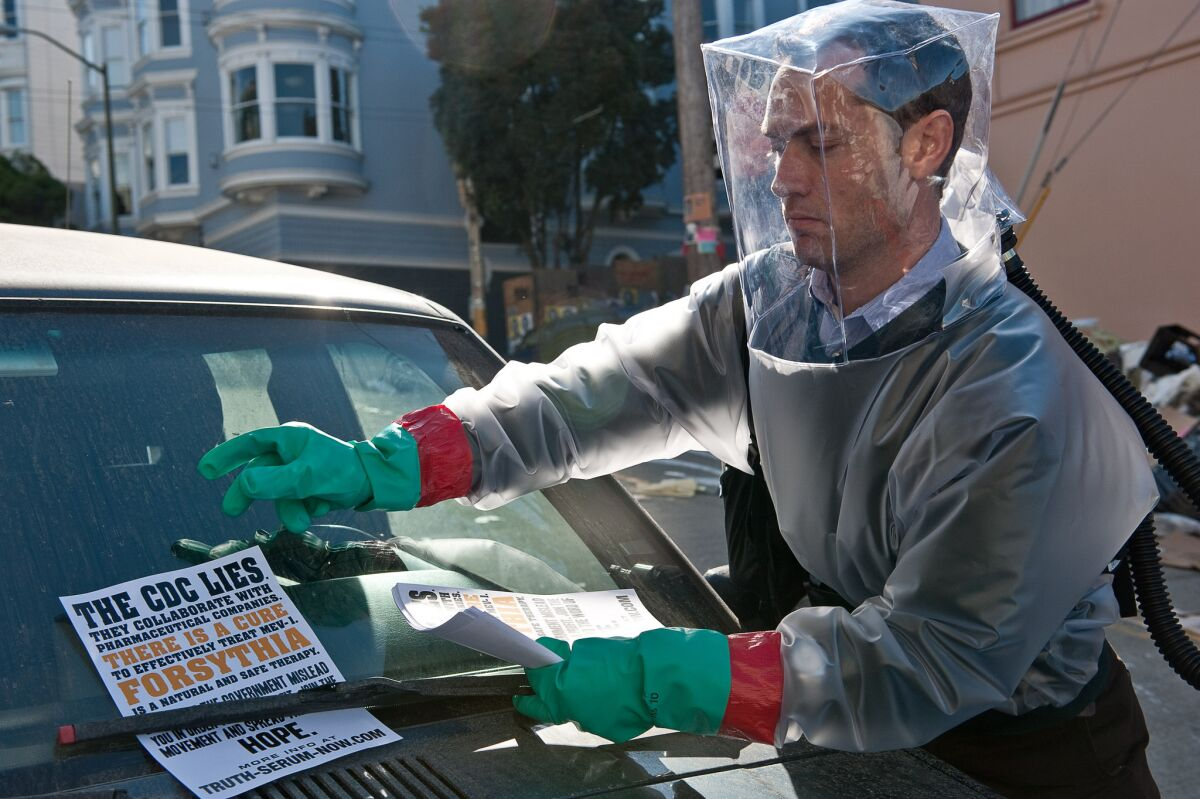
Alan Krumeweide in Contagion (Claudette Barius / Warner Bros.)
I’m reminded of Jude Law’s fear-mongering character in Contagion, Alan Krumewiede, the conspiracy theorist who conjectured MEV-1, the film’s fictional virus, was“Godzilla, King Kong, Frankenstein, all in one.”
Of course, this sentiment did not bud from MPX or COVID-19 like a novel variant. No, it has existed in the United States for decades, if not longer, and it has not been dormant.
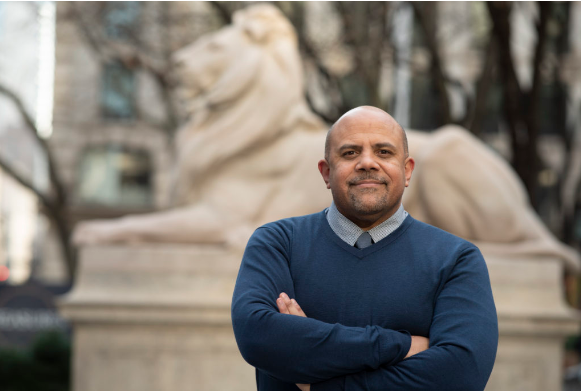
Dr. Stephen Thrasher, a scholar of the criminalization of HIV/AIDS at Northwestern University, stood in Duke’s anthropology lecture hall this month and drew parallels between the recent MPX/COVID-19 epidemics and that of HIV/AIDS in the 1980s-90s and stretching into the new millennium. He asked us to raise our hands if we personally knew someone with HIV/AIDS. A few did. If we knew someone who had died from HIV-related causes. A few less. What about COVID? The entire audience raised hands as if to signal the new era of viral infection.
Dr. Steven Thrasher is the inaugural Daniel H. Renberg Chair of social justice in reporting (with an emphasis on issues relevant to the LGBTQ community) and an assistant professor of journalism at Northwestern. His research focuses on HIV in America.
As Thrasher historicized, the stigma that encapsulated HIV/AIDS significantly delayed life-saving interventions on the local and national scale. Prejudice hindered research funding, drug distribution, and government health agency mobilization. The rising tide of the HIV/AIDS epidemic was concurrent with increased violence towards the LGBTQ community, and gay men in particular, analogous to a king tide flooding the coastline.
Thrasher exemplified this taboo through the “patient zero” misconception, which was propagated by the media during the epidemic and embedded like a splinter in pop culture’s thumb (i.e. the film Patient Zero with Matt Smith, Stanley Tucci, and Natalie Dormer).
Gaëtan Dugas was miscredited as Patient Zero of the HIV/AIDS epidemic in America Credit: Fadoo Productions
Gaëtan Dugas, a Québécois Canadian flight attendant, was inappropriately labeled “patient zero” of the HIV/AIDS epidemic in America. As Thrasher and other researchers have debunked, Dugas was, in fact, not the first person to bring HIV to the United States. Further, Dugas was not even included in the early infection group. And Dugas was Patient O (like oh), not zero, for Out-of-State. Yet, this contextualization of the virus endures despite being disproved. Upon diagnosis, many infected individuals will experience shame.
In the 1980s and 90s, HIV/AIDS was characterized as the “gay plague,” setting ablaze a moral panic in America comparable to that of the Satanic Panic, rock ‘n’ roll, and fear of razor blades stuffed into gooey 3 Musketeers bars at Halloween (and there’s an interesting overlap in the timing of these hysterias in the collective American consciousness). And just two months ago even, many people were characterizing MPX in the same accusatory and morally dubious way.
Like with the AIDS epidemic, Thrasher said the US government failed to mobilize public health initiatives early enough to proactively stifle MPX outbreaks in spite of the disease’s well-documented diffusion across Europe and into neighboring Canada.
“We could’ve tapped the Strategic National Stockpile,” he argued. Thrasher listed multiple public health interventions that could have and should have been implemented with the first faint smoke signals of MPX in the United States (as they were in the past for meningitis and polio outbreaks).
For context, the Strategic National Stockpile (SNS) is a cache of medicines, antibiotics, and vaccines that the government started to accumulate just prior to 9/11 in 2001 and, seemingly, in an exponential manner after — almost like doomsday preppers hoarding freeze-dried beef stroganoff and cans of beans in their underground bunkers. Born from the smoking rubble and smoke of New York City following the terrorist attack, fear of biological warfare, especially the weaponization of smallpox, paralyzed the US (i.e. the Anthrax scare).
The SNS was tapped after 9/11, for 12 major hurricanes, COVID-19, and the swine flu (to name a few), but not for monkeypox.
As historically evidenced, mass vaccination and herd immunity effectively prevent the spread of viral infections, especially for slow-mutating viruses like MPX.
“We should have quickly vaccinated queer men and transmasc people,” Thrasher said, “building on a very historic anomaly which is that adults have been socialized to take vaccines en masse in a way that has not happened in many decades.” And because MPX and smallpox are closely related viruses, a rollout of the stockpile’s smallpox vaccine could have nipped the outbreak in the bud.
A large focus of Thrasher’s research is on who is affected by viruses, and how, and why. Nearing 6.6 million COVID-19 deaths worldwide, many would argue that viruses — these ancient, non-life forms — are Earth’s “great equalizers,” as acknowledged by Thrasher in multiple publications. Evolution has pushed them to infect, replicate, and spread: machine-like and non-discriminatory.
But, he added, viruses are not great equalizers. Infection is inherently unequal. Again, we must ask the question who?
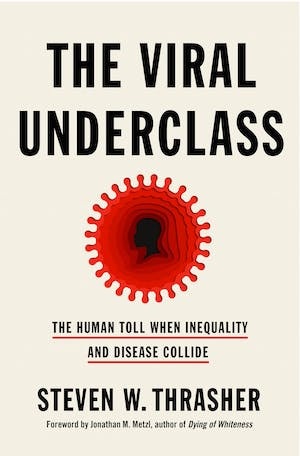
Viral infections disproportionately burden marginalized bodies and communities, a concept Thrasher framed as the viral underclass (coined by activist Sean Strub and reshaped by Thrasher to describe this phenomenon). Writing in his book of the same name, “… the viral underclass can help us think about how and why marginalized populations are subjected to increased harms of viral transmission, exposure, replication, and death.”
Let’s return to the MPX vaccine. The Biden administration did not tap the SNS for mass vaccination. Instead, it rolled out meager health interventions at a snail’s pace (like Sisyphus pushing his stone up the hill). Still, many at-risk individuals, in particular men who have sex with men, opted to receive a two-shot regimen to protect themselves from the virus. Considering the viral underclass, Thrasher posed the following questions:
Who is disproportionately burdened by MPX in the US? He answered, “Black and Latino men who have sex with men.”
And, who is receiving the medical interventions to protect themselves from the painful infection? He answered again, “I got one MPX vaccine shot, almost everyone in line but me and a friend were white.” He describes the discrepancy between those receiving the vaccine and those most at-risk of acquiring MPX in his Scientific American article “Monkeypox Is a Sexually Transmitted Infection, and Knowing That Can Help Protect People.”
And his years of HIV research corroborate this trend.
From the New York Times, Michael Johnson has been working to overturn laws criminalizing HIV in the United States.
He spoke (and wrote in The Viral Underclass) about his time reporting the Michael Johnson court case in St. Louis, Missouri. Michael Johnson, a black, gay, former college wrestler, was sentenced to 30 years in prison after failing to disclose his HIV status to his sexual partners — a criminal offense. The prosecution had sought a maximum 60.5 years, practically a life sentence.
For context, in the state of North Carolina, the maximum sentence for voluntary manslaughter is a little under five and a half years. In the courtroom, Thrasher was privy to the prosecution’s smoking gun: Johnson had previously signed a legally-binding acknowledgment of his HIV diagnosis. With the flick of a pen, nondisclosure was a criminal offense.
In his interviews, however, Thrasher found that Michael Johnson was semi-illiterate and had not been properly informed of the legal implications of the document he had signed. Nor had he been informed of the consequences of breaking the legal contract. Nor had he been counseled or given any legal advice prior to being charged.
Michael Johnson was released from prison 25 years early after his ruling was overturned. His is a body in the viral underclass.
Excerpted from Thrasher’s book The Viral Underclass: The Human Toll When Inequality and Disease Collide
Vito Russo speaks at the 1988 ACT UP demonstration at the Department of Health and Human Services in Washington, D.C. Credit: Rick Gerharter/HBO Documentary Films
Concluding his lecture, Thrasher quoted AIDS activist Vito Russo’s Why We Fight speech from the 1988 ACT UP Demonstration at the Department of Health and Human Services. In reading the entire transcript, I found that Russo was aware of the viral underclass, as Thrasher theorized, despite the term not yet existing in the academic ethos. He said in his address:
“If I’m dying from anything — I’m dying from the fact that not enough rich, white, heterosexual men have gotten AIDS…. Living with AIDS in this country is like living in the twilight zone. Living with AIDS is like living through a war which is happening only for those people who happen to be in the trenches. Every time a shell explodes, you look around and you discover that you’ve lost more of your friends, but nobody else notices. It isn’t happening to them.”
Is it possible to ever resolve the viral underclass in the US? As long as systemic inequities continue to exist, no. This may seem pessimistic or even cynical, but Thrasher concluded his lecture (and his book) with reserved optimism. “Let’s get to work,” he implored.
If we can identify and actively dismantle the systems that disproportionately burden certain populations with viruses and diseases, like a spool of yarn, we can begin to unravel the viral underclass in America.
Yes, infections should be treated with accessible and affordable medicine. Yes, healthcare should be expanded. Yes, we should continue to improve the efficacy of drugs and diagnostics. But, health interventions alone do not cure communities of disease.
Thrasher found that marginalized bodies will continue to be infected, in spite of medicinal intervention, if the inequities from which the viral underclass emerge are not concurrently cured. Let’s get to work.
“Krithi Karanth is…” begins a long sentence if not pruned, so I will settle on the following: Dr. Karanth is the Chief Conservation Scientist and Director at the Centre for Wildlife Studies in India, an adjunct professor in the Nicholas School at Duke, and a Vogue Woman of the Year.
On Oct. 13, she visited her alma mater to catch us up on her work.
Karanth grew up in close contact with an abundance of wildlife as the daughter of tiger biologist Dr. Ullas K. Karanth in India. Her first experience in the jungle was at the ripe age of one, and she credits this “sheer joy of watching nonhumans uninterrupted” as the basis for her deep concern and care for wildlife.
Krithi Karanth, Ph.D. (2008)
She received her Ph.D from the Nicholas School after scouring historic hunting journals and interviewing Indian wildlife scientists to build a database that documents the havoc wreaked on wildlife populations in India, beginning in the mid-nineteenth century. The results are gut-wrenching, among them: an estimated 96% plunge in the lion population, 67% drop in tigers, and a 62% decline in wolves.
After thirteen years studying and researching in the U.S., Karanth returned home to India, where she felt her impact could be greater.
Today, large British hunting parties are no longer the main cause of species decline in India. Instead, man and beast find themselves stepping on each other’s toes and tails more and more as towns expand and animals like elephants and leopards lose their habitats.
At the Centre for Wildlife Studies, Karanth’s work focuses on mitigating the most prevalent problems in human-wildlife interaction: crop and property damage, livestock predation, and human injury and death.
Her tactics for doing so are expansive. At CWS, she leads several initiatives targeting different sides of the problem.
WildSeve deploys timely assistance to people, most often farmers, dealing with destructive wildlife encounters. Farmers can call a toll free number, and a member of the team will ride out to their farm to help document the incident and file a claim for government compensation, allowing farmers to complete what would otherwise be an arduous and expensive legal process. In “peak season,” between October and November when many farmers are growing a cover crop known to attract elephants, WildSeve deploys as many as thirty conflict responders per day.
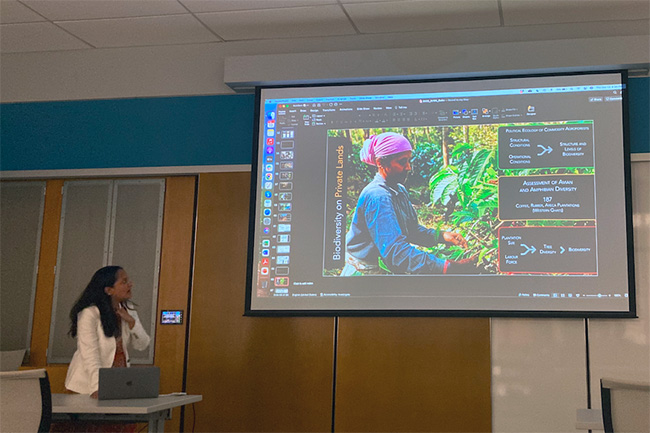
Dr. Karanth presenting at the Nicholas School
The goal of these interactions is not simply response, but mitigation. WildSeve helps farmers understand what factors increase the likelihood of human-wildlife conflict (HWC) and how to avoid these encounters in the future.
Another project in the works, WildCarbon, will assist farmers in transitioning their land from agriculture to carbon-sequestering agro-forests in places where the benefits can outweigh the costs.
Karanth says that trust is key to ensuring that the advice from the team is well-received. It is often difficult to convince a farmer to change their practices. Farming technique is both a careful science and the basis of a farmer’s livelihood. The project is in its seventh year, and Karanth says it has taken time for farmers to see that their assistance works. One factor that helps build this trust is that many members of the WildSeve team are locals in the communities.
Another program, WildShaale, is designed to foster understanding and appreciation for local wildlife in schoolchildren. Karanth pointed out that many school-age children easily recognize a kangaroo despite their lack of proximity to or interaction with the Australian marsupial, but could not identify the Indian wolf native to their backyard.
For children living in communities that come in close contact with wildlife, their perception of the animals is often one of fear. Karanth said the curiosity and empathy that WildShaale nurtures is critical to creating communities that have a net positive relationship with their animal neighbors. By fostering this empathy, violence becomes a last resort when dealing with wildlife conflicts.
After Karanth’s talk, I grabbed a chai latte from Beyu Cafe and sat down in Penn Pavilion for New York Times columnist Bret Stephens’ chat on cross-partisan conversation. At the time, I didn’t see much connection between the two events, but in retrospect, it is there. Both talks touched on that attempt at harmony, respect, and civil discourse I so often find myself craving: for Karanth, it’s between animals and people; for Stephens, people and people.
As I got ready to write this article, I turned on my GE digital clock radio to keep me company. I debated switching to a podcast, but then the host mentioned elephants and — given their relevance to task — I leaned in a little closer.
The radio still works!
WUNC was playing this week’s segment of the TED Radio Hour, which centered on finding resolutions in situations of conflict. The woman being interviewed was discussing her own solution to elephant-human conflict in Kenya: beehives.
I will leave it to the reader to find out how, but the remainder of the segment drove home my key takeaway from hearing Karanth speak: Seeking out simple, yet innovative answers to human-wildlife conflict, a life or death issue, can teach us a lot about the importance of finding solutions to interpersonal conflict.
This is part one of a two-part series; next week we will dive into the nitty-gritty of biblical research, but for now, we’re focusing on what biblical research is and why it matters.
To the uninitiated, “biblical research” might not conjure up images of dancing, or analyzing films, or studying engineering. But meet Maximillion Whelan. A third-year M.Div. student at Duke, Whelan runs a website for film aficionados focusing on analyzing movie scenes and was recently published in Quarterly Review of Film and Video for an article on theology and film. He notes: “Biblical research sheds light on how everyday activities effectively shape history and are also shaped by history. By “zooming in,” delving into the details and contexts, biblical research enables us to simultaneously “zoom out” – to see what things we are taking for granted, where our readings have led us, and how we take our readings into other spheres of life.”
Image courtesy of Nicole Kallson (as part of her course Introduction to Theology and the Arts)
Or take Divinity School student Nicole Kallson. She is pursuing a Master’s of Theological Studies with a Certificate in Theology and the Arts.
“As a theologian and dancer, I use my background in dance to assist my understanding of the Bible.” Kallson explains. “I tend to focus on ideas of embodiment, beauty, and inter- and intra- personal relationships.”
Both students—along with countless other Blue Devils and other mascot identities—use their studies as a lens through which to examine themselves and their passions. And isn’t that what we emphasize so clearly at Duke—the interdisciplinary, interpersonal, interfaith, international, interwoven identities of people, places, and things? Is that not what research is all about in the end? Perhaps the purpose of biblical research is not as foreign to us as we may think at first.
Degree-seekers may come from expertise in literature, classical studies, practical faith, or other backgrounds that may easily come to mind. But they also come from natural sciences, physical sciences, political science, art and media studies, creative writing, engineering, medicine, sociology, public policy, economics, and so much more. And each of these students is applying their research and understanding of the Bible to their understanding of the world at large, seeking to become better, more intentional academics in the process.
The new Dean of Duke Divinity School was born and raised in Puerto Rico; he has prayed with Pope Francis and presented him with writings on interfaith dialogues. He also has Bachelor’s and Master’s degrees in mechanical engineering.
“It might seem odd to have a series focused on the Bible as a banned book, given that it’s the most polished book in history,” he opened. He gave an example further; for a time in recent Guatemalan history, possession of the Bible was persecuted as a means of targeting perceived Communist empathizers. Even within Christain communities, he explains, there has been discourse among devotees of certain translations and versions—not all of them amenable.
The event also featured Brent Strawn of the Duke Divinity School and Jennifer Knust from Trinity College of Arts & Sciences Department of Religious Studies.
Jennifer Knust during the Forever Learning Institute’s Policing Pages presentation on the Bible
“The survival of the New Testament as a text and a collection is a theological and practical achievement,” noted Knust. “It is repeatedly refreshed in response to new circumstances, even as remains of past approaches continue to shape what can happen next.”
It is because of the differing opinions of so many people over such a long time that we have different faiths, and biblical research uses the lens of Christianity to evaluate that phenomenon.
Knust continues: “Today we know that there are over 5,000 manuscript copies of the New Testament, none of which are identical in every particular.”
She herself was a member of the board of the New Revised Standard Version Updated Edition—the most recent scholarly translation of the Bible, published in 2021. She elaborated on her feelings on the dynamics and fluidity of the text, describing a constant push and pull of desire and tradition. Perhaps researchers, in the present, past, or future, may desire to change words, meanings, or uses of the Bible, but they are contradicted by a tradition dictated by the populous.
Biblical research seeks to answer questions about the Bible— and by extension, the fruitfulness of humanity. The sustainability of religious texts of all kinds is a testament (pun intended) to the success of human minds compounded over thousands of years.
A 1611 copy of the Authorized Version Knustuses as an example of different Protestant translations.
On this PeopleMover-style tour of biblical research, I hope we’ve taken away some key points:
Firstly, the work of many biblical researchers is deeply personal. We’ve discovered through this that the work of any researcher in any field has the potential to be deeply personal.
Additionally, we learned that the interdisciplinary reach of biblical studies works inversely; students may turn to biblical research from other subjects to enhance their work, or they may even turn to other subjects to enhance their work in biblical research.
And finally, we arrive at our destination; next week we’ll talk more in-depth about what biblical research entails and meet some key players in those conversations.
Last Monday, Oct. 17, Duke University students who had conducted global health research had the opportunity to present their work. From North Carolina to Sub-Saharan Africa, the 2022 Global Health Research Showcase featured works that tackle some of the world’s most pressing health issues. Over 40 undergraduate, Masters, and PhD student projects examined a broad range of issues, determinants, and phenomena in countries from almost every continent. Here’s a few project highlights, in case you missed it:
Maeve Salm, pursuing her Master of Science in Global Health, went to Tanzania to study contraceptive use. Tanzania’s youth are highly impacted by teen pregnancy, and Salm wanted to understand desires for contraceptive use among adolescents affected by HIV. She learned that, much like in the U.S., stigma influences access to sexual healthcare for adolescents. This qualitative study aimed to support young people in achieving their desired health outcomes and reducing HIV transmission by examining barriers and facilitators to family planning. Findings indicate that youth agency in reproductive health is of utmost importance.
Maeve Salm presenting her poster at the 2022 Global Health Research Symposium.
Wondering about the Covid-19 response in other countries? Master of Science in Global Health Candidate Stephanie Stan explored the barriers and enablers to the pandemic response in Peru. Per capita, Peru experienced the highest mortality rate form the disease compared to any other country. Due to several challenging factors, they were slow to receive COVID-19 vaccines. However, they implemented highly successful vaccination campaigns once vaccines were obtained. What can be learned from Peru’s pandemic response? Prolonged and proactive collaborations between sectors (healthcare, academics, and government) enable swift public health responses in a crisis. It’s important to have elected officials who are empowered to make decisions promoting science.
“Definitely meeting all the incredible people that I interviewed and learning about their work and involvement in Peru’s pandemic response. Learning about what happens moving forward from their point of view.”
Stephanie Stan, when asked about her global health research experience
Winning the first-place Graduate Student Research Award, Judith Mwobobia’s project examined the stigma of cancer in sub-Saharan Africa. Stigma is a huge barrier to receiving treatment, which is a problem considering that 70% of global cancer deaths originate from Africa. Perceptions of financial stress, misconceptions about cancer, and fear of death were common attitudes driving cancer stigma. Proposed interventions included education and policy recommendations for low-resourced communities. Mwobobia is pursuing her Master of Science in Global Health. Clearly a supportive group, her classmates erupted in cheers when the award was announced.

















 By Victoria Wilson, Class of 2023