Following the people and events that make up the research community at Duke

Students exploring the Innovation Co-Lab

Category: Policy Page 5 of 7

Integrating Pediatric Care in NC: Behavioral Health Perspectives

In healthcare, developing a new treatment is often half of the battle. The other half lies in delivering these treatments to those communities who need them the most. Coordinating care delivery is the goal of NC Integrated Care for Kids (InCK), an integrated pediatric service delivery and payment platform looking to serve 100,000 kids within five counties — Alamance, Orange, Durham, Granville, and Vance — in central North Carolina. The project is a collaborative effort between Duke, UNC, and the NC Department of Health and Human Services (DHHS) funded by a federal grant from the Centers for Medicare and Medicaid Services (CMS). The program’s executive director is Dr. Charlene Wong (MD, MSPH), a Duke researcher, physician, and professor who leads an interdisciplinary team of researchers and policy experts as they explore ways to reduce costs via integrating care for North Carolina youth enrolled in Medicaid and Children’s Health Insurance Program (CHIP).

The five counties that are part of NC InCK

I recently had the opportunity to speak with two of InCK’s service partners: Dr. Gary Maslow (MD, MPH) and Chris Lea (Duke ’18). Both work within the Behavioral Health group of InCK, which seeks to use behavioral health expertise through collaborative care and training providers to help support pediatric care. Maslow, a professor at the Duke Medical School, has focused heavily on child and developmental psychiatry throughout his career. Having entered medical school with a desire to work in pediatric hematology, Maslow recalls how a conversation with a mentor steered him in the direction of behavioral health. At the time, Maslow was part of the Rural Health Scholars program at Dartmouth College; while discussing his aspirations, one of his professors asked him to consider conditions outside of cancer, leading Maslow to consider chronic illness and eventually child psychiatry. “Kids have other problems,” Maslow’s professor told him.

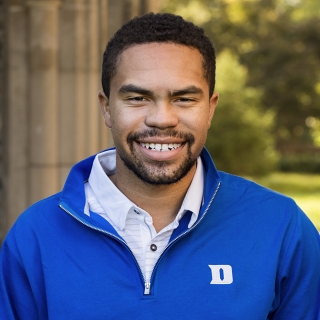
Dr. Gary Maslow (MD, MPH)
Chris Lea (Duke ’18)

When looking at healthcare networks, especially those in rural areas in North Carolina, Maslow noticed a disaggregated service and payment network where primary care providers were not getting the necessary education to support the behavioral health needs of children. His work with Lea, a third-year medical student at Duke, has centered around looking at Medicaid data to understand provider distribution, medication prescription, and access to therapy based one’s area of residence. Lea’s path to NC InCK began as an undergraduate at Duke, where he obtained a B.S. in psychology in 2018. As he explains, mental health has been a vested interest of his for years, a passion reinforced by coursework, research at the Durham VA Medical Center, and NC InCK. He discussed the important of appropriate crisis response, specifically how to prepare families and providers in the event of pediatric behavioral health crises such as aggression or suicidality, as critical in improving behavioral health integration. These safety plans are critical both before a potential crisis and after an actual crisis occurs.

Two main goals of Maslow and Lea’s work are to increase the implementation of safety plans for at-risk youth and expand follow-up frequency in primary care settings. The focus on primary care physicians is especially critical considering the severe shortage of mental health professionals around North Carolina.

The behavioral health group is but one subset of the larger NC InCK framework. The team is led by Chelsea Swanson (MPH). Other collaborators include Dr. Richard Chung (MD), Dan Kimberg, and Ashley Saunders. NC InCK is currently in a two-year planning period, with the program’s launch date slated for 2022.

Services provided by NC InCK

Restoring the “Sacred Link”: Water Rights in Australia

(Jenny Evans/Getty Images)

For 223 years — ever since Britain established its first Australian colony in 1788 — indigenous Australians have exercised resistance to colonial plundering and exploitation. One thing colonizers have plundered and exploited is water — water that is “cultural, spiritual; water for our people, water for our country,” according to Tati Tati Elder Brendan Kennedy.
As part of the Fall 2021 Global Environmental Justice Speaker Series — part of a student-led Environmental Justice course here at Duke — on October 6th, Dr. Bruce Lindsay, the Senior Lawyer at Environmental Justice Australia (EJA), discussed indigenous water rights in Australia. 

Because the Australian constitution is “silent on key issues” of land and water use, throughout the 19th and 20th centuries, water use was regulated according to English riparian rights in conjunction with English common law. Under this colonial law, whoever owned the land on which water flowed had the right to that water. 

Dr. Lindsay argued that Australian law was designed according to the “gross fantasy of the empty continent.” Upon the premise that Aboriginals simply did not exist, colonizers proceeded accordingly — buying and selling land that was already occupied and under aboriginal custodianship. Because Aboriginals didn’t own land in a way recognized by the law, they were “marginalized and excluded” from decisions about water infrastructure and allocation “while degradation [went] on around them.”

Dr. Lindsay and the EJA work primarily with aboriginal communities and organizations in the Murray Darling Basin. The Murray Darling Basin is the largest river Basin in Australia, hosting 90% of the population, 70% of irrigated land, and providing 40% of agricultural production. A precious resource amidst Australia’s hot, semi-arid climate, the Basin has been the site of major conflicts over water since the early 19th century. 

The Murray Darling faces a problem called “over allocation,” which means that more entitlements for water use have been issued than can be sustained at their full value. By the 1990s and 2000s, over-extraction had led to drought and unprecedented water shortages, and the ecosystems supported by the Murray Darling Basin were “on the verge of ecological collapse.” The Australian government passed the Water Act of 2007 and the Basin Plan of 2012 to bring the Basin to a “healthier level” and “ensure that the Basin is managed in the national interest” as they saw fit. 

To highlight the tension between the Australian legal view and the Aboriginal view, Dr. Lindsay read the Aboriginal anthropologist Deborah Bird Rose’s definition of country. According to Australia’s indigenous people, country “gives and receives life… is lived in and lived with… is a proper noun… is a living entity with a yesterday, today and tomorrow with a consciousness, and a will toward life.” For Aboriginals, the flow of water should support this notion of cultural wellbeing and “genuine coexistence.” But according to Dr. Lindsay, Australian law (being a “pillar of the settler state”) does not currently provide for “life, ecosystem health, and spirit except for where it intersects with the utilitarian purpose.” Thus, Dr. Lindsay believes that the law needs a massive upheaval in order to be reconciled with the indigenous vision.

The EJA is currently working with Aboriginal communities on one such upheaval: the “cultural flows” concept of water management. Cultural flows necessitates reallocation and redistribution of water rights by the Australian government in order to increase Aboriginal control and authority over water. To restore life to country, reverse environmental catastrophe, and revitalize their economic health and culture, Aboriginals hold that there must be a change from the current model where water is understood as something to be continually exploited. Such a change is not without historical precedent: in New Zealand in 2017, the government granted the Whanganui River legal status as a living entity, so that New Zealand law now views harming the Whanganui tribe and harming the river as equivalent. 

Ultimately, the EJA hopes to implement the cultural flows framework across the Basin. They’re starting by working with the Tati Tati First Nations community to implement cultural flows in the Margooya Lagoon. Because this requires the Victorian government to deliver the rights to manage water there, the EJA must work with both Australian law and the Aboriginal view. Dr. Lindsay claimed that they don’t have to be mutually exclusive. The EJA seeks to find the intersection where water as a public good to be managed in the public interest can also be water managed for the good of country and the health of the community. Thus, the EJA aims to advocate for policy that enables that mutually beneficial outcome.

Dr. Lindsay ended by recalling his earlier point of reconciling Australian law with indigenous vision. He stated that a “broader set of changes” need to occur in order to really bring justice to Aboriginal communities. Although the Australian High Court’s passing of the Native Title Act of 1993 ostensibly ended riparian rights by recognizing “native title” (the aboriginal traditional ownership of land “according to their own laws and customs”), native title is a “limited device” as far as water rights. Indigenous Australians have native title rights over 30% of the Australian continent, but own only 0.01% of water entitlements. Because state governments have a large role in reallocation, cultural flows projects would have to proceed on a case-by-case basis.

What Dr. Lindsay really hopes to see is a legal mechanism other than native title that will grant legitimacy to aboriginal traditional ownership. He recalled the Uluru Statement from the Heart. It states:

“[Our] sovereignty… has never been ceded or extinguished. How could it be otherwise? That peoples possessed a land for sixty millennia and this sacred link disappears from world history in merely the last two hundred years?”

Uluru Statement from the heart


How could it be? Sadly, the fact that only 0.01% of water entitlements are owned by indigenous Australians indicates that the sacred link of traditional ownership has disappeared — at least in the legal sense. So this is the ultimate goal of Dr. Lindsay and the EJA’s work with indigenous communities: to restore this sacred link.

Post by Zella Hanson

What does the World Need from Future Policy Leaders?

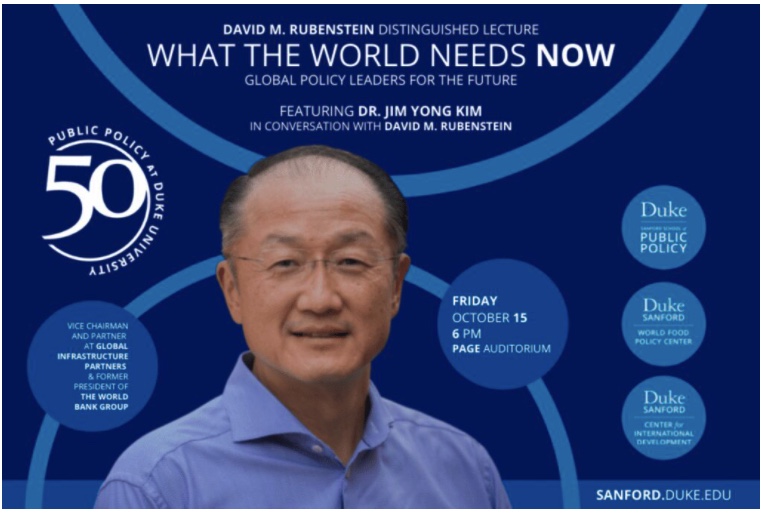
The Sanford School of Public Policy’s David Rubenstein endowed lecture on Oct. 15 was like a conversation between two old friends.

In fact it was. Former World Bank president Jim Yong Kim and Duke alumnus and donor David Rubenstein got together on stage in celebration of the school’s 50th anniversary to catch up, and the audience was able to listen in. (Watch full video here)

Rubenstein had been a long-time mentor to Kim, offering him advice and aid along his journey.

The conversation began with Kim opening up about his childhood in Korea and the U.S.

“My dad was born in North Korea, and after he escaped he never saw his parents again.” His mom, also a refugee, was born in South Korea.

When Kim was just five years old, his parents made the decision to move from South Korea to the U.S. in hopes of a better future for him. He studied at the University of Iowa for a year before transferring to Brown University. After graduating from Brown and getting an MD from Harvard, Kim and a friend, Duke alumnus Paul Farmer MD, came up with the idea to start a nonprofit.

“I remember my close friend Paul said to me, ‘Now that we’ve had the opportunity to be involved in ridiculously elaborate educations, what’s our responsibility to the poor?’ and that’s how Partners in Health was created.”

The nonprofit aimed to grant accessible healthcare in Haiti, and then eventually to other countries around the world. After his time with Partners in Health, Kim became the President of Dartmouth University, and then became President of the World Bank.

“I had a coach in high school who told me, ‘You have to know when to leave.’ I’ve had many careers in my lifetime, and I’m grateful for that.”

Kim Yong Jim (pictured on the left) in conversation with David Rubenstein (pictured on the right).

Kim also talked about his views on the pandemic from a policy standpoint, questioning, “Why are we taking such a passive view on how to tackle this pandemic?” He explained how the U.S. was completely unprepared as a nation to tackle an epidemic like this, as only 2.5% of health spending had been allocated towards public health.

Rubenstein continued the conversation, asking Kim what his advice for future world policy leaders is. “You’ve made a fantastic choice coming to Duke, but try to come out with a skill. You have to learn new things,” he said.

He explained how Duke was the perfect environment to foster education and skill simultaneously, and how this kind of opportunity enhances your ability to give back to the world. “My medical degree from Harvard helped me with Partners in Health and gave me a skill I could fall back on and learn from.”

Kim argued that versatility is a good thing, not a bad thing, and that future policy leaders need to hone in on this strength to make the most out of their career.

Kim pictured with President Obama during his time as President of the World Bank.

Excitingly enough, I had the rare opportunity to ask these brilliant men a question towards the end of the lecture: “How do you release any self-doubt you have when going after such a big goal, like starting your own non-profit?” Kim responded by saying that “regardless of how my goal turned out, I knew I had to try.”

The message of this lecture was clear. Schools like Duke hold the world’s future leaders, and at a time like this, it is crucial that we as students develop ourselves in a well-rounded way.

Post by Skylar Hughes, Class of 2025

Dr. Laura Richman is Defining Health by its Social Determinates

In 2010, the Affordable Care Act sparked a nationwide debate on the extent of responsibility the American government has over our healthcare. But Dr. Laura Richman has been asking that question since long before that. 

Richman is a health psychologist. “I examine psychosocial factors that have an impact on health behaviors and health outcomes,” she explains, sitting across from me at the Law School café. (Neither of us were wearing a cardigan. It was rather hot outside). 

Laura Richman Ph.D. is an associate professor in population health sciences. (image: Scholars@Duke)

Richman is an associate professor at Duke in the Population Health Sciences, an associate of the Duke Initiative for Science & Society, and, coincidentally, my professor in the Science & the Public FOCUS cluster. She co-teaches the course Science, Law, and Policy with Dr. Yousef Zafar, in which we examine the social determinants of health through the lens of cancer screening, diagnosis, and treatment.

After graduating from the University of Virginia in 1997 with a Ph.D. in social psychology, Richman worked at a sort of think-tank for health professionals collaborating on social issues. This inspired her to pursue health research through the lens of social determinants.

“There was a lot of work on substance use, on mental health, on behavioral disorders. That certainly contributed to my continued interest in factors that have an influence on these [health] outcomes,” she said. 

Continuing in this work, she became a research associate at the School of Public Health at Harvard University; Richman described her time at Harvard as “exciting,” which is not a word used by many to describe empirical research environments. “Certainly there’s that really robust relationship between low income, low education, low job status and poor health outcomes, but a lot of those pathways— like the ones we talk about in class, Olivia— had not been studied.” 

She’s referring to the public health concept of ‘upstream’ and ‘downstream’ solutions. (The river parable goes as follows: when you observe a trend in people drowning in a certain river, you are presented with different ways of solving the problem. You can start pulling people out of the river and saving them one at a time, which is called a “downstream” solution in public health. You can also prevent people from falling into the river, which is called an “upstream” solution.)

(courtesy of SaludAmerica!)

Richman’s professional research explores another crucial social determinant of health we discussed in class: perceived versus actual discrimination. She asked whether marginalization — objectively or subjectively — can affect functioning, “both psychologically and cognitively. Like, how does it affect their thought processes? Their decision-making? Then, how does that affect their health?” You can read her study here

One thing I noted immediately was Richman’s affinity for creative research design. In a lab she headed at Duke, she conducted one experiment with a student that tested the aforementioned effect of marginalization on health decisions. They provided subjects with a choice between unhealthy and healthy snack options after watching a video of, reading a passage about, or imagining members of their community experience discrimination.

In one study we read for Science, Law, and Policy, the stress effect of discrimination towards Arabic-named individuals after 9/11 was measured through the birth outcomes of Arabic-named mothers pregnant during that time. When I asked her about this, she said, “Particularly working with students, I think that they just bring so much energy and creativity to the research. Surveys serve their purpose — I think they’re really important, but I think there are just lots of opportunities to do more with research designs and research questions. I like trying to approach things from a different angle.” 

Richman is also working on a book. She is studying relational health — health as determined by the opioid epidemic, the obesity crisis, and social isolation associated with aging. She hopes her project will be used in classrooms (and by the interested layman), and that the value of social determinants of health is reflected in increased funding dollars, more people interested in health disparities, more focus in medical education on the screening and referral system, and stimulating dialogue among people in positions of power on a policy level.

Post by Olivia Ares, Class of 2025

The Major Player in Global Infrastructure Investment – And What That Means for the Climate

Perhaps no singular economy in the world has grown and expanded as rapidly as China’s. “Made in China” labels prove just how far of a reach China has globally – from clothes to technology to automotive parts. But there’s another facet of this expansion that is poised to become more and more important.

Developing countries across the world face infrastructure challenges that hinder their growth and prosperity, and these challenges have only been exacerbated by COVID-19. China, along with other key economic players, is sensing this sore lack, and competing to invest in global infrastructure projects. There are many questions to be asked about the ethics and impact of global infrastructure investment, but one thought in particular rises to the top: what does infrastructure investment mean for the climate?

To prod at this question, the Duke University Center for International and Global Studies hosted a conversation with Dr. Jackson Ewing on September 29 entitled “The Great Infrastructure Game: Why Asia, Europe, and America are Competing to Build in the Developing World and What It Means for the Global Climate”. Ewing, who holds a joint appointment as a senior fellow at Duke University’s Nicholas Institute of Environmental Policy as well as adjunct associate professor at the Sanford School of Public Policy, unpacked the “game” by taking a specific deep dive into China’s investment sources, standards, and approaches.

Dr. Jackson Ewing

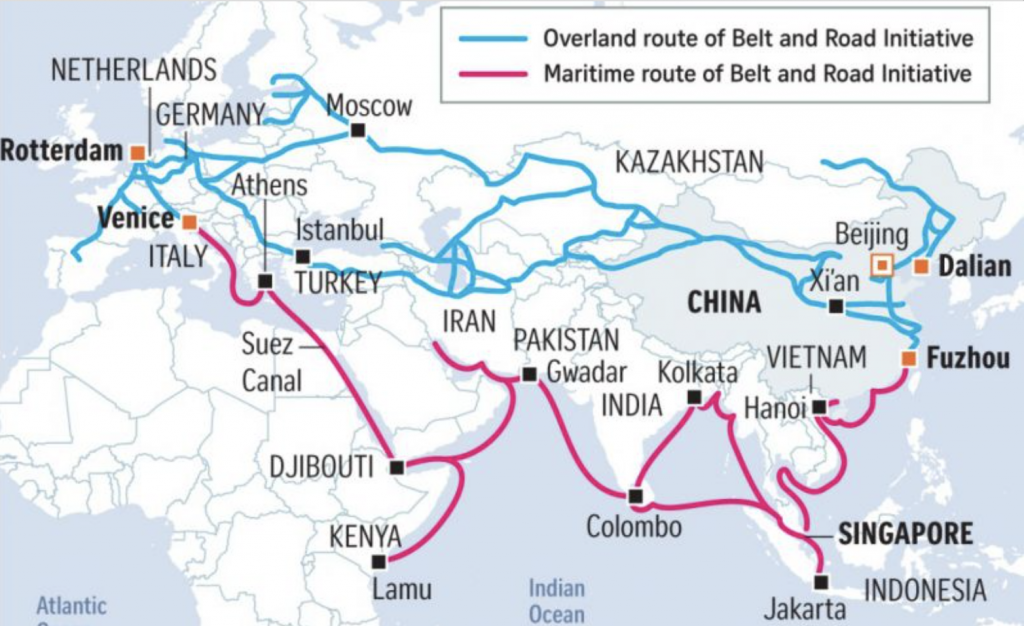
A couple of key things stood out from the conversation. The first is that to understand China’s infrastructure investment impact, it’s important to understand the Belt and Road Initiative (BRI). The BRI is arguably the most important “umbrella mechanism” for China’s infrastructure investment, associated with projects such as ports, railways, airports, and power plants. Launched in 2013, its name comes from the concept of the Silk Road, an ancient network of trade routes connecting China to the Mediterranean, that was established during the Han Dynasty 2,000 years ago. This modern-day Silk Road connects Asia with Africa and Europe via land and maritime networks. The initiative defines its five major priorities to be “policy coordination, infrastructure connectivity, unimpeded trade, financial integration, and connecting people.”

Mapping the Belt-and-Road Initiative

The BRI has led to what Ewing called “meteoric investment growth.” What does that investment look like? Ewing made note of several key characteristics. One is that Chinese lending has shifted significantly, from lending to sovereign banks to lending to companies and organizations in destination countries. This type of investment makes up nearly 70% of China’s portfolio. Another characteristic of this investment is that a chunk of the BRI project portfolio – 35%, to be exact – has encountered massive criticism on the grounds of corruption and environmental issues.

Slide from the presentation by Dr. Ewing

Previously, energy investment along the BRI looked mostly like coal. Between 2007 and 2015, China led all nations in financing nearly 25 billion dollars of outbound coal creation, with India, Indonesia, Mongolia, Turkey, and Vietnam being its biggest recipients.

Slide from the presentation by Dr. Ewing

Ewing noted that while China arguably does have a coal overcapacity problem, “it still compares significantly in outbound renewables.” The diagram below gives a breakdown of BRI energy investments – while the orange chunk of coal is still the biggest chunk of investment, the green renewable chunks don’t lag far behind. This increased interest in the renewable space is largely fueled by capacity problems, as well as domestic and environmental challenges. There has been a plateauing of coal consumption in the country – but is that something to get excited about?

 There have been cross-ministerial efforts to promote a Green BRI in response to criticism, but as Ewing put it, “They’ve led to debatably meaningful practices to undergird existing initiatives.” While coal investment has slowed down as hydro investment has picked up the pace, China’s annual energy finance from policy banks has taken a hit and is slowing down. So what can we conclude?

Slide from the presentation by Dr. Ewing

Well, it’s safe to conclude two things. The first is that this Chinese shift away from coal does matter – but whether this will lead to a change in Chinese investment philosophy that will mark the next decade remains to be seen. The second thing to conclude is that as China dips more into the renewable space, other countries will follow. In fact, the U.S and EU have been prioritizing renewable investments for a while. This competition may very well mean that we see a growing number of renewable projects, which is undoubtedly good news for the climate.

Post by Meghna Datta, Class of 2023

New Blogger Nhu Bui: Discovering Science Communication

My name is Nhu Bui, pronounced “New Buoy.” I’m a sophomore from Cypress, Texas hoping to major in Environmental Science & Policy and English (that’s only two, I promise), and I’m thrilled to join the Duke Research Blog team.

Thanh-Nhu Bui, Nhu for short

I’ve loved science ever since I could waddle into my backyard to catch ladybugs and earthworms. For the longest time, I was convinced I was going to be a zookeeper, or maybe a veterinarian – anything that would allow me to work with animals. (I also toyed with the idea of becoming a physician, treating the most ferocious of creatures.) But I also knew that reading and writing were my fortes and that I was always happier in a library than in a laboratory. 

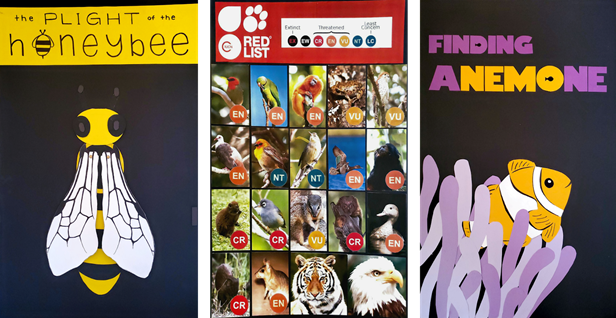
In high school, I joined the speech and debate team. My primary (and favorite) event was informative speaking: 10 minutes of educational entertainment on a topic of choice. I always chose to speak on environmental issues – from bees to coral reefs – and I loved it. The event was my perfect storm of science and communications… so imagine my excitement upon entering college and discovering that science communication is a whole thing.

Some highlights of my informative visual aids

With the blog, I hope to be able to discover new interests and explore my intrigues across the wide world of research at Duke University. But most importantly, I hope to be able to hone my craft. Effective science communication is more crucial than ever; issues like climate change and vaccination impact every aspect of life, but the public’s view of science is mired in perceptions of bias and manipulation. While science and politics are inextricable, trust and awareness are critical for a functioning society.

Of course, constantly questioning the world is also critical – it’s the foundation of scientific discovery – but as with everything, it’s all about balance. Who knows where that balance is? I’m still looking for it myself, but I’m hoping that joining the Duke Research Blog will help me on the way. 

Keeping a respectful distance while admiring monkeys.

Outside of my love for science and writing, here are the most important things to know about me: my favorite movies are Paddington 1 and 2 (can’t choose), my top genre on Spotify is show tunes (I’ve never done theater), and I once walked through a Whataburger drive-thru (it’s a Texas thing). 

Thanks for getting to know me, and I hope to see you back on the blog soon!

Post by Nhu Bui, Class of 2024

Cemetery, Community, Classroom: Collaborating to Honor the Dead

Open Durham

The institutional neglect and indignity faced by many African Americans during and after the Jim Crow era in the South didn’t end when their lives did. In a panel hosted by the Duke Office of Durham & Community Affairs on Sept. 10, a community leader, Duke professor, and undergraduate student discussed some of the work they are doing to combat the marginalization of Durham’s deceased in Geer Cemetery, two miles from Duke’s campus. 

Debra Taylor Gonzalez-Garcia, President, Friends of Geer Cemetery

Founded on land purchased from Frederick and Polly Geer by John O’Daniel, Nelson Mitchell, and Willie Moore in 1877, Geer Cemetery is the final resting place for over 3000 of Durham’s African American citizens. As Maplewood Cemetery was segregated, from 1877 until the opening of Beechwood cemetery in 1924 Geer served as the only cemetery for the African American dead. Lacking public funding and under fire from the health department for overcrowding, Geer Cemetery closed in the 1930s and, in the absence of a plan for its continued upkeep, fell into a state of disrepair

President of Friends of Geer Cemetery Debra Taylor Gonzalez-Garcia provided a brief history of Geer Cemetery. 

The nonprofit Friends of Geer Cemetery was formed in 2003 by “concerned citizens and neighbors” and has worked to “restore the cemetery’s grounds and research its histories” under their mission statement “restore, reclaim, respect.” According to Gonzalez-Garcia, work consists of maintaining the cemetery grounds, repairing headstones, writing life stories, and advocating for recognition. 

Friends of Geer Cemetery has accomplished a lot in terms of restoration: in 2004 the cemetery was unrecognizable, with broken headstones, overgrowth, and sunken burials. Today, with the help of Keep Durham Beautiful, Preservation Durham, and other volunteers, the entire cemetery can now be easily viewed.

The organization also continues to work tirelessly toward their other objectives, reclamation and respect. By mining local records, research volunteers have created a database which includes approximately 1,651 burials, but efforts are ongoing. 

Gonzalez-Garcia expressed excitement about the organization receiving grant funding for an archaeological survey. “[The survey] will help us to map out burials, because currently, there is no map,” Gonzalez-Garcia said. “We aren’t sure where people are buried.” 

The community leader discussed how efforts to reclaim Geer Cemetery bring about questions that reckon with white supremacy in general. “We’re not told stories of the African Americans who built Durham,” Gonzalez-Garcia said. “Why do we know so much about Washington Duke, and nothing of Augustus Shepard? Why should Maplewood still exist and not Geer Cemetery?” 

Adam Rosenblatt

Associate Professor of the Practice in International Comparative Studies Adam Rosenblatt expressed his interest in how care for the dead is “bound up with human rights and social justice.” This interest is personal: he has his own graveless ancestors who disappeared in the Holocaust. He expressed his passion for educating others about “places of mourning in our midst” through “community-engaged” scholarship.

Along with Gonzalez-Garcia, Rosenblatt sponsored a Story+ program at Duke entitled Geer Cemetery: Labor, Dignity, and Practices of Freedom in an African American Burial Ground. With the help of sponsors and a graduate mentor, Duke undergraduates Nyrobi Manuel, Kerry Rork, and Huiyin Zhou researched the cemetery closely in order to “uncover the stories of ordinary citizens and add these stories back into the historic narrative about Geer.” The researchers produced three unique, interactive digital projects which will contribute to the Friends of Geer Cemetery’s online platform for education and outreach. 

Rosenblatt discussed one challenge the Story+ engaged with: What really constitutes a human subject? The IRB’s definition doesn’t include the dead; there’s no IRB protocols for researching the dead and their stories. Many archives disappear entirely, or are fragmented.

Nyrobi Manuel

Nyrobi Manuel, a Duke undergraduate, was one of Rosenblatt and Golzalez-Garcia’s mentees. Manuel took Rosenblatt’s course “Death, Burial, and Justice in the Americas” and says the course inspired her to dig deeper into African American death practices. Through the Story+, Manuel researched John C. Scarborough, who established the fifth-oldest Black-owned funeral home in the country. She produced a project entitled “Scarborough and Hargett Funeral Home: Dignified Death and Compassion in the Black Community.” 

Manuel discussed her findings. Many funeral directors became important figures in their community, and John C. Scarborough was no different. A philanthropist and important community member, he helped to establish Scarborough Nursery School, North Carolina’s oldest licensed nursery school.

What’s always drawn Gonzalez-Garcia to Geer Cemetery is its “quiet beauty” and sense of connection. Though her ancestors are buried in Virginia, where she’s from, Geer Cemetery seeks to tell stories of African Americans through “emancipation and reconstruction: throughout history.” Geer is special because it seeks to tell the story of her “blood relatives” while also celebrating the history of Durham, which, she said fondly, is “my community now.”

New Blogger Skylar Hughes: ‘Up for the Challenge’

When I was a young girl, My mother once explained to me the importance of a first impression. “You can only make it once, after all,” she’d say. Here I am writing this introduction for you guys, and her words echo in my mind, so I’ll give it my best shot.

Senior pictures, time flies!

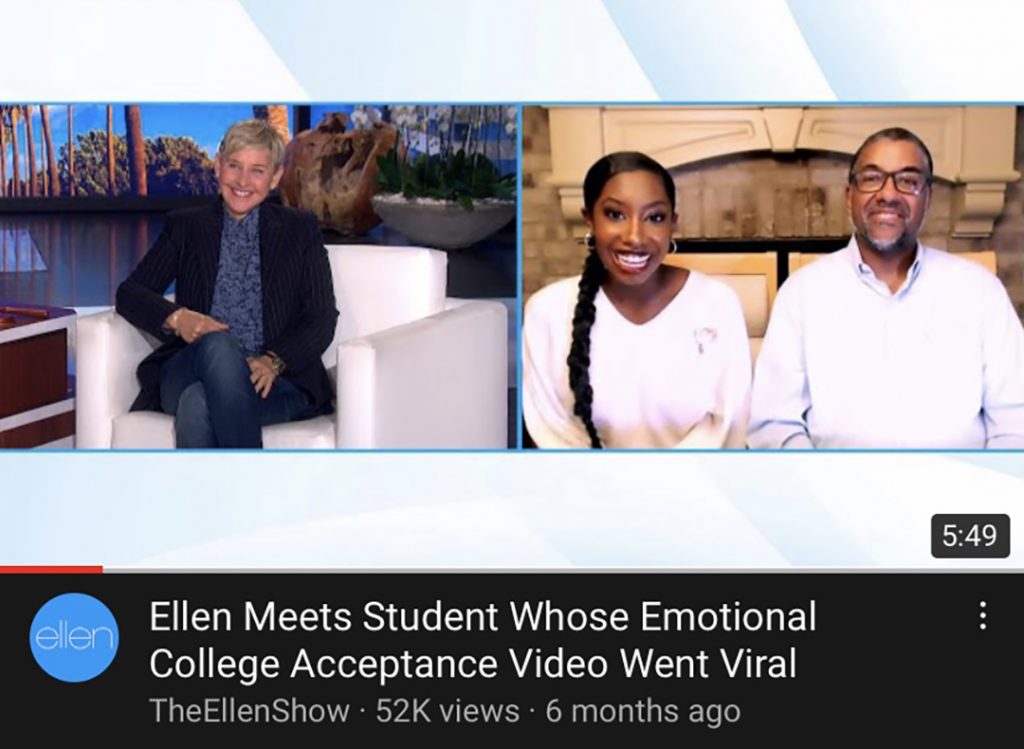
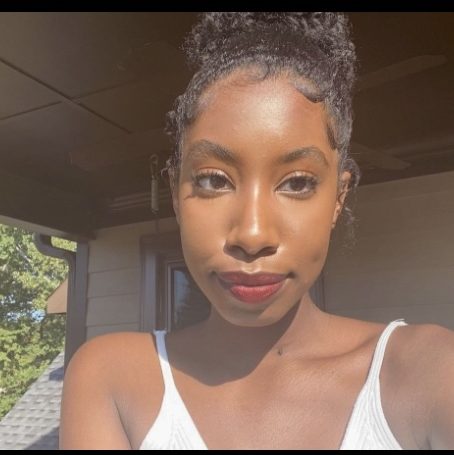
Hi, my name is Skylar Hughes, and I’m a part of the class of 2025. Atlanta, Georgia, is where I call home, and from my slang to my walk, it’s quite obvious where I grew up. I’m the person who will talk to everyone and is not at all afraid to speak her mind. A random fun fact about me is that I was actually on the Ellen Show in January!! (kind of cool, right?) It still feels unreal that I am here, and you will most likely see me wandering around lost one day like the freshman I am. My major is undecided, but currently I am between Marine Science and Public Policy. (confused isn’t even the word. )

I’m still in shock from this… https://youtu.be/OivXTYYiUj4

Marine science was my first love, the major that I’ve had a crush on since middle school, and invested countless hours researching online and through documentaries. I even went to a Duke TIP marine science program in the Gulf of Mexico my sophomore year of high school and loved every second of it. I’ve watched every episode of Deep Blue on National Geographic and probably know more than a person should about coral reefs. But public policy? That was like my celebrity crush, the major I eyed from a distance and really admired, but never had the privilege to closely interact with. I remember watching figures like Alexandria Ocasio-Cortez and Stacey Abrams dominate the field with their intelligence, being the change they wanted to see in their communities, and I was hooked. As a teenager, I often found myself frustrated with government decisions and realized that public policy gave me the chance to make genuine change. I was sold.

My High School Graduation!

So now here I am at Duke, which maintains an outstanding program for marine science AND public policy, and I am like a kid in a candy store. Along with hoping to figure my major out this year, I’m also planning on being involved with the Black Student Alliance here at Duke, as well as joining Duke’s Climate Change Coalition, and volunteering at the Geer Street Learning Garden.

For me, research blogs are a brilliant way to reach the masses with reliable information, research, and content that can be trusted, which is profoundly important to me. Education is the only process by which growth is made. Without education, we’re, in essence, doomed for retrogression. Education arms people with a weapon that cannot be stolen, one that can not only rid them of their current circumstances but be a guiding light towards their desired ones.

Education refines new ideas, which are the only reasons man is not still living in caves and figuring out fire. The education of one can be utilized to educate another, creating a snowball effect of intellect that cannot be restrained. An educated population leads to educated decisions in society, which leads to educated leaders in office, leading to more authentic community at Duke, in Durham, and beyond.

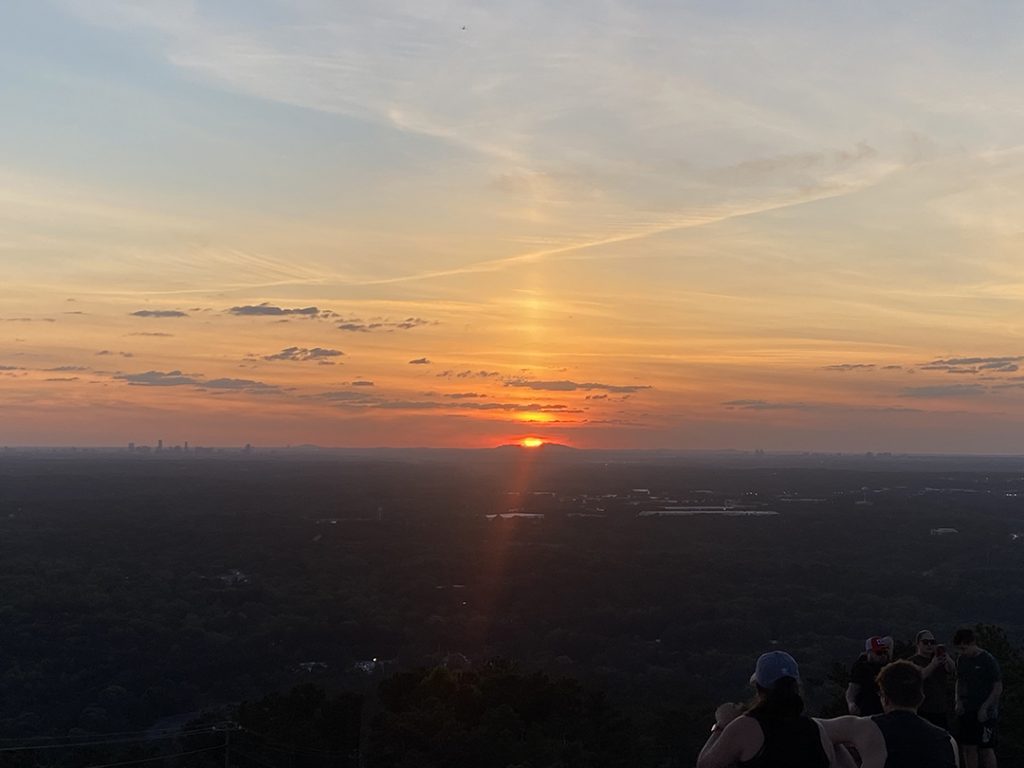
Sunset view from one of my favorite spots in Atlanta: Stone Mountain!

I take great pleasure in writing, and it was one of the few activities in school that I viewed as a stress reliever instead of a stressor. In a society as dynamic and saturated as the one we’re submerged in, research blogs are essential. Durham represents such a culturally rich and diverse community with so many stories to tell and issues to be brought to light. There are people from all ranges of socioeconomic status, gender, race, and religion, with narratives that are worth their weight in gold. I can only imagine the growth as an intellectual and the valuable experience gained with this position, and I am up for the challenge.

Post by Skylar Hughes, Class of 2025

Child Protective Services Do Work, But They Are Unevenly Distributed

Roughly one in seven  New York City children suffer confirmed mistreatment at home and many are placed in foster care. But relatively few children are permanently separated from their parents by the termination of parental rights, according to new research from Duke University and Rutgers University-Newark.

The data points to a relative success story in the world of child welfare, said Chris Wildeman, a Duke University sociologist and co-author of the research. In New York City, child welfare specialists intervene often in abuse and neglect cases but are often able to avoid terminating parental rights, even when they do remove the child from the home, Wildeman added.

Wildeman’s co-authors are Kieran Healy, a Duke sociologist, and Frank Edwards and Sara Wakefield from the School of Criminal Justice at Rutgers University – Newark.

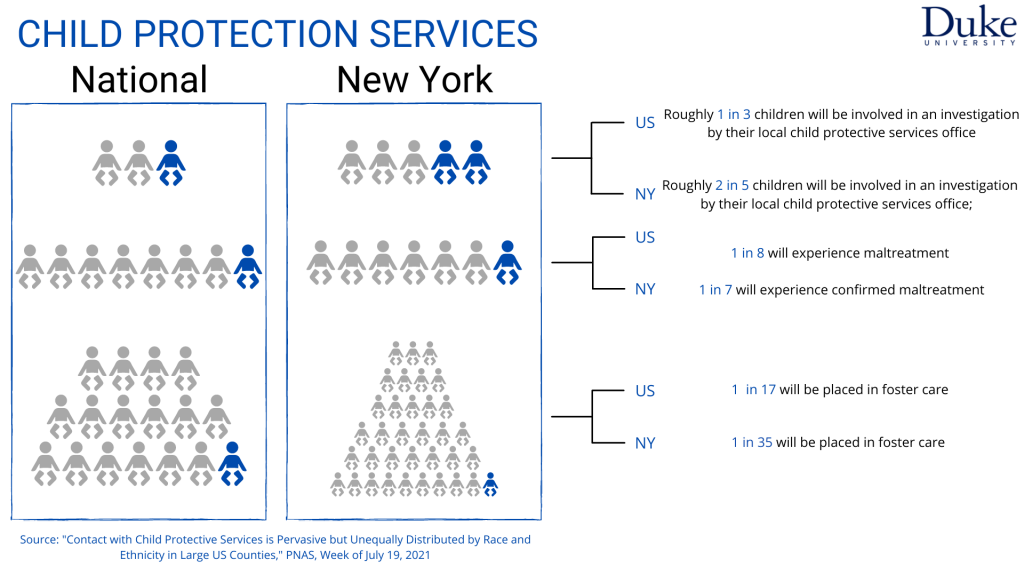
In New York City, roughly two in five children will be involved in an investigation by their local child protective services office; one in seven will experience confirmed maltreatment, one in 35 will be placed in foster care. (Dallas Clemons)

“I think the core takeaway there is that New York is the prime example of taking maltreatment seriously and intervening as a system,” Wildeman said. “But also taking seriously the idea that permanent termination of parental rights totally closes off any chance for family reunification, so only doing it in the most extreme circumstances.”

The peer-reviewed study, appearing the week of July 19 in the Proceedings of the National Academy of Sciences, derives from an analysis of child welfare data from the nation’s 20 most populous counties. (The New York data is from all five boroughs because the entire city’s child welfare system is under a single governing umbrella)

The study looked at how often children were the subject of a child services investigation; suffered confirmed mistreatment, were placed in foster care, and removed permanently from their homes through the termination of parental rights.

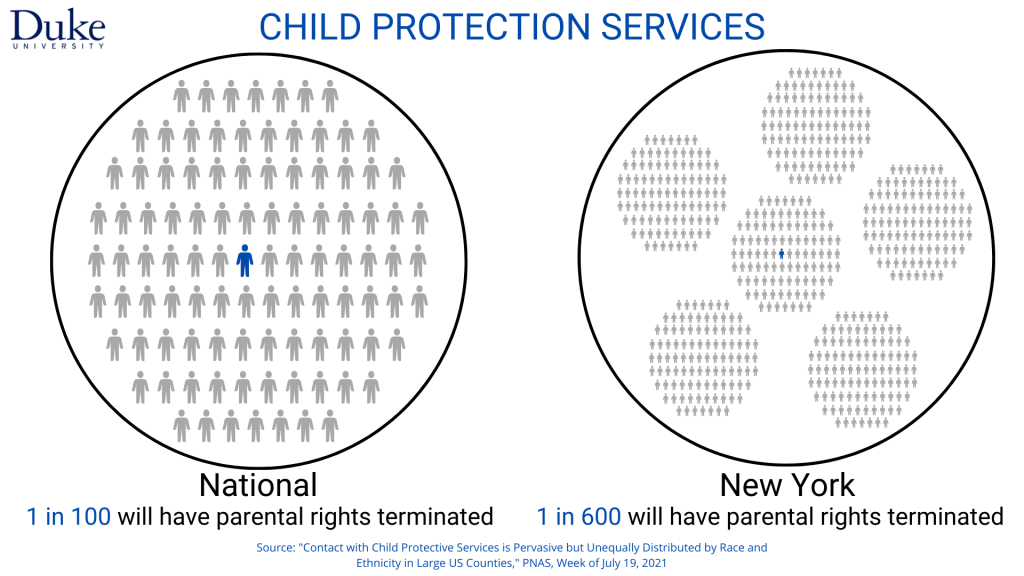
Nationally, roughly one in three children will be involved in an investigation by their local child protective services office; one in eight will experience maltreatment, one in 17 will be placed in foster care and one in 100 will have parental rights terminated, according to the study.

In New York City, roughly two in five children will be involved in an investigation by their local child protective services office; one in seven will experience confirmed maltreatment, one in 35 will be placed in foster care and one in 600 will have parental rights terminated, according to the study.

Nationally, one in 100 parents will have their rights terminated, while in New York that figure is one in 600. (Dallas Clemons)

“The system is functioning more the way many child welfare advocates would like it to function,” Wildeman said. “Make sure you identify maltreatment, but attempt to use services rather than foster care treatment, at least initially, and then only terminating parental rights in only the most extreme circumstances. And trying to be aware of racial disparities in those processes.”

CITATION:  “Contact with Child Protective Services is Pervasive but Unequally Distributed by Race and Ethnicity in Large US Counties,” PNAS, July 19, 2021. DOI: 10.1073/pnas.2106272118

Post by Eric Ferreri , Duke University Communications

Black Americans’ Vaccine Hesitancy is Grounded in More Than Mistrust

Covid-19 is considered a “general pandemic,” but its impacts have been disproportionate along the lines of race and ethnicity. Though vaccines may serve as our best chance to put an end to Covid, the problem of vaccine hesitancy amongst Black people in the U.S. is particularly pervasive and grounded by more than simple mistrust.

Gary Bennett (Ph.D.) discussed the issue of complex determinants of vaccine hesitancy among Black Americans Monday, April 5. Bennett is a Professor of Psychology, Neuroscience, Global Health, and Medicine at Duke, as well as director of Duke Digital Health and Vice Provost for Undergraduate Education.

Gary Bennett, Ph.D.

“At the end of the day, we are dealing with an issue that demands pragmatic attention,” Bennett said, “How do we get shots in arms?” It turns out, the answer is quite complex and historically confounded.

While Black people have experienced much higher burdens from Covid-19 despite contracting the disease at a similar rate to whites, they have been disproportionately vaccinated at lower rates than white people.

“Access matters and it matters a lot,” Bennett said. One clear example of decreased access for Black Americans is that fewer vaccination sites are located in areas with high concentrations of Black people.

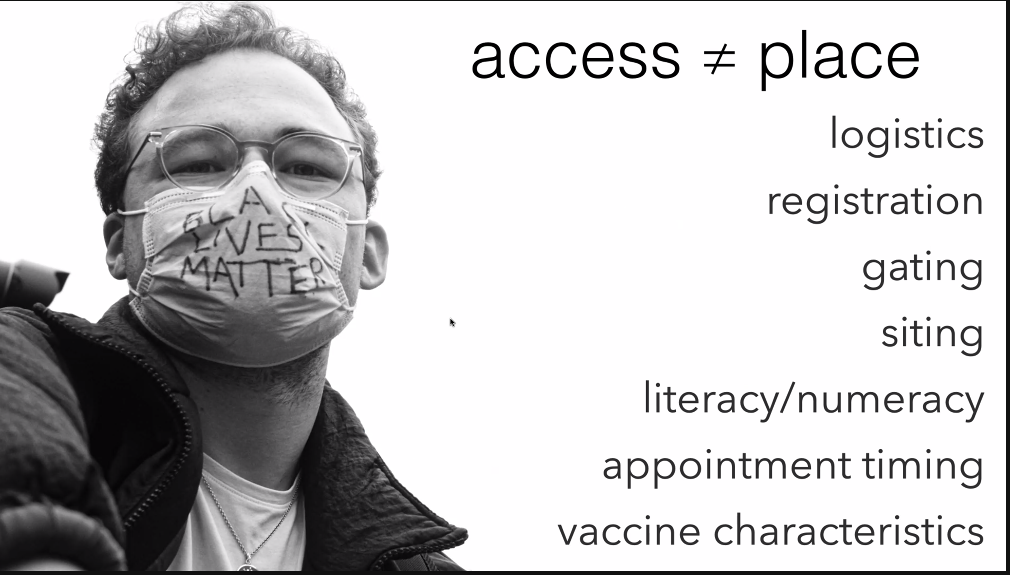
However, Bennett said, access does not simply equal place. “How much friction are you creating in this process?” he prompted, pointing to examples of complicated registration systems, inadequate public transportation to vaccine sites, or overall distance from a location. All of these factors already limit who is able to access vaccinations without the added influences of reduced vaccine uptake due to vaccine hesitancy.

A slide from Dr. Bennett’s presentation which outlines the plethora of impactors on access.

Vaccine hesitancy was listed by the World Health Organization as a top 10 global threat in 2019, when vaccines were preventing 2-3 million deaths per year in the pre-Covid era. Though Bennett said that vaccine hesitancy “has been with us for a long time,” there “are real consequences” to continued reluctance and refusal to get vaccinated with heightened risks due to the nature of the pandemic.

Bennett said that many claims around hesitancy blame communities for their inability to access vaccines, but this fails to consider or to change the underlying behaviors that drive hesitancy. Bennett outlined these underlying drivers as 1) mistrust, 2) social norms, and 3) understandable uncertainties.

A slide from Dr. Bennett’s presentation showing the unequal distribution of vaccination sites in Atlanta GA in predominantly white areas.

“It’s not just mistrust of the medical system, it’s mistrust of institutions,” Bennett said, “There’s a lot of reasons for [Black people] to mistrust institutions.” The murder of George Floyd stands as one poignant contemporary example, but “Tuskegee [still] looms large in the minds of Black Americans.” The Tuskegee experiment exploited 600 Black men working as sharecroppers who had syphilis by knowingly withholding treatment and simply seeing what happened to their bodies as a result of the disease for over 40 years.

This experiment was not the first of its kind: Whole body radiation was tested on Black people. Fistula surgery was developed on enslaved Black women by the “father of modern gynecology.” The immortal cells of Henrietta Lacks, a Black woman, have been used far and wide to advance science after a sample of her cancerous cervix was unknowingly stolen from her. Modern studies have also shown how different implicit biases of Black patients shape their treatment outcomes due to skewed physician perceptions.

The capital riot, the murder of George Floyd, and the Jim Crow Era all exemplify the pervasive institutionalized racism that erodes Black trust in U.S. institutions of all kinds.

Our social networks are also vitally important to influencing our feelings about receiving the Covid vaccine. In Black communities, Bennett said, fewer people in their networks have gotten vaccinations and those who have received vaccines are less vocal about it leading to a collective lack of interest in receiving vaccinations.

These two factors, paired with understandable uncertainties about the side effects of the vaccine or potentially getting Covid itself, generate the need to change our approaches to vaccine hesitancy and increased uptake amongst Black communities in the U.S.

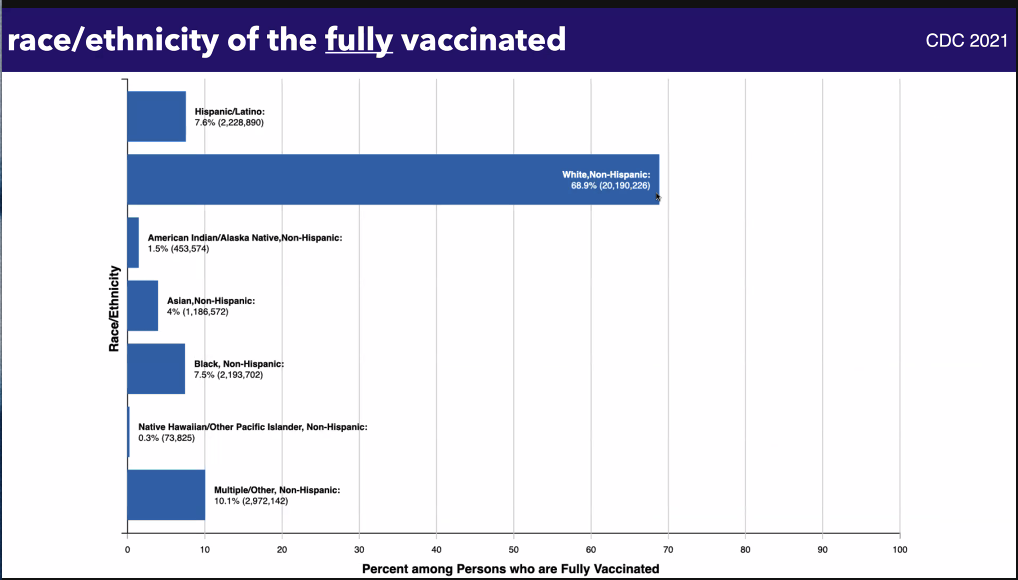
White people have been disproportionately vaccinated over all other racial/ethnic categories in the U.S.

To do this we need to lead with empathy and appreciate the fact that changing attitudes towards vaccines is a process. “Shaming people is bad,” Bennett said. “Stigmatizing people will actually lead to the converse of what we expect.”

Over time, we can work to correct misconceptions, contextualized uncertainties, and share stories rather than statistics to push people further from vaccine refusal and closer to vaccine demand.

And when more Black Americans are ready, “vaccination should be an easy choice.” By implementing opt-out policies, rather than opt-in and by taking more direct actions like making vaccination appointments for people, Covid vaccines may indeed be the key to ending the pandemic – in an equitable and proportionate way.

Post by Cydney Livingston

Page 5 of 7

Powered by WordPress & Theme by Anders Norén