Following the people and events that make up the research community at Duke

Students exploring the Innovation Co-Lab

Category: Lecture Page 11 of 20

Ghost Hunters: Duke Physicists Track the Changeable Neutrino

One kilometer below the surface of Mount Ikeno in Japan lies Super-Kamiokande, the largest neutrino detector of its kind in the world. This 12-story, cylindrical chamber holds 50,000 tons of water and is lined with over 11,000 tubes that spot the bursts of light emitted when high-energy neutrinos collide with matter.

Nearly 20 years ago, experiments at Super-K and elsewhere revealed that neutrinos can oscillate or change “flavor,” a discovery which proved that the ghostly particles have mass and upended their role in the Standard Model of physics. Since then, Duke physicists Kate Scholberg and Chris Walter have used the massive detector to further explore the nature of these neutrino oscillations, seeking to pin down how and when they change their flavors and what this might mean for our understanding of physics.

SuperK

Within the massive Super-Kamiokande neutrino experiment in Japan, researchers travel by boat to check individual photomultiplier tubes that detect bursts of light created when neutrinos interact with water. Credit: Kamioka Observatory, Institute for Cosmic Ray Research, The University of Tokyo.

On Wednesday, Scholberg and Walter, along with Duke neutrino physicist Phillip S. Barbeau, will tell the story of neutrino oscillations in a talk titled, “Hunting Ghosts, How a 50,000-ton underground detector revealed the changeable nature of the neutrino and altered our view of the Universe,” presented as part of the Natural sciences in the 21st century colloquium.

In preparation for the talk, Scholberg spoke with colloquium organizer Rotem Ben-Shachar about the nature of neutrinos, what makes them so hard to catch, and what they have teach us about the origins of matter in our universe.

What is a neutrino?

Neutrinos, sometimes known as “ghost particles,” are among the known “elementary” particles: unlike atoms, they are not made up of anything smaller. Neutrinos are special because they are neutral, meaning they have no electric charge, and they interact extremely weakly with matter. They also have very tiny masses: a neutrino has no more than about 1/500,000 the mass of an electron. Because of their tiny masses, neutrinos travel at speeds close to the speed of light. Neutrinos come in three “flavors”: electron, muon and tau.

Why are neutrinos so hard to catch?

Neutrinos only interact only via the weak force — this is one of the four known forces, the others being gravity, electromagnetism, and the strong force which holds atomic nuclei together.  As you might guess from the name, the weak force is really feeble, and that means that neutrinos hardly ever interact with matter at all.  Mostly they just pass right through things without leaving any trace. Once in a while, they do interact, leaving a charged particle that you can detect. In order to “catch” a neutrino — to detect the interaction — you need either a huge number of neutrinos, or an enormous detector, or preferably both. For example, Super-Kamiokande is gigantic, but we see only about ten high-energy neutrinos per day in the detector.  On the surface of the Earth, cosmic radiation can easily swamp a signal this slight, so neutrino detectors are often built underground where they are shielded from cosmic radiation.

When we can catch a neutrino, what do we learn from it?

dukebanner

Duke scientists suspended inside the Super-K detector.

Particle physicists like us try to understand the basic nature of matter and energy: our goal is to learn what the universe is made of, and how its constituents interact with one another. We’re also interested in cosmology — the history and evolution of the entire universe. It’s essential to understand the fundamental physics in order to understand what happened after the Big Bang, and why the universe looks as it does today. For instance, nobody understands why the universe is made primarily of matter and not antimatter, which has properties very much like matter, but with opposite charge. The study of neutrinos can give insight into many questions like this one.

What specifically we learn with a neutrino detector depends on the source of neutrino, the type of neutrino, and how far the neutrinos travel.  For instance, at Super-K we can detect neutrinos that come from collisions of cosmic rays, high energy particles from outer space, with the upper atmosphere. These neutrinos travel through the Earth: some of them go a short distance, and some of them travel all the way from the other side of the Earth. What we observe is that neutrinos change from one flavor to another as they travel — it turns out that this can only happen if neutrinos have mass.

The 2015 Nobel prize in physics was awarded for discovery of neutrino oscillations by the Super-Kamiokande and Sudbury Neutrino Observatory experiments. Why was this discovery so important?

The discovery that neutrinos oscillate as they travel — they change their flavor — told us that neutrinos have non-zero mass. This is a really fundamental piece of information. It completely changes the role neutrinos play in the Standard Model of particle physics, and in fact we still don’t know exactly how to fit neutrinos with mass into the picture; how to do this depends on whether neutrinos and antineutrinos are really the same particles or not.

Neutrino mass also matters for cosmology. Since neutrinos have mass, we know they make up some of the unknown “dark matter” of the Universe, but we also now know that neutrinos can only make up a small fraction of the dark matter.  Exactly *how* the neutrinos oscillate also matters, as this depends on fundamental parameters of nature.
SK-NueCand

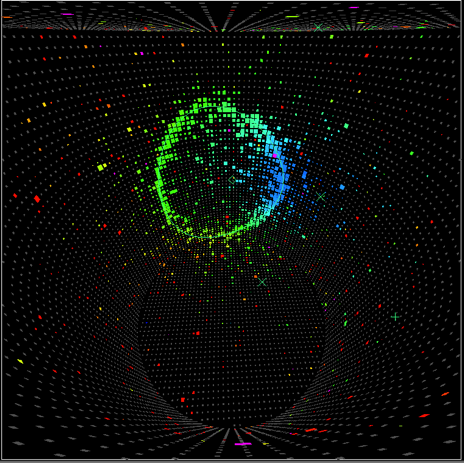
A 3-D display of a candidate electron-neutrino event in the Super-Kamiokande detector. Each of the colored dots represents a detector that was hit by the light created when the electron neutrino interacted with the detector.

How does your research build on the discovery of neutrino oscillations?

The discovery of oscillations in atmospheric and solar neutrinos by Super-K and SNO has now been confirmed by multiple other experiments, and we’ve made tremendous progress over the past 20 years in refining our understanding of neutrino oscillations. An experiment we are involved in at Duke, T2K (“Tokai to Kamioka”), sends a beam of high-energy neutrinos from an accelerator a distance of 300 km to Super-K.  This experiment has discovered new oscillation properties of neutrinos and will continue to take data over the next several years.

But there are still big questions out there about neutrinos — we have three neutrinos, but we don’t know if we have two heavier ones and one light one, or two light ones and a heavy one, which matters for the big picture. We don’t know if oscillations of neutrinos and antineutrinos happen differently. We don’t know if neutrinos and antineutrinos are really the same particles.  The answers to these questions may help us understand the origin of matter.  A next-generation beam experiment, DUNE, will send a beam of neutrinos 1300 kilometers from Fermilab to South Dakota and may answer some of these questions — and if we are lucky, we’ll also catch a burst of neutrinos from a supernova.

The Natural sciences in the 21st century colloquium will be held Wednesday, April 13 at 4:30 PM in Duke’s Gross Hall, room 107.

Kara J. Manke, PhD

Post by Kara Manke

Mapping the Pathways of Least Resistance

Cancer is a notoriously slippery target. It can assume multiple genetic identities, taking a different pathway whenever it needs to dodge the latest treatment. A recent study found that just a single, tiny tumor can contain more than a million distinct mutations, priming it for resistance.

A series of brain-scans on one patient whose brain tumor bounced back repeatedly despite surgery, chemotherapy and radiation. (Fujimaki T et al. “Effectiveness of interferon-beta and temozolomide combination therapy against temozolomide-refractory recurrent anaplastic astrocytoma.” doi:10.1186/1477-7819-5-89)

A series of brain-scans on one patient whose tumor (white) bounced back repeatedly despite surgery, chemotherapy and radiation. (Fujimaki T et al. “Effectiveness of interferon-beta and temozolomide combination therapy against temozolomide-refractory recurrent anaplastic astrocytoma.” doi:10.1186/1477-7819-5-89)

So, while one treatment might be able to wipe out most of the cancer cells, the few that remain with the right genetic makeup will go on to forge a resistance.

Such resistance is a huge problem and one of the reasons that cancer is on its way to becoming the number one killer disease in the United States. By the end of this year, cancer will kill nearly 600,000 Americans and millions more around the world.

Kris Wood, Ph.D., spoke about the challenges of combating cancer drug resistance at the Basic Science Day on Nov. 16. The annual event brought together faculty, staff, trainees, and students to celebrate basic science research and to encourage collaborations. During the day, attendees heard TED-length talks from faculty members studying a wide range of topics, from vocal learning to asexual reproduction.

“My lab is most interested in the basic question of what are the things that cancer cells can do that allow them to survive in what should be toxic environments created by drug treatments,” said Wood, an assistant professor of pharmacology and cancer biology. “By understanding how cancer cells survive in drug environments, we might be able to both predict those patients who will respond well and respond poorly to treatments, and also design combination therapies that could work more effectively.”

Kris Wood is an assistant professor of pharmacology and cancer biology.

Kris Wood is an assistant professor of pharmacology and cancer biology.

Wood said that knowing that so many different genetic alterations can lead to resistance might make researchers wonder what chances they have of ever stopping a tumor.

But he thinks there is reason to be optimistic, because these myriad mutations seem to function by altering a discrete set of pathways. In turn, many of these pathways seem to create the same kinds of effects in cells – chiefly, fueling growth and shirking death. Targeting the effects that enable resistance could bring about better ways to treat cancers.

For example, half of melanomas are driven by mutations in a gene called BRAF. Wood began to map out the different drug resistance pathways that are controlled by the BRAF signaling molecule. He found that many of these pathways converge on another signaling molecule called MYC, which is known to promote cell proliferation.

When Wood blocked MYC in drug-resistant melanoma cells, he found that it could make them sensitive to further rounds of chemotherapy. He also found that suppressing MYC in melanoma cells before treatment could dramatically delay the time that it takes for resistance to emerge.

Mutant tumor cells (brown) in a brain metastisis of malignant melanoma. BRAF is stained. (Image by Jensflorian via Wikimedia Commons.)

Mutant tumor cells (brown) in a brain metastisis of malignant melanoma. BRAF is stained. (Image by Jensflorian via Wikimedia Commons.)

“MYC is a complicated beast, and there are lots of things it can do,” said Wood. “I think there are some promising strategies for inhibiting MYC, which could lead to intelligent therapies that target resistance.”

Broadfoot_100Guest post by Marla Vacek Broadfoot Ph.D.

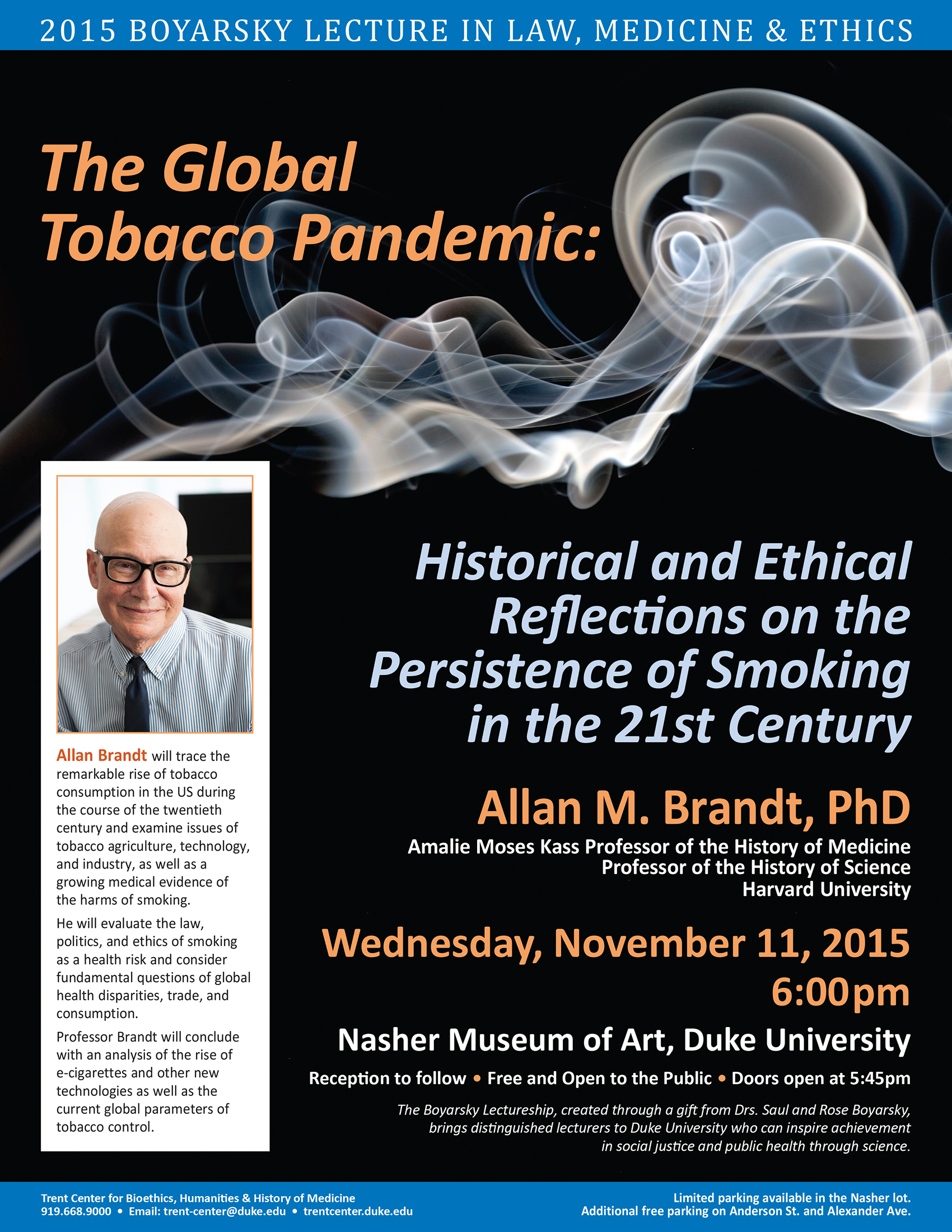
The dangerous persistence of smoking into the 21st century

The "smoking ring" cigarette billboard advertisement in New York City. Picture Credit: theoldmotor.com

The “smoking ring” cigarette billboard advertisement in New York City. Picture Credit: theoldmotor.com

When Harvard historian of science Allan Brandt was a child, he couldn’t help but notice one thing in particular when in the car with his family — the cigarette advertising billboards. At the time, there was a very unique billboard that advertised Camel cigarettes, which actually smoked “rings” from the board. His young mind was captivated by how cool the board looked — and presumably, unaware of the dangers of the product the board was advertising.

As time passed, it became increasingly clear to Brandt and to the American public that smoking cigarettes was bad for you. Brandt’s most recent book – The Cigarette Century, was awarded the Bancroft Prize in 2008. In Brandt’s words, cigarettes are the “most dangerous product ever produced in such large quantities.” And indeed, the numbers are shocking — over 480,000 Americans die annually of tobacco-related diseases.

Given such obvious problems associated with cigarettes, Brandt started wondering, “How could something so bad for you be so advertised in such bold ways?”

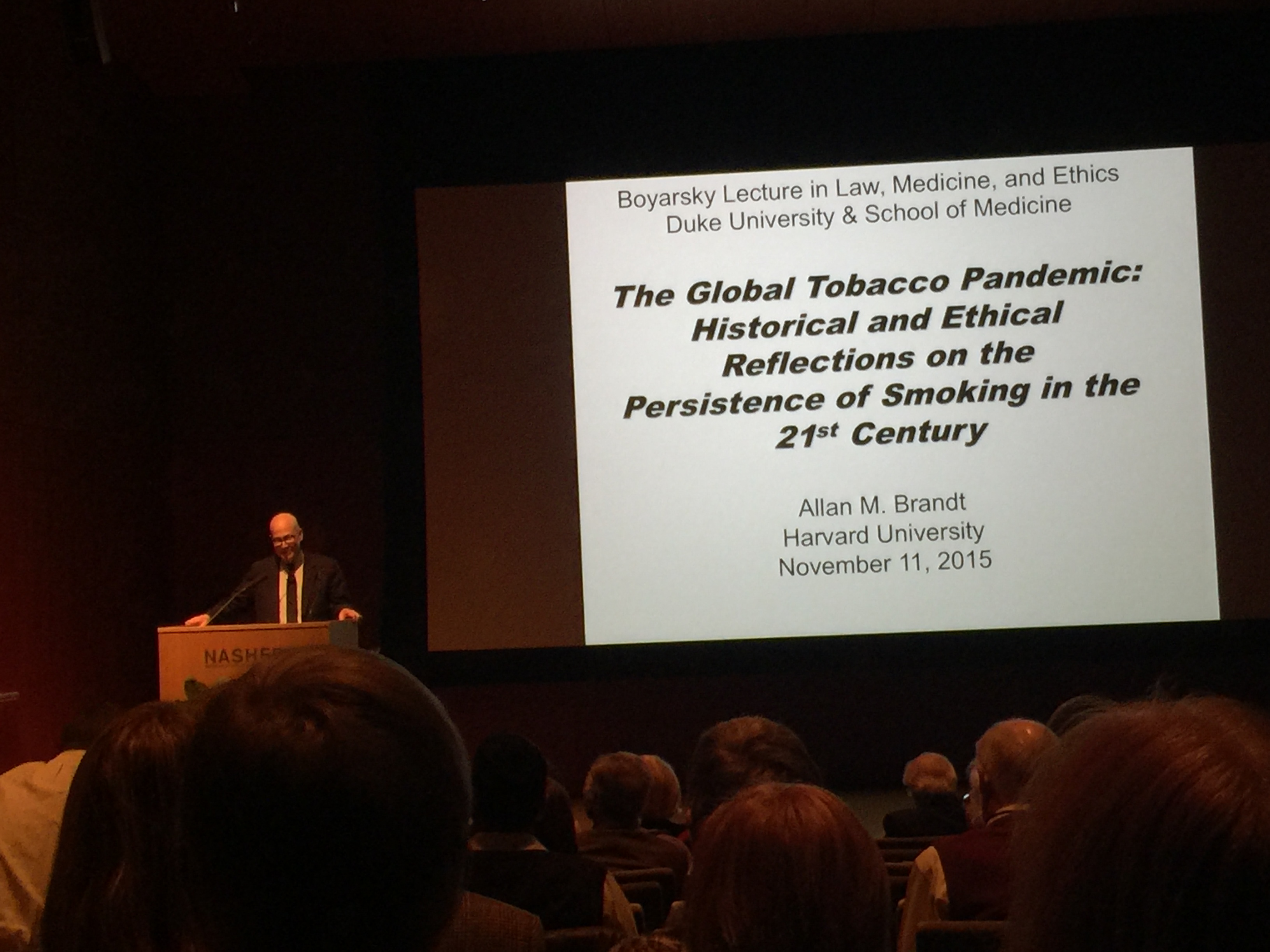
2015BoyarskyflierREVThe answer, Brandt explained to a Duke audience gathered on Nov. 11 for the 2015 Boyarsky Lecture in Law, Medicine and Ethics, was manipulation — the American public was being grossly manipulated by the bold advertising of cigarettes. Brandt talked about Mr. Edward Bernays, who, according to Brandt, is one of the main founders of the concept of modern public relations, made extensive efforts to put smoking into the mainstream media. One of Bernays’ biggest achievements was the widespread introduction of smoking to Hollywood. The efforts to introduce smoking to mainstream media worked amazingly well. By the mid-1950s, nearly half of all Americans were smoking. To put this into perspective, at the turn of the 20th century, nearly no Americans were smoking!

However, as more and more research proved that cigarettes were actually harmful to Americans’ health, another curious phenomenon happened, where cigarette companies were actually funding their own research.

Brandt pointed out how this was a thinly disguised attempt to publish misleading conclusions about cigarettes to the public by establishing it as “science.” Such biased research funding occurs today in other industries as well, such as for oil companies, for research concerning climate change.

a3e3e7a871d3b4bac29471e0513262bb

Children smoking in various developing countries is not uncommon, and poses a huge health risk to them. Picture Credit: CBSNews

However, public health campaigns still showed measurable positive impact — today it is evident that there is a declining trend in the number of smokers in America. However, wouldn’t that mean that the cigarette industry would die down? According to Brandt, it couldn’t be farther from the truth. The cigarette industries have now moved to exporting cigarettes to the developing world, where populations are less educated, and there are fewer regulations concerning such sales.

According to Brandt, in 2000, four million people died — two million died in the developed world, and two million in the developing world. By the year 2030, over 10 million people total will be killed by cigarette use — three million in developed nations, and seven million in developing nations. The rapid proliferation in such developing countries due to lack of education and awareness is heavily evident, especially with the much higher rate of childhood smoking. It is heavily evident that most of the disease fatalities will be borne by developing nations in the coming years, and will ensure copious profits for cigarette companies for years to come.

While Brandt did acknowledge the very persistent growth of the cigarette companies in the near future, he did not rule out that it was still possible to fight against this. By working together, we can all help bring awareness to the parts of the world where cigarettes are being advertised to uneducated people.

IMG_0139


Thabit_Pulak_100Post by Thabit Pulak, Duke 2018


From Neutrinos to Nuclear Deals: Congressman Bill Foster

Hon. Bill Foster of the 11th District of Illinois is the only member of Congress to hold a Ph.D. in science. On November 5th, Congressman Foster visited Duke’s Initiative for Science and Society to discuss his unconventional path to politics and his consequent unique perspective. He lightheartedly delivered what he called a “recruiting speech” to a room full of scientists, hoping to persuade students with scientific background to become involved in public policy.

Representative Bill Foster, Ph.D., doing what politicians must.

Bill Foster started his first business with his brother at the age of 19 out of his family basement. His earnest, innovative efforts to use computers to control lighting manifested in the company Electronic Theatre Controls, which powered Disneyland and Disneyworld’s Parade of Lights in the 1980s, the 2012 London Olympic Stadium, Chicago’s Millenium Park, and a large portion of shows on Broadway.

Foster then transitioned into his career in physics. He undertook the IMB Proton Decay Experiment for his Ph.D. thesis under Larry Sulak; Foster did not observe proton decay, but he did observe neutrinos from a supernova. Foster continued his physics career at the Fermi National Accelerator Lab in suburban Chicago, where he smashed protons and anti-protons together at high speeds and later worked on the particle accelerators themselves.

In the midst of discovering Big Bang particles, Foster also fell into politics by maintaining an active civil engagement. He volunteered for Patrick Murphy’s campaign in 2006, where he says he “learned business on the factory floor,” a philosophy he has maintained since his days at Electronic Theatre Controls. He began the 110th Congress as an intern for Rep. Patrick Murphy, and ended it sitting as a Congressman.

Hon. Foster graphs the relative numbers of scientists and engineers, lawyers, and career politicians in Congress. The U.S. Congress consists mostly of career politicians, explains Foster, while China, for example, consists mostly of engineers.

Rep. Foster plots the relative numbers of scientists and engineers, lawyers, and career politicians in international governing bodies. The U.S. Congress consists mostly of career politicians, explains Foster, while China, for example, consists mostly of engineers.

Since winning his seat in 2012, Foster has introduced a scientific perspective to Congress, even if he’s careful not to conflate that with his political stance. He makes a point to clarify technical details of issues like the Iran nuclear deals, human genetic engineering, and public key cryptography on cell phones, to ensure that Congress makes the most informed decisions possible on highly complicated ethical issues. On genetic engineering, he noted, “Our ethical paradigm is not set up for it,” as the notion of “All men are created equal” fundamentally cannot handle humans whose genetic traits are pre-picked. Clearly, scientific expertise will be invaluable in such consequential issues.

Life in Washington, Foster stated, is unromantic. Foster lives in efficiency apartments and grounds himself by holding “Congress on your Corner” events, where he answers any constituent questions, like why grout isn’t working on a driveway.

Political customs, such as the dilemma of which tie to wear to promote his campaign, still bewilder his scientific mind. Most of the votes he makes, like renaming a post office, or voting on an issue the President will inevitably veto, don’t really matter, he said.

But what makes politics worth it for him, Foster explained as he passed around his voting card, is the power to make a positive difference in issues that impact millions of people. Such ambitions transcend the boundaries between science and policy.

By Olivia Zhu Olivia_Zhu_100

Deep Brain Stimulation as Treatment for Parkinson's

As if a Nobel Prize weren’t enough, another Duke scientist recently earned a prestigious award for groundbreaking research. Warren Grill was recognized Nov. 2 at the MDB Trent Semans Center for his research and development of deep brain stimulation (DBS) treatments for Parkinson’s disease.

He won the Javits Neuroscience Investigator Award, which was was created by the U.S. Congress in honor of Senator Jacob Javits, a U.S. politician who succumbed to ALS. The award is worth $4 million, and is used to fund four years of research devoted to curing neurological diseases.

thumb_image_4613272

Warren Grill of biomedical engineering was honored with the Javits Award for his work in biomedical neuroscience

Grill is a professor of biomedical engineering, neurobiology, and electrical and computer engineering at Duke whose research has earned him numerous previous awards; including the Scholar/Teacher of the Year award in 2014.

In a talk recognizing his Javits award, Grill stressed the importance of developing non-pharmaceutical treatments for neurological conditions as society faces the increasing prevalence of cognitive diseases in coming decades. “Pills will not save us,” he said.

He also pointed out that pharmaceutical companies seem to avoid developing medicines for mental illness, due to their calculation that the financial cost isn’t worth the low chance of success in curing brain diseases. However, he argues, treatments such as DBS are proving them wrong.

Deep brain stimulation is the placement of a “brain pacemaker” into what is roughly the geographic center of the head, in areas such as the VIM thalamus, globus pallidus, and subthalamic nucleus. For twenty-four hours a day, every day of the year, the brain receives constant stimulation by these electrodes, causing symptoms in Parkinson’s such as tremors, rigidity, and difficulty walking to subside or even disappear. While Grill conceded that scientists do not yet understand how and why these electrodes work, he showed video evidence of patients’ improvement after receiving the treatment. For example, a patient who had a debilitating case of Parkinson’s that left him in a wheelchair was soon able to walk, make sandwiches, and even shovel snow after the implantation of the device.

Schematic of a typical deep brain stimulation device. (National Institutes of Health)

Schematic of a typical deep brain stimulation device. (National Institutes of Health)

Grill and his team have worked on improving the efficiency of the DBS device, giving it a longer lifespan and reducing the amount of surgical procedures that patients have to undergo (and the cost of  treatments). Whereas before, the devices would produce high-frequency stimulation to the brain to alleviate symptoms, Grill researched and developed a pattern of DBS with a lower frequency, using computational evolution, that would allow the device to work just as effectively while being up to 75% more efficient. His improvements on the device have allowed them to work up to seven years longer than before, reducing patient surgeries, and thus the risk of infection and misprogramming.

The next steps Grill expects to work on include the development of patient-specific patterns that work more effectively with individual patient’s brains. In addition, he hopes to allow patients to be able to adjust the frequency of their brain stimulation, thus allowing them the choice between efficacy and efficiency of the device throughout their daily lives. Studies are also being conducted into the use of DBS to treat other diseases such as Alzheimer’s, depression, Tourette’s, and epilepsy.

Watch a video of the lecture: [youtube https://www.youtube.com/watch?v=6104hDxB69c]

Devin_Nieusma_100Post by Devin Nieusma, Duke 2019

Relationship Between Domestication and Human Social Skills

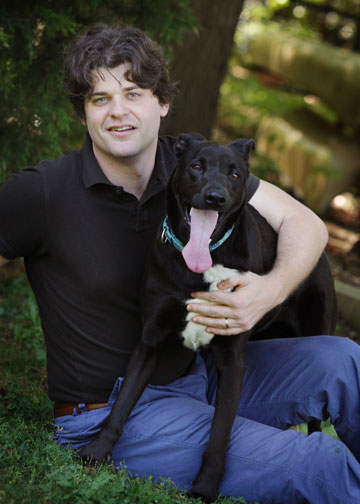
Brian Hare wants to know why humans are such big babies.  

Well,  that was just the provocative title for his Center for Cognitive Neuroscience talk on Oct. 2. What he wants to know is what happens in the development of human babies that socially advances and separates them from their animal counterparts.

brianhare_dccc2

Hare, an associate professor of evolutionary anthropology, discussed human evolution and comparisons to our ancestors and chimpanzees, bonobos and even dogs. He explained that the idea of comparing humans to other species suggests that “something very fundamental happened during human evolution that makes us human– a shift in human development.”

First Hare attempted to evaluate whether certain advanced capabilities of humans are present in other species. One means of doing this was by examining if other species think about the thoughts of others. In a video from an experiment  “Gaze” that Hare conducted, he looks at a chimpanzee named Dorene, and then suddenly glances upwards. The chimp follows suit, gazing up at the ceiling to see what Hare is looking at. From this behavior, Hare inferred that chimpanzees are in fact capable of thinking about the thoughts of others, like the human species.

This led Hare to examine another behavior that is advanced in humans: cooperation. Hare explained that in previous laboratory research, chimpanzees were found to be incredibly uncooperative. Hare’s studies in the field, however, proved the opposite. In an experiment with Alicia Melis and Michael Tomasello, two chimps were put in adjacent, but separate rooms. A treat was visible with a string leading to each chimpanzee. If one animal pulled the string, it just got the string. But if both pulled cooperatively, they ended up with the food. The researchers found that 95% of the chimps could work together to solve this problem to get an equal payoff for both of them. Hare did note, however, that if the chimps had communicated, they could have solved the problem more efficiently.

This showed that where chimpanzees might differ from the human species is in their inability integrate cooperation and communication. With children, Hare explains, this is a fundamental part of development that is established early in life. Because of this, Hare wondered if there is something motivationally different about the structure of cooperation between humans and other species, something that also shows early in development.

When humans work together, Hare said, they understand they have a shared goal and will adjust to different roles to complete the task. This has led to, from an evolutionary perspective, a very “strange” behavior in humans, in which they do things together simply because they like to. Hare calls this “we psychology.” Hare showed two videos side by side: one of his son rolling a ball to his mother, Vanessa Woods, and another of a chimp in a cage rolling a ball with Woods. When Woods stopped playing the game, the chimp reached out of the cage and grabbed her arm and pushed the ball so it would roll back to him. From this, Hare inferred that, like humans, chimps may also have a small tendency for “we psychology.”

In another study, Hare compares two-year-old children to adult and juvenile chimpanzees. In terms of physical cognition, the species were very similar to one another. On the social problem solving front, however, human children were already outperforming juvenile and adult chimpanzees. This study, along with the culmination of his earlier research, reinforced Hare’s idea that something very fundamental happens early in human development that differentiates human’s social and communicative capabilities from other species: domestication.  

“It’s not just that kids are solving problems better, but it may even be that the way kids cognitively organize has changed,” he said.

Hare explains that just knowing the cause to be domestication was not enough, however. He wanted to understand how this worked. Hare referenced extensive breeding research conducted by Dmitri Konstantinovich Belyaev, in which he studied the domestication of the fox. Not only did these foxes show behavioral changes due to domestication, they also displayed morphological and physiological changes: floppy ears, curly tails and high levels of serotonin. Belyaev also found that, like humans, foxes use gestures and communicative cues. So, Hare concluded that the process of domestication influences a realm of social and biological characteristics and could be manipulated and interpreted in many different ways, especially in our own development.

experimental-fox

“This doesn’t just happen as a result of artificial selection, or human selection. It can happen as a result of natural selection,” Hare said. “So then we turn to our own species and start looking at whether there’s any evidence in our own evolution for this.” he said.

madeline_halpert_100

By Madeline Halpert, Class of 2019

Life and Death on the Frontiers of Global Health

IMG_3461Vision, according to Mark Dybul, is the biggest problem in public health.

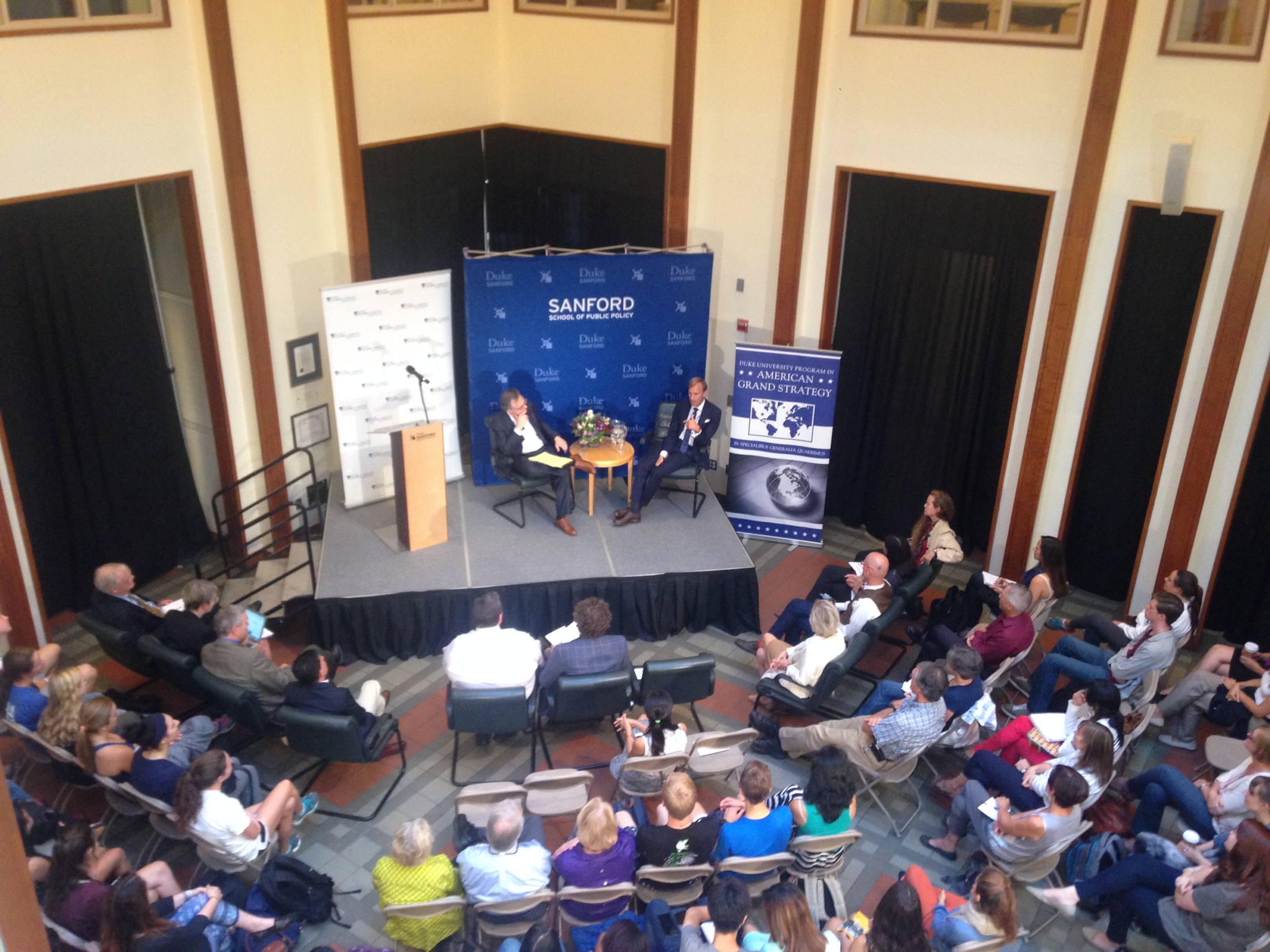
Dybul, the Executive Director of the Global Fund to Fight AIDS, Tuberculosis, and Malaria, and former head of the President’s Emergency Plan for AIDS Relief (PEPFAR), appeared at Duke on Sept. 16 for the Sanford School of Public Policy’s Egan lecture. The event was co-sponsored by the Duke Global Health Institute and the Kenan Institute for Ethics.

The format was like a meeting of the minds as Michael Gerson, Washington Post columnist, former speechwriter for George W. Bush, and Pamela and Jack Egan Visiting Professor at Duke, interviewed Dybul.

Gerson and Dybul probed fundamental questions such as how to effectively empower health efforts, socioeconomic disparity in health aid efforts, the role of science in public health, and trends in AIDS treatment methods.

Dybul opened by painting a picture of the landscape of AIDS in Africa in the epoch before serious AIDS efforts. He described the streets of Uganda “clogged with coffins,” an atmosphere thick with the expectation of imminent death.  He said the implications of this desolate psychology spread far beyond the human body, decreasing motivation for education or investment.

Dybul stressed that a program focused on vision, methods, and results is necessary in order to alleviate the AIDS epidemic, rather than a paternalistic approach gauged  only by the sheer amount of money given to an issue and the amount of aid distributed.

He said that bilateral aid organizations, many of which are based in the U.S., are necessarily attached to governments across oceans and thus inspire a certain degree of distrust with local communities. Global Fund, for example, serves as a mechanism for countries to organize anti-AIDS efforts, rather than the directing organization.

The reasons for the measured success of Global Fund, Dybul admitted, are unclear, largely due to the inability of separating variables in live populations. “Public health is art,” he added. The positive impact of Global Fund is indisputable, with decreased numbers of casual sex partners and increased use of condoms contributing to the reduced spread of AIDS in African nations.

When Gerson asked about the future of public health, Dybul predicted a relative increase in the prevalence of non-communicable disease; however, he forecasted that the more important question will be: “Who pays [for treatment]?”

Dybul also projected a vision of a worldwide, cohesive data management system to provide surveillance as a preventative measure in communities — “being smart” about epidemics. Dybul emphasized that public health extends deep into the community and suggested that the term “global health” may evolve into “country health” as relief efforts become more locally-based.

Dybul advised aspiring students to focus on what excites you, yet be open to new opportunities.

View a video of the entire talk (1:18) —

[youtube https://www.youtube.com/watch?v=-HHZyraZ574]


Olivia_Zhu_100 By Olivia Zhu

E-cigarettes might help smoking cessation

Research has shown that nicotine replacement therapies such as the patch, gum lozenges and nasal spray are only 25 percent effective in smoking cessation within the first year of use.

Jed Rose, Ph.D.

Jed Rose, Ph.D.

Jed Rose, Director of the Duke Center for Smoking Cessation, thinks the use of e-cigarettes, or electronic nicotine delivery systems (ENDS) could be a better way to quit smoking.

Rose spoke Tuesday in a session sponsored by the Center on Addiction and Behavior Change.

He said nicotine replacement is delivered at a slower rate and a lower dose than in actual cigarettes, so it fails to curb craving among smokers. Replacements also don’t replicate one of the main sensory behaviors of smoking: inhalation.

Rose discussed a study in which he and his colleagues anesthetized participants’ airways to see if they could detect the smoke, while keeping the same dose of nicotine to the brain. When participants couldn’t feel the smoke as much, there were more cravings for cigarettes and less satisfaction.

An e-cigarette vaporizes nicotine with battery power, avoiding the combustion byproducts of burning tobacco. (via Wikimedia Commons)

They’ve also found that replacement treatments, when given on a temporary basis of just one year, often resulted in relapse.

So what does an e-cigarette actually do? The battery of this electronic cigarette heats an oil that vaporizes the nicotine with a substance called propylene glycol. The gas is released and condenses immediately into a cloud of smoke.

Why is the e-cigarette safer? It’s the combustion products in smoke, rather than the nicotine, that are responsible for most smoking-related disease. Rose cited the 2010 Surgeon General’s Report that backs up this claim that nicotine itself is not responsible for cardiovascular problems or cancers.

GUIDE-Inside-a-eCig

Rose thinks that e-cigarettes could be the best of both worlds, allowing smokers the same sensory effects they enjoy, while possibly avoiding other health hazards of regular cigarette smoking.

Rose also addressed concerns about formaldehyde being present in e-cigarettes. He says this is rare, and only occurs with e-cigarettes that have higher voltages which causes overheating to occur. While there is evidence from two trials that the new devices help smokers to stop smoking long-term compared with placebo, unfortunately, very few studies have looked at this issue. Rose also shares concerns that the new product could be picked up by youth who wouldn’t normally smoke cigarettes, or serve as a gateway between e-cigarettes and real ones.

In the end, however, he thinks this product has the potential to be highly effective in treating addiction, and hopes it will be evaluated further.

“The agency that has to sort through this is the FDA,” he said. “They have to prove that it will help society as a whole. It has to benefit the health of the population.”

madeline_halpert_100By Madeline Halpert

Imagining Alternate Realities: Is Brian Williams in the Clear?

By Duncan Dodson

When I go home and reminisce with family about road trips we took or embarrassing moments they facilitated, eventually we’ll disagree on “what actually happened.” We’re all so certain—our memories unfold vividly yet contrarily. It’s clear the past can be subjective, but why is this so?

As part of Duke University’s Brain Awareness Week, I went to a talk at Fullsteam Brewery on imagining alternate realities by Dr. Felipe De Brigard, Assistant Professor of Philosophy and member of Center for Cognitive Neuroscience. De Brigard began by discussing studies of patients with hippocampal atrophy (as in amnesia, PTSD, and severe depression) struggling to place themselves in both the future and the past. Their impoverished answers contrast with those of healthy controls, suggesting a link between areas of the brain accessed for recalling the past and picturing the future.

Dr. Felipe De Brigard presents his recent studies on the relationship between the neural default network and autobiographical thoughts at Fullsteam Brewery 3/19.

Dr. Felipe De Brigard presents his recent studies on the relationship between the neural default network and autobiographical thoughts at Fullsteam Brewery 3/19.

De Brigard buttressed this by displaying fMRI neural images of parts of the brain used when imagining future events and evoking memories. These parts encompass the default network: a system of functions and firings executed when the brain is not engaged in a specific task. Evidence shows the default network allows engagement in “mental time travel” or the projection of oneself into the future or onto the singular, objective past. This assumption leads to temporal asymmetry: only one past exists with which the imagination can corroborate yet it can visualize limitless possibilities.

De Brigard challenged this view: what if the default network works in both directions? He argues that the parts of the brain used for imagining possible futures also allow us to conceive potential outcomes in our past that did not occur, the process of counterfactual thinking. He has found that when contemplating an alternative reality considered likely to have occurred, the brain behaves as if it were remembering. Memory is not haphazard reproduction but probabilistic reconstruction — our memory is constantly rebuilding the past with both fact and what are likely facts, and frequently the distinction is blurred.

A fascinated and packed Fullsteam, many audience members were at their second or third event for Brain Awareness week at Duke.

A fascinated and packed Fullsteam; many audience members were at their second or third event for Brain Awareness week at Duke.

“Perhaps we should cut Brian Williams a little slack?” De Brigard chuckled. Ample evidence shows that engagement in especially rich and detailed counterfactual thinking can increase the probability of constructing — and believing the authenticity of — false memories.

More intriguing than pardoning Williams are potential contributions to treatment of anxiety, depression, and PTSD. A common debilitating trigger among these disorders is repetitive counterfactual thinking, “I shouldn’t have said that, I shouldn’t have said that.” Perhaps with further study on the default network and its relationship to autobiographical contemplations, neuroscientists might develop tools to alter the pathways or functionality of the default network.

As for my family, they have some major counterfactual thinking patterns to alter; my memory is immaculate.

Blake Wilson: Pioneer of the Modern Cochlear Implant

By Anika Ayyar

Despite severe hearing difficulties, William H. Gates Sr. sat listening to his son, Bill Gates, deliver an acceptance speech after winning a Lasker Award for Public Service in 2013. He was able to participate in this momentous occasion thanks to his cochlear implant, an electronic device that simulates the functions of the cochlea (a cavity in the inner ear) by transmitting sound signals to the brain.

Coincidentally, three of the masterminds behind this very device were also present at the same ceremony, as they themselves were being awarded Lasker Awards for their work developing the modern cochlear implant. Blake Wilson, one of these scientists, noted during his speech at Duke last week that it was quite an experience for them to watch a device they had pioneered transform a personal interaction between William Gates Sr. and his son, right before their eyes.

Blake Wilson displays a cochlear implant.

Blake Wilson displays a cochlear implant.

Rewind 50 years, and few people would have paused to even consider the possibility of such a device that could capture sound signals and make them audible to individuals whose ears were damaged. Physiologist Merle Lawrence stated in 1964 that stimulation of auditory nerves would never result in perception of speech, while Rainer Klinke, a German neurophysiologist, went as far as to claim that “from a physiological point of view, cochlear implants [would] not work”.

Luckily, Blake Wilson thought differently. Starting in the 1980’s, he worked with teams across the globe, from the US, to Belgium, to Australia, to develop an innovative device that was able to process sound waves. As of 2015, this innovation has restored hearing capabilities to more than 450,000 individuals.

The path to generating an effective cochlear implant was characterized by continuous discovery and improvement. The first step in the process was simply to build a safe electronic device that had a lifespan of many years. This device was engineered to generate artificial electrical stimuli that triggered neurons in deaf individuals, whose sensory cells do not respond to the body’s chemical signals.

Diagram of cochlear implant in the human ear.

Diagram of cochlear implant in the human ear.

As the diagram on the right shows, both external (radio receiving and transmitting coils, processing chip) and internal (an array of electrodes around the helical structure of the inner ear) components work together in a cochlear implant to allow for speech recognition and hearing capabilities without the functionality of the cochlea’s natural functions.

Once scientists successfully engineered a device that stimulated the inner ear without causing any harm, teams in Palo Alto, Vienna, and Melbourne worked to enhance the implant by utilizing the tonotopic arrangement of the human auditory system. Stanford Professor Blair Simmons discovered that cadence, in addition to place of stimulation, was an important aspect of auditory signals, and he spearheaded experiments that sent different pulses to different electrodes in order to create a variety of perceptions of pitch.

By 1988, the NIH said that 1 in 20 patients who had received cochlear implants were able to carry out normal conversations without lip reading- a phenomenal accomplishment. The Consensus Statement also suggested that multichannel implants might be more effective than single-channeled ones, an idea that brought Wilson from Palo Alto to Duke in 1989, where he began to research multilateral stimulation. With support from the Research Triangle Institute, as well as members of the Duke community such as Dean Katsouleas of the Pratt School, Wilson was able to provide bilateral electrical stimulation to patients, by combining electric and acoustic methods for people who had residual, low frequency hearing. He also worked with colleagues to compress the range of sounds in the environment to a narrower range that could be transmitted to patients, by using filters to divide sounds into different frequencies.

Screen Shot 2015-03-11 at 5.26.26 PM

Blake Wilson converses with a user of a cochlear implant. The joy in the individual’s face is clear- and she is able to understand Wilson clearly!

Together, these prominent advances as well as numerous others fueled the evolution of the modern cochlear implant, which is projected to reach more than one million deaf and hearing-impaired individuals by 2020.

Listening to Wilson describe the history and progress of the project made it clear that the modern cochlear implant is not only a revolutionary creation in itself, but also that it holds enormous potential as a model for further development of other neural processes, such as restoration of vision and balance. Perhaps the most inspirational part of Wilson’s presentation however, was his description of the profound joy experienced by patients, doctors, and families whenever a cochlear implant restores auditory capability to an individual who otherwise never dreamt it possible to be able to hear.

Blake Wilson can be contacted at blake.wilson@duke.edu

To learn more about the event, please visit this page.

View the entire lecture, with introductions by Provost Sally Kornbluth and Dean Tom Katsouleas of the Pratt School of Engineering. (1:08)

Page 11 of 20

Powered by WordPress & Theme by Anders Norén