It’s not enough to just publish a great scientific paper.
Somebody else has to think it’s great too and include the work in the references at the end of their paper, the citations. The more citations a paper gets, presumably the more important and influential it is. That’s how science works — you know, the whole standing-on-the-shoulders-of-giants thing.
So it always comes as a chest swelling affirmation for Dukies when we read all those Duke names on the annual list of Most Cited Scientists, compiled by the folks at Clarivate.
This year is another great haul for our thought-leaders. Duke has 30 scientists among the nearly 7,000 authors on the global list, meaning their work is among the top 1 percent of citations by scientific field and year, according to Clarivate’s Web of Science citation index.
As befits Duke’s culture of mixing and matching the sciences in bold new ways, most of the highly cited are from “cross-field” work.
Duke’s Most Cited Are:
Biology and Biochemistry
Charles A. Gersbach
Robert J. Lefkowitz
Clinical Medicine
Scott Antonia
Christopher Bull Granger
Pamela S. Douglas
Adrian F. Hernandez
Manesh R. Patel
Eric D. Peterson
Cross-Field
Chris Beyrer
Stefano Curtarolo
Renate Houts
Tony Jun Huang
Ru-Rong Ji
Jie Liu
Jason Locasale
Edward A. Miao
David B. Mitzi
Christopher B. Newgard
John F. Rawls
Drew T. Shindell
Pratiksha I. Thakore
Mark R. Wiesner
Microbiology
Barton F. Haynes
Neuroscience and Behavior
Quinn T. Ostrom
Pharmacology and Toxicology
Evan D. Kharasch
Plant and Animal Science
Xinnian Dong
Sheng Yang He
Psychiatry and Psychology
Avshalom Caspi
William E. Copeland
E. Jane Costello
Terrie E. Moffitt
Social Sciences
Michael J. Pencina
John W. Williams
Congratulations, one and all! You’ve done us proud again.
Not feeling the holiday cheer this year? The gap between expectations and reality can leave people feeling lonely. Photo by madartzgraphics.
Not everyone’s holiday plans resemble a Hallmark card.
If the “most wonderful time of the year” isn’t your reality, you’re not alone. You might have an idea of a festive picture-perfect holiday season, but what actually transpires doesn’t always measure up.
And that’s where loneliness comes from, says King’s College London graduate student Samia Akhter-Khan, first author of a new study on the subject.
“Loneliness results from a discrepancy between expected and actual social relationships,” Akhter-Khan said.
Together with Duke psychology and neuroscience Ph.D. Leon Li, Akhter-Khan and colleagues co-authored a paper on why people feel lonely, particularly in later life, and what we can do about it.
“The problem that we identified in current research was that we haven’t really thought about: What do people expect from their relationships?” Akhter-Khan said. “We work with this definition of expectations, but we don’t really identify what those expectations are and how they change across cultures or over the lifespan.”
In every relationship, we expect certain basics. We all want people in our lives who we can ask for help. Friends we can call on when we need them. Someone to talk to. People who “get” us. Someone we can trust. Companions with whom we can share fun experiences.
But the team’s theory, called the Social Relationship Expectations Framework, suggests that older people may have certain relationship expectations that have gone overlooked.
Akhter-Khan’s first clue that the causes of loneliness might be more complex than meets the eye came during a year she spent studying aging in Myanmar from 2018 to 2019. At first, she assumed people generally wouldn’t feel lonely — after all, “people are so connected and live in a very close-knit society. People have big families; they’re often around each other. Why would people feel lonely?”
But her research suggested otherwise. “It actually turns out to be different,” she said. People can still feel lonely, even if they don’t spend much time alone.
What efforts to reduce loneliness have neglected, she said, is how our relationship expectations change as we get older. What we want from social connections in, say, our 30s isn’t what we want in our 70s.
The researchers identified two age-specific expectations that haven’t been taken into account. For one, older adults want to feel respected. They want people to listen to them, to take an interest in their experiences and learn from their mistakes. To appreciate what they’ve been through and the obstacles they have overcome.
They also want to contribute: to give back to others and their community and pass along traditions or skills through teaching and mentoring, volunteering, caregiving, or other meaningful activities.
Finding ways to fulfill these expectations as we get older can go a long way towards combating loneliness in later life, but research has largely left them out.
“They’re not part of the regular scales for loneliness,” Li said.
Part of the reason for the oversight may be that often the labor and contributions of older people are unaccounted for in typical economic indices, said Akhter-Khan, who worked in 2019-20 as a graduate research assistant for a Bass Connections project at Duke on how society values care in the global economy.
“Ageism and negative aging stereotypes don’t help,” she added. A 2016 World Health Organization survey spanning 57 countries found that 60% of respondents said that older adults aren’t well respected.
Loneliness isn’t unique to older people. “It is a young people’s problem as well,” Akhter-Khan said. “If you look at the distribution of loneliness across the lifespan, there are two peaks, and one is in younger adulthood, and one is an old age.”
Even before the COVID-19 pandemic, world leaders began sounding the alarm on loneliness as a public health issue. Britain became the first country to name a minister for loneliness, in 2018. Japan followed suit in 2021.
That’s because loneliness is more than a feeling – it can have real impacts on health. Persistent loneliness has been associated with higher risks of dementia and Alzheimer’s disease, heart disease and stroke, and other health problems. Some researchers suggest it’s comparable or riskier than smoking and obesity.
The researchers hope that if we can better understand the factors driving loneliness, we might be better able to address it.
CITATION: “Understanding and Addressing Older Adults’ Loneliness: The Social-Relationship Expectations Framework,” Samia C. Akhter-Khan, Matthew Prina, Gloria Hoi-Yan Wong, Rosie Mayston, and Leon Li. Perspectives on Psychological Science, Nov. 2, 2022. DOI: 10.1177/17456916221127218
“To me [this image] captures the wonder, the awe, the beauty of sound and the brain that tries to make sense of it,” said professor Nina Kraus, Northwestern University researcher and author of “Of Sound Mind: How Our Brain Constructs a Meaningful Sonic World.”
Stop. What do you hear?
We might not always think about the sounds around us, but our brains are always listening, said Northwestern University professor Nina Kraus.
Kraus, auditory researcher and author of “Of Sound Mind: How Our Brain Constructs a Meaningful Sonic World,” spoke via Zoom to a Duke audience in October. She has published more than four hundred papers on the auditory system in humans and other animals and how it’s affected by conditions like autism, aging, and concussion. She discussed some of her findings and how “the sound mind” affects us in our day-to-day lives.
One of the slides from Kraus’s presentation. We can think of sound as having many “ingredients.”
“I think of the sound mind as encompassing how we think, how we move, how we sense, and how we feel,” Kraus said. We live in a “visually dominated world,” but for hearing people, sound plays an important role in language, music, rhythm, and how we perceive the world.
One of the slides from Kraus’s presentation. The human auditory system involves not just the ears but also several regions of the brain. The “hearing brain” engages movement, cognition, and emotions along with interpreting direct sensory input from all senses.
Kraus discussed the auditory system and how much of what we think of as hearing takes place in the brain. We can think of sound as signals outside the head and electricity as signals inside the head (neural processing). When those two merge, learning occurs, and we can make sound-to-meaning connections.
Another slide from Kraus’s presentation. In an experiment, teaching rabbits to associate a sound with meaning (in this case, more carrots) changed patterns of neuron firing in the auditory cortex, even in individual neurons. “Same sound, same neuron, and yet the neuron responded differently… because now there’s a sound-to-meaning connection,” Kraus said.
Despite how sensitive our neurons and brains are to sound, things can get lost in translation. Kraus studies how conditions like concussions and hearing loss can adversely affect auditory processing. Even among healthy brains, we all hear and interpret sounds differently. People have unique “sonic fingerprints” that are relatively stable over time within an individual brain but differ between people. These patterns of sound recognition are apparent when scientists record brain responses to music or other sounds.
“One of the biological measures that we have been using in human and in animal models,” Kraus said, is FFR (frequency following response) to speech. FFR-to-speech can be used to analyze an individual’s auditory processing system. It also allows scientists to convert brain responses back into sound waves. “The sound wave and the brainwave resemble each other, which is just remarkable.”
One of Kraus’s slides. Technology called frequency following response (FFR) can be used to convert brain waves back into original sound (like a song).
This technology helps reveal just how attuned our brains are to sound. When we hear a song, our brain waves respond to everything from the beat to the melody. Those brain waves are so specific to that particular song or sound that when scientists convert the brain waves back into sound, the resulting music is still recognizable.
When scientists try this on people who have experienced a concussion, for instance, the recreated music can sound different or garbled. Experiments that compare healthy and unhealthy brains can help reveal what concussions do to the brain and our ability to interpret sound. But not everything that affects auditory processing is bad.
Musical training is famously good for the brain, and experiments done by Kraus and other scientists support that conclusion. “The musician signature—something that develops over time—” has specific patterns, and it can enhance certain components of auditory processing over time. Making music might also improve language skills. “The music and language signatures really overlap,” Kraus said, “which is why making music is so good for strengthening our sound mind.” Kids who can synchronize to a beat, for example, tend to have better language skills according to some of the experiments Kraus has been involved with.
Musicians are also, on average, better at processing sound in noisy environments. Musicians respond well in quiet and noisy environments. Non-musicians, on the other hand, respond well in quiet environments, but that response “really breaks down” in noisy ones.
Interestingly, “Making music has a lifelong impact. Making music in early life can strengthen the sound mind when one is seventy or eighty years old.”
A slide from Kraus’s presentation. Musicians tend to be better at processing sounds in noisy environments.
Exercise, too, can improve auditory processing. “Elite division 1 athletes have especially quiet brains” with less neural noise. That’s a good thing; it lets incoming information “stand out more.”
In experiments, healthy athletes also have a more consistent response over time across multiple trials, especially women.
These benefits aren’t limited to elite athletes, though. According to Kraus, “Being fit and flexible is one of the best things you can do for your brain,” Kraus said.
Kraus and her team have a regularly updated website about their work. For those who want to learn more about their research, they have a short video about their research approach and an online lecture Kraus gave with the Kennedy Center.
Nina Kraus with a piano. “Science is a deeply human endeavor,” she said, “and I think we often forget that. It’s made by people.” Photo courtesy of Kraus and colleague Jenna Cunningham, Ph.D.
Exposing young kids to different opinions or asking them to explain their thinking can have surprising benefits, Duke University researchers find.
DURHAM, N.C. — “But that’s not fair!” If you’re a parent or a teacher, you’ve probably heard this countless times.
To most young children, “fair” simply means treating everyone equally. Kids are quick to say they shouldn’t have to go to bed earlier than a sibling, or put up with more chores or homework than a classmate.
But as children get older, they begin to grasp that sometimes, things can be unequal and still be fair — especially when people have different needs, circumstances, or abilities. Up until 8 to 10 years of age, most children aren’t yet capable of such moral subtlety, but a new study shows they can get closer, with help from a surprising source: disagreement.
For preschoolers, a 20-minute conversation with someone who disagrees with them or who asks them to justify their ideas can foster more nuanced moral calculations about what it means to be “fair.”
That’s the key finding from a new Duke University study that examines how children develop their sense of morality.
Many theorists have proposed that a child’s interactions with other people can shape their growing sense of right and wrong. But experiments to pinpoint exactly what kinds of interactions are most helpful have been lacking, said first author Leon Li, who did the research with developmental psychologist Michael Tomasello as part of his PhD in psychology and neuroscience at Duke.
In a study that appeared this summer in the Journal of Experimental Child Psychology, the researchers asked 129 children aged 4 to 5 years to discuss simple moral dilemmas with a puppet and try to make the most fair decision.
In one experiment for example, they asked the children to imagine two boys, one of whom missed breakfast, and decide how to split cookies between them at snack time. In another, the question was whether two girls should get in the same amount of trouble for throwing away someone’s lunch, when one of them mistook it for trash.
No matter what the child decided, afterward the puppet responded by either agreeing or disagreeing, and by either asking the child to explain their reasoning or not. Then the researchers observed how the puppet’s responses affected the child’s thinking in future trials.
They found that children who had previously encountered different points of view, or had to justify their decisions, were more likely to favor the more deserving recipient, rather than fall into “fair must mean equal” thinking.
Li cautions that disagreeing with a child or asking them to justify themselves won’t necessarily make them more honest, or hardworking, or generous.
“Those are other domains of morality, but we only found this in fairness,” Li said. “It’s possible it wouldn’t have an effect with, say, social exclusion” or some other aspect of moral behavior that the team didn’t examine.
But when people ask him, ‘is this how I teach my child to be more virtuous?’ — at least when it comes to fairness — “the answer is yes,” Li said.
CITATION: “Disagreement, Justification, and Equitable Moral Judgments: A Brief Training Study,” Leon Li and Michael Tomasello. Journal of Experimental Child Psychology, July 14, 2022. DOI: 10.1016/j.jecp.2022.105494
In recognition of the 50th anniversary of Title IX, which was intended to make sex discrimination in education illegal, a panel of Duke women met on Thursday, September 29 to talk about whether Title IX could change STEM, (Science Technology, Engineering and Math). Unfortunately, the answer was not simple.
But just through the sharing of the statistics relevant to this problem, the stories, and their solutions, one could start to understand the depth of this problem. One takeaway was that all women in STEM, whether they be student, professor, or director, have faced gender discrimination.
The student panelists after a successful forum
Down to the Statistics:
Dr. Sherryl Broverman, a Duke professor of the practice in biology and global health, gave the audience an overview. Of all of Duke’s regular ranked, tenured-track faculty, only 30% are women. In contrast, women make up 60% of the non-tenure track faculty. Dr. Broverman said men are promoted in Duke at a higher frequency. This is especially seen with the associate professor title because, on average, men are associate professors for 4 to 5 years; whereas women are associate professors for up to 9 years.
To give an example, senior Nasya Bernard-Lucien, a student panelist who studied Biomedical Engineering and then Neuroscience informed me that she has had a total of two women professors in her entire STEM career. This is a common pattern here at Duke because taking a STEM class that has a woman professor is as rare as finding a non-stressed Duke student.
Dr. Kisha Daniels (left) and Dr. Whitney McCoy (right)
The Beginning of a Girl’s Career in STEM
This disproportionate demographic of women professors in STEM is not a new occurrence with Duke or the rest of the world because the disproportion of women in STEM can be seen as early as middle school. Two of the student panelists noted that during their middle school career, they were not chosen to join an honors STEM program and had to push their school’s administration when they asked to take more advanced STEM classes.
Dr. Kisha Daniels, an associate professor of the practice in education said on a faculty panel that one of her daughters was asked by her male peers, “what are you doing here?” when she attended her middle school’s honors math class. Gender discrimination in STEM begins in early childhood, and it extends its reach as long as women continue to be in a STEM field, and that is particularly evident here at Duke.
Women in STEM at Duke
Dr. Sherryl Broverman
The last panel of the Title IX @ 50 event was the student panel which consisted of undergraduate and graduate students. Even though they were all from different backgrounds, all acknowledged the gender disparity within STEM classes.
Student Bentley Choi said she was introduced to this experience of gender discrimination when she first arrived at Duke from South Korea. She noted how she was uncomfortable and how it was hard to ask for help while being one of the few women in her physics class. One would have hoped that Duke would provide a more welcoming environment to her, but that is not the case, and it is also not an isolated incident. Across the panel, all of the women have experienced discomfort in their STEM classes due to being one of the few girls in there.
The Future of Title IX
How can Title IX change these issues? Right now, Title IX and STEM are not as connected as they need to be; in fact, Title IX, in the past, has been used to attack programs created to remedy the gender disparity in STEM. So, before Title IX can change STEM, it needs to change itself.
Title IX needs to address that this problem is a systemic issue and not a standalone occurrence. However, for this change to happen, Dr. Whitney McCoy, a research scientist in Child and Family Policy, said it perfectly, “we need people of all backgrounds to voice the same opinion to create policy change.”
So, talk to your peers about this issue because the more people who understand this situation, the chances of creating a change increases. The last thing that needs to occur is that 50 years in the future, there will be similar panels like this one that talk about this very issue, and there are no panels that talk about how we, in the present, fixed it.
Even before the COVID-19 pandemic, mental health challenges were the leading cause of poor life outcomes in young people. As many as 1 in 5 U.S. children aged 3 to 17 have a mental, emotional, developmental or behavioral disorder, according to the Centers for Disease Control and Prevention.
Now, that crisis has been exacerbated. Symptoms of depression and anxiety for children and adolescents have doubled during the pandemic.
Seventy percent of U.S. public schools reported an increase in the number of children seeking mental health services during the pandemic and many have struggled to meet the needs of those students, according to the latest federal data.
As the Biden administration and Congress consider policies and programs that could help curb these mental health challenges that children face, a group of Duke researchers may already have one answer.
Eighteen years after administering an intensive childhood intervention program called Fast Track, a group of Sanford School of Public Policy scholars has found that it not only proved effective at reducing conduct problems and juvenile arrests in childhood, it also improved family outcomes when the original children grow up and become parents themselves.
Their followup findings, which appeared in June in the Journal of Child Psychology and Psychiatry, show that girls who received the Fast Track intervention during first through 10th grades had improvements in several aspects of their family environments 18 years later.
Specifically, Fast Track reduced food insecurity in the mothers’ family environments, and lessened the mothers’ depression, alcohol and drug problems, and their use of corporal punishment.
“We knew the Fast Track early childhood intervention was successful at reducing aggressive behavior in childhood and criminal arrests in young adulthood,” said Drew Rothenberg, research scientist at the Duke Center for Child and Family Policy and lead author on the study.
“This research demonstrates that the early intervention doesn’t just benefit the children receiving the services,” he added. “It also improves the family environments those child form as adults, benefiting their own children. In other words, it looks like the effects of early intervention can ripple across generations.”
Drew Rothenberg
According to Rothenberg, the beneficial effects of Fast Track are just as large as those seen in prevention programs that only affect a single generation.
“Impressively, these beneficial effects were also almost as big as those seen immediately after the end of the Fast Track intervention 18 years earlier,” Rothenberg said. “Therefore, for mothers, Fast Track’s effects appear powerful across two generations of homes and are much longer-lasting than previous research suggested.”
“Surprisingly, the benefits of the Fast Track intervention on family environments formed as adults found for mothers did not extend to fathers,” said study co-author Jennifer Lansford, research professor at the Duke Sanford School of Public Policy and director of the Duke Center for Child and Family Policy.
Jennifer Lansford, Director of Duke Center for Child and Family Policy
“Even in contemporary society, women are still tasked with a greater proportion of child-rearing responsibility, and still more often called to create family routines and climate,” Lansford said. “Therefore, the beneficial Fast Track effects on reducing corporal punishment and increasing family food security may emerge only in mothers because mothers are still primarily responsible for the provision of parenting and procurement of resources for family meals, and consequently more likely to benefit from such intervention.”
Rothenberg said the findings suggest childhood mental health interventions can break maladaptive cycles and promote the development of healthy family environments when those children grow up and start their own families.
“With this evidence, we also demonstrate that investing in early childhood interventions won’t just pay off for today’s children but also for generations of children to come,” Rothenberg said.
Researchers surveyed 400 Fast Track participants who were now parents at age 34 about aspects of their current family environment. They wanted to assess whether parent substance use problems, depression, romantic partner violence, parent warmth, parent use of physical aggression and corporal punishment, family chaos, and food insecurity were better for adults who had participated in Fast Track as children than for adults who had been in the control group.
“We designed the Fast Track program to improve emotional awareness and interpersonal competence among children at high risk for peer conflict, antisocial and delinquent behaviors and life-course failure,” said study co-author Kenneth Dodge, the William McDougall Distinguished Professor of Public Policy Studies at the Duke Sanford School of Public Policy. Dodge is a member of the Conduct Problems Prevention Research Group that created the Fast Track program.
Participants had been drawn from high-risk elementary schools in Durham, North Carolina, Nashville, Tennessee, rural Pennsylvania and Seattle, Washington. Starting in first grade, students were randomly assigned to either receive Fast Track or be followed as a control group. Students who received the Fast Track intervention received social skills training, tutoring, and a social-emotional learning curriculum taught by teachers. Their parents received training in techniques to help the students manage their behavior.
The Fast Track project has been supported since 1991 by National Institute of Mental Health (NIMH) Grants R18MH48043, R18MH50951, R18MH50952, R18MH50953, R01MH062988, K05MH00797, and K05MH01027; National Institute on Drug Abuse (NIDA) Grants R01DA016903, K05DA15226, RC1DA028248, and P30DA023026; National Institute of Child Health and Human Development Grant R01HD093651; and Department of Education Grant S184U30002.
CITATION: “Intergenerational Effects Of The Fast Track Intervention on the Home Environment: A Randomized Control Trial,” William Andrew Rothenberg, Jennifer E. Lansford, Jennifer Godwin, Kenneth A. Dodge, William E. Copeland, Candice L. Odgers, Robert J. McMahon, Natalie Goluter, and Conduct Problems Prevention Research Group. Journal of Child Psychology and Psychiatry, June 15, 2022. DOI: 10.1111/jcpp.13648
Post by Sarah Brantley, communications director for Duke’s Center for Child and Family Policy
Institute for Consumer Money Management, and Duke University’s Center for Advanced Hindsight.
Intending to do the right thing doesn’t always lead to actually doing it, a tendency formally known as the “intention-behavior gap.” We can intend to go to bed early and still go to bed late. We can want to exercise and still choose not to. We can recognize the importance of saving extra money and still choose to spend it instead. So why is it so hard to change our behavior? Because, says Jonathan Corbin, Ph.D., “brains are weird” and “the world is difficult.”
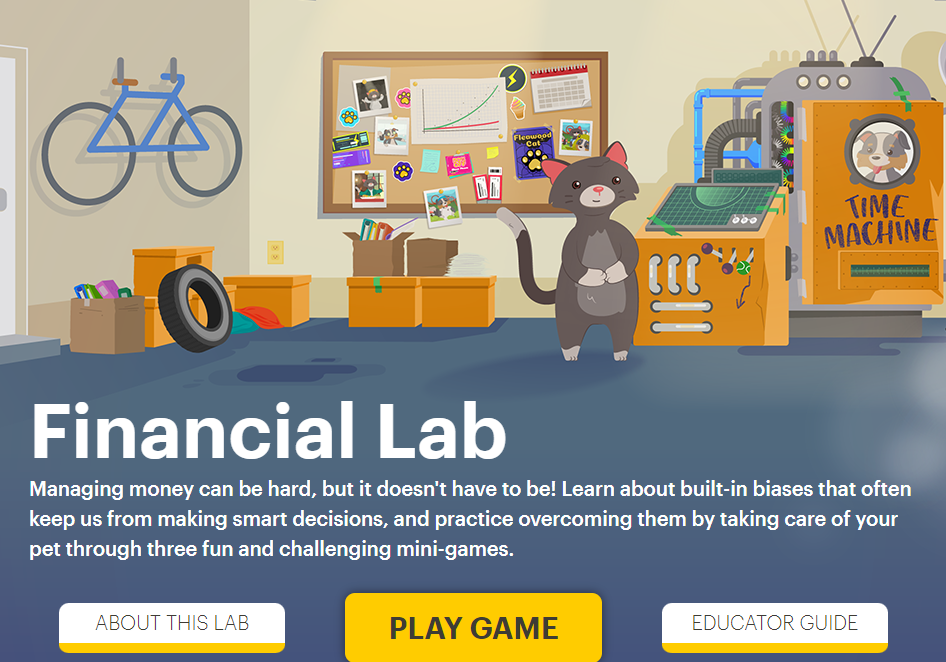
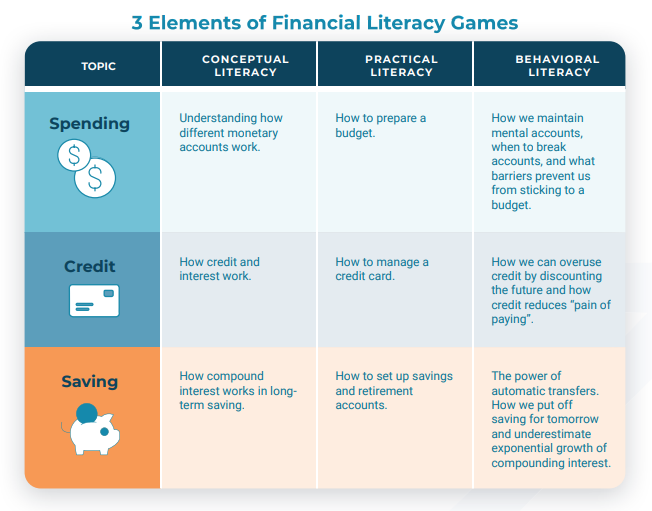
Corbin is a senior behavioral researcher at the Center for Advanced Hindsight at Duke University. The Center for Advanced Hindsight recently partnered with NOVA Labs, Thought Cafè, and the Institute for Consumer Money Management to create the NOVA Financial Lab, a group of financial literacy games targeted at adolescents and emerging adults. In each game, players practice managing money while taking care of a pet. You may never have to sneak a cat into a concert or prepare a retirement plan for a dog in real life, but you will need to understand concepts like budgeting, interest, and debt. “What we hope people start to do,” Corbin says, “is really think about, ‘What decisions should I make now to make better decisions later?’”
Essentially, “Money spent now is money that can’t be spent later.” As intuitive as that might seem, “The way we think about money is relative, and it’s not linear.” When you’re already spending thousands of dollars on a car, for instance, an extra five hundred dollars for a feature you may or may not need “feels like a very small amount of money,” but in a different situation, its value can seem higher. How many times, Corbin points out, could you go out to eat with five hundred dollars?
There are three games: Shopportunity Cost, Budget Busters, and Exponential Potential. (“One of the people from PBS helped us come up with these cute names,” Corbin says.) They each involve different skills, but they all focus on “financial literacy from a behavioral science perspective.” Players have to contend with both external obstacles and common behavioral biases to make financial decisions for a pet. “I always choose the dog,” Corbin adds, “but I understand other people might choose the cat.” (I chose the cat.)
The first game, Shopportunity Cost, focuses on short-term financial planning. It involves dressing a pet up like a person in order to sneak them into a concert for the night. “You have to make decisions that optimize the pet’s happiness while also being able to make it to the concert and back home,” but you have a limited amount of money to spend. If you spend too much money too soon, you’ll run out, but if you’re too frugal, your pet won’t enjoy the evening. As goofy as the concert scenario is, it introduces players to an important concept known as opportunity cost, which refers to the potential benefits we miss out on when we choose one alternative over another. Say you’re debating between a $50 outfit and a $30 one. The opportunity cost of choosing the more expensive outfit is $20, but shoppers don’t always consider that. “Opportunity cost neglect is the simple idea that when we’re faced with financial decisions, we tend not to consider alternative uses for that money.” Reframing the $30 outfit as “a $30 dress that I’m okay with plus 20 extra dollars” that could be spent elsewhere might lead you to choose the cheaper outfit. Or it might not. “Sometimes you want the $50 outfit, and that’s perfectly fine… but a lot of the time that might not be the right decision.” Like many things, taking opportunity cost into account is a balancing act. “We shouldn’t obsess over every possible opportunity that there is,” Corbin cautions, but “consider[ing] opportunity costs can lead to better financial decisions.”
Budget Busters, meanwhile, involves medium-term planning. Players have to manage checking, credit, and savings accounts while caring for their pet over a six-month period. Along with purchasing essential and non-essential items to attend to their pet’s basic needs and happiness, players have to contend with unforeseen circumstances like medical emergencies. The game introduces people to the 50-30-20 rule, a budgeting concept that involves devoting 50% of income to essentials, 30% to non-essentials, and 20% to savings. Budget Busters also explores the principle of mental accounting, the idea that aside from formal budgets, we have “categories in our head” that change our perception of money. “Let’s say you get birthday money from your relative. That money tends to be a different kind of spending money to you than money you get from your paycheck,” Corbin explains, because “money feels different in different contexts.”
There are parallels in Budget Busters. Sometimes players receive unexpected windfalls like gifts or prizes. (My cat won $40 for being “Best in Show” at the local pet pageant.) Players get to decide whether to use the extra money on a “fun” item for their pet or put it into savings. Corbin says “gift money” is a classic example of a misleading mental account. “We tend to overspend… because it feels like it’s not even our money in a way.” In reality, though, money has “fungibility,” meaning it’s “exchangeable… across any account.” In other words, “money is money,” regardless of where it comes from. A $10 bill, for instance, can be exchanged for two fives without changing its value. (Non-fungible tokens, or NFTs, lack this property. “You can’t exchange the picture of a cat you bought from the internet for Chipotle.”) Like Shopportunity Cost, Budget Busters focuses on both traditional financial concepts and common behavioral tendencies that affect decision-making. “None of these things are necessarily bad,” Corbin emphasizes, “but they’re things that one should be aware of… when that natural proclivity may be swaying them in the wrong way.”
Budget Busters, which focuses on monthly budgeting, also encourages players to look closely at discounts when shopping. “Sometimes the discount that looks really good from a percentage-off perspective isn’t actually the better discount” in terms of overall budgeting and total amount of money saved, Corbin warns.
The last game, Exponential Potential, explores concepts like compound interest, debt, and investment. The premise of the game involves traveling back in time to balance debts and investments. The goal is to make your pet a millionaire. By showing players how investment decisions can affect future net worth, the game seeks to increase understanding of processes involving exponential growth. Exponential Potential introduces the concept of exponential growth bias. According to Corbin, “We tend to underestimate things that grow exponentially.” He cites the coronavirus pandemic as an example: “Even the people who were making the graphs of Covid’s growth… it’s really hard for them to figure out how to show that to people.” Log-transformed graphs are one option, but they can be deceptive by making the slope look flatter. Similarly, when dealing with exponential growth in the financial world, “People are going to underestimate how badly they’re going to get burned” by debt, but they may also underestimate how much they’ll benefit by saving for retirement.
With compound interest, for instance, “The interest gets applied both to principle and to interest from the last time, and that’s where exponential growth happens.” In the game, players have the opportunity to adjust how much money to put toward paying off debts, investing, and saving for retirement each month. Then they travel decades into the future to see how their decisions have affected their pet’s net worth. “We’re hoping that that kind of feedback allows you to think through… what you might have done wrong and try to correct,” Corbin says. Once again, though, raw numbers aren’t the only factor at play. “We just want people to understand what the optimal way to do this is, and if there’s a better way for them to do that psychologically, that’s fine.” Debt account aversion, for example, refers to the fact that people want to have fewer debt accounts, meaning they are often eager to pay off accounts in full when they can. Some financial advisers suggest that “because they think it’ll get the ball rolling and you’ll be more likely to pay off the next one.” According to Corbin, there isn’t a lot of evidence for that, and sometimes paying everything off at the outset isn’t ideal. For instance, “It is optimal to start thinking about retirement as soon as you can… but if you’re delaying putting money into retirement because you’re so concerned with your student loan debt,” that can be problematic. Still, Corbin understands the appeal of closing debt accounts. “I am risk-averse, which means if I have a debt I’m probably going to put more money toward that debt that I necessarily should given what the interest rates are and what I could potentially make by investing that money instead.” Financially speaking, “There’s a decent likelihood that I should just pay the minimum on my mortgage… [but] I’ve decided I’m willing to trade off those future gains for the peace of mind that if something goes wrong… I’ll be ahead on my mortgage payment.” Even in Exponential Potential, the right choices aren’t always clear-cut. Corbin describes it as a “sandbox approach” where players are given more opportunity to play around. “This is the trickiest game because there’s no perfect answer for anything,” he says. “Everything has risk.”
Another bias that can affect our financial decisions is known as present bias, the tendency to discount the future in favor of the present. Corbin offers the everyday example of staying up too late. “Nighttime Me wants to stay up and read…. Morning Me is going to be really ticked off at Nighttime Me when they’re exhausted and don’t want to get up.” Research suggests that people can have a harder time identifying with their future selves. That can easily affect our financial decisions, too. “I’m going to let future me worry about that. That guy. Whoever that is.” However, “If you can get people to identify more with that person,” they can sometimes make better decisions. Ultimately, “The game isn’t trying to force people to become investment robots.” We are biased for the present because we live in it, and that’s normal. The purpose of the game is simply “to nudge people… to worry just a little more about the future.”
“Money is basically for safety, security, and happiness,” Corbin says. The ultimate objective is to balance needs, wants, and savings to achieve those three goals both in the present and the future.
Anyone remember the Sesame Street episode where Big Bird tackles the opioid crisis?
Me neither. However, that isn’t to say that Sesame Street isn’t doing its part to help parents and children alike to cope with this, among other pressing issues that plague our society.
Jeanette Betancourt, Ed. D. is Senior Vice President for U.S. Social Impact at Sesame Workshop, a division of the Sesame Street organization striving to positively impact children’s early learning, health, and well-being. Betancourt is deeply involved in the Sesame Street in Communities initiative (ssic.org), which she came to discuss with the Sanford School of Public Policy on January 18th.
Sesame Street in Communities aims to bring public awareness to prominent societal issues in what Betancourt labels a “non-stigmatizing way.” Their efforts are specifically targeted to impact children coping with traumatic experiences and their families – resources on the Sesame Street in Communities website span from Elmo’s Special-Special Comfort video for children who have fallen victim to violence, to Abby’s Expressing Feelings video for children divided between divorced parents.
Not all the videos are as heavy as one might think: some of the content promotes behavioral routines, such as tooth-brushing or schedule-making, designed to build children a more stable foundation that they can use to tackle trauma, should it arise.
Some of the most recent resources posted to the Sesame Street in Communities website.
Betancourt says that their strategy hinges heavily upon leveling, or presenting the same messaging in a variety of mediums (videos, storybooks, live-action films), for more complete comprehension. This is reflected heavily on their website: their Autism series alone includes multiple workshops, printables, articles, videos, interactives, and storybooks. The content and learning strategies promoted by Sesame Street in Communities are all founded upon clinical research, developmental psychology, and other forms of testing to ensure that they have a measurable impact on young children and their families.
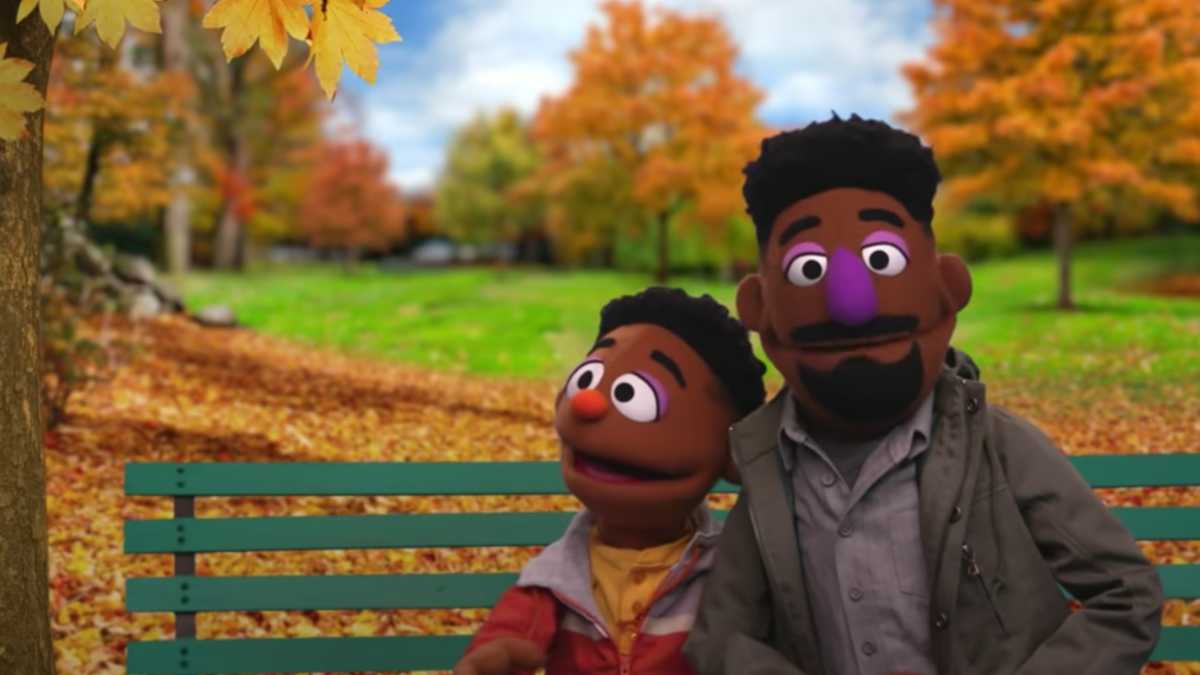
Wes and Elijah Walker, the faces of the Coming Together: Racial Justice project.
One of the most recent initiatives described by Betancourt is the Coming Together: Racial Justice project. In this series of content (found on ssic.org), the viewer is introduced to the Wes and Elijah Walker, two humanoid Muppets that, according to Betancourt, are intended to represent the Black experience.
In the video, five-year old Wes and his father Elijah are sitting in the park when they are approached by Elmo, who wants to know about the pigmentation of their skin. Elijah explains to Elmo that all humans have different amounts of melanin in their skin, hence why some individuals have lighter or darker skin. Elijah also tells Elmo that, even though their skin may look different, “we’re all part of the human race.”
To make this concept easier for children to understand, Elijah connects this to the color of the changing leaves in the park, telling Elmo that leaves of different colors all came from the same tree.
If you know a child or a family that could benefit from such materials, more information can be found on ssic.org.
Unfortunately, AI has also magnified one of humanity’s least desirable traits: bias. In recent years, algorithms influenced by bias have often caused more problems than they sought to fix.
When Google’s image recognition AI was found to be classifying some Black people as gorillas in 2015, the only consolation for those affected was that AI is improving at a rapid pace, and thus, incidents of bias would hopefully begin to disappear. Six years later, when Facebook’s AI made virtually the exact same mistake by labeling a video of Black men as “primates,” both tech fanatics and casual observers could see a fundamental flaw in the industry.
On November 17th, 2021, two hundred Duke Alumni living in all corners of the world – from Pittsburgh to Istanbul and everywhere in between – assembled virtually to learn about the future of algorithms, AI, and bias. The webinar, which was hosted by the Duke Alumni Association’s Forever Learning Institute, gave four esteemed Duke professors a chance to discuss their view of bias in the artificial intelligence world.
Dr. Stacy Tantum, Bell-Rhodes Associate Professor of the Practice of Electrical and Computer Engineering, was the first to mention the instances of racial bias in image classification systems. According to Tantum, early facial recognition did not work well for people of darker skin tones because the underlying training data – observations that inform the model’s learning process – did not have a broad representation of all skin tones. She further echoed the importance of model transparency, noting that if an engineer treats an AI as a “black box” – or a decision-making process that does not need to be explained – then they cannot reasonably assert that the AI is unbiased.
Stacy Tantum, who has introduced case studies on ethics to students in her Intro to Machine Learning Class, echoes the importance of teaching bias in AI classrooms.
While Tantum emphasized the importance of supervision of algorithm generation, Dr. David Hoffman – Steed Family Professor of the Practice of Cybersecurity Policy at the Sanford School of Public Policy – explained the integration of algorithm explainability and privacy. He pointed to the emergence of regulatory legislation in other countries that ensure restrictions, accountability, and supervision of personal data in cybersecurity applications. Said Hoffman, “If we can’t answer the privacy question, we can’t put appropriate controls and protections in place.”
To discuss the implications of blurry privacy regulations, Dr. Manju Puri – J.B. Fuqua Professor of Finance at the Fuqua School of Business – discussed how the big data feeding modern AI algorithms impact each person’s digital footprint. Puri noted that data about a person’s phone usage patterns can be used by banks to decide whether that person should receive a loan. “People who call their mother every day tend to default less, and people who walk the same path every day tend to default less.” She contends that the biggest question is how to behave in a digital world where every action can be used against us.
Dr. Philip Napoli has observed behaviors in the digital world for several years as James R. Shepley Professor of Public Policy at the Sanford School, specifically focusing on self-reinforcing cycles of social media algorithms. He contends that Facebook’s algorithms, in particular, reward content that gets people angry, which motivates news organizations and political parties to post galvanizing content that will swoop through the feeds of millions. His work shows that AI algorithms can not only impact the behaviors of individuals, but also massive organizations.
At the end of the panel, there was one firm point of agreement between all speakers: AI is tremendously powerful. Hoffman even contended that there is a risk associated with not using artificial intelligence, which has proven to be a revolutionary tool in healthcare, finance, and security, among other fields. However, while proven to be immensely impactful, AI is not guaranteed to have a positive impact in all use cases – rather, as shown by failed image recognition platforms and racist healthcare algorithms that impacted millions of Black people, AI can be incredibly harmful.
Thus, while many in the AI community dream of a world where algorithms can be an unquestionable force for good, the underlying technology has a long way to go. What stands between the status quo and that idealistic future is not more data or more code, but less bias in data and code.
What happens when you give people money? Dr. Aisha Nyandoro and Natalie Foster know: through their research, they’ve seen the impacts of guaranteed income firsthand.
On November 9, as part of the Duke Center for Child and Family Policy’s Sulzberger Distinguished Lecture series, these experts discussed their work and what we can learn from it at “What Happens When You Give People Money: The Future of Economic Security for Children and Families.”
Natalie Foster
Foster, co-founder and co-chair of the Economic Security Project, began with the big idea of guaranteed income. Before the pandemic, wealth and income inequality were at all-time highs — disparities that “can be traced back to the origins of racialized capitalism.” But recently, things have gotten even harder. Wages have remained stagnant despite increases in productivity — and despite inflation, making it harder to afford things like rent. Foster denounced the “strong ideology that says that lack of security in this system is a personal failing. That if you can’t pull yourself up, there’s something wrong with you.” There’s something wrong with the system, Foster said. “People are working. The economy isn’t.”
Foster said that even though there didn’t appear to be room in these political conditions to do things differently, she had the “audacity to imagine something else: the ‘adjacent possible.’” She wanted to give cash to people directly, ensuring an income floor regardless of whatever crises that may abound.
Foster worked with the mayor of Stockton, California on the Stockton Economic Empowerment Demonstration (SEED), which provided 125 Stockton residents with $500 monthly payments for two years.
Dr. Aisha Nyandoro
Foster was connected by a mutual friend to Nyandoro, the CEO of Springboard to Opportunities. Nyandoro had launched The Magnolia Mother’s Trust, which provides low-income Black mothers in Jackson, Mississippi with $1,000 monthly payments for one year.
With The Magnolia Mother’s Trust, Nyandoro sought to shift away from economic policy “rooted in ‘what is,’ and toward ‘what could be.’” This concept has a rich history, she said, and includes the work of Martin Luther King Jr. and the Black Panthers. She had a specific ‘what if’ in mind: “What if when Black women told us what they needed, we believed them?” What if we sought to overturn the very structures that keep these people down, and subverted the “paternalistic nature of the social safety net”?
Nyandoro stated that as a researcher, when she has questions, she “goes back to the people.” When she did, she found that although people’s needs were individual, “cash was ubiquitous” — cash was a solution that could address every single one of the problems that she heard. Giving cash directly could help combat a system that “penalizes people for being poor, rather than trying to lift them out of poverty.”
Why low-income Black mothers? Nyandoro explained that in order to do the work of economic liberation, one must identify what’s wrong with the system. In this case, that meant identifying those who are the most negatively impacted by the system, and using what limited resources are available to help them specifically.
Nyandoro turned to her findings: giving people cash works. These mothers are often working tirelessly, holding down two or three jobs and struggling to make ends meet. After receiving the money, people continue to work and often do so at higher rates (a major fear of opponents of guaranteed income). As a result, their income is often doubled — with life-changing results.
Beyond the numbers, Nyandoro emphasized that “we are seeing joy. We don’t talk about joy enough as it relates to Black women.” This money allowed Black women to feel free, to be entrepreneurial: to “dare to dream for the first time — for themselves and for their families.”
She referenced Chimamanda Ngozi Adichie’s famous speech “The Danger of a Single Story,” explaining that in order to change the narrative, “we need to change the narrator.” It’s time to think about whose voices we center.
In Jackson, Mississippi and Stockton, California, the pair had carried out research about the ‘adjacent possible.’ They’d used cities and states as “laboratories in democracy.” Foster said that their work was paving the way for gradual advances in guaranteed income — slowly, but surely. Then, the pandemic hit.
Suddenly, ideas that had recently been dismissed as too radical were viewed as necessary. Often unable to work, people needed money fast in order to put food on the table and cover their most urgent needs. The federal government rose to the challenge with the American Rescue Plan, providing stimulus checks and pandemic unemployment insurance, plus expanding the Child Tax Credit. “The ‘adjacent possible’”, Foster said, “had become the possible.”
The country saw an “immediate drop in poverty.” The pandemic was revealing, said Foster. It revealed that cash provides time, stress reduction, and resilience. It revealed that cash serves as a tool to create economic security and “build back better.” Above all, it revealed that “poverty is a policy choice that we’re currently making. We could make a different policy choice in order to eliminate it.”
The pandemic also revealed that stimulus checks and the Child Tax Credit were “very popular policies.” Nyandoro has observed support in the form of petitions for monthly cash transfers, the founding of organizations like Mayors for a Guaranteed Income and Guaranteed Income Community of Practice, and the launch of over a hundred guaranteed income pilots of some sort. All these efforts, Nyandoro said, are pushing toward “the same North Star”: centering the needs of families and achieving economic liberation through federal policy.
Foster turned the discussion toward next steps: “these victories have been immense, but could disappear” if the Build Back Better Act does not pass. The Act includes a year-long extension of the expanded Child Tax Credit, a key instantiation of guaranteed income. The Child Tax Credit has bipartisansupport.
If the extension of the Child Tax Credit passes, then according to Foster, guaranteed income is one step closer to becoming a cornerstone of social policy. This would be a “nail in the coffin of the way we’ve done policy for the last fifty years — that you’re only worth what you do in the world. Every human has dignity and worth, and we have the opportunity to build a policy that says just that.”
Nyandoro agreed with Foster. As an anti-poverty advocate, she believes in a world without poverty: a world where “everyone can have a life of dignity for themselves and their families.” She believes that the ‘adjacent possible’ is achievable if “we can move beyond our own individual needs in order to view life as a collective, where prosperity is shared rather than hoarded.” She ended by quoting Toni Morrison: “if you have some power, then your job is to empower someone else.”
Last Friday, the House voted to pass the Build Back Better Act, which now heads to the Senate.