Following the people and events that make up the research community at Duke

Students exploring the Innovation Co-Lab

Category: Biology Page 25 of 32

Aphasia: Acceptance, Hope, Purpose

By Sonal Gagrani

Imagine having a head full of things to say, but not being able to articulate them. This is the life of Carl McIntyre.

AphasiaPosterSouth21

courtesy of aphasiathemovie.com

There is a three-hour window of opportunity after the initiation of a stroke in which it can be effectively treated. However, when a stroke hit Carl McIntyre, those three hours passed before he could be safely withdrawn from danger. His ability to speak and understand became heavily impaired, a condition known as aphasia. In order to raise awareness of this condition that affects not only him, but almost 40% of the people who suffer a stroke, he starred as himself in a film called Aphasia. Carl McIntyre came himself to speak at Duke for Brain Awareness Week following a screening of his film.
BAW logoAphasia is a group of communication disorders that affect the language centers of the brain causing impairments in speech, speech comprehension, reading and writing. It tends to arise with damage of some part of the brain, often due to a stroke, brain tumors, or neurodegenerative diseases.

McIntyre expressed powerfully that, “what happens to one, happens to two.” The aphasia affects not only him but his entire family. Life felt as if it was over, loving was difficult; he felt “trapped inside of his head.” Having a reservoir full of thoughts that he was unable to empty due to this inability to communicate could be eternally frustrating. Aphasia patients often are cognitively intact, but have trouble expressing what they want to say. McIntyre occasionally used a whiteboard to write down words he was struggling to say or stumbled on the first sounds of words.

Carl McIntyreBut rather than letting the aphasia control the way that he lived, McIntyre worked hard to restore his language capabilities and spread awareness of the challenges that inflicted individuals must face. Most importantly, McIntyre expressed the importance of keeping hope.

He explained that the first step to having a positive outlook on his condition was to accept the “old Carl was dead.” The next was to keep hope that his life could continue as normal as possible – that the condition would not impair his lifestyle. Last, he expressed the importance of having a sense a purpose by picking up hobbies and not losing all meaning in life. Carl strives to have a strong sense of self despite the adversities he and his family has had to face and inspires others to understand and do just this.
 

Music, the Brain and Jimi Hendrix

By Ashley Mooney

Hearing music and moving to it are more connected than you’d think. 

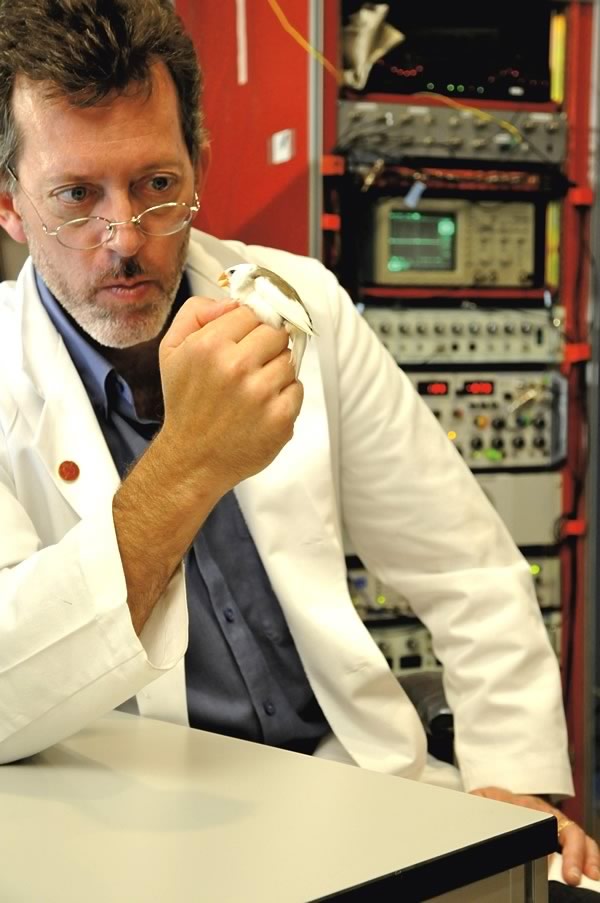
Richard Mooney and one of his research subjects. (Photo - Duke Magazine)

Richard Mooney and one of his research subjects. (Photo – Duke Magazine)

Neurobiologists have traditionally viewed human responses to sound as reflexive.

But in fact, perception of sound and music can be viewed as much more dynamic, said Richard Mooney, George Barth Geller professor of neurobiology and classically-trained guitarist. Rather than speaking in a typical lecture hall, Mooney presented his research in Motorco Music Hall.

“In the classic view of how the nervous system works, there’s a sensory stimulus in the world that excites our sensory receptors and then we behave,” Mooney said. “This can’t be so. We don’t live in a reflexive experience. We’re living in a state where we’re present in the moment.”

Using a video of musician Jimi Hendrix’s performance of “Johnny B. Goode,” Mooney illustrated the connection between the motor system and the auditory cortex.

“Hendrix is anticipating all these dynamics in music, moving his body in a way to accentuate it,” Mooney said. “It’s a really good example of how our brain must be forecasting the sound it wants to make or the sound it wants to experience.”

Mooney cited a study in which trained keyboard players were asked either to listen to music without making physical movements or to play a piece without being able to hear it. Using functional MRI, researchers found that the auditory cortex, the supplementary motor area and the premotor cortex of the brain all receive more oxygen than other sections during either task, implying a connection between the systems.

“Music isn’t passive. Even when we’re listening, it’s engaging not only the biological amplifier in our ear, but also this really complex network of sensory motor structures in our brain,” Mooney said.

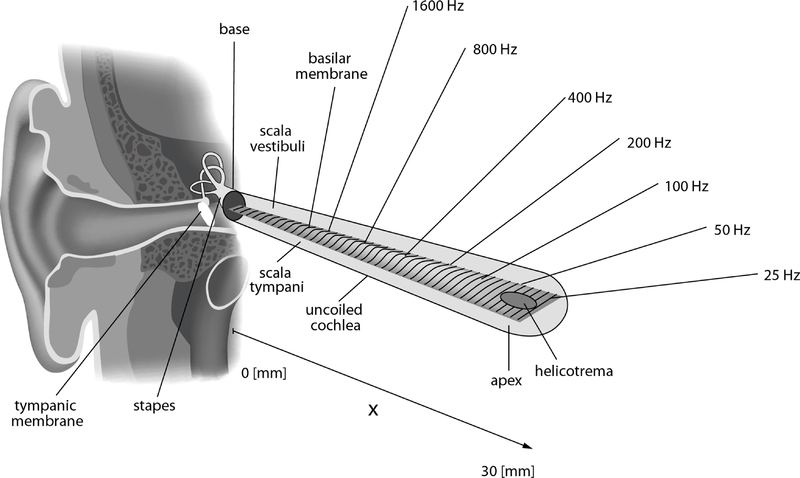
800px-Uncoiled_cochlea_with_basilar_membrane

An uncoiled cochlea with the basilar membrane. Courtesy of Wikimedia commons.

A part of the inner ear called the cochlea functions as an acoustical prism, splitting complex sounds into an array of simpler, tone-like components.

“The lens of our eye focuses stimuli in a way that’s Cartesian,” Mooney said. “In contrast, what our ear has to do is really take a mismatched pattern of energy that’s vibrating in our eardrum and decompose it into simpler components.”

People have biological amplifiers deep in their cochlea that allow them to perceive and interpret speech and music. Average-volume speech usually causes the basilar membrane, a structure in the inner ear, to vibrate within a very small distance—approximately the diameter of a gold atom. Mooney noted that the level of vibration indicates that the membrane moves about 100-fold more than it would if the system were purely passive.

The cochlea even vibrates in deaf ears, just not to the same extent. But much of a person’s ability to hear, that is to discern differences in pitch and the nuances of spoken language, also rely on hair cells within the ear.

“These aren’t the things responsible for your grandfather’s tufts of hair that are coming out of his ears,” Mooney said. “These are all a special kind of nerve cell called a receptor cell.”

Even though all people have connections between their motor and auditory systems and may understand the connections conceptually, musicians and those who frequently practice making music can usually predict upcoming tones with more accuracy.

He provided the example of basketball players shooting free throws. If shown video clips of a person shooting a free throw, but not the final trajectory, only professional players can accurately predict whether the ball went into the basket. Sportscasters and audience members cannot accurately predict baskets, even if they are highly exposed to watching the actions.

BAW logoThe lecture was part of Brain Awareness Week, a global campaign to encourage public interest in the progress and benefits of brain research. Mooney noted that Brain Awareness Week helps him gain a different perspective on his research.

“Scientists hang out with themselves in their labs and they ask each other these really sort of pointy headed questions all the time,” he said. “They don’t get a lot of chances to hear from people who have really different perspectives.”

The final event in the series was a hands-on demonstration at the Museum of Life and Science, Saturday from 1 to 4 p.m.

Why are Dogs Skinny in Costa Rica?

By: Nonie Arora

Duke student Mary Chavarria had the opportunity to learn how animals are treated in an indigenous community in Costa Rica. Chavarria is a junior from Los Angeles, California studying evolutionary anthropology. An avid traveler, she is a also a member of Round Table and on the executive broad of the Duke Undergraduate Bioethics Society.

Chavarria and her group members presenting their findings. Credit: Mary Chavarria

Chavarria and her group members presenting their findings. Credit: Mary Chavarria

Last semester, she studied abroad in Costa Rica through the Duke OTS program on tropical medicine & global health. In addition to taking classes on tropical medicine and field ethnobiology, Chavarria had the opportunity to complete a research project while in the region.

The minister of health for the region presented the students with potential topics that he believed ought to be investigated for the indigenous communities. There was a range of projects: dental health, isolated older adults, social groups and pets. Chavarria and her group chose to research how pets were perceived and the health of pets in the community.

Her group wanted to know how perceptions of animals influence their health as pets and how this would correlate with zoonosis, the transfer of disease from animals to humans. To determine perceptions of animals, they developed a survey to use in a school.

“We knew that it would be difficult to just go house to house. We would have to hike between them and there are mountains in between. We decided that the best way to access most people reliably would be to go to a school,” Chavarria explained.

They asked questions like:

  • Do you like your pet?
  • Do you play with it?
  • Why do you have a pet?
The team meets with students to ask them about pets. Credit: Mary Chavarria

The team meets with students to ask them about pets. Credit: Mary Chavarria

They surveyed 70 kids from elementary and middle school. Their response rate was almost one hundred percent since they administered the survey in classrooms.

“We found that pets were not treated as you or I may consider [treating a pet]: groomed or walked. They were utilitarian, to put it gently. The pets were skinny,” Chavarria explained.

“While the animals were skinny, people also don’t have great nutrition in this under-resourced region. People would feed them parts of what they were eating, which wasn’t supremely nutritious for humans, and [was] even less so for dogs,” Chavarria said.

Chavarria’s team also found that people in the region really didn’t know the extent to which diseases could be transmitted between humans and animals. Scabies, spread by a parasite that causes similar diseases in humans and dogs, is a problem in the region, she added.

Ultimately, Chavarria believes that better awareness of disease transmission between animals and humans and better treatment of animals has the potential to reduce human disease.

Science Under Pressure

Guest post by Lauren Burianek, doctoral candidate in cell biology

The basement of the Duke Clinic (called Duke South by everyone around here) seems like the last place you’d expect to dive for treasure, but researchers and physicians at the Center for Hyperbaric Medicine and Environmental Physiology are doing just that – diving for a better understanding of the human body.

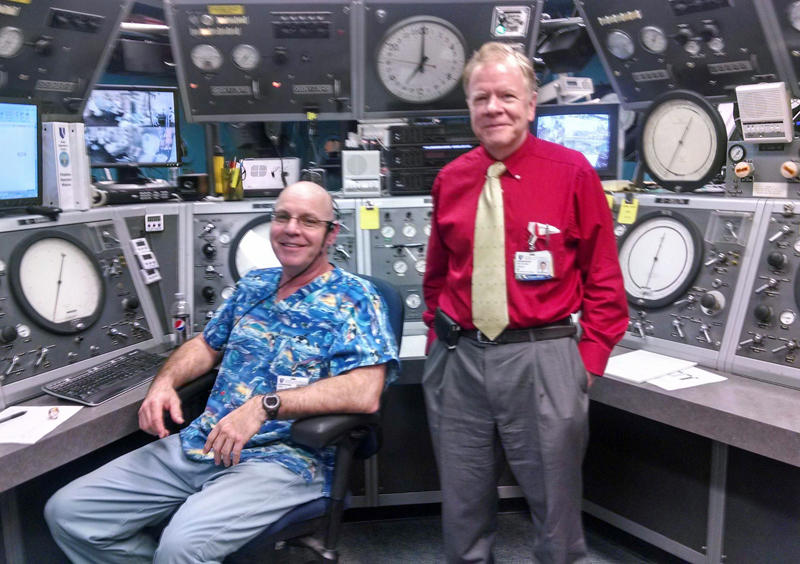
Medical Director Rich Moon (standing) and chamber engineer Eric Schinazi at the controls of the hyperbaric chambers.

Medical Director Rich Moon (standing) and chamber engineer Eric Schinazi at the controls of the hyperbaric chambers.

The $10 million facility was built in 1968 to study the effects of diving, altitude, and compressed gasses on human physiology.  It features seven large steel chambers capable of simulating the high pressure of 1,000 feet below sea water to the low pressure of 100,000 feet above sea level. To put that into perspective, 1000 feet is the deepest the Smithsonian exploratory submersible, DROP, can dive, and 100,000 feet above sea level is considered to be “near-space” (with the peak of Mt. Everest at a measly 30,000 feet).

The deadly physiology of atmospheric pressure first came to light during construction of the Brooklyn Bridge in New York and the Eads Bridge in St. Louis in the late 1800s. High pressure tunnels were designed to keep the water out as footings were set in river beds, but the pressure also dissolved gas molecules in the blood streams of tunnel workers. When they emerged from the pressurized conditions, the gas would bubble out of solution like a freshly opened can of soda, causing life-threatening conditions, including damage to the organs and lungs, and killing about a quarter of the workers.

A news photo of workers in the Lincoln Tunnel under construction in the mid-1930s.

A news photo of workers in the Lincoln Tunnel under construction in the mid-1930s.

A couple decades later, a decompression chamber was used during the building of the Lincoln Tunnel under the Hudson River to slow the depressurization and reduce the chance of injury. This change reduced the deaths relating to decompression from 25% to almost 0%.

Similarly, SCUBA divers must carefully watch their rate of ascent; otherwise, they too might experience what is now known as decompression sickness or the “bends.”

The Hyperbaric facility at Duke is dedicated to researching exactly how the human body deals with these extreme pressures.

The interior of one of the hyperbaric chambers. The stickers are souvenirs of decades of research projects.

The interior of one of the hyperbaric chambers. The stickers are souvenirs of decades of research projects.

Rich Moon, the Medical Director of the facility, has been working there since 1979. “It’s really interesting to learn how the lungs work when you have millions more molecules in there than you’re supposed to,” Moon says. “At high pressures, some macromolecules change conformation, and that can affect even simple things, like how your hemoglobin binds to oxygen.”

In addition to research, the facility is used to treat  hospital patients on a regular basis. Patients with carbon monoxide poisoning undergo hyperbaric (high pressure) oxygen treatment. Because carbon monoxide binds tightly to blood cells, an increase in pressure releases the carbon monoxide so the blood cells can bind oxygen again.

Patients with necrotic wounds benefit from hyperbaric oxygen therapy to increase blood flow to the area of the injury.

A physician is always on call at the facility to handle emergencies,  including SCUBA divers with decompression sickness who are rushed to Durham for treatment.

The research projects relate to diving and altitude and are funded largely by the U.S. Navy. One project is focused on the interaction of nitrogen with neurotransmitters during diving. At high pressures, nitrogen can dissolve into the bloodstream and act as an anesthetic, leading to what is known as nitrogen narcosis. Understanding the mechanism behind nitrogen narcosis may give insight into how to treat and prevent this from happening to divers in extreme situations.

Click on the image to see a large panoramic of the control panel and one of the  steel tanks. (Photo by Eric Schinazi)

Click on the image to see a large panoramic of the control panel and one of the steel tanks. (Photo by Eric Schinazi)

Finding Order in Insect and Orc Swarms

Ouellette's model of insect swarming

Ouellette’s model of insect swarming

By Olivia Zhu

Dr. Nicholas Ouellette looks for the organization in disorder.

Ouellette, associate professor in the mechanical engineering department at Yale University, studies collective motion in animal systems. On February 17, he presented his models of swarming of Chironomus riparius, the non-biting midge, as part of Duke’s Physics Colloquium. Ouellette ultimately hopes to pin down fundamental laws of biology through his physics research.

In the lab, Ouellette has found that Chironomus insects swarm in a columnar, teardrop shape in the center of their container. They only live in their flying state for two to three days, during which they mate, lay eggs and die. During this period, swarming affords them protection from predators and the opportunity to mate.

Ouellette and his lab have devised various methods of modeling the insects’ swarming. They found that the insect density remains constant, and that the “scattering,” or collisions of insects, mirrors that of an ideal gas over long periods of time. Interestingly, the graph of individual insect speed follows a Maxwell-Boltzmann distribution, even though the lab did not track the usual factors that create such a distribution, like temperature.

The most pressing question Ouellette would like to answer is which factors create a swarm—he has determined that close insect-insect repulsion contributes to swarming, but distant insect-insect attraction does not. To pursue this question, Ouellette is testing how many insects it takes to make a swarm.

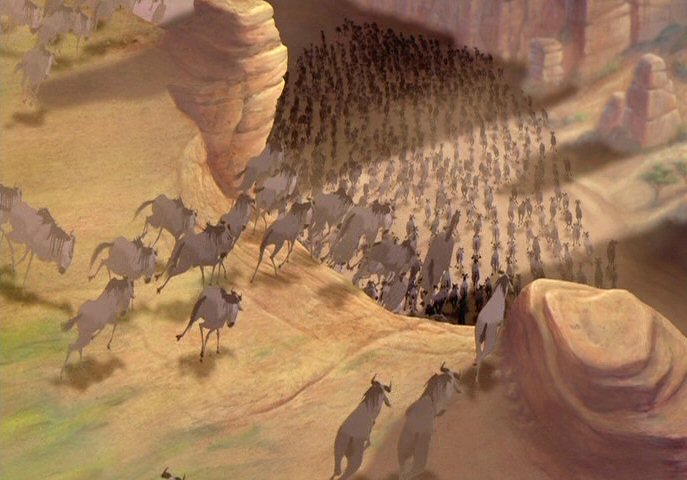
Wildebeest stampede modeled in The Lion King

Wildebeest stampede modeled in The Lion King

Other animals that exhibit collective motion are mackerel, wildebeests and starlings. Some familiar examples of collective motion modeling are visible as the Orcs storm the castle in Lord of the Rings and as the wildebeests charge the canyon in The Lion King.

Four Things You May Not Know about Ecologist E.O. Wilson

By Erin Weeks

Edward O Wilson Red Hills, Aalabama  2010 by Beth Maynor Young 6x9_0

(Photo: Beth Maynor Young)

Edward O. Wilson is one of the most renowned living biologists, the world’s foremost authority on ants, and for a little while at least, a member of the Duke faculty.

Wilson is on campus teaching the first of an annual course, part of a recent partnership between the E.O. Wilson Biodiversity Foundation and Duke’s Nicholas School of the Environment. Feb. 11, he spoke to a sold-out auditorium about “The Diversity of Life,” a lecture that was equal parts awe-inspiring facts, humorous anecdotes from a life in science and call to arms for future generations.

Here are four things the audience learned last night about E.O. Wilson.

1. He’s dabbled in dreams of Jurassic Park. When asked what he thought of de-extinction, the plan to resurrect vanished species using their DNA, Wilson enumerated all the reasons why the efforts may be futile: we have only genetic shreds; the appropriate habitat may be gone; we can’t produce breeding populations from limited DNA.

But then he paused. “I’ll tell you frankly,” he said, “I’d like to see a mammoth.”

2. He made his first scientific discovery as an adolescent. An eye permanently damaged in a fishing accident led the young Wilson to his interest in ants, which he could view up close. One day in his native Alabama, he discovered a ferocious mound-building species he’d never seen before. He didn’t recognize it then, but those were among the first of the destructive red fire ants that would soon invade the entire Southeast, causing billions of dollars of economic and medical damage.

3. The man is 84 and still going strong. Professor Wilson closed his talk with a passage from his newest book, arriving in April, called “A Window on Eternity: A Biologist’s Walk Through Gorongosa National Park.” He’s written two dozen other books, including a foray into fiction at age 80 (the novel, called Anthill, won him the 2010 Heartland Prize for fiction).

4. The future is in nematodes. Or fungi. Or Archaea. Throughout the talk, Wilson reiterated his hopes for young scientists to become the cataloguers and guardians of Earth’s immense biological diversity. Only a fraction of the planet’s estimated species of nematodes, fungi and Archaea are known to science, and “these little things run the world,” he said.

The need for “-ologists” has never been greater, he said.

(Photo: Jared Lazarus)

(Photo: Jared Lazarus)

VIEW THE ENTIRE TALK (YouTube, 1:10 with introductions)

[youtube http://www.youtube.com/watch?v=d-DZ0CUKn2Y?rel=0]

Deconstructing the HS Textbook: A perspective from Steve Nowicki

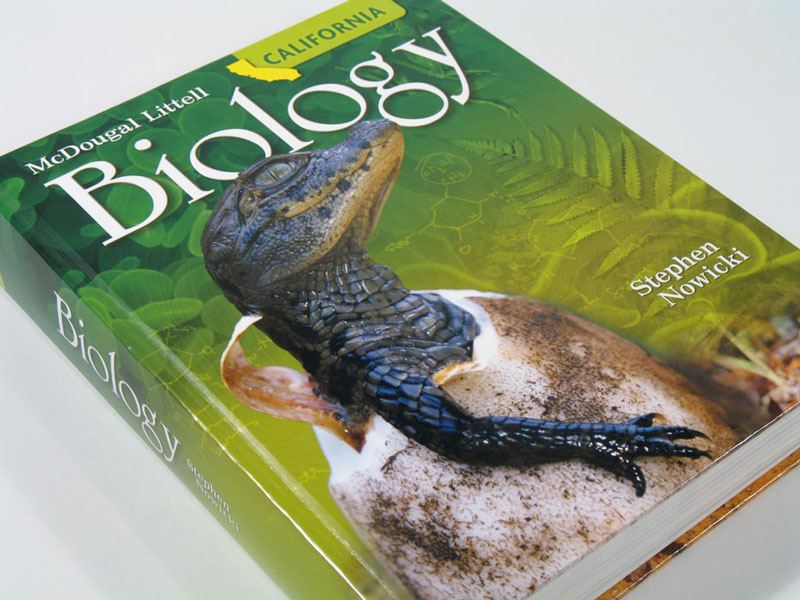
Nowicki's original version of his textbook, published by the family-owned McDougall-Littell. Nowicki railed against the organization of the new corporation, Houghton Mifflin Harcourt, owned by people somewhere in the Arab Emirates.

Nowicki’s original version of his textbook, published by the family-owned McDougall-Littell. It’s now published by Houghton Mifflin Harcourt.

By Olivia Zhu

Today I learned that Steve Nowicki wrote my ninth grade biology textbook! Dr. Nowicki, most commonly known for his neurobiology research in birdsong or his role as Dean and Vice Provost for undergraduate education, gave a lecture about his experience writing a high school textbook on Tuesday, February 11, through Bass Connections.

Nowicki shed light into the seven-year process of writing a textbook.  He said the table of contents itself took two years. After drafting an initial table of contents, Nowicki sent it to nationwide teacher focus groups—multiple times—for revisions. He then edited the table of contents to meet each individual state’s standards, a process complicated by No Child Left Behind. As for the actual writing process? “I could send the editors crap,” Nowicki confessed. The editors would then turn crap into “better crap.”

Dean Nowicki's official portrait

Dean Nowicki’s official portrait

Nowicki then faced more challenges. He described the struggle of biology textbook companies against the Texas state government, whose governor and chair of state education simply did not believe in evolution. The legislature ultimately allowed the teaching of evolution, mostly in the interest of attracting businesses, in Nowicki’s opinion. The opposition got personal as well. Nowicki said that in the Los Angeles Unified School District, competing textbook companies spread smear sheets about him questioning his credentials as a scientist and the quality of his book.

Ultimately, Nowicki put forth tremendous effort into writing a textbook that still stands as the biology book for Houghton Mifflin Harcourt, but said it did little for his CV and didn’t turn much profit.

Still, he said he feels rewarded because he believes “each average citizen should know something about biology,” if only to be thoroughly informed of current issues.

Student Melissa Chieffe: Budding Conservation Biologist

By Nonie Arora

Melissa Chieffe, a Junior Biology major, grew up outside Cleveland, Ohio and arrived at Duke enthusiastic about following a pre-vet path. As a freshman, she began volunteering at the Duke Lemur Center as a technician assistant. Through her work, she became interested in conservation in Madagascar and decided to apply to OTS – South Africa.

Screenshot 2014-02-02 22.30.55

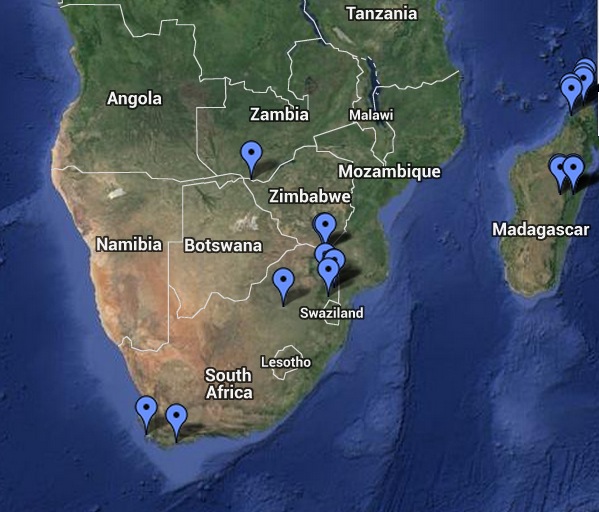
A map of Chieffe’s travels. Credit: Melissa Chieffe using Google Maps. (click on map to learn more)

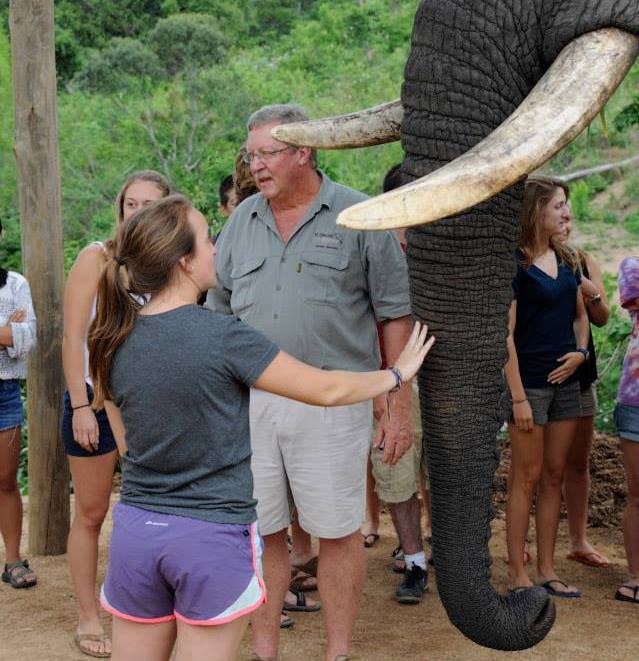
Through OTS – South Africa, she had the opportunity to travel all around the region and work on three group research projects, focusing mainly on ecology and conservation in the Kruger National Park.

1424502_10152425467463452_1055954345_n

Melissa Chieffe. Credit: Liza Morse

In the first, she collected data for the Kruger long-term research initiative on vegetation changes caused by elephants. Specifically, she honed in on damage done to AppleLeaf trees (Philenoptera violacea) and assessed damage done to 175 trees of that species in the Kruger National Park. The study looked at bark stripping and toppling of trees caused by elephants. Bark stripping happens when elephants rub their tusks on trees; if the elephants remove too much mark the trees are more likely to die, according to Chieffe.

From their study, her team observed a bottleneck in tree size: the elephants generally knocked trees over before they could reach their mature height. Their preliminary data indicated that higher elephant population densities – combined with frequent burnings in the savannah – made it harder for trees to reach the mature stage.

In their independent research project, Chieffe and her group had the opportunity to work with a population of captive elephants. The elephant population in the Kruger National Park has been growing exponentially since the termination of culling operations in the 1990s, which is causing problems for the vegetation and the nearby rural farms, according to Chieffe. The elephants are known to destroy crops, fences, and storage facilities. The students looked into using bee hives as a deterrent for elephants. Chieffe explained that beehive fences could have great applications for conservation through community based conservation initiatives.

They used the sound of bees buzzing & the scent of honey to stand in as surrogates for bee hives. Wild elephants exhibited defensive retreating behaviors when exposed to the bee sounds and scents.

Camera traps

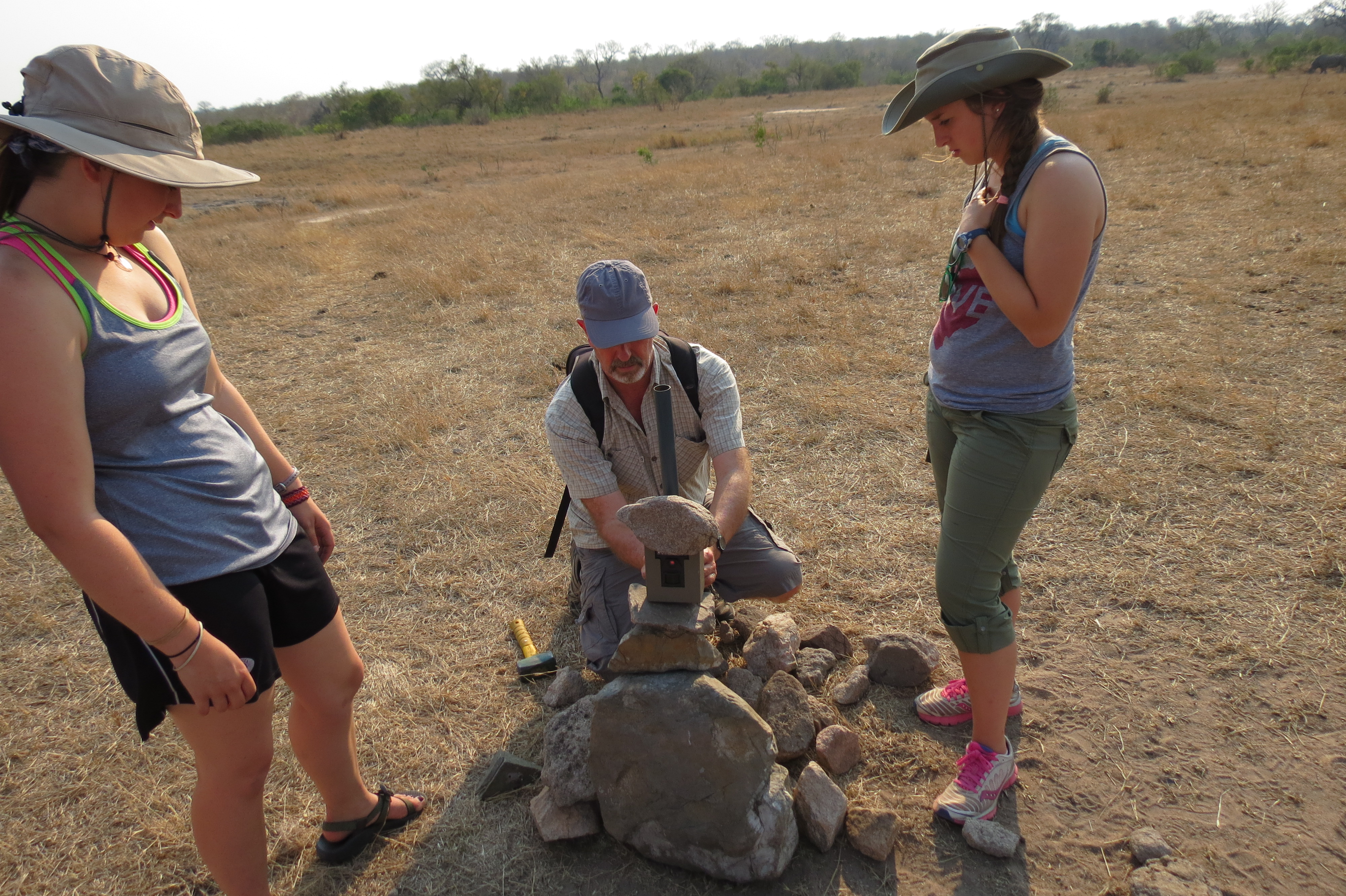
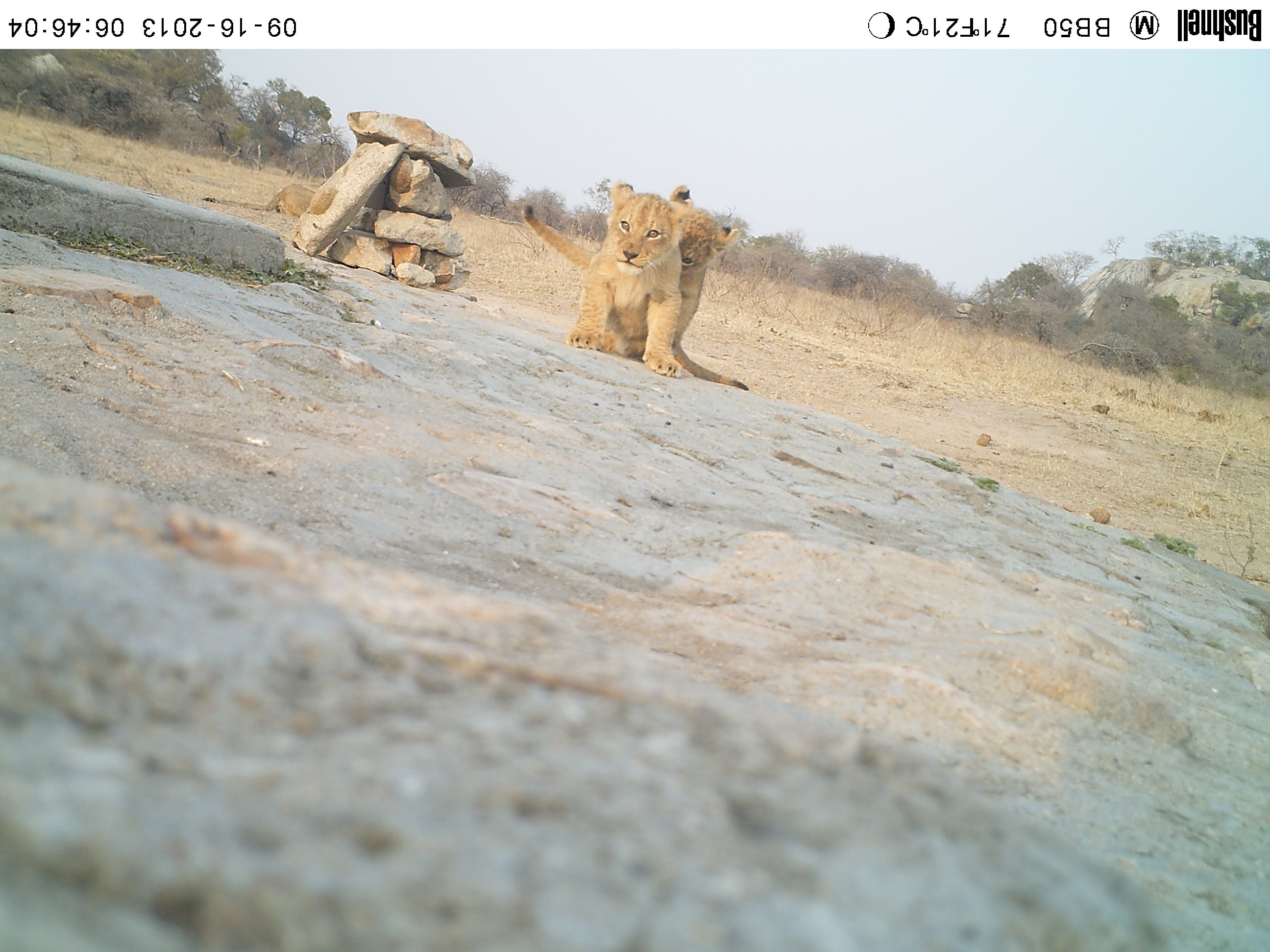
Chieffe learns to use camera traps (above) and photo of lion cubs taken by a camera trap (below). Credit: Melissa Chieffe

Chieffe learned to use camera traps (above) and made a photo of lion cubs with a camera trap (below). Credit: Melissa Chieffe

In her faculty field project, Chieffe worked with Professor Jeremy Bolton, an expert in the field, and Professor Tali Hoffman from the University of Cape Town to study camera traps. Chieffe’s team set up four camera traps at five different watering holes, which are known to act as “nodes of activity” for wildlife, to compare efficacy of two types of camera traps: field scan and motion sensor. Camera traps can be used to to record endangered animals and to survey biodiversity of an area.

“I enjoyed living in nature reserves, the national park, constantly surrounded by amazing researchers and scientists and others who are involved in conservation management. It was inspiring to live near them. We also got to present our findings to park management, which was awesome,” Chieffe said.

The program has helped her further her ambitions in conservation biology.

“I thought it was a dream [to become a conservation biologist]. But meeting people who are actually doing what I now want to do has made it seem realistic,” Chieffe said. She hopes to continue with  her research in South Africa on elephants and vegetation this summer.

Volunteer Network Shouldn't be Stranded and Dying

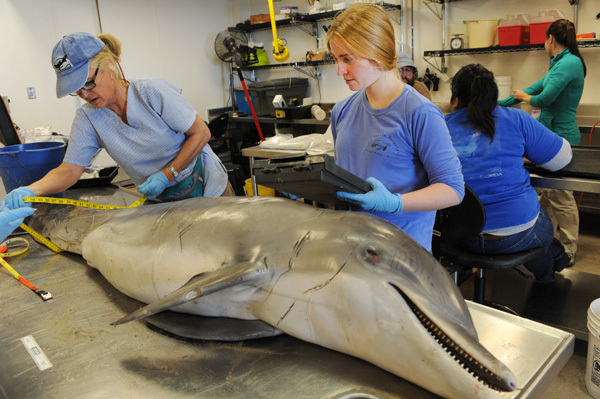
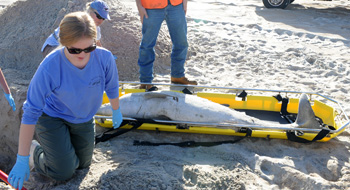
measurements on a dead dolphin (Photo: Susan Farley)

During a lab necroscopy, Dr. Vicky Thayer (left) takes measurements on a dead dolphin as student Samantha Emmert records the data. (Photo: Susan Farley)

Guest Post by Samantha Emmert, a Biology and Evolutionary Anthropology undergraduate at the Duke Marine Lab

The rolling sand dunes and gentle waves of Emerald Isle are so picturesque that I almost forget why I am there: to conduct a necropsy (autopsy on a non-human) on a stranded bottlenose dolphin. Vicky and I have been searching for the animal for about an hour now, driving up and down the beach. Suddenly, I catch a whiff of rotting flesh. Great! We’ve found it!

During my year at the Duke Marine Lab, I am volunteering for the North Carolina Central Coast Marine Mammal Stranding Network. This is no normal year for the network and others like it on the east coast. In the last seven months, 1081 bottlenose dolphins have stranded between New York and Florida. This magnitude of strandings is almost ten times the average, and has therefore been declared an “Unusual Mortality Event” by the National Oceanic and Atmospheric Administration. The cause of these deaths? Morbillivirus, the disease family that includes human measles.

For Independent Study credit I have been collecting data about the stranded dolphins and comparing them to data from 1987-88, the last and only other time there was a morbillivirus Unusual Mortality Event affecting bottlenose dolphins. I have found that this event is following the patterns of 87-88 almost exactly, particularly in terms of the sex and age of dolphins, and when and where they are stranding. These patterns may be a strong indicator for the path of future events.

Dolphin strandings in the area are reported to Dr. Vicky Thayer, the network’s coordinator and a Duke alumna (M.E.M. 1982, Ph.D. 2008). Vicky then calls her volunteers, such as myself, to assist in a response. Today, the dolphin was freshly dead and in good shape for a full necropsy. As Vicky assesses the dolphin for signs of human interaction, I sharpen knives and prepare vials to hold tissue samples. I put on my boots, coveralls, and gloves (things are about to get bloody). Together, Vicky and I peel back blubber and slice through flesh in order to reach the organs that are most impacted by morbillivirus: the lungs, associated lymph nodes, and spinal cord.

This Unusual Mortality Event is not the only problem that the network has been facing this year. Their federal funding for the upcoming year was not renewed.

Many marine mammal rescue networks, such as this one, rely on the John H. Prescott Marine Mammal Rescue Assistance Grant Program, established under amendments to the Marine Mammal Protection Act. However, the number of networks that received awards declined from 39 in 2012 to 12 in 2013. Only two of those 2013 recipients are in the geographic range affected by the dolphin mortality, compared to 13 in 2012. Particularly during a time when they are busiest, the loss of funding has been a huge stress for the networks.

Samantha climbs out of a freshly dug beach grave for yet another dead dolphin.

Samantha and Vicky got to this dolphin just before town workers buried it on the beach and were able to get their tissue samples.

Throughout the necropsy, several fishermen stop by to ask what we are doing. They’ve been fishing on this beach for decades and are aware of the increased occurrence of strandings in the area. It is vital to us that they understand the importance of reporting stranded animals.

“As top predators in coastal waters, these animals are sentinels of ocean health. When they wash ashore in unprecedented numbers, we should direct our attention and funding to learn as much as we can about the cause,” Vicky explains while taking apart the carcass.

We reach the lungs and, sure enough, they are discolored and covered in lesions. We cut chunks from the lung, lung lymph node, and spinal cord and I squish them into small vials. They will be sent to a lab in California to be tested for morbillivirus. The data we record and samples we take will be useful for the many researchers interested in this event across the nation.

It is hard to say what will become of the NC Central Coast Marine Mammal Stranding Network and others like it. Without renewed funding in the 2014 year, Vicky will be unable to continue the network and stranding response will stop in this area. Valuable data for long-term research on stranded animals will be lost. Live-stranded animals will die on beaches unaided. In order to protect and conserve these beloved species, the Prescott Grant and other funding sources must be made more readily available.

Turtle Sexes are Temperamental

Guest post by Lauren Burianek, doctoral candidate in cell biology

A pair of one-week-old red-eared sliders. The one on the right looks a little cranky. (Tadpole667 via Wikimedia Commons)

A pair of one-week-old red-eared sliders. (Tadpole667 via Wikimedia Commons)

When humans are developing, they snuggle in a warm environment and everything is provided by the mother. The sex of this developing fetus is determined by its individual genetic makeup, particularly the presence of the X and Y chromosomes.

But laid as an egg in a hole on a riverbank, the sex of a red-eared slider turtle is determined by the temperature at which the egg is developed.

At temperatures above 84.6°F, the hatchling will develop into a female, but at lower temperatures, the hatchling will develop into a male. However, at exactly this temperature (called the pivotal temperature), half of the hatchlings will be female and the other half will be male.

Scientists have no idea how temperature affects the sex of the turtle hatchlings, but researchers in Blanche Capel’s lab at Duke are trying to find out.

Red-eared sliders breed in late spring near riverbanks in Louisiana. Researchers carefully collect the eggs from common nesting spots and send the eggs to Duke University. In the Capel lab, graduate student Mike Czerwinski then buries the eggs in sand and places them into incubators at different temperatures. From here, he will analyze the gonads, or sexual organs, of the turtle embryos incubated at the different temperatures.

Grad student Mike Czerwinski in the Capel lab.

Grad student Mike Czerwinski in the Capel lab.

Czerwinski and his colleague Lindsey Mork discovered that when the turtle embryos were incubated at the pivotal temperature, both gonads developed into either testes or ovaries, but rarely did the two gonads develop into one of each.

Then, they incubated the turtle embryos at the pivotal temperature, dissected the two gonads and incubated each of them at different temperatures, either male-developing or female-developing temperatures. Surprisingly, the separated pairs of gonads still attempted to develop into the same sex regardless of the incubation temperature.

Tyrannosaurus Rex may have had temperature-sensitive eggs too. (tlcoles via Wikimedia Commons)

Tyrannosaurus Rex may have had temperature-sensitive eggs too. (tlcoles via Wikimedia Commons)

For example, if one of the gonads incubated in the male-developing temperature readily turned into a testis, the other gonad of the embryo, even though it was incubated in female-developing temperatures, is slower to develop into an ovary than expected, suggesting that it was genetically predisposed to be a testis.

“The results are exciting because it shows that there is a global mechanism beyond temperature dependence that allows for sex determination,” said Czerwinski. “All we’ve known up until now is that temperature is important for these turtles, but now we know that there also has to be a genetic component. Sex determination is so varied between different species, but this might give us insight into how we’re all connected.”

Climate change could definitely be a factor in the survival of these turtles and other temperature-dependent species. After all, the dinosaurs are thought to have exhibited temperature-dependent sex determination.

With increasing temperatures, a higher proportion of hatchlings will be females. Snapping turtles, however, have found a way to combat this – by moving north. The same species of snapping turtles exhibit different pivotal temperatures at different latitudes.

Evolution truly is an amazing process.

Page 25 of 32

Powered by WordPress & Theme by Anders Norén