Research Blog

Following the people and events that make up the research community at Duke

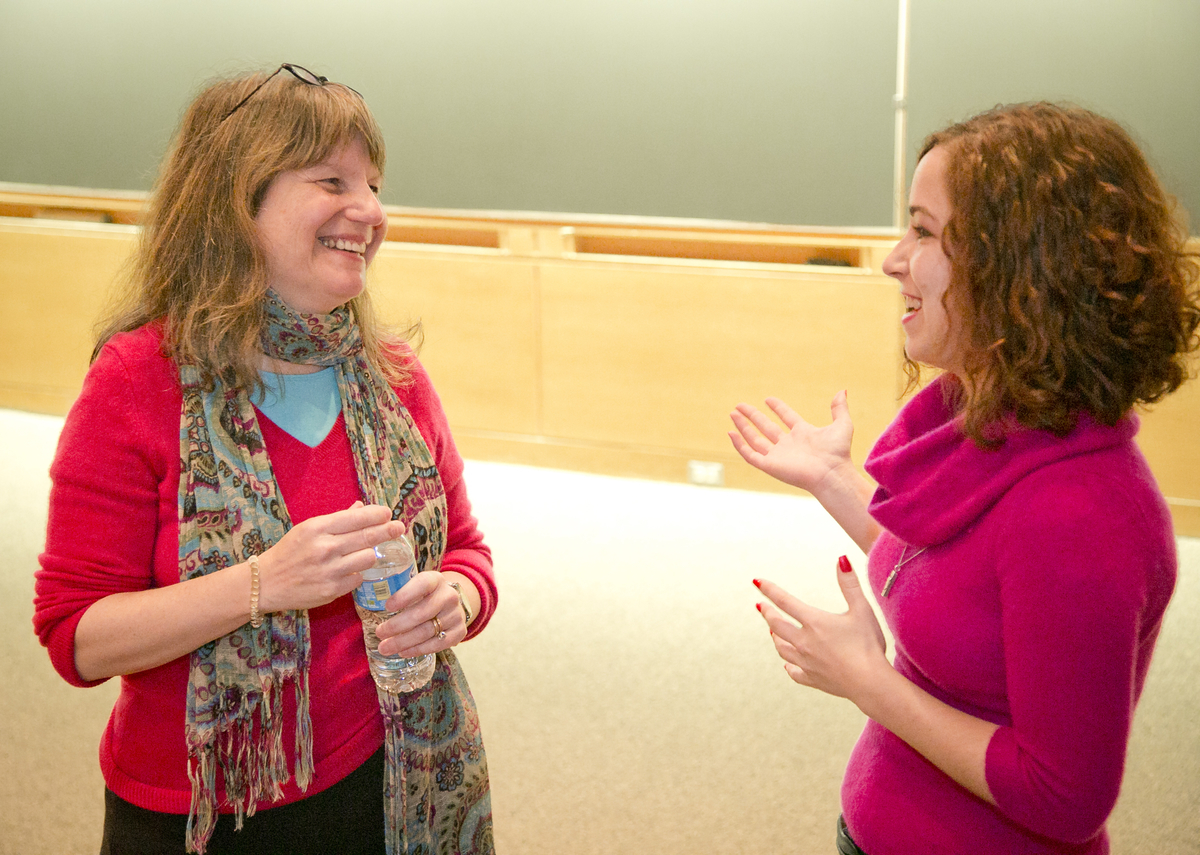
Students exploring the Innovation Co-Lab

Fruit flies get their close-up shot, Nobel style

By Robin Ann Smith

Any movie that begins with an extreme close-up of the back side of a fruit fly — the same kind found feeding on over-ripe tomatoes and bananas in your kitchen — may seem like an unlikely candidate for action blockbuster of the year. But this is no typical movie.

https://www.youtube.com/watch?v=fwzIUnKNw0s

Duke biologists Dan Kiehart and Serdar Tulu recorded this 3D close-up of a developing fly embryo using new super-resolution microscope technology developed by Eric Betzig, one of the winners of the 2014 Nobel Prize in Chemistry.

Cutting-edge microscopes available on many campuses today allow researchers to take one or two images a second, but with a new technique called lattice light-sheet microscopy — developed by Betzig and colleagues and reported in the Oct. 24, 2014, issue of Science — researchers can take more than 50 images a second, and in the specimen’s natural state, without smooshing it under a cover slip.

Kiehart and Tulu traveled to the Howard Hughes Medical Institute’s Janelia Farm research campus in Ashburn, Virginia, where the new microscope is housed, to capture the early stages of a fruit fly’s development from egg to adult in 3D.

Fruit fly embryos are smaller than a grain of rice. By zooming in on an area of the fly embryo’s back that is about 80 microns long and 80 microns wide — a mere fraction of the size of the period at the end of this sentence — the researchers were able to watch a line of muscle-like cells draw together like a purse string to close a gap in the fly embryo’s back.

The process is a crucial step in the embryo’s development into a larva. It could help researchers better understand wound healing and spina bifida in humans.

Their movie was assembled from more than 250,000 2D images taken over 100 minutes. The hundreds of thousands of 2D snapshots were then transferred to a computer, which used image-processing software to assemble them into a 3D movie.

“This microscope gives us the highest combination of spatial and temporal resolution that we can get,” Kiehart said.

Betzig won this year’s Nobel Prize for his work on techniques that allow researchers to peer inside living cells and resolve structures smaller than 200 nanometers, or half the wavelength of light — a scale once thought impossible using traditional light microscopes.

Even finer atomic-scale resolution has long been possible with microscopes that use beams of electrons rather than light, but only by killing and slicing the specimen first, so living cells and the tiny structures in motion inside them couldn’t be observed.

Betzig and collaborators Wesley Legant, Kai Wang, Lin Shao and Bi-Chang Chen of Janelia Farm Research Campus all played a role in developing this newest microscope, which creates an image using a thin sheet of patterned light.

The fly movie is part of a collection of videos recorded with the new technology and published in the Oct. 24 Science paper.

One video in the paper shows specialized tubes inside cells called microtubules — roughly 2,000 times narrower than a human  hair — growing and shrinking as they help one cell split into two.

Other videos reveal the motions of individual cilia in a single-celled freshwater creature called Tetrahymena, or cells of a soil-dwelling slime mold banding together to form multicellular slugs.

Kiehart and Tulu will be going back to Janelia Farm in January to use the microscope again.

“For this visit we’re going to zoom in to a smaller area to look at individual cells,” Tulu said.

“Waking up the morning of October 8 and hearing on the radio that our paper includes a Nobel Prize winner was pretty special,” Kiehart said.

CITATION: “Lattice light-sheet microscopy: Imaging molecules to embryos at high spatiotemporal resolution,” Chen, B.-C., et al. Science, October 2014. http://www.sciencemag.org/content/346/6208/1257998
Shedding Light on Careers Beyond Academia  

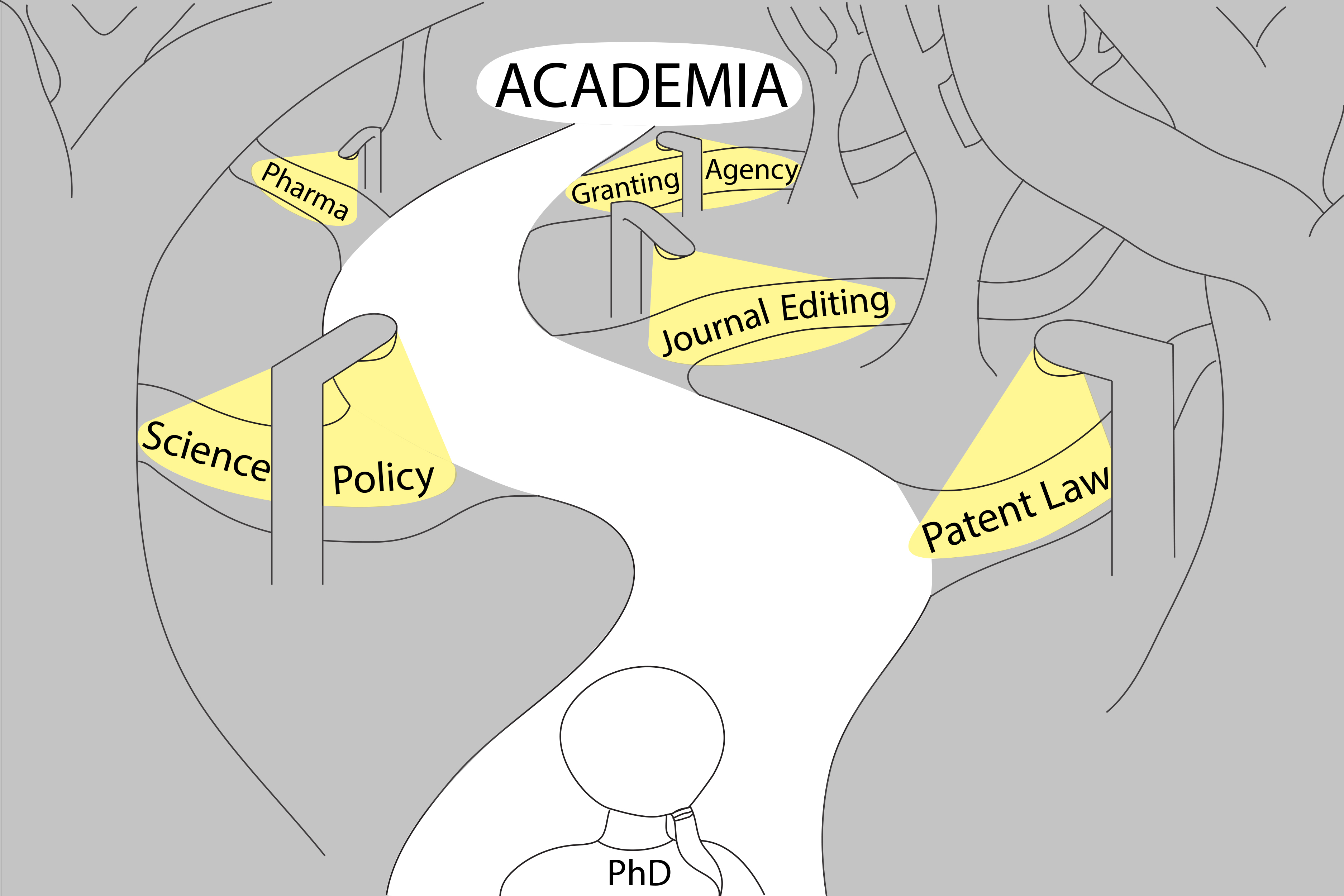
Grad school can seem like walking down a well-lit path in an otherwise dark forest. It’s easy to see the academic path, but who knows what might happen if you step off of it? (Illustration: Ted Stanek)

Grad school can seem like walking down a well-lit path in an otherwise dark forest. It’s easy to see the academic path, but who knows what might happen if you step off of it? (Illustration: Ted Stanek)

Guest post from Ted Stanek, PhD candidate in neurobiology

The Duke Institute for Brain Sciences’ Beyond Academia panel on Oct. 30 tried to illuminate the many career paths available to PhDs and spread hope rather than dread in the minds of Triangle area graduate students.

There has been a flood of articles recently about the increase in competition in the academic world for tenure-track faculty positions and federal funding. They all harped on the perils of staying in academia and the tragedy of being a PhD student or postdoc in such a climate.

Many of these stories focus on the terrifying choice that all PhDs and postdocs face at various points in their career: whether or not they want to stay on the academic track. The alternative feels like jumping off of a cliff, and many people complain that programs which accept more PhD students than there are academic jobs available are effectively pushing students towards that cliff.

Ted Stanek

Ted Stanek is a PhD student in neurobiology.

In the face of this negative outlook for PhDs, the Duke Institute for Brain Sciences recently provided welcome insight into the variety of non-academic careers that may lie in a PhD’s future. Beyond Academia was a day-long workshop consisting of five groups of 3-4 panelists discussing their own career trajectories, what their careers are like, and how they prepared to achieve such positions. Each panelist had a neuroscience or biomedical science PhD, and each had found a successful and fulfilling career outside of the academic niche.

“There are no ‘alternative careers’,” Katja Brose, Senior Editor of Neuron, emphasized in her keynote address.  “There are just careers.”

Workshop panelists revealed just how many careers were available to PhDs. A major point reinforced during the event was that you are never “stuck” on the academic track. You have the option of changing careers every step of the way – even after you’ve reached the level of tenured faculty.

Switching career paths, however, is a daunting task – a common reason why many PhD students go straight into a postdoc. It’s easy to see how the skills that you learn as a graduate student will transfer to skills you can use as a postdoc, and then as a young faculty.

Elizabeth Brannon, a professor of psychology & neuroscience who organized the seminar, pointed out in her welcoming speech that PhD students have limited access to professionals outside of academia, making it difficult to even identify non-academic careers that may interest them, let alone prepare for them.

While many of these careers beyond academia do require some type of preparation, this preparation may simply consist of pursuing your interests while completing your PhD. Writing or editing for your lab, starting up a journal club, and participating in university or professional organizations are all great ways to boost your resume and develop your interests.

Perhaps the hardest part of preparing for any career, academic or otherwise, is undergoing that initial period of self-reflection necessary to identify what skills you possess in your current position, what interests you about your job, and how your life values might impact your career.

“The point at which your skills, interests, and values overlap determines your career sweet spot,” Brose said.

Do you especially enjoy the administrative aspects of academia? Maybe grant management is the way to go. How about actually conducting experiments to discover new biological mechanisms? Perhaps working in a pre-clinical lab for a pharmaceutical company is the place for you. What if you love writing – either the spinning of a story (science writer/freelancer), or writing down the scientific facts with precise and accurate language (medical writer)? Are you interested in new biological technology (intellectual property and patent law)? Or helping to change laws about science (science policy)? Maybe you just love reading papers and debating where they should be published (journal editor).

All of these positions highly value PhDs in particular, no matter what the specifics of your thesis are. Every PhD in the brain and behavioral sciences, whether molecular, systems, or behavioral, develops what career advisors call transferable skills. These highly valued “super powers” as one panelist put it, include being able to communicate technical topics to a diverse audience, working with team members, learning a large amount of information quickly and effectively, being resilient in the face of unexpected adversity, and thinking critically to solve complex problems. The overwhelming message from Beyond Academia was that no matter where you end up, after you get your PhD you can find a career that will make you happy and fulfilled.

To me, it seems like pursuing a PhD is a lot like walking down a well-lit path in an otherwise dark forest. It’s easy to see the next step along the path to academia, but who knows what might happen if you step off of it?

Thanks to Beyond Academia, that forest is now a little brighter.

Beyond Academia was  presented by the Duke Institute of Brain Sciences, the Graduate Admitting Program in Cognitive Neuroscience, the Neurobiology Graduate Program, and the Duke Psychology & Neuroscience Graduate Program.  This event was organized by  Elizabeth Brannon and Richard Mooney, with help from Tanya Schrieber, and moderated by Duke graduate students Caroline Drucker, Rosa Li, Marissa Gamble, and Vanessa Puñal.

The Science of Self-Agency: Dr. Nicolelis and the Walk Again Project

By Olivia Zhu

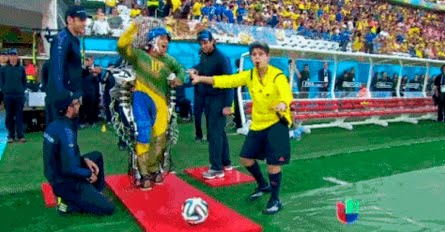
Screen grab from Univision of Juliano's robo-kick at the World Cup opening ceremony.

Screen grab from Univision of Juliano’s robo-kick at the World Cup opening ceremony.

Over the course of his 20-year career, Dr. Miguel Nicolelis has restored movement and self-agency to paraplegic patients.

On November 11th, as part of the Grand Challenge Seminar Series, Dr. Nicolelis captivated his audience by explaining the extensive process that culminated in Juliano, a Brazilian 29-year-old paralyzed from the chest downward in a car accident, performing the opening kick of the World Cup simply by using his mind.

Dr. Nicolelis has several faculty appointments in the Duke School of Medicine, Department of Psychology and Neuroscience, Institute for Brain Sciences, and Center for Neuroengineering. He has also written a book, Beyond Boundaries, about his work. His program, Walk Again, is supported by the Edmond and Lily Safia International Institute of Neuroscience in Brazil.

Dr. Nicolelis began making progress in 1999-2000 at Duke by developing electrodes that could record firing from multiple neurons. Using this technology, he determined which neurons were necessary for a monkey to move a joystick during a video game. Then, Dr. Nicolelis focused on creating a bypass that would bridge the mind directly to a computer, essentially removing the body as an intermediary.

He called this bypass a “Brain-Machine Interface,” or BMI, a term he coined at a cheese steak joint outside of Philadelphia. With the BMI, Dr. Nicolelis’s monkeys could play the video game without moving their arms or the joystick—they simply imagined themselves moving the joystick. The monkeys could even use their arms to do other tasks like eat or scratch themselves, creating a “third arm.”

Since then, with an extensive team of engineers, Dr. Nicolelis has implemented this technology by creating a IMG_1941hydraulically-powered exoskeleton that interprets a patient’s firing neurons and moves a patient’s legs accordingly.

He has also created artificial “skin,” which provides tactile feedback of movement to a patient’s upper body or, eventually, through an implant directly to the tactile cortex of the brain.

The technology is so accurate that patients report feeling “ghost limbs”—they believe that their legs are actually walking. The legendary Brazilian soccer player, Ronaldo, reportedly exclaimed “I’m moving!” with incredulity, when he was strapped to a chair testing Nicolelis’s technology.

Training with the exoskeleton also improves patients’ cardiovascular circulation, mental health, gastrointestinal health, and sensitivity in previously paralyzed areas.

Dr. Nicolelis is truly using science to stretch the boundaries of the human body.

World Domination in a Loaf of Bread

By Robin Smith

If baker’s yeast could take over the world, the bread leavener’s world domination might look like this time-lapse movie produced by a team led by Duke biologist Nicolas Buchler:

https://www.youtube.com/watch?v=bB331faPnJ0

Their report in the Nov. 5, 2014, issue of the journal Molecular Biology of the Cell shows time-lapse images of yeast cells under a microscope as one cell grows and divides into two, and two into four, and so on.

To watch the budding yeasts in action, the researchers inserted a gene for an enzyme that gives fireflies their characteristic yellow light into the yeasts’ DNA.

It normally takes one yeast cell about 90 minutes to grow and divide into two new cells. But in the time-lapse movie, the process is compressed into a few seconds.

The yellow dots show genes being turned on and off in the nucleus of each cell.

The approach allows scientists to track the activation and deactivation of genes over a tiny cell’s fast life cycle more accurately than standard labeling techniques using other glowing proteins, the researchers say.

CITATION: “Measuring fast gene dynamics in single cells with timelapse luminescence microscopy,” Mazo-Vargas, A., Park, H., Aydin, M. and N. Buchler. Molecular Biology of the Cell, November 5, 2014.

All Ears for Corn Genetics

By Nonie Arora

“Technology is progress” and “new is better” seem to be mantras in some fields of research. However, when it comes to fields of genetically modified corn, we might be wise to think otherwise.

20141024_174347

Dr. Mary Eubanks and Students at the Campus Farm. Credit: Nonie Arora

Duke biology professor Dr. Mary Eubanks spoke to a group of Duke students, community members, and a farmer from Togo about corn genetics in a workshop held Friday, Oct. 24 at the Duke Campus Farm. Dr. Eubanks founded her own seed genetics company (Sun Dance Genetics LLC) and is a leading advocate for changing the way we grow corn.

Dr. Eubanks became intrigued by the origins of corn while studying the origins of agriculture and the start of American civilization in an archaeology PhD program. She realized that she wouldn’t be able to answer her questions about what she considered to be this “great botanical mystery” without an understanding of genetics. To uncover this mystery, she pursued a postdoctoral program in corn genetics. Based on her experimentation, she developed the hypothesis that maize domestication involved something called intergeneric hybridization, or crossing between plants in different genera.

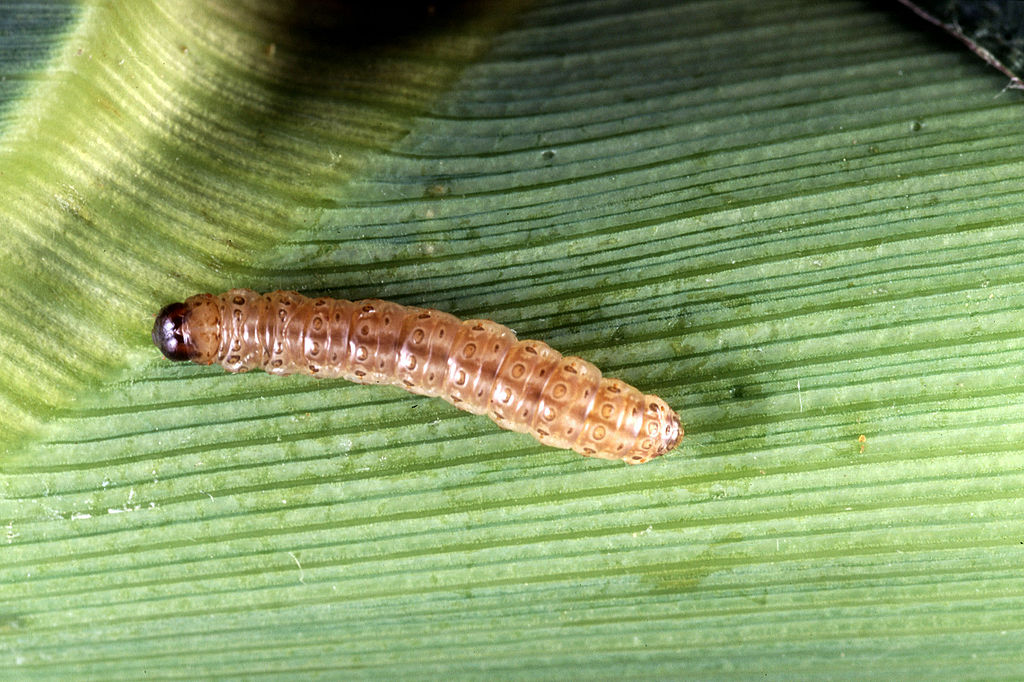
European Corn Borner attacks Maize. Credit: Wikimedia commons

European Corn Borner attacks Maize. Credit: Wikimedia commons

During her career, Dr. Eubanks also worked in regulatory affairs and learned about the devastating effects of chemical pesticides. She became an advocate for sustainable agriculture: finding ways to develop pest-resistant corn without genetic engineering. She has successfully transferred natural resistance to the worst insect pests of corn — corn rootworm and European corn borer.

In contrast to using natural breeding methods to create new lines of corn, genetically modifying organisms could have negative effects on human health, according to Dr. Eubanks. Dr. Eubanks believes that the inserter and promoter sequences that are used to get the genes to express the foreign proteins can lead to antibiotic resistance and intestinal issues for humans.

The group was surprised by her description of her own anaphylactic shock reaction to Bt-corn, a GMO. Her own personal history of the allergic reaction made her think of the potential reactions our bodies could be having to GMOs. Dr. Eubanks described how it was problematic that genes being introduced to the crop came from other organisms and that humans haven’t evolved a tolerance to the proteins the genes encode. This could lead to potential allergenicity in humans. According to Dr. Eubanks, it is possible that there has been horizontal gene transfer between plasmids — small molecules used to insert genes from one organism to the next — and the human gut.

When asked about the regulations regarding GMOs, Dr. Eubanks explained that the FDA is in charge of the labeling and GMOs are generally regarded as safe so long as they are substantially equivalent to the other food product. The industry is very opposed to the labeling of GMOs and 90% of the corn, cotton, and soy available has some GMO product in it, according to Dr. Eubanks. She believes that not enough is being done to regulate the industry.

We were intrigued by her discussion of food security and funding for interventions. She described that a lot of international work on food security highly promotes technology and the big industry agricultural model. Dr. Eubanks believes we need to change our paradigm from thinking that the most advanced technological options are always best to considering an ecological intensification approach. Such an approach seeks to design more productive, sustainable production systems that are well suited to their environments by better understanding how nature functions. Her current work is helping bring food security to South Sudan through corn that is pest-resistant and drought-tolerant.


A scientist’s unlikely path, with Duke Provost Sally Kornbluth

By Robin Smith

Many scientists have an inkling of their path at an early age, having spent their childhoods breeding hamsters for fun, or conducting backyard experiments on earthworms.

Not so for Duke Provost and cell biologist Sally Kornbluth.

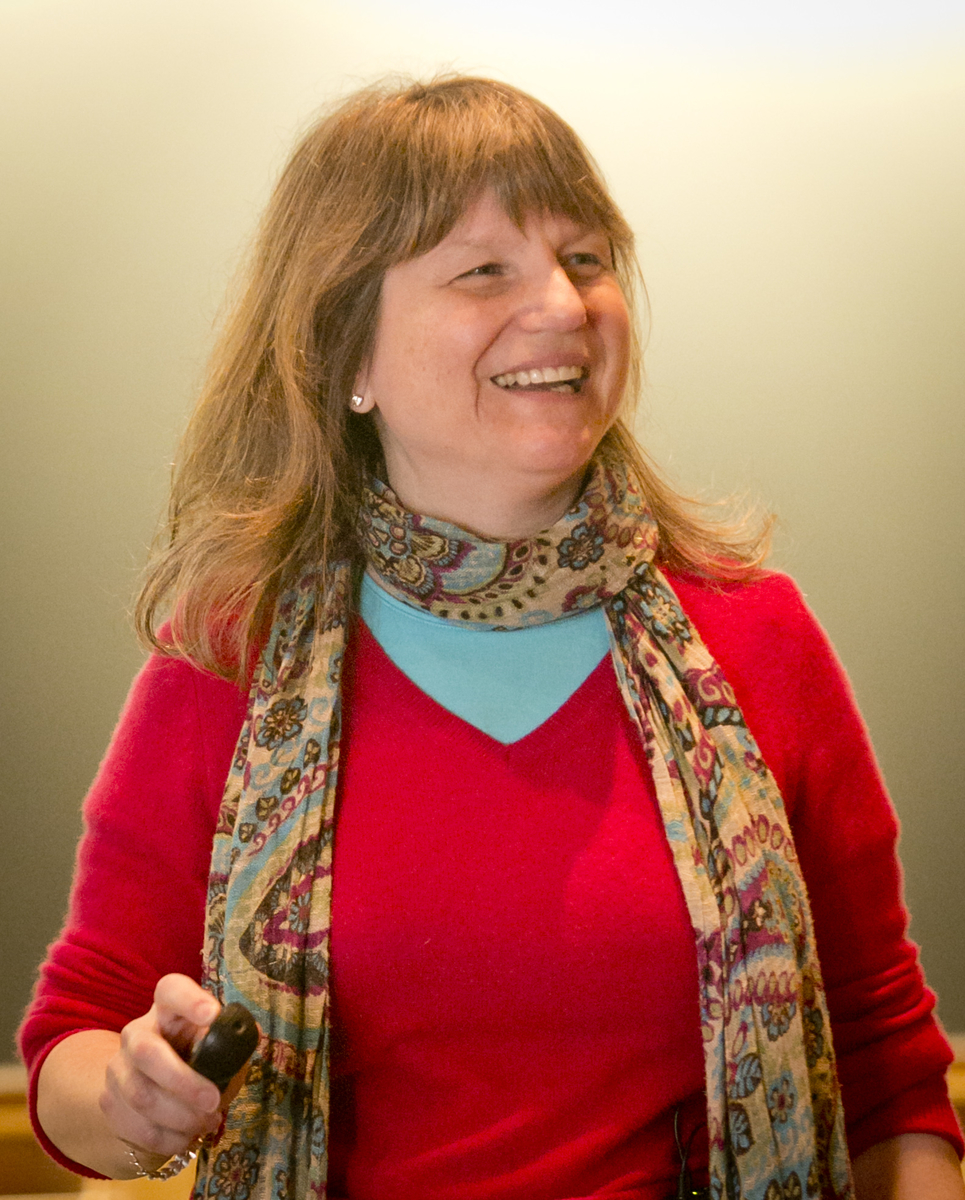
Provost Sally Kornbluth delivers her lecture, "What Makes Me a Scientist," at Love Auditorium.

Provost Sally Kornbluth delivers her lecture, “What Makes Me a Scientist,” at Love Auditorium.

“Science wasn’t a part of my upbringing at all,” said Kornbluth, who grew up in Fair Lawn, New Jersey, a small suburb 25 miles outside of New York City. Her mother was an opera singer.

“My mother once played Queen Elizabeth at the Metropolitan Opera. I can tell you she certainly wouldn’t have let us bring something like a worm or a hamster into the house.”

In an October 30 talk hosted by the Duke BioCoRE program, Kornbluth shared this story and the unlikely path she took to becoming a scientist and the lessons she learned along the way.

As an undergraduate at Williams College, Kornbluth majored in political science. She remembers leading a tour group through the science quad as a freshman tour guide and thinking, “I’ll never take a class here.”

“The only reason I signed up for my first science course — a class on human biology and social issues taught by a professor named Bill DeWitt — was I thought it would be a relatively painless way to satisfy the graduation requirements,” she said.

Things changed once she started the course. “That’s when I realized, wow, science is about asking interesting questions and solving puzzles and finding out how things work. Having a set of facts was only the starting point.”

She describes DeWitt as the best teacher she’s ever had. “The impact of teachers who influenced me along the way was really profound,” she said.

After graduating from college in 1982 she considered applying to medical school. But then she received a scholarship to go to Cambridge University in England for two years, where she earned a second bachelor’s degree in genetics.

148814_provstlec010“One of the formative things about that time was we were forced to read a lot of journal articles. The science textbooks I’d read gave the impression that experiments always work so cleanly and beautifully. But reading scientific papers helped me realize that things aren’t as neat, and not everyone agrees with each other.”

She also learned a lesson about remembering the big picture.

“Especially if you’re doing experiments that are long and involved, you have to be motivated by the idea behind the experiment, not by the actual physical things you’re doing every day,  because often they’re pretty mundane. When you’re doing lab work in molecular biology it’s hard to get excited about doing one hundred mini-preps.”

Kornbluth took these lessons with her to graduate school. She earned a Ph.D. in molecular oncology from Rockefeller University in 1989, and did postdoctoral training at the University of California, San Diego.

She joined the Duke faculty in 1994, along with her husband, Daniel Lew, Ph.D., both as professors of pharmacology and cancer biology at Duke Medicine.

“We got lucky because we both worked on aspects of the cell cycle, which was a super hot field at the time,” she said.

Her recent research aims to identify the molecular signals that tell tumor cells to divide or die, which may help explain why some cancers fail to respond to chemotherapy. The work could point to new ways of overcoming drug resistance in breast, pancreatic and other cancers.

For Kornbluth, one of the biggest joys of being a scientist is the camaraderie and the collaborative nature of the work. “Maybe that’s why I went into administration,” she says.

Kornbluth served as vice dean for basic science at Duke Medicine from 2006 to 2014.

This June, she succeeded 15-year-veteran Peter Lange as provost, the chief academic officer at Duke. She is the first woman to hold the post.

148814_provstlec015


Rationing is Not a Four-Letter Word

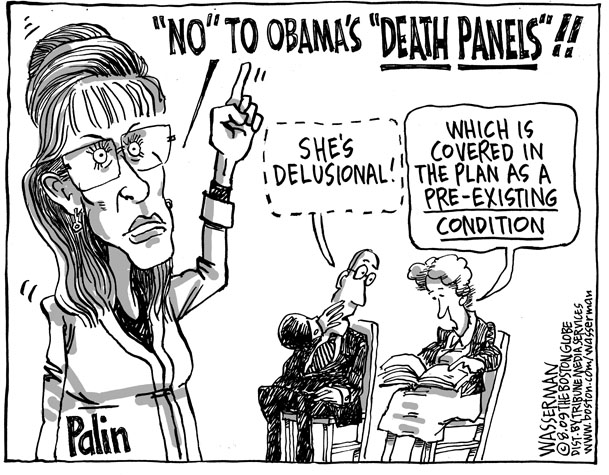
Wasserman Globe cartoon

Palin and “Death Panels” cartoon from the Boston Globe.

By Nonie Arora

Starting with a news clip of Sarah Palin talking about death panels on Fox News is a sure-fire way to gain the attention of your audience. That’s exactly what Dr. Phillip Rosoff did to ease into his more serious talk about the ethics of rationing health care in the United States. He spoke to a crowded audience of clinicians, ethicists, and students for the Trent Center for Bioethics, Humanities, & History of Medicine lecture series.

210_RosoffPhilip2011

Dr. Philip Rosoff. Source: pediatrics.duke.edu

Dr. Rosoff discussed both moral and economic reasons why we need to ration healthcare in the United States. For one, health care costs are bankrupting the nation and taking money from other social goods. According to Dr. Rosoff, our health care system is expensive, inefficient and has astounding disparities in access to quality care.

“Health care is not the only good. Other factors contribute to our ability to live a good life, including education and the arts,” he said.

“The key to rationing isn’t saying ‘no,’ but how it’s done,” he said.

He unveiled his vision for a better model of health care. In his eyes, a single-payer system that would eliminate the centralized profit motive – where physicians and hospitals have the perverse financial incentives to sell things – would decrease costs without compromising quality. He believes that a similar, expansive, generous benefit plan should be available to all, and those who make the rules ought to be bound by them. Problems arise when people make decisions for others without being affected by the outcomes, Dr. Rosoff explained.

He referenced the organ transplant waiting list, UNOS, as an accepted system where most patients do not complain about bias or unfairness because they realize that everyone has been given a fair shot. The same should be true of our reformed health care system: there should be no “VIPs” or “VUPS” (very unimportant people) and steps ought to be taken to ensure that everyone with a similar clinical prognosis should be bound by the same rules.

While it may seem impossible to increase coverage while lowering costs, other countries provide high quality care at a fraction of the cost, Rosoff explained. Twenty five percent of our spending in the U.S. goes towards unnecessary treatments or administrative expenses.

When asked what the rallying cry for such a major change in the health care system would be, Dr. Rosoff said that the system as it is will bankrupt us, so changes need to be made. At the same time, we need to avoid evoking the scarcity principle, drawing as little attention as possible to changes being made, he concluded.

Learn more specifics about the ethical principles underlying the rationing of healthcare in Dr. Rosoff’s latest book: Rationing is Not A Four-Letter Word: Setting Limits on Healthcare (Published by Basic Bioethics)

Joining the ride – Thabit Pulak

By Thabit Pulak

Howdy everyone! My name is Thabit Pulak, and I am currently a freshman, hailing from the grand nation of Texas! Although I haven’t declared my major yet, I am interested in Public Policy, and Medicine.

My first arsenic filters -- fresh from the factory!

My first batch of custom-made  water filters, fresh from the manufacturing plant in Bangladesh!

I’ve been interested in science ever since I was really young. As I got older, I became more aware of my surroundings. Ethnically, I am from Bangladesh, which is a poverty-stricken nation. Amongst the many problems the country faces, one that personally caught my eye was that of arsenic water poisoning, which affects nearly 70 million people in Bangladesh, and about 300 million people across the world. Continually drinking arsenic-tainted water results in arsenicosis, which is a chronic state of arsenic poisoning that gradually develops into various types of bodily cancers. So I thought, if exposure to arsenic was reduced, then the incidence of cancer would decrease as well.

Studying the issue closer, I noticed that solutions for filtering arsenic from water did exist, but they were very expensive (nearly $70) for the average villager, who makes around $1 a day. This was definitely a problem, as what good use was a solution, which was financially inaccessible to the target audience?

My meeting with the Minister of Bangladesh

I started to delve into this problem, trying to figure out what I could do. I read research articles on how other filters on the market worked. I noticed that the technologies used in other filters were plagued with various problems that brought cost up, such as being patented, or technologies not available natively in Bangladesh. Working in the kitchen of my home in Texas, I slowly developed an arsenic water filter that could also filter bacteria from water at an affordable price. I designed my filter in such a way that the whole filter could theoretically be built using materials in a typical village home.

Throughout the process of working on this project, I had the privilege of meeting many people who supported me along the way. I met with Bob Perciaspe, who at the time, was the head administrator of the EPA. I also met with Senator Ted Cruz of Texas, who lent me his endorsement towards carrying on with my work, with the future focus of expanding into rural areas into Texas, which also include arsenic affected regions. And, to my huge surprise, I was invited to the White House and met with President Obama!

I am now working on implementing my design. I founded iKormi, a non-profit organization, with the goal of alleviating problems faced by the underprivileged, in which my primary focus was arsenic water poisoning. Using some grants and money I raised, I was able to start up a small water filter plant in Bangladesh which manufactures arsenic water filters according to my design, consisting completely of local materials, using local labor. The filters were being built at a tenth of the cost. In addition to the manufacturing process, I also was able to gain support of many influential people in Bangladesh, including the Minister (and former general secretary) of Bangladesh. While there is definitely a lot more work to do, I definitely look forward to expanding this operation to be able to serve a wide variety of people who need access to clean drinking water.

At Duke, I hope to continue with my work in Bangladesh through the wealth of opportunities available to students in terms of research and working abroad. I look forward to writing for the Duke Research Blog!

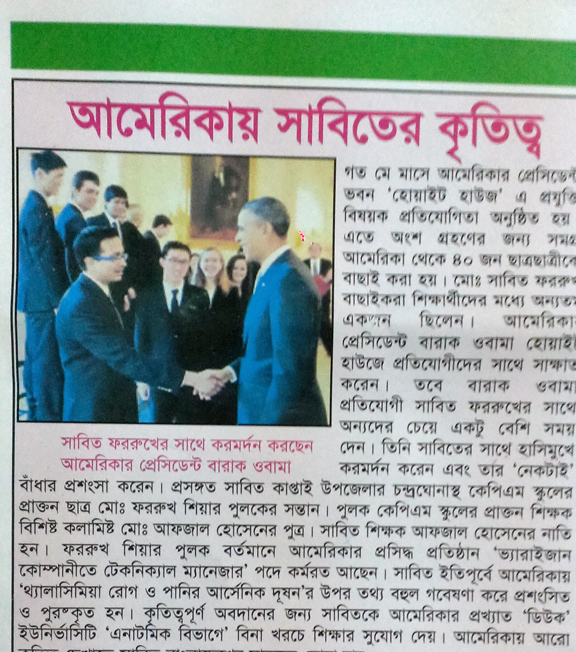
Thabit and Obama

Me and President Obama in one of the Bangladesh national newspapers!

[youtube http://www.youtube.com/watch?v=9EE5q1F7HY8?rel=0]

Scents Are Key to Lemur Nightlife

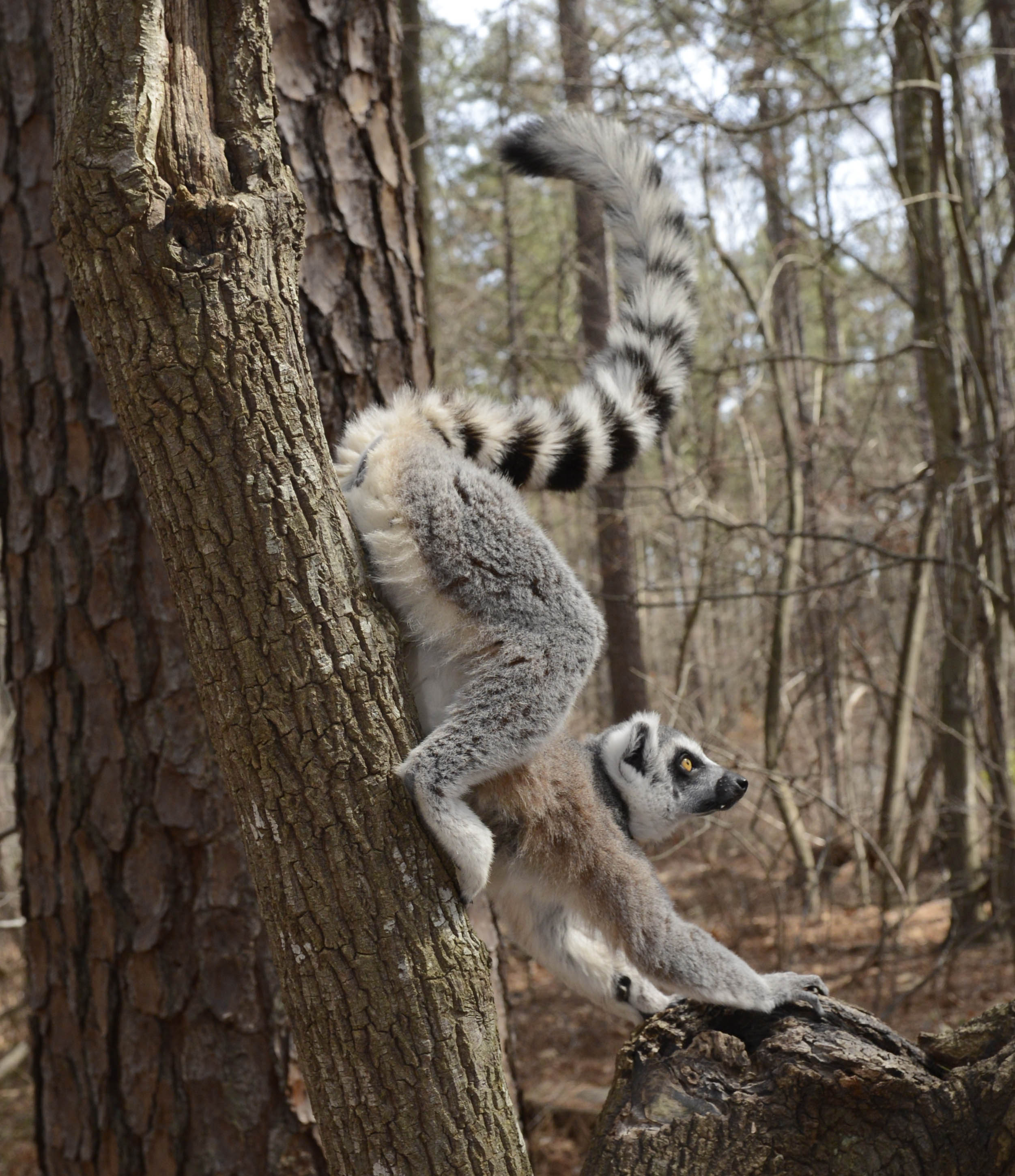
LEMUR SUPERPOWER #457:  Some lemurs can safely digest cyanide in amounts sufficient to kill an elephant. Others can enter hibernation-like states to survive periods when food and water are in short supply. To add to their list of superpowers, lemurs also have especially keen powers of scent.

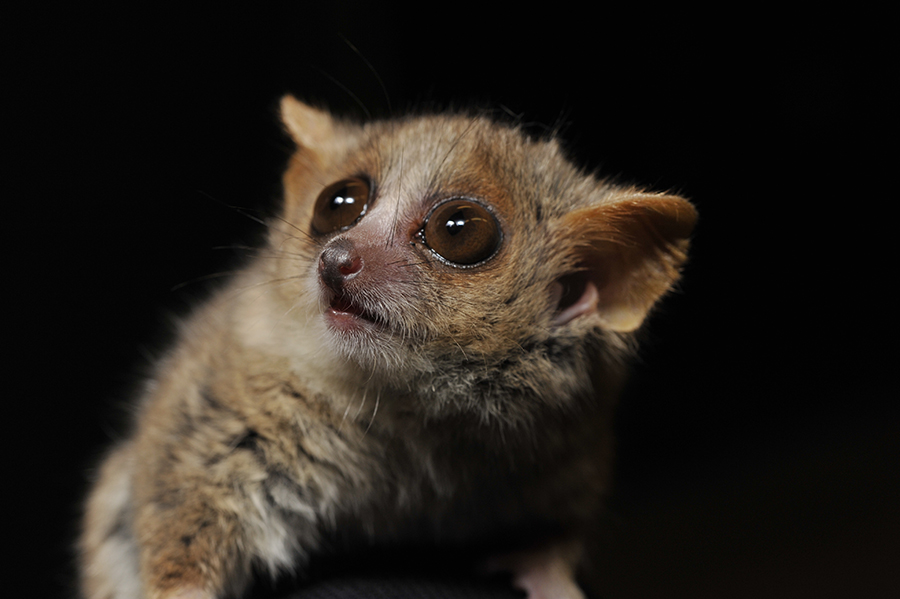
Buried in the nose of Fuggles the mouse lemur are specialized pheromone receptors that help her distinguish friend from foe in the dark of night, when mouse lemurs are active.

By Robin Ann Smith

If you could pick one superpower, consider taking inspiration from lemurs. Some lemurs can safely digest cyanide in amounts that would kill an elephant. Others can enter hibernation-like states to survive periods when food and water are in short supply. Still others have keen powers of scent, with the ability to find mates and avoid enemies in the darkness by smell alone.

Research by biologist and Duke Lemur Center director Anne Yoder suggests that the molecular machinery for sniffing out pheromones — much of which has gone defunct in humans and many other primates — is still alive and well in lemurs and lorises, our distant primate cousins.

Lemurs use scents to mark the boundaries of their territories, distinguish males from females and figure out whether another animal is friend or foe. When a lemur gets a whiff of another animal, specialized pheromone receptors in the lining of the nose transmit the information to the brain, triggering instinctive urges like mating, defense and avoiding predators.

The receptors are proteins encoded by a family of genes called V1Rs. First identified in rats in the mid-1990s, V1R genes are found in animals ranging from lampreys to humans. But the proportion of these pheromone-detection genes that actually functions varies greatly from one species to the next, Yoder said last week in a roundtable discussion hosted by Duke’s Science & Society program.

Randy the ring-tailed lemur scent-marks his territory. Photo by David Haring.

Randy the ring-tailed lemur scent-marks his territory. Photo by David Haring.

Studies suggest that as much as 90% to 100% of the pheromone-detection genes in humans consist of disabled pieces of DNA, called pseudogenes.

“Our pheromone-detection genes are so boring — we don’t have many of them, and almost all of them are broken,” Yoder said.

But in lemurs and lorises — whose ancestors split off from the rest of the primate family tree more than 60 million years ago — the proportion of pheromone-detection genes that is still intact is much higher.

In a study published this year, Yoder and colleagues analyzed the DNA of 19 species and subspecies of lemurs and lorises, looking for subtle differences in their V1R genes. They found that one group — the mouse lemurs — has the highest proportion of intact V1R sequences of any mammal yet studied.

To find out which genes are linked to which scents, Yoder and her colleagues plan to take DNA sequences from pheromone-detecting genes in lemurs, insert them into mice, and expose the mice to different scents to see how they respond.

An ability to sniff out the right mates — and avoid being seduced by the wrong suitors — may have served as a mating barrier that allowed lemur species to diverge after arriving in their island home of Madagascar, helping to explain how the more than 70 living species of lemurs came to be, Yoder says.

3D Storytelling of Livia’s Villa

by Anika Radiya-Dixit

blog1pic

Eva Pietroni is in charge of the 3D modeling project, “Livia’s Villa Reloaded”

Have you ever pondered upon how 3D virtual realities are constructed? Or the potential to use them to tell stories about architectural masterpieces built millenniums ago?

The 5th International Conference on Remote Sensing in Archaeology held in the Fitzpatrick Center this weekend explored new technologies such as remote sensing, 3D reconstruction, and 3D printing used by the various facets of archaeology.

In her talk about a virtual archeology project called “Livia’s Villa Reloaded,” Eva Pietroni, art historian and co-director of the Virtual Heritage Lab in Italy, explored ways to integrate 3D modeling techniques into a virtual reality to best describe the history behind the reconstruction of the villa. The project is dedicated to the Villa Ad Gallinas Albas, which Livia Drusilla took as dowry when she married Emperor Augustus in the first century B.C.

The archeological landscape and the actual site have been modeled with 3D scenes in a Virtual Reality application with guides situated around the area to explain to tourists details of the reconstruction. The model combined images from the currently observable landscape and the potential ancient landscape — derived from both hypotheses and historical references. Many parts of the model have been implemented in the Duke Immersive Virtual Environment (DiVE).

Instead of using simple 3D characters to talk to the public, the team decided to try using real actors who talked in front of a small virtual set in front of a green screen. They used a specialized cinematic camera and played around with lighting and filtering effects to obtain the best shots of the actor that would later be put into the virtual environment. Pietroni expressed her excitement at the numerous feats the team was able to accomplish especially since they were not limited by rudimentary technology such as joysticks and push buttons. As a result, the 3D scenes have been implemented by testing the “grammar of gesture” — or in other words, the interactivity of the actor performing mid-air gestures — in a virtual environment. Hearteningly, the public has been “attracted by this possibility,” encouraging the team to work on better enhancing the detailed functionalities that the virtual character is able to perform. In her video demonstration, Pietroni showed the audience the Livia’s villa being reconstructed in real time with cinematographic paradigms and virtual set practices. It was extremely fascinating to watch as the video moved smoothly over the virtual reality, giving a helicopter view of the reconstruction.


Screen Shot 2014-10-14 at 9.24.55 PM

Helicopter view of the villa

One important point that Pietroni emphasized was testing how much freedom of exploration to give to the user. Currently, the exploration mode — indicated by the red dots hovering over the bird in the bottom left corner of the virtual reality — has a predefined camera animation path, since the site is very large, to prevent the user from getting lost. At the same time, the user has the ability to interrupt this automated navigation to look around and rotate the arm to explore the area. As a result, the effect achieved is a combination of a “movie and a free exploration” that keeps the audience engaged for the most optimal length of time.

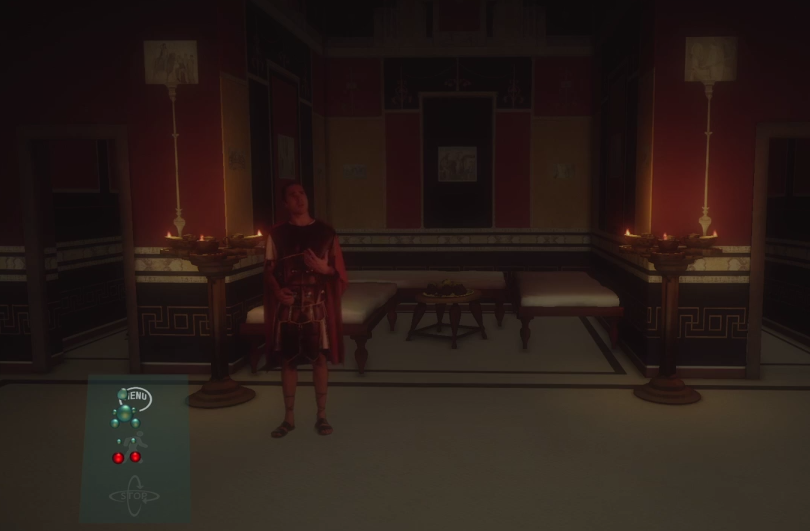
Another feature provided in the menu options allows the user to navigate to a closer view of a specific part of the villa. Here, the user can walk through different areas of the villa, through kitchens and gardens, with guides located in specific areas that activate once the user has entered the desired region. This virtual storytelling is extremely important in being able to give the user a vicarious thrill in understanding the life and perspective of people living in ancient times. For example, a guide dressed in a toga in a kitchen explained the traditions held during mealtimes, and another guide in the private gardens detailed the family’s sleeping habits. The virtual details of the private garden were spectacular and beautiful, each leaf realistically swaying in the wind, each flower so well created that one could almost feel the texture of the petals as they strolled past.


Screen Shot 2014-10-14 at 9.24.39 PM

Guide talking about a kitchen in the villa

Screen Shot 2014-10-14 at 9.25.15 PM

Strolling through the gardens

The novelty of the “Livia’s Villa Reloaded” project is especially remarkable because the team was able to incorporate new archeological findings about the villa, rather than simply creating a system from old data without ever updating the visual aspects. Sometimes, as the speaker noted, this required the team to entirely reconfigure the lighting of a certain part of the villa when new data came in, so unfortunately, the project is not yet automatic. Of course, to ultimately improve the application, the team often queries the public on specific aspects they liked and disliked, and perhaps in the future, the virtual scenes of the villa may be developed to a perfection that they will be confused with reality itself.


See details about the conference at: http://space2place.classicalstudies.duke.edu/program/dive

Page 81 of 111

Powered by WordPress & Theme by Anders Norén