Research Blog

Following the people and events that make up the research community at Duke

Students exploring the Innovation Co-Lab

Star Wars and Space Travel: The Study of Science through Popular Movies

Who says class has to be all about lectures and labs? Andrés Aragoneses, a quantum optics researcher at Duke, has created a class called “Science & Science Fiction” in conjunction with the Osher Lifelong Learning Institute at Duke (OLLI). The course explores hot science fiction topics through the study of famous movies – from Star Wars, to Independence Day, to The Martian.
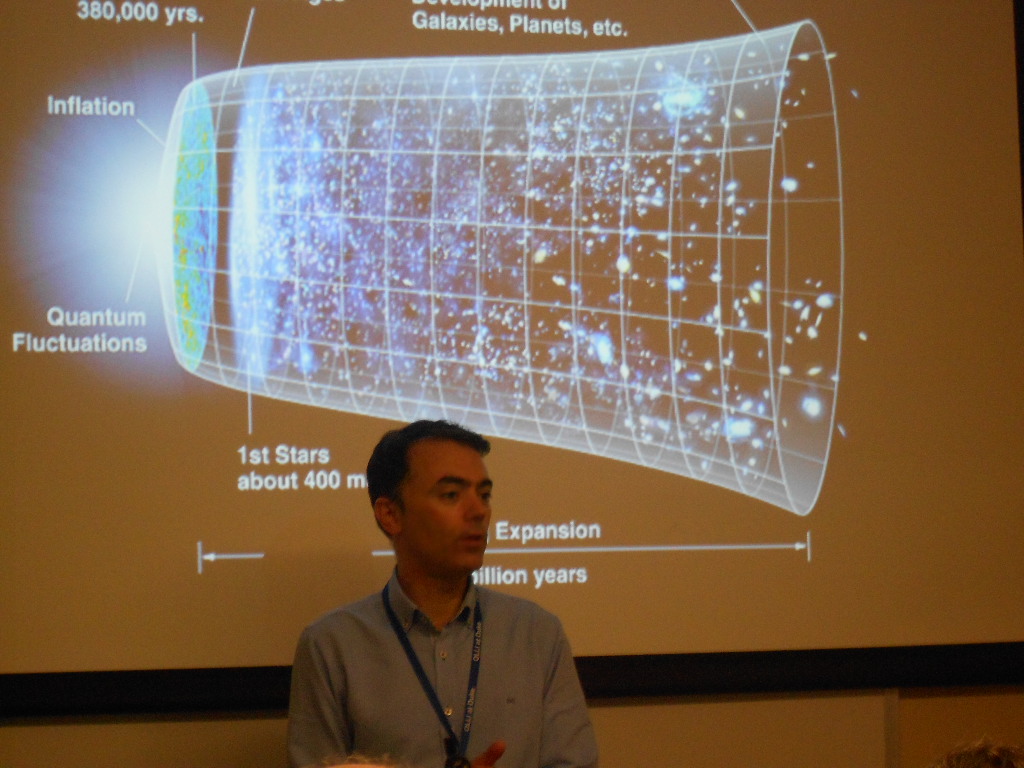
Professor Aragoneses teaching the class about the Big Bang Expansion

Professor Aragoneses teaching the class about the Big Bang Expansion

The unconventional idea to use movies as the primary medium for the class was born during Professor Aragoneses’s time teaching in Spain. Physics professors at his university had found that in order to get students to follow their classes, they had to do more than just explain Newton’s law and demonstrate practice problems. So, they began to relate these complex topics to media that the students were familiar with — news, cinema, and comics.

Each week, the OLLI group watches small scenes of movies that use scientific concepts in their production, and then learns the true theories behind these concepts. Most movies are quite fantastic when it comes to their scientific aspects, and this leads to incorrect representations of cosmological, physical, and astronomical phenomena on the screen. Focusing on a single concept each class, Aragoneses debunks Hollywood myths about natural disasters, comets, solar flares, neutrinos, and magnetic fields (to name a few).

Astronauts traveling with fuel packing in "Mission to Mars"

Astronauts traveling with jet packs in “Mission to Mars”

One week, the class focused on the dynamics of travel in space, calling on “Mission to Mars” to provide them with their screen reference. In one particular scene, astronauts are walking on Mars, propelled by air coming out of their backs and pushing them forward. The class learned that due to the lack of frictional force in space, the astronauts would, in reality, never run out of fuel since they would not need to push as hard as the movie suggested, using up much less fuel. The popular movie reference allowed Aragoneses to easily segue into the topics of friction, Newton’s laws, and the reality of space travel for the remainder of the class, while still holding the students’ attention. The group also analyzed the scientifically impossible behavior of deadly neutrinos in scenes from “2012” to learn about their true movement, and watched parts of “Independence Day” to better understand meteors and atmospheric interferences.

Astrophysicist searching for new planets by analyzing star movements.

Astrophysicist searching for new planets by analyzing star movements.

Occasionally, Aragoneses uses scientifically sound movies to study different concepts. One scene in Star Wars features Obi-Wan searching for a planet he is not able to find in existing maps. Yoda explains to him that the movement of the other stars in the sky is suspicious, and reasons that something must exist in between, although Obi-Wan cannot see it. The scene demonstrates the true manner in which astrophysicists search for new planets; since they are so tiny, they analyze movements of surrounding stars to detect their presence rather than searching for the planets themselves. Clearly the Grand Jedi Master knew a thing or two about the real universe!

Aragoneses’s idea to teach the class in such a unique fashion has evidently captivated his students; they often return after the week with new questions, suggestions for future movie references, and an excitement to continue their exploration of elaborate scientific concepts. The class has been a learning experience for Aragoneses as well, as he has had the chance to watch movies he hadn’t previously seen, and develop a deeper understanding of the concepts he teaches. He has so thoroughly enjoyed his work on the class in fact, that he is considering continuing to teach for OLLI in the future.

For those who are interested in enrolling in one of Aragoneses’s future classes, or another class hosted by OLLI, please visit their website. The Institute teaches about 100 different courses that range in topic from history, to science, to politics, to religion. The courses are taught both by Duke professors, and by other individuals from the Durham area.

Anika Ayyar_100Post by Anika Ayyar

Spice up learning with interactive visualizations

Hannah Jacobs is a Multimedia analyst at the Duke Wired! Lab who aims to change learning the humanities from A to B, much to the excitement of students and faculty packed into the Visualization Friday Forum on Oct. 16. Using visualization as a tool to show connections between space, time, and culture, she hopes to augment the humanities classroom by supplementing lecture with interactive maps and timelines.


BlackAndWhite

Colorful


The virtual maps created for Professor Caroline Bruzelius’ Art History 101 course were built using Omeka’s plugin Neatline, a “geotemporal exhibit builder that allows [the user] to create beautiful, a complex, maps, image annotations, and narrative sequences” such as the Satellite view below.


Demo Neatline visualization


Using the simple interface, Jacobs created a syllabus with an outline of units and individual lectures, each course point connected to written information, point(s) on the map, and period or span on timeline.


Syllabus using Neatline interface


Jacobs also implemented clickable points on the map to display supplementary information, such as specific trade routes used of certain raw materials, video clips, and even links to recent pertinent articles. With such an interface, students are better able to understand how the different lectures move backward and forward in time and make connections with previously learned topics.


Supplementary video clips


For the Art History 101 class,Professor Bruzelius assigned her students a project in which they use Neatline to map the movement of people and materials for a specific culture. One student graphed the Athenian use and acquisition of timber accompanied by an essay with hyperlinks to highlight various parts of the map; another visualized the development of Greek coinage with mapped points of mining locations.


Visualization accompanied by essay

Displaying development of Greek coinage


The students were excited to use the interactive software and found that they learned history more thoroughly than by completing purely paper assignments. Their impressive projects can be viewed on the Art History website.

As we continue to create interactive visualizations for learning, students in the future may study space, time, and culture using a touchscreen display like the one below.


Interactive learning of the future

Interactive learning of the future


hjaccobs

Hannah joined the Wired! Lab in September 2014 after studying Digital Humanities at King’s College London. Previously, she obtained a BA in English/Theatre from Warren Wilson College, and she worked at Duke’s Franklin Humanities Institute from 2011-2013 before departing for London.


Post written by Anika Radiya-Dixit

From Idea to Impact: Salman Azhar Brings Silicon Valley Mentality to Duke

An idea cannot be inherently good or bad, argues Salman Azhar, Entrepreneur in Residence, Associate Professor of Computer Science, and alumnus of Duke University. Instead, the success of an idea hinges on the steps an entrepreneur takes in the conversion from an idea to a plan.

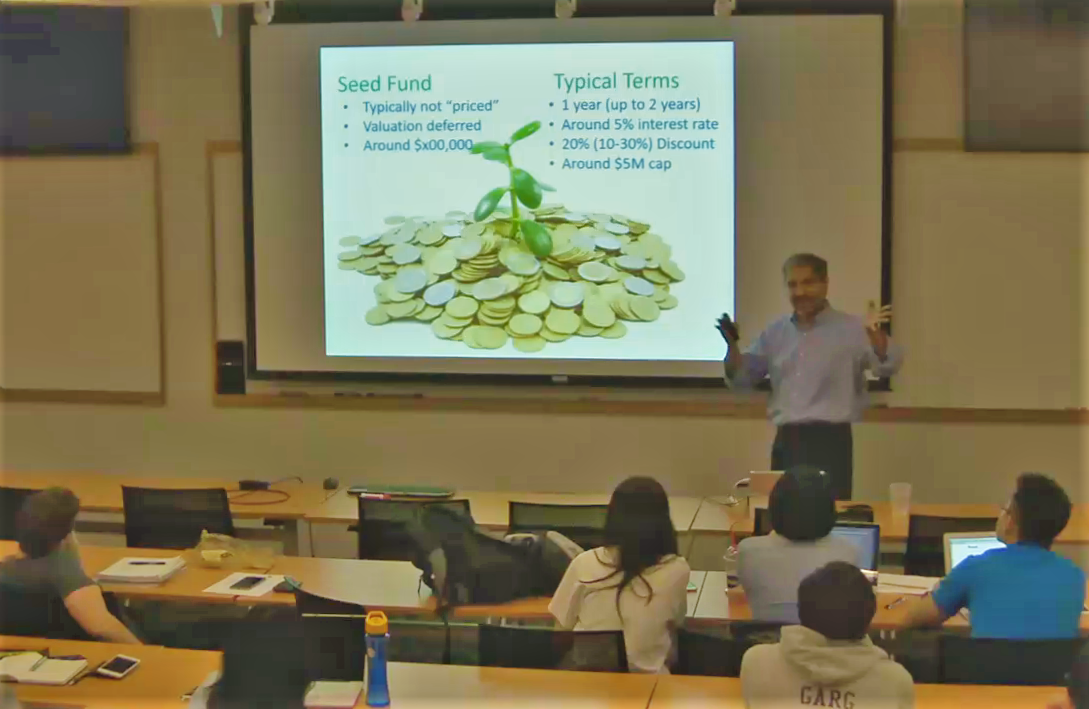
On October 14, Azhar explained to students the evolution of a tech start-up from the idea phase to conception.

facebook-vs-myspaceAzhar emphasized implementation details over the idea itself, citing the example of MySpace and Facebook: neither is conceptually better than the other, yet today, only Facebook stands successful.

Azhar introduced the Duke students to the Silicon Valley mindset, a set of conventions and pieces of advice to make it in the competitive world of start-ups. Azhar himself has expertise in the entrepreneurial round, citing his two successful start-ups. Now he has chosen to dedicate his time to giving back and encouraging the future generation of young people to put their ideas into action.

Azhar began his talk by probing students to consider motivation, to ask themselves at their cores why they should join the start-up world. He urges, “Don’t lie down” and work for established companies like IBM, Microsoft, or even Google– rather, try something on your own. Azhar points out that the challenges involved at a start-up exceed in scope those one might otherwise face, which may be limited to converting functional specifications into code.

“Brand yourself,” he said. Create an image of yourself, just as Apple creates one for its products. A brand, he notes, is a representation of one’s unique view of the world. The creation of a brand, ironically enough, ought to come from a certain degree of introspection. Such introspection should additionally serve to seek out complementary partners with whom to start a company.

Screen Shot 2015-10-15 at 1.39.32 PMIn a guidebook-like manner, Azhar outlined the major  concerns of a start-up process, including bringing an idea to pitch, obtaining funding and defining an exit strategy.

He emphasized the three rules for start-ups: 1. Don’t use your own money, 2. Don’t use your own money, and 3. Don’t use your own money.

He used Swyp, a start-up for alternative payment, to demonstrate examples of technical risks and business risks. In regard to the latter, he questions, “Why will the people pick your company?” And even, “Why will they make a decision?” challenging one to think about how to create a product  compelling enough to move consumers to act.

After doling out tips on approaching investors for funding and  explaining funding rounds, Azhar again returned to the question of the practicality of ideas. With respect to a decision between selling the startup or going public in an IPO, Azhar asserts that the only reason to go for an acquisition is if you run out of ideas, or if someone else can execute your idea better than you can.

Thus, Azhar presents the creation of start-ups as idea management, if you will. Only with such a practical approach can one hope for the survival of his idea in the rough and tumble of Silicon Valley.

By Olivia Zhu Olivia_Zhu_100

A fireside chat with Marc Jeuland

Living in Few dorm has its perks, aside from being right beside the bus stop. My faculty-in-residence, Dr. Hwansoo Kim had kindly hosted a reception in his residence, where he invited Dr. Marc Jeuland for a talk about the development of water infrastructure to help improve health. A Chat with Dr. Jeuland
I was immediately captivated when I saw the email invite – as I personally had worked with affordable water filtration, in the developing world, so this was right in my field of interest.

Jeuland is an assistant professor in the Sanford School of Public Policy and the Duke Global Health Institute. He shared his experience working on one of his most recent, major projects, which was of his water infrastructure improvements in Zarqa, Jordan. For a long time, Jordan has been experiencing a water crisis. For the residents of Zarqa, water often has to be purchased from other areas, and then carefully preserved for days, or weeks, and even up to a month. The piped water infrastructure that currently existed in Zarqa was very inefficient, and was a major source of the shortages.

Jeuland, who is an environmental engineer, said that as much as 70 percent of this water can be lost from pipelines as the water reaches the citizens of Zarqa. Jeuland worked to assess inefficiencies within the current water supply systems and tried to design and implement improvements to remedy the faults.

marc-jeuland-headshot

Marc Jeuland is an assisstant professor of global health and public policy

Aside from his work in Zarqa, Jeuland has been involved with countless other projects and studies that have ultimately benefited underserved communities around the world. He has characterized the effects of contaminated groundwater on inhabitants in Rift Valley, Ethiopia and done a detailed analysis of the correlation between water quality and kidney disease in Sri Lanka.

Jeuland’s work shows the real-world applicability of interdisciplinary fields. His work has encompassed the field of not only environmental science, but also behavioral science, economics, and engineering.

For those of you interested in learning more about the interdisciplinary fields of global health and environmental sciences/policy, it would definitely be a great idea to take a look at the classes Jeuland teaches, which include “ENVIRON 538: Global Environmental Health: Economics and Policy” and “GLHLTH 531: Cost Benefit analysis for Health and Environmental Policy”.

It was an honor to get to meet Professor Jeuland. I could tell he was a very busy man. By the time you read this, he is probably off traveling somewhere else in the world, working to improve more lives.

Thabit_Pulak_100By Thabit Pulak, Class of 2018


SiNON Overcomes Barriers to Win Grand Prize

In order to win Duke’s 16th annual Start-Up Challenge, Afreen Allam only had to cross the blood-brain barrier.

IMG_3675

Entrepreneur, angel investor, and Duke parent Magdalena Yesil opening the event.

Amongst a pool of entrepreneurs selling raw desserts, footwear, and online education programs, her patented neurological treatment impressed the judges enough to earn her the Wickett Family Grand Prize.

The Start-Up Challenge is a year-long entrepreneurship competition with an entry pool of over 100 student teams. Throughout the year, participants get weeded out, down to the final nine teams. The Grand Finale was held in the Fuqua School of Business on Sept. 30.

Finalists were given four minutes to pitch their idea in the hopes of winning $50,000. And for Ms. Allam, that dream came true.

Her company, SiNON, will use the prize money to continue developing her product, a patented nanoparticle that encapsulates drugs to be delivered to the brain. Her research began in her third year as an undergraduate student at one of the Indian Institutes of Technology (IITs) that was affiliated with the Massachusetts Institute of Technology. She delved into chemistry research, developing technologies with carbon nanotubes with the intention of creating an alternative to chemotherapy to battle cancer. She was encouraged to create a patent for her work, a process she initially didn’t know anything about but underwent anyway, receiving it about a year and a half ago.

Afreen Allam (holding giant check) with her friends, family and $50,000 in winnings.

Now a student at Fuqua, the direction of her research changed last summer, when Ms. Allam began focusing more on neurological diseases after discovering that her nanoparticle was able to cross the blood-brain barrier, something only 2 percent of drugs can do. Her current product, SiNON, works to increase the effectiveness of neurological treatments, as well as reducing associated side effects.

She said the funding from the Start-Up Challenge will help her company conduct feasibility studies to allow her to approach biotech and pharmaceutical companies.

Relationship Between Domestication and Human Social Skills

Brian Hare wants to know why humans are such big babies.  

Well,  that was just the provocative title for his Center for Cognitive Neuroscience talk on Oct. 2. What he wants to know is what happens in the development of human babies that socially advances and separates them from their animal counterparts.

brianhare_dccc2

Hare, an associate professor of evolutionary anthropology, discussed human evolution and comparisons to our ancestors and chimpanzees, bonobos and even dogs. He explained that the idea of comparing humans to other species suggests that “something very fundamental happened during human evolution that makes us human– a shift in human development.”

First Hare attempted to evaluate whether certain advanced capabilities of humans are present in other species. One means of doing this was by examining if other species think about the thoughts of others. In a video from an experiment  “Gaze” that Hare conducted, he looks at a chimpanzee named Dorene, and then suddenly glances upwards. The chimp follows suit, gazing up at the ceiling to see what Hare is looking at. From this behavior, Hare inferred that chimpanzees are in fact capable of thinking about the thoughts of others, like the human species.

This led Hare to examine another behavior that is advanced in humans: cooperation. Hare explained that in previous laboratory research, chimpanzees were found to be incredibly uncooperative. Hare’s studies in the field, however, proved the opposite. In an experiment with Alicia Melis and Michael Tomasello, two chimps were put in adjacent, but separate rooms. A treat was visible with a string leading to each chimpanzee. If one animal pulled the string, it just got the string. But if both pulled cooperatively, they ended up with the food. The researchers found that 95% of the chimps could work together to solve this problem to get an equal payoff for both of them. Hare did note, however, that if the chimps had communicated, they could have solved the problem more efficiently.

This showed that where chimpanzees might differ from the human species is in their inability integrate cooperation and communication. With children, Hare explains, this is a fundamental part of development that is established early in life. Because of this, Hare wondered if there is something motivationally different about the structure of cooperation between humans and other species, something that also shows early in development.

When humans work together, Hare said, they understand they have a shared goal and will adjust to different roles to complete the task. This has led to, from an evolutionary perspective, a very “strange” behavior in humans, in which they do things together simply because they like to. Hare calls this “we psychology.” Hare showed two videos side by side: one of his son rolling a ball to his mother, Vanessa Woods, and another of a chimp in a cage rolling a ball with Woods. When Woods stopped playing the game, the chimp reached out of the cage and grabbed her arm and pushed the ball so it would roll back to him. From this, Hare inferred that, like humans, chimps may also have a small tendency for “we psychology.”

In another study, Hare compares two-year-old children to adult and juvenile chimpanzees. In terms of physical cognition, the species were very similar to one another. On the social problem solving front, however, human children were already outperforming juvenile and adult chimpanzees. This study, along with the culmination of his earlier research, reinforced Hare’s idea that something very fundamental happens early in human development that differentiates human’s social and communicative capabilities from other species: domestication.  

“It’s not just that kids are solving problems better, but it may even be that the way kids cognitively organize has changed,” he said.

Hare explains that just knowing the cause to be domestication was not enough, however. He wanted to understand how this worked. Hare referenced extensive breeding research conducted by Dmitri Konstantinovich Belyaev, in which he studied the domestication of the fox. Not only did these foxes show behavioral changes due to domestication, they also displayed morphological and physiological changes: floppy ears, curly tails and high levels of serotonin. Belyaev also found that, like humans, foxes use gestures and communicative cues. So, Hare concluded that the process of domestication influences a realm of social and biological characteristics and could be manipulated and interpreted in many different ways, especially in our own development.

experimental-fox

“This doesn’t just happen as a result of artificial selection, or human selection. It can happen as a result of natural selection,” Hare said. “So then we turn to our own species and start looking at whether there’s any evidence in our own evolution for this.” he said.

madeline_halpert_100

By Madeline Halpert, Class of 2019

Trailer Parks and Weird Socks: Economist Charlie Becker

“Do you know what a trailer park* is?” Professor Becker smiled as he threw the question across the dinner table during a FINvite.

“Yes,” I paused, somewhat defensively, “I lived in one.”

The trailer home where I spent my teenage years. An elusive façade of affordability.

“Oh…,” He had a look on his face that I would never forget, a curious, deliberate gaze. “Well, why don’t you come research for me?”  And that, kids, is how you get a research job.

Thus began the story of how I became a trailer park research enthusiast with Dr. Becker. (Actually we just call him Charlie.)

*For our purposes, trailer parks = mobile homes = manufactured housing

Due to increasing demand for affordable housingabout 20 million Americans live in mobile homes even though trailer park management might be anything but fair. Here’s how it works:

In a community like this, tenants typically own the manufactured structures that are their homes (Homeownership! The American Dream!) but not the land under it, and once they’re dropped off, mobile homes are not very mobile because it costs about $3,000 to relocate.

The low-to-moderate income tenants are often subjected to increasing monthly land rents after being lured in by the predatory sales practices, at which point they often can’t afford to relocate to another park (that could have exploitative rents anyway).

Here’s how Charlie explains it (2:27 Video):

How could anyone voluntarily subject oneself to living with such fishy property rights?

Caitlin Gorback (Duke ’11), who recently left the NY Federal Reserve for the Wharton School of business, wrote a thesis on trailer parks economics under Charlie Becker’s mentorship to answer this very question.

Photo Credit: Duke Economics

Gorback modelled the mixed-ownership method to explain how the tenant-owned-house and park owner-owned-land arrangement might maximize profit and utility for both owners and tenants: The park owners benefit from not having any toilets to fix because the tenants own the housing structures. The tenants benefit from sharing a form of governance because the park owner who owns the land has the authority to control unruly neighbors.

This creates the possibility of a mutually-beneficial scenario, where the management provides the governing structure needed to maintain a homogenous tenant base within trailer parks. This is beneficial for tenants, since they typically prefer neighbors with similar habits. So it happens that there is within-park homogeneity and inter-park heterogeneity, such as retiree trailer parks, family-friendly trailer parks, and so on. Wow! Science.

Charlie first got into trailer parks after witnessing a horrendous case of mismanagement first-hand. A relatively large trailer park changed hands shortly before the financial crisis. After suffering substantial losses and being barred from reselling, the new owner sought revenge by doubling rents, devastating the tenants. “It’s a tough story,” he said, “and also interesting to an economist… where else do you find people entrusting a valuable asset to someone else who might render it worthless?”

Before his obsession with trailer parks research, Charlie has consulted for The World Bank, advised the government of Kazakhstan on social security, and helped fix the higher education system in Ukraine by chairing the International Academic Board.

Stay tuned for Charlie’s forthcoming book with Caitlin and research with Ashley Yea on trailer park valuation and nearby apartment rents. In the meantime, check out why Charlie endorses President Obama’s plan of racially integrating neighborhoods and read up on his do’s and don’ts of purchasing a home.

You can also find Charlie busy running the unique Master of Science in Economics and Computation (MSEC) at Duke, teaching Urban Economics to undergraduates, or masterfully making fun of his students’ socks.

Exhibit A:
charlie_facebook2

YunChu_Huang_100

By YunChu Huang, Duke 2016

Duke co-hosts THInC: Triangle Health Innovation Challenge

Blue Devils and Tar Heels may be rivals on the court, but there is little doubt they can be partners in research and innovation.

DSC_0937

Participants broke into teams, and spent the weekend working on their solutions.

Last weekend, the Duke School of Medicine Innovation and Entrepreneurship Activity Group and the Carolina Health Entrepreneurship Initiative jointly organized the first ever Triangle Health Innovation Challenge (THInC), a 48-hour ‘hackathon’  that brought together students, clinicians, engineers, and business people from around the Triangle to collaborate on solving problems in healthcare and medicine.

The organizers wanted to tap into the collective knowledge of the Triangle to tackle healthcare problems in novel ways, and to engage individuals who did not necessarily see themselves as healthcare innovators.

“We realized that the Triangle has an immense pool of academic, clinical, and technical talent, but these groups of people rarely interact,” said co-organizer Tanmay Gokhale, an M.D./Ph.D. student in Biomedical engineering at Duke. “We wanted to bring them all into the same room and empower them to make a difference in healthcare.”

DSC_0991

Teams had the chance to meet with mentors, who advised them on their ideas and business strategies.

On Friday, the first evening of the event, 127 participants pitched 44 different healthcare problems, proposed 25 solutions, and broke into 15 teams that were, for the most part, interdisciplinary and involved members from across the Triangle.

Many Pratt School of Engineering students, both undergraduate and graduate, participated in the event, and several were members of  winning teams.

Each team worked through the weekend, designing and creating a product that delivered on a proposed solution. The projects ranged from evaluating treatment and clinic options for patients through a mobile app, to informing future patients by crowdsourcing opinions and advice from people who had experienced similar medical situations.

IMG_2786

Teams, judges, and audience members gathered in the Trent Semans Center for Health Education on Sunday afternoon for the final presentations.

The ingenuity and quality of the solutions that were presented on Sunday afternoon was stunning; each team had drawn from their own firsthand experiences with the shortcomings and challenges of the healthcare system to deliver targeted, nuanced products that tackled meaningful issues.

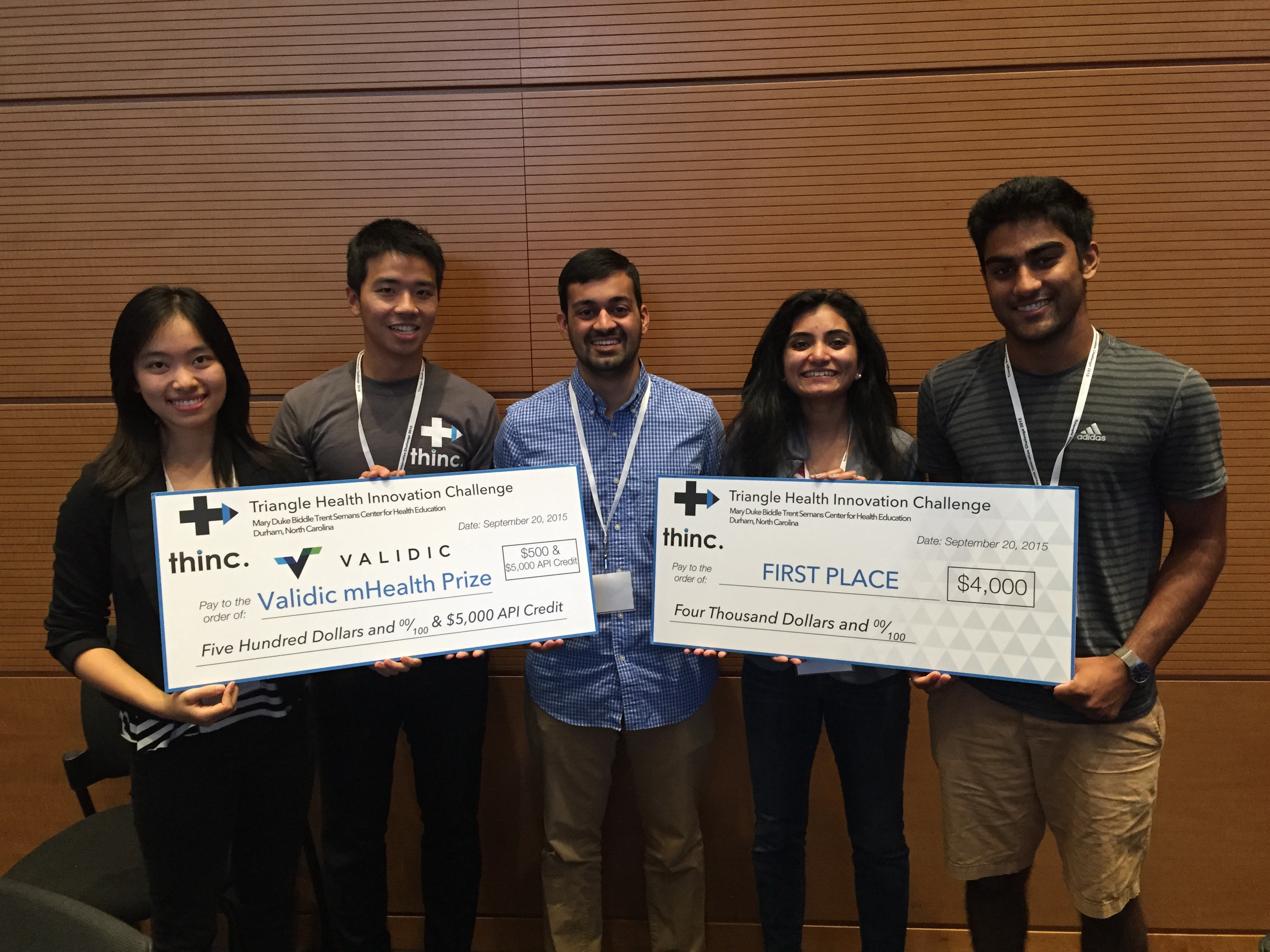
In a time-cap of three minutes, each team presented the fruits of their weekend of hacking, and were judged not only on their creativity and technical complexity, but also on clinical and business feasibility. Four winners were awarded $13,000 in cash and credits to work with the API (programming interface) of Validic, a Durham company that collects de-identified patient data from medical devices, wearables and apps.

Team Tiba, the winner of the grand prize, created a wearable physical therapy activity tracker to ensure that patients performed their physical therapy exercises regularly and correctly.

Team Breeze, winner of the runner-up prize, presented a smart lung function trainer and app to encourage pursed-lip breathing exercises in patients with chronic obstructive pulmonary disease (COPD).

Team Leia, the winners of the Mosaic Health Solutions prize, developed a digital to-do list for physicians, which integrated intimately with stores of data in order to send live push notifications about patient updates and prioritize different actions for different studies. The team hoped to improve

Team Tiba, winners of the Grand Prize and the Validic mHealth Prize, pose after the awards ceremony.

Team Tiba, winners of the Grand Prize and the Validic mHealth Prize, pose after the awards ceremony.

patient and physician satisfaction as well as patient safety, by assuring that doctors were up to date on conditions and constantly in sync with changes and improvements. Their prototype piggybacked off of current medical APIs, and queried existing data, making it easy for the roughly 150,000 clinicians who already store their data online to easily transition to the app.

Given the immense success of THInC, the organizers said they’re already planning to do it again next year. They’d like to recruit more students as well as more professional developers and programmers so that more teams could come away with a functioning prototype of their solution.

For any questions regarding the event, or planning, promoting, or executing next year’s event, please contact info@thincweekend.org. Interested individuals can also join the Health 2.0 NC Triangle group to participate in other similar events and meet similarly minded people in the area – all are welcome!

Anika Ayyar_100Post By Anika Ayyar

Fisticuffs Among the Mantis Shrimp

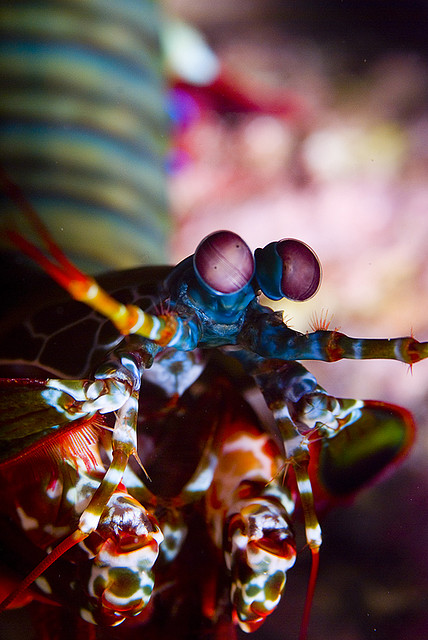
When mantis shrimp (Stomatopoda) dispute territory or mating rights, they use the tools at hand – namely two super-sonic bludgeons powerful enough to dismember a live crab or break through a clam shell.

Mantis shrimp are pugnacious pugilistic crustaceans . (Photo by Nazir Amin via Wikimedia Commons.)

Mantis shrimp are pugnacious and pugilistic. (Photo by Nazir Amin via Wikimedia Commons.)

Fortunately, they’ve developed a way to use these deadly clubs on each other without causing too many fatalities. In a ritualized battle called “telson sparring,” the combatants take turns hammering on each other’s tail-plate, which is raised up like a shield.

Graduate student Patrick Green watched more than 30 such contests in captive Panamanian mantis shrimp to discover that it wasn’t the shrimp who hit hardest who won the bout, but the one who hit the most frequently.

Green and his Ph.D. supervisor, biology professor Sheila Patek, hypothesize that the ritualized fighting could be a display of overall vigor and tenacity rather than outright punching power.

CITATION: “Contests with deadly weapons: telson sparring in mantis shrimp (Stomatopoda),” Green PA, Patek SN. Biology Letters, Sept. 2015. DOI:10.1098/rsbl.2015.0558

[youtube https://www.youtube.com/watch?v=psnvOqtRmzI]

Karl Leif Bates

Post by Karl Leif Bates, Director of Research Communications

Life and Death on the Frontiers of Global Health

IMG_3461Vision, according to Mark Dybul, is the biggest problem in public health.

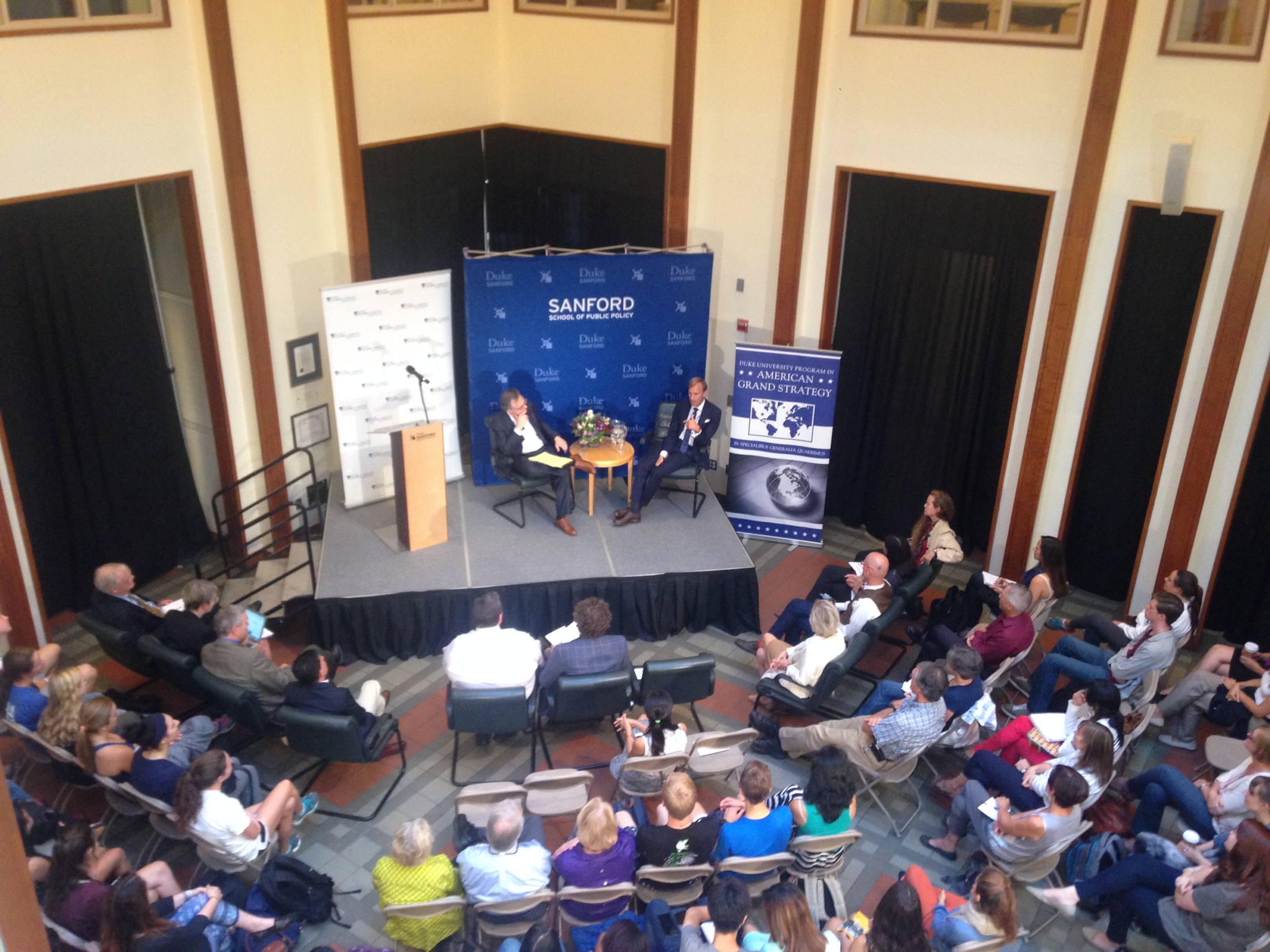
Dybul, the Executive Director of the Global Fund to Fight AIDS, Tuberculosis, and Malaria, and former head of the President’s Emergency Plan for AIDS Relief (PEPFAR), appeared at Duke on Sept. 16 for the Sanford School of Public Policy’s Egan lecture. The event was co-sponsored by the Duke Global Health Institute and the Kenan Institute for Ethics.

The format was like a meeting of the minds as Michael Gerson, Washington Post columnist, former speechwriter for George W. Bush, and Pamela and Jack Egan Visiting Professor at Duke, interviewed Dybul.

Gerson and Dybul probed fundamental questions such as how to effectively empower health efforts, socioeconomic disparity in health aid efforts, the role of science in public health, and trends in AIDS treatment methods.

Dybul opened by painting a picture of the landscape of AIDS in Africa in the epoch before serious AIDS efforts. He described the streets of Uganda “clogged with coffins,” an atmosphere thick with the expectation of imminent death.  He said the implications of this desolate psychology spread far beyond the human body, decreasing motivation for education or investment.

Dybul stressed that a program focused on vision, methods, and results is necessary in order to alleviate the AIDS epidemic, rather than a paternalistic approach gauged  only by the sheer amount of money given to an issue and the amount of aid distributed.

He said that bilateral aid organizations, many of which are based in the U.S., are necessarily attached to governments across oceans and thus inspire a certain degree of distrust with local communities. Global Fund, for example, serves as a mechanism for countries to organize anti-AIDS efforts, rather than the directing organization.

The reasons for the measured success of Global Fund, Dybul admitted, are unclear, largely due to the inability of separating variables in live populations. “Public health is art,” he added. The positive impact of Global Fund is indisputable, with decreased numbers of casual sex partners and increased use of condoms contributing to the reduced spread of AIDS in African nations.

When Gerson asked about the future of public health, Dybul predicted a relative increase in the prevalence of non-communicable disease; however, he forecasted that the more important question will be: “Who pays [for treatment]?”

Dybul also projected a vision of a worldwide, cohesive data management system to provide surveillance as a preventative measure in communities — “being smart” about epidemics. Dybul emphasized that public health extends deep into the community and suggested that the term “global health” may evolve into “country health” as relief efforts become more locally-based.

Dybul advised aspiring students to focus on what excites you, yet be open to new opportunities.

View a video of the entire talk (1:18) —

[youtube https://www.youtube.com/watch?v=-HHZyraZ574]


Olivia_Zhu_100 By Olivia Zhu

Page 72 of 111

Powered by WordPress & Theme by Anders Norén