Research Blog

Following the people and events that make up the research community at Duke

Students exploring the Innovation Co-Lab

New Blogger: Lola Sanchez-Carrion

Hi! My name is Lola Sanchez-Carrion and I am currently a sophomore at Duke pursuing a double major in Biology and Global Health. I was born in New York, and raised between Miami and Lima, Peru. It was in Lima that I developed a passion for global health, and a strong understanding of the implications scientific research can have on communities like the one I lived in.

New Blogger Lola Sanchez-Carrion is a sophomore in pre-med.

New Blogger Lola Sanchez-Carrion is a sophomore in pre-med.

Throughout high school, I did volunteer work with “TECHO,” an NGO that works towards mitigating poverty by building emergency relief homes, improving health systems, and encouraging political advocacy in developing regions of South America. By working with this organization and interacting with communities on a personal level, I began taking greater notice of global health issues and the need to address them.

I was so moved by my experiences with TECHO that I wrote an article about it for an online publication for international schools, and in doing so another interest emerged: a desire to write about all things health/science-related. I wrote for my high school’s “Environmental Science Blog,” a medium through which student writers showcased conferences and events taking place on campus and around Lima regarding environmental activism. I organized a conference on climate change at my high school to instigate conversations on scientific topics relevant to those of my generation. I realized the power that one’s words, written and verbal, had on teaching and inspiring others, particularly those outside the realms of the “scientific community.”

I am currently on the pre-med track at Duke, but am still very much open to the idea of following a scientific career that does not entail pursuing a medical degree. My courses in Global Health, particularly classes taught by Dr. Broverman and Dr. Whetten, have allowed me to recognized the infinite opportunities that exist through research at Duke, and how tangible the impact from research really is.

I hope that by writing for the Duke Research Blog, I will get to experience this research hands-on, meet the interesting students and faculty behind the cutting-edge work, and share it with other members of the Duke community so that they too can experience that impact.

Apart from my work with the Duke Research Blog, I am a tour guide on campus and am a member of Duke’s WISER Club, an organization that works towards empowering and educating women in rural Kenya.

New Blogger on the Scene: Meg Shieh

Hi everyone! My name is Meg Shieh, and I’m currently a Duke froshling. Where I come from cannot be answered in the standard 5-second or two- to three-word answer: I was born and raised in La Verne, California for almost thirteen years. The summer before 9th grade, my family and I moved to Kaohsiung, Taiwan; I’ve lived there for the past four years.

In Taiwan, I met my high school IB HL Chemistry teacher and Science Club advisor, Dr. Marilou Gallos. She was my greatest mentor in high school and piqued my interest in the sciences. I was the Science Club President, so I spent most of my time in her lab researching and conducting test drives on projects for members to complete. My school was also undergoing Leadership in Energy and Environmental Design (LEED) certification by the U.S. Green Building Council (USGBC) at the time. I was made the sole student representative on our LEED Committee, so I was privy to the inner workings of the certification and construction processes. Besides giving school tours regarding LEED certification to visitors, I also wrote and published my first article on the USGBC website.

dsc00655

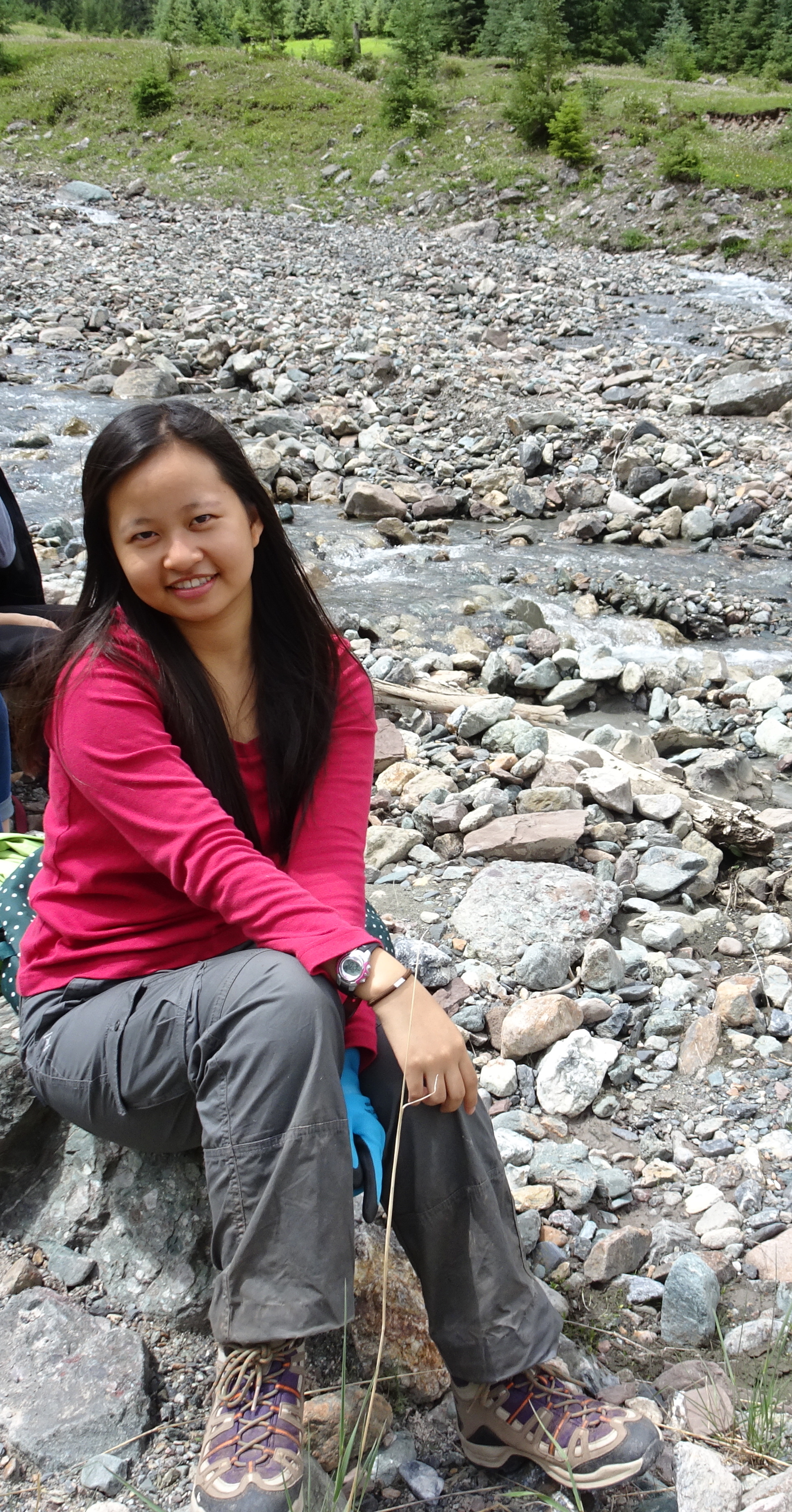
Resting by a river in the Qilian Mountains

The summer before senior year, my IB HL Biology teacher, Mr. Robert Oddo, took me and eleven of my classmates to China on an Operation Wallacea research expedition. On our first day in the Qilian Mountains, my group was selected to go up into the mountains. We woke up at 5 AM and needed to be at the top of the mountains by 7 AM in order to observe blue sheep or bharal. I had never hiked before, much less climbed to the top of a mountain at more than 3,200 km above sea level. Based on the confusion amongst the guides, I surmised that they had never been up mountains in this area before. We ended up following the extremely narrow goat paths. Once we reached the top, I sunk to the ground and observed the blue sheep skull a ways down and blue sheep excrement. We were too late. For the rest of the trip, I measured the size of a mouse, made bait, set small mammal traps, performed mist netting, and held birds in my hand. I realized that field research is something to look into.

My current interests lie in Chemistry and Biology, but I’m also interested in Psychology and Russian. I hope to be involved in enthralling research here at Duke, so I’m always on the lookout for opportunities!

Outside of academics, I enjoy reading murder-mystery novels, hanging out with friends, and basking in the lit-ness of the Brown Common Room. I love acting as an Admissions Ambassador and being a part of Club Figure Skating and Best Buddies.

I am so excited to be on the Research Blog Team and cannot wait to attend events, interview researchers, and share stories with all of you!

Students Mine Parking Data to Help You Find a Spot

No parking spot? No problem.

A group of students has teamed up with Duke Parking and Transportation to explore how data analysis and visualization can help make parking on campus a breeze.

As part of the Information Initiative’s Data+ program, students Mitchell Parekh (’19) and Morton Mo (’19) along with IIT student Nikhil Tank (’17), spent 10 weeks over the summer poring over parking data collected at 42 of Duke’s permitted lots.

Under the mentorship of graduate student Nicolas-Aldebrando Benelli, they identified common parking patterns across the campus, with the goal of creating a “redirection” tool that could help Duke students and employees figure out the best place to park if their preferred lot is full.

A map of parking patterns at Duke

To understand parking patterns at Duke, the team created “activity” maps, where each circle represents one of Duke’s parking lots. The size of the circle indicates the size of the lot, and the color of the circle indicates how many people entered and exited the lot within a given hour.

“We envision a mobile app where, before you head out for work, you could check your lot on your phone,” Mo said, speaking with Parekh at the Sept. 23 Visualization Friday Forum. “And if the lot is full, it would give you a pass for an alternate lot.”

Starting with parking data gathered in Fall 2013, which logged permit holders “swiping” in and out from each lot, they set out to map some basic parking habits at Duke, including how full each lot is, when people usually arrive, and how long they stay.

However, the data weren’t always very agreeable, Mo said.

“One of the things we got was a historical occupancy count, which is exactly what we wanted – the number of cars in the facility at a given time – but we were seeing negative numbers,” said Mo. “So we figured that table might not be as trustworthy as we expected it to be.”

Other unexpected features, such as “passback,” which occurs when two cars enter or exit under the same pass, also created challenges with interpreting the data.

However, with some careful approximations, the team was able to estimate the occupancy of lot on campus at different times throughout an average weekday.

They then built an interactive, Matlab-based tool that would suggest up to three alternative parking locations based on the users’ location and travel time plus the utilization and physical capacity of each lot.

“Duke Parking is really happy with the interface that we built, and they want us to keep working on it,” Parekh said.

“The data team worked hard on real world challenges, and provided thoughtful insights to those challenges,” said Kyle Cavanaugh, Vice President of Administration at Duke. “The team was terrific to work with and we look forward to future collaboration.”

Hectic class schedules allowing, the team hopes to continue developing their application into a more user-friendly tool. You can watch a recording of Mo and Parekh’s Sept. 23 presentation here.

The team's algorithm recommends up to three alternative lots if a commuter's preferred lot is full. In this video, suggested alternatives to the blue lot are updated throughout the day to reflect changing traffic and parking patterns. Video courtesy of Nikhil Tank.

Kara J. Manke, PhD

Post by Kara Manke


Aging Gracefully, and Cheaply, in a Small Space

The old joke is, “We’ve cured cancer several times — in mice!”

But the trouble with our favorite lab animal is that they aren’t nearly as close to humans as we had hoped.

Researchers who are working on human longevity obviously need a model organism — they can’t keep their funding going for 100 years to see how a person dies. And other primates aren’t ideal, either; they’re also pretty long-lived and expensive to house, besides.

microcebus mouse lemurs

Mouse lemurs at a lab outside Paris eagerly lap up their calories. Sometimes it’s great being in the control group. (CNRS photo)

So what if you had a primate that was relatively short-lived, say 13 years tops, and quite small, say 100 grams, a bit bigger than a mouse? Behold the Mouse Lemur, Microcebus, the smallest member of the primate family.

In a pair of presentations Friday during the Duke Lemur Center’s 50th Anniversary scientific symposium, gerontologists Fabien Pifferi of the French national lab CNRS, and Steven Austad, chair of biology at the University of Alabama-Birmingham (UAB), made their arguments for how well “le microcèbe” might work in studying aging in humans.

Pifferi works at one of two mouse lemur breeding colonies in France, which is housed in an elegant old chateau in Brunoy, a suburb southeast of Paris. There, a 450-member breeding colony of grey mouse lemurs produces about 100 pups a year, and the scientists have devised many clever, non-invasive ways to test their physical and mental abilities as they age.

“It seems like their normal aging is very similar to humans,” Pifferi said. But about 20 percent of the tiny lemurs follow a different trajectory, marked by the formation of brain plaques, atrophy of the brain and cognitive declines. It’s not exactly Alzheimer’s disease, he said, but it may be a useful scientific model of human aging.

Aging, UAB’s Austad began, is already the number one health challenge on the planet and will remain so for the foreseeable future. We need a good research model to understand not just how to achieve longevity, but how to live healthy longer, he said.

Filbert, a grey mouse lemur, was born at the Duke Lemur Center in June 2013, weighing less than two cubes of sugar. He should still be around in 2023 at least.

Filbert, a grey mouse lemur, was born at the Duke Lemur Center in June 2013, weighing less than two cubes of sugar.

Citing some early studies on using calorie restriction and rapamycin to increase longevity, Austad said mouse lemurs may be “a mid-way model between mice and humans.”

The CNRS colony at Brunoy tried to replicate a study on calorie restriction and longevity that had yielded mixed results in other animals. The mouse lemurs in the experimental condition thrived.

“I saw this colony last year,” Lemur Center Director Anne Yoder said. “The one remaining control animal was old and feeble and sort of pathetic. The four calorie-restricted animals were bouncing around, they were glossy.” Though suffering age-related blindness at that point, they were very much alive and frisky, Pifferi added.

“I think the mouse lemur is a great intermediate to do these sorts of studies,”  Austad said.

But, as you may imagine, some members of the lemur community who have dedicated their lives to preserving rare and critically endangered lemurs might struggle with the idea of  breeding up mouse lemurs to use as lab animals, even if the tests are non-invasive. Nobody asked hostile questions, but the discussion is sure to continue.

Karl Leif BatesPost by Karl Leif Bates

How to Get a Lemur to Notice You

Duke evolutionary anthropology professor Brian Hare studies what goes on in the minds of animals.

Duke evolutionary anthropology professor Brian Hare studies what goes on in the minds of animals.

Duke professor Brian Hare remembers his first flopped experiment. While an undergraduate at Emory in the late 1990s, he spent a week at the Duke Lemur Center waving bananas at lemurs. He was trying to see if they, like other primates, possess an important social skill. If a lemur spots a piece of food, or a predator, can other lemurs follow his gaze to spot it too?

First he needed the lemurs to notice him. If he could get one lemur to look at him, he could figure out if other lemurs then turn around and look too. In similar experiments with monkeys and chimps, oranges had done the trick.

“But I couldn’t get their attention,” Hare said. “It failed miserably.”

Hare was among more than 200 people from 25 states and multiple countries who converged in Durham this week for the 50th anniversary celebration of the Duke Lemur Center, Sept. 21-23, 2016.

Humans look to subtle movements in faces and eyes for clues to what others are thinking, Hare told a crowd assembled at a two-day research symposium held in conjunction with the event.

If someone quickly glances down at your name tag, for example, you can guess just from that eye movement that they can’t recall your name.

We develop this skill as infants. Most kids start to follow the gaze of others by the age of two. A lack of interest in gaze-following is considered an early sign of autism.

Arizona State University graduate student Joel Bray got hooked on lemurs while working as an undergraduate research assistant in the Hare lab.

Arizona State University graduate student Joel Bray got hooked on lemurs while working as an undergraduate research assistant in the Hare lab.

“Gaze-following suggests that kids are starting to think about the thoughts of others,” Hare said. “And using where others look to try to understand what they want or what they know.”

In 1998 Hare and researchers Michael Tomasello and Josep Call published a study showing that chimpanzees and multiple species of monkeys are able to look where others are looking. But at the time not much was known about cognition in lemurs.

“When you study dogs you just say, ‘sit, stay,’ and they’re happy to play along,” Hare said. Working at the Duke Lemur Center, eventually his students discovered the secret to making these tree-dwelling animals feel at home: “Lemurs like to be off the ground,” Hare said. “We figured out that if we just let them solve problems on tables, they’re happy to participate.”

Studies have since shown that multiple lemur species are able to follow the gaze of other lemurs. “Lemurs have gone from ignored to adored in cognitive research,” Hare said.


Ring-tailed lemurs are among several species of lemurs known to follow the gaze of other lemurs. The ability to look where others are looking is considered a key step towards understanding what others see, know, or might do. Photo by David Haring, Duke Lemur Center.

Ring-tailed lemurs are among several lemur species known to follow the gaze of other lemurs. The ability to look where others are looking is considered a key step towards understanding what others see, know, or might do. Photo by David Haring, Duke Lemur Center.

Robin SmithPost by Robin A. Smith

Lemur Poop Could Pinpoint Poaching Hotspots

DNA detective work aims to map the illegal pet lemur trade in Madagascar

Local business owners in Madagascar sometimes use ring-tailed lemurs to sell photo ops to tourists. Tourists visiting the country can easily support the illegal pet lemur trade unknowingly by paying to touch or have their picture taken with a lemur. Photo courtesy of the Pet Lemur Survey project (www.petlemur.com)

Businesses in Madagascar sometimes use ring-tailed lemurs to sell photo ops to tourists. Tourists visiting the country can easily support the illegal pet lemur trade unknowingly by paying to touch or have their picture taken with a lemur. Photo courtesy of the Pet Lemur Survey project (www.petlemur.com)

When Tara Clarke went to Madagascar this summer, she packed what you might expect for a trip to the tropics: sunscreen, bug spray. But when she returned seven weeks later, her carry-on luggage contained an unusual item: ten pounds of lemur droppings.

“That’s a lot of poop,” Clarke said.

A visiting assistant professor of evolutionary anthropology at Duke, Clarke and colleagues are analyzing DNA from lemur feces to pinpoint poaching hotspots in Madagascar’s pet lemur trade.

Pet lemurs are illegal in Madagascar, the only place on Earth where lemurs — the world’s most endangered primates — live in the wild.

More than 28,000 lemurs were taken from the wild and kept as pets on the island between 2010 and 2013 alone, surveys suggest.

Many pet lemurs are captured as babies, separated from their mothers and sold for less than two dollars apiece to hotels and restaurants to lure tourists, who pay to touch the animals and have their photo taken with them.

Anyone caught removing lemurs from the forest, selling them, or keeping them without a government permit can be fined and sentenced to up to two years in jail. But the laws are difficult to enforce, especially in remote villages, where rural poverty is common and law enforcement personnel may be few.

Clarke (left) and LaFleur (right) co-direct a nonprofit called Lemur Love that aims to protect ring-tailed lemurs and their habitat in southern Madagascar. Follow them at https://www.facebook.com/lemurloveinc/.

Primatologists Tara Clarke (left) and Marni LaFleur (right) co-direct a nonprofit called Lemur Love that aims to protect ring-tailed lemurs and their habitat in southern Madagascar. Follow them at https://www.facebook.com/lemurloveinc/.

In 2011, Malagasy officials began confiscating pet ring-tailed lemurs, the most popular species in the pet lemur trade, and handing them over to a non-governmental organization in southwestern Madagascar called Renalia, home of the Lemur Rescue Center.

About two dozen ring-tailed lemurs are currently being rehabilitated there in the hopes that many of them will one day be reintroduced to the wild.

But rounding up all the lemurs held illegally in private hands and taking them in would be nearly impossible, Clarke said. “There just isn’t a facility big enough, or the funding or the manpower.”

If we can figure out where the animals are being taken from the forest, Clarke said, we might be able to target those poaching hotspots and try to prevent them from becoming pets in the first place through education and outreach initiatives.

Ring-tailed lemurs live in southern Madagascar, an island nation off the coast of Africa. Map by Alex Dunkel.

Ring-tailed lemurs live in southern Madagascar, an island nation off the coast of Africa. Map by Alex Dunkel.

This summer, Clarke and biological anthropologist Marni LaFleur of the University of California, San Diego began collecting baseline samples of ring-tailed lemur poop from national parks and protected areas around southern and southwestern Madagascar, where ring-tailed lemurs live in the wild. They also collected samples from 19 ex-pets at the Lemur Rescue Center.

The samples are being shipped to the Primate Molecular Ecology Laboratory at Hunter College in New York for analysis.

There, with help from lab director Andrea Baden, the team will use DNA extracted from the wild samples to build a map of variation in ring-tailed lemur genes across their range.

By analyzing the DNA of the ex-pets housed at the Lemur Rescue Center and comparing it with their map, the researchers hope to pinpoint or rule out where the animals were first taken from the wild.

In addition to collecting feces, Clarke and LaFleur also worked with local guides to count ring-tailed lemurs in their natural habitat and estimate how many are left.

The pet trade isn’t the only threat to lemur survival. Over the past 40 years, logging, slash-and-burn agriculture, and charcoal production have reduced forest cover in southwestern Madagascar by nearly half.

“Their habitat is disappearing,” said Clarke, who has conducted field research in Madagascar since 2004.

Their 2016 census suggests that fewer than 2000 ring-tailed lemurs remain in the wild — a significant decline compared with the last census in 2000, when ring-tailed lemurs were estimated based on satellite images to number more than 750,000.

In every town the researchers visited they also passed out hundreds of posters about the illegal pet lemur trade as part of a nationwide education campaign called “Madagascar’s Treasure: Keeping Lemurs Wild,” which aims to raise interest in protecting the few wild populations that remain.

Lemur protection programs such as theirs can also benefit other threatened wildlife that share the lemurs’ forest habitat, such as the giant-striped mongoose and the radiated tortoise.

Keeping lemurs as pets isn’t unique to Madagascar. “There are thousands of lemurs in private hands in the U.S. too,” said Andrea Katz, curator at the Duke Lemur Center. Every year, the Duke Lemur Center gets phone calls from people in the U.S. looking for answers to questions about their pet lemurs’ health or behavioral problems.

“In some states it’s legal to have a pet lemur,” Clarke said. “You can find them online. You can find them in pet stores. A lot of times what happens is they reach sexual maturity and they get aggressive, and that’s when people call a zoo or a sanctuary.”

“Because you can see ring-tailed lemurs in zoos and movies people don’t think that they need our help. They don’t believe that they’re endangered. We’re trying to change that view,” Clarke said.

This research was supported by grants from the Margot Marsh Biodiversity Foundation and Conservation International’s Primate Action Fund.

These crowned lemurs are among more than 30 of the roughly 100 known lemur species in Madagascar that are affected by the pet lemur trade. Explore interactive data visualizations of pet lemur sightings in Madagascar by species, date and location at http://www.petlemur.com/data-visualization.html. Photo courtesy of the Pet Lemur Survey project (www.petlemur.com)

These crowned lemurs are among more than 30 of the roughly 100 known lemur species in Madagascar that are affected by the pet lemur trade. Explore interactive data visualizations of pet lemur sightings in Madagascar by species, date and location at http://www.petlemur.com/data-visualization.html. Photo courtesy of the Pet Lemur Survey project (www.petlemur.com)

Robin Smith


Post by Robin A. Smith

“Gastronauts” Decode Gut-Brain Communication

We like to think of our brains as the ultimate commanders-in-chief, dictating each and every heartbeat and muscle twitch within our bodies.

But our loopy insides may have a lot more say than we realize.

normal_gastric_mucosa_low_mag

Healthy mucosal cells in the human stomach, magnified. (credit: Nephron)

“Not only does the brain send information to the gut, but the gut sends information to the brain,” said Michael Gershon, professor of pathology and cell biology at Columbia University. “And much of that we don’t yet understand.”

Gershon was one of nearly 200 scientists gathered at Duke last Friday for Gastronauts, a symposium exploring how our twisty, slimy guts and our twisty, slimy brains communicate with each other. By decoding the cellular and molecular messaging behind this gut-brain chatter, these researchers hope to gain insight into a wide array of modern health challenges, from obesity to Alzheimer’s.

Scientists gathered in the Trent Semans Great Hall for the Gastronauts poster session

Nearly 200 scientists gathered in the Trent Semans Great Hall Sept. 9 for Gastronauts, sponsored by the Duke Institute for Brain Sciences.

Even if you sever all nerve connections between the brain and the gut, Gershon explained, your digestive tract will still carry on all that squeezing and acid-secreting necessary to digest food. The gut’s ability to ‘direct its own traffic’ led Gershon to dub the gut’s nervous system our “Second Brain.”

“The brain in the head deals with the finer things in life like religion, poetry, politics, while the brain in the gut deals with the messy, dirty, disgusting business of digestion,” Gershon said.

Our head brain and our gut brain talk to each other via long nerve fibers, such as a bundle of nerve cells called the vagus nerve that links the central nervous system to our abdominal organs, or via chemical signals, such as the neurotransmitter serotonin. Talks throughout the day delved into different aspects of these interactions – from how eating sugar can change our perception of taste to how the make-up of our gut microbiome might influence neural connectivity in the brain.

An illustration of human viscera

Our twisty loopy intestines can operate independently of our brains.

Duke professor Warren Grill presented his latest research on electrical stimulation of the vagus nerve. In projects led by graduate student Nikki Pelot and senior Eric Musselman, his group is building computer models to simulate the effects of electrical pulses on individual nerve cells within the vagus. These models might allow researchers to design devices to specifically block electrical signals going to the gut, a treatment that has been shown to help with obesity, Grill said.

And though we may think of the gut as the second brain, we should all remember that it came first, Duke professor Diego Bohórquez reminded the audience in the opening remarks.

“I like to say the gut is actually the first brain,” said Bohórquez. “If you go back to seafloor organisms, that was the first nervous system that was assembled.”


Kara J. Manke, PhD


Post by Kara Manke

In Sync

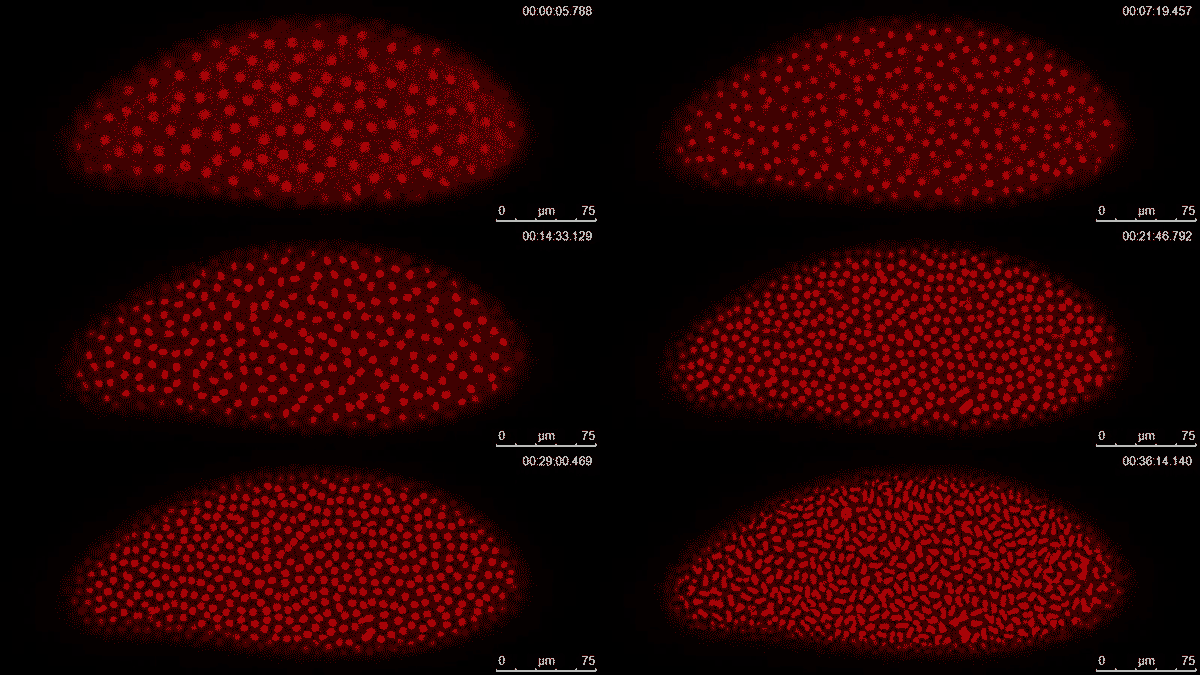
DiTalia2The dividing red spots in this time-lapse video belong to a busily developing fruit fly embryo. A fruit fly egg can divide into some 6,000 cells in just two hours —  faster division than cancer tumors. To watch them action, graduate student Victoria Deneke and assistant professor Stefano Di Talia tagged the nuclei with a protein that glows red. In a recent study, they show that the cells coordinate their rapid divisions via waves of protein activity that spread across the embryo. The waves help ensure that all the cells enter the next stage of development at the same time.

Duke graduate student Victoria Deneke has been awarded an international student research fellowship from the Howard Hughes Medical Institute.

Duke graduate student Victoria Deneke has been awarded an international student research fellowship from the Howard Hughes Medical Institute.

Starting September 2016, Deneke became one of 20 graduate students from 14 countries selected for an international student research fellowship from the Howard Hughes Medical Institute.

Three-year fellowship is designed to support outstanding international graduate students studying in the United States who are ineligible for fellowships or training grants through U.S. federal agencies.

Born in El Salvador, Deneke earned her undergraduate degree in chemical engineering from the University of Notre Dame before joining Stefano Di Talia’s at Duke in 2013.

Fellows must be nominated by their institution; participation is by invitation only. Deneke is only the second student at Duke to receive an HHMI International Student Research Fellowship since the program was established in 2011.

CITATION:  “Waves of Cdk1 Activity in S Phase Synchronize the Cell Cycle in Drosophila Embryos,” Victoria Deneke, Anna Melbinger, Massimo Vergassola and Stefano Di Talia. Developmental Cell, August 2016. http://dx.doi.org/10.1016/j.devcel.2016.07.023

Is Durham's Revival Pricing Some Longtime Residents Out?

When a 2015 national report on gentrification released its results for the nation’s 50 largest cities, both Charlotte and Raleigh — North Carolina’s top two biggest cities — made the list.

The result was a collection of maps and tables indicating whether various neighborhoods in each city had gentrified or not, based on changes in home values and other factors from 1990 to the present.

Soon Durham residents, business owners, policy wonks and others will have easy access to similar information about their neighborhoods too, thanks to planned updates to a web-based mapping tool called Durham Neighborhood Compass.

Two Duke students are part of the effort. For ten weeks this summer, undergraduates Anna Vivian and Vinai Oddiraju worked with Neighborhood Compass Project Manager John Killeen and Duke economics Ph.D. student Olga Kozlova to explore real-world data on Durham’s changing neighborhoods as part of a summer research program called Data+.

As a first step, they looked at recent trends in the housing market and business development.

Photo by Mark Moz.

Durham real estate and businesses are booming. A student mapping project aims to identify the neighborhoods at risk of pricing longtime residents out. Photo by Mark Moz.

Call it gentrification. Call it revitalization. Whatever you call it, there’s no denying that trendy restaurants, hotels and high-end coffee shops are popping up across Durham, and home values are on the rise.

Integrating data from the Secretary of State, the Home Mortgage Disclosure Act and local home sales, the team analyzed data for all houses sold in Durham between 2010 and 2015, including list and sale prices, days on the market, and owner demographics such as race and income.

They also looked at indicators of business development, such as the number of business openings and closings per square mile.

A senior double majoring in physics and art history, Vivian brought her GIS mapping skills to the project. Junior statistics major Oddiraju brought his know-how with computer programming languages.

To come up with averages for each neighborhood or Census block group, they first converted every street address in their dataset into latitude and longitude coordinates on a map, using a process called geocoding. The team then created city-wide maps of the data using GIS mapping software.

One of their maps shows the average listing price of homes for sale between 2014 and 2015, when housing prices in the area around Duke University’s East Campus between Broad Street and Buchanan Boulevard went up by $40,000 in a single year, the biggest spike in the city

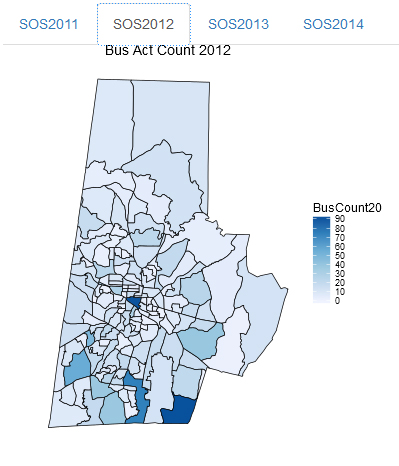
Their web app shows that more businesses opened in downtown and in south Durham than in other parts of the city.

Duke students are developing a web app that allows users to see the number of new businesses that have been opening across Durham. The data will appear in future updates to a web-based mapping tool called Durham Neighborhood Compass.

They also used a programming language called “R” to build an interactive web app that enables users to zoom in on specific neighborhoods and see the number of new businesses that opened, compare a given neighborhood to the average for Durham county as a whole, or toggle between years to see how things changed over time.

The Durham Neighborhood Compass launched in 2014. The tool uses data from local government, the Census Bureau and other state and federal agencies to monitor nearly 50 indicators related to quality of life and access to services.

When it comes to gentrification, users can already track neighborhood-by-neighborhood changes in race, household income, and the percentage of households that are paying 30 percent or more of their income for housing — more than many people can afford.

Vivian and Oddiraju expect the scripts and methods they developed will be implemented in future updates to the tool.

When they do, the team hopes users will be able to compare the average initial asking price to the final sale price to identify neighborhoods where bidding has been the highest, or see how fast properties sell once they go on the market — good indicators of how hot they are.

Visitors will also be able to compare the median income of people buying into a neighborhood to that of the people that already live there. This will help identify neighborhoods that are at risk of pricing out residents, especially renters, who have called the city home.

Vivian and Oddiraju were among more than 60 students who shared preliminary results of their work at a poster session on Friday, July 29 in Gross Hall.

Vivian plans to continue working on the project this fall, when she hopes to comb through additional data sets they didn’t get to this summer.

“One that I’m excited about is the data on applications for renovation permits and historic tax credits,” Vivian said.

She also hopes to further develop the web app to make it possible to look at multiple variables at once. “If sale prices are rising in areas where people have also filed lots of remodeling permits, for example, that could mean that they’re flipping those houses,” Vivian said.

Data+ is sponsored by the Information Initiative at Duke, the Social Sciences Research Institute and Bass Connections. Additional funding was provided by the National Science Foundation via a grant to the departments of mathematics and statistical science.

groupshot


Writing by Robin Smith; video by Sarah Spencer and Ashlyn Nuckols

LHC Reveals No New Physics Yet, but Duke Scientists Stay the Hunt

For particle physicists, “expect the unexpected” is more than just a catchy tagline.

Duke scientists on the Large Hadron Collider’s (LHC’s) ATLAS collaboration are on the hunt for hints of the unexpected: new, undiscovered particles or forces that could point to theories beyond the remarkably accurate, yet clearly incomplete, Standard Model of physics.

IMG_0721_crop

The Duke physics team at CERN this summer, gathered in front of a model of one of the LHC’s superconducting electromagnets. (Left to right: Ifeanyi Achu, Emily Stump, Elisa Zhang, Hannah Glaser, Wei Tang, Spencer Griswold, Andrea Bocci, Minyu Feng, Shu Li and Al Goshaw).

But the tsunami of new data coming out of the LHC’s current run, which began May of this year, has yet to provide any promising clues. Notably, at the ICHEP conference in Chicago, ATLAS collaboration members presented new results showing that an intriguing “bump” observed in 2015 data — speculated to be the first evidence of a completely new particle six times the mass of the Higgs — was likely just a statistical fluctuation in the data.

“It was quite amazing,” said Duke physics professor Al Goshaw, a member of the ATLAS collaboration. “With this new data there should have been a very clear signal, and there is nothing. It’s just absolutely gone.”

Goshaw has spent much of the summer at CERN, leading a team of undergraduate and graduate scientists crunching the numbers on the new data. Undeterred by the results presented in Chicago, he says the Duke team is still hard at work searching for other massive new particles.

“Our plan is to take the full data set collected in 2016 and extend the search for a new force-carrying particle up to much higher energies,” Goshaw said. “The search will go up to about 25 times the mass of the top quark or 35 times the mass of the Higgs.” They aim to have the results of this analysis ready by early 2017.

Why all the interest in tracking down these massive new particles?

ATLAS-CONF

Particle and energy spray recorded following a high-energy proton-proton collision event at the LHC in May. (Credit: CERN)

Goshaw says there are a myriad of alternative theories to the standard model, so many that trying to test specific predictions of individual models would be prohibitively time-consuming.

“But there is one prediction which they almost all make, and that is that there should be additional massive particles beyond those contained in the standard model,” Goshaw said. “So a generic way to search is to look for the new forces which are indicated by a force carrier, a massive new particle.”

The new data, collected at higher energies than the 2010-2012 run and with higher “brightness” or luminosity than the 2015 run, gives physicists the best chance yet of spotting an elusive new particle.

However, it’s not always looking at a plot and looking for a little bump, Goshaw says. Physicists, including the Duke team, are also utilizing the new data to perform highly precise tests of the standard model.

“The precision tests are really trying to find cracks in the standard model,” Goshaw said. “There could be particles that are so massive that we cannot detect them, but they may appear as subtle deviations in standard model predictions.”

But for now, the tried-and-true still holds. “It is quite extraordinary that, with these beautiful tests, everything is still described by the standard model,” Goshaw said.

Kara J. Manke, PhD

Post by Kara Manke

Page 65 of 111

Powered by WordPress & Theme by Anders Norén