Research Blog

Following the people and events that make up the research community at Duke

Students exploring the Innovation Co-Lab

An Expert’s Perspective on Mental Health

In honor of Mental Health Awareness Week and Depression Awareness Month, I interviewed Rae Jean Proeschold-Bell,  an associate research professor of Global Health in the Duke Global Health Institute whose research focuses on positive mental health, clergy health, and the integration of care within health systems.

In 2007, Proeschold-Bell founded the Clergy Health Initiative, a program developed to improve health outcomes among the clergy of North Carolina. In their first study, they performed a longitudinal survey of nine Methodist churches in North Carolina to determine the clergy’s health status. It was found that the clergy had a far higher obesity rate (41%) than the rest of North Carolina (29%). High rates of chronic disease associated with overweight/obese individuals were also present. The most interesting find, though, was that depression rates were double that of the regional average. Why?

rae_jean_proeschold-bell_002

Proeschold-Bell has conducted research in Kenya, Tanzania, Peru, India, and the U.S.

“Being the leader of an organization is difficult, says Proeschold-Bell. Churches are extremely underfunded and are constantly pressed for time. Pastors are expected to do all of the spiritual work that being a pastor entails, and also act as business managers for the church. But, thanks to donations from the Duke Endowment, Proeschold-Bell was able to develop three interventions to improve clergy health. Since then, she’s retrieved ten years of data that has allowed for further improvements in holistic health for the clergy of North Carolina.

When asked about depression specifically, Proeschold-Bell said that “the current model in place to treat depression does not work.” We focus strictly on treating the issue by mitigating its symptoms through an antidepressant, instead of pulling at the issue from multiple roots.

She says our efforts should be focused on increasing positive mental health. Positive mental health refers to the presence of positive emotions and good functioning (in both individual and social environments). Work being done by Corey Keyes at Emory has shown that individuals with high positive mental health are less likely to develop depression and chronic disease. By focusing our efforts towards improving one’s overall mental wellbeing, we can get individuals “ahead of the curve” and prevent them from even being depressed in the first place, says Proeschold-Bell.

Further research focusing on positive emotions has been conducted by Barbara Fredrickson at UNC, who suggests that positive emotions have been scientifically proven to increase people’s open-mindedness. Those with more positive emotions have been more willing to try new things and open up to other people, says Proeschold-Bell. These positive emotions connect greatly to one’s ability to be resilient, and there is research to be done in the overlap between possessing these emotions and being able to recover from situations of trauma and conflict that can be mentally straining.

To tackle mental health issues, we must look at them holistically and extensively. Not only do these issues need to be covered from all angles, but interventions need to be culturally competent and context-specific. Keeping these values in mind, will help improve global mental health outcomes.

lola_sanchez_carrion_100hed

Post by: Lola Sanchez-Carrion

3D-Printable Material Sets Terminator’s Eyes Aglow

Pumpkins just not cutting it for you this year?

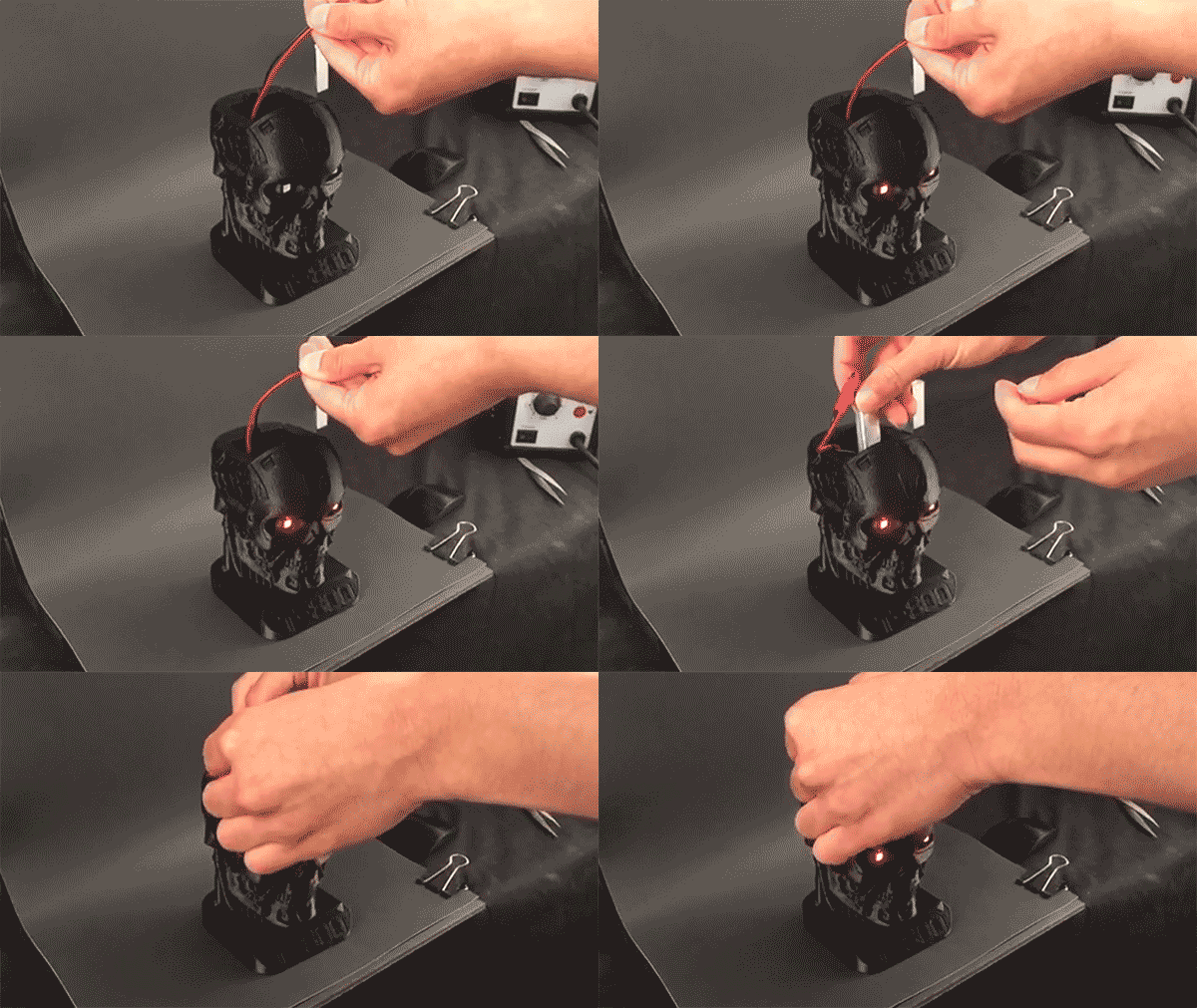
If you want a unique, hand-made Halloween decoration – and happen to have access to a 3D printer – Duke graduate student Patrick Flowers has just the project for you: this 3D-printed Terminator head, complete with shining, blood-red eyes.

[youtube https://www.youtube.com/watch?v=llDaqaicGGk]

Flowers, a PhD candidate in Benjamin Wiley’s lab, is not spending his time studying early eighties action flicks or the Governator’s best break-out roles. Instead, he and his labmates are working hard to brew up highly-conductive, copper-based materials that can be 3D printed into multilayer circuits – just like the one powering this Terminator’s glowing LED eyes.

Their latest copper concoction, which they have named “Electrifi,” is about 100 times more conductive than other materials on the market. The team has a taken out a provisional patent on Electrifi and also started a company, named Multi3D, where 3D-printing aficionados can purchase the material to include in their very own devices.

Micro CT scan of the 3D Terminator head

This X-ray view of Terminator’s head, collected with Duke SMIF’s Micro CT scanner, shows the embedded 3D circuit powering his LED eyes.

Creating a conductive, 3D-printable material is a lot trickier than just throwing some copper into a printer and going to town, Flowers said.

“Copper is really conductive originally, but if you try to extrude it out of a hot nozzle like you have to do in order to do this 3D printing, then it quickly loses all its properties,” Flowers said. And conductive materials that can stand the heat, like silver, are too expensive to use on any sort of scale, he added.

To bring the benefits of 3D printing to the world of electric circuits, Flowers and his labmates are experimenting with mixing copper with other materials to help it stay conductive through this extrusion process.

“This lab has a long history of working with copper – copper nanowires, copper particles, copper nanoparticles – so we’ve got a lot of little tricks that we use to maintain the conductivity,” Flowers said.

The team is currently testing the limits of their new material and plans to publish their findings soon. In the meantime, Flowers is busy exploring the other capabilities of Electrifi — outside of plastic android noggins.

“The circuit inside this guy is really simple, but it does show the capabilities of the material: it is embedded, it shows that I can go down, over, up, out, and go to a couple of eyes,” Flowers said. “Now I want to expand on that and show that you can make these really complicated embedded structures that have multiple layers and multiple components, other than just LEDs.”

adding_battery

Kara J. Manke, PhD

Post by Kara Manke

Diabetes — and Privacy — Meet 'Big Data'

“Click here to consent forever.”

If consent to participate in medical research were that simple, Joanna Radin of Yale University would have to find a new focus for her research, and I would never have found the Trent Center for Bioethics, Humanities & History of Medicine.

Luckily for us both, this is not the case. Medical consent is a very complex issue that can, as Radin’s research attests, traverse generations.

joanna-radin-headshot

Joanna Radin’s reserach focuses on the intersection of medical history, anthropology and ethics at Yale University. Source: Yale School of Medicine

Radin is an Associate Professor of Medical History at Yale, the perfect fit for the Humanities in Medicine Lecture Series taking place this month at the Trent Center. Her research nails the narrow intersection of medical history, anthropology, bioethics and data analytics. In fact, Radin’s appeal is so broad that her visit to Duke was sponsored by no less than six Duke departments, including the Departments of Computer Science, History, Electrical and Computer Engineering, Cultural Anthropology and Statistical Science.

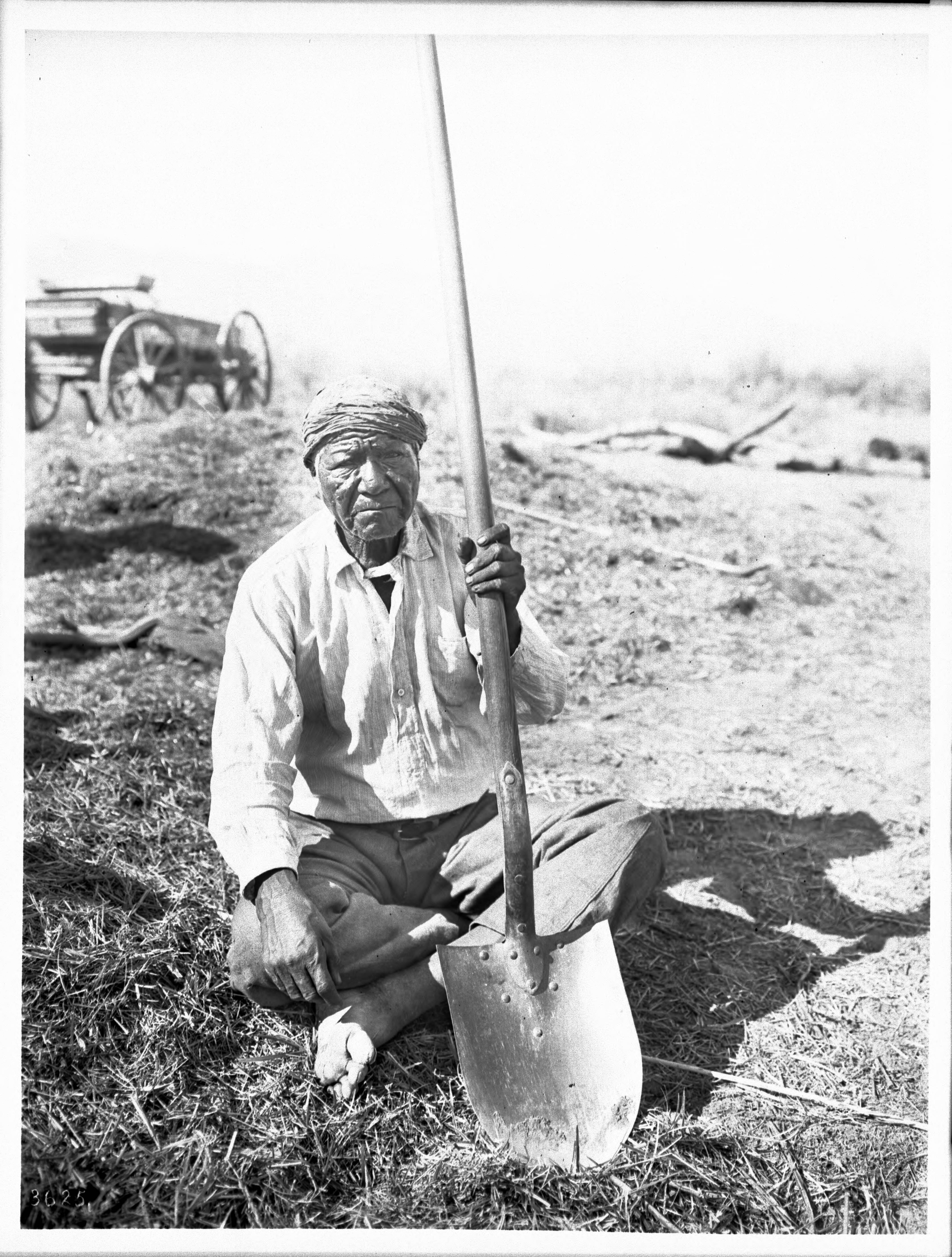
Radin’s lecture honed in on a well-known case in the realm of bioethics and medical history: the Pima Native American tribe in Arizona, which is known for unusually high rates of diabetes and obesity. The Pima were the first Native American tribe to be granted a reservation in Arizona—30,000 acres—at the beginning of the California Gold Rush. In 1963, following nearly half a century of mass famine among the Pima, the National Institute of Health (NIH) conducted a survey for rheumatoid arthritis in the Pima tribe, instead discovering a frighteningly high frequency of diabetes.

In 1965, the NIH initiated a long-term observational study of the Pima that continued for about 40 years, though it was meant to last no more than 10. The goal of the study was to learn about diabetes in the “natural laboratory” of sorts that the Pima reservation unwittingly provided. The data collected in this study came to be known as the Pima Indian Diabetes Data set (PIDD).

Machine learning enters the story around 1987, when David Aha and colleagues at the University of California, Irvine (UCI) created the UCI Machine Learning Repository, an archive containing thousands of data sets, databases and data generators. The repository is still active today, virtually a gold mine for researchers in machine learning to test their algorithms. The PIDD is one of the oldest data sets on file in the UCI archive, “a standard for testing data mining algorithms for accuracy in predicting diabetes,” according to Radin.

pima_indian_man_miguel_a_farmer_pima_arizona_ca-1900_chs-3625

A Pima farmer in Pima, Arizona, circa 1900. Source: Wikimedia Commons

Generations’ worth of data on the Pima tribe have been publicly accessible in the UCI archive for over two decades, creating ethical controversy around the accessibility of information as personal as blood pressure, body mass index (BMI) and number of pregnancies of Pima Native Americans. Though the PIDD can help refine machine learning algorithms that could accurately predict—and prevent—diabetes, the privacy issues provoked by the publicness of the data are impossible to ignore.

This is where “eternal” medical consent enters the equation: no researcher can realistically inform a study participant of what their medical data will be used for 40 years in the future.

These are the interdisciplinary questions that Radin brought forth in her lecture, weaving together seemingly opposite fields of study in an engaging, thought-provoking presentation. No one who left that room will look at the Apple Terms & Conditions the same way again.


Post by Maya Iskandarani iskandarani_maya_100hed

Economics and Health: The Biases Behind Our Decisions

Eric Finkelstein of the the Duke Graduate Medical School in Singapore studies how economic principles might be used to improve individual healthcare.

At a talk last Friday, Finkelstein, who was selected by Thomson Reuters as one of the world’s most influential scientific minds of 2015, argued that the same biases that affect our economic decisions could also influence our healthcare choices, and that understanding these biases could help motivate individuals to live healthy active lives.

In theory, people should be able to make healthy choices, Finkelstein said. Under the utility maximization model, individuals have the ability to rationalize and recognize the benefits of taking particular actions for themselves. But often we are not rational beings, he said, and there are several “deviations” that steer us away from maximizing our utility.

One of these deviations is the “present bias” preference, which leads us to make decisions in the present that our future self will regret. He discussed a particular experiment in which people are asked to choose what they will eat in one week’s time: a candy bar or an apple. Most choose the apple, but after a week, when they were given the opportunity to reevaluate their choice and change it, most switch to the candy bar.

This experiment shows not only the dynamic, unpredictable nature of our decisions, but also highlights our tendency to overestimate the will power of our “future selves.”

Another interesting bias that prevents us from being rational is our probabilistic assessment bias, which describes our tendency to overestimate the probability of very unlikely events, while underestimating the probability of those that are likely. This bias directly relates to health and our tendency to ignore the possibility of suffering a detrimental health problem like a heart attack, when in reality it’s quite commonplace.

Eric Finkelstein’s research, which focuses on the intersection between economics and global health, has gained him renowned success nationally and abroad. Source: Duke NUS Medical School.

To understand how these biases might influence individuals suddenly diagnosed with a terminal illness, Finkelstein and his medical team in Singapore conducted their own study on healthcare choices. In the experiment, both healthy and sick individuals were asked to identify what treatments they would prioritize if diagnosed with terminal cancer: level of pain, hours of care required, potential to extend life, cost of treatment and location of death.

Most healthy individuals said they would want whatever treatment was cheapest, but showed very little interest in investing in extending their life or selecting where they died. When sick patients were asked the same questions, on the other hand, they valued place of death (home was preferred) and survival time above everything else. Such information indicates just how difficult it is for us to predict where to invest in healthcare for cancer patients.

From this study and several others, Finkelstein concludes that we are not rational beings, but are instead irrational ones that feed off of biases and change our opinions constantly. But, he suggests that through the use of incentives, we can mediate these irrational biases and ultimately improve health outcomes.


Post by Lola Sanchez-Carrion

lola_sanchez_carrion_100hed

Girls Get An Eye-Opening Introduction to Photonics

14711502_10153733048287100_3205727043350847171_o

Demonstration of the Relationship between Solar Power and Hydrogen Fuel. Image courtesy of DukeEngineering.

Last week I attended the “Exploring Light Technologies” open house hosted by the Fitzpatrick Institute for Photonics, held to honor International “Introduce a Girl to Photonics” Week. It was amazing!

I was particularly enraptured by a MEDx Wireless Technology presentation and demonstration titled “Using Light to Monitor Health and View Health Information.” There were three “stations” with a presenter at each station.

At the first station, the presenter, Julie, discussed how wearable technologies are used in optical heart rate monitoring. For example, a finger pulse oximeter uses light to measure blood oxygen levels and heart rates, and fitness trackers typically contain LED lights in the band. These lights shine into the skin and the devices use algorithms to read the amount of light scattered by the flow of blood, thus measuring heart rate.

At the second station, the presenter, Jackie, spoke about head-mounted displays and their uses. The Google Glass helped inspire the creation of the Microsoft Hololens, a new holographic piece of technology resembling a hybrid of laboratory goggles and a helmet. According to Jackie, the Microsoft Hololens “uses light to generate 3D objects we can see in our environment.”

14589884_10153733048602100_2715427782090593871_o

Using the Microsoft Hololens. Image courtesy of DukeEngineering.

After viewing a video on how the holographic technology worked, I put on the Microsoft Hololens at the demonstration station. The team had set up 3D images of a cat, a dog and a chimpanzee. “Focus the white point of light on the object and make an L-shape with your fingers,” directed Eric, the overseer. “Snap to make the objects move.” With the heavy Hololens pressing down on my nose, I did as he directed. Moving my head moved the point of light. Using either hand to snap made the dog bark, the cat meow and lick its paws, and the chimpanzee eat. Even more interesting was the fact that I could move around the animals and see every angle, even when the objects were in motion. Throughout the day, I saw visitors of all ages with big smiles on their faces, patting and “snapping” at the air.

Applications of the Microsoft Hololens are promising. In the medical field, they can be used to display patient health information or electronic health records in one’s line of sight. In health education, students can view displays of interactive 3D anatomical animations. Architects can use the Hololens to explore buildings. “Imagine learning about Rome in the classroom. Suddenly, you can actually be in Rome, see the architecture, and explore the streets,” Jackie said. “[The Microsoft Hololens] deepens the educational experience.”

14707854_10153733048632100_7506613834348839624_o

Tour of the Facilities. Image courtesy of DukeEngineering.

Throughout the day, I oo-ed and aw-ed at the three floors-worth of research presentations lining the walls. Interesting questions were posed on easy-to-comprehend posters, even for a non-engineer such as myself. The event organizers truly did make sure that all visitors would find at least one presentation to pique their interest. There were photonic displays and demonstrations with topics ranging from art to medicine to photography to energy conservation…you get my point.

Truly an eye-opening experience!

Post by Meg Shiehmeg_shieh_100hed

Violence: Risk vs Protection Factors

On Oct. 3, in place of a typical Interdisciplinary Discussion Course (IDC) for the Focus program, we were brought together in the White Lecture Hall on East to hear Dr. Jeremy G. Richman give a lecture on “Violence, Compassion, and the Brain”.

Dr. Jeremy G. Richman

Dr. Jeremy G. Richman

Since his daughter Avielle was killed in the Sandy Hook Elementary School shooting, Dr. Richman has been studying violence and the brain with the Avielle Foundation. Using his extensive research experience in neuroscience and neuropsychopharmacology, Dr. Richman has been working with a team on understanding the risk and protective factors for violence.

untitled-3

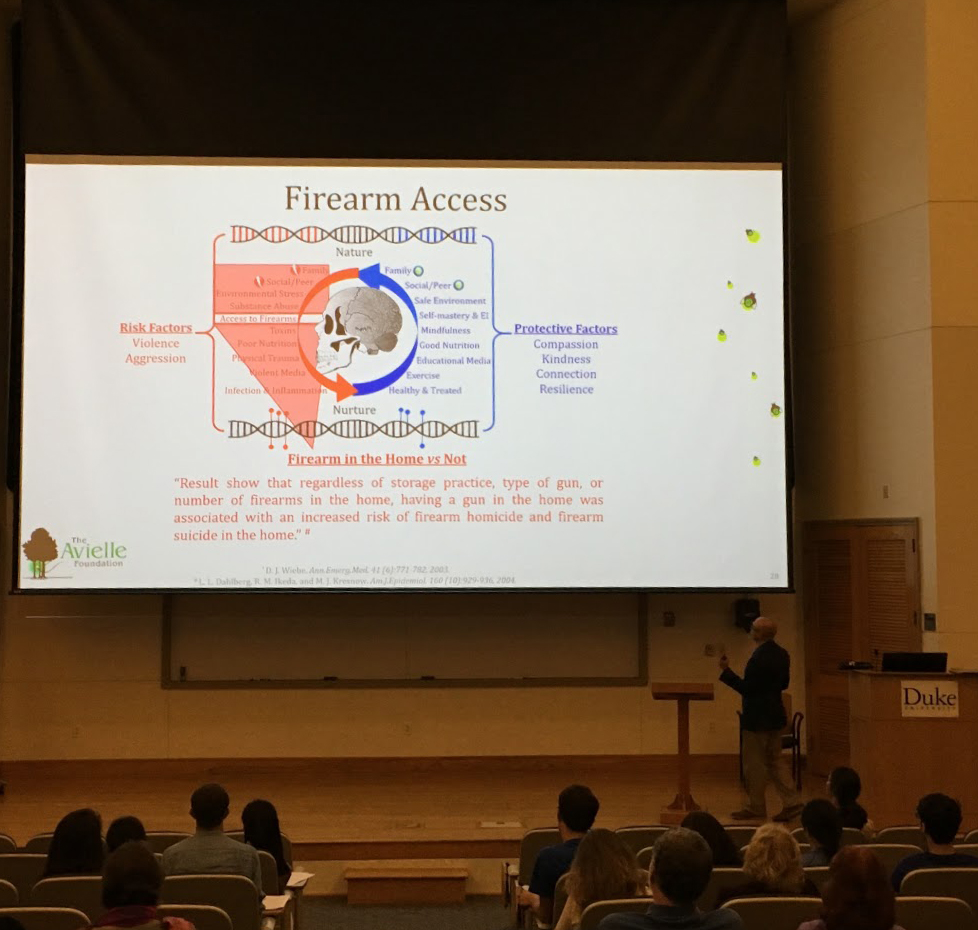
Dr. Richman lecturing in the White Lecture Hall on East Campus


The brain is very complex, and its processes and connections are still very much veiled. As a result, The Avielle Foundation currently conducts research on understanding violence by “bridging biochemical and behavioral sciences” using functional MRI brain scans, biochemistry, and genetics and epigenetics.

Based on the research he has analyzed, Dr. Richman identified four types of adverse childhood experiences (ACEs) that are risk factors for violence: psychological, physical, sexual, and household dysfunction/neglect.

Interestingly enough, research has shown that physically abused children are not necessarily more likely to be arrested for a violence-related crime. While it can happen, the situation is complicated because there is more than one factor involved. Adverse childhood experiences typically lead to violence towards oneself. When someone has at least four ACEs, their risk for alcoholism increases seven-fold. When males have more than five experiences within the ACE categories, their risk for drug use increases by 46 times. The more ACEs experienced, the greater exponentially the percentage of lifetime history of attempted suicides.

Studies have shown that firearm access in the home “is associated with an increased risk of firearm homicide and firearm suicide in the home.”

The debate of Nature vs. Nurture also comes into play. Humans have a monoamine oxidase A (MAOA) gene, also known as the Warrior Gene. MAOA is also associated with low dopamine levels. When males experience physical abuse and have low MAOA, the chance for them to have psychopathology increases. The interesting thing is that there is one main difference between a violent psychopath and a resilient leader: childhood experiences. A violent psychopath likely had an adverse childhood experience; the resilient leader had a nurturing childhood. Richman noted that studies involving neuroscience and psychology always have shortcomings because of the brain’s complexity. The brain’s processes and connections are still very much veiled.

Despite all these risk factors to violence, there are protective factors in place. One is less at risk when in a compassionate, kind, resilient, and connection-building environment with family and peers who embody these ideals. Healthy habits, good nutrition, and exercise help reduce stress, which in turn helps reduce the chances for violence.

Post by Meg Shiehmeg_shieh_100hed

Meet the Newbie: Maya Iskandarani

Hello!

My name is Maya Iskandarani, and I’m a freshman at Duke from Miami, Florida—meaning I’ll probably be in trouble once the temperature in Durham drops below 50°.

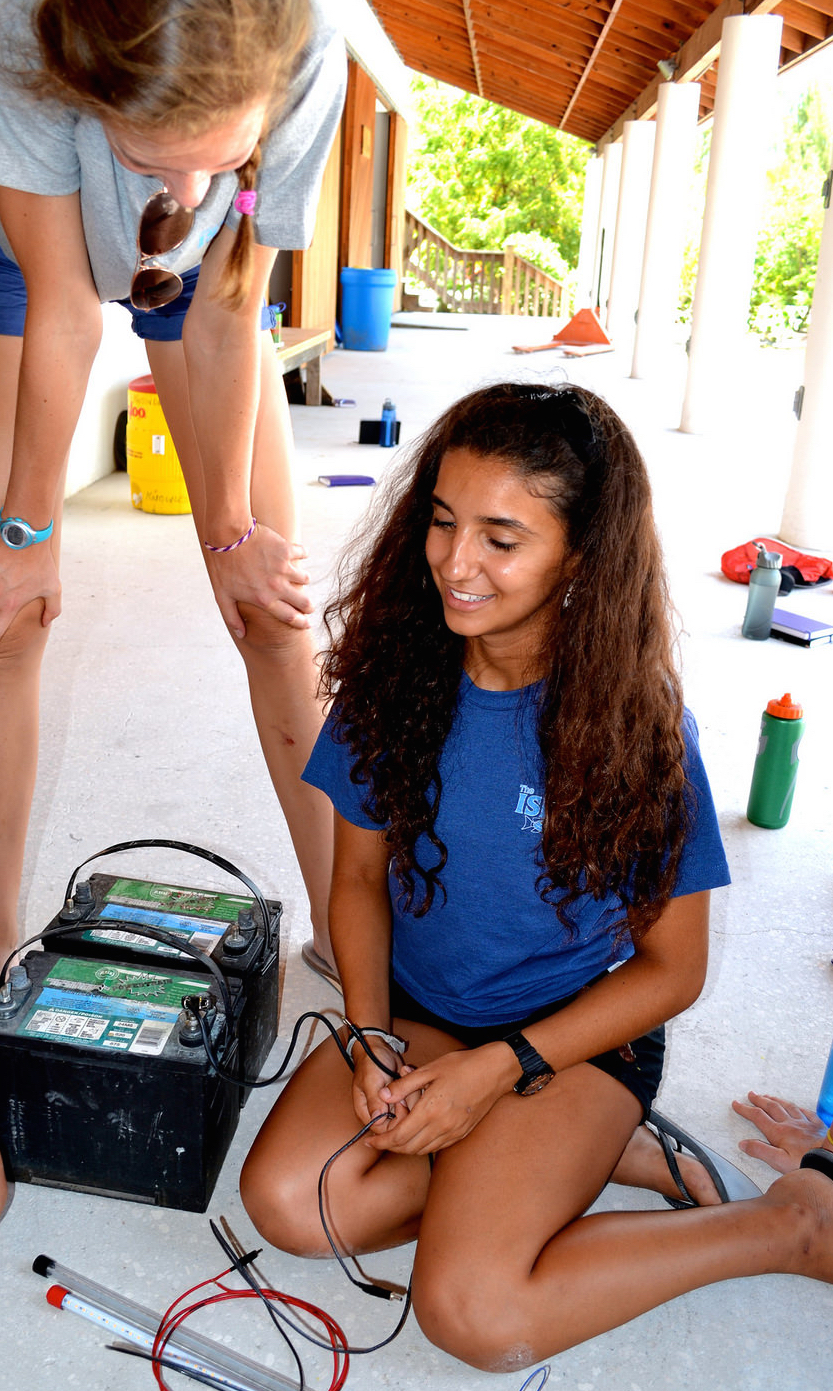
Messing around with an electric circuit at the Center for Sustainable Development (CSD) at the Island School. Source: Island School Communications Team

Messing around with an electric circuit in the Center for Sustainable Development (CSD) at The Island School. Source: The Island School Communications Team.

Though I might be poorly prepared for “real” seasons, I’m no less excited to start my adventure at Duke. For now, my academic interests lie in Biology (particularly Genetics and Marine Science), Earth and Ocean Sciences, Neuroscience, Spanish, Arabic, and French. I’m also in the Genetics and Genomics cluster of the Duke Focus Program. As you can see, I have some intense self-reflection to do before I declare a major.

I’m a walk-on to the Duke Women’s Rowing team, and feel very lucky to start fresh in an awesome sport with fantastic coaches and teammates. I also participated in Project WILD this summer, camping for two weeks in Pisgah National Forest without much prior camping, hiking, or backpacking experience. Otherwise, I’ve fought my instinct to jump into a million cool extracurricular clubs and programs, so I can get a handle on this “college” thing before I bite off more than I can chew.

In high school, I was an editor for the school newsmagazine (s/o highlights), president of the International Baccalaureate Honor Society (IBHS), vice president of the environmental club, Gables Earth, and a scooper at Whip ‘n Dip, an ice cream shop down the street from my house. I trained with the club swim team Miami Swimming for six years, and competed for my high school swim team for four.

My first taste of research was volunteering with Dr. Claire Paris of the University of Miami in my junior year of high school. I spent a few weeks helping then-PhD-candidate Dr. Erica Staaterman (a Duke alumna!) complete her dissertation on the relationship between marine soundscapes and biodiversity. My role was small, but fascinating: I used a computer program to manually filter hydrophone recordings from coral reefs in the Florida Keys for boat noise.

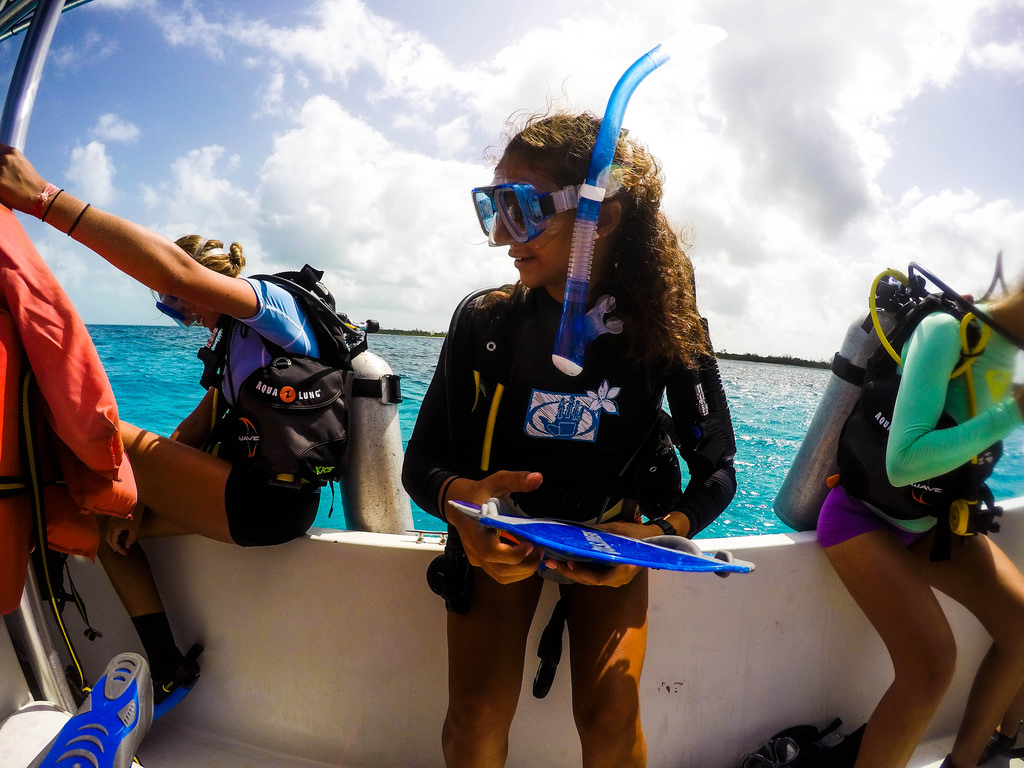
Preparing for a boat dive off of Cape Eleuthera, with underwater slate in hand to take notes while observing the coral reef.

Preparing for a boat dive off of Cape Eleuthera, with underwater slate in hand to take notes on coral reef life. Source: The Island School Communications Team.

My experience in Dr. Paris’s lab spurred me to further explore marine science, so I applied to attend The Island School over the summer entering my senior year. I spent a month in the blazing heat of the Bahamas, freediving through the same crystal-clear waters in the mornings that I returned to study on SCUBA in the afternoons. Although I’m not quite set on Marine Science as a course of study at Duke, I absolutely intend to spend a semester or two at the Duke Marine Lab to figure it out.

My curiosity in nearly all academic subjects pulls me in a hundred different directions, a few of which I hope to follow through with as part of the Duke Research Blog team. I can’t wait to meet researchers who are passionate about their work, and, perhaps, discover a research passion of my own.

Fostering a Collaborative Research Environment in Peru

We are told time and time again that Duke is a global university, one that transcends borders and takes interdisciplinary education to the next level.

On Monday, I was able to experience this international mindset firsthand at the Peru Health Symposium, a conference that celebrated a decade of culminating research efforts by Duke in Peru.

The symposium was organized by Dr. William Pan, a professor of Global Environmental Health at Duke who has worked on many research projects in Peru ranging from reproductive health to tuberculosis. In his opening remarks, Pan said the trademark interdisciplinary nature of Duke has allowed it to succeed as a research institution in Peru, along with its affiliation to pioneers in Peruvian health/environmental research, like John Terborgh.

“We are standing on the shoulders of giants,” said Pan. During the first panel, several research projects were presented.

Field Work in Peru

Helena Frischtak conducting research with Peruvian children in the field.

Helena Frischtak, a 4th year medical student at UVA and former Doris Duke Fellow spent a year studying the neurological effects of mercury exposure on children. She performed basic neurological exams, along with cognitive tests amongst 5-11 year-old children, and preliminary data suggests potential impacts of mercury exposure on cognitive development.

Marlee Krieger of the Center for Global Women’s Health Technologies presented a cervical cancer treatment that brings colposcopy into the primary care setting. When one is screened for cervical cancer, a pap smear is first conducted and if abnormalities are detected, a colposcopy is performed and tissue is biopsied from the cervix. This multiple-step process is tedious, and the number of patients that return for the colposcopy often declines. By combining the steps into one visit and performing it with a simpler and cheaper device, testing efficiency has increased.

Maria Lazo Porras of Cayetano Heredia University (Lima’s prominent medical university) presented findings on the effects of migration from rural to urban regions on chronic disease. Her findings suggest a correlation between urbanization and obesity, but provided surprising results that indicate higher rates of hypertension and diabetes in rural communities.

Peru amazon

Illegal mining scars the Amazon’s lush forests and flushes mercury runoff into streams.

Students doing research in the Amazon presented posters of their findings to faculty members of the Nicolas School and DGHI.

The main theme resonating throughout the conference was the need for collaboration not only to address public/environmental health concerns, but to organize symposiums like this one. The culmination of efforts by the Center for Latin American and Caribbean Studies (CLACS), DGHI, and the Nicholas School have fueled the Peru project’s palpable success.

Below is the link to the documentary shown at the symposium:

http://www.daughterofthelake.pe/ – “Hija de la Laguna” (Daughter of the Lake), 2015. The documentary tells the story of how a Peruvian woman used her powers to stop illegal mining from destroying the lake in her community; a lake that to her, represents her mother’s spirit.

lola_sanchez_carrion_100hedPost by Lola Sanchez-Carrion

Meet the New Blogger: Shanen Ganapathee

Hi y’all! My name is Shanen and I am from the deep, deep South… of the globe. I was born and raised in Mauritius, a small island off the coast of Madagascar, once home to the now-extinct Dodo bird.

Shanen Ganapathee

Shanen Ganapathee is a senior who wishes to be ‘a historian of the brain’

The reason I’m at Duke has to do with a desire to do what I love most — exploring art, science and their intersection. You will often find me writing prose; inspired by lessons in neuroanatomy and casting a DNA strand as the main character in my short story.

I’m excited about Africa, and the future of higher education and research on the continent. I believe in ideas, especially when they are big and bold. I’m a dreamer, an idealist but some might call me naive. I am deeply passionate about research but above all how it is made accessible to a wide audience.

I am currently a senior pursuing a Program II in Human Cognitive Evolution, a major I designed in my sophomore year with the help of my advisor, Dr. Leonard White, whom I had to luck to meet through the Neurohumanities Program in Paris.

This semester, I am working on a thesis project under the guidance of Dr. Greg Wray, inspired by an independent study I did under Dr. Steven Churchill, where we examined the difference in early human and Neandertal cognition and behavior. I am interested in using ancient DNA genomics to answer the age-old question: what makes us human? My claim is that the advent of artistic ventures truly shaped the beginning of behavioral modernity. In a sense, I want to be a historian of the brain.

My first exposure to the world of genomics was through the FOCUS program — Genome in our Lives — my freshman fall. Ever since, I have been fascinated by what the human genome can teach us. It is a window into our collective pasts as much as it informs us about our present and future. I am particularly intrigued by how the forces of evolution have shaped us to become the species we are.

I am excited about joining the Duke Research blog and sharing some great science with you all.

Walla Scores Grand Prize at 17th Annual Start-Up Challenge

The finalists of Duke’s 17th Annual Start-Up Challenge have found time between classes, homework, and West Union runs to research and develop pitches aiming to solve real-world problems with entrepreneurship. The event, hosted last week at the Fuqua School of Business, featured a Trinity alum as the keynote speaker. Beating out the other seven start-up pitches for the $50,000 Grand Prize was Walla, an app founded by Judy Zhu, a Pratt senior.

Judy Zhu and the Walla team pose with their $50,000 check, which is giant in more ways than one.

Judy Zhu and the Walla team pose with their $50,000 check, which is giant in more ways than one.

Walla aims to create a social health platform for college students by addressing widespread loneliness and creating a more inclusive campus community. The app’s users post open invitations to activities, from study groups to pick-up sports, allowing students to connect over shared interests.

Walla is closely tied with Duke Medicine by providing data from user activity to medical researchers. User engagement is analyzed to supply valuable information on mental health in young adults to professionals. The app currently features 700 monthly active users, with 3000 anticipated within the next month, and many more as the app opens to other North Carolina colleges.

Tatiana Birgisson returned to Duke to talk about her own experiences creating a business while an undergrad that won the Start-Up Challenge in 2013. Birgisson’s venture, MATI energy drink, was born out of her Central Campus dorm room and, through the support of Duke I&E resources, became the major energy drink contender it is today, as a healthy alternative to Monster or Red Bull.

The $2,500 Audience Choice award went to Ebb, an app designed to empower women on their periods by keeping them informed of physical and emotional symptoms throughout the course of their cycles, and creating a community through which menstruating women can receive support from those they choose to share information with.

Tatiana Birgisson won the 2013 startup challenge with an energy drink brewed in her dorm room, now sold as MATI.

Tatiana Birgisson won the 2013 startup challenge with an energy drink brewed in her dorm room, now sold as MATI.

Other finalists included BioMetrix, a wearable platform for injury prevention; GoGlam, an application to connect working women with beauticians in Latin America; Grow With Nigeria, which provides engaging STEM experiences for students in Nigeria; MedServe; Tiba Health; Teraphic.

This year’s Start-Up Challenge was a major success, with innovative entrepreneurs coming together to share their projects on changing the world. Be sure to come out next year; I’ll post an invite on Walla!

devin_nieusma_100Post by Devin Nieusma

Page 64 of 111

Powered by WordPress & Theme by Anders Norén