Research Blog

Following the people and events that make up the research community at Duke

Students exploring the Innovation Co-Lab

Science Gets By With a Little Help From Its Friends

There are many things in life that are a little easier if one recruits the help of friends. As it turns out, this is also the case with scientific research.

Lilly Chiou, a senior majoring in biology, and Daniele Armaleo, a professor in the Biology Department had a problem. Lilly needed more funding before graduation to initiate a new direction for her project, but traditional funding can sometimes take a year or more.

So they turned to their friends and sought crowdfunding.

Chiou and Armaleo are interested in lichens, low-profile organisms that you may have seen but not really noticed. Often looking like crusty leaves stuck to rocks or to the bark of trees, they — like most other living beings — need water to grow. But, while a rock and its resident lichens might get wet after it rains, it’s bound to dry up.

If you’re likin’ these lichens, perhaps you’d like to support some research…

This is where the power of lichens comes in: they are able to dry to a crisp but still remain in a suspended state of living, so that when water becomes available again, they resume life as usual. Few organisms are able to accomplish such a feat, termed desiccation tolerance.

Chiou and Armaleo are trying to understand how lichens manage to survive getting dried and come out the other end with minimal scars. Knowing this could have important implications for our food crops, which cannot survive becoming completely parched. This knowledge is ever more important as climate becomes warmer and more unpredictable in the future. Some farmers may no longer be able to rely on regular seasonal rainfall.

They are using genetic tools to figure out the mechanisms behind the lichen’s desiccation tolerance[. Their first breakthrough came when they discovered that extra DNA sequences present in lichen ribosomal DNA may allow cells to survive extreme desiccation. Now they want to know how this works. They hope that by comparing RNA expression between desiccation tolerant and non-tolerant cells they can identify genes that protect against desiccation damage.  

As with most things, you need money to carry out your plans. Traditionally, scientists obtain money from federal agencies such as the National Science Foundation or the National Institutes of Health, or sometimes from large organizations such as the National Geographic Society, to fund their work. But applying for money involves a heavy layer of bureaucracy and long wait times while the grant is being reviewed (often, grants are only reviewed once a year). But Chiou is in her last semester, so they resorted to crowdfunding their experiment.

This is not the first instance of crowdfunded science in the Biology Department at Duke. In 2014, Fay-Wei Li and Kathleen Pryer crowdfunded the sequencing of the first fern genome, that of tiny Azolla. In fact, it was Pryer who suggested crowdfunding to Armaleo.

Chiou (left) and Armaleo in a video.

Chiou was skeptical that this approach would work. Why would somebody spend their hard-earned money on research entirely unrelated to them? To make their sales pitch, Chiou and Armaleo had to consider the wider impact of the project, rather than the approach taken in traditional grants where the focus is on the ways in which a narrow field is being advanced.

What they were not expecting was that fostering relationships would be important too; they were surprised to find that the biggest source of funding was their friends. Armaleo commented on how “having a long life of relationships with people” really shone through in this time of need — contributions to the fund, however small, “highlight people’s connection with you.” That network of connections paid off: with 18 days left in the allotted time, they had reached their goal.

After their experience, they would recommend crowdfunding as an option for other scientists. Having to create widely understood, engaging explanations of their work, and earning the support and encouragement of friends was a very positive experience.

“It beats writing a grant!” Armaleo said.

Guest Post by Karla Sosa, Biology graduate student


Open Communication is Key to Research in Schools

One of the things that excited me most about coming to Duke was the amount of research being done on campus, from theoretical physics to biological field work or cultural anthropology. I recently had the opportunity to attend a panel about conducting research in schools. As someone who has only ever done biological and chemistry-based lab work, I was eager to learn more about how research is conducted in other disciplines.

Doing research in schools is particularly challenging because it includes so many parties. The research goals must align with the school district’s priorities, collaboration must occur with the teachers, administrators and researchers about the design of the study and feasibility of implementations, and there must be cooperation from the students who are often young children unaware of the research going on.

Ultimately, the core role of schools is to educate children. Thus, in order to conduct research, the team needs to find a way to provide a clear benefit to schools for participation and make sure of protecting instruction time, reducing the burden on teachers.

The main purpose of the panel was to help Duke researchers better understand how to effectively interact and conduct research in schools. This was very well reflected in the four panelists Amy Davis, Cherry Johnson, Michele Woodson, and Holle Williams who each gave short, individual presentations.

Essentially,  the goal of a school is to provide high-quality education to the students. So to conduct research, researchers must find a way to make their goals applicable to the teachers.

Davis, the coordinator of grants, research, and development in Durham Public Schools explained that because of their large minority population, researchers often want to partner with them. Davis explained that researchers should strive to work collaboratively in a way that will yield what the researcher needs but also benefit the school. The focus of the teachers and administrators is not on research and they are not experts in things like research design.

She urged researchers to first reach out to her because she knows which schools would be a viable fit and can help provide the language to talk directly to them. Furthermore, she addressed that researchers sometimes need to have the flexibility to alter the research design when working in schools.

Johnson, the Director of Research and Grant Development in Johnston County Public Schools began by explaining how her district is driven by principles of relationships, relevance, and innovation.

She added that they are  “always interested in collab opportunities between universities and JCPS.”

However, studies that can aid in furthering their priorities, namely innovation, teacher recruitment and social and emotional learning will have a higher likelihood of being conducted successfully.

What makes the county so unique is that they are almost two districts within one.

“We still have notable lines between the haves and have nots,” Johnson added referring to large the socioeconomic differences between the Raleigh commuters and farm families.

To address some of these challenges, JCPS are participating in many partnerships with universities like NC State, UNC and Duke including a study with Dr. Leslie M. Babinski, associate research professor in the Sanford School of Public Policy.

Dr. Babinski conducting research in schools
Dr. Babinski working with students

Ultimately, university research is not a school district’s top priority. However, Woodson added that if the research has the ability to aid the school in accomplishing their goals then it increases the likelihood of success for both parties.

The last speaker was Holle Williams the Director of Main Campus Institutional Review Board at Duke University. Most schools require the approval of Duke’s IRB, which aims to protect the rights and welfare of human research subjects. Williams explained that their goal is to understand the intent of the researcher’s project.

“We want to make sure that what you are doing, what you are contemplating meets the definition of research” Williams stated.

Understanding intent allows then to distinguish research from other kinds of projects where research can help the school but also must contribute to the universal knowledge of a given education based topic.

A big emphasis of the talk was open communication. Both the school representatives and director of IRB highlighted that in order to most efficiently carry out a research project, the researchers should make sure to reach out to both the schools as well as main campus IRB. Through effective communication, strong partnerships can be built between the Duke community and local schools to conduct research that benefits both parties.

Post by Anna Gotskind

Alex Dehgan and The Snow Leopard Project

Traveling through war-torn areas at risk of encountering landmines, militia, and difficult terrain, Alex Dehgan was protected only by a borrowed Toyota Corolla. Dehgan, the Chanler Innovator in Residence at Duke, has spent much of his life overseas addressing conflict in Afghanistan through promoting wildlife conservation.

As a result, Dehgan has served in multiple positions within the U.S. Department of State, including the office of the secretary, and the bureau of Near Eastern affairs. There, he aided in addressing foreign policy issues in Iran, Iraq, and Egypt and contributed to the improvement of science diplomacy. Recently, he founded the Office of Science and Technology as the Chief Scientist at the U.S. Agency for International Development.

Dehgan Speaking at Duke

Dehgan recently gave a talk at Duke on the snow leopard project, an effort he spearheaded focusing on snow leopard (Panthera uncia)  and other wildlife conservation in Afghanistan. Because of the conflict, most people are not aware of the incredible wildlife and natural beauty within the country’s borders.

Snow Leopard Project Gallery Photo

In his conservation efforts, Dehgan visited the Pamir, Karakoram, Hindu Kush, and Tien Shian mountain ranges hoping to learn more about the wildlife that lived there and the best way to promote their conservation. He used camera traps and collected scat to figure out species were in the area.

He began by talking about the Pamir mountains. Despite the fact that this is a very dangerous region to be, Dehgan ventured in ready to work with locals and discover the wildlife there. Once,  a member of his team asked if they could forgo checking the camera traps for the day because they were being bombed by the U.S. Army. However, it was worth it because Dehgan had the opportunity to work with locals and collect images as well as data on several unique species.

This included the Marco Polo sheep (Ovis ammon polii), enormous sheep that live in single-sex groups for most of the year. They only come together to mate and when they do, the males clash heads with one another for the ability to procreate. He was also able to find a markhor (Capra falconeri), which he prefers to call a “Twin-horn unicorn.” Markhor means snake eater, but the animal does not actually eat snakes. These animals are so valuable that a hunter once paid $110,000 to shoot one. Dehgan and his team were able to collect hair and genetic samples of musk deer (Moschus), which can be found in very steep areas of the Pamir mountains. These animals derive their name from the musk they produce which is often used in perfumes.

Snow Leopard Project Gallery Photo

The area is known as Nuristan, the land of the enlightened, and is unique in that each valley has its own tradition, crafts, and even dialect. Dehgan and his team worked with people from the region and trained them to look for the specific animals

One of the most remarkable places Dehgan visited was Band-e Amir, which he described as looking like the grand canyon. The most unique natural aspect is a system of six lakes formed by the same process that creates stalactites and stalagmites. Above the lakes is an incredible mountain range and on top of the mountains are marine fossils because it used to be at the bottom of the sea. Here, Dehgan was able to use camera traps to collect images of ibexes (Capra ibex), Persian leopards (Panthera pardus saxicolor), and poachers. Poaching would eventually become one of Dehgan’s key focuses. Dehgan and his team also discovered Asiatic wild asses and assumed the presence of Asiatic leopards after finding their skins in the nearby villages.

Dehgan discovered that there was a massive trade in wildlife driven by the U.S. military. Skins of snow leopards and Persian leopards could be found all over Afghanistan as a part of illegal wildlife trade and other wildlife like Saker Falcons could be sold for up to $1 million.

As a result, Dehgan started a program around wildlife trafficking. A major part of his effort took place on Chicken Street, a busy shopping area where illegal animal skins could frequently be found. Dehgan worked closely with U.S. Military police, training them on how to identify furs.

Dehgan also worked with Afghani airport employees on how to inspect baggage for illegal furs. This resulted in the shut down of nearly all illegal fur trade, which Dehgan said was one of his biggest successes. In fact, one day while in Afghanistan, Dehgan received word that a fur trader wished to speak with him. Assuming they were angry at him for reducing their business Dehgan said that he actually feared for his life. However, it turned out that the fur trader simply wanted to be trained to identify illegal furs because they too wanted to protect Afghanistan’s wildlife.

Dehgan explained that Afghanistan was one of the easiest places he ever did conservation. This is because 80 percent of the human population is dependent on natural resources and thus when the wildlife fails, they fail. Because of this, they are eager to help aid in promoting conservation efforts.

Additionally, Dehgan was able to create the Wildlife Conservation Society’s Afghanistan Program which resulted in Afghanistan’s first and second national parks. Villages held local elections to set up a committee and to set up rules to govern the national parks.

Ultimately, his conservation work not only helped wildlife, but supported democracy by empowering, working with and training local communities.

To learn more, check out Dehgan’s recently published book, “The Snow Leopard Project” as well as his twitter, @lemurwrangler.

By Anna Gotskind

The Costs of Mental Effort

Every day, we are faced with countless decisions regarding cognitive control, or the process of inhibiting automatic or habitual responses in order to perform better at a task.

Amitai Shenhav, PhD, of Brown University, and his lab are working on understanding the factors that influence this decision making process. Having a higher level cognitive control is what allows us to complete hard tasks like a math problem or a dense reading, so we may expect that the optimal practice is to exert a high level of control at all times.

Shenhav’s lab explores motivation and decision making related to cognitive control.

Experimental performance shows this is not the case: people tend to choose easier over hard tasks, require more money to complete harder tasks, and exert more mental effort as the reward value increases. These behaviors all suggest that the subjects’ automatic state is not to be at the highest possible level of control.

Shenhav’s research has centered around why we see variation in level of control. Because cognitive control is a costly process, there must be a limit to how much we can exert. These costs can be understood as tradeoffs between level of control and other brain functions and consequences of negative affective changes related to difficult tasks, like stress.

To understand how people make decisions about cognitive control in real time, Shenhav has developed an algorithm called the Expected Value of Control (EVC) model, which focuses on how individuals weigh the costs and benefits of increasing control.

Employing this model has helped Shenhav and his colleagues identify situations in which people are likely to choose to invest a lot of cognitive control. In one study, by varying whether the reward was paired only with a correct response or was given randomly, Shenhav simulated variability in efficacy of control. They found that people learn fairly quickly whether increasing their efforts will increase the likelihood of earning the reward and adjust their control accordingly: people are more likely to invest more effort when they learn that there is a correlation between their own effort and the likelihood of reward than when rewards are distributed independent of performance.

Another study explored how we adjust our strategies following difficult tasks. Experiments with cognitive control often rely on paradigms like the Stroop task, where subjects are asked to identify a target cue (color) while being presented with a distractor (incongruency of the word with its text color). Shenhav found that when subjects face a difficult trial or make a mistake, they adjust by decreasing attention to the distractor.

The Stroop task is a classic experimental design for understanding cognitive control. Successful completion of Stroop task 3 requires overriding your reflex to read the word in cases where the text and its color are mismatched.

A final interesting finding from Shenhav’s work tells us that part of the value of hard work may be in the work itself: people value rewards following a task in a way that scales to the effort they put into the task.

Zapping Your Brain Is Dope

Emerging technology has created a new doping technique for athletic performance that is, as of now, perfectly legal.

Coined “neuro-doping,” this method sends electric current through one’s brain to facilitate quicker learning, enhanced muscular strength, and improved coordination. Use of this electronic stimulus has taken off in the sports world as a replacement for other doping methods banned by the World Anti-Doping Agency (WADA). Because it’s relatively new, WADA has yet to establish rules around neuro-doping. Plus, it’s virtually undetectable. Naturally, a lot of athletes are taking advantage of it.

Image result for doping

One specific method of neuro-doping is known as Transcranial Direct-Current Stimulation (tDCS). It works by sending a non-invasive and painless electrical current through the brain for around three to 20 minutes, in order to excite the brain’s cortex, ultimately increasing neuroplasticity (Park). This can be done commercially via a headset like device for $200.

Image result for transcranial direct current stimulation headset
The Halo Sport

Weight lifters, sprinters, pitchers, and skiers are just some of many types of athletes who can benefit from tCDS. By practicing with these headphones on, new neural pathways are constructed to help their bodies achieve peak performance. Dr. Greg Appelbaum, director of Opti Lab and the Brain Stimulation Research Center, says it’s especially useful for athletes where technique and motor skills triumph — such as a sprinter getting out of the blocks or an Olympic ski jumper hanging in the air. Top-tier athletes are pushing that fine limit of what the human body can accomplish, but neuro-doping allows them to take it one step further.

Neuro-doping has other applications, too. Imagine insanely skilled Air Force pilots, surgeons with exceptionally nimble hands, or soldiers with perfect aim. tCDS is being used to make progress in things like Alzheimer’s and memory function because of its impact on cognitive functioning in the forms of increased attention span and memory. You could even learn the guitar faster.

In this sort of context, it’s a no brainer that neuro-doping should be taken advantage of. But how ethical is it in sports?

The precedent for WADA to ban a substance or technique has been based on meeting two of the following three criteria: (1) drugs or tools that likely enhance performance to secure a winning edge; (2) drugs or tools that place athletes’ health at risk; (3) any substances or techniques that ruin the “spirit-of-sport” (Park). Lots of research has shown tCDS is pretty legit. As for health risks, tCDS is still in the experimental stage, so not much can be said about its side effects. Ethically, it causes a lot of controversy.

Many issues come into play when thinking about allowing athletes to neuro-dope. Given its similarities with other popular drugs, tCDS could introduce unfair advantages. Furthermore, not everyone may have access to the technology, and not everyone may want to use it. However, it’s important to note that sports already have unfair advantages. Access to things like proper coaching and nutrition may not be a reality for everyone. Sports are just inherently competitive.

Back when baseball players doped, it was awesome to watch them crush balls out of the park. Reintroducing performance enhancement through tCDS could mean we start seeing mountain bikers launching insane air and world records being smattered. The human body could achieve newfound heights.

Are the benefits worth it? Does neuro-doping ruin the “spirit of the sport?” Regardless of these important questions, tCDS is a fascinating scientific discovery that could make a difference in this world. So, what do you think?

Will Sheehan
Post by Will Sheehan

Park, Cogent Social Sciences (2017), 3: 1360462
https://doi.org/10.1080/23311886.2017.1360462

Dolphin Smarts

Imagine you are blindfolded and placed into a pool of water with a dolphin. The dolphin performs a movement, such as spinning in a circle, or swimming in a zig-zag pattern, and your task is to imitate this movement, without having seen it. Ready, go. 

Sound impossible? While it may not be possible for a human to do this with any accuracy, a dolphin would have no problem at all. When cognitive psychologist and marine mammal scientist Kelly Jaakkola gave this task to the dolphins at the Dolphin Research Center in Florida, they had no problem at all copying a human’s behavior. So how did they do it? Jaakkola thinks they used a combination of active listening and echolocation.

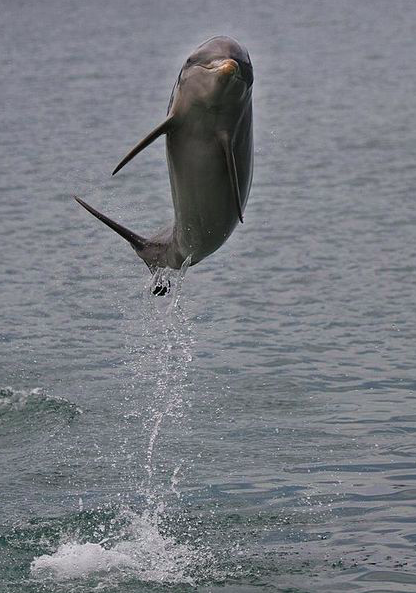
How smart are dolphins? (Photo from Wikimedia Commons: Stuart Burns)

Humans love to claim the title of “smartest” living animal. But what does this mean? How do we define intelligence? With a person’s GPA? Or SAT score? By assigning a person a number that places him or her somewhere on the scale from zero to Einstein? 

Honestly, this is problematic. There are many different types of intelligence that we forget to consider. For example, Do you know that five is less than seven? Can you remember the location of an object when you can’t see it? Can you mimic a behavior after watching it? Are you capable of cooperating to solve problems? Can you communicate effectively? All of these demonstrate different intelligent skills, many of which are observed in dolphins.

Needless to say, dolphins and humans are entirely different creatures. We have different body plans, different ways of interacting with the world, and different brains. It has been 90 million years since we shared a common ancestor, which is why the things we do have in common are so fascinating to researchers. 

Like us, dolphins understand ordinality. When presented with two novel boards with different numbers of dots, dolphins at the Dolphin Research Center chose the smaller number 83 percent of the time. But unlike us, they weren’t counting to solve this problem. When they were shown boards that represented consecutive numbers, the dolphins struggled, and often failed the task.

Similar to humans, dolphins understand that when objects are hidden from view, they still exist. At the Dolphin Research Center, they could easily remember the location of toy when a trainer hid it inside a bucket. However, unlike humans, dolphins couldn’t infer the movement of hidden objects. If the bucket was moved, the dolphins didn’t understand that the toy had moved with it.

Dr. Jaakkola presents to a packed room of Duke students

While they may not be physicists, Jaakkola has shown that dolphins are stellar cooperators, and amazing at synchronous tasks. When asked to press an underwater button at the same time as a partner, the dolphins pushed their buttons within 0.37 milliseconds of each other, even when they started at different times. As the earlier example shows, dolphins can also imitate incredibly well, and this skill is not limited to mimicking members of their own species. Even though humans have an entirely different body plan, dolphins can flexibly use their flipper in place of a hand, or their tail in place of legs, and copy human movements.

It is believed that dolphins evolved their smarts so that they could navigate the complex social world that they live in. As the researchers at the Dolphin Research Center have shown, they possess a wide array of intelligent abilities, some similar to humans and others entirely different from our own. “Dolphins are not sea people,” Jaakkola warned her audience, but that’s not to discount the fact that they are brilliant in their own way. 

Style Recommendations From Data Scientists

A combination of data science and psychology is behind the recommendations for products we get when shopping online.

At the intersection of social psychology, data science and fashion is Amy Winecoff.

Amy Winecoff uses her background in psychology and neuroscience to improve recommender systems for shopping.

After earning a Ph.D. in psychology and neuroscience here at Duke, Winecoff spent time teaching before moving over to industry.

Today, Winecoff works as a senior data scientist at True Fit, a company that provides tools to retailers to help them decide what products they suggest to their customers.

True Fit’s software relies on collecting data about how clothes fit people who have bought them. With this data on size and type of clothing, True Fit can make size recommendations for a specific consumer looking to buy a certain product.    

In addition to recommendations on size, True Fit is behind many sites’ recommendations of products similar to those you are browsing or have bought.

While these recommender systems have been shown to work well for sites like Netflix, where you may have watched many different movies and shows in the recent past that can be used to make recommendations, Winecoff points out that this can be difficult for something like pants, which people don’t tend to buy in bulk.

To overcome this barrier, True Fit has engineered its system, called the Discovery engine, to parse a single piece of clothing into fifty different traits. With this much information, making recommendations for similar styles can be easier.

However, Winecoff’s background in social psychology has led her to question how well these algorithms make predictions that are in line with human behavior. She argues that understanding how people form their preferences is an integral part of designing a system to make recommendations.

One way Winecoff is testing how true the predictions are to human preferences is employing psychological studies to gain insight in how to fine-tune mathematical-based recommendations.

With a general goal of determining how humans determine similarity in clothes, Winecoff designed an online study where subjects are presented with a piece of clothing and told the garment is out of stock. They are then presented with two options and must pick one to replace the out-of-stock item. By varying one aspect in each of the two choices, like different color, pattern, or skirt length, Winecoff and her colleagues can distinguish which traits are most salient to a person when determining similarity.

Winecoff’s work illustrates the power of combining algorithmic recommendations with social psychological outcomes, and that science reaches into unexpected places, like influencing your shopping choices.  

Post by undergraduate blogger Sarah Haurin

Meet the Researcher Who Changed How We Care for Rape Survivors

One of the first things I was told during freshman orientation was that two out of every five young women at Duke experience some form of sexual assault during their four years as an undergraduate. Shortly after that, I was informed that as a Duke student, I was not allowed to protect myself with pepper spray, because it is banned by university policy.

At the 2019 Harriet Cook Carter Lecture, Ann Burgess, a professor of psychiatric mental health nursing at Boston College, reported that 25 to 30 percent of women and 10 percent of men will be sexually assaulted in their lifetimes, statistics that make our campus standard of 40 percent seem strikingly high in comparison. Burgess has devoted her life to the support of sexual assault survivors, and pioneered treatments for victims of such abuse. For the past fifty years, she has studied the traumatic effects of rape and violence on patients of all ages, and worked closely with the FBI Academy to research the underlying causes of such crimes. Her work at the FBI was so impactful, Netflix decided to write a TV series about her, a crime drama called “Mindhunter.” Talk about a powerful woman.

Ann Wolbert Burgess, DSNc, APRN, BC, FAAN (Photo from Duke University School of Nursing)

When she began her work with rape survivors in the 1970s, the world was a very different place. Public attitudes towards sexual assault were unsupportive and disapproving of victims. Rape thrived on prudery, silence, and misunderstanding. There were very few reported cases, low conviction rates of criminals, and plenty of victim blaming. “We just didn’t talk about these kinds of things,” Burgess recalled. “There was no public recognition.”

So have we advanced? Yes, absolutely. Throughout the years, Burgess says she has seen a crucial shift towards more support for survivors. She has helped the FBI develop better systems for criminal profiling, and testified countless times in court to ensure justice for survivors of all ages. Burgess has witnessed these court cases changing policies, and affecting the genesis of laws that will better protect citizens against rape and other violent crimes. She has studied lasting trauma in survivors, and used this research to implement new culturally and developmentally appropriate services for victims. She believes that, as a society, we are doing a much better job today to reduce stigma and support survivors, but that the work is not even close to finished.

Sexual assault is still an intensely pervasive issue in society. Rape can happen anywhere, to anyone, and Burgess thinks it all boils down to the cultural emphasis on aggression. “We’ve all become complacent to the violence in the world that we live in,” as panelist Lynden Harris put it. As a society, we perpetuate aggressive masculinity, often without even realizing it. And especially in communities like the military, where women and men alike are highly regulated and taught to avoid showing weakness at all costs, the stigma surrounding sexual assault is intense. Commander Alana Burden-Huber, director of public health services at the Cherry Point Naval Health Clinic, shared her perspective that it can be very difficult to come forward in such a world of conformity. She also mentioned that female jurors in sexual assault cases tend to be much harsher on female survivors than male jurors, and attributes this to the fact that female members of the military are constantly trying to be harder and more stoic, so as to parallel military men.

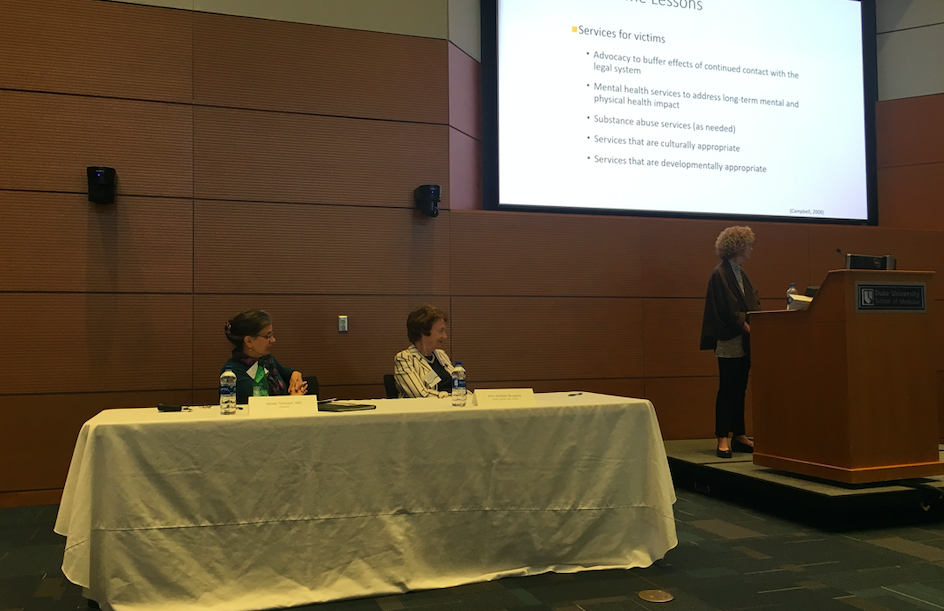
Mindy Oshrain and Ann Burgess listen intently to the contributions of other panelists

Panelist Mindy Oshrain, a consulting associate in the Duke Department of Psychiatry, quieted the crowd by sharing a moving quote from Maya Angelou: “There is no greater agony than bearing an untold story inside of you.” She reminded us that it is so important to listen to patients, and slow down enough to ask someone multiple times if they are doing okay. It is easy to forget this at a place like Duke, where we are all constantly moving 100 miles a minute, checking boxes as we rush from one activity to the next, but it can make all the difference to stop, and take the time to ask again- How are you really doing? What can I do to support you? Empathy has the power to change the world.

As a sophomore, I now live in a building full of young women on the edge of Central Campus, on a street that is only serviced by Duke transportation in one direction. Just a few months ago, I woke up to a Duke Alert message on my phone, which informed me that a violent rape crime had occurred in the night, just fifty yards from my apartment. While we may have come a long way since the 1970s, the unavoidable fact remains that as young women living in this world, we are not safe. Let’s change that.

Post by Anne Littlewood, Trinity ’21

We Can’t Regrow Limbs Like Deadpool, But This Creature Can

Try as we might, humans can’t regrow limbs. But losing your left leg isn’t such a problem for axolotls.

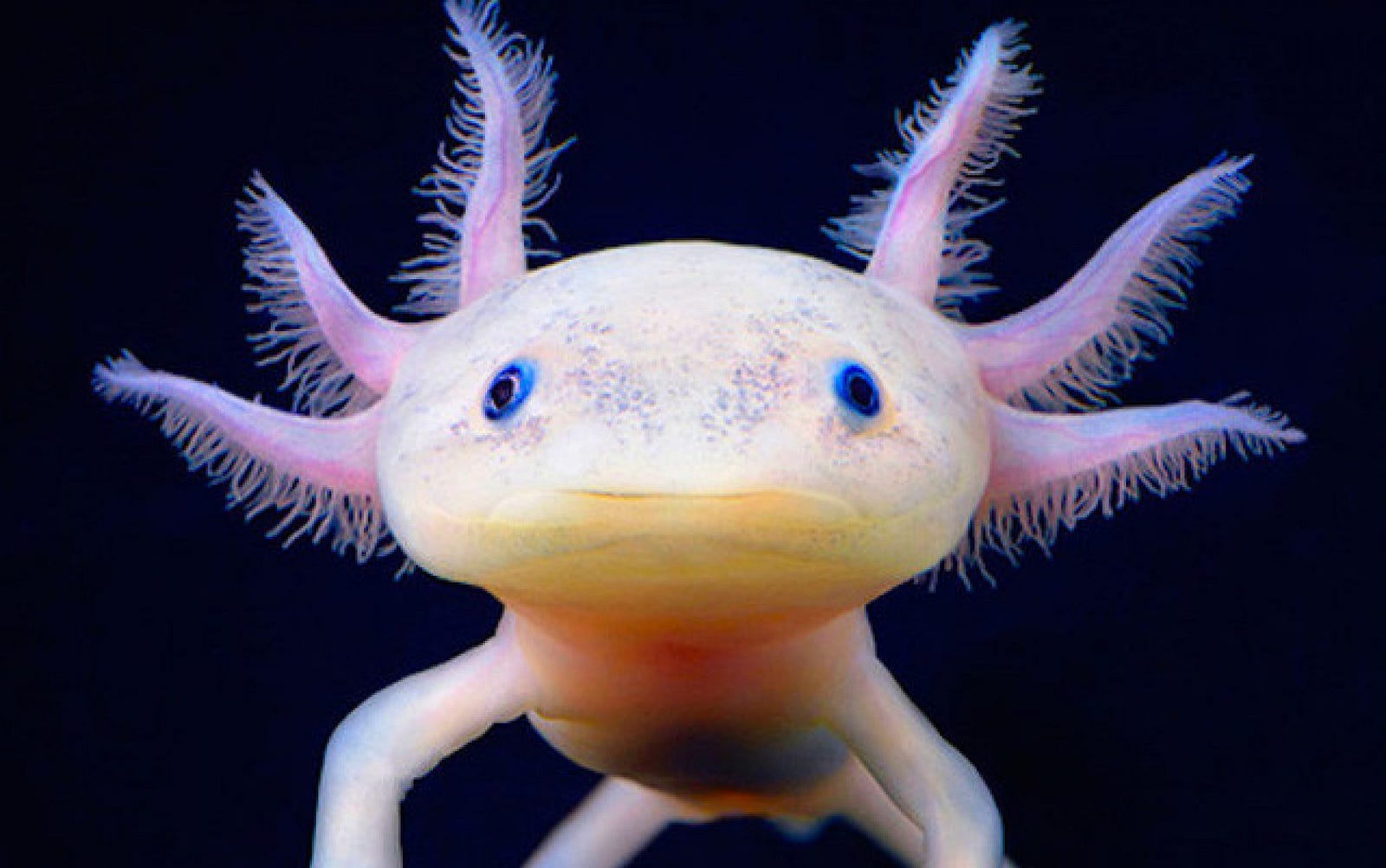
Image result for axolotl

Last Wednesday, Dr. Jessica Whited gave a fascinating talk about the importance of studying these strange little salamanders. Axolotls are capable of regenerating lost limbs so well that once a limb has fully grown back, you can’t tell the difference. No scars, no deformities. This genetic phenomenon serves as a powerful model for uncovering what mechanisms might be required for stimulating regeneration in humans.

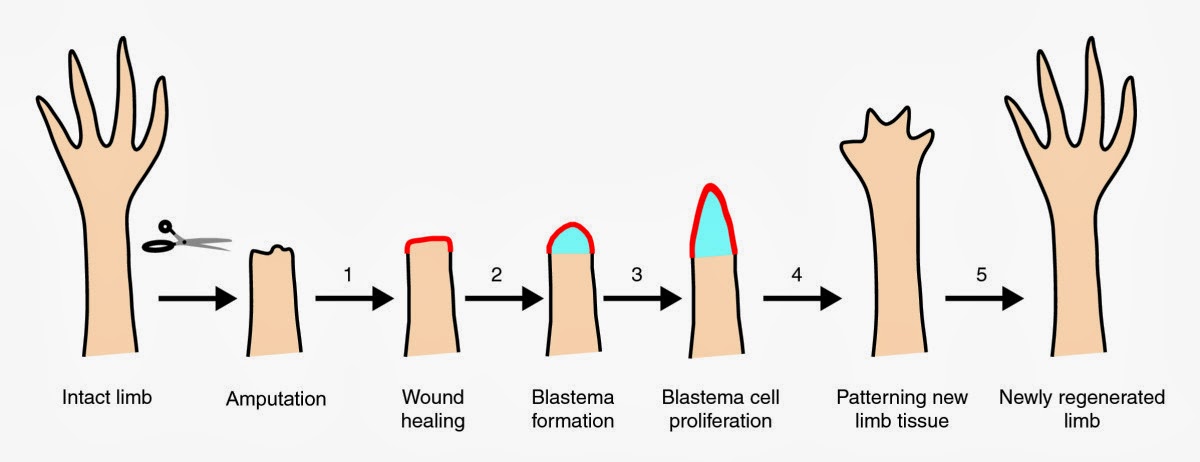
The limb regeneration process goes through a few stages. Within hours after amputation, a wound epidermis forms around the injury. Next, a blastema grows – a big clump of cells that will be the basis for future growth. After that, a new limb just kind of sprouts out as you might imagine.

Image result for axolotl limb regeneration

So what gives the axolotl this seemingly magical ability? In attempt to answer that question, Whited’s lab looked at how the process starts – specifically at the creation of the blastema, something mammals do not form post-injury. They found that a single amputation causes an activation of progenitor cells throughout the axolotl’s body. Cells in the heart, liver, spinal cord, and contralateral limb all reenter circulation. Essentially an activation signal is sent throughout the whole body, indicating a systemic response to the injury rather than a local one.

Another question Whited sought to answer was if the same limb could regenerate multiple times. She had her student Donald Bryant carry out an experiment on a group of axolotls. Bryant would repeatedly amputate the same limb, letting it fully regrow for ten weeks between amputations. The results of the experiment show that after five amputations only 60 percent of the limb would regenerate. This percentage decreased with the number of amputations. So while axolotls may seem like they have super powers, they aren’t exactly invincible. They decline in their regenerative capabilities after repeated amputation.

Protein EYA2 PDB 3GEB.png

A key finding in this experiment was that repeated amputation led to a decrease in the EYA2 gene (Eyes Absent 2). This particular gene was deemed necessary for the blastema cells to progress through different growth checkpoints. It is required during the cell cycle “to execute decisions about whether the cells will continue to proliferate or not.” So while we don’t exactly know why, we do know that EYA2 plays an important role in the axolotl’s regenerative powers.

Although Whited and her team were able to uncover some important findings, several questions still linger. How is the activation of EYA2 induced following amputation? Why is repeated amputation linked to less EYA2 genes? If cells are poised to anticipate injury / DNA damage, why is it that repeated amputation leads to less regeneration?

Image result for deadpool baby hand

Humans and other mammals are not quite as lucky as the axolotl. Amputation is a relevant and serious issue, yet no biological solution has been devised. Thankfully, the research conducted around axolotl regenerative properties could provide us with knowledge on natural cellular reprogramming. Maybe one day we’ll be able to regrow limbs just like Deadpool.

Will Sheehan
Post by Will Sheehan

Magazine Covers Hew to Stereotypes, But Also Surprise

Data + Women’s Spaces

Media plays a large role in the lives of most people. It’s everywhere. Even if you don’t actively purchase magazines, you are exposed to the covers in daily life. They are at newsstands, in grocery stores, in waiting rooms, online and more. Intrigued by the messages embedded in magazine covers, Nathan Liang (psychology, statistics), Sandra Luksic (philosophy, political science) and Alexis Malone (statistics) sought out to understand how women are represented in media as a part of a research project in the Data+ program.

Data+ is one of the many summer research opportunities at Duke. It’s a 10-week program focused on data science that allows undergraduate students to explore different research topics using data-driven approaches. Students work collaboratively in small interdisciplinary teams and develop skills to marshal, analyze, and visualize data.

The team’s project, titled Women’s Spaces, focused on a primary research question: Which messages are pervasive in women’s and men’s magazines and how do these messages change over time, across magazines, and between different target audiences.

Together, the team analyzed 500+ magazine covers published between January 2010 and June 2018, from Cosmopolitan, Esquire, Essence, Good Housekeeping and Seventeen. They used image analysis, text analysis and sentiment analysis in order to understand how women are represented on the magazine covers.

To conduct image analysis the team used Microsoft Azure Face Detect with Python in order to identify cover models. This software accounted for perceived emotions, age and race. They also noted the race/ethnicity and hair length of the cover models. Their research revealed that excluding Essence, 85 percent of magazine covers were white and had below average body sizes. One specific thing they found was that men had a greater range of emotions while women seemed to always appear happy. Furthermore, there was less emotional variance among minorities and in general, no Asian men. However, they did note that there may have been a software bias in that Microsoft Azure may not have picked up as well on the emotions of minorities.

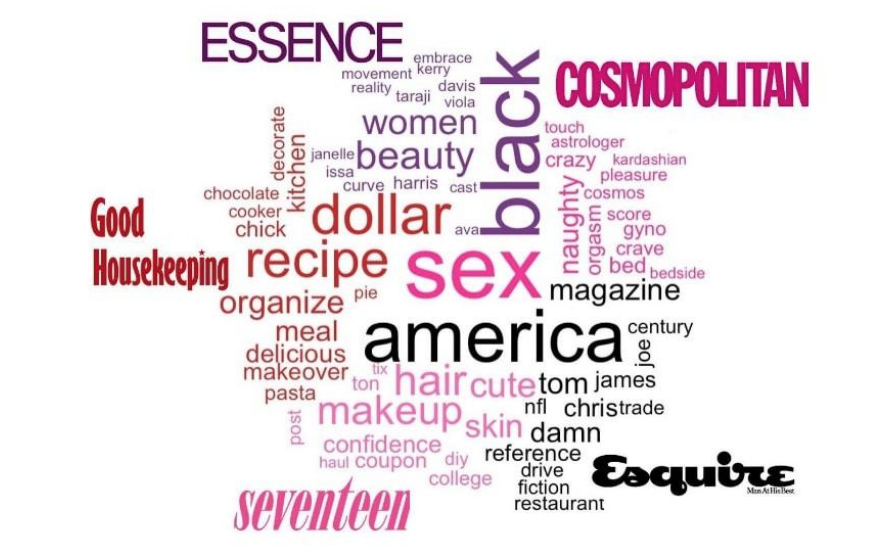
In order to conduct text analysis, the team had to self-type the text on the magazine covers because oftentimes the text on magazine covers was layered on top of images making it hard for software to detect. This reduced the number of magazines that they were able to analyze because it took up so much time. They then used a Term Frequency-Inverse Document Frequency (tf-idf) algorithm to determine both how often a term occurred on the cover how important a term was. Their results revealed several keywords associated with different magazines. Some of these include sex (Cosmopolitan),  curvy, beauty, and business (Essence), cooking, cleaning, and kitchen (GH), cute (Seventeen), and cars, America, and Barbeque (Esquire)

Tf-idf word cloud for all magazines

Lastly, they conducted a sentiment analysis. Sentiment analysis involved computationally identifying the opinions expressed in the magazine covers to determine their attitude on the topic being displayed. While sentiment libraries exist, there were not any that had magazine/advertising industry-specific sentiments and thus, were not usable for the research. As a result, the team created their own sentiment dictionary with categories like “positive,” “negative,” “sex,” “sell-words,” “appearance,” “home,” “professional,” “male” and “female.”

At the end of the summer, their main takeaway was that magazines tend to reinforce gender norms and stereotypes. The covers also backed up some of the established preconceived notions they had about magazines. However, they also discovered messages of empowerment. Interestingly, these were often connected to beauty as well as consumerism.

In a presentation, the team explained that one of the lessons they took away from the summer was that Data science is not objective, but biases are hard to spot. They noted that throughout the process they made sure to question their methodologies of analyzing data. It was particularly challenging to determine where the biases were coming into play: be it their questions, data sources or even understanding of feminism. Because of the interdisciplinary nature of the project, combining humanities with data science, the team was academically diverse. Luksic stated in the presentation that she, especially, came in skeptical of the idea that technology was assumed to be “objective”.

Luksic added, “It’s one thing to know, on a abstract level, that data science is not objective. It is another thing entirely to try to do or practice data science in a way that minimizes your subjectivities. Ultimately, we hope for a data science that can incorporate subjectivity in a way that emphasizes differences, such as between black-centered feminism and anti-black feminism.”

The discoveries made by the team play into a larger discussion about women’s roles in media and how that influences feminism and empowerment in relation to marketing and how that impacts women’s movements.

Luksic stated, “the versatility of data science allowed us to pursue multiple different paths with different conceptions of feminisms underlying them, which was exciting and empowering.”

By Anna Gotskind

Page 45 of 111

Powered by WordPress & Theme by Anders Norén