The human body is populated by a greater number of microbes than its own cells. These microbes survive using metabolic pathways that vary drastically from humans’.
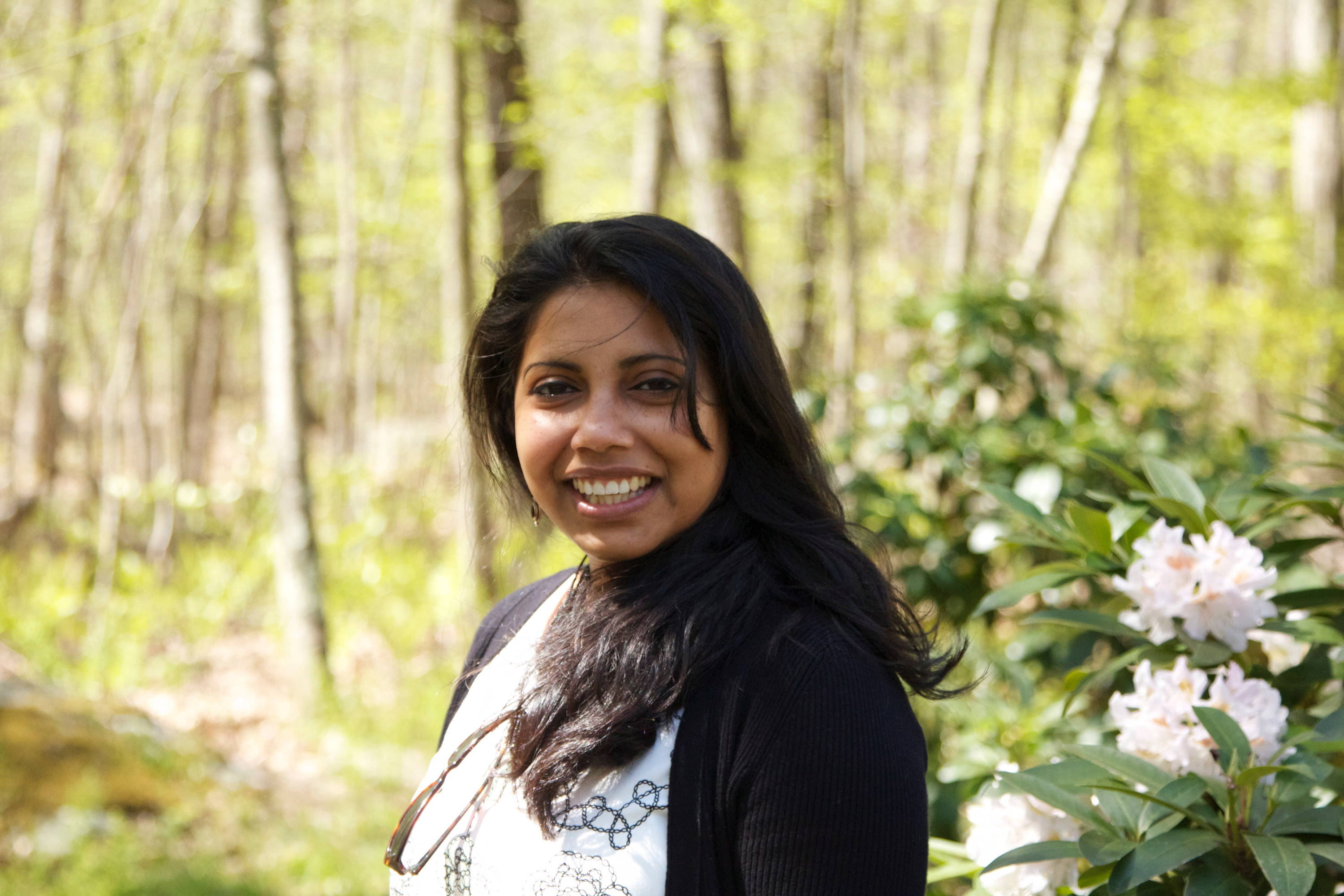
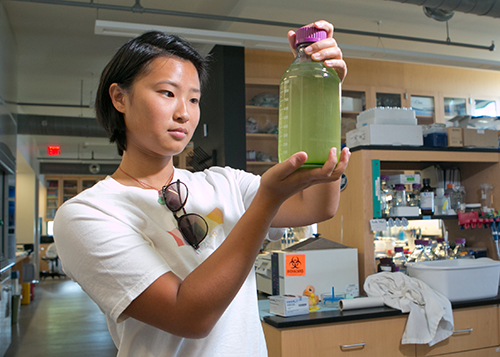
Arpita Bose’s research explores the metabolism of microorganisms.
Arpita Bose, PhD, of Washington University in St. Louis, is interested in understanding the metabolism of these ubiquitous microorganisms, and putting that knowledge to use to address the energy crisis and other applications.
Photoferrotrophic organisms use light and electrons from the environment as an energy source
One of the biggest research questions for her lab involves understanding photoferrotrophy, or using light and electrons from an external source for carbon fixation. Much of the source of energy humans consume comes from carbon fixation in phototrophic organisms like plants. Carbon fixation involves using energy from light to fuel the production of sugars that we then consume for energy.
Before Bose began her research, scientists had found that some microbes interact with electricity in their environments, even donating electrons to the environment. Bose hypothesized that the reverse could also be true and sought to show that some organisms can also accept electrons from metal oxides in their environments. Using a bacterial strain called Rhodopseudomonas palustris TIE-1 (TIE-1), Bose identified this process called extracellular electron uptake (EEU).
After showing that some microorganisms can take in electrons
from their surroundings and identifying a collection of genes that code for
this ability, Bose found that this ability was dependent on whether a light
source was also present. Without the presence of light, these organisms lost
70% of their ability to take in electrons.
Because the organisms Bose was studying can rely on light as a source of energy, Bose hypothesized that this dependence on light for electron uptake could signify a function of the electrons in photosynthesis. With subsequent studies, Bose’s team found that these electrons the microorganisms were taking were entering their photosystem.
To show that the electrons were playing a role in carbon
fixation, Bose and her team looked at the activity of an enzyme called RuBisCo,
which plays an integral role in converting carbon dioxide into sugars that can
be broken down for energy. They found that RuBisCo was most strongly expressed
and active when EEU was occurring, and that, without RuBisCo present, these organisms
lost their ability to take in electrons. This finding suggests that organisms
like TIE-1 are able to take in electrons from their environment and use them in
conjunction with light energy to synthesize molecules for energy sources.
In addition to broadening our understanding of the great diversity in metabolisms, Bose’s research has profound implications in sustainability. These microbes have the potential to play an integral role in clean energy generation.
According to Professor Deonte Harris, many of us here in the U.S. have a fascination with Black music. But at the same time, we tend not to realize that it’s. . . well, Black music.
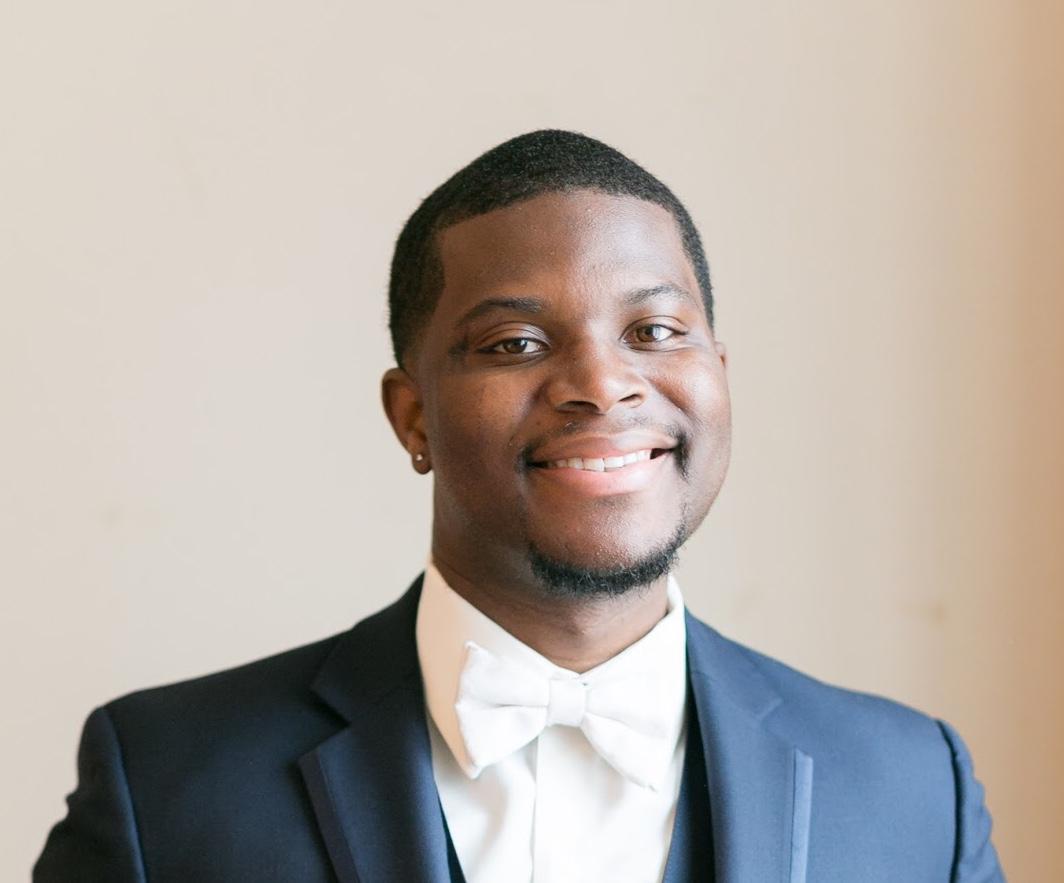
Deonte Harris, Ph.D., Assistant Professor of the Practice of the International Comparative Studies Program
He chose to conduct his research in the UK because of its large overseas Caribbean population and because he found that not much scholarship was dedicated to Black Europe. “It’s such a rich space to think about different historical entanglements that affect the lives and trajectories of Black people,” he explained.
Those entanglements include the legacies of colonialism, the Slave Trade, empire, and much more. The racialization of such historical processes is necessary to note.
For example, Harris found that a major shift in Black British music occurred in the 1950s due to anti-Black racism in England. Black individuals were not allowed to socialize in white spaces, so they formed community in their own way: through soundsystems.
These soundsystem originated in Jamaica and debuted in the UK in the postwar years. A soundsystem was the organization of Black individuals, music, and machines, typically in basements and warehouses, for the enjoyment of Black music and company. It became a medium through which a Black community could form in a racialized nation.
Notting Hill Carnival, London: An annual celebration of Black British culture. Photo by Dominic Alves.
Today, Black British music has greatly expanded, but still remains rooted in sound systems.
While the formation of community has been positive, Harris explains that much of his research is a highly complex and often disheartening commentary on Blackness.
Blackness has been created as a category by dominant society: the white community, mostly colonizers. Black music became a thing only because of the push to otherize Black Britons; in many ways, Black culture exists only as an “other” in relation to whiteness. This raises a question of identity that Harris continues to examine: Who has the power to represent self?
In the U.S. especially, Black music is a crucial foundation to American popular music. But as in the UK, it finds its origins in community, folk traditions, and struggle. The industrial nature of the U.S. allows that struggle to be commercialized and disseminated across the globe, creating a sort of paradox. According to Harris, Black individuals must reconcile “being recognized and loved globally, but understanding that people still despise who you are.”
To conduct his research, Harris mostly engages in fieldwork. He spends a significant amount of time in London, engaging with Black communities and listening to live music. His analysis typically involves both sonic and situational elements.
But the most valuable part of Harris’ fieldwork, perhaps, is the community that he himself finds. “Ethnomusicology has for me been a very transformative experience,” he said. “It has helped me to create new global relationships with people — I consider myself now to have homes in several different places.”
On September 10th, queerXscape, a new exhibit in The Murthy Agora Studio at the Rubenstein Arts Center, opened. Sinan Goknur and Max Symuleski, PhD candidates in the Computational Media, Arts & Cultures Program, created the installation with digital prints of collages, cardboard structures, videos, and audio. Max explains that this multi-media approach transforms the studio from a room into a landscape which provides an immersive experience.
Max Symuleski
The two artists combined their experiences
with changing urban environments when planning this exhibit. Sinan reflects on
his time in Turkey where he saw constant construction and destruction,
resulting in a quickly shifting landscape. While processing all of this
displacement, he began taking pictures as “a way of coping with the world.”
These pictures later become layers in the collages he designed with Max.
Meanwhile, Max used their time in
New York City where they had to move from neighborhood to neighborhood as
gentrification raised prices. Approaching this project, they wondered, “What
does queer mean in this changing landscape? What does it mean to queer
something? Where are our spaces? Where do we need them to survive?” They had
previously worked on smaller collages made from magazines that inspired the
pair of artists to try larger-scale works.
Both Sinan and Max have watched the
exploding growth in Durham while studying at Duke. From this perspective, they
were able to tackle this project while living in a city that exemplifies the
themes they explore in their work.
One of the cardboard structures
Using a video that Sinan had made as inspiration for the exhibit, they began assembling four large digital collages. To collaborate on the pieces, they would send the documents back and forth while making edits. When it became time to assemble their work, they had to print the collage in large strips and then careful glue them together. Through this process, they learned the importance of researching materials and experimented with the best way to smoothly place the strips together. While putting together mound-like cardboard structures of building, tire, and ice cube cut-outs, Max realized that, “we’re now doing construction.” Consulting with friends who do small construction and maintenance jobs for a living also helped them assemble and install the large-scale murals in the space. The installation process for them was yet another example of the tension between various drives for and scales of constructions taking place around them.
While collage and video may seem like an odd combination, they work together in this exhibit to surround the viewer and appeal to both the eyes and ears. Both artists share a background in queer performance and are driven to the rough aesthetics of photo collage and paper. The show brings together aspects of their experience in drag performance, collage, video, photography, and paper sculpture of a balanced collaboration. Their work demonstrates the value of partnership that crosses genres.
Poster for the exhibit
When concluding their discussion of changing spaces, Max mentioned that, “our sense of resilience is tied to the domains where we could be queer.” Finding an environment where you belong becomes even more difficult when your landscape resembles shifting sand. Max and Sinan give a glimpse into the many effects of gentrification, destruction, and growth within the urban context.
The exhibit will be open until October 6. If you want to see the results of weeks of collaging, printing, cutting, and pasting together photography accumulated from near and far, stop by the Ruby.
Thomas Barlow ’21 finds inspiration in small everyday things most people overlook: a craggy lichen growing on a tree, a dead insect, the light reflected by a pane of glass. Where we might see a flower, Barlow looks past the showy pink petals to the intricate parts tucked within.
The 20-year-old is a Duke student majoring in biology. By day, he takes classes and does research in a lab. But in his spare time, he likes to take up-close photographs using objects he finds outside or around the lab: peach pits, fireflies. But also pipettes, pencils.
A handheld laser pointer and flitting fireflies become streaks of light in this long-exposure image in Duke Forest. By Thomas Barlow.
Barlow got interested in photography in middle school, while playing around with his dad’s camera. His dad, a landscape architect, encouraged the hobby by enlisting him to take photos of public parks, gardens and playgrounds, which have been featured on various architects’ websites and in national publications such as Architecture Magazine. But “I always wanted to get closer, to see more,” Barlow said.
In high school he started taking pictures of still lifes. But he didn’t just throw flowers and fruit onto a backdrop and call it art. His compositions were a mishmash of insects and plants arranged with research gadgets: glass tubes, plastic rulers, syringes, or silicon wafers like those used for computer chips.
“I like pairing objects you would never find
together normally,” Barlow said. “Removing them from their context and
generating images with interesting textures and light.”
Sometimes his mother sends him treasures from her garden in Connecticut to photograph, like the pale green wings of a luna moth. But mostly he finds his subjects just steps from his dorm room door. It might be as easy as taking a walk through Duke Gardens or going for one of his regular runs in Duke Forest.
Having found, say, a flower bud or bumblebee, he then uses bits of glass, metal, mirrors and other shiny surfaces — “all objects that interact with light in some interesting way” – to highlight the interaction of light and color.
“I used to be really obsessed with dichroic
mirrors,” pieces of glass that appear to change colors when viewed from
different angles, Barlow said. “I thought they were beautiful objects. You can
get so many colors and reflections out of it, just by looking at it in
different ways.”
In one pair of images, the white,
five-petaled flowers of a meadow anemone are juxtaposed against panels of
frosted glass, a pipette, a mechanical pencil.
Another image pair shows moth wings. One is zoomed in to capture the fine details of the wing scales. The other zooms out to show them scattered willy-nilly around a shimmering pink circle of glass, like the remnants of a bat’s dinner plate.
Luna moth wings and wing scales with dichroic mirror, Thomas Barlow
For extreme close-ups, Barlow uses his Canon
DSLR with a microscope objective mounted onto the front of a tube lens.
Shooting this close to something so small isn’t just a matter of putting a bug
or flower in front of the camera and taking a shot. To get every detail in
focus, he takes multiple images of the same subject, moving the focal point
each time. When he’s done he’s taken hundreds of pictures, each with a
different part of the object in focus. Then he merges them all together.
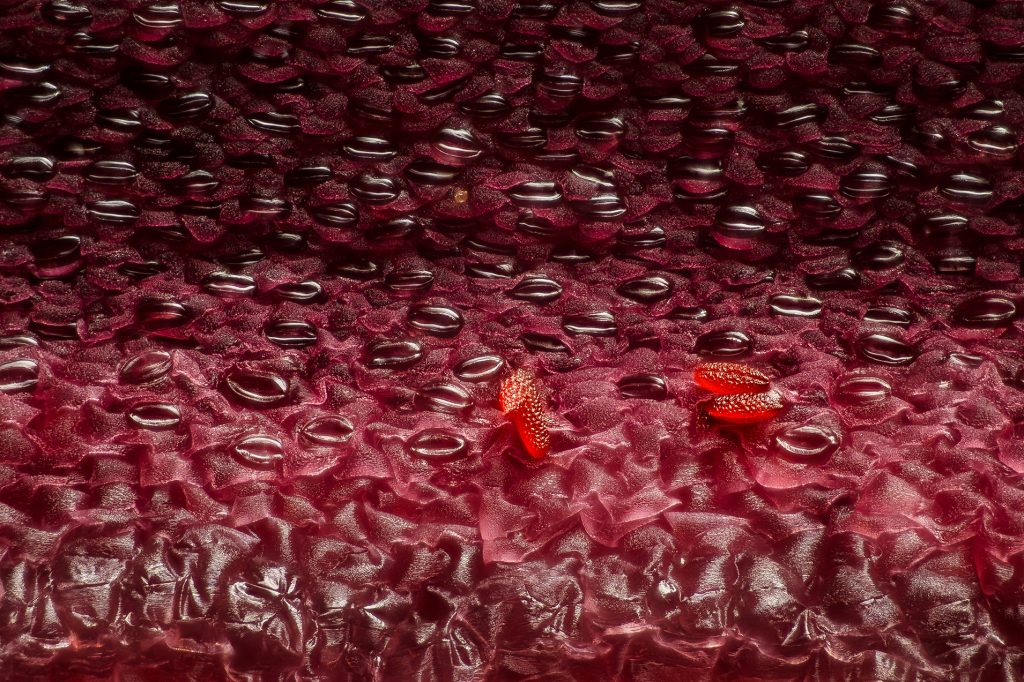
At high magnification, Barlow’s flower close-ups reveal the curly yellow stamens of a zinnia flower, and the deep red pollen-producing parts of a tiger lily.
“I love that you can see the spikey pollen
globules,” Barlow said.
Stomata and pollen on the underside of a tiger lily stamen, by Thomas Barlow
When he first got to Duke he was taking photos using a DIY setup in his dorm room. Then he asked some of the researchers and faculty he knew if there was anything photography-related he could do for their labs.
“I knew I was interested in nature
photography and I wanted to practice it,” Barlow said.
One thing led to another, and before long he
moved his setup to the Biological Sciences building on Science Drive, where he’s
been photographing lichens for Daniele Armaleo and Jolanta Miadlikowska, both
lichenologists.
“A lichen photo might not seem like anything special to an average person,” Barlow said. “But I think they’re really stunning.”
Just about every day, there’s a new headline about this or
that factor possibly contributing to Alzheimer’s Disease. Is it genetics,
lifestyle, diet, chemical exposures, something else?
The sophisticated answer is that it’s probably ALL of those things working together in a very complicated formula, says Alexander Kulminski, an associate research professor in the Social Science Research Institute. And it’s time to study it that way, he and his colleague, Caleb Finch at the Andrus Gerontology Center at the University of Southern California, argue in a recent paper that appears in the journal Alzheimer’s and Dementia, published by the Alzheimer’s Association.
Positron Emission Tomography scan of a brain affected by cognitive declines . (NIH)
“Life is not simple,” Kulminski says. “We need to combine
different factors.”
“We propose the ‘AD Exposome’ to address major gaps in
understanding environmental contributions to the genetic and non-genetic risk
of AD and related dementias,” they write in their paper. “A systems approach is
needed to understand the multiple brain-body interactions during
neurodegenerative aging.”
The analysis would focus on three domains, Kulminski says:
macro-level external factors like rural v. urban, pollutant exposures,
socio-economcs; individual external factors like diet and infections; and internal
factors like individual microbiomes, fat deposits, and hormones.
That’s a lot of data, often in disparate, broadly scattered
studies. But Kulminski, who came to Duke as a physicist and mathematician, is
confident modern statistics and computers could start to pull it together to
make a more coherent picture. “Twenty years ago, we couldn’t share. Now the way
forward is consortia,” Kulminski said.
The vision they outline in their paper would bring together
longitudinal population data with genome-wide association studies,
environment-wide association studies and anything else that would help the
Alzheimer’s research community flesh out this picture.
And then, ideally, the insights of such research
would lead to ways to “prevent, rather than cure” the cognitive declines of the
disease, Kulminsky says. Which just
happens to be the NIH’s goal for 2025.
Science
is increasingly asking artificial intelligence machines to help us search and interpret
huge collections of data, and it’s making a difference.
But unfortunately, polymer chemistry — the study of large, complex molecules — has been hampered in this effort because it lacks a crisp, coherent language to describe molecules that are not tidy and orderly.
Think nylon. Teflon. Silicone. Polyester. These and other polymers are what the chemists call “stochastic,” they’re assembled from predictable building blocks and follow a finite set of attachment rules, but can be very different in the details from one strand to the next, even within the same polymer formulation.
Plastics, love ’em or hate ’em, they’re here to stay. Foto: Mathias Cramer/temporealfoto.com
Chemistry’s
old stick and ball models and shorthand chemical notations aren’t adequate for a
long molecule that can best be described as a series of probabilities that one
kind of piece might be in a given spot, or not.
Polymer chemists searching for new materials for medical treatments or plastics that won’t become an environmental burden have been somewhat hampered by using a written language that looks like long strings of consonants, equal signs, brackets, carets and parentheses. It’s also somewhat equivocal, so the polymer Nylon-6-6 ends up written like this:
{<C(=O)CCCCC(=O)<,>NCCCCCCN>}
Or this,
{<C(=O)CCCCC(=O)NCCCCCCN>}
And when we get to something called ‘concatenation
syntax,’ matters only get worse.
Stephen Craig, the William T. Miller Professor of Chemistry, has been a polymer chemist for almost two decades and he says the notation language above has some utility for polymers. But Craig, who now heads the National Science Foundation’s Center for the Chemistry of Molecularly Optimized Networks (MONET), and his MONET colleagues thought they could do better.
Stephen Craig
“Once you have that insight about how a polymer is grown,
you need to define some symbols that say there’s a probability of this kind of
structure occurring here, or some other structure occurring at that spot,”
Craig says. “And then it’s reducing that to practice and sort of defining a set
of symbols.”
Now he and his MONET colleagues at MIT and Northwestern University have done just that, resulting in a new language – BigSMILES – that’s an adaptation of the existing language called SMILES (simplified molecular-input line-entry system). They they think it can reduce this hugely combinatorial problem of describing polymers down to something even a dumb computer can understand.
And that, Craig says, should enable computers to do all the stuff they’re good at – searching huge datasets for patterns and finding needles in haystacks.
The initial heavy lifting was done by MONET members Prof. Brad Olsen and his co-worker Tzyy-Shyang Lin at MIT who conceived of the idea and developed the set of symbols and the syntax together. Now polymers and their constituent building blocks and variety of linkages might be described like this:
Examples of bigSMILES symbols from the recent paper
It’s
certainly not the best reading material for us and it would be terribly difficult
to read aloud, but it becomes child’s play for a computer.
Members
of MONET spent a couple of weeks trying to stump the new language with the
weirdest polymers they could imagine, which turned up the need for a few more
parts to the ‘alphabet.’ But by and large, it holds up, Craig says. They also threw
a huge database of polymers at it and it translated them with ease.
“One of the things I’m excited about
is how the data entry might eventually be tied directly to the synthetic
methods used to make a particular polymer,” Craig says. “There’s an opportunity
to actually capture and process more information about the molecules than is
typically available from standard characterizations. If that can be done,
it will enable all sorts of discoveries.”
BigSMILES was introduced to the
polymer community by an article in ACS Central Science
last week, and the MONET team is eager to see the response.
“Can other people use it and does it work for
everything?” Craig asks. “Because polymer structure space is effectively
infinite.” Which is just the kind of thing you need Big Data and machine
learning to address.
“This is an area where the
intersection of chemistry and data science can have a huge impact,” Craig says.
Students
finish among top 1% in 100-hour math modeling contest against 11,000 teams
worldwide
Imagine trying to move the 26,000 tourists who visit the Louvre each day through the maze of galleries and out of harm’s way. One Duke team spent 100 straight hours doing just that, and took home a prize.
If you’ve ever visited the Louvre in Paris, you may have been too focused on snapping a selfie in front of the Mona Lisa to think about the nearest exit.
But one Duke team knows how to get out fast when it matters most, thanks to a computer simulation they developed for the Interdisciplinary Contest in Modeling, an international contest in which thousands of student teams participate each year.
Their results, published in the
Journal of Undergraduate Mathematics and Its Applications, placed them in the
top 1% against more than 11,000 teams worldwide.
With a record 10.2 million visitors
flooding through its doors last year, the Louvre is one of the most popular
museums in the world. Just walking through a single wing in one of its five
floors can mean schlepping the equivalent of four and a half football fields.
For the contest, Duke undergraduates
Vinit Ranjan, Junmo Ryang and Albert Xue had four days to figure out how long
it would take to clear out the whole building if the museum really had to evacuate
— if the fire alarm went off, for instance, or a bomb threat or a terror
attack sent people pouring out of the building.
It might sound like a grim premise.
But with a rise in terrorist activity in Europe in recent years, facilities are
trying to plan ahead to get people to safety.
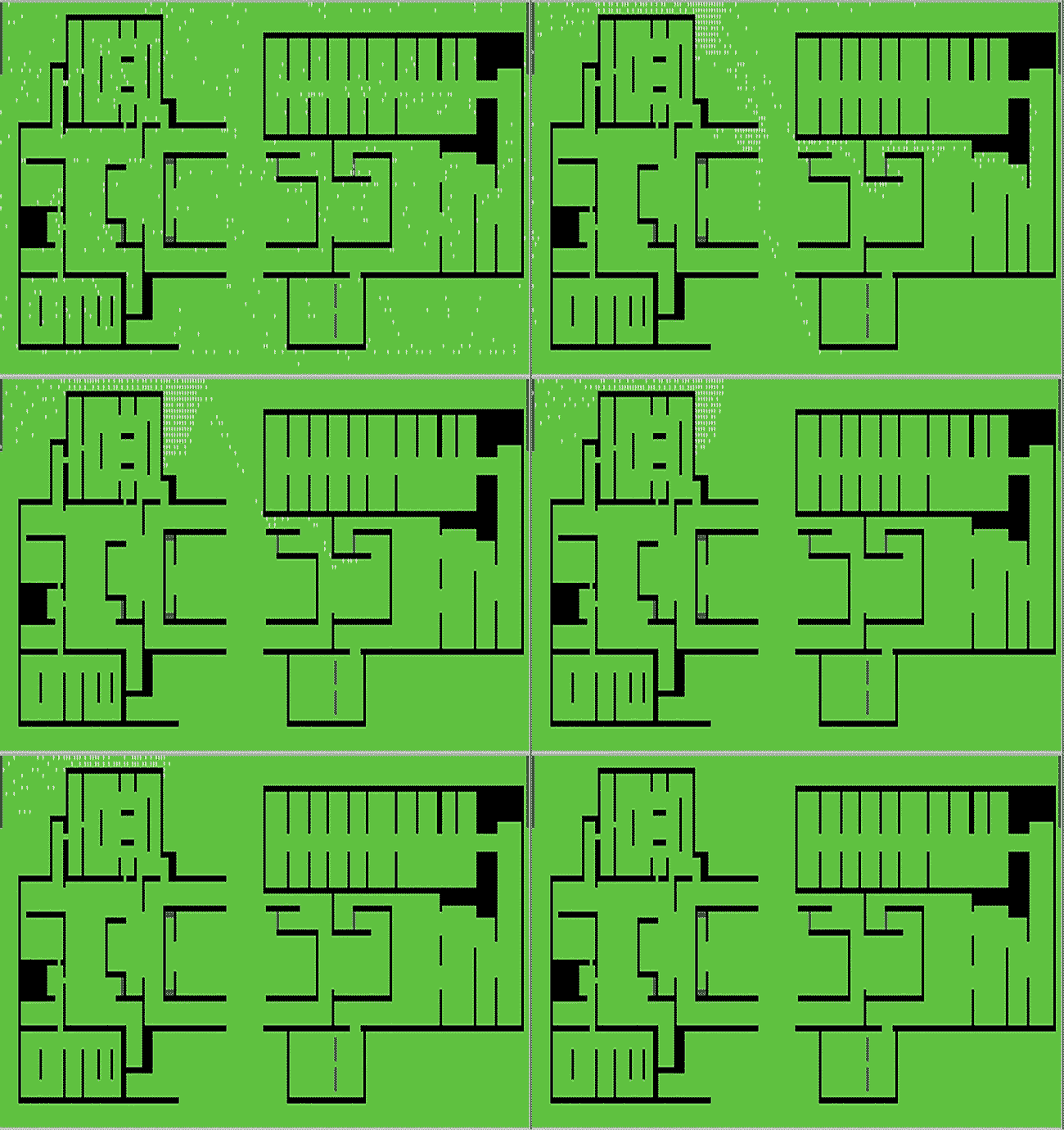
The team used a computer program
called NetLogo to create a small simulated Louvre populated by 26,000 visitors,
the average number of people to wander through the maze of galleries each day.
They split each floor of the Louvre into five sections, and assigned people to
follow the shortest path to the nearest exit unless directed otherwise.
Computer simulation of a mob of tourists as they rush to the nearest exit in a section of the Louvre.
Their model uses simple flow rates — the number of people that can “flow” through an exit per second — and average walking speeds to calculate evacuation times. It also lets users see what happens to evacuation times if some evacuees are disabled, or can’t push through the throngs and start to panic.
If their predictions are right, the
team says it should be possible to clear everyone out in just over 24 minutes.
Their results show that the exit at
the Passage Richelieu is critical to evacuation — if that exit is blocked, the
main exit through the Pyramid would start to gridlock and evacuating would take
a whopping 15 minutes longer.
The students also identified several
narrow corridors and sharp turns in the museum’s ground floor that could
contribute to traffic jams. Their analyses suggest that widening some of these
bottlenecks, or redirecting people around them, or adding another exit door
where evacuees start to pile up, could reduce the time it takes to evacuate by
15%.
For the contest, each team of three
had to choose a problem, build a model to solve it, and write a 20-page paper
describing their approach, all in less than 100 hours.
“It’s a slog fest,” Ranjan said. “In
the final 48 hours I think I slept a total of 90 minutes.”
Duke professor emeritus David Kraines, who advised the team, says the students were the first Duke team in over 10 years to be ranked “outstanding,” one of only 19 out of the more than 11,200 competing teams to do so this year. The team was also awarded the Euler Award, which comes with a $9000 scholarship to be split among the team members.
When I was named to the new position of Vice President for Research at Duke last month, it was the culmination of an extensive process that examined how Duke performs all aspects of research. But rather than being seen as an end-point, I hope that everyone will view this as a beginning.
Lawrence Carin, Vice President for Research
This re-examination of Duke’s research was led by President
Price and included many leaders from across Duke, including Provost Sally
Kornbluth, Chancellor Eugene Washington, and the Dean of the School of Medicine,
Mary Klotman. We also engaged the services of an External Advisory Panel that included
Ann M. Arvin (chair), professor of pediatrics and microbiology and former vice
provost and dean of research at Stanford University; Edward M. Stolper, William
E. Leonhard Professor of Geology and former provost at Caltech; and Barry S.
Coller, David Rockefeller Professor, physician-in-chief and vice president for
medical affairs at Rockefeller University.
(L-R) Ann Arvin, Edward Stolper and Barry Coller
During the Advisory Panel’s visit to Duke, Dr. Coller made a
comment that stuck with me. He said: “You can always tell the effectiveness of
an organization by how anyone within it responds when they answer the phone and
hear this request: `Please connect me to the quality department.’ ” At a
high-functioning organization, Dr. Coller said, anyone answering that query would
say that they are responsible for
quality, as is everyone in our organization.
There is no separate
department of quality; everyone is a member of the quality department. This, I
think, is something that all of us working and studying at Duke should take to
heart, concerning everything we do at Duke, including all aspects of research.
We need to not only be in charge of quality within our own research, but also
take the responsibility to each other and to the institution, to assure that
everything throughout the Duke research enterprise is done with the highest
quality. That means excellence in all its forms, including ethics and integrity.
Nursing students work with assistant professor Rémi Hueckel.
My hope is that the Duke research enterprise will be characterized
as a highly functioning operation. Toward that end, if you should see something
that can be improved, seek to improve it. Often this can be done directly, by utilizing
the agency we may have in a given situation. If the issue requires broader
engagement, communicate with your School leadership, or with the Duke Office of
Scientific Integrity (DOSI). Let’s work as a team.
Duke’s move to a Vice President for Research position, with oversight
over all aspects of our research in both
the School of Medicine and the schools and departments on the campus side, is a
reflection of what many in the administration have been calling a “One Duke” philosophy.
WE NEED TO … TAKE THE RESPONSIBILITY TO EACH OTHER AND TO THE INSTITUTION, TO ASSURE THAT EVERYTHING THROUGHOUT THE DUKE RESEARCH ENTERPRISE IS DONE WITH THE HIGHEST QUALITY.
Lawrence Carin
We are increasingly one university, with the lines between
different schools blurring, and when it comes to research, that is one of our great
competitive advantages over peer institutions.
I hope we also can go beyond “One Duke” and emphasize “Our
Duke.” While every member of the Duke research community must be a
member of the Duke Research Quality Department, this is particularly true of
our faculty. Faculty should not just feel that they are employees of Duke; as
faculty, each of us has a leadership responsibility for stewardship of Duke as
a whole.
Student Sabrina Tran studying algae at the Marine Lab.
Given the pressure faculty face to find and secure research
funding and to publish high-quality research, it is natural that faculty tend
to focus on their own relatively narrow part of Duke– their lab and students. While this is to be expected
for junior faculty, we must expect something more from our senior faculty.
Senior Duke faculty have a responsibility to foster an
environment dedicated to the highest quality of ethics and integrity, if for no
other reason than that the actions of a tiny minority can impact the reputation
of the entire university, as we’ve seen in a few isolated but high-profile
examples that affected all of us individually,
and our institution’s reputation nationally.
By Our Duke, I mean a culture that emphasizes that
the research enterprise at Duke belongs to all of us, and all of us have a
responsibility to care for it.
Barton Haynes, MD, Director of the Human Vaccine Institute (with gloves).
To help me with the expanded duties and responsibilities of
being Vice President for Research, we have identified four faculty who will be engaged on research challenges, helping me and
my OVPR colleagues with direction and implementation.
Susan Alberts (Biology & Evolutionary Anthropology),
Sonke Johnsen (Biology), Hashim Al-Hashimi (Biochemistry) and Andrew Muir (Division
of Gastroenterology in Department of Medicine) have agreed to become regular
members of the VPR team, meeting with me and other Duke leaders regularly.
We intend to pull in a larger group of Duke faculty to
supplement and help us. Our goal is not to make every faculty member an
administrator. Our goal is to have increasing faculty ownership of Duke’s
overall research enterprise, providing inputs and guidance, and helping us set
priorities.
To say everyone is a member of the Quality Department is easy; to make it happen is another thing. We will be engaging faculty extensively in this process. It is critical that we do this together, as a community dedicated to achieving the highest quality in everything we do at Duke.
I look forward to working with all of you to pursue this new vision of an integrated, caring, high-quality Duke research community.
A student in biomedical engineering.
Post by Lawrence Carin, Vice President for Research
Some stories are too good to forget. With almost formulaic accuracy, elements from classic narratives are constantly being reused and retained in our cultural consciousness, to the extent that a room of people who’ve never read Romeo and Juliet could probably still piece out its major plot points. But when stories are so pervasive, how can we tell what’s original and what’s Shakespeare with a facelift?
This summer, three Duke undergraduate students in the Data+ summer research program built a computer program to find reused stories.
“We’re looking for invisible adaptations, or appropriations, of stories where there are underlying themes or the messages remain the same,” explains Elise Xia, a sophomore in mechanical engineering. “The goal of our project was to create a model where we could take one of these original stories, get data from it, and find other stories in literature, film, TV that are adaptations.”
The Lion King for example, is a
well-known appropriation of Hamlet. The savannahs of Africa are a far cry from
Denmark, and “Simba” bears no etymologic resemblance to “Hamlet”, yet they’re
fundamentally the same story: A power-hungry uncle kills the king and ousts the
heir to the throne, only for an eventually cataclysmic return of the prince. In
an alternate ending for the film,
Disney directors even considered quoting Hamlet.
“The only difference is that there’s no incest in The Lion King,” jokes Mikaela Johnson, an English and religious studies major and member of the Invisible Adaptations team.
With Hamlet as their model text, the team used a Natural Language Processing system to turn words into data points and compare other movie scripts and novels to the original play.
But the students had to strike a balance between
the more surficial yet comprehensive analysis of computers (comparing place
names, character names, and direct quotes) with the deeper textual analysis
that humans provide.
So, they developed another branch of analysis:
After sifting through about 30,000 scholarly texts on Hamlet to identify major
themes — monarchy, death, ghost, power, revenge, uncle, etc. – their computer
program screened Wikipedia’s database for those key words to identify new
adaptations. After comparing the titles found from both primary and secondary
sources, they had their final list of Hamlet adaptations.
“What we really tried to do was break down what a story is and how humans understand stories, and then try to translate that into a way a computer can do it,” says Nikhil Kaul, rising junior in computer science and philosophy. “And in a sense, it’s impossible.”
Finding the threshold between a unique story and derivative stories could have serious implications for copyright law and intellectual property in the future. But Grant Glass, UNC graduate student of English and comparative literature and the project manager of this study, believes that the real purpose of the research is to understand the context of each story.
“Appropriating without recognition removes the
historical context of how that story was made,” Glass explains. Often,
problematic facets of the story are too deeply ingrained to coat over with
fresh literary paint: “All of the ugliness of text shouldn’t be capable of
being whitewashed – They are compelling stories, but they’re problematic. We
owe past baggage to be understood.”
Adaptations include small hat-tips to their
original source; quoting the original or using character names. But
appropriations of works do nothing to signal their source to their audience,
which is why the Data+ team’s thematic analysis of Wikipedia pages was vital in
getting a comprehensive list of previously unrecognized adaptations.
“A good
adaptation would subvert expectations of the original text,” Glass says. Seth
Rogan’s animated comedy, Sausage Party, one of the more
surprising movie titles the students’ program found, does just that. “It’s a
really vulgar, pretty funny movie,” Kaul explains. “It’s very existential
and meta and has a lot of death at the end of it, much like Hamlet does. So,
the program picked up on those similarities.”
Without this new program, the unexpected resemblance could’ve gone unnoticed by literary academia – and whether or not Seth Rogan intended to parallel a grocery store to the Danish royal court, it undoubtedly spins a reader’s expectation of Hamlet on its head.
Many people turn to the Internet to find a Mr. or Ms. Right. But lemurs don’t have to cyberstalk potential love interests to find a good match — they just give them a sniff.
A study of lemur scents finds that an individual’s distinctive body odor reflects genetic differences in their immune system, and that other lemurs can detect these differences by smell.
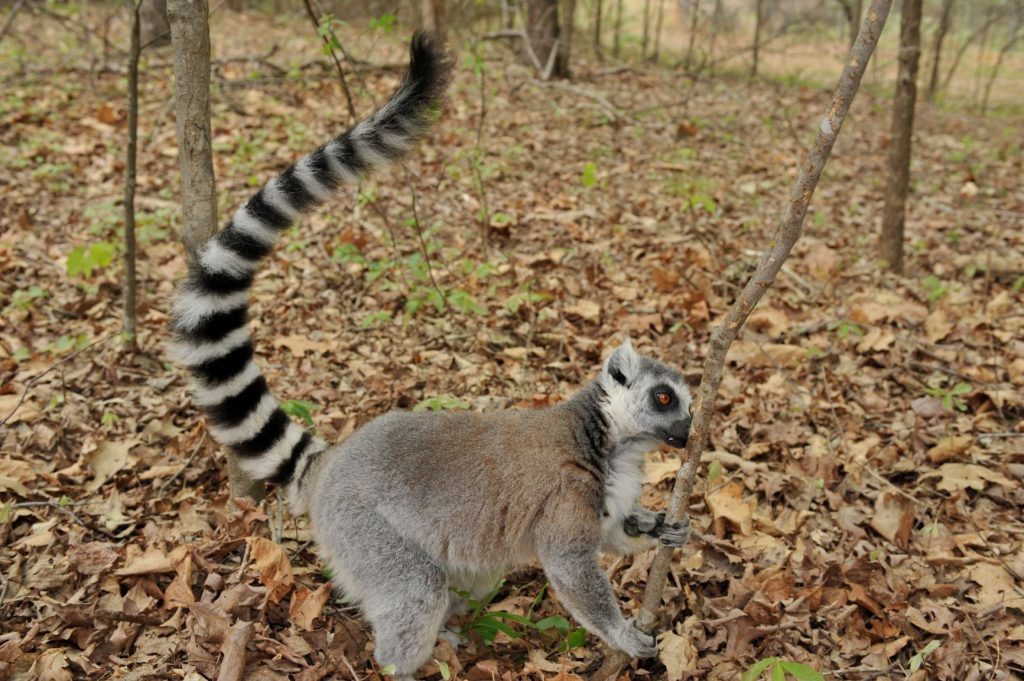
Smell check: Fritz the ring-tailed lemur sniffs a tree for traces of other lemurs’ scents. Photo by David Haring, Duke Lemur Center.
From just one whiff, these primates are able to tell which prospective partners have immune genes different from their own. The ability to sniff out mates with different immune genes could make their offspring’s immune systems more diverse and able to fight more pathogens, said first author Kathleen Grogan, who did the research while working on her Ph.D. with professor Christine Drea at Duke University.
The results appeared online August 22 in the journal BMC Evolutionary Biology.
Lemurs advertise their presence by scent marking — rubbing stinky glands against trees to broadcast information about their sex, kin, and whether they are ready to mate.
Lemurs can tell whether a mate’s immune genes are a good genetic match by the scents they leave behind. Photo by David Haring, Duke Lemur Center
For the study, Grogan, Drea and colleagues collected scent secretions from roughly 60 lemurs at the Duke Lemur Center, the Indianapolis Zoo, and the Cincinnati Zoo. The team used a technique called gas chromatography-mass spectrometry to tease out the hundreds of compounds that make up each animal’s signature scent.
They also analyzed the lemurs’ DNA, looking for differences within a cluster of genes called MHC that help trigger the body’s defenses against foreign invaders such as bacteria and viruses.
Their tests reveal that the chemical cocktail lemurs emit varies depending on which MHC types they carry.
To see if potential mates can smell
the difference, the researchers presented lemurs with pairs of wooden rods
smeared with the bodily secretions of two unfamiliar mates and observed their
responses. Within seconds, the animals were drawn to the smells wafting from
the rods, engaging in a frenzy of licking, sniffing, or rubbing their own
scents on top.
In 300 trials, the team found that
females paid more attention to the scents of males whose immune genes differed
from their own.
MHC genes code for proteins that help the immune system recognize foreign invaders and distinguish “friend” from “foe.” Since different genetic versions respond to different sets of foreign substances, Grogan said, sniffing out genetically dissimilar mates produces offspring more capable of fighting a broad range of pathogens.
Just because females spent more time
checking out the scents of dissimilar males doesn’t necessarily make them more
likely to have kids together, Grogan said. Moving forward, she and her
colleagues plan to use maternity and paternity DNA test results from wild
lemurs living in Beza Mahafaly Reserve in Madagascar to see if lemur couples
are more different in their MHC type than would be expected by chance.
Similar results have been found in humans, but this is the first time the ability to sniff out partners based on their immune genes has been shown in such distant primate kin, said Grogan, who is currently a postdoctoral fellow at Pennsylvania State University.
“Growing evidence suggests that
primates rely on olfactory cues way more than we thought they did,” Grogan
said. “It’s possible that all primates can do this.”
This research was supported by the National Science Foundation (BCS #0409367, IOS #0719003), the National Institutes of Health (F32 GM123634–01), and the Duke University Center for Science Education.
CITATION: “Genetic Variation at MHC class II Loci Influences Both Olfactory Signals and Scent Discrimination in Ring-Tailed Lemurs,” Kathleen E. Grogan, Rachel L. Harris, Marylène Boulet, and Christine M. Drea. BMC Evolutionary Biology, August 22, 2019. DOI: 10.1186/s12862-019-1486-0


















 Post by Robin A. Smith
 #/media/File:Notting_Hill_Carnival_2007_004.jpg)