Research Blog

Following the people and events that make up the research community at Duke

Students exploring the Innovation Co-Lab

Recovery, Resilience, and Coexistence: Nature-based Solutions on the Coast

When it comes to balancing the needs of humans and the needs of nature, “Historically it was ‘develop or conserve’ or ‘develop or restore,’” says Carter Smith, Ph.D., a Lecturing Fellow in the Division of Marine Science & Conservation who researches coastal restoration.

However, according to Brian Silliman, Ph.D., Rachel Carson Distinguished Professor of Marine Conservation Biology, “We are having a new paradigm shift where it’s not just… ‘nature over here’ and ‘humans over here.’”

Instead, conservation initiatives are increasingly focusing on coexistence with nature and ecological resilience, according to this panel discussion of marine science experts during Duke Research and Innovation Week 2023.

Nature-based solutions — protecting and restoring natural shoreline habitats — have a proven role in protecting and restoring coastal ecosystems. According to the International Union for Conservation of Nature (IUCN), “Nature-based solutions… address societal challenges effectively and adaptively, simultaneously benefiting people and nature.”

The panel, moderated by Andrew J. Read, Ph.D., Stephen A. Toth Distinguished Professor of Marine Biology and Professor of Marine Conservation Biology, also included Brian Silliman, Carter Smith, and Stephanie Valdez, a Ph.D. Student in Marine Science & Conservation.
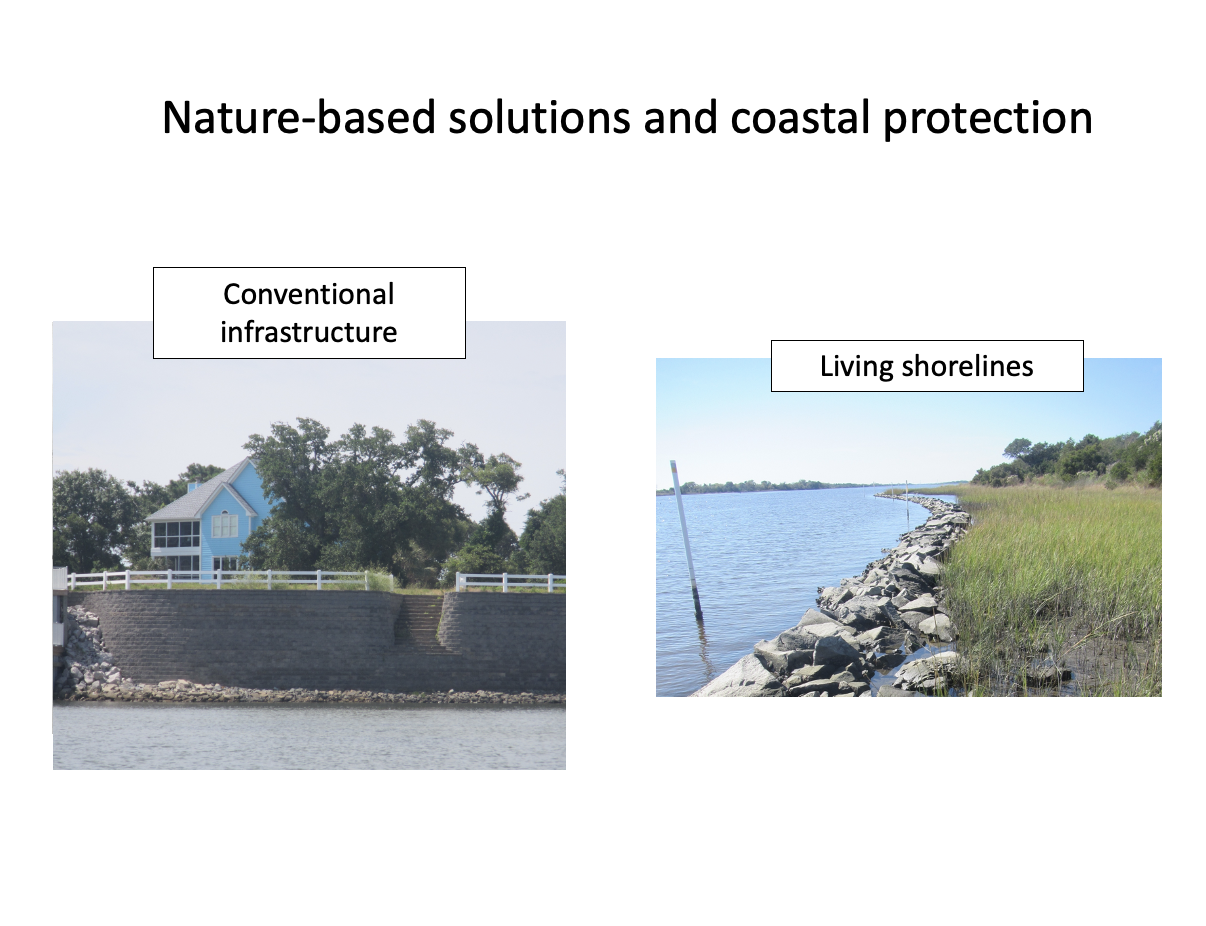
Living shorelines can help protect coastal ecosystems from storms while also offering benefits for climate and conservation. Photos by Carter Smith.

According to Smith, nature-based solutions can “leverage nature and the power of healthy ecosystems to protect people” while also preserving biodiversity and mitigating climate change. She spoke about living shorelines as an effective and ecologically responsible way to protect coastal ecosystems.

“The traditional paradigm in coastal protection is that you build some kind of hard, fixed structure” like a seawall, Smith said, but conventional seawalls can have negative effects on biodiversity, habitats, nutrient cycling, and the environment at large. “In this case, coastal protection and biodiversity really are at odds.”

After multiple hurricanes, living shorelines had significantly less visible damage or erosion than sites with conventional hardscape protection, like seawalls.

Nicholas Lecturing Fellow Carter Smith

That’s where living shorelines come in. Living shorelines incorporate plants and natural materials like sand and rock to stabilize coastal areas and protect them from storms while also creating more natural habitats and minimizing environmental destruction. But “if these structures are actually going to replace conventional infrastructure,” Smith says, it’s important to show that they’re effective.

Smith and colleagues have studied how living shorelines fared during multiple hurricanes and have found that living shorelines had significantly less “visible damage or erosion” compared to sites with conventional storm protection infrastructure.

After Hurricane Matthew in 2016, for instance, both natural marshes and conventional infrastructure (like seawalls) lost elevation due to the storm. Living shorelines, on the other hand, experienced almost no change in elevation.

Smith is also investigating how living shorelines may support “community and psychosocial resilience” along with their benefits to biodiversity and climate. She envisions future community fishing days or birdwatching trips to bring people together, encourage environmental education, and foster a sense of place.

PhD student Stephanie Valdez then spoke about the importance of coastal ecosystems.

Blue carbon ecosystems,” which include sea grasses, marshes, and mangroves, provide services like stabilizing sediments, reducing the destructive force of powerful waves, and storing carbon, she said. These ecosystems can bury carbon much faster than terrestrial ecosystems, which has important implications when it comes to climate change.

In the atmosphere, carbon dioxide and other greenhouse gasses contribute to global warming, but plants pull carbon dioxide out of the air during photosynthesis and convert it to carbohydrates, releasing oxygen as a byproduct. Therefore, ecosystems rich in fast-growing plants can serve as carbon sinks, reducing the amount of atmospheric carbon, Valdez explained.

Unfortunately, blue carbon ecosystems have suffered significant loss from human activities and development. We’ve replaced these wild areas with farms and buildings, polluted them with toxins and waste, and decimated habitats that so many other creatures rely on. But given the chance, these places can sometimes grow back. Valdez discussed a 2013 study which found that seagrass restoration led to a significantly higher carbon burial rate within just a few years.

Sea grasses, marshes, and mangroves provide services like stabilizing sediments, reducing the destructive force of powerful waves, and storing carbon.

PhD Student Stephanie Valde

Valdez also talked about the importance of recognizing and encouraging natural ecological partnerships within and between species. Humans have taken advantage of such partnerships before, she says. Consider the “Three Sisters:” beans, corn, and squash, which Native Americans planted close proximity so the three crops would benefit each other. Large squash leaves could provide shade to young seedlings, beans added nitrogen to the soil, and cornstalks served as a natural beanpole.

Recognizing that mutualistic relationships exist in natural ecosystems can help us preserve habitats like salt marshes. Valdez points to studies showing that the presence of oysters and clams can positively impact seagrasses and marshes. In restoration, it’s important “that we’re not focusing on one species alone but looking at the ecosystem as a whole”—from top predators to “foundation species.”

“There is hope for successful restoration of these vital ecosystems and their potential to aid in climate change mitigation,” Valdez said.

Finally, Prof. Brian Silliman discussed the role of predators in wider ecosystem restoration projects. Prioritizing the protection, restoration, and sometimes reintroduction of top predators isn’t always popular, but Silliman says predators play important roles in ecosystems around the world.

“One of the best examples we have of top predators facilitating ecosystems and climate change mitigation are tiger sharks in Australia,” he says. When the sharks are around, sea turtles eat fewer aquatic plants. “Not because [the sharks] eat a lot of sea turtles but because they scare them toward the shoreline,” reducing herbivory.

However, Silliman said it’s unclear sometimes whether the existence of a predator is actually responsible for a given benefit. Other times, though, experiments provide evidence that predators really are making a difference. Silliman referenced a study showing that sea otters can help protect plants, like seagrasses, in their habitats.

Restoring or reintroducing top predators in their natural habitats can help stabilize ecosystems impacted by climate change and other stressors.

And crucially, “Predators increase stress resistance.” When physical stressors reach a certain point in a given ecosystem, wildlife can rapidly decline. But wildlife that’s used to coexisting with a top predator may have a higher stress threshold. In our ever-changing world, the ability to adapt is as important as ever.

“I think there is great optimism and opportunity here,” Silliman says. The other speakers agree. “Right now,” Valdez says, “as far as restoration and protection goes, we are at the very beginnings. We’re just at the forefront of figuring out how to restore feasibly and at a level of success that makes it worth our time.”

Restoring or reintroducing top predators in their natural habitats can help stabilize ecosystems impacted by climate change and other stressors.

Brian Silliman

Smith emphasized the important role that nature-based solutions can play. Even in areas where we aren’t achieving the “full benefit of conserving or restoring a habitat,” we can still get “some benefit in areas where if we don’t use nature-based solutions,” conservation and restoration might not take place at all.

According to Valdez, “Previously we would see restoration or… conservation really at odds with academia itself as well as the community as a whole.” But we’re reaching a point where “People know what restoration is. People know what these habitats are. And I feel like twenty or thirty years ago that was not the case.” She sees “a lot of hope in what we are doing, a lot of hope in what is coming.”

“There’s so much that we can learn from nature… and these processes and functions that have evolved over millions and millions of years,” Smith adds. “The more we can learn to coexist and to integrate our society with thriving ecosystems, the better it will be for everyone.”

Post by Sophie Cox, Class of 2025

On-Stage Neuroscience with Cockroach Brains …and Legs

A low buzzing erupts into a loud static noise that fills the Duke lecture hall.

University of Michigan neuroscientist Gregory Gage describes the noise as the “most beautiful sound in the world.” It’s not the sound itself that evokes such fascination, but the source: this is the sound of electrical signals coming from neurons inside an amputated cockroach leg. 

With a background in electrical engineering, Gage credits this sound as the moment that got him interested in neuroscience. He now travels the country as an educator to bring his experiments to the public and encourage interest in neuroscience. His organization, Backyard Brains aims to bring research outside of the lab, and make it accessible to children and students everywhere. On Feb. 2, he presented the Gastronauts Seminar in the Nanaline Duke Building.

His first on-stage experiment aims to understand how information is encoded inside neurons, specifically the neurons located inside the barbs on cockroach legs. In order to record the signals without the roach running off, the first step is to amputate the cockroach leg. For all those worried for the well-being of the roach, rest assured that it was first “anesthetized” in a bath of ice water. (It’s still up for debate if cockroaches can truly feel pain, but Gage likes to err on the side of caution). Importantly, cockroaches also have the ability to regenerate limbs. In about five weeks a new leg will start to grow to replace the one that has been lost, and the entire regrowth will be completed in about 3 to 5 months. 

Underneath each hair on the leg of a cockroach, there is a neuron that detects stimuli and sends electrical impulses up to the brain.

The second step is to place electrode pins through the legs. Two pins are required so that the current will flow through the leg. One pin is located where there are very few neurons, serving as the ‘ground.” This experiment will measure the difference between the two pins, multiplied by the gain provided by an amplifier which makes the signal easier to see and hear. 

Turning up a volume knob on the amplifier, a low static buzzing becomes audible throughout the lecture hall. As Gage is the first to admit, “it doesn’t sound like much” at first. There are a few possibilities: maybe there is no neuron activity, maybe the leg is dead, or maybe it’s just not stimulated. The leg barbs contain stretch receptors: important sensory structures that play critical roles in detecting vibration, pressure, and touch.

These receptors are a type of ion channel, which are proteins located in the plasma membrane of cells that form a passageway through the membrane. They have the ability to open and close in response to chemical or mechanical signals. Stretch-activated ion channels respond to membrane deformation. When compressed, they allow ions to flow through, creating an immediate change in the transmembrane gradient and allowing for a rapid signaling response. The flow of ions is a flow of charge, and constitutes an electric current.

The opening and closing of ion channels underlie all electrical signaling of nerves and muscles. Why has the nervous system evolved to use electricity (as opposed to a chemical diffusion process)? Because it’s fast. And often our lives (or that of a cockroach) depend on responding quickly.

At the direction of Gage, a volunteer lightly brushes the cockroach leg. Suddenly, a change in the noise: short static bursts in volume correspond with each stroke of the cockroach leg. These are “single-unit recordings,” a sampling of the activity of individual or small clusters of neurons. The sound we are hearing is a burst of activity: the neurons rapidly firing in response to the stimuli, and attempting to send the electrical message up the brain.

Dr. Gage points out the spikes, or action potentials, associated with the firing of neurons in the roach’s leg.

Next, Gage pulls up his screen and shows a visual representation of the electrical signals. Along with the sound, it is clear to see the large spikes that correspond with the neurons firing. These spikes are called action potentials, and they occur when the membrane potential of a specific cell location rapidly rises and falls. When touching the leg hairs with more pressure, the number of action potentials per second increases. Measuring the number of spikes that occur per second is called rate coding, and it can be used to answer complex questions about how neurons respond to stimuli.

This experiment demonstrated how neurons send electrical impulses to the brain. But the brain does not just receive electrical impulses, it also sends them out. What happens if we tried to simulate the electrical impulses sent by the brain to the cockroach’s leg? In his second on-stage experiment, Gage demonstrates exactly this, using hip-hop music from his iPod as his electrical current.

The buds of a pair of headphones are cut off and replaced with small clips that attach to the electrode pins sticking out of the leg. Dr. Gage presses play on the music on his iPod, and immediately, the end of the cockroach leg begins to twitch and jump. The leg moves most dramatically with the bass of the music: lower frequencies have the longest waves, which correspond to the largest amount of current. 

You can watch Dr. Gage perform the “cockroach beatbox” experiment live on stage in one of his Ted Talks.

One final experiment combines both of the previous ones: how nerves encode information, and how nerves can be stimulated. A group of undergraduates at the University of Chile developed a system that uses an app to control the mind of a roach. Cockroaches use their antennae to observe the environment around them. If you take a cockroach and fit a wire inside each antenna (think of them like hollow tubes filled with neurons), you can stimulate those neurons, tricking the cockroach brain into thinking it has detected an outside stimulus. Using an Arduino microcontroller, the team of students created a little “hat” for the cockroach, and connected it via bluetooth to a smartphone app that can be used to send electrical impulses. Stimulating the right antennae causes the cockroach to move to the left, and stimulating the left antennae causes the cockroach to move to the right.

The RoboRoach device uses a smartphone app to perform “mind control” on the roach.

Why a cockroach? It’s a question that a volunteer stops to ask after finding herself up close and personal with the creature. Gage explains that they actually have brains very similar to our own. If we can learn “a little about how their brain works, we’re gonna learn a lot about ours.”

He ends his presentation with a parting message to all the researchers in the room: “I spend my life working on weird things like this, because each one tells a little story. Through these stories we can bring experiments to classrooms, democratize science and make it more accessible to everyone.”

Post by Kyla Hunter

Post by Kyla Hunter, Class of 2023

Design challenge feels like fun, actually earns credits

It seemed like soccer — football — was everywhere in December. The World Cup is the most watched sporting event in the world, attracting viewership from billions of people every four years.

Yet, despite advances in training, technique, and the ability to have half of the Earth’s population watching a single game at the same time, ‘the beautiful game’ has remained remarkably similar to its original form, which is believed to go back thousands of years.

Inspired by the World Cup and the topic of innovation in sports, one team of Duke undergraduates decided that the game was due for a bit of innovation.

Team Aelevate and their device for turning any bike into a stationary exerciser.

They were students enrolled in the Fall 2022 semester of Product Design one of five student teams tasked with the challenge of creating a “novel smart fitness device.”

Dedicated to the idea of incorporating “smart fitness” into soccer, the team decided to spend the semester building a smart soccer goal post. They retrofitted a goal post with lasers and photoresistors to detect the exact speed and position at which the ball passes through the goal and report the results in a user-friendly computer interface. The motivation behind this device was to provide a tool that helps amateur and professional soccer players hone their scoring skills with precise, real-time data.

Over the course of the semester, the team brainstormed, conceptualized, designed, and built a high-fidelity, working prototype of their product, eventually culminating in an end-of-semester product trade show.

The Product Design course, created just over one year ago by Dr. Rebecca Simmons, is intended to provide another opportunity for students to take a class focused on team-based, open-ended design. The class aims to “expand students’ designing under constraint skills,” explains Simmons, a widely beloved professor of mechanical engineering for undergraduates.

A School of Engineering video about the showcase event

Students work in small groups of 4-5, usually a mix of mechanical and electrical engineers, to conceptualize, design, prototype, build, and test a product over the course of one semester. The only constraints are a budget of $1,000, and a theme that varies from semester to semester. In the past the theme has been “smart kitchen,” “smart transportation,” and, this semester, “smart fitness.” 

The LaserF team and their smart soccer goal.

Undergraduate engineers partner with graduate students in Engineering Management (Managing Product Design, an advanced topics class taught by Dr. Gregory Twiss). While the undergraduate engineers focus on designing and building, the graduate students learn about the management side of developing a product (business, marketing, customer analysis, and more). While previously just open to mechanical engineering students, in Fall 2022 the class expanded to include ECE students and ECE professor Dr. Tyler Bletsch.

Creating novel smart technology is always a daunting task, but it adds a whole new layer of complexity when the device you’re creating has to be kicked, hit, or otherwise struck with heavy objects.

For LaserF, the group developing the smart soccer goal, the class certainly fulfilled the promise of providing a learning experience that was challenging and rigorous. The project encountered numerous obstacles from beginning to end, according to team members Lelia Jennings (ME ‘23) and Jake Mann (ME ‘23). Brainstorming an idea, meeting the budget constraints, coordinating with the graduate team, and working within the rules of the on-campus makerspaces were all constant challenges. One of the most comical moments, according to Lelia, occurred on the very day of the trade show. 

For most of the year, the Fitzpatrick atrium looks like a quiet, ordinary, empty space. A pretty space to study and pass through on your way to class, but otherwise unremarkable. During the end of the semester, however, it transforms into one of the busiest spots on campus. The atrium becomes the site of several poster fairs and project presentations that represent the culmination of a semester’s worth of hard work for numerous classes, clubs, and independent studies. One such event is the Product Design trade show.

After months of work, LaserF finally found themselves in the buzzing atrium, ready for the show. After setting up all their complex parts, the product was ready for the first test throw in the final, real working environment. One of the grad students volunteered for the premiere kick-off.

After a tense countdown, the student kicked the ball… and launched it directly into the crossbar of the goal, knocking it back, and sending every laser out of misalignment. Luckily, as Lelia recalls, the team was all “so sleep deprived, we just started laughing.” With a few minutes to spare before the beginning of the show, they were able to recalibrate their device in time.

This is Autospot – a device for lifting weights safely by yourself.

One more notable theme arose when a new idea was tossed out in the weekly class meeting: what about weatherproofing? Admittedly, the team had not thought about it. Thinking on the fly, one team member jokingly posed solving the problem with “a well-placed piece of tape.” As the weeks went by, weatherproofing still never managed to make it up the list of priorities. Turning to the professor for advice as the tradeshow approached, the suggestion that came back was perhaps using some well-placed pieces of tape after all. “It’s funny how priorities change with time,” said Jake Mann.

In a class of 25 students, LaserF was not the only group to overcome significant challenges to produce a remarkable final product. The team Aelevate created an accessory that turns any bicycle into a stationary bike, providing variable resistance, and adjustable inclines. Revfit created a boxing device integrated with lights and sounds to create a fun boxing workout that evokes the competitive spirit of an arcade game. Gear Guroo created a device that attaches onto bicycles and recommends the optimal bike gear. Lastly, AutoSpot created an automatic spotter device for a bench press. It uses a hydraulic press to lift a barbell away from the chest when failure is detected.

Revfit and their boxing machine. That’s me, second from left

Overall, the tradeshow was a tremendous success. All of the students in the class, many of whom have already taken it twice, resoundingly recommend it to fellow engineering students.

Eva Jacobsthal, a member of the AutoSpot team, appreciates that the class “allows students to have complete ownership over the development process – you are able to demonstrate your creativity and knowledge base while gaining hands-on experience.” Another student notes that the course feels like “an extracurricular that counts for academic credit.”

Simmons said the best part of the class is the students who take it, noting “the curiosity, dedication, perseverance and excitement of the students is really reflected in the innovative and high-quality final designs.” The class, next offered in Fall 2023, comes highly recommended to any graduate or undergraduate engineering students who may be interested in product design.

Lastly, the class serves as a reminder to always take the long way through the Fitzpatrick atrium when the end of the semester rolls around – you never know what exciting trade show or product fair you might step into.

Post by Kyla Hunter

Post by Kyla Hunter, Class of 2023

Some Primates Are More Susceptible to Parasites Than Others. Researchers Are Using New Methods to Find Out Why.

Chimpanzees are among the best studied primates for parasite interactions. Photo credit: Wikimedia Commons

Fleas, tapeworms, Giardia, pinworms:  Parasites are all around us. But some animals are more susceptible than others. Take the well-studied chimpanzee, for example: it’s known to host over 100 parasites. In contrast, species like the indri, a lemur only found on Madagascar, are only known to host about 10 parasites. Many other primates are so poorly studied that only one parasite has ever been recorded.

Relative to the chimpanzee, the indri is poorly known for its parasites. Credit: James Herrera.

In a new study published in the Journal of Animal Ecology, we examined which traits of both primates and parasites predict the likelihood of their interactions. Using advanced techniques in social network analysis, called the exponential random graph, we were able to simultaneously test the traits of primates and parasites to determine what predisposes primates to infection and what gives some parasites a unique advantage.

For primates, larger species that are found in warmer, wetter climates are more likely to host diverse parasites, compared to smaller species living in drier, cooler climates. Further, species in the same branches of the evolutionary tree and those that live in the same geographic region are more likely to share parasites than more distantly related species found on different continents. Viruses, protozoa, and helminth worms are more likely to infect diverse primates than fungi, arthropods, and bacteria. Parasites that are known to infect non-primate mammals are also more likely to infect diverse primates.

A photo from a microscope slide showing the blood parasite Plasmodium falciparum. One of the pathogens that causes malaria, P. falciparum also infects 118 other primates. In contrast, there are at least 30 other kinds of Plasmodium that only infect one or a few primates and their disease effects are poorly understood. Photo credit: Wikimedia Commons.

These new results were made possible by the great advances being made in infectious disease ecology. Over the last two decades, Dr. Charles Nunn at Duke University’s Evolutionary Anthropology and Global Health departments has been working with teams of researchers to compile all published records of primate-parasite interactions. Combing through the literature, almost 600 published sources were obtained to glean which parasites are found in over 200 primates species, with over 2,300 interactions recorded. With the analytical tools in social network science mastered by Duke Sociology professor Dr. James Moody, we were able to systematically test how traits of both hosts and parasites affect the likelihood of their interaction for the first time. While many previous studies used subsets of this database and examined either hosts or parasites in isolation, we were able to make new inferences about the critical links in this unique ecological network.

This work builds on a recent study that showed how extinction of primate hosts could lead to the co-extinction of almost 200 parasite species. While at first this might seem like a good thing, in fact it could have negative impacts on biodiversity as a whole. Many parasites don’t actually cause disease or death in the hosts, and some may even have beneficial properties. We simply don’t know enough about these critical and co-evolved relationships to understand what effects host-parasite coextinctions could have in the long-term.

While it might seem strange to worry about parasite extinctions, they are actually an important part of biodiversity and ecosystem functions. Understanding how primates and parasites interact reveals new insights into coevolutionary theory, and could also contribute to the conservation of underappreciated species richness. While from a public health perspective, we’d like to see some parasites disappear, like corona and ebola viruses, from an evolutionary stance, the sheer diversity of parasites and their intimate relationships with their hosts make them fascinating and crucial components of biodiversity.

By James Herrera, Ph.D., Duke Lemur Center SAVA Conservation Initiative

What is it like to Direct a Large, Externally-Funded Research Center?

What are the trials and tribulations one can expect? And conversely, what are the highlights? To answer these questions, Duke Research & Innovation Week kicked off with a panel discussion on Monday, January 23.

The panel

Moderated by George A. Truskey, Ph.D, the Associate Vice President for Research & Innovation and a professor in the Department of Biomedical Engineering, the panelists included…

  • Claudia K. Gunsch, Ph.D., a professor in the Departments of Civil & Environmental Engineering, Biomedical Engineering, and Environmental Science & Policy. Dr. Gunsch is the director of the NSF Engineering Research Center for Microbiome Engineering (PreMiEr) and is also the Associate Dean for Duke Engineering Research & Infrastructure.
Dr. Claudia Gunsch
  • Yiran Chen, Ph.D., a professor in the Department of Electrical & Computer Engineering. Dr. Chen is the director of the NSF AI Institute for Edge Computing (Athena).
Dr. Yiran Chen
  • Stephen Craig, Ph.D., a professor in the Department of Chemistry. Dr. Craig is the director of the Center for the Chemistry of Molecularly Optimized Networks (MONET).
Dr. Stephen Craig

The centers

As the panelists joked, a catchy acronym for a research center is almost an unspoken requirement. Case in point: PreMiEr, Athena, and MONET were the centers discussed on Monday. As evidenced by the diversity of research explored by the three centers, large externally-funded centers run the gamut of academic fields.

PreMiEr, which is led by Gunsch, is looking to answer the question of microbiome acquisition. Globally, inflammatory diseases are connected to the microbiome, and studies suggest that our built environment is the problem, given that Americans spend on average less than 8% of time outdoors. It’s atypical for an Engineering Research Center (ERC) to be concentrated in one state but uniquely, PreMieR is. The center is a joint venture between Duke University, North Carolina A&T State University, North Carolina State University, the University of North Carolina – Chapel Hill and the University of North Carolina – Charlotte.

PreMiEr – not to be confused with the English Premier League

Dr. Chen’s Athena is the first funded AI institute for edge computing. Edge computing is all about improving a computer’s ability to process data faster and at greater volumes by processing data closer to where it’s being generated. AI is a relatively new branch of research, but it is growing in prevalence and in funding. In 2020, 7 institutes looking at AI were funded by the National Science Foundation (NSF), with total funding equaling 140 million. By 2021, 11 institutes were funded at 220 million – including Athena. All of these institutes span over 48 U.S states.

Athena, or the Greek goddess of wisdom, is a fitting name for a research center

MONET is innovating in polymer chemistry with Stephen Craig leading. Conceptualizing polymers as operating in a network, the center aims to connect the behaviors of a single chemical molecule in that network to the  behavior of the network as a whole. The goal of the center is to transform polymer and materials chemistry by “developing the knowledge and methods to enable molecular-level, chemical control of polymer network properties for the betterment of humankind.” The center has nine partner institutions in the U.S and one internationally.

MONET, like French painter Claude Monet

Key takeaways

Research that matters

Dr. Gunsch talked at length about how PreMiEr aspires to pursue convergent research. She describes this as identifying a large, societal challenge, then determining what individual fields can “converge” to solve the problem.

Because these centers aspire to solve large, societal problems, market research and industry involvement is common and often required in the form of an industry advisory group. At PreMiEr, the advisory group performs market analyses to assess the relevance and importance of their research. Dr. Chen also remarked that there is an advisory group at Athena, and in addition to academic institutions the center also boasts collaborators in the form of companies like Microsoft, Motorola, and AT&T.

Dr. Chen presenting on Athena’s partner institutions at Monday’s talk.

Commonalities in structure

Most research centers, like PreMiEr, Athena, and MONET, organize their work around pillars or “thrusts.” This can help to make research goals understandable to a lay audience but also clarifies the purpose of these centers to the NSF, other funding bodies, host and collaborating institutions, and the researchers themselves.

How exactly these goals are organized and presented is up to the center in question. For example, MONET conceptualizes its vision into three fronts – “fundamental chemical advances,” “conceptual advances,” and “technological advances.”

At Athena, the research is organized into four “thrusts” – “AI for Edge Computing,” “AI-Powered Computer Systems,” “AI-Powered Networking Systems,” and “AI-Enabled Services and Applications.”

Meanwhile, at PreMiEr, the three “thrusts” have a more procedural slant. The first “thrust” is “Measure,” involving the development of tracking tools and the exploration of microbial “dark matter.” Then there’s “Modify,” or the modification of target delivery methods based on measurements. Finally, “Modeling” involves predictive microbiome monitoring to generate models that can help analyze built environment microbiomes.  

A center is about the people  

“Collaborators who change what you can do are a gift. Collaborators who change how you think are a blessing.”

Dr. stephen craig

All three panelists emphasized that their centers would be nowhere without the people that make the work possible. But of course, humans complicate every equation, and when working with a team, it is important to anticipate and address tensions that may arise.

Dr. Craig spoke to the fact that successful people are also busy people, so what may be one person’s highest priority may not necessarily be another person’s priority. This makes it important to assemble a team of researchers that are united in a common vision. But, if you choose wisely, it’s worth it. As Dr. Craig quipped on one of his slides, “Collaborators who change what you can do are a gift. Collaborators who change how you think are a blessing.”

In academia, there is a loud push for diversity, and research centers are no exception. Dr. Chen spoke about Athena’s goals to continue to increase their proportions of female and underrepresented minority (URM) researchers. At PreMiEr, comprised of 42 scholars, the ratio of non-URM to URM researchers is 83-17, and the ratio of male to female researchers is approximately 50-50.

In conclusion, cutting-edge research is often equal parts thrilling and mundane, as the realities of applying for funding, organizing manpower, pushing through failures, and working out tensions with others sets in. But the opportunity to receive funding in order to start and run an externally-funded center is the chance to put together some of the brightest minds to solve some of the most pressing problems the world faces. And this imperative is summarized well by the words of Dr. Craig: “Remember: if you get it, you have to do it!”

Post by Megna Datta, Class of 2023

How Concerned Should You Be About AirTags?

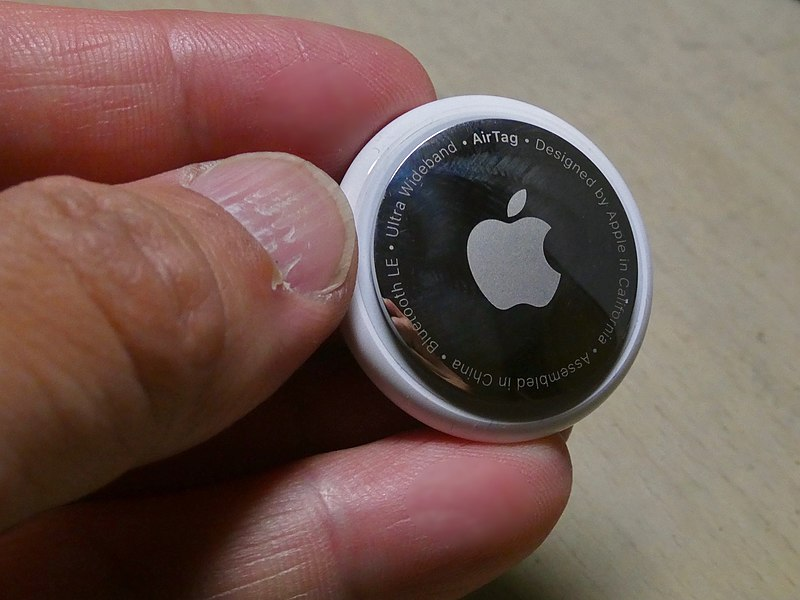
Photograph of an AirTag from Wikimedia Commons. Image licensed under Creative Commons Attribution-Share Alike 4.0 International. Creator: KKPCW.

I didn’t even know what an AirTag was until I attended a cybersecurity talk by Nick Tripp, senior manager of Duke’s IT Security Office, but according to Tripp, AirTag technology is “something that the entire Duke community probably needs to be aware of.”

An AirTag is a small tracking device that can connect to any nearby Apple device using Bluetooth. AirTags were released by Apple in April 2021 and are designed to help users keep track of items like keys and luggage. Tripp himself has one attached to his keys. If he loses them, he can open the “Find My” app on his phone (installed by default on Apple devices), and if anyone else with an Apple device has been near his keys since he lost them, the Bluetooth technology will let him see where his keys were when the Apple device user passed them—or took them.

According to Tripp, AirTags have two distinct advantages over earlier tracking devices. First, they use technology that lets the “Find My” app provide “precise location tracking”—within an inch of the AirTag’s location. Second, because AirTags use the existing Apple network, “every iPhone and iPad in the world becomes a listening device.”

You can probably guess where this is going. Unfortunately, the very features that make AirTags so useful for finding lost or stolen items also make them susceptible to abuse. There are numerous reports of AirTags being used to stalk people. Tripp has seen that problem on Duke’s campus, too. He gives the example of someone going to a bar and later finding an AirTag in their bag or jacket without knowing who put it there. The IT Security Office at Duke sees about 2-3 suspected cyberstalking incidents per month, with 1-2 confirmed each year. Cyberstalking, Tripp emphasizes, isn’t confined to the internet. It “straddles the internet and the real world.” Not all of the cyberstalking reports Duke deals with involve tracking devices, but “the availability of low-cost tracking technology” is a concern. In the wrong hands, AirTags can enable dangerous stalking behavior.

As part of his IT security work, and with his wife’s permission, Tripp dropped an AirTag into his wife’s bag to better understand the potential for nefarious use of AirTags by attackers. Concerningly, he found that he was able to track her movement using the app on his phone—not constantly, but about every five minutes, and if a criminal is trying to stalk someone, knowing their location every five minutes is more than enough.

Fortunately, Apple has created certain safety features to help prevent the malicious use of AirTags. For instance, if someone has been near the same AirTag for several hours (such as Tripp’s wife while there was an AirTag in her bag), they’ll get a pop-up notification on their phone after a random period of time between eight and twenty-four hours warning them that “Your current location can be seen by the owner of this AirTag.” Also, an AirTag will start making a particular sound if it has been away from its owner for eight to twenty-four hours. (It will emit a different sound if the owner of the AirTag is nearby and actively trying to find their lost item using their app.) Finally, each AirTag broadcasts a certain Bluetooth signal, a “public key,” associated with the AirTag’s “private key.” To help thwart potential hackers, that public key changes every eight to twenty-four hours. (Are you wondering yet what’s special about the eight-to-twenty-four hour time period? Tripp says it’s meant to be “frequently enough that Apple can give some privacy to the owner of that AirTag” but “infrequently enough that they can establish a pattern of malicious activity.”)

But despite these safety features, a highly motivated criminal could get around them. Tripp and his team built a “DIY Stealth AirTag” in an attempt to anticipate what measures criminals might take to deactivate or counteract Apple’s built-in security features. (Except when he’s presenting to other IT professionals, Tripp makes a point of not revealing the exact process his team used to make their Stealth AirTag. He wants to inform the public about the potential dangers of tracking technology while avoiding giving would-be criminals any ideas.) Tripp’s wife again volunteered to be tracked, this time with a DIY Stealth AirTag that Tripp placed in her car. He found that the modified AirTag effectively and silently tracked his wife’s car. Unlike the original AirTag, their stealthy version could create a map of everywhere his wife had driven, complete with red markers showing the date, time, and coordinates of each location. An AirTag that has been modified by a skilled hacker could let attackers see “not just where a potential victim is going but when they go there and how often.”

“The AirTag cat is out of the bag, so to speak,” Tripp says. He believes Apple should update their AirTag design to make the safety features harder to circumvent. Nonetheless, “it is far more likely that someone will experience abuse of a retail AirTag” than one modified by a hacker to be stealthier. So how can you protect yourself? Tripp has several suggestions.

  1. Know the AirTag beep indicating that an AirTag without its owner is nearby, potentially in your belongings.
  2. If you have an iPhone, watch for AirTag alerts. If you receive a notification warning you about a nearby AirTag, don’t ignore it.
  3. If you have an Android, Tripp recommends installing the “Tracker Detect” app from Apple because unlike iPhone users, Android users don’t get automatic pop-up notifications if an AirTag has been near them for several hours. The “Tracker Detect” Android app isn’t a perfect solution—you still won’t get automatic notifications; you’ll have to manually open the app to check for nearby trackers. But Tripp still considers it worthwhile.
  4. For iPhone users, make sure you have tracking notifications configured in the “Find My” app. You can go into the app and click “Me,” then “Customize Tracking Notifications.” Make sure the app has permission to send you notifications.
  5. Know how to identify an AirTag if you find one. If you find an AirTag that isn’t yours, and you have an iPhone, go into the “Find My” app, click “Items,” and then swipe up until you see the “Identify Found Item” option. That tool lets you scan the AirTag by holding it near your phone. It will then show the AirTag’s serial number and the last four digits of the owner’s phone number, which can be useful for the police. “If I found one,” Tripp says, “I think it’s worth making a police report.”

It’s worth noting that owning an AirTag does not put you at higher risk of stalking or other malicious behavior. The concern, whether or not you personally use AirTags, is that attackers can buy AirTags themselves and use them maliciously. Choosing to use AirTags to keep track of important items, meanwhile, won’t hurt you and may be worth considering, especially if you travel often or are prone to misplacing things. Not all news about AirTags is bad. They’ve helped people recover lost items, from luggage and wallets to photography gear and an electric scooter.

“I actually think this technology is extremely useful,” Tripp says. It’s the potential for abuse by attackers that’s the problem.

Post by Sophie Cox, Class of 2025

Rewilding the Gut

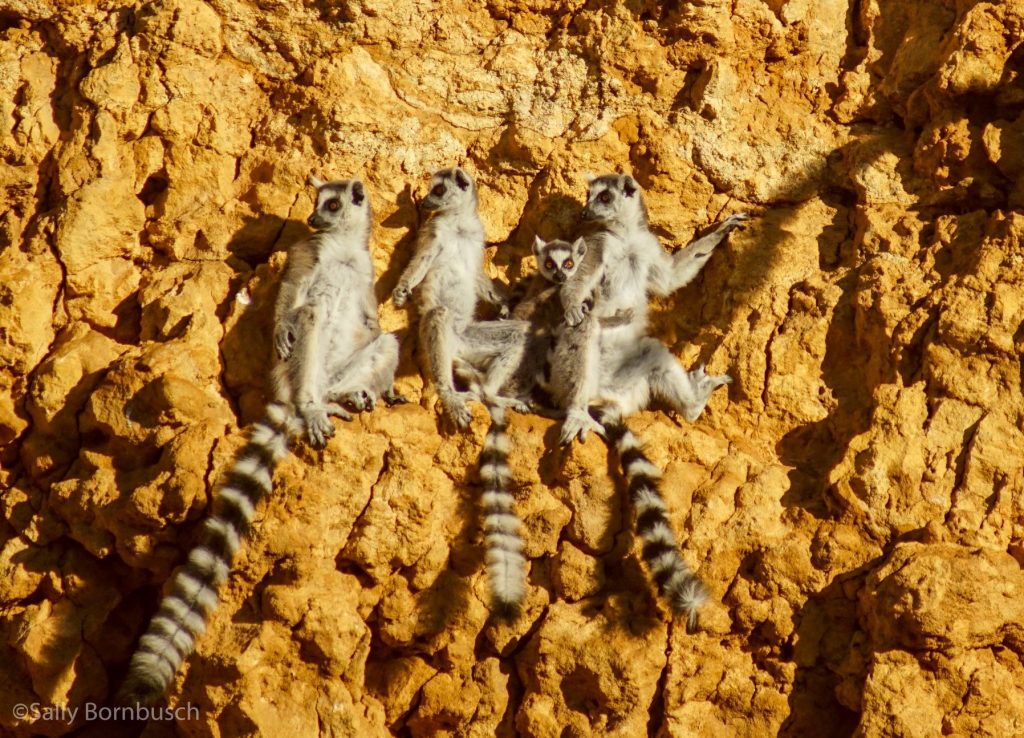
Processed foods and overuse of antibiotics can wreak havoc on the trillions of bacteria and other microbes that inhabit the gut. A new study of the gut microbiomes of lemurs looks at whether reconnecting with nature can help restore this internal ecosystem to a more natural state. Credit: Sally Bornbusch.

Modern life messes with the microbiome -– the trillions of bacteria and other microbes that live inside the body. Could reconnecting with nature bring this internal ecosystem back into balance?

A new study suggests it can, at least in lemurs. Led by Duke Ph.D. alumnus Sally Bornbusch and her graduate advisor Christine Drea, the research team collected fecal samples from more than 170 ring-tailed lemurs living in various conditions in Madagascar: some were living in the wild, some were kept as pets, and some were rescued from the pet and tourism industries and then relocated to a rescue center in southwestern Madagascar where they ate a more natural diet and had less exposure to people.

Collecting fecal samples in Madagascar

Then the researchers sequenced DNA from the fecal samples to identify their microbial makeup. They found that the longer lemurs lived at the rescue center, the more similar their gut microbes were to those of their wild counterparts. Former pet lemurs with more time at the rescue center also showed fewer signs of antibiotic resistance.

By “rewilding” the guts of captive animals, researchers say we may be able to better prime them for success, whether after rescue or before translocation or reintroduction into the wild.

This research was supported by grants from the National Science Foundation (1945776, 1749465), the Triangle Center for Evolutionary Medicine, Duke’s Kenan Institute for Ethics, the Margot Marsh Biodiversity Fund and Lemur Love.

CITATION: “Microbial Rewilding in the Gut Microbiomes of Captive Ring-Tailed Lemurs (Lemur catta) in Madagascar,” Sally L. Bornbusch, Tara A. Clarke, Sylvia Hobilalaina, Honore Soatata Reseva, Marni LaFleur & Christine M. Drea. Scientific Reports, Dec. 27, 2022. DOI: 10.1038/s41598-022-26861-0.

Robin Smith
By Robin Smith

Modeling the COVID-19 Roller Coaster

A Duke team looks at the math behind COVID’s waves as new coronavirus variants continue to emerge. Credit: @ink-drop

DURHAM, N.C. — First it was Alpha. Then Delta. Now Omicron and its alphabet soup of subvariants. In the three years since the coronavirus pandemic started, every few months or so a new strain seems to go around, only to be outdone by the next one.

If the constant rise and fall of new coronavirus variants has left you feeling dizzy, you’re not alone. But where most people see a pandemic roller coaster, one Duke team sees a mathematical pattern.

In a new study, a group of students led by Duke mathematician Rick Durrett studied the calculus behind the pandemic’s waves.

Published Nov. 2022 in the journal Proceedings of the National Academy of Sciences, their study got its start as part of an 8-week summer research program called DOmath, now known as Math+, which brings undergraduates together to collaborate on a faculty-led project.

Their mission: to build and analyze simple mathematical models to understand the spread of COVID-19 as one strain after another popped up and then rose to outcompete the others.

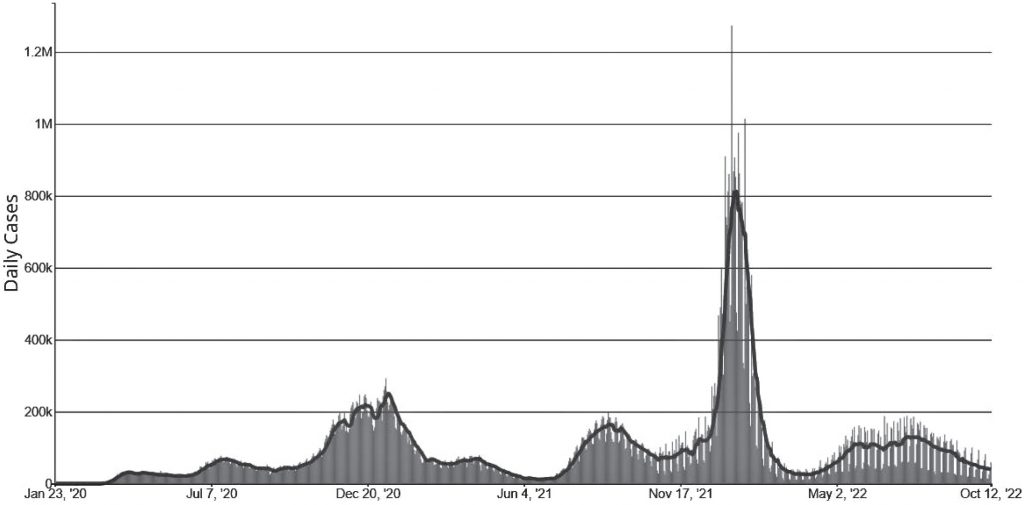
In an interview about their research, project manager and Duke Ph.D. student Hwai-Ray Tung pointed to a squiggly line showing the number of confirmed COVID cases per capita in the U.S. between January 2020 and October 2022.

The COVID-19 pandemic has unfolded in waves. Adapted from The New York Times, July 18, 2022

“You can see very distinct humps,” Tung said.

The COVID pandemic has unfolded in a series of surges and lulls — spikes in infection followed by downturns in case counts.

The ups and downs are partly explained by factors such as behavior, relaxation of public policies, and waning immunity from vaccines. But much of the roller coaster has been driven by changes to the coronavirus itself.

All viruses change over time, evolving mutations in their genetic makeup as they spread and replicate. Most mutations are harmless, but every so often some of them give the virus an edge: Enabling it to break into cells more easily than other strains, better evade immunity from vaccines and past infection, or make more copies of itself in order to spread more effectively.

Take the Delta variant, for example. When it first started going around in the U.S. in May 2021, it was responsible for just 1% of COVID cases. But thanks to mutations that helped the virus evade antibodies and infect cells more easily, it quickly tore across the country. Within two months it had outcompeted all the other variants and rose to the top spot, causing 94% of new infections.

“The natural question to ask is: What’s going on with the transition between these different variants?” Tung said.

For their study the team developed a simple epidemic model called an SIR model, which uses differential equations to compute the spread of disease over time.

SIR models work by categorizing individuals as either susceptible to getting sick, currently infected, or recovered. The team modified this model to have two types of infected individuals and two types of recovered individuals, one for each of two circulating strains.

The model assumes that each infectious person spreads the virus to a certain number of new people per day (while sparing others), and that, each day, a certain fraction of the currently infected group recovers.

In the study, the team applied the SIR model to data from a database called GISAID, which contains SARS-CoV-2 virus sequences from the pandemic. By looking at the coronavirus’s genetic code, researchers can tell which variants are causing infection.

Study co-author Jenny Huang ’23 pointed to a series of S-shaped curves showing the fraction of infections due to each strain from one week to the next, from January 2021 to June 2022.

When they plotted the data as points on a graph, they found that it followed a logistic differential equation as each new variant emerged, rose steeply, and — within six to 10 weeks — quickly displaced its predecessors, only to be taken over later by even more aggressive or contagious strains.

Durrett said it’s the mathematical equivalent of something biologists call a selective sweep, when natural selection increases a variant’s frequency from low to high, until nearly everyone getting stick is infected with the same strain.

“I’ve been interested in epidemic modeling since the end of freshman year when COVID started,” said Huang, a senior who plans to pursue a Ph.D. in statistics next year with support from a prestigious Quad Fellowship.

They’re not all typical math majors, Durrett said of his team. Co-author Sofia Hletko, ’25, was a walk-on to the rowing team. Laura Boyle ’24 was a Cameron Crazie.

For some team members it was their first experience with mathematical research: “I came in having no idea what a differential equation was,” Boyle said. “And by the end, I was the person in the group explaining that part of our presentation to everyone.”

Boyle says one question she keeps getting asked is: what about the next COVID surge?

“It’s very hard to say what will happen,” Boyle said.

The teams says their research can’t predict future waves. Part of the reason is the scanty data on the actual number of infections.

Countries have dialed back on their surveillance testing, and fewer places are doing the genomic sequencing necessary to identify different strains.

“We don’t know the nature of future mutations,” Durrett said. “Changes in people’s behavior will have a significant impact too.”

“The point of this paper wasn’t to predict; rather it was to explain why the waves were occurring,” Huang said. “We were trying to explain a complicated phenomenon in a simple way.”

This research was supported by a grant from the National Science Foundation (DMS 1809967) and by Duke’s Department of Mathematics.

CITATION: “Selective Sweeps in SARS-CoV-2 Variant Competition,” Laura Boyle, Sofia Hletko, Jenny Huang, June Lee, Gaurav Pallod, Hwai-Ray Tung, and Richard Durrett. Proceedings of the National Academy of Sciences, Nov. 3, 2022. DOI: 10.1073/pnas.2213879119.

Robin Smith
By Robin Smith

For Weary Scholars, a Moment to Regroup, Reconnect…and Write

DURHAM, N.C. — English professor Charlotte Sussman doesn’t get much time in her role as department chair to work on her latest book project, an edited collection of essays on migration in and out of Europe.

“At least not during daylight hours,” Sussman said.

But a recent workshop brought a welcome change to that. Sussman was one of 22 faculty who gathered Dec. 13 for an end-of-semester writing retreat hosted by the Duke Faculty Write Program.

Duke faculty and staff gather for an end-of-semester writing retreat.

Most of them know all too well the burnout faculty and students face at the end of the semester. But for a few precious hours, they hit pause on the constant onslaught of emails, meetings, grading and other duties to work alongside fellow writers.

The participants sat elbow-to-elbow around small tables in a sunlit room at the Duke Integrative Medicine Center. Some scribbled on pads of paper; others peered over their laptops.

Each person used the time to focus on a specific writing project. Sussman aimed to tackle an introduction for her 34-essay collection. Others spent the day working on a grant application, a book chapter, a course proposal, a conference presentation.

Jennifer Ahern-Dodson, Ph.D.

“We have so many negative associations with writing because there’s always something more to do,” said associate professor of the practice Jennifer Ahern-Dodson, who directs the program. “I want to change the way people experience writing.”

Ahern-Dodson encouraged the group to break their projects into small, specific tasks as they worked toward their goals. It might be reading a journal article, drafting an outline, organizing some notes, even just creating or finding a file.

After a brief workshop, she kicked off a 60-minute writing session. “Now we write!” she said.

The retreat is the latest installment in a series that Ahern-Dodson has been leading for over 10 years. In a typical week, most of these scholars wouldn’t find themselves in the same room. There were faculty and administrators from fields as diverse as history, African and African American Studies, law, psychology, classics, biostatistics. New hires sitting alongside senior scholars with decades at Duke.

Peggy Nicholson, J.D., Clinical Professor of Law, writing alongside colleagues from across campus

“I really like the diversity of the group,” said Carolyn Lee, Professor of the Practice of Asian and Middle Eastern Studies. “It’s a supportive environment without any judgement. They all have the same goal: they want to get some writing done.”

Sussman said such Faculty Write program get-togethers have been “indispensable” to bringing some of her writing projects over the finish line.

Participants say the program not only fosters productivity, but also a sense of connection and belonging. Take Cecilia Márquez, assistant professor in the Duke History Department. She joined the Duke faculty in 2019, but within months the world went into COVID-19 lockdown.

“This was my way to meet colleagues,” said Márquez, who has since started a writing group for Latinx scholars as an offshoot.

The writing retreats are free for participants, thanks to funding from the Office of the Dean of Trinity College of Arts and Sciences and the Thompson Writing Program. Participants enjoy lunch, coaching and community in what’s normally a solitary activity.

“I appreciate the culture of collaboration,” said David Landes, who came to Duke this year as Assistant Professor of the Practice in Duke’s Thompson Writing Program. “In the humanities our work is intensely individualized.”

Assistant Professor of Biostatistics & Bioinformatics Hwanhee Hong (left) and Adam Rosenblatt, Associate Professor of the Practice in International Comparative Studies (right)

Retreats are one of many forms of support offered by the Faculty Write program: there are also writing groups and workshops on topics such as balancing teaching and scholarship or managing large research projects.

“One of the distinguishing features of Faculty Write is the community that extends beyond one event,” Ahern-Dodson said. “Many retreats are reunions.”

After two hours of writing, Ahern-Dodson prompted the group to take a break. Some got up to stretch or grab a snack; others stepped outside to chat or stroll through the center’s labyrinth at the edge of Duke Forest.

It’s more than just dedicated writing time, Ahern-Dodson said. It’s also “learning how to work with the time they have.”

The retreats offer tips from behavioral psychology, writing studies, and other disciplines on time management, motivation, working with reader feedback, and other topics.

As they wrap up the last writing session of the day, Ahern-Dodson talks about how to keep momentum.

“Slow-downs and writing block are normal,” Ahern-Dodson said. Maybe how you wrote before isn’t working anymore, or you’re in a rut. Perhaps you’re not sure how to move forward, or maybe writing simply feels like a slog.

“There are some things you could try to get unstuck,” Ahern-Dodson said. Consider changing up your routine: when and where you write, or how long each writing session lasts.

“Protect your writing time as you would any other meeting,” Ahern-Dodson said.

Sharing weekly goals and accomplishments with other people can help too, she added.

“Celebrate each win.”

Ultimately, Ahern-Dodson says, the focus is not on productivity but on meaning, progress and satisfaction over time.

“It’s all about building a sustainable writing practice,” she said.

Ahern-Dodson leads an end-of-semester writing retreat for Duke scholars.

Coming soon: On Friday, Jan. 27 from 12-1 p.m., join Vice Provost for Faculty Advancement Abbas Benmamoun for a conversation about how writing works for him as a scholar and administrator. In person in Rubenstein Library 249 (Carpenter Fletcher Room)

Get Involved: Faculty and staff are invited to sign up for writing groups for spring 2023 here.

Learn more about sustainable writing practices: “The Productivity Trap: Why We Need a New Model of Faculty Writing Support,” Jennifer Ahern-Dodson and Monique Dufour. Change, January/February 2023.

Robin Smith
By Robin Smith

Student Researchers Share What They Know About AI and Health

The healthcare industry and academic medicine are excited about the potential for artificial intelligence — really clever computers — to make our care better and more efficient.

The students from Duke’s Health Data Science (HDS) and AI Health Data Science Fellowship who presented their work at the 2022 Duke AI Health Poster Showcase on Dec. 6 did an excellent job explaining their research findings to someone like me, who knows very little about artificial intelligence and how it works. Here’s what I learned:

Artificial intelligence is a way of training computer systems to complete complex tasks that ordinarily require human thinking, like visual categorization, language translation, and decision-making. Several different forms of artificial intelligence were presented that do healthcare-related things like sorting images of kidney cells, measuring the angles of a joint, or classifying brain injury in CT scans.

Talking to the researchers made it clear that this technology is mainly intended to be supplemental to experts by saving them time or providing clinical decision support.

Meet Researcher Akhil Ambekar

Akhil standing next to his poster “Glomerular Segmentation and Classification Pipeline Using NEPTUNE Whole Slide Images”

Akhil Ambekar and team developed a pipeline to automate the classification of glomerulosclerosis, or scarring of the filtering part of the kidneys, using microscopic biopsy images. Conventionally, this kind of classification is done by a pathologist. It is time-consuming and limited in terms of accuracy and reproducibility of observations. This AI model was trained by providing it with many questions and corresponding answers so that it could learn how to correctly answer questions. A real pathologist oversaw this work, ensuring that the computer’s training was accurate.

Akil’s findings suggest that this is a feasible approach for machine classification of glomerulosclerosis. I asked him how this research might be used in medicine and learned that a program like this could save expert pathologists a lot of time.

What was Akhil’s favorite part of this project? Engaging in research, experimenting with Python and running different models, trying to find what works best.

Meet Researcher Irene Tanner

Irene Tanner and her poster, “Developing a Deep Learning Pipeline to Measure the Hip-Knee-Ankle Angle in Full Leg Radiographs”

The research Irene Tanner and her team have done aims to develop a deep learning-based pipeline to calculate hip-knee-ankle angles from full leg x-rays. This work is currently in progress, but preliminary results suggest the model can precisely identify points needed to calculate the angles of hip to knee to ankle. In the future, this algorithm could be applied to predict outcomes like pain and physical function after a patient has a joint replacement surgery.

What was Irene’s favorite part of this project? Developing a relationship with mentor, Dr. Maggie Horn, who she said provided endless support whenever help was needed.

Meet Researcher Brian Lerner

Brian Lerner and his poster, “Using Deep Learning to Classify Traumatic Brain Injury in CT Scans”

Brian Lerner and his team investigated the application of deep learning to standardize and sharpen diagnoses of traumatic brain injury (TBI) from Computerized Tomography (CT) scans of the brain. Preliminary findings suggest that the model used (simple slice) is likely not sufficient to capture the patterns in the data. However, future directions for this work might examine how the model could be improved. Through this project, Brian had the opportunity to shadow a neurologist in the ER and speculated upon many possibilities for the use of this research in the field.

What was Brian’s favorite part of this project? Shadowing neurosurgeon Dr. Syed Adil at Duke Hospital and learning what the real-world needs for this science are.

Many congratulations to all who presented at this year’s AI Health Poster Showcase, including the many not featured in this article. A big thanks for helping me to learn about how AI Health research might be transformative in answering difficult problems in medicine and population health.

By Victoria Wilson, Class of 2023

Page 17 of 111

Powered by WordPress & Theme by Anders Norén