Following the people and events that make up the research community at Duke

Students exploring the Innovation Co-Lab

Category: Physics Page 6 of 11

Star Wars and Space Travel: The Study of Science through Popular Movies

Who says class has to be all about lectures and labs? Andrés Aragoneses, a quantum optics researcher at Duke, has created a class called “Science & Science Fiction” in conjunction with the Osher Lifelong Learning Institute at Duke (OLLI). The course explores hot science fiction topics through the study of famous movies – from Star Wars, to Independence Day, to The Martian.
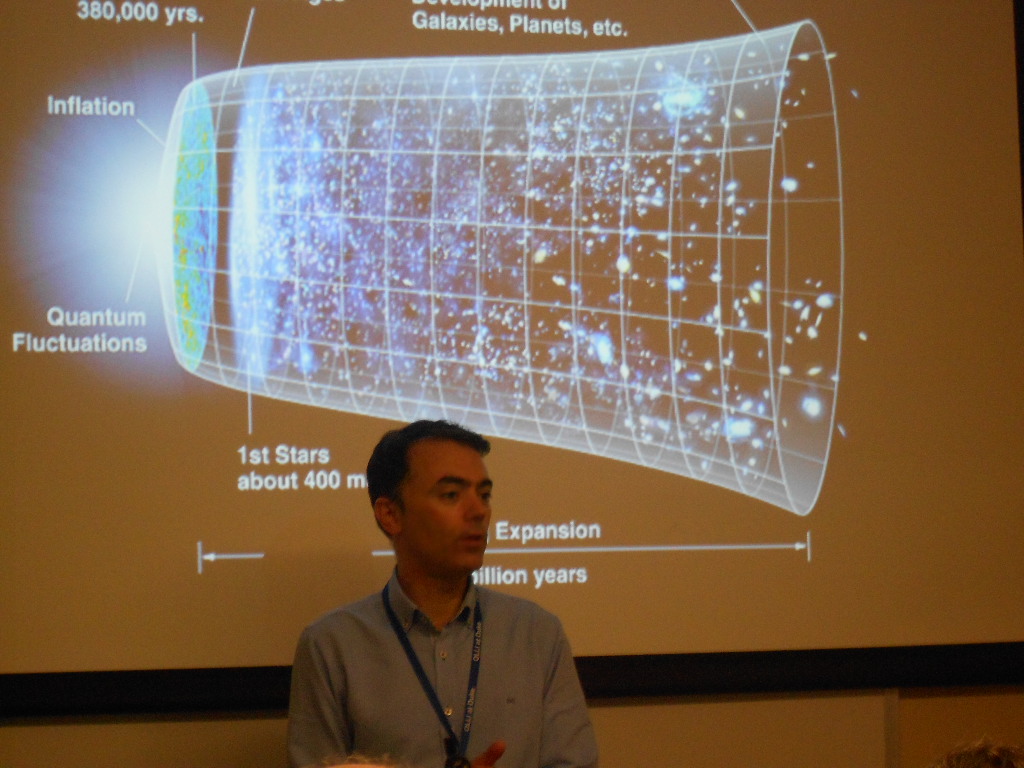
Professor Aragoneses teaching the class about the Big Bang Expansion

Professor Aragoneses teaching the class about the Big Bang Expansion

The unconventional idea to use movies as the primary medium for the class was born during Professor Aragoneses’s time teaching in Spain. Physics professors at his university had found that in order to get students to follow their classes, they had to do more than just explain Newton’s law and demonstrate practice problems. So, they began to relate these complex topics to media that the students were familiar with — news, cinema, and comics.

Each week, the OLLI group watches small scenes of movies that use scientific concepts in their production, and then learns the true theories behind these concepts. Most movies are quite fantastic when it comes to their scientific aspects, and this leads to incorrect representations of cosmological, physical, and astronomical phenomena on the screen. Focusing on a single concept each class, Aragoneses debunks Hollywood myths about natural disasters, comets, solar flares, neutrinos, and magnetic fields (to name a few).

Astronauts traveling with fuel packing in "Mission to Mars"

Astronauts traveling with jet packs in “Mission to Mars”

One week, the class focused on the dynamics of travel in space, calling on “Mission to Mars” to provide them with their screen reference. In one particular scene, astronauts are walking on Mars, propelled by air coming out of their backs and pushing them forward. The class learned that due to the lack of frictional force in space, the astronauts would, in reality, never run out of fuel since they would not need to push as hard as the movie suggested, using up much less fuel. The popular movie reference allowed Aragoneses to easily segue into the topics of friction, Newton’s laws, and the reality of space travel for the remainder of the class, while still holding the students’ attention. The group also analyzed the scientifically impossible behavior of deadly neutrinos in scenes from “2012” to learn about their true movement, and watched parts of “Independence Day” to better understand meteors and atmospheric interferences.
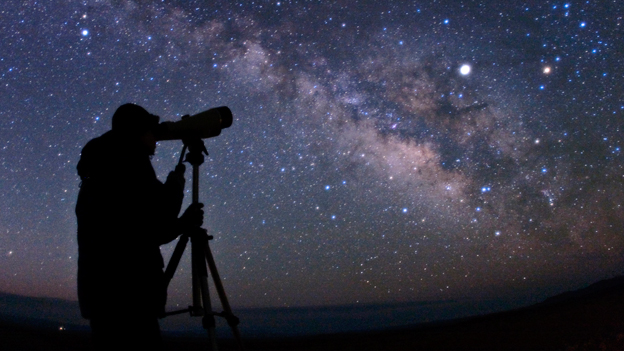
Astrophysicist searching for new planets by analyzing star movements.

Astrophysicist searching for new planets by analyzing star movements.

Occasionally, Aragoneses uses scientifically sound movies to study different concepts. One scene in Star Wars features Obi-Wan searching for a planet he is not able to find in existing maps. Yoda explains to him that the movement of the other stars in the sky is suspicious, and reasons that something must exist in between, although Obi-Wan cannot see it. The scene demonstrates the true manner in which astrophysicists search for new planets; since they are so tiny, they analyze movements of surrounding stars to detect their presence rather than searching for the planets themselves. Clearly the Grand Jedi Master knew a thing or two about the real universe!

Aragoneses’s idea to teach the class in such a unique fashion has evidently captivated his students; they often return after the week with new questions, suggestions for future movie references, and an excitement to continue their exploration of elaborate scientific concepts. The class has been a learning experience for Aragoneses as well, as he has had the chance to watch movies he hadn’t previously seen, and develop a deeper understanding of the concepts he teaches. He has so thoroughly enjoyed his work on the class in fact, that he is considering continuing to teach for OLLI in the future.

For those who are interested in enrolling in one of Aragoneses’s future classes, or another class hosted by OLLI, please visit their website. The Institute teaches about 100 different courses that range in topic from history, to science, to politics, to religion. The courses are taught both by Duke professors, and by other individuals from the Durham area.

Anika Ayyar_100Post by Anika Ayyar

Visualizing Crystals of the Cosmos

The beautiful mathematical structure of Penrose patterns have advanced our understanding of quasicrystals, a new breed of high-tech physical materials discovered in meteorites. Like all physical materials, these are collections of one or a few types of “particles” – atoms, molecules, or larger units – that are arranged in some pattern. The most familiar patterns are crystalline arrangements in which a simple unit is repeated in a regular way.

Periodic pattern of the honeycomb

During last Friday’s Visualization Forum, Josh Socolar, a Duke physics professor, conveyed his enthusiasm for the exotic patterns generated by non-periodic crystalline structures to a large audience munching on barbecue chicken and Alfredo pasta in the LSRC (Levine Science Research Center). Unlike many of the previous talks on visualizing data, Professor Socolar is not trying to find a new technique of visualization, but rather aims to emphasize the importance of visualizing certain structures.

Equations in chemistry for calculating vibrations when a material is heated are often based on the assumption that the material has a uniform structure such as the honeycomb pattern above. However, the atoms of a non-periodic crystalline object will behave differently when heated, making it necessary to revise the simplified mathematical models – since they can no longer be applied to all physical materials.

Quasicrystals, one type of non-periodic structured material, can be represented by the picture below. The pattern contains features with 5-fold symmetry of various sizes (highlighted in red, magenta, yellow, and green).

Quasicrystal structure with 5-fold symmetry

Quasicrystal structure with 5-fold symmetry

Drawing straight lines within each tile – as shown on the bottom half of the diagram below – produces lines running straight through the material with various lengths. Professor Socolar computed the lengths of these line segments and was amazed to discover that they follow the Fibonacci sequence. This phenomenon was recently discovered to occur naturally in icosahedrite, a rare and exotic mineral found in outer space.

Lines drawn through a quasicrystal structure

Lines drawn through a quasicrystal structure

By using software programs like Mathematica, we can create 3D images and animations for the expansion of such quasicrystal structures (a) as well as computing Sierpinski patterns formed when designing other types of non-periodic tile shapes (b).

Still of animation of expanding quasicrystal tiles - that looks like a cup of coffee.

(a) Still of animation of expanding quasicrystal tiles – that looks like a cup of coffee.

(b)

(b) Sierpinski triangle pattern drawn for other non-periodic tile shapes

(b) Recolored diagram of

(b) Recolored diagram of Sierpinski triangle pattern

Most importantly, Professor Socolar concludes, neither the Fibonacci nor non-periodic Penrose patterns would have been identified in quasicrystal structures without the visualization tools we have today. With Fibonacci sequence patterns discovered in the sunflower seed spiral as well as in the structure of the icosahedrite meteorite, we have found yet another mathematical point of unity between our world and the rest of the cosmos.

Professor Socolar taking questions from the audience.

Professor Socolar taking questions from the audience.

Post by Anika Radiya-Dixit

World's Largest Atom Smasher Gets a Reboot

by Robin Ann Smith

Buried 300 feet beneath the Franco-Swiss border in a 17-mile circular tunnel, the world’s biggest scientific instrument is revving back to life after a two-year overhaul.

Duke researchers are ready here in Durham and at the CERN physics laboratory near Geneva as the Large Hadron Collider gears up for its second three-year run.

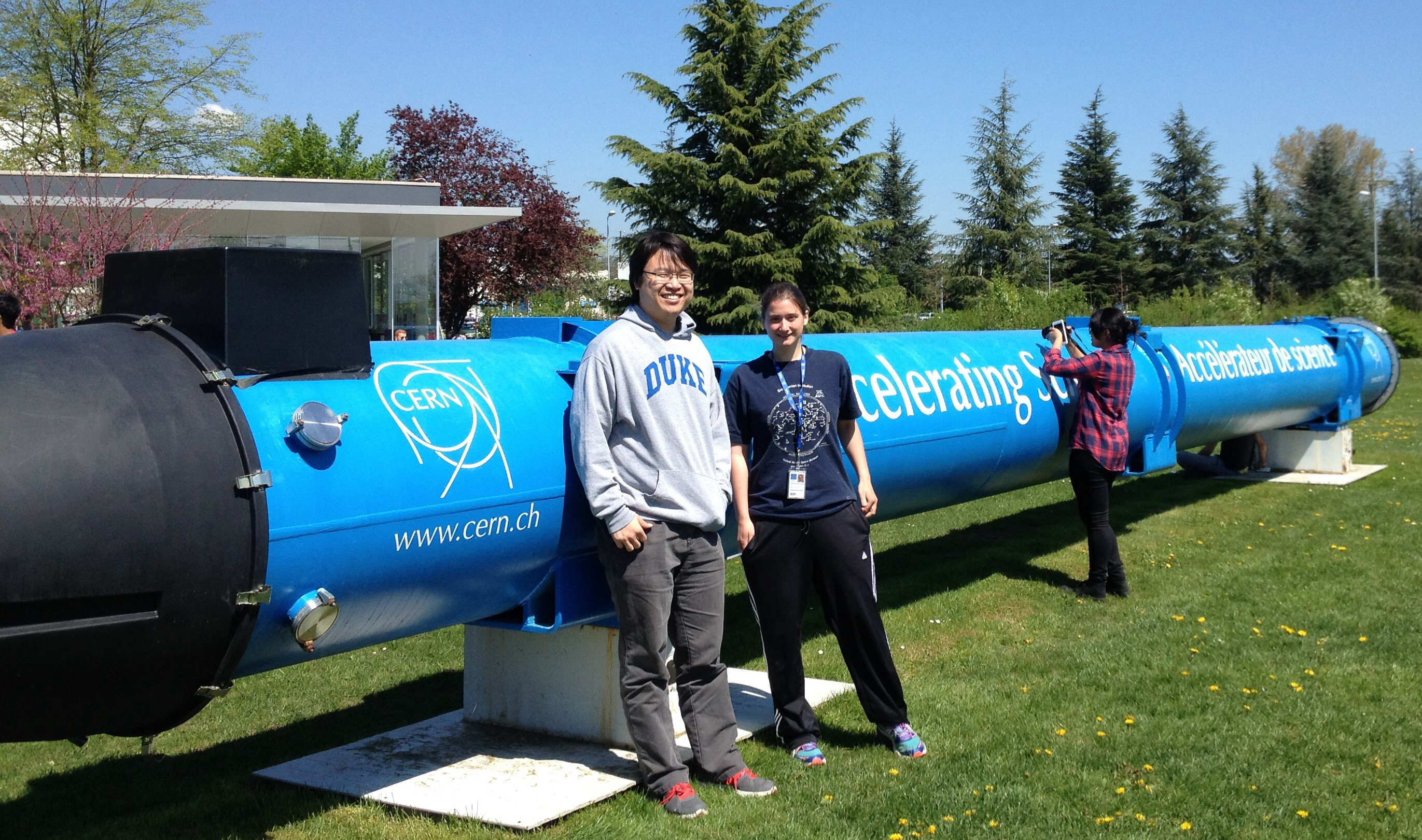
Duke physics students Chen Zhou and Elena Villhauer pose next to one of the thousands of enormous magnets that send proton beams hurtling around the Large Hadron Collider's 17-mile circumference more than 10,000 times a second.

Duke physics students Chen Zhou and Elena Villhauer pose next to one of the thousands of enormous magnets that send proton beams hurtling around the Large Hadron Collider’s 17-mile circumference more than 10,000 times a second.

By mid-summer, the largest and most powerful particle accelerator in the world will use its superconducting magnets to send beams of protons — invisible particles in the center of every atom — hurtling around the giant circular track at nearly the speed of light.

The reboot will ramp up to almost twice the energy of its first run, smashing protons together with a collision energy of 13 trillion electron volts.

One trillion electron volts is roughly the energy of a flying mosquito. While this isn’t much for a mosquito, it’s a huge amount of energy for something as tiny as a proton, which packs that energy into a space a million million times smaller than a mosquito.

Duke physics graduate student Lei Li takes a shift in the ATLAS control room.

Duke physics graduate student Lei Li takes a shift in the ATLAS control room.

By sifting through the debris that results from these collisions, researchers hope to figure out what particles may have existed in the first trillionths of a second after the “Big Bang” of the early Universe.

For the Duke scientists who have been involved in analyzing the data from the LHC’s first run from 2010 to 2013 — millions of gigabytes of data a year — the work never stopped.

That includes people like physics graduate student David Bjergaard, who studies an elusive, short-lived particle charmingly named the charm quark.

Bjergaard and other Duke scientists will be on-site this summer to continue their experiments at ATLAS, one of the four massive detectors that record the collisions.

The highlight of the LHC’s first run was the end of the 50-year hunt for a particle called the Higgs boson, the missing piece in a theory called the Standard Model of particle physics.

Now researchers are hoping to make more Higgs particles and study them more closely. But they’re also on the lookout for surprises.

“Maybe we’ll see something completely unexpected that doesn’t fit into any of our current models,” said Duke physics professor Mark Kruse, who from 2007 to 2009 led one of the teams that searched for the Higgs boson at Fermilab near Chicago.

“I am excited about the possibility,” said Duke graduate student Chen Zhou, who has been working with Kruse on a way to search for so-called ”new physics” by looking for events that show up in the ATLAS detector as a high-energy electron together with a similar but heavier particle called a muon.

1209198_02-A5-at-72-dpi

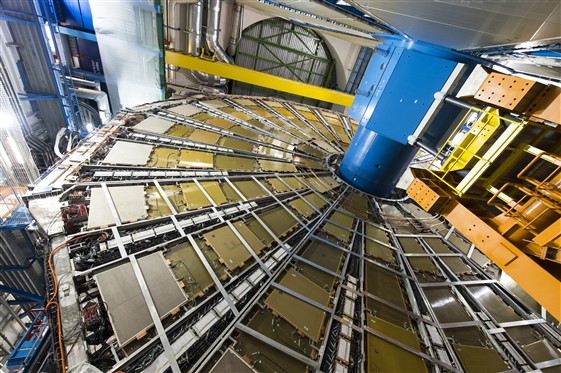
The 7,000-ton ATLAS detector at the Large Hadron Collider weighs as much as the Eiffel Tower and records about 20 million proton-proton collisions every second.

If new particles are lurking just around the corner, then they should be detected fairly quickly, Kruse said.

Duke student researcher Elena Villhauer will be scouring the data for hints of “quantum” black holes. These aren’t the black holes of space horror films — collapsed stars from which nothing, not even light, can escape — but harmless black holes that are smaller than a proton and evaporate instantly. If found, they would support the existence of extra dimensions in space beyond the three that we see.

“It’s science fiction possibly coming to life,” said Villhauer, who has been based at CERN since July 2014.

Other Duke students will be looking for the invisible substance called “dark matter,” which makes up most of the mass of the universe but has never been produced in the lab. “We know that dark matter exists. The only question is, can we produce it and detect it at the Large Hadron Collider? It could manifest itself in ways that we might not expect,” Kruse said.

The Duke researchers are among 10,000 scientists from 113 countries who collaborate on experiments at Large Hadron Collider.

For Lei Li, a Duke graduate student in physics who moved to CERN last year, the best part about living on-site is the opportunity to mingle with world experts in her field, face-to-face, on a daily basis.

Before, if she wanted to talk to someone working on the supercollider she had to connect remotely online, and deal with a six-hour time difference.

“[Now] If I come across a problem, I just invite an expert to grab a coffee,” she said.

CERN_Aerial_View

Bird’s-eye view of the CERN physics lab near Geneva, Switzerland.


Science Bracketology Runs Amok

By Karl Leif Bates

Okay, this bracket thing might be getting out of hand.

In addition to the men’s basketball tournament — where nearly 20 percent of the surviving teams are from our fair Triangle — and the women’s basketball tournament, in which both Duke and UNC are still alive — there have been a wave of science-related me-too brackets hoping to garner some social media love.

But hey, we have some big dogs in all of those fights too, so we’ll play along.

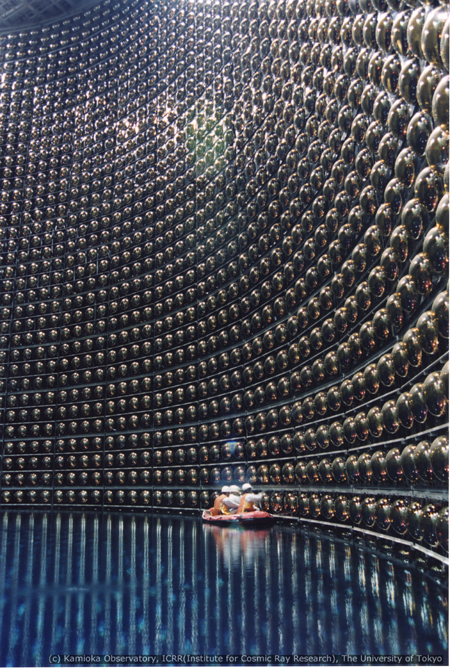
Maintenance workers inside the Super Kamiokande neutrino detector float on a rubber raft atop superpure water. (Kamioka Observatory, Institute for Cosmic Ray Research, The University of Tokyo)

Maintenance workers inside the Super Kamiokande neutrino detector float on a rubber raft atop superpure water. (Kamioka Observatory, Institute for Cosmic Ray Research, The University of Tokyo)

The particle physics folks at Symmetry magazine rolled out a bracket this week that pits sixteen of the coolest big machines in experimental physics against each other in head-to head-fashion.

Round one of their pair-wise elimination tournament pits an underground dark matter detector called LUX (The Large Underground Xenon dark-matter detector, naturally) against Swiss media darling, the Large Hadron Collider.

We’re going to stay on the sidelines for this one, as both experiments involve Duke people: Neutrino hunter Kate Scholberg, a professor of physics, works with LUX . And the LHC — specifically the ATLAS experiment — has dozens of Duke folks involved, most notably Mark Kruse, the Fuchsberg-Levine Professor of physics and head of ATLAS outreach in the U.S.

The fifth match in the physics bracket pits the Super-Kamiokande neutrino detector in Japan against something called DEAP in Canada which is looking for WIMPS. (We’re not making that up; it stands for Weakly Interacting Massive Particles.)

Kate Scholberg is a professor of physics at Duke.

Kate Scholberg is a professor of physics at Duke.

DEAP is probably a piece of junk though, because Super K has Scholberg and Associate Professor Chris Walter in its corner. And by the way, they’re already at work on Hyper-Kamiokande, which we’re sure the Canadians could only match with what, hyper wimps?

Go ahead and vote before 3 a.m. March 27, if you’re a fan of giant, expensive physics machines. We know we are!

UPDATE: April 7, 2015: The Dark Energy Camera, a big boy at the top of a Chilean mountain, topped the Large Hadron Collider in the final. Read the results here. We can’t believe there wasn’t some concerted ballot-stuffing going on.

Meanwhile, the good folks at ThomsonReuters have once again put out a bracket pitting the 64 universities in the men’s basketball tournament against each other on the strength of their academic publishing stats.

Last year, you’ll recall, the Blue Devils lost a heartbreaker in the final round to some California team that has like, a dancing tree for a mascot? What the Fir is up with that?

The ThomsonReuters contest is waged over h-indices, citation impact, international collaborations and other measures of research publishing rigor.

The California tree-huggers’ ballers didn’t make the basketball tournament this year, so maybe we have a clear shot to the finals again. Wisconsin and Harvard might give us a scare coming from the other side of the bracket, though.

UPDATE – April 7, 2015: We did indeed have a clear shot to the final contest, where Harvard beat us. This marks our second consecutive final-round disappointment. Read the disappointing news from Thomson Reuters. 

By the way, Duke won the dang basketball tournament at least!

Cameron Crazies are rooting for our scientists too!

Cameron Crazies are rooting for our scientists too!

Summer Restoration in a Bolivian Winter

By Olivia Zhu2014-06-19 10.45.15

My biggest accomplishment this summer was being able to call the mountains of Bolivia home. Far away from the lecture halls of Duke, I encountered a profound, alternative education that included everything from learning traditional dances to working in a rural hospital laboratory to raising pigs.

Of course, living in Bolivia for two months had its challenges, like a diet in which potatoes were considered vegetables, repeated food poisoning from chicha, the local alcoholic drink consisting of fermented corn, lack of a consistent water source, many near-car accidents, and most of all a deep-seated machismo, but I feel that these were all almost inextricable aspects of a culture that left such a positive impression upon me.

El Hospital Pietro Gamba in Anzaldo, Bolivia

El Hospital Pietro Gamba in Anzaldo served over 69 rural communities in Bolivia

Of course, the inextricability of such factors posed a problem for me as an intern at El Hospital Pietro Gamba encouraging sustainable development to promote public health. Although 80% of children had head lice, a vast majority contracted repeated gastrointestinal bacterial infections, and countless had scabies, the community seemed to get along contentedly. Regardless, with support from the Foundation for Sustainable Development and DukeEngage, my sponsor organizations, I leveraged the relatively new running water system, implemented only 25 years ago, to set in motion a comprehensive lice campaign, to obtain government funding of soap in public restrooms for at least two years, and to create preventative medicine informational materials.

The majority of my education, though, occurred outside the scope of my project. Most importantly, I’ve learned to openly embrace different forms of learning, like relaxation or soccer, that energize me to wholeheartedly pursue my rigorous biophysics career, which I am so fortunate to have at one of the best universities in the world.

The idea of the Aymara New Year illustrates my mentality poignantly: on the first day of the Aymara New Year, traditional Bolivians wish for health, prosperity, and happiness, just as we do in the United States. However, they have a deeper connection with Pachamama, or Mother Nature: on New Year’s Day, they wake up early in the morning to stand on the ground barefoot, awaiting the first rays of the sun. They believe that watching these rays rise above the horizon and light the earth will bring them energy for the entire year. In this, the Aymara New Year represents both personal aspiration and attenuation with the environment.

Similarly, I now aim to maintain a balance between self and surroundings: I hope to be more attuned to the world around me rather than single-mindedly submersing myself in quantum physics, as I believe that varied experiences will infuse me with energy in whatever I pursue. Now, back at Duke for the start of my junior year, I’m excited to begin blogging again and to continue my adventures and education here on campus.

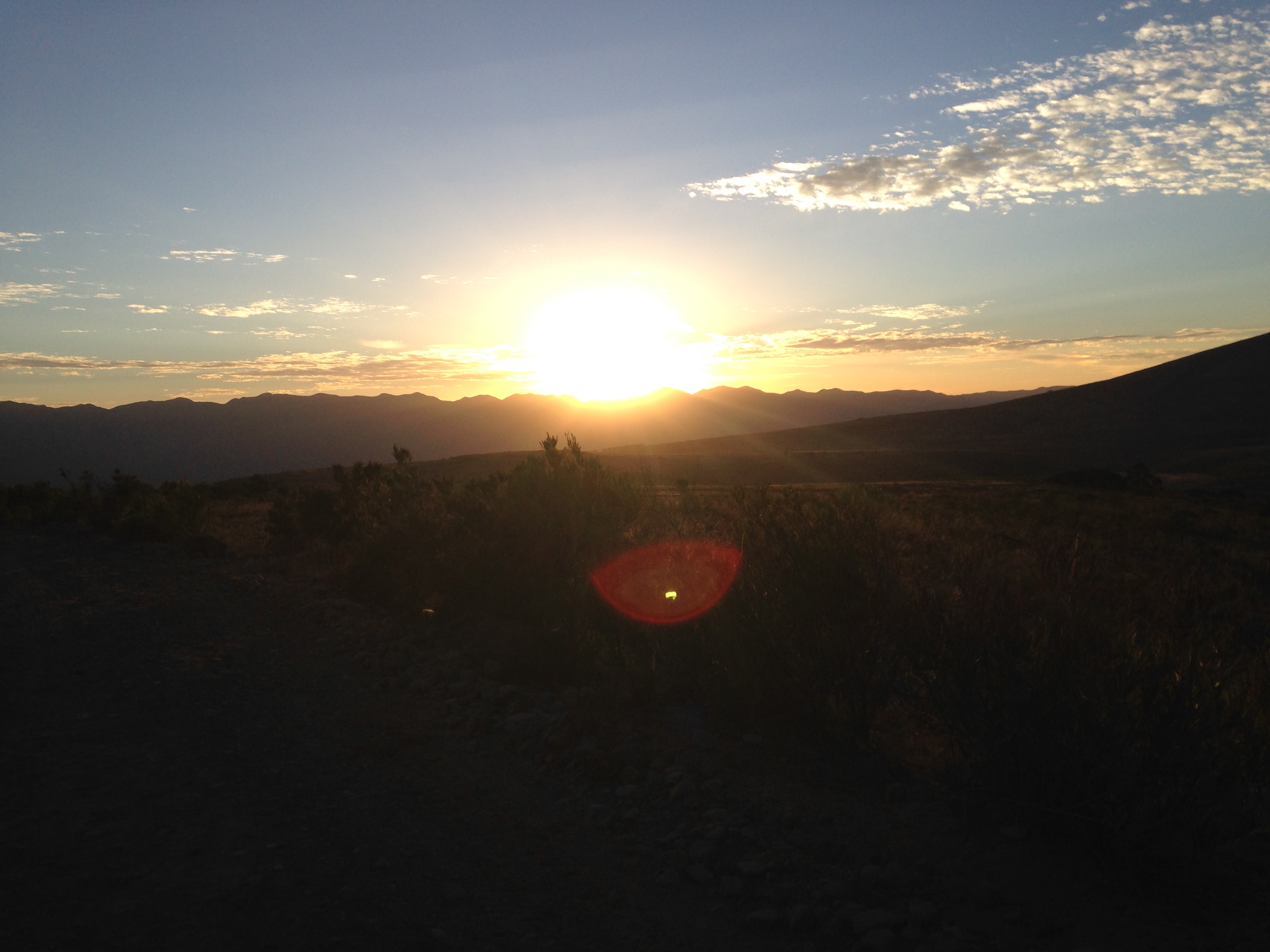
The Aymara sunrise on June 21, 2014.

The Aymara sunrise on June 21, 2014.

Duke Researchers Cited for Their Influence


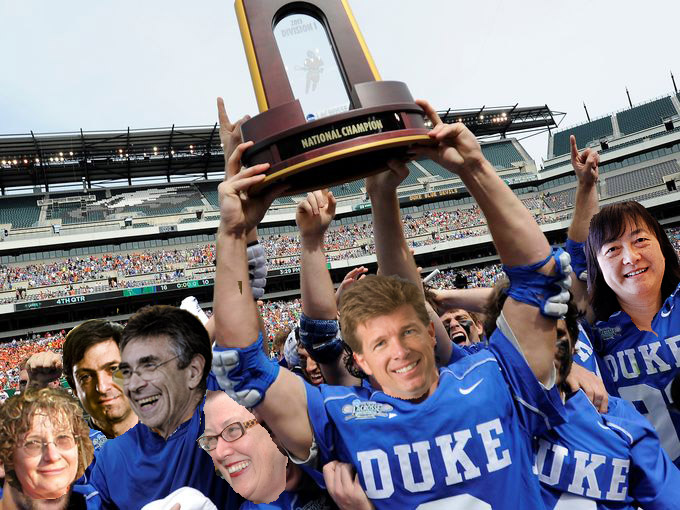
We are the champions, my friend.

We are the champions, my friend.

By Karl Leif Bates

A new compilation of the world’s most-cited scientists just released by Thomson Reuters (our friends from March Madness), shows that 32 Duke researchers are in the top one percent of their fields.

There are 3215 most-cited scientists on the list, so perhaps that makes Duke the one percent of the one percent?

Most-cited means a particular paper has been named frequently in the references by other papers in that field.

And that “is a measure of gross influence that often correlates well with community perceptions of research leaders within a field,” Thomson Reuters says. The database company admits their study methodology does favor senior authors who have had their papers out there longer, but there are quite a few younger Duke researchers in this list too.

From the Medical Center, the tops in citations in clinical medicine are cardiologists  Eric Peterson, Robert Califf, Christopher Granger, and Eric Magnus Ohman. Michael Pencina, a biostatistician at the Duke Clinical Research Institute, is also most-cited in clinical medicine.

Perhaps not surprisingly, Nobel laureate, biochemist, and father of the G-protein coupled receptor Robert Lefkowitz made the list in pharmacology and toxicology.

Barton Haynes and David Montefiori of the Duke Human Vaccine Institute are listed in the microbiology category.

Medical School basic scientist Bryan Cullen of Molecular Genetics and Microbiology was cited in microbiology.

In psychiatry/psychology, A. John Rush, the vice dean for clinical research at Duke-NUS School of Medicine in Singapore, made the list, as did Richard Keefe, Joseph McEvoy of psychiatry and Avshalom Caspi, and Terrie Moffitt of Psychology & Neuroscience in Arts & Sciences.

Also from Trinity College of Arts and Sciences, Ahmad Hariri and HonaLee Harrington of Psychology & Neuroscience also made the list in psychiatry/psychology. Benjamin Wiley was oft-cited in Chemistry, James Berger and Ingrid Daubechies in mathematics, and plant biologists Philip Benfey, Xinnian Dong and Tai-Ping Sun in the category of plant and animal science.

Sanford School of Public Policy Dean Kelly Brownell is on the list in general social sciences, along with Arts & Sciences sociologist James Moody and nutrition researcher Mary Story of community and family medicine and the Duke Global Health Institute.

Nicholas School of the Environment researchers Robert Jackson and Heather Stapleton were cited the environment/ecology category.

From the Pratt School of Engineering, David R. Smith was cited in the physics category and Jennifer West in materials science.

The economics and business category includes Dan Ariely along with his Fuqua School of Business colleagues Campbell Harvey and Arts & Sciences economist Tim Bollerslev.

The Thomson Reuters analysis is based on their Web of Science database. This is the first time it has been done since 2001, when there were 45 Duke names on the list (including five that appeared again this time), but the methodology has changed somewhat.

UPDATE – There’s now a full PDF report  from Thomson Reuters for download – http://sciencewatch.com/sites/sw/files/sw-article/media/worlds-most-influential-scientific-minds-2014.pdf


Neutrinoless Search Still Neutrinoless, For Now

By Karl Leif Bates

Phil Barbeau is an assistant professor of physics in the Triangle Universities Nuclear Lab.

Phil Barbeau is an assistant professor of physics in the Triangle Universities Nuclear Lab.

An international team of neutrino hunters, including Duke physicist Phil Barbeau, is publishing an update this week on the first two years of an ambitious experiment called EXO-200. (The cool name stands for 200-kilogram Enriched Xenon Observatory.)

What the team is after is “neutrinoless double-beta decay,” a particular reaction that’s expected once in 10 to the 25 years in a given molecule of xenon. At about a billion times longer than the age of the universe, that’s a little long to make the funding agencies wait for results, “so we use Avogadro’s number to fight that,” said Barbeau, who is an assistant professor of physics and member of the Triangle Universities Nuclear Lab.

EXO-200

The vessel at the heart of EXO-200 holds pure Xenon 136 and was built in a class 100 clean room.

EXO-200 is a 40-centimeter cylinder of very thin, almost balloon-like copper containing 200 kg of pure Xenon 136. That capsule is in turn surrounded by a vacuum, another thin copper shell, a foot-thick layer of lead, chilled to -100C and buried 2,150 feet underground in a New Mexico salt dome. They really don’t want any intrinsic radiation confusing things.

Unfortunately, the scientific team has been locked out of their underground lair for months by safety concerns following a radiation leak at the federal facility, so the experiment is on hold until things get cleaned up.

EXO-200 is so sensitive that even the super-tiny amount of radiation contained in a human fingerprint would throw it off, so all of this has to be super-cleanroom-clean too.

If the device can see a neutrinoless double-beta decay, it would strongly suggest the existence of a theoretical Dirac neutrino of unknown mass, AND that this particle exists simultaneously as a particle and its own anti-particle. And that, in turn, would poke another hole in the Standard Model of physics.

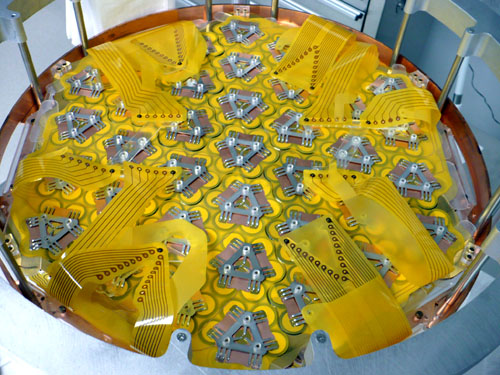
A gorgeous hand-built array of "avalanche photodiodes" captures faint ultraviolet flashes of particle decay.

A gorgeous hand-built array of “avalanche photodiodes” captures faint ultraviolet flashes of particle decay.

If this is all starting to sound a little crazy, just know that these little fellas are candidates for both dark matter and dark energy, the huge missing variable in the mass and energy of the entire universe. So finding them would be helpful. (Here’s a really good article (PDF) in Physics World by Stanford physicists.)

Xenon 136 isotopes occur naturally at about 20 percent of a population of xenon, so the scientists sent a $3 million ton of xenon to Russia to be spun in the sorts of industrial centrifuges that were formerly used to purify fission materials for nuclear bombs. Swords become plowshares, the Russians keep the lighter Xenon and re-sell it, and the scientists get their enriched 136 for the experiment.

EXO-200 is one of several competing experimental designs that are being used as a proof of concept for the Department of Energy. As physicists are wont to do, they’re drawing up plans to build a detector that is five to 25 times bigger, but first these teams have to figure out which approach works best.

Barbeau said this week’s update on EXO-200 is essentially that they haven’t seen anything so far, other than establishing that the detector is working really well and probably capable of catching the neutrinoless double-beta when it happens. “One thing that’s a constant with the neutrino is that it’s always surprising us,” Barbeau said.

The update appears as an advance online paper in Nature June 4.

EXO-200’s international team of physicists  is supported by the Department of Energy and National Science Foundation in the United States, the NSERC in Canada, SNF in Switzerland, NRF in Korea, RFBR in Russia and DFG Cluster of Excellence “Universe” in Germany.

Studying patterns in bacterial organization

credit to Gerard Wong, of the California NanoSystems Institute

credit to Gerard Wong, of the California NanoSystems Institute

by Olivia Zhu

Bacterial biofilms, at first glance, may seem to be spontaneous, random phenomena from which we have no power to protect our environment or ourselves.

They’re potentially useful as an aid to wastewater treatment, but they also cause infections that account for $6 billion a year in health care costs. Biofilms are also more resistant to antibiotic drugs, making them difficult to eradicate.

Dr. Kun Zhao, of the California NanoSystems Institute at UCLA, refuses to see biofilms as arbitrary: he emphasizes the fact that biofilms are communities of bacteria in self-produced polymeric matrices of polysaccharides, and using a biophysical approach, he studies the pattern behind their organization.

Central questions in Zhao’s research include how bacterial colonies transition from reversible to irreversible attachment, how they migrate, and how they ultimately disperse. Specifically, Zhao examines the polysaccharide Psl, which poses a positive feedback loop because it is both secreted by moving bacteria and serves as a chemo-attractant for future bacteria movement. The positive feedback creates an inherent pattern, as bacteria are more likely to visit a location they have been to before.

Zhao and colleagues have also discovered that bacterial mutants that cannot produce Psl exhibit more random and uniform movement.

To better quantify bacterial movement,Zhao has created a computer algorithm that shows the full movement history of each individual bacterium on a dish, and that provides a “search engine” allowing researchers to find every bacterium performing specific life cycle activities, like division.

Zhao has postulated a “rich get richer” mechanism for biofilms. He compares bacterial organization to Wall Street because concentrated movement ensures that some cells become extremely enriched. In the future, he hopes to model colloidal structures for biological problems, like the growth of the bacterial cell wall. Zhao currently uses colloids, which in physics are used as models for atomic systems, to observe how shapes affect self-assembly. He also would like to look at cell-substrate interactions, which are implicated in bacterial territoriality and social interactions.

Grad Student Solves 30-Year-Old Physics Problem

By Erin Weeks

Sometimes an age-old question just needs a fresh set of eyes.

That was the case in Duke’s physics department, where a graduate student and professor recently resolved a calculating dilemma that has vexed computational physicists for decades.

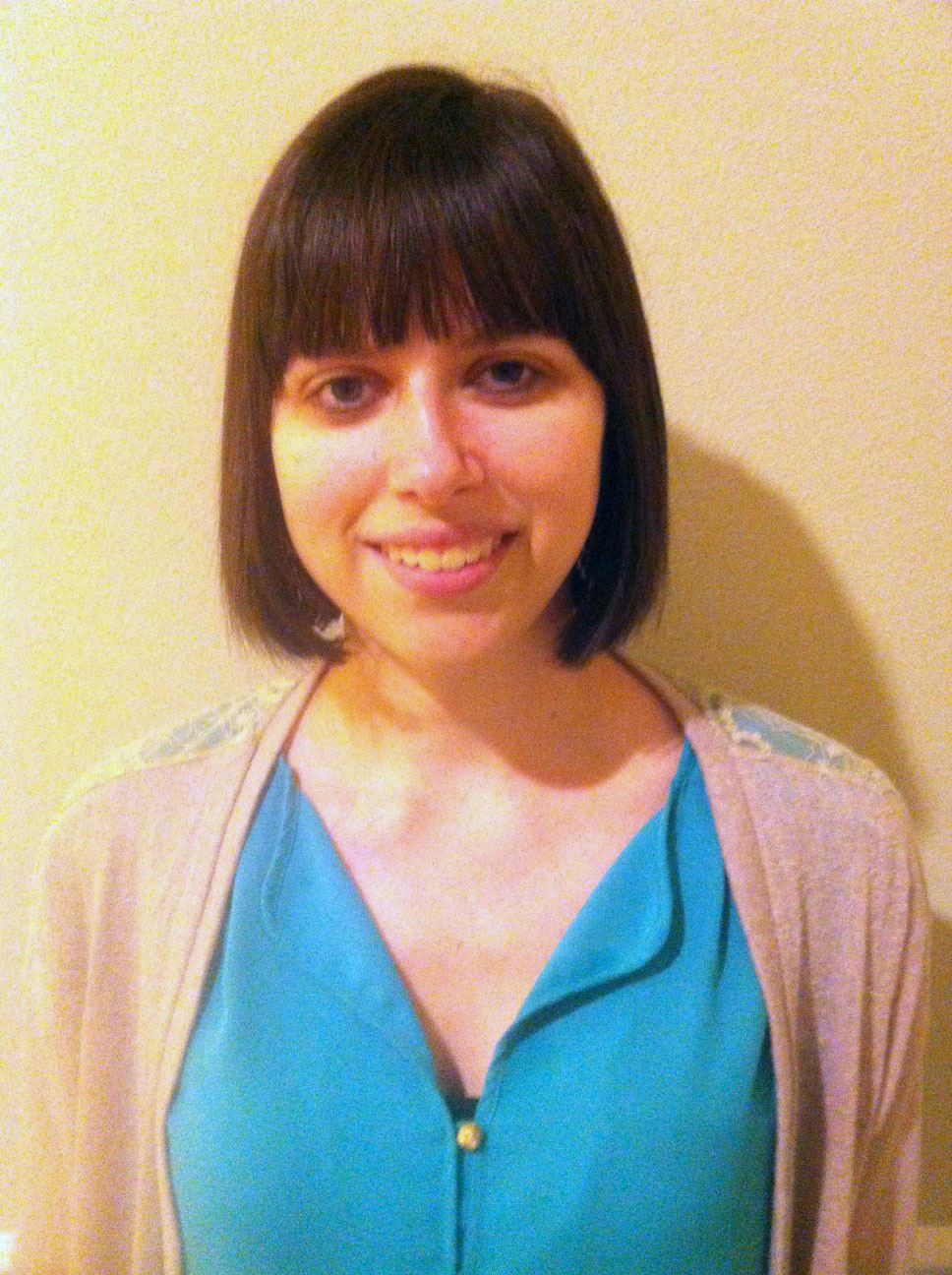
Emilie Huffman, second year PhD student in physics

Emilie Huffman, second year PhD student in physics

Emilie Huffman is a second-year PhD student from Charlotte, North Carolina. Last spring she began working with Shailesh Chandrasekharan, an associate professor and the director of graduate studies in physics, on what’s known as a sign problem.

Chandrasekharan is a theoretical nuclear and particle physicist who specializes in solving sign problems, which arise when one uses certain computational algorithms to calculate the behavior of large numbers of particles called fermions.

“Almost all the matter we know of are made with fermions,” Chandrasekharan said. “As building blocks of matter, it’s very important to be able to do calculations with them.”

But calculations of such complexity get tricky, and sign problems make it easy for wrong results to surface.

“It’s a very broad problem that affects almost all fields of physics involving quantum mechanics with strong correlations, where Monte Carlo methods are essential to perform calculations,” Chandrasekharan said.

Some in the field have simply moved on since the 1980s, leaving interesting questions plagued by sign problems unexplored. Other scientists have found workarounds and approximations. Very few, including Chandrasekharan, have tried to figure out solutions through the years. Huffman began work to expand on one of her advisor’s solutions, involving a grouping concept called fermion bags, and apply them to a new class of problems.

“She finally figured out a nice formula,” Chandrasekharan said. “Although the formula is quite simple and elegant, I couldn’t guess it.”

“In physics, often there’s a truth, and if you’re hitting on the right truth, everything starts falling into place.” Chandrasekharan says that’s what happened when he began applying Huffman’s formula to a class of problems.

Their paper appeared recently in the journal Physical Review B’s Rapid Communications.

“Now that I have a solution, I can begin to apply it,” Huffman said. Starting with condensed matter physics, Huffman plans to apply her solution to various questions that have been stymied by sign problems. “I can use this solution to study properties of graphene,” she said, referring to the single-layer carbon that has been touted as the strongest material in the world. Many puzzles remain in the field, especially involving multi-layer graphene sheets.

Wherever she turns her attention next, it’s clear Huffman has a promising career ahead.

Citation: “Solution to sign problems in half-filled spin-polarized electronic systems,” Emilie Huffman and Shailesh Chandrasekharan. Physical Review B Rapid Communications, March 12, 2014. DOI: 10.1103/PhysRevB.89.111101.


The Catastrophic Origins of Our Moon

This still from a model shows a planet-sized object just after collision with earth. The colors indicate temperature. (Photo: Robin Canup)

This still from a model shows Earth just after collision with a planet-sized object. The colors indicate temperature. (Photo: Robin Canup)

By Erin Weeks

About 65 million years ago, an asteroid the size of Manhattan collided with the Earth, resulting in the extinction of 75% of the planet’s species, including the dinosaurs.

Now imagine an impact eight orders of magnitude more powerful — that’s the shot most scientists believe formed the moon.

One of the leading researchers of the giant impact theory of the moon’s origin is Robin Canup, associate vice president of the Planetary Science Directorate at the Southwest Research Institute. Canup was elected to the National Academy of Sciences in 2012, and she’s also a graduate of Duke University — where she returned yesterday to give the fifth Hertha Sponer Lecture, named for the physicist and first woman awarded a full professorship in science at Duke.

According to the giant impact hypothesis, another planet-sized object crashed into Earth shortly after its formation 4.5 billion years ago. The catastrophic impact sent an eruption of dust and vaporized rock into space, which coalesced into a disk of material rotating around Earth’s smoldering remains (see a very cool video of one model here).  Over time, that wreckage accreted into larger and larger “planetesimals,” eventually forming our moon.

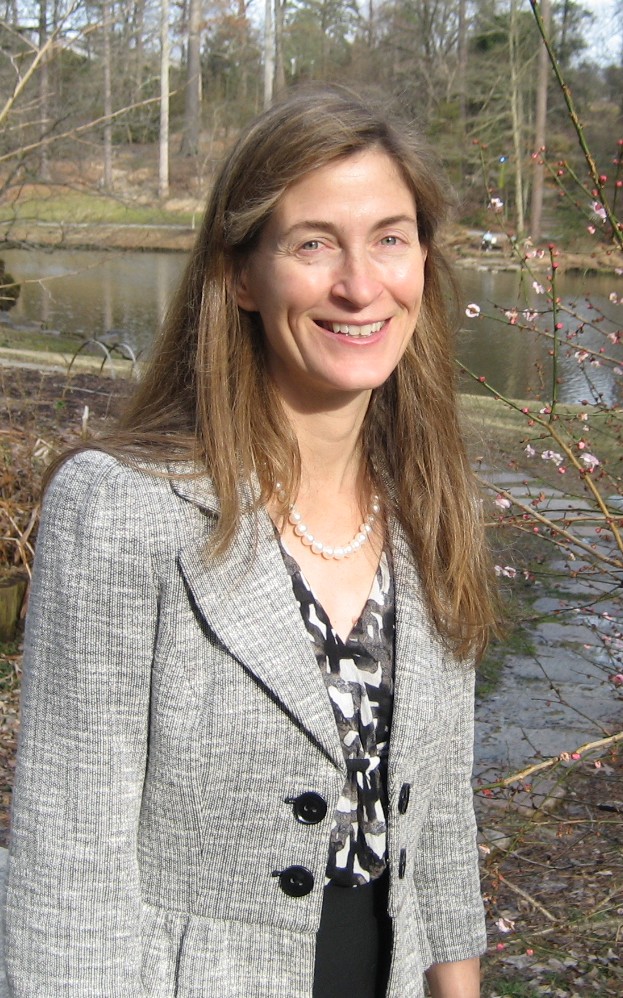
Physics professor Horst Meyer took this photo of Robin Canup, who was his student as an undergraduate,

Robin Canup (Photo: Horst Meyer, who taught Canup as an undergrad at Duke)

Scientists favor this scenario, Canup said, because it answers a number of questions about our planet’s unusual lunar companion.

For instance, our moon has a depleted iron core, with 10% instead of the usual 30% iron composition. Canup’s models have shown the earth may have sucked up the molten core of the colliding object, leaving the dust cloud from which the moon originated with very little iron in it.

Another mystery is the identical isotopic signature of the moon and the earth’s mantle, which could be explained if the two original bodies mixed, forming a hybrid isotopic composition from the collision.

Canup’s models of the moon’s formation help us understand the evolution of just one (albeit important) cosmic configuration in our galaxy. As for the rest out there, she says scientists are just beginning to plump the depths of how they came to be. Already, the models show “they’re even crazier than the theoreticians imagined.”

Page 6 of 11

Powered by WordPress & Theme by Anders Norén