Following the people and events that make up the research community at Duke

Students exploring the Innovation Co-Lab

Category: Animals Page 17 of 19

Not Swimming with Spinners

By Ashley Yeager

spinner dolphins

Spinner dolphins swimming just off the bow of a boat. Image courtesy of Dave Johnston, Duke.

Waianae, HI – Pet a dolphin for me, my sister texted as I stepped onto a catamaran in West Oahu. I didn’t have the heart to tell her that is exactly what I would NOT be doing, under any circumstances.

I have to admit that a little later, as a pod of wild spinner dolphins undulated just ahead of the bow of our boat, it was really hard not to reach out and try to touch one of them.

It was almost as if getting closer to the creatures as they slid through the water would free us, if only for a moment, from our artificial world of buildings, cars, computers and cell phones. But, in reality, interacting with spinners can’t take us away from our hyper-connected world, and chasing and touching the dolphins is not good for them either.

“If you try to play with spinners during the day, it’s like a stranger coming into your bedroom in the middle of the night and trying to wake you up,” says Nicholas School marine biologist Dave Johnston. He comes to Hawaii a few times each year to take photographs and other data on the islands’ spinner dolphins to learn more about their behaviors, population size and the bays they are swimming in during the day.

Spinner dolphins — Stenella longirostris – swim into shallow bays off Hawaii’s coast during the day to rest, turning off half of their brain at a time as they sleep. With one half on and one half off, they can still swim to the surface to breathe and ultimately recharge for the next night’s hunt.

But lots of vacationing people swimming and sailing in the bays aren’t thinking of the dolphins’ schedule and rest, they are only wanting to get closer to the wild animals. And the dolphins, much like humans, are curious. They’re going to check you out if you’re in their space, just like you would if you hear a strange noise in your room while your trying to sleep, our guides from Hawaii Nautical tell us as we cruise out of Waianae Harbor on West Oahu.

We sail for a bit and then come upon a pod of spinner dolphins resting off our port side. Everybody bunches to the front of the boat to get as close as they can to the animals. Our guides remind us of the dolphins’ sleep cycle and explain that the tour company follows the NOAA-sponsored Dolphin SMART program.

SMART stands for: Staying back from the dolphins; Moving away if they seem disturbed; Always keep a boat engine in neutral if you are near a pod; Refraining from feeding or touching them; and Teaching others to be dolphin SMART. Needless to say, we didn’t swim with or touch the dolphins. Sorry sis. Instead, we sailed a bit more, snorkeled with some sea turtles, not touching them of course, and then sailed back toward the harbor.

On the way back, we spotted another pod of spinners, and even more inspiring, we simply watched the animals. They were enjoying their rest, undisturbed in their home — something we all crave and appreciate when we can get it.
'Hoot-Dash Display' Brings the Chicks In

Guest Post by Robin A. Smith, National Evolutionary Synthesis Center (NESCent)

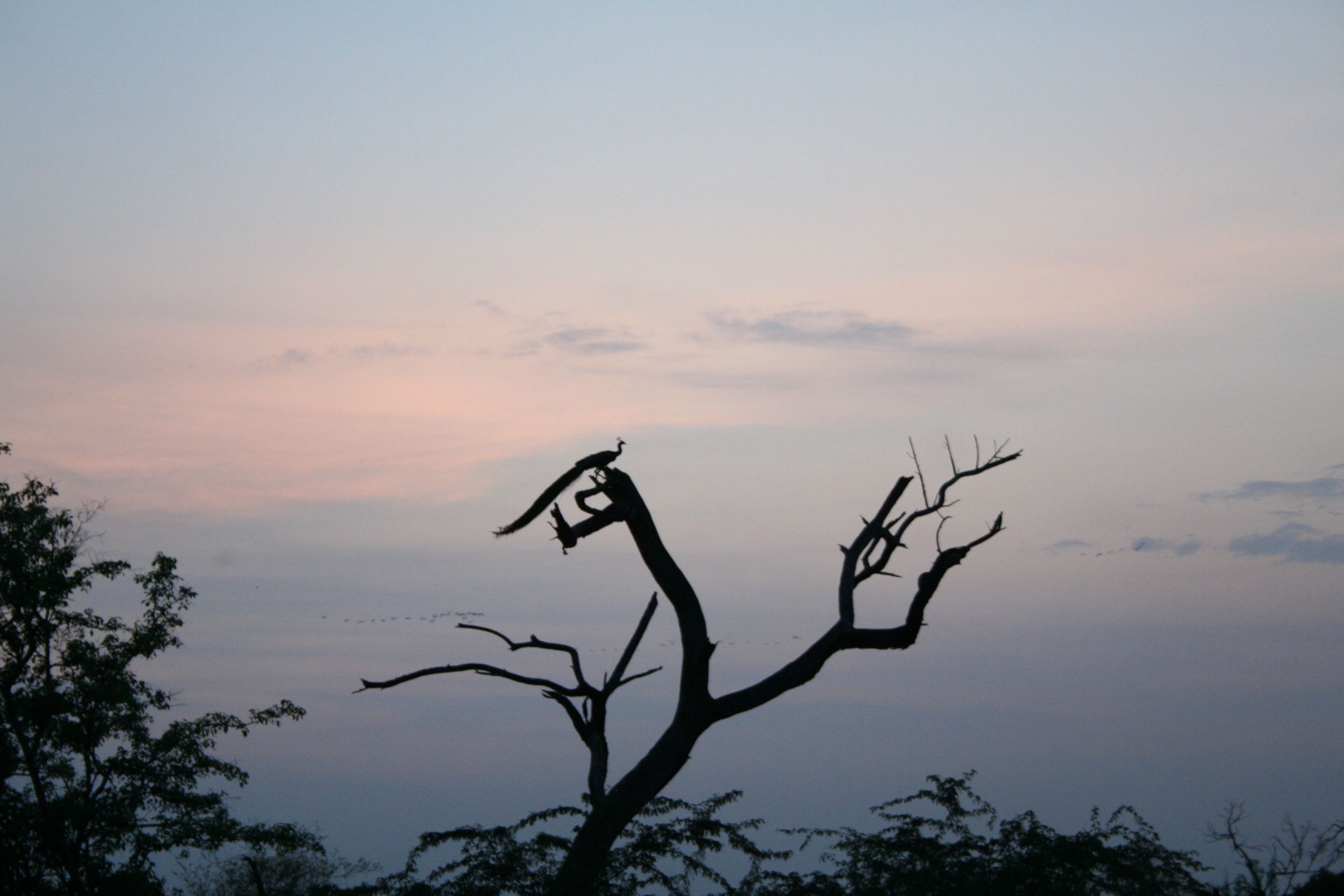
A male peacock roosting at the top of a tree in India at dusk. (Jessica Yorzinski photo)

Deep in the scrublands of Keoladeo National Park in northwest India, one thing was hard for biologist Jessica Yorzinski to ignore: It wasn’t the heat. It wasn’t the jackals. It was the squawks of peacocks in the throes of passion.

From behind the trees in the distance, she could hear a loud two-part whoop, the distinctive call that male peacocks make right before mating.

During the peacock courtship dance, a male announces that he’s ready to make his move by dashing towards the object of his affection and emitting a singular squawk before mounting his mate.

“Peacocks have a number of different courtship calls, but this is the only one specifically associated with the moment before copulation, a time when the female is finally right in front of the male. It’s called the hoot-dash display,” said   Yorzinski, who is a post-doctoral fellow in the Center for Cognitive Neuroscience at Duke.

The amorous peacock’s signature hoot poses a puzzle for scientists. For one thing, he’s already got the girl. “By that point she’s already right there, checking him out. You’d think that he might not need another signal at such a late stage in the courtship process,” Yorzinski said.

What’s more, the calls could alert potential predators to an easy meal. Jackals, tigers and hawks can make a quick snack of a wild peacock in their native habitat of South Asia. “In a sense, they’re advertising that they’re distracted and vulnerable. It would be wise for a predator to capitalize on that,” Yorzinski said.

Yorzinski on stakeout inside a blind on a day hotter than 100 degrees F. (courtesy of Jessica Yorzinski)

Intrigued, Yorzinski recorded the loud carrying-on of males in mid-conquest. Then she played the calls to free-ranging females in India and videotaped their reactions. At each site, a loudspeaker played copulation calls on one day and silent controls on another day.

The result: the recorded love sounds made by amorous peacocks in the throes of passion drew eavesdropping females from afar. Females approached and spent more time near speakers that were playing hoots compared to silent controls.

To make sure the birds weren’t simply drawn to any noise, Yorzinski repeated a similar experiment with captive birds in an outdoor enclosure at Duke. There, a speaker played two different sounds: peacock copulation calls, or crow caws.

The results matched what she found in the wild. Captive females paid little attention to the speakers when crow caws were playing, but when the love whoops were played, the females moved toward the source of sound and spent more time near the speaker.

“Why they’re attracted to these calls and what it tells them — these are still open questions,” Yorzinski said.

Announcing the fact that he’s getting a girl could help a male attract additional mates, she explained.

Studies in other species have shown that females flock towards popular males. “It’s like someone’s already vouched for him. If he’s good enough for one girl, then he might be good enough for another girl, too.”

[youtube http://www.youtube.com/watch?v=DGlKRSzPKsk&version=3&hl=en_US]
That dating boost could make up for the risks involved in disclosing his whereabouts to potential predators, especially in the birds’ native habitat where dense trees and grasses make strutting males hard for females to spot.

If distant females are drawn to the love calls made by mating males, why don’t the males simply boost their call rate to give the impression that they’re more successful than they actually are?

“One of the biggest unanswered questions is why males don’t fake it,” Yorzinski said. “I’ve heard males making false calls when there’s no mate in sight, so there definitely is some level of cheating going on. Figuring out why they don’t do it more often would be the key.”

The study will appear in the January print issue of the journal Behaviour, and is available online at http://booksandjournals.brillonline.com/content/10.1163/1568539x-00003037.

CITATION:  Yorzinski, J. and K. Anoop, “Peacock copulation calls attract distant females.” Behaviour, Jan. 2013. DOI:10.1163/1568539X-00003037.

The new blood diamond is your cell phone

by Ashley Mooney

There is an African proverb that says “when the elephants fight, the grass suffers.”

In the Democratic Republic of the Congo, the elephants are militias and the grass is the women, said John Prendergast, co-founder of Enough Project, an organization that fights to end genocide.

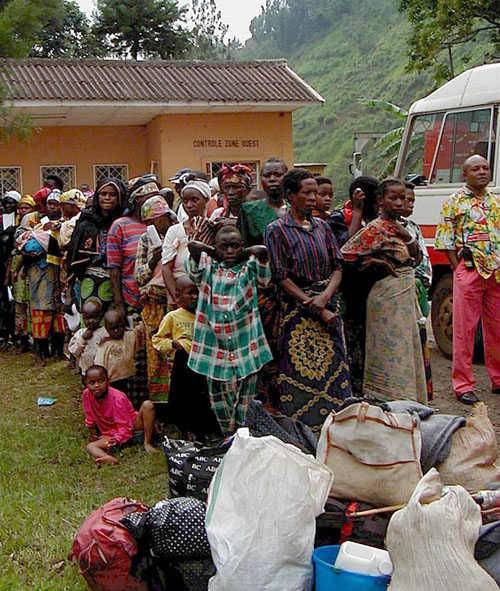
Congolese rape victims assemble outside of a peace hut. Courtesy of Wikimedia Commons.

Prendergast, who spoke at Duke Nov. 29, said the DRC is now the home of the deadliest war since World War II. The conflict has been created in part by large corporations seeking a variety of natural resources within the region throughout the past 150 years. Currently, the Congo is the main source of gold, tantalum, tin and tungsten, which are used to power electronics such as cell phones, laptops and digital cameras.

“Congo is now the most dangerous war because powerful corporations have come to [the country] for the last few centuries to take whatever they want, and structured the state to facilitate that,” he said. His talk was part of the Ferguson Family Distinguished Lectureship series on the Environment and Society.

The nation is currently riddled by struggles between the Congolese armies, militias and other groups from bordering nations Rwanda and Uganda. Many of the groups utilize brutal tactics throughout mineral-smuggling networks, and, Prendergast said, use sexual violence at the center of their methodology.

“[There has been] no other war in the world where the link between our consumer appetites and sexual violence is so direct,” he said. “All of these groups use rape as a means of social control… They target women to humiliate and destroy the will of the community.”

Prendergast has dedicated himself to the pursuit of peace in the region for over 30 years and has lobbied several companies – including Apple – to use free-trade models of mineral trade.

“Unless international capital or profit-seeking capital is regulated in some way, it will trample all over human rights,” he said.

Prendergast credited Duke’s student body for leading the nation in the Conflict-Free Campus Initiative, which 115 schools are involved in.

The way to create peace, he said, is to pressure the United States government to encourage the United Nations and other countries to support “an African-led peace process in Congo,” which deals with the root causes of the issue.

“We aren’t going to solve all of the Congo’s problems sitting here – we aren’t going to solve them in the United States or Europe,” he said. “But we can play a major role in supporting the Congolese to find those solutions.”

He added that until everyone is more aware of the root cause – the demand for phones, laptops and other electronics – the conflict will not end.

“When you log onto your laptops tonight, remember they wouldn’t be so cheap without minerals from the Congo,” he said. “When you answer your cell phone or make a call, remember… all of the women of the Congo who have survived sexual attacks.

Gecko's stick inspires adhesives and even superheroes

By Ashley Yeager

A single hair on a gecko’s foot has enough “stickiness” to pick up an ant. Credit: Kellar Autumn, Lewis & Clark College.

Sticky feet driving you up the wall?

Well, maybe not. But they are for Cicak, or Gecko-Man. After a few sips of coffee contaminated by a virus-infected gecko, a loser lab scientist suddenly becomes a Malaysian superhero, sticking to walls, using his tongue to scale skyscrapers and even eating bugs.

“Gecko feet are nature’s best adhesion and removal device,” said Lewis & Clark College biologist Kellar Autumn. He gave the keynote speech during the awards ceremony of the third annual Abhijit Mahato photo contest on Nov. 7.

While Autumn riled up the audience with his images and videos of the science behind gecko feet and their inspiration for new adhesives, robots and superheroes, he also used the talk to remind the photographers in the audience that appearance and scientific images can be misleading.

The science of how geckos climb up walls and across ceilings is at least a 200-year-old question, one that even Aristotle tried to answer. In the late 1960s, one scientist took some scanning electron microscope images of gecko feet and thought they revealed suction cups as the mechanism that let geckos scale walls and ceilings. But that idea was wrong.

It wasn’t until Autumn and his collaborators began looking more closely at the creature’s feet in the late nineties and early 2000s that scientists realized it wasn’t suction, but nanometer-scale interactions between a surface and the gecko’s foot hairs, or setae, that let them stick, release and climb. His team took a single gecko foot hair and made the first direct measurement of its adhesive function. Turns out the stickiness in one hair is so strong it can lift the weight of an ant.

The team also discovered that geckos release their feet as they climb by changing the angle of their feet hairs. That means that the contact geometry of setae are more important that any other factor in their ability to climb, Autumn said, adding that the discovery demonstrated “we could make this stuff.”

Tom Cruise climbs a skyscraper with “gecko gloves: in MI:Ghost Protocol. Image courtesy of: Danny Baram.

He showed videos of both the kinematics and kinetics of the way geckos climb and compared and contrasted the physics the creatures use to the human-engineered “nanopimples” and wedge-shaped nanoridges that resemble geckos’ sticky feet. The animal’s foot physics is “different than pretty much everything else out there,” Autumn said, though he did describe several developing projects to try to mimic the animals’ movements.

Still, he said, he’s convinced that “had geckos not evolved their sticky feet, humans would not have invented adhesive nanostructures.” And, there’s no way we’d have gecko gloves or could even think of gecko band-aides and the other cool applications of gecko-feet science, he said.

Citations:

“Adhesive force of a single gecko foot-hair.” Autumn, K., et. al. (2000). Nature 405, 681-685.

“Evidence for van der Waals adhesion in gecko setae.” Autumn, K., et. al. (2002). Proc. Natl. Acad. Sci. USA 99, 12252-12256.

“Evidence for self-cleaning in gecko setae.” Hansen, W. and Autumn, K. (2005). Proc. Nat. Acad. Sci. U. S. A. 102, 385-389.

Monkey Marketing and Poop-Dodging

by Ashley Mooney

Have you ever thought of advertising to a monkey?

Junior Yavuz Acikalin, an economics and neuroscience double major, is doing an independent research project with the Platt Lab that deals with just that—monkey advertising. Acikalin’s project deals with whether or not one can influence primate reward preferences by branding rewards. Branding involves using associations between brand logos and images of female monkey perinea—“sexy images” for monkeys in his words—and high status male faces.

“Finding similarities between how mainstream methods of marketing affect humans and monkeys can lead to a better understanding of the evolutionary factors that affect consumer behavior,” he said. “Experiments on monkeys can help us better understand the irrationalities that happen in the markets, and more importantly, the brain mechanisms that underlie the effects of advertising on consumer behavior.”

The lab, run by Michael Platt, director of the Duke Institute for Brain Sciences and Center for Cognitive Neuroscience, studies how the brain decides between different actions. A main focus of the lab is on value-based decision making, and the brain mechanisms responsible for these processes—in summary, neuroeconomics, Acikalin said.

His daily duties include writing Matlab code for the touch-screen interface that the monkeys use, he said. He also writes code for data analysis and runs the experiments.

Acikalin noted that he loves animals and cannot live without having multiple pets at home, making his time with the monkeys rewarding. His research, however, does come with its downsides.

“My least favorite part is dealing with all the biohazard on a daily basis—or more precisely, monkey poop,” he said.

A Different Kind of "Knock Out Mouse"

by Ashley Mooney

What is the best method to test anxiety in mice? I spent my summer at home in Portland, Ore. figuring out just that.

According to the National Institute of Mental Health, one in five adults in the United States have an anxiety disorder, but only about a third of those people are receiving treatment. In order to develop better medications, we wanted to understand the mechanism by which injuries—such as traumatic brain injury—lead to anxiety disorders.

The "guillotine" I helped build to model traumatic brain injury in mice

The lab was using six tests on mice, including the elevated plus maze, acoustic startle response and  the “hyponeophagia test”—which examined how long it took a mouse to consume a new food.  My boss, a postdoctoral researcher, ran a series of correlations on test results to find that some are not as effective in testing anxiety as scientific journals say they are.

I helped build two of the other tests that were new to the lab. One of them was a guillotine of sorts to test traumatic brain injury. While the guillotine does not do anything gruesome to the mice, it does give them a minor concussion to model the type of injury that many people experience in sports, car accidents and other mishaps.

We were looking at whether traumatic brain injury increases your chance of developing anxiety. To do this, we conditioned 80 mice and put them through mazes before and after knocking them on the head.

Although the mice kept me pretty busy, the head veterinarian of the research institute allowed me to shadow him in the mornings and help out with the pigs and rodents.

And a lesson from all of my maze-building experiences: chloroform is useful for more than knocking people unconscious—one can use it to bind plastic together and create a plethora of fun experiments for mice to run around.

Lemurs Most Threatened Mammals on the Planet

By Karl Leif Bates

Things seem to be going from bad to worse for the lemurs of Madagascar.

A report issued two weeks ago by a working group in Antananarivo, Madagascar’s capital, concludes that these prosimian primate cousins of ours are THE most endangered mammals on the planet with 91 percent of all lemurs on the Red List of threatened status.

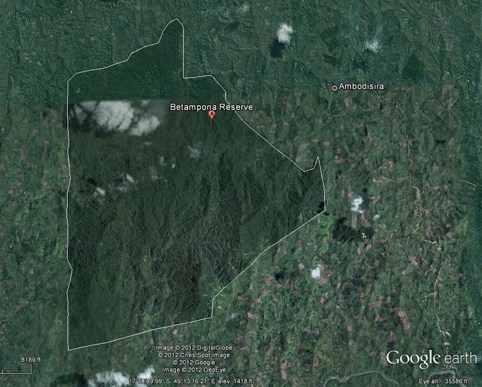
Google Earth image

The 5,000-acre Betampona Nature Reserve in the eastern rainforest region is the smallest and oldest of Madagascar's officially protected areas. It looks like a green island surrounded by damaged forests and subsistence farming. The reserve is jointly managed by the Madagascar Fauna Group, of which the Duke Lemur Center is a founding partner, and was the site of first reintroduction of lemurs which had been bred in captivity at DLC.

In a poor and poorly governed country, humans are steadily chewing away at lemur habitat and at the lemurs themselves.

One species, the northern sportive lemur, is down to just 18 individuals on a tiny speck of habitat at the extreme northern end of the island. There are none in captivity.

“When these species disappear from Madagascar, they are lost forever,” Lemur Center Director Anne Yoder said. Captive breeding programs, like the one at the Duke Lemur Center, are a poor substitute for the protection lemurs really need.

The warning is unfortunately all too familiar to the faculty, staff and volunteers of the DLC, and it casts their work in conservation, education and research as even more critical.

In addition to its crucial work in Durham, DLC has been working on the ground in Madagascar for more than 20 years to preserve habitat and build a corps of conservation-minded citizens. Post-doctoral researcher Erik Patel  participated in the Antananarivo workshop and reported on the meeting last week.

Learn More:

Anne Yoder and Charlie Welch on Duke Lemur Center blog.

Russ Mittermeier, chairman of the Madagascar Primate Specialist Group and President of Conservation International in the Huffington Post.

Infographic from Duke Lemur Center

The Duke Lemur Center's breeding population becomes ever more important as wild lemurs disappear.

Sleuths Take Over Science This Summer

Story and Photos by Gabriel Aikens, NCCU Summer Intern

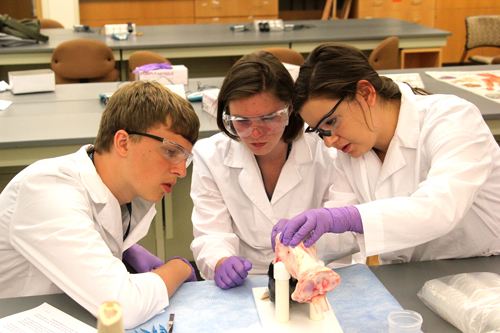
Science Sleuths Lance Cook, Alex St. Bernard, and staff member Emily Milligan work together on dissecting a cow's ankle, called the fetlock.

While many teens spend their summer days playing Xbox and watching cartoons, some eighth and ninth graders are constructing catapults and dissecting cow knuckles as part of Summer Science Sleuths at Duke, a two-week program that exposes kids from across the country to science in fun and creative ways.

On a recent Thursday morning inside the Biological Sciences Building, the kids dissected cow fetlocks, which are similar to the upper knuckle joints in a human hand. There were looks of amazement, curiosity, and disgust as Dean Aguiar, program director at The Hartwell Foundation, demonstrated proper procedure with the fetlock.

“Feel free to take one home to barbeque,” Aguiar joked. Some of the kids weakly smiled, but overcame their queasy feelings the more they operated on the fetlock with their scalpels.

“It was cool,” said ninth grader Samantha Goetz from Cream Ridge, New Jersey. “The activity is similar to what I want to do when I get older, like surgery and such.”

Dean Aguiar, program director at The Hartwell Foundation, demonstrated proper procedure on the fetlock to sleuth Natalia LeMay.

The point of the dissection was to have a better understanding of joint movement, as well as identify bone cartilage, ligaments, and synovial fluid, which is a lubricating liquid inside the joint that provides nutrients to joint tissues.

On other days during the two-week camp, the Sleuths created solar ovens, built rafts, and visited the Videri Chocolate Factory in Raleigh to learn how chocolate is made. The kids were housed in dorms at Duke and had picnics and cookouts on campus, as well as dinner at the Durham Bulls Athletic Park.

To be considered for selection to participate in Summer Science Sleuths at Duke, campers completed a survey on attitudes toward science, had a parent submit an application and had a teacher complete the recommendation form.

“This is the second year of the Summer Science Sleuths at Duke program,” said Chris Adamcyzk, executive director of the Duke Center for Science Education and creator of the program. “We want to make science fun for the kids,” she says. “ We carefully design the curriculum so that they can be introduced to a breadth of science, while making connections to their real world. Although they do experiments in the lab, they also interview scientists and take field trips to connect interesting science with everyday life.”

Fetlocks are similar to human knuckles, but a whole lot larger.

Making science fun for the kids is also the goal of Frederick Dombrose, President of The Hartwell Foundation, which funds the program.

“This wasn’t designed for kids who were at the top of their science class,” he said. “We created this for bright kids who have an interest in science so we can inspire them. This is an opportunity that most of them would’ve never been exposed to, so we want them to enjoy themselves and take advantage of this.”

Culture shapes bird communication, too

SingingSwampSparrow_RL

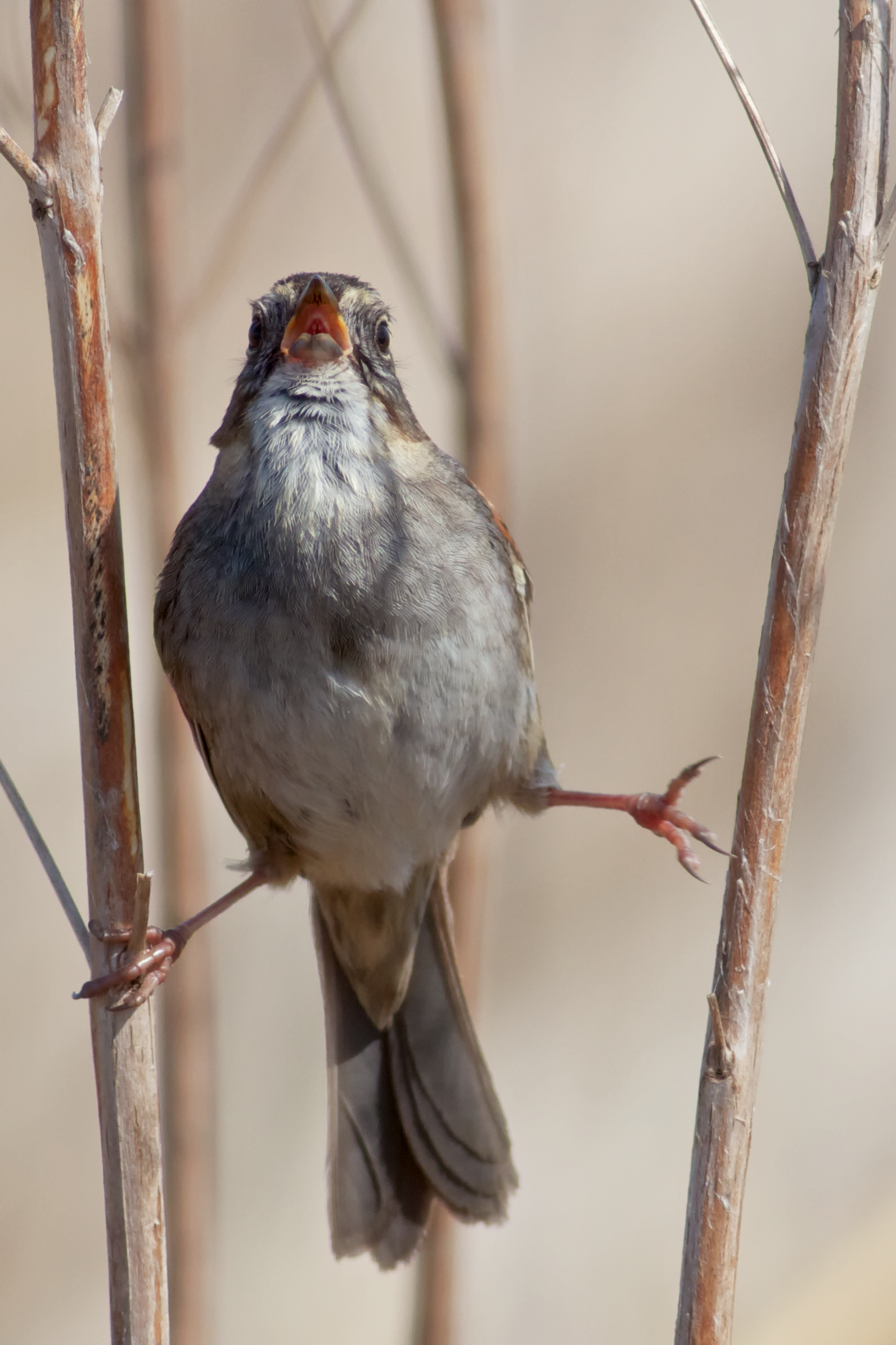
A male swamp sparrow switches branches as he sings.Credit: Robert Lachlan, Duke.

Guest post by: Eugene Morton, York University

Bird song is one of the most fascinating and complex examples of animal communication, and the quest to understand its evolution and function has fueled the careers of many behavioral ecologists, psychologists and neurophysiologists.

Recently, scientists in the Departments of Biology and Neurobiology at Duke University have made incredible advances in this field. In “Songbirds learn songs least degraded by environmental transmission,” Susan Peters, Elizabeth P. Derryberry, and Stephen Nowicki show how a youngster chooses which songs to learn from the huge number they may be exposed to during their learning period.

Their simple but elegant experiment offered the birds a choice to learn songs that contained echoes versus no echoes and the birds chose to learn only those with no echoes. The rejected songs had been transmitted and re-recorded through 25 meters of habitat, and picked up reverberations and a few other changes along the way, but they were equally loud to the learned versions.

This says a great deal about how birds put to use their extraordinary ability to hear small time differences. What’s so great about hearing echoes?

Compared to our ability, where we hear only echoes from distant large objects, birds can hear echoes from tree trunks and vegetation. They use this ability to learn songs that transmit with the least amount of echoes or, more generally, degradation.

In this way, the birds themselves reject songs less well suited to their environment; cultural selection. As the birds were housed together while learning the songs it is not surprising that they came up with two that were never presented to them; they must also have learned from each other.

SingingSwampSparrow

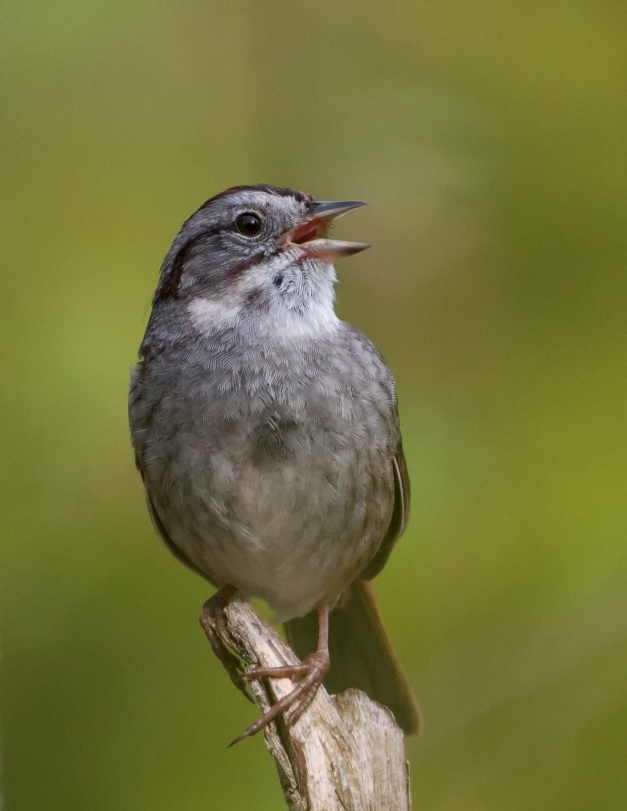
A male swamp sparrows sings to his neighbors.Credit: Robert Lachlan, Duke.

Why is it important to understand the criteria birds use to choose songs to learn? I would answer because then we can understand how cultural and natural selection interact. Cultural selection favors birds that learn songs that will propagate for the greatest distance and remain undegraded.

These songs must function better than a random selection of songs would. The function must related to how the listeners of these songs are affected by them: are they more efficiently repelled if they are competitors and attracted if they are potential mates? Natural selection will favor the birds whose songs do this the best.

And it turns out that this interplay is helping birds cope with increasingly human-influenced environments. The traffic noise we generate can favor learning songs that are higher or lower in than the frequency of this noise. This ability is based upon the same cultural choice of songs described here for swamp sparrows.

It is hoped that this excellent study will stimulate others to assess the role of learning in adapting songs, not only to habitats, but to the social functions songs have. Songs function over distance and this study describes how song learning can strengthen this role and the importance of distance in song evolution.

Eugene S. Morton
Hemlock Hill Field Station, Pennsylvania
York University, Ontario, Canada
mortone@si.edu

Forgotten Deserts

By Ashley Yeager

A cheetah walks through the African desert. Credit: Martin Harvey, ARKive.org

Deserts get a bad rap. They seem dry and, well, deserted.

“With perceptions such as these, it’s not hard to see why deserts are neglected,” says Andrew Jacobson, coordinator of the Big Cats Initiative intern team at Duke University and the National Geographic Society.

In a June 15 Letter to the Editor in Science, Jacobson and an international list of authors point out the neglect of deserts and argue that the ecosystem has disproportionally little funding or research interest when compared with forests and other habitats that are similar in size and biodiversity.

“Deserts are not barren, empty wildernesses. Many interesting species live there. They are just sparsely distributed,” says Jacobson, who is a research associate in the Nicholas School of the Environment. He studies and works to protect cheetahs, which live and rely on the sandy, barren stretches of land. “If we care about cheetahs, then we should care about deserts,” he says.

In the letter, the authors call on the United Nations Conference on Sustainable Development, Rio+20,  to support the UN Convention to Combat Desertification (UNCCD) and take steps to meet its minimum target of halting land degradation. A statement of support should also include steps to ensure the restoration of desert ecosystems, Jacobson says.

“We want Rio+20 to help ensure that deserts are considered in global priority-setting exercises and consequently receive the attention and funding they deserve,” he says.

In the run-up to the group’s next meeting June 20-22, however, Rio+20 has received heavy criticism for failing to fulfill its initial pledges — reducing poverty, advancing social equity and ensuring environmental protection as population grows. In a June 14 editorial,  Nature cautions Rio+20 that if the meeting is to be “a platform for major new treaties and commitments — the world is awash with both, and to no avail.”

Jacobson says one of the main benefits of getting Rio+20 to support the anti-desertification goals would be to raise consciousness about the issue. Desertification was originally identified as one of three great challenges to sustainable development at the original Rio conference in 1992. “Achieving the UNCCD goal will not be easy and success will depend on many factors, but for momentum to continue, we need high-level support that can only be achieved here,” he says, adding that “you never quite know the power of a global agreement until you travel around a bit.”

Citation:
“Forgotten Biodiversity: The Empty Desert.” S. Durant, et. al. Science. June 15 2012. 336: 1379-1380.

Page 17 of 19

Powered by WordPress & Theme by Anders Norén