Following the people and events that make up the research community at Duke

Students exploring the Innovation Co-Lab

Category: Animals Page 11 of 19

Geography and the Web: A new frontier for data vizualization

A GIS Day earth cake made by the Collegiate Baker

You might be forgiven if you missed GIS Day at The Levine Science Research Center Nov. 18, but it was your loss. Students and faculty enjoyed a delightful geography-themed afternoon of professional panels, lightning talks, and even a geospatial research-themed cake contest.

What is GIS and why is it important?

Geographic information systems (GIS) give us the power to visualize, question, analyze, and interpret data to understand relationships, patterns, and trends in the world around us. Those who work with data and analytics have a responsibility to contribute to this change by helping us make the right decisions for our future. As noted during ESRI’s 2015 User Conference in the video below, “We have a unique ability to impact and shape the world around us. [Yet] for all of our wisdom, our vast intellectual marvels, we still choose a path of unsustainability and continue to make decisions that negatively impact the Earth and ourselves. […]We must accept our responsibility as stewards of the Earth. […] We must apply our best technology, our best thinking, our best values. Now is the time to act. Now is the time for change.”


How does GIS help?

Doreen Whitley Rogers, Geospatial Information Officer for the National Audubon Society, led a lively discussion about GIS and the World Wide Web at Duke’s GIS Day. She said GIS is essential to understand what is happening in the geographic space around us. As GIS becomes increasingly web-based, efficiently distributing the system to other people is crucial in a time when new data about the environment is being created every second.

3D map displaying the height of buildings that birds hit windows

3D map displaying the height of buildings at which birds fly into windows in Charlotte, NC

Rogers and her team are aiming to move authoritative GIS data to web for visualizations and create a centralized system with the potential to change our culture and transform the world. As the technology manager, she is working on bringing the information to people with proper security and integrity.

In order to get people to use GIS data in a generalized way, Rogers needed to implement several core capabilities to assist those integrating GIS into their workflow. These include socializing GIS as a technology to everybody, creating mobile apps to work with data in real time, and 3D maps such as this one of bird-strikes in downtown Charlotte.

Case Studies

ClimateWatch helps us predict the seasonal behaviour plants and animals.

Mobile apps connecting to the GIS platform promise a strong “return on mission” due to the vast number of people using maps on phones. By mobilizing everyone to use GIS and input data about birds and geography in their area, the platform quickly scales over millions of acres. In the Bahamas, an  app allows users to take pictures to support bird protection programs.

ClimateWatch is an app that gives us a better understanding of how bird habitats are affected during temperature and rainfall variations – motivating people to speak up and act towards minimizing anthropogenic climate change. Developed by Earthwatch with the Bureau of Meteorology and The University of Melbourne, the app enables every Australian to be involved in collecting and recording data to help shape the country’s scientific response to climate change.

Virtual simulation of scenic flights as an endangered bird.

Virtual simulation of scenic flights from the perspective of an endangered bird.

Apps such as the 3-D flight map give users the vicarious thrill of cruising through nature landscapes from the view of endangered birds.

With the movements toward cleaning air and water in our communities, our planet’s birds will once again live in healthier habitats. As the Audubon Society likes to say: “Where birds thrive, people prosper.”


For more information about bird-friendly community programs, you can visit Audubon‘s site or send them a message.

Doreen Rogers after her presentation on National GIS day.


To learn more about data visualization in GIS, you can contact Doreen Whitley Rogers via email here.

Anika_RD_hed100_2

Post by Anika Radiya-Dixit

Iridescent Beauty: Development, function and evolution of plant nanostructures that influence animal behavior

Iridescent wings of a Morpho butterfly

Iridescent wings of a Morpho butterfly

Creatures like the Morpho butterfly on the leaf above appear to be covered in shimmering blue and green metallic colors. This phenomenon is called “iridescence,” meaning that color appears to change as the angle changes, much like soap bubbles and sea shells.

Iridescent behavior of a soap bubble

Iridescent behavior of a soap bubble

In animals, the physical mechanisms and function of structural color have been studied significantly as a signal for recognition or mate choice.

On the other hand, Beverley Glover believes that such shimmering in plants can actually influence animal behavior by attracting pollinators better than their non-iridescent counterparts. Glover,Director of Cambridge University Botanic Garden,  presented her study during the Biology Seminar Series in the French Family Science Center on Monday earlier this week.

Hibiscus Trionum

Hibiscus Trionum

The metallic property of flowers like the Hibiscus Trionum above are generated by diffraction grating – similar to the way CD shines – to create color from transparent material.

In order to observe the effects of the iridescence on pollinators like bees, Glover created artificial materials with a surface structure of nanoscale ridges, similar to the microscopic view of a petal’s epidermal surface below.

Nanoscale ridges on a petal's epidermal surface.

Nanoscale ridges on a petal’s epidermal surface.

In the first set of experiments, Glover and her team marked bees with paint to follow their behavior as they set the insects to explore iridescent flowers. Some were covered in a red grating – containing a sweet solution as a reward – and others with a blue iridescent grating – containing a sour solution as deterrent. The experiment demonstrated that the bees were able to detect the iridescent signal produced by the petal’s nanoridges, and – as a result – correctly identified the rewarding flowers.

Bees pollinating iridescent "flowers"

Bees pollinating iridescent “flowers”

With the evidence that the bees were able to see iridescence, Glover set out for the second experiment: once the bees find a specific type of flower, how long does it take them to find the same flower in a different location? Using the triangular arrangement of shimmering surfaces as shown below, Glover observed that iridescence produced by a diffraction grating leads to significant increase in foraging speed as compared to non-iridescent flowers.

Triangular formation of iridescent disks used for experimentation on bees

Triangular formation of iridescent disks used for experimentation on bees

While iridescence in plants is difficult to spot by a casual stroll through the garden, pollinators such as bees definitely can see it, and scientists have recently realized that insect vision and flower colors have co-evolved.

In order to ensure that pollen is transferred between flowers of the same species, these flowers have developed a unique structure of iridescence. As scientists work on understanding which plants produce these beautiful colors and how the nanoscale structure is passed down through reproduction, we can only look at our gardens in wonder at the vast amount of nature that still remains to be explored and learned.

Wonder of nature

Wonders of nature in an everyday garden


Beverley Glover is the Director of Cambridge University Botanic Garden and is currently accepting applications for PhD students


Post written by Anika Radiya-Dixit


Relationship Between Domestication and Human Social Skills

Brian Hare wants to know why humans are such big babies.  

Well,  that was just the provocative title for his Center for Cognitive Neuroscience talk on Oct. 2. What he wants to know is what happens in the development of human babies that socially advances and separates them from their animal counterparts.

brianhare_dccc2

Hare, an associate professor of evolutionary anthropology, discussed human evolution and comparisons to our ancestors and chimpanzees, bonobos and even dogs. He explained that the idea of comparing humans to other species suggests that “something very fundamental happened during human evolution that makes us human– a shift in human development.”

First Hare attempted to evaluate whether certain advanced capabilities of humans are present in other species. One means of doing this was by examining if other species think about the thoughts of others. In a video from an experiment  “Gaze” that Hare conducted, he looks at a chimpanzee named Dorene, and then suddenly glances upwards. The chimp follows suit, gazing up at the ceiling to see what Hare is looking at. From this behavior, Hare inferred that chimpanzees are in fact capable of thinking about the thoughts of others, like the human species.

This led Hare to examine another behavior that is advanced in humans: cooperation. Hare explained that in previous laboratory research, chimpanzees were found to be incredibly uncooperative. Hare’s studies in the field, however, proved the opposite. In an experiment with Alicia Melis and Michael Tomasello, two chimps were put in adjacent, but separate rooms. A treat was visible with a string leading to each chimpanzee. If one animal pulled the string, it just got the string. But if both pulled cooperatively, they ended up with the food. The researchers found that 95% of the chimps could work together to solve this problem to get an equal payoff for both of them. Hare did note, however, that if the chimps had communicated, they could have solved the problem more efficiently.

This showed that where chimpanzees might differ from the human species is in their inability integrate cooperation and communication. With children, Hare explains, this is a fundamental part of development that is established early in life. Because of this, Hare wondered if there is something motivationally different about the structure of cooperation between humans and other species, something that also shows early in development.

When humans work together, Hare said, they understand they have a shared goal and will adjust to different roles to complete the task. This has led to, from an evolutionary perspective, a very “strange” behavior in humans, in which they do things together simply because they like to. Hare calls this “we psychology.” Hare showed two videos side by side: one of his son rolling a ball to his mother, Vanessa Woods, and another of a chimp in a cage rolling a ball with Woods. When Woods stopped playing the game, the chimp reached out of the cage and grabbed her arm and pushed the ball so it would roll back to him. From this, Hare inferred that, like humans, chimps may also have a small tendency for “we psychology.”

In another study, Hare compares two-year-old children to adult and juvenile chimpanzees. In terms of physical cognition, the species were very similar to one another. On the social problem solving front, however, human children were already outperforming juvenile and adult chimpanzees. This study, along with the culmination of his earlier research, reinforced Hare’s idea that something very fundamental happens early in human development that differentiates human’s social and communicative capabilities from other species: domestication.  

“It’s not just that kids are solving problems better, but it may even be that the way kids cognitively organize has changed,” he said.

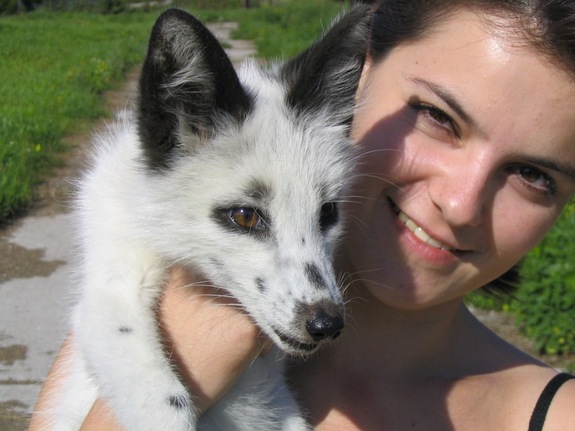
Hare explains that just knowing the cause to be domestication was not enough, however. He wanted to understand how this worked. Hare referenced extensive breeding research conducted by Dmitri Konstantinovich Belyaev, in which he studied the domestication of the fox. Not only did these foxes show behavioral changes due to domestication, they also displayed morphological and physiological changes: floppy ears, curly tails and high levels of serotonin. Belyaev also found that, like humans, foxes use gestures and communicative cues. So, Hare concluded that the process of domestication influences a realm of social and biological characteristics and could be manipulated and interpreted in many different ways, especially in our own development.

experimental-fox

“This doesn’t just happen as a result of artificial selection, or human selection. It can happen as a result of natural selection,” Hare said. “So then we turn to our own species and start looking at whether there’s any evidence in our own evolution for this.” he said.

madeline_halpert_100

By Madeline Halpert, Class of 2019

Fisticuffs Among the Mantis Shrimp

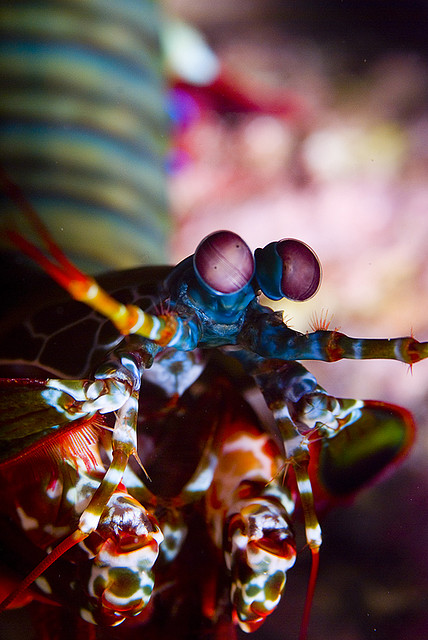
When mantis shrimp (Stomatopoda) dispute territory or mating rights, they use the tools at hand – namely two super-sonic bludgeons powerful enough to dismember a live crab or break through a clam shell.

Mantis shrimp are pugnacious pugilistic crustaceans . (Photo by Nazir Amin via Wikimedia Commons.)

Mantis shrimp are pugnacious and pugilistic. (Photo by Nazir Amin via Wikimedia Commons.)

Fortunately, they’ve developed a way to use these deadly clubs on each other without causing too many fatalities. In a ritualized battle called “telson sparring,” the combatants take turns hammering on each other’s tail-plate, which is raised up like a shield.

Graduate student Patrick Green watched more than 30 such contests in captive Panamanian mantis shrimp to discover that it wasn’t the shrimp who hit hardest who won the bout, but the one who hit the most frequently.

Green and his Ph.D. supervisor, biology professor Sheila Patek, hypothesize that the ritualized fighting could be a display of overall vigor and tenacity rather than outright punching power.

CITATION: “Contests with deadly weapons: telson sparring in mantis shrimp (Stomatopoda),” Green PA, Patek SN. Biology Letters, Sept. 2015. DOI:10.1098/rsbl.2015.0558

[youtube https://www.youtube.com/watch?v=psnvOqtRmzI]

Karl Leif Bates

Post by Karl Leif Bates, Director of Research Communications

Four-Fifths of a Banana is Better than Half

Fractions strike fear in the hearts of many grade schoolers – but a new study reveals that they don’t pose a problem for monkeys.

Even as adults, many of us struggle to compute tips, work out our taxes, or perform a slew of other tasks that use proportions or percentages. Where did our teachers and parents go wrong when explaining discounts and portions of pie? Are our brains simply not built to handle quantitative part-whole relationships?

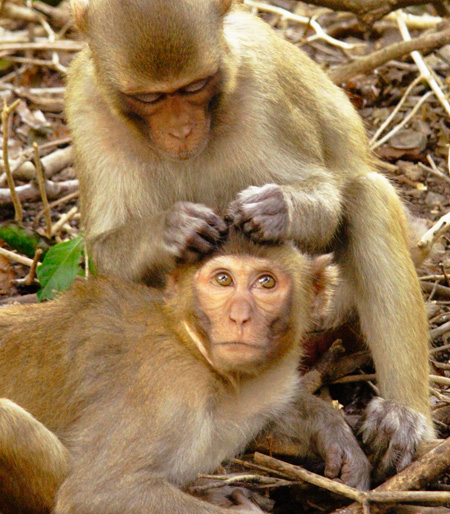
Lauren Brent macaques

Fractions and logical relationships are some of the things a wild macaque might think about while grooming and being groomed. (image copyright Lauren Brent)

To try to answer these questions, my colleagues and I wanted to test whether other species understand fractions. If our fellow primates can reason about proportions, our minds likely evolved to do so too.

In our study, which appears online in the journal Animal Cognition, Marley Rossa (Trinity 2014), Dr. Elizabeth Brannon, and I asked whether rhesus monkeys (Macaca mulatta) are able to compare ratios.

We let the monkeys play on a touch-screen computer for a candy reward. First we trained them to distinguish between two shapes that appeared on the screen: a black circle and a white diamond. When they touched the black circle, they heard a ding sound and received a piece of candy. But when they touched the white diamond, they heard a buzz sound and did not get any candy. The candy-loving monkeys quickly developed a habit of choosing the rewarding black circle.

http://www.free-training-tutorial.com/math-games/fraction-matching-equivalent1.html

Fractions example taken from sheppardsoftware.com

Next we introduced fractions. We showed two arrays on the screen, each with several black circles and white diamonds. The monkeys’ job was to touch the array having a greater ratio of black circles to white diamonds. For example, if there were three black circles and nine white diamonds on the left, and eight black circles and five white diamonds on the right, the monkey needed to touch the right side of the screen to earn her candy (8:5 is better than 3:9).

We didn’t always make it so easy, though. Sometimes both arrays had more black circles than white diamonds, or vice versa. Sometimes the array with the higher black-circle-to-white-diamond ratio actually had fewer black circles overall. They needed to find the largest fraction of black circles. For example, if there were eight black circles and 16 white diamonds on the left (8:16), and five black circles and six white diamonds on the right (5:6), the correct answer would be the latter, even though there were more black circles on the left side. That is how we made sure that monkeys were paying attention to the relative numbers of shapes in both arrays.

The monkeys were able to learn to compare proportions. They chose the array with the higher black-circle-to-white-diamond ratio about three-quarters of the time. Impressively, when we showed them new arrays with number combinations they had never seen before, the monkeys still tended to select the array with the better ratio.

Our results suggest that monkeys understand the magnitude of ratios. They also indicate that monkeys might be able to answer another type of question: analogies. These four-part statements you may have seen on standardized tests take the form “glove is to hand as sock is to foot.”

This kind of reasoning requires not only recognizing the relationship between two items (glove and hand) but also how that relationship compares with the relationship between the other two items (sock and foot). Understanding the relationships between relationships — that is, second-order relationships — was believed to require language, making it possibly a uniquely human ability. But in our study, monkeys successfully determined the relationship between two fractions – each one a relationship between two numbers – to make their choices.

If monkeys can reason about ratios and maybe even analogies, our minds are likely to have been set up with these skills as well.

The next step for this line of research will be to figure out how best to employ these in-born abilities when teaching proportions, percentages, and fractions to human children.

CITATION: “Comparison of discrete ratios by rhesus macaques (Macaca mulatta)” Caroline B. Drucker, Marley A. Rossa, Elizabeth M. Brannon. Animal Cognition, Aug. 19, 2015. DOI: 10.1007/s10071-015-0914-9

SAMSUNG CAMERA PICTURES

Guest post by graduate student Caroline B. Drucker. Caroline is curious about both the evolutionary origins and neural basis of numerical cognition, which she currently studies in lemurs and rhesus monkeys.

Uneasy Lies the Gut That Wears the Crown

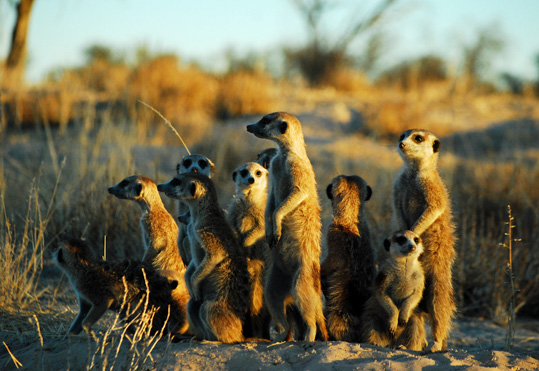
Meerkats of the Kalahari Desert are social, and wormy. (all photos by Ed Kabay)

Meerkats of the Kalahari Desert are social, and wormy. (Photo by Ed Kabay)


The dominant matriarchs of meerkat society carry a heavy burden.

Not only are these females stressed from having to constantly scold and cajole the rowdy members of the tribe to maintain their perch as the primary breeders and enforcers of the clan, they apparently host more parasites as well.

In a two-year study at the Kuruman River Reserve in South Africa’s Kalahari Desert, Duke graduate student Kendra Smyth sampled the parasite diversity of 83 sexually mature meerkats living in 18 social groups.

Specifically, she gathered 97 freshly deposited poops for later analysis. Such is the glamour of graduate student field work.

After diluting and spinning, the samples were microscopically analyzed for careful counting of the eggs of six species of intestinal worms.

What Smyth found in the end was consistent with similar studies done in male-dominant societies: The boss is more heavily parasitized.

So, why is that? Well, it might be that the matriarch’s stressful job takes some resources away from her immune defenses, or it may be that her close contact with more members of the tribe puts her at greater risk of picking up worms from others.

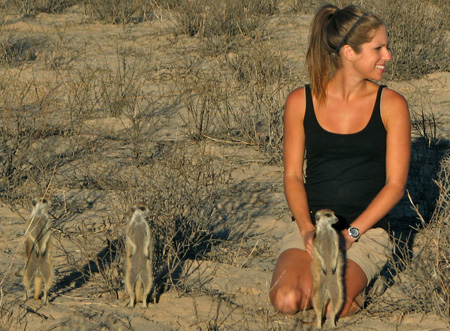
Meerkats, and graduate students like Kendra Smyth, are often seen scanning the horizon.

Meerkats, and graduate students like Kendra Smyth, are often seen scanning the horizon. (Photo by Ed Kabay)

The bottom line is that the meerkat model of sexual selection carries a cost, which, as in other species, is more heavily borne by the breeders.

Smyth’s findings appeared online this month in Behavioral Ecology and are a part of her dissertation research on immune function in meerkats. In addition to poop, she’s sampling blood and looking at hormone levels and other variables.

“Parasites are a proxy for measuring the immune system,” said Smyth, who is a fourth-year grad student with Christine Drea of Evolutionary Anthropology and the Program in Ecology.

And wild-living meerkats can be a kind of proxy for humans. “Most of what we know about the immune system comes from laboratory mice living in unrealistic conditions,” Smyth said. “They’re housed singly in clean cages and they’re parasite-free. I’m not convinced that that’s how the immune system works when you put them in the natural world.”

“For any kind of species living in groups, like humans, it’s important to understand the dynamics of the spread of disease and which individuals might be susceptible,” she said.

During one meerkat weigh-in, this practical joker put his thumb on the scale.

During one meerkat weigh-in, this practical joker put his thumb on the scale. (Photo by Kendra Smyth)

This work was supported by the National Science Foundation (IOS-1021633) and a dissertation travel grant from the Duke Graduate School. Research at the Kuruman River Reserve is supported by the European Research Council (294494), Cambridge, Duke and Zurich Universities.

Post by Karl Leif Bates

Karl Leif Bates

Marine Lab Hosts 500+ at Open House

In what was a record high turnout, more than 500 people made their way to Pivers Island on Saturday Aug. 1, for the Duke University Marine Lab’s annual open house. Visitors listened to whales, peered at plankton and sea urchin larvae through microscopes, and learned how salinity gradients and wind can drive ocean currents at 16 research stations scattered throughout the campus. Kids of all ages also got to meet horse conchs, pen shell clams, tulip snails, fiddler crabs, slipper snails and other creatures in the marine lab’s touch tanks. “We don’t think of snails as having teeth but they really do; that radula is quite a weapon. It’s like a cross between a chainsaw and a tongue,” said Duke visiting professor Jim Welch. Photos by Amy Chapman-Braun, Nicholas School of the Environment at Duke.

Is it Just Us?

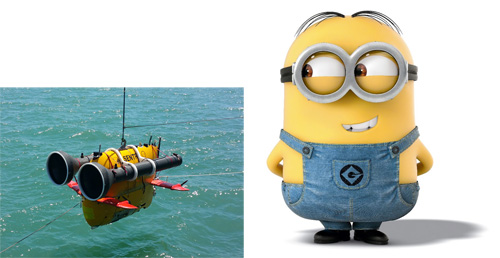
Plankzooka, on the left there, is two big tubes strapped on either side of the autonomous undersea rover Sentry.

Plankzooka, on the left there, is two big tubes strapped on either side of the autonomous undersea rover Sentry.

We certainly admired the news Friday coming out of a marine science cruise that hasn’t even ended: They found a shipwreck a mile down while also pioneering a new device for gently and precisely sampling plankton at those crushing and dark depths.

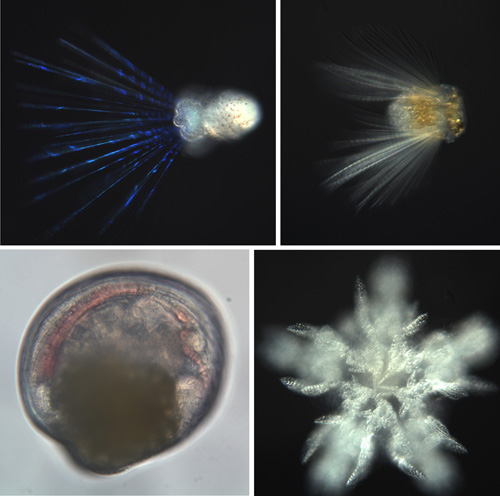
But we couldn’t help but notice the “plankzooka’s” uncanny resemblance to a familiar cartoon character.  Here’s an example of some of the juvenile plankton it collected around a methane seep on the sea floor.

plankton

A sampling of juvenile plankton from the deep sea.


Summer Data+ Groups Pursue Pigs and Purchases

Many students spend their summer breaks going on vacations and relaxing, but not the 40 students selected to participate in Data+, a summer research program at Duke.

They meet twice a week for lunch to share their work on the third floor of Gross Hall.

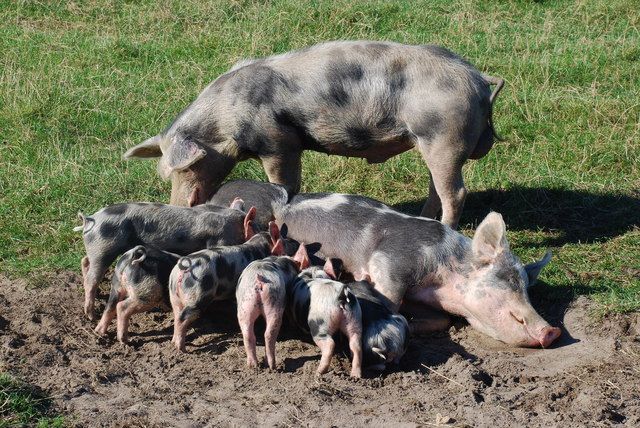
A pair of pigs and their piglets. Photo by Alan Fryer via Wikimedia commons

A pair of pigs and their piglets. Photo by Alan Fryer via Wikimedia commons

Mercy Fang and Mike Ma are working on a research project involving prolific pigs, those that make a lot of piglets. They are trying to determine if the pigs are being priced rationally, whether or not the livestock market is efficient and the number of offspring per pig.

Fang said the most challenging part is the research data. “Converting PDF files of data into words has been hard,” said Fang.
The students are using four agricultural databases to determine the information on the pigs, including pedigrees.

Most of the students in Data+ are rising sophomores and juniors majoring in a variety of majors that include math, statistics, sociology and computer science. The program started in mid-May and runs for 10 weeks and allows students to work on projects using different research methods.

Another group of student that presented on June 18 is working on a research project involving data on food choices.

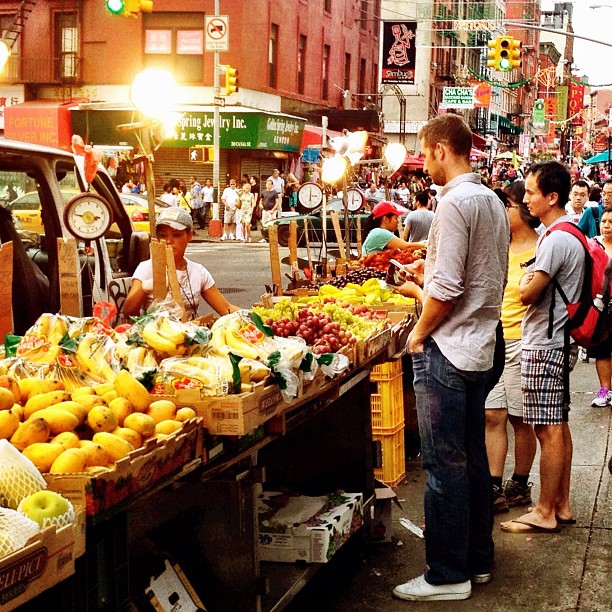
A produce stand in New York City, photo by Anderskev via Wikimedia Commons.

A produce stand in New York City, photo by Anderskev via Wikimedia Commons.

Kang Ni, Kehan Zhang and Alex Hong are using quantitative methods of study using the “clustering process” to determine a recommendation system for consumers to help them choose healthier food choices. The students are working with The Duke-UNC USDA Center for Behavioral Economics and Healthy Food Choice Research (BECR) center.

“Consumers already recognize a system to get a certain snack,” said Zhang. “We want to re-do a system to help consumers make better choices.”

The students are basing their research on nutrition information and food purchases from the BECR Data warehouse, which comes from consumer information from throughout the US. This includes food purchases and nutrition information from 2008-2012.

Zhang added that the hardest part was keeping up with information.
“It’s a lot of data in the future, and it will be challenging putting it into use,” said Zhang.

Students in attendance said the food choices data research group provided good information.

“I liked the quantitative methods they used to categorize food,” said Ashlee Valante.

The Data+ research program is sponsored and hosted by the Information Initiative at Duke (iiD) and the Social Science Research Institute (SSRI).  The funding comes from Bass Connections and from a National Science Foundation grant managed by the Department of Statistical Science.

Warren_Shakira_hed100Guest post by Shakira Warren, NCCU Summer Intern

Bird Consortium Wants to Run the Table

Just a few months after rolling out a huge package of studies on the genomics of 48 members of the bird family tree, an international consortium of scientists is announcing their new goal: sequencing all 10,000 species of birds in the next five years.

Erich Jarvis

Erich Jarvis is an associate professor of neurobiology in the medical school and a Howard Hughes Medical Institute investigator.

Called B10K for short, this effort should be the first attempt to sequence the genomes of all living species in a single class of vertebrates – and the most species-rich one at that.

The consortium announced their intentions in a letter appearing June 4 in Nature.

A genomic-level tree of life of the entire class should reveal links between genetic and phenotypic variation, perhaps reveal the evolution of biogeographical and biodiversity patterns across a wide-range of species, and maybe show the influences of ecology and human activity on species evolution.

But consortium co-leader, Erich Jarvis of Duke neurobiology, just loves birds for their minds. He is involved with the project to enhance his use of songbird brains as models of human speech.

Having proven the technical feasibility of the project and redrawn the bird phylogeny already, the consortium is now expanding to include experts in museum science, biogeography and ecology from the Kunming Institute of Zoology and Institute of Zoology of Chinese Academy of Science in Beijing; the Smithsonian Institution in the USA; and the Center of Macroecology, Evolution and Climate in Denmark. The complete list of contributing institutions and collaborators is listed on the B10K site.

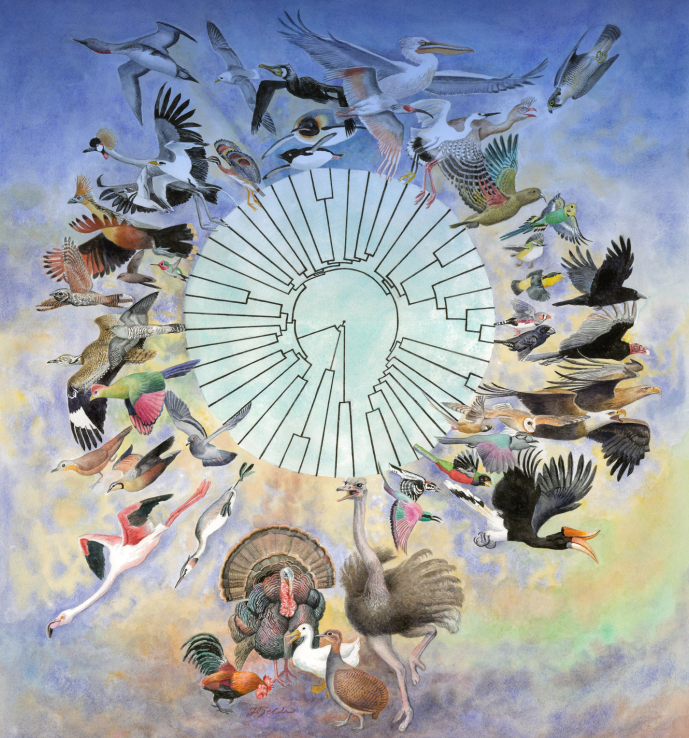
B10K bird phylogeny

The new bird family tree drawn on complete genome sequencing of 48 species representing each major order. Painting by Jon Fjeldså.

“Given the small size and less complex features of bird genomes relative to other vertebrates, the ongoing advances in sequencing technologies, and the extensive availability of high quality tissue samples from birds deposited in museums around the world, reaching this ambitious goal is not only possible but also practical,” the consortium said in a prepared statement.

We look forward to many more exciting findings from B10K, but hopefully not all at once like last time.

-By Karl Leif Bates

Page 11 of 19

Powered by WordPress & Theme by Anders Norén