Research Blog

Following the people and events that make up the research community at Duke

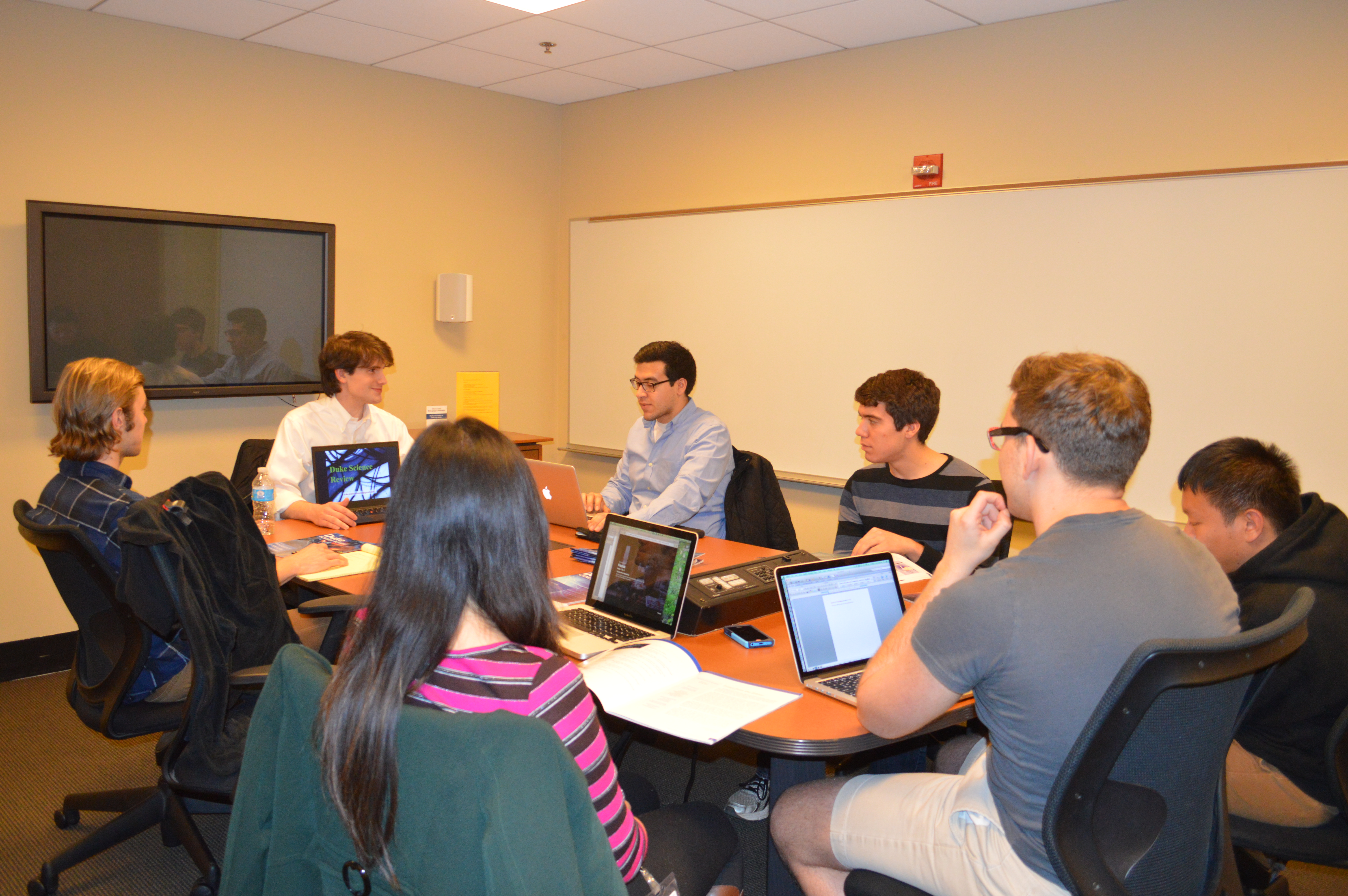
Students exploring the Innovation Co-Lab

Research, New Policies Protect "The Lungs of India"

Guest Post By Sheena Faherty, Ph.D. Candidate in Biology

You can’t see into the lungs of the people of Agra, India, home of the Taj Mahal. But just a glance at what should be pristine white marble domes of the local landmark shows that air quality is a major concern. The iconic domes are tarnished and need frequent cleaning to keep them white.

taj mahal

A cleaning in progress shows how much discoloration grimy air  deposits on the Taj Mahal. (Courtesy of Mike Bergin)

A study by Duke researchers published in Environmental Science and Technology has determined the exact air particles that are the cause of the Taj’s discoloration and threat to the health of the local people.

“The Taj Mahal can be thought of as the lungs of India,” says Mike Bergin, the lead author of the study and a new faculty member in Duke’s Civil and Environmental Engineering department, who credits his wife Michelle with coming up with the analogy.

What he means is that the same particles discoloring the Taj Mahal are depositing in the lungs of people in Agra and are having a negative impact on their health.

Within weeks of the publication of the study, the Indian government started putting air pollution control strategies in place. In the city of Agra, diesel-guzzling vehicles have been banned from the streets, new policies are being enacted to stop the burning of trash and refuse, and local governments are replacing the traditional heating and cooking method of dung-burning with free compressed natural gas.
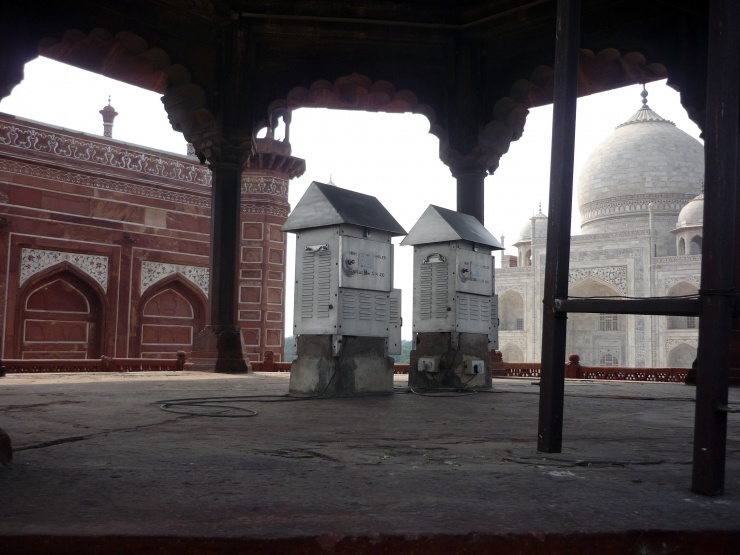
Air sampling devices were set up to determine the exact particles causing the discoloration. (Courtesy of Mike Bergin)

Air sampling devices were set up to determine the exact particles causing the discoloration. (Courtesy of Mike Bergin)

This might be one of the fastest “science into policy” actions ever and Bergin couldn’t be more pleased.

His research looks at how small particles in the atmosphere have impacts on human health and climate. A few years back, while attending a scientific meeting in India, he visited the Taj Mahal and noticed something strange.

“Part of it was covered in scaffolding and under the scaffold, part of the dome was brown, and there was a thick line that was white. I took a photo right away and thought, ‘That’s the weirdest thing I have ever seen.’”

He started asking people about it and kept getting the same story: The Taj Mahal gets really dirty. It has something to do with the quality of the air. We don’t know what it is, but we clean it off.

And for Bergin—a scientist whose expertise lies in air quality—the wheels began to turn.

While serving as faculty at Georgia Tech, he assembled a multi-disciplinary team from international in both the US (University of Wisconsin at Madison) and India (IIT Kanpur and the Archaeological Survey of India) to tackle the challenge of sampling both particulates in the air, as well as those that collect on the surface of the Taj Mahal, to determine which particles were the cause of the unblemished white domes turning brown.

The team found that collected samples contained high concentrations of carbon-based particles and dust. Both sources are known to absorb light, which gives the appearance of a brown hue.

Findings from this study and the impact it has had on policy-makers in India demonstrate how deeply celebrated our cultural icons, such as the Taj Mahal, are.

“People knew the air there was bad, but nobody was really doing that much about it. The interesting thing is that they moved very quickly because they didn’t want to see the Taj Mahal getting discolored,” Bergin says.

Mapping Science: The Power of Visualization

By Lyndsey Garcia

Mobile Landscapes: Using Location Data from Cell Phones for Urban Analysis

Mobile Landscapes: Using Location Data from Cell Phones for Urban Analysis

We are constantly surrounded by visuals: television, advertisements and posters. Humans have been using visuals such as cartographic maps of the physical world to help guide our exploration and serve as a reminder of what we have already learned.

But as research has moved into more abstract environments that are becoming more difficult to interact with or visualize, the art of science mapping has emerged to serve as a looking glass to allow us to effectively interpret the data and discern apparent outliers, clusters and trends.

Now on display from from January 12 to April 10, 2015, the exhibit Places & Spaces: Mapping Science serves as a fascinating and intriguing example of the features and importance of science mapping.

The end result of a ten-year effort with ten new maps added each year, all one hundred maps are present at Duke at three different locations: the Edge in Bostock Library, the third floor of Gross Hall, and the second floor of Bay 11 in Smith Warehouse.

Visualizing Bible Cross-References

Visualizing Bible Cross-References

Science maps take abstract concepts of science and make them more visible, concrete, and tangible. The scope of the exhibit is broad, including science maps of the internet, emerging pandemics in the developing world, even the mood of the U.S. based on an analysis of millions of public tweets. Science mapping is not limited to the natural or technological sciences. Several maps visualize social science data such as Visualizing Bible Cross Connections and Similarities Throughout the Bible, where the axis represents the books of the Bible and the arches portray connections or similar phraseology between the books.

Angela Zoss, the exhibit ambassador who brought the project to Duke, comments, “The visualization helps at multiple phases of the research process. It helps the researcher communicate the data and understand his or her data better. When we try to summarize things with equations or summary statistics, such as the average, the mean, or the median, we could be glossing over very important patterns or trends in the data. With visualization, we can often visualize every single point in space for small data sets. One might be able to detect a pattern that you would never have been lost in simple summary statistics.”

The physical exhibit holds importance to the Places & Spaces project due to the physical printing of the maps. Some of the details on the maps are so intricate that they require an in-person viewing of the map in order to appreciate and understand the information portrayed. Such as, A Chart Illustrating Some of the Relations Between the Branches of Natural Science and Technology, is a hand-drawn map from 1948 showing the relationships between the branches of natural sciences and technology by using a distance-similarity metaphor, in which objects more similar to each other are more proximate in space.

A Chart Illustrating Some of the Relations between the Branches of Natural Science and Technology. Used by permission of the Royal Society

The maps look more like works of art in a museum than a collection of maps to interpret data. Angela Zoss explains her love of visualization as, “Visual graphics can inspire an emotion and excitement in people. It can encourage people to feel for information that would otherwise seem dry or intangible. The exhibit heightens those emotions even more because you see so many wonderful examples from so many different viewpoints. Every visualizing person is going to make a different choice in the details they want represented. Being able to see that variety gives people a better idea of how much more is possible.”

The Power of the Past

Guest Post by Eric Ferreri, Duke News & Communications

If you grow up in the working class, neither love nor money can trump your blue-collar roots, a Duke sociologist has found.

Her study of couples from different social classes suggests that those who “marry up” still make life decisions based on their upbringing.

Cover of Streib book

Sociologist Jessi Streib’s book “The Past” is about class structure in marriages.

“Your social class never goes away,” says Jessi Streib, an assistant professor of sociology whose findings are revealed in her new book: The Power of the Past: Understanding Cross-Class Marriages. “It stays with you in terms of how you live your life. The class you’re born into sticks with you and shapes you, even when you marry into more money and a far more financially secure life.”

Streib’s findings derive from interviews she conducted with white, heterosexual Midwestern couples. She interviewed 32 couples in which one spouse came from a working class background, the other from the middle class. For comparison, she also interviewed 10 couples in which both spouses grew up in the middle class.

Streib defines working class as people raised by parents with high school educations; the middle class subjects were raised by college-educated parents.

Her findings run contrary to the notion held by many scholars that strivers can outrun a difficult childhood by getting a college degree and good-paying middle-class job.

While the findings suggest that a middle class upbringing isn’t required to excel in the American workplace, those upwardly mobile people from working class roots may still miss out on opportunities if they can’t or don’t subscribe to the unspoken norms of middle class culture, Streib notes.

Streib found that couples from different classes held onto their own, firmly-rooted beliefs regarding money and parenting, often negotiating fervently with each other over the proper amount of career planning and nurturing of children. Should children be left to grow and discover on their own, or should goals and schedules be set for them?

“Those are the sorts of tiny battles cross-class couples have all the time,” Streib said. “These are not insurmountable obstacles, but they are certainly common and consistent.”

Ben Wang: Food lover and undergraduate researcher

Ben Wang in rural Appalachia Credit: Ben Wang

Ben Wang in rural Appalachia Credit: Ben Wang

By Nonie Arora

Ben Wang, a senior Evolutionary Anthropology major from New Jersey, strongly believes we are what we eat. A foodie, scientist, and future health care practitioner, he thinks that changing food habits can improve our nation’s health.

“When we came to Duke, our summer reading book was Eating Animals,” he said.  “I felt so many emotions while I was reading the book. It really impacted the way I think about food. In fact, I became a pescetarian (a fish-eating vegetarian).”

Freshman year, Wang knew he had this interest in food, but he didn’t know how to incorporate it into his academic world.

During his second year, Wang started to find his way. “I remembered the topic when I was hunting for a research lab, and started working in Dr. Tso-Pang Yao’s metabolism lab so that I could learn more about how nutrition directly impacts health,” he said.

Wang spent time investigating proteins that increase or decrease the amount of “mitochondrial fusion” that happens in cells. Wang explained that metabolism is how our bodies process food and distribute nutrients, and these compounds help in that process.

“I really enjoyed this lab because the topic was directly related to patient care and our research had direct pharmacologic applications,” Wang said.

Farm Fresh tomatoes! Credit: Ben Wang

Farm Fresh tomatoes! Credit: Ben Wang

In the summer of 2014, he pursued a Bass Connections fellowship in rural Appalachia, in one of the most impoverished counties in the US.

He participated in a Farm-to-Table partnership between local Appalachian farms and a middle school. This partnership was part of a broader program for Appalachian girls. He coordinated the logistics and ended up doing much of the culinary work for the partnership, cooking up delicacies with ingredients like swiss chard, beets, and kale.

“I really wanted to go all the way in introducing a fresh perspective to these women,” Wang said, “I had to convince the girls that these veggies would taste good.”

Farm to Table initiative in action. Credit: Ben Wang

Farm to Table initiative in action. Credit: Ben Wang

They did not always like his creations.
He says one student told him, “I’m not going to eat this hippie food.”

But he persevered, and ultimately most of the girls were excited about what they had learned and reevaluated the way they ate.

Maintaining lasting gains will be difficult because much of the food would have been unaffordable to the girls on their own. In the town that they live in, the closest supermarket is a Walmart a half hour away. Other than that, there is a Dollar General and Hillbilly Market, neither of which stock fresh produce, according to Wang.

However, Wang thinks that showing these girls there are food options beyond those that they have experienced was valuable, and that they can choose to strive for them if they want to.

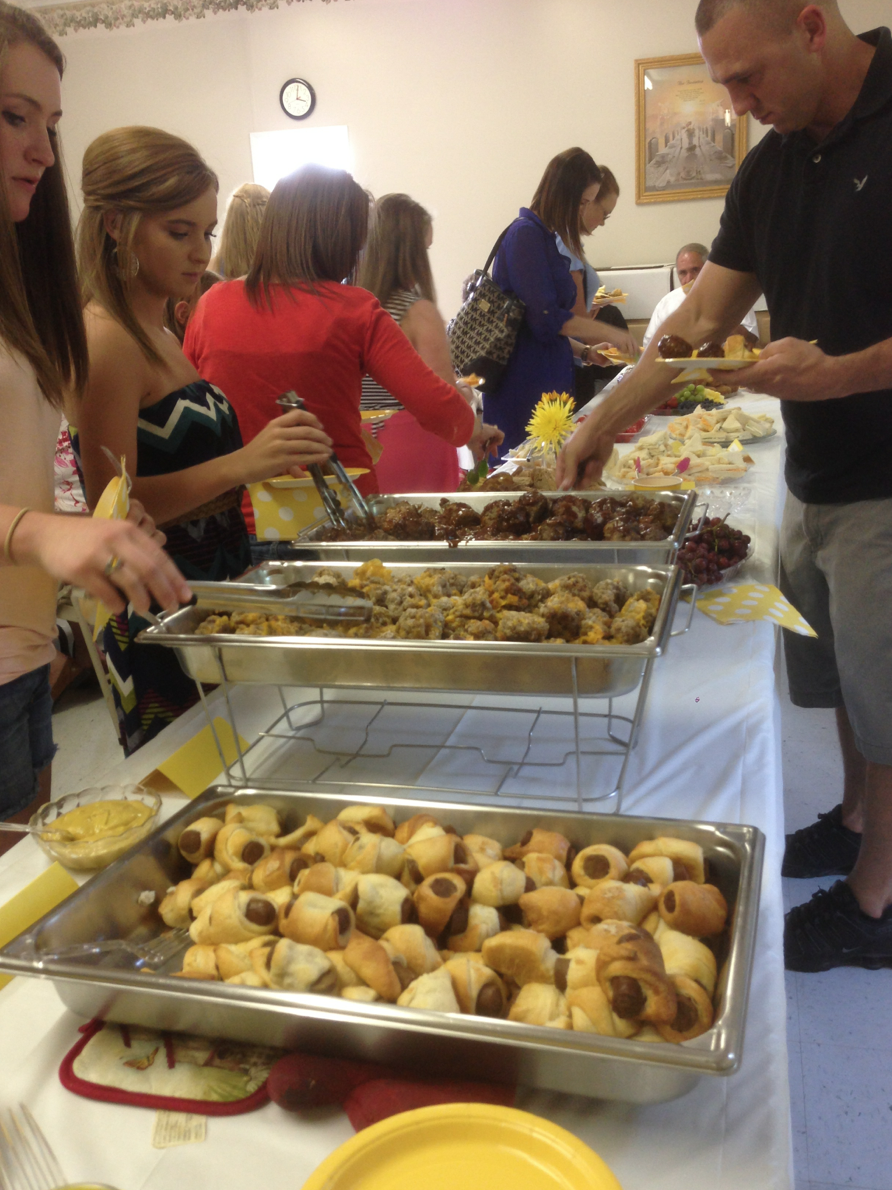
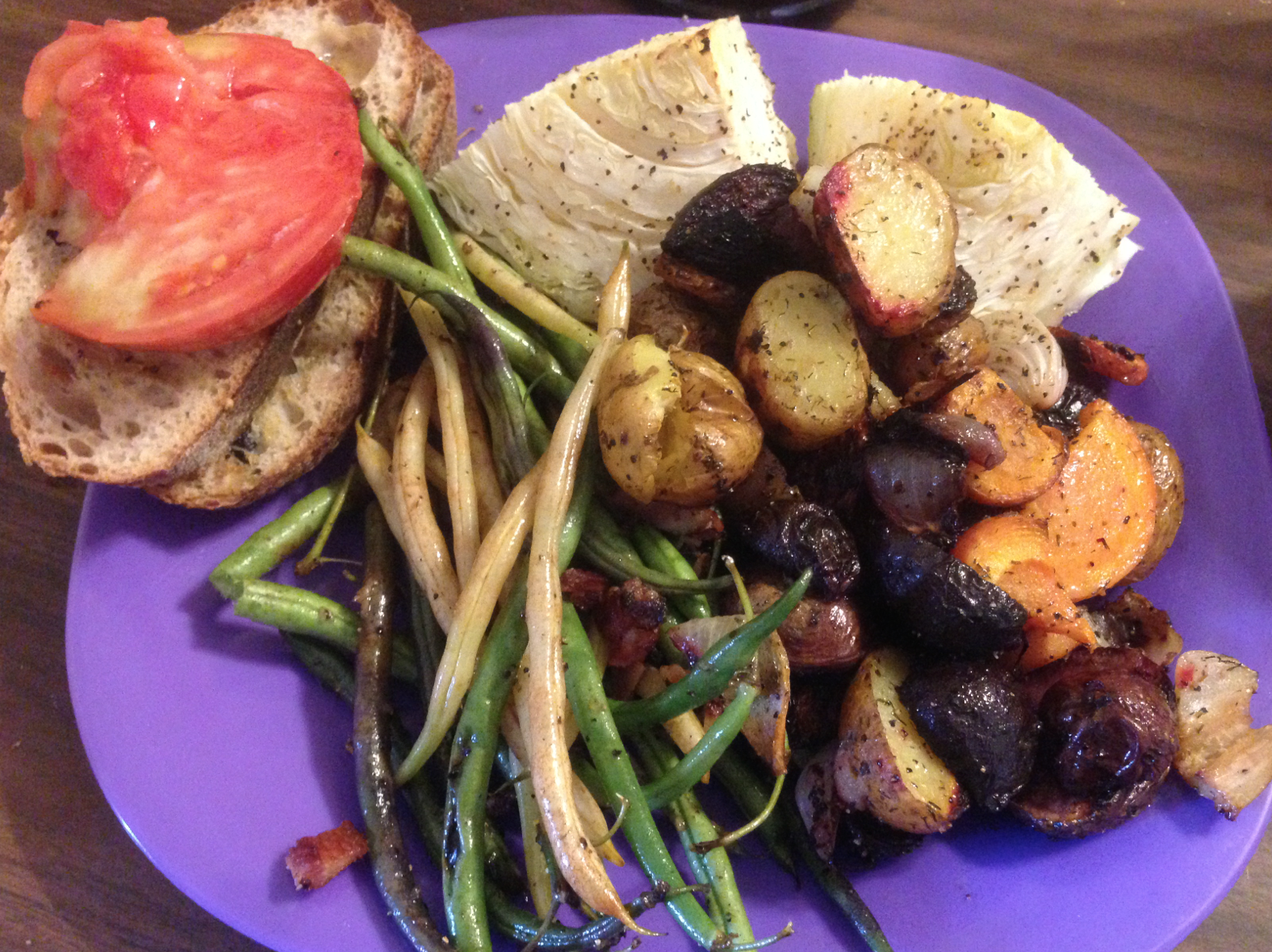
Changing eating habits, one delicious meal at a time. Credit: Ben Wang

Changing eating habits, one delicious meal at a time. Credit: Ben Wang

As for Wang, he is headed to dental school in the fall and hopes to include nutritional awareness in his future practice to help his patients achieve better systemic health.


Curiosity, Music and Mentors Led Nowicki to Science

By Duncan Dodson

“The only reason I got into the program I wanted to was because I was a pretty good low brass player—I’m actually sure of it!”

Stephen Nowicki, Dean and Vice Provost of Undergraduate Education, chuckles as he recounts his journey from early scientific beginnings to his most recent research. As part of Duke BioCoRE program, prominent Duke Scientists are asked to answer the question, “Why am I a scientist?”

Nowicki talk picture

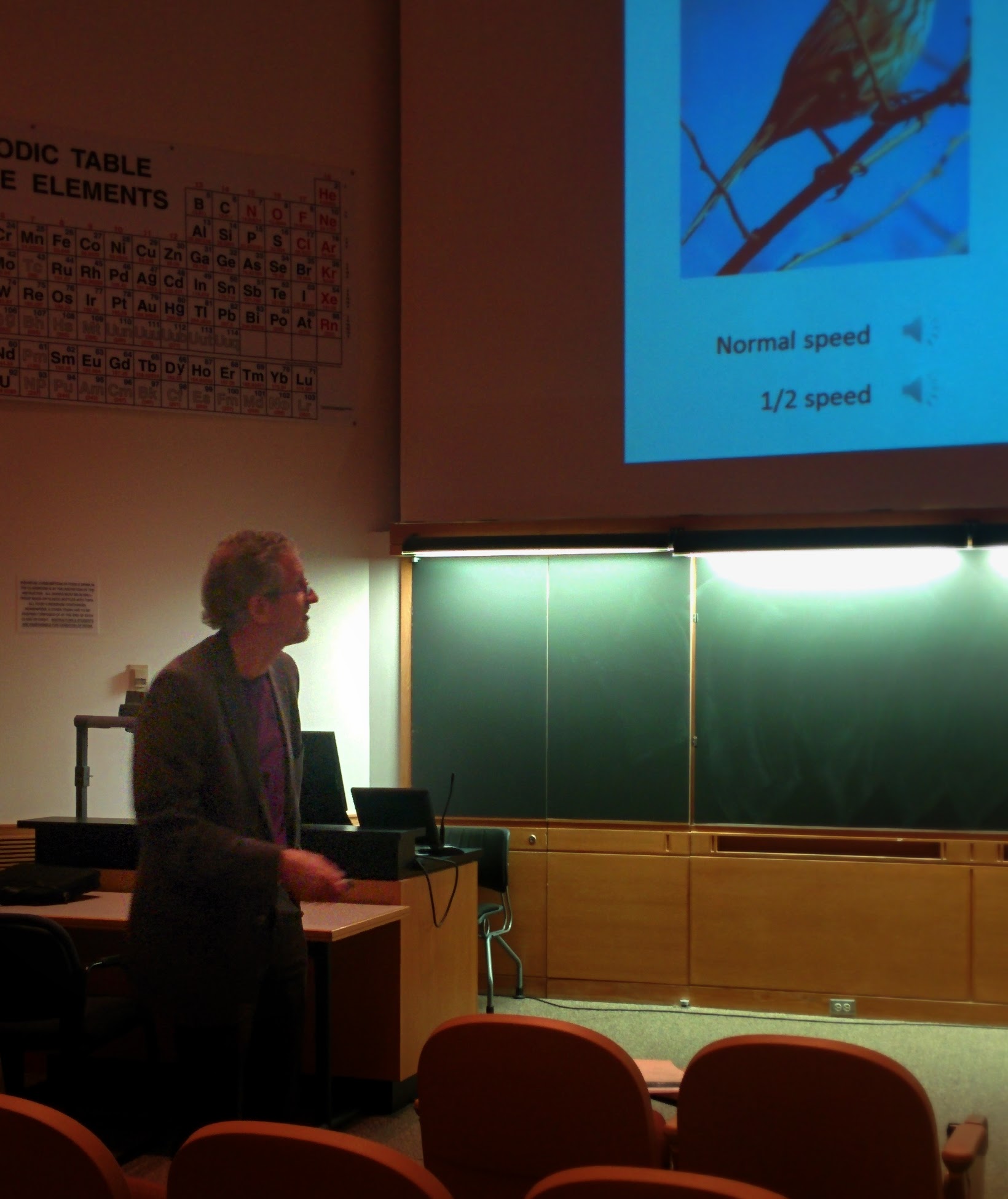
Nowicki explains his most recent research with swamp sparrows and phonemes, the smallest derivative of vocal communication, at Love Auditorium January 23, 2015.

Nowicki started his answer to that question on January 23 with a picture of a dissected—well more like massacred—frog, commenting that he never thought he liked science because of his high school science courses that were not well-taught.

“All I remember from that course was dissecting a frog, and not knowing what I was supposed to get out of it.” This led him to pursue a music major at Tufts University. It was Tufts’ equivalent of Duke’s Trinity requirements in a natural science field that led to an ironic turn of events—quickly picking up a biology double major.

“I had some friends that said ‘Oh you should take this biology course,’ and I did and it changed my life, because it was really well taught,” he said. From there, his mentor at Tufts reached out to a colleague, the head of a competitive graduate neurobiology program at Cornell, Tom Eisner. Eisner mentioned to Nowicki that he was looking to start an amateur orchestra at Cornell;  Nowicki responded that he could play lower brass, sparking Eisner’s interest, and ultimately, according to Nowicki, his acceptance into the program.

Flash forward about 30 years. Nowicki has an impressive career in the field of neurobiology. His most recent publication challenges the neurological methods in which swamp sparrows process the subtle differences of phonemes, the smallest derivatives of vocal communication, in other birds’ songs.

Steve Nowicki

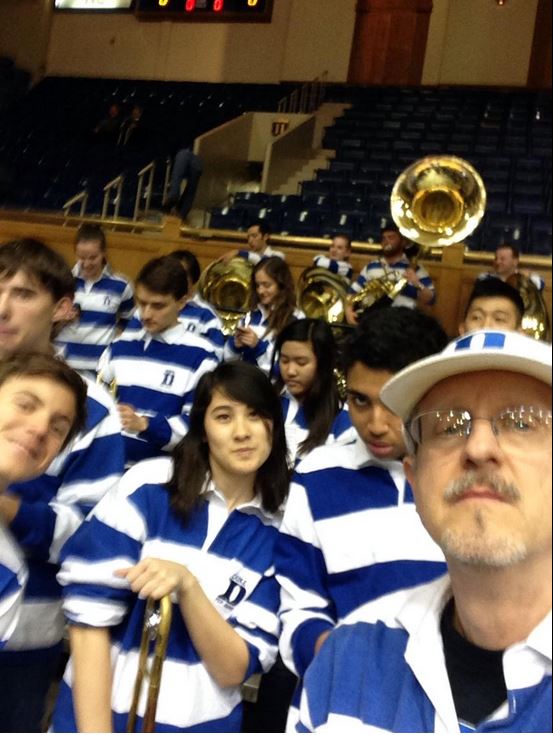
Nowicki’s tweet (@SteveNowickiDU) January 13, 2015. “Back where I belong at last!” Nowicki is a regular in the Cameron pep band who has always combined his passion for music with a curiosity for science.

Nowicki spent a majority of his talk relating entertaining anecdotes about his work with “Robobird,” a titanium swamp sparrow used to test these theories.

He repeatedly stressed the importance of curiosity, which led him to discover subjects he was passionate about. He discussed the process of instilling the same kind of curiosity in three undergraduate engineers through the two-and-a-half year research project. “[The first year engineers] didn’t have a clue, but they were not deterred. When they started to understand the problem they just kept digging in and digging in.”

When asked why he is a scientist, Nowicki responded, “I was lucky to run into mentors who revealed me to aspects of science that interested me, and I wasn’t afraid to fail.”

Synergizing Partnerships of the Heart

Guest post by Dharshini Subbiah

With diseases like heart disease, high blood pressure and diabetes on the rise in Asia and throughout the world, six Duke University faculty made the trip to Singapore last week to be a part of the symposium, “Synergizing Biomedical Research in Cardiovascular and Metabolic Disorders.”

The symposium featured experts presenting their research related to the clustering of metabolic syndrome, diabetes, hypertension, hyperlipidemia and cardiovascular disease — a global epidemic that is emerging as a major cause of mortality and human suffering in Asia.

A major objective of the meeting was to develop productive partnerships and collaborations to enhance research in the field. The Duke faculty were joined by colleagues from the Duke-National University of Singapore Graduate Medical School (Duke-NUS), SingHealth, A*Star, the National University of Singapore, the National University Health System, and the NTU Lee Kong Chian School of Medicine.

“I dare say it would be difficult to go anywhere in the world and find a scientific program with the breadth and quality of what we’ve heard during this Symposium. After reflecting on the various presentations and what people are doing, I believe there are many potential areas where we can work together productively,” declared Duke-NUS Dean-designate Tom Coffman.

Professor Coffman, who for many years was the Chief of Nephrology at Duke University, was both optimistic and clear about his expectations, “I think it’s on us, to take advantage of the opportunities to bring together Duke and Singapore in order to harness our resources, talents and energy to do some great things. We can have a real impact in this area and improve what happens to our patients.”

The Symposium was held on January 19-20 and was the first in a series of activities marking the tenth year of Duke-NUS.


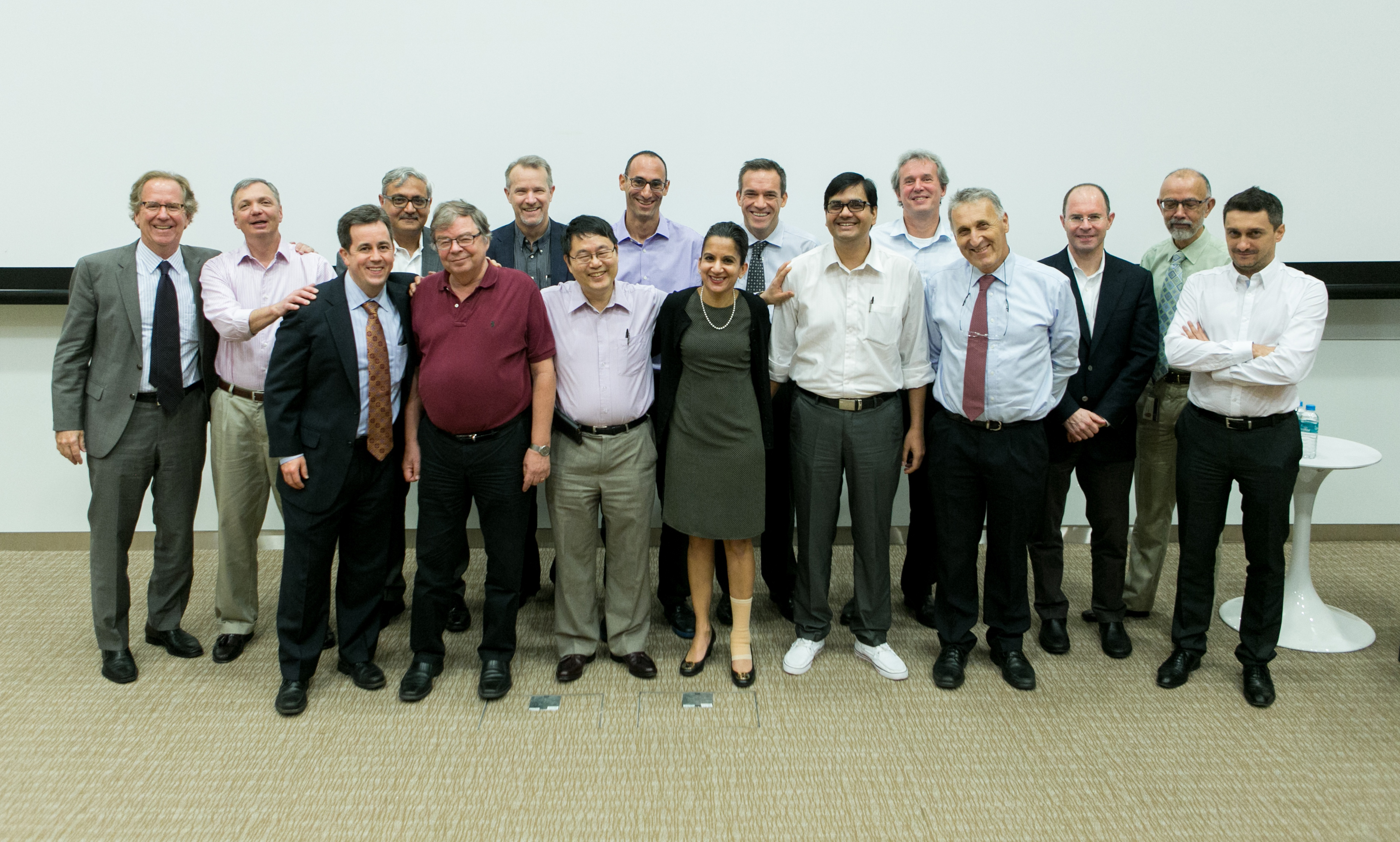
Working in concert for the future of medicine are researchers from Duke-NUS, SingHealth, A*Star, the National University of Singapore, the National University Health System, and the NTU Lee Kong Chian School of Medicine. Shown on the extreme left is Thomas Coffman, M.D., Director of the Cardiovascular Research Center at Duke Medicine.

Working in concert for the future of medicine are researchers from Duke-NUS, SingHealth, A*Star, the National University of Singapore, the National University Health System, and the NTU Lee Kong Chian School of Medicine. Shown on the extreme left is Thomas Coffman, M.D., Director of the Cardiovascular Research Center at Duke Medicine.

Behind the Scenes at Duke's Student-Run Science Journal

By Nonie Arora

What do tuberculosis vaccines, water quality, and protein trafficking share in common? All may be featured in articles for the upcoming issue of Duke Science Review. I spoke with Matthew Draelos, co-editor-in-chief, and other publication team members.

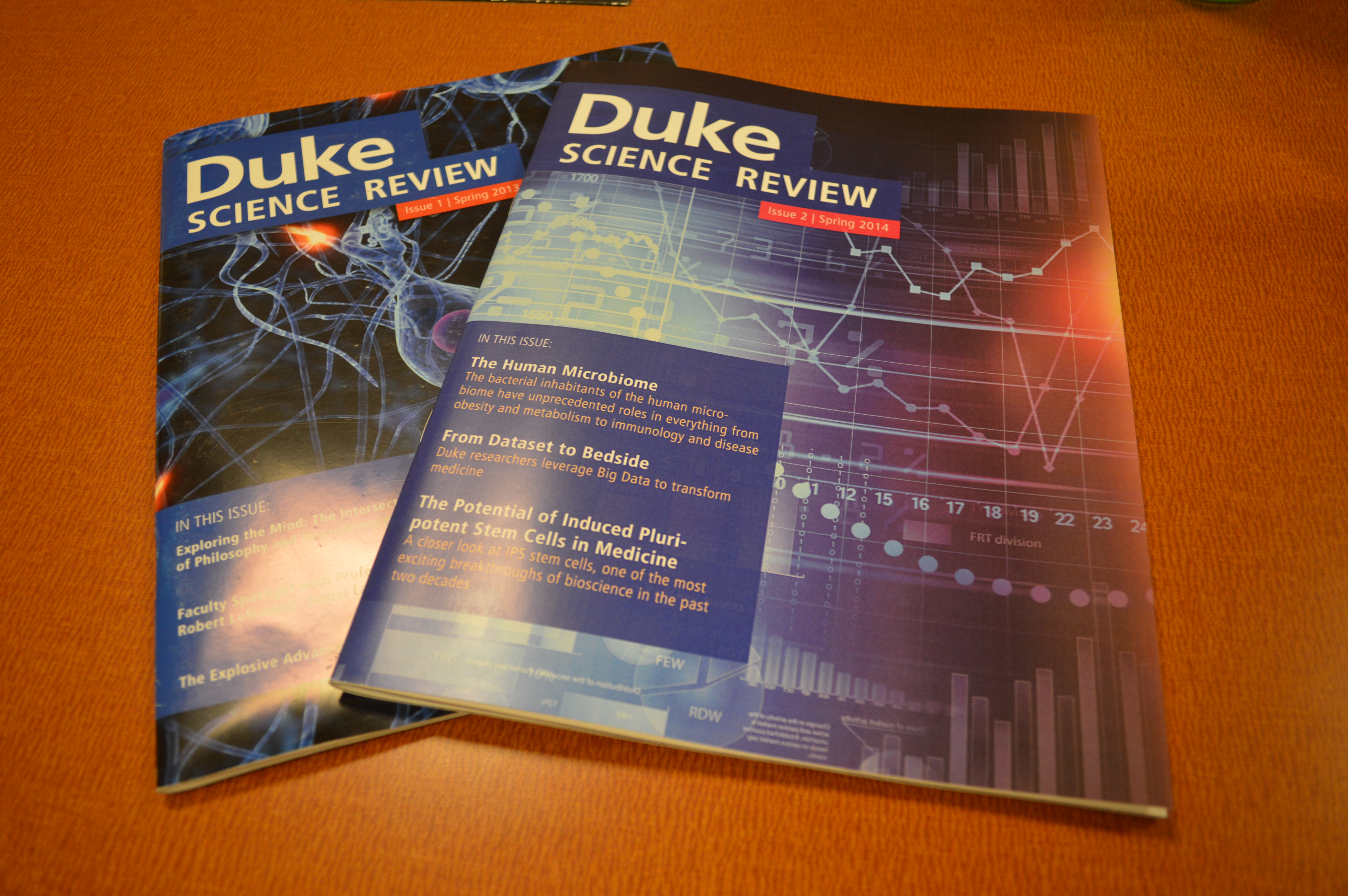
Duke Science Review Publication. Credit: Nonie Arora

Duke Science Review Publication. Credit: Nonie Arora

Draelos explained that the Duke Science Review deals with broad topics with an emphasis on review articles and draws from the undergraduate, graduate, and professional school communities.

Draelos’s motivations for leading the Duke Science Review stem from his previous research experiences. Draelos worked in an undergraduate lab for four years at NC State University. There, he felt integrated into the publication process in the laboratory of Dr. Gavin Williams. At Duke, he is excited to have the opportunity to get involved in a student-run science journal and take on a leadership role.

His interest in science is focused on pharmaceutical development, particularly antibiotics. He has worked previously with enzymes called polyketide synthases, which are nature’s machinery for making antibiotics. He hopes to someday develop novel chemical solutions to unsolved medical problems.

Students learn about the publication process. Credit: Nonie Arora.

Students learn about the publication process. Credit: Nonie Arora.

“I think it’s important for students to publish their research primarily because in the current funding environment it’s publish or perish. This is increasingly true for young scientists. We must be able to write well, and the Duke Science Review establishes a risk-free forum for students to practice scientific writing,” Draelos commented.

A second reason he mentioned for enabling students to publish their work is that people spend considerable time and energy writing papers for courses, and a lot of that effort is wasted if only the professor is able to read their work. This journal is a way for people to spread their work to a larger audience and perhaps gain some additional recognition.

Lefko Charalambous, an editor for the journal, added that it is important to improve scientific communication and literacy in budding scientists. “It’s a way for us to appreciate what goes into producing a journal article and the reward from having it published at our age,” he said.

“We hope to enrich the scientific discourse, especially for freshmen and sophomores who are looking into scientific research and don’t know where to start,” Draelos said.

To submit an abstract for a potential report or article, check out their website.

Is the "Wizarding Gene" Dominant or Recessive?

By Nonie Arora

Dr. Spana explains the wizarding gene to eager students. Credit: Arnab Chatterjee

Dr. Spana explains the wizarding gene to eager students. Credit: Arnab Chatterjee

How do recessive alleles and the world of Harry Potter connect? Some students found out last week from Dr. Eric Spana, a faculty member in the Biology department.

He started off by explaining how a mutation in the MC1R (melanocortin 1 receptor) gene causes red hair in humans because of the way it affects a pigment called eumelanin. He added that MC1R is a recessive gene, and showed a pedigree of the Weasley family tree. Professor Spana pointed out that J. K. Rowling had gotten the genetics right. The Weasley clan has red hair and so does Harry’s daughter Lily. This makes sense because Harry must have a recessive allele for red hair since his mother, also Lily, had red hair. Whether this is intentional or just fortuitous casting, who can really say?

He then explained some potential retroactive genetic “crosses” that could be done to determine whether the “wizarding gene” was dominant or recessive. As a quick refresher, recessive alleles require both the mom and dad to pass on the same genetic sequence to the child for the condition to occur, while dominant alleles require only one copy.

According to Professor Spana, Step 1 was to check whether a witch and a muggle who mated ould produce a wizard. Indeed, this is possible, and the evidence is Seamus Finnigan, a half-blood wizard. Due to these results, the gene could still be dominant or recessive.

In Step 2, he explained, you mate a wizard to someone who could not have the wizarding gene. Fridwulfa, the giantess, married Mr. Hagrid, a wizard, to produce our beloved Rubeus Hagrid, who was a wizard. Since giants cannot have the wizarding gene, but Hagrid is still a wizard, the wizarding gene must be dominant!

Crowd of students ask provocative questions about squibs and recessive vs. dominant inheritance. Credit: Arnab Chatterjee

Crowd of students ask provocative questions about squibs and recessive vs. dominant inheritance. Credit: Arnab Chatterjee

You’ll have to stop by Dr. Spana’s office to ask him more about where muggle-borns and squibs come from. There’s a few different genetic explanations, and I encourage you to do some thinking and exploration.

Outside of his work on the genetics of Harry Potter, Dr. Spana also researches and teaches Genetics & Developmental Biology at Duke.

iGEM: An Exciting Way to Merge Biology and Engineering

Screen Shot 2015-01-12 at 6.41.06 PM

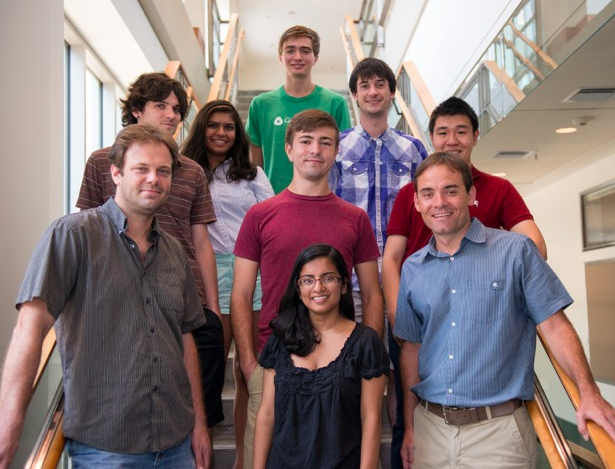
Duke iGEM 2014 team with faculty advisors Nick Buchler, front left, and Charlie Gersbach, front right. Mike is behind Dr. Gersbach.

by Anika Radiya-Dixit

The International Genetically Engineered Machine (iGEM) competition is dedicated to education for students interested in the advancement of synthetic biology, in other words, taking engineering principles and applying them to natural sciences like biology.

Students in the competition explored using a gene or series of genes from E.coli bacteria to create biological devices for applications such as dissolving plastic or filtering water. In November 2014, the Duke iGEM team took part in the annual competition in Boston, proudly leaving with a gold medal on their work in 3D printing technology and DNA synthesis protocol.

This week, I contacted the iGEM team and had the opportunity to talk with one of the members, Mike Zhu, about his experience in the competition. Mike is currently a junior from Northern California studying Biomedical Engineering and Computer Science. He is enthusiastic about researching how biology and computer science interact, and is conducting research with Dr. John Reif on DNA technology. Mike is also involved with the Chinese Dance team, and enjoys cooking, eating, and sleeping. Below is an edited transcript of the interview.


How did you get interested in your project topic?

We wanted to build a binary response platform that uses logic gates or on-off switches in E. coli to make it easier to regulate genes. We used the CRISPr/Cas9 system that allows for specific targeting of any gene, and that enables synthetic biologists to create more complex gene circuits. Personally, I was interested in developing an infrastructure that allows engineering concepts to be applied to cells, such as creating code that allows cells to do arithmetic so they can keep track of the cells around them. I think applications like these open doors to a really cool field.


What was your best moment during the Boston competition?

The competition was four days long, but we had to come back early due to work and midterms, so we missed the last dance and dinner, but overall it was a lot of fun. There were multiple workshops and talks, and the one that stood out most to me was one by someone from MIT who designed a ‘biocompiler’ to take code specifying the behavior of cells [1]. It was essentially like creating a programming language for cells, and I thought that was really cool.

Tell me about someone interesting you met.

There were a lot of people from the industry who came by and asked about our project, and some of them wanted to recruit us for internships. At the competition, there were people from all over the world, and I liked best that they were friendly and genuinely interested in developing tools to work with cells.


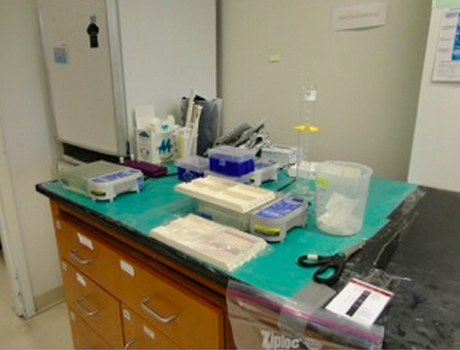
Experiment work in a biology lab.

What was the hardest or most frustrating part of working on the project?

Lab work is always the most frustrating because you’re dealing with microscopic parts – things easily go wrong and it’s difficult to debug, so we ended up repeating the experiments over and over to work through it.

 Are you continuing with  the competition this year?

I’m working for Caribou Biosciences in Berkeley, one of the companies that wanted to recruit us during the competition. They are developing tech similar to what we did, so I enjoy that.

It’s a good thing to get into bioengineering. People are trying to make  tech cheaper and easier so we can potentially do experiments in our garage – sort of like ‘biohacking’ or do-it-yourself-biology – and this still has a long way to go, but it’s really cool.

MikeZhu

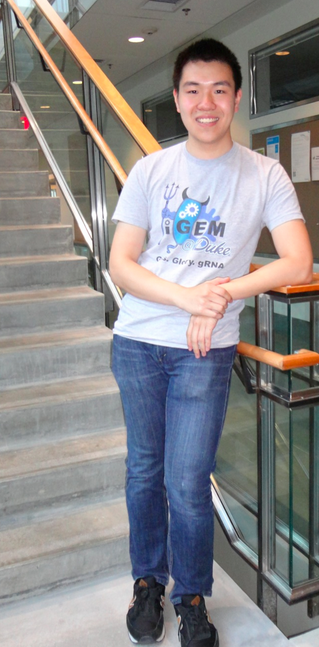
Mike Zhu, wearing the competition shirt.

Now that you’ve gone through the competition, what would you like to say to future students who are interested in applying their knowledge of BME  learned at Duke?

There are a lot of clubs at Duke that are project-based, but these are primarily in Electrical Engineering or Mechanical Engineering, so the iGEM competition is – as far as I know – the only project-based club for students more interested in biology. You get funding, lab space, and mentors with a team of undergraduates who can work on a project themselves. It’s pretty rare for both PIs [Principal Investigators] to give the undergrads free reign to work on what they want, especially compared to volunteering in a lab. You also get a chance to present your project and meet up with other people, and you’re exposed to topics most students get to experience only in senior year classes. Overall, the club is a great way to be introduced to cutting edge research, and it’s a good opportunity for freshman to find out what’s going on in BME.

Learn More about the Duke iGEM team and project

[1] More about MIT’s Biocomplier can be read at http://web.mit.edu/jakebeal/www/Talks/IBE12-BioCompiler-Feedback-abstract.txt.


Microbiome Researchers Find Common Ground

Guest Post from John Rawls Ph.D.,  associate professor of molecular genetics and microbiology

Illustration by Timothy Cook

Illustration by Timothy Cook

Recent advances in genomic technology have led to spectacular insights into the complexity and ubiquity of microbial communities (the microbiome) throughout our planet, including on and within the human body.

The microbiome is now known to contribute significantly to human health and disease, regulate global biogeochemistry, and harbor much of our planet’s genetic diversity.

On November 21, 2014, more than 200 scientists, clinicians, engineers, and students gathered in the Trent Semans Center at the Duke University Medical Center to learn about cutting-edge microbiome research in an interdisciplinary symposium entitled “The Human and Environmental Microbiome.”

Reflecting the interdisciplinary nature of this exciting field, symposium participants represented a broad range of basic and clinical science departments at Duke  and other institutions across North Carolina’s Research Triangle.

John RawlsThe symposium showcased microbiomes in a wide diversity of habitats, including the body surfaces of humans and other animals, plant roots, soil, dust, freshwater streams, coastal waters, and in vitro systems.

Despite the diversity of their experimental systems, participants shared many of the same experimental approaches and methodologies.  For instance, microbial genomic sequencing was highlighted as a tool for understanding the life cycle of the parasites that cause malaria, as well as for identifying useful genes in symbiotic bacteria residing in the intestine.

Several abstracts presented at the symposium highlighted innovative new genetic and genomic approaches to understanding how microbial communities assemble and function, which could be widely applicable to other microbiomes.

In addition to shared methodologies, participants also reported on shared themes emerging from analysis of different microbiomes.  For example, analysis of a marine environment in response to acute weather perturbation revealed many of the same ecological patterns observed in the human gut microbiome during a cholera outbreak.

The symposium was organized by the Duke Center for Genomics of Microbial Systems (GeMS), which was established in 2012 to provide an intellectual environment that brings together investigators across Duke University wishing to apply genomic approaches to study basic aspects of microbial biology.

To learn more about GeMS activities and resources, you can join their email list by requesting a subscription on the GeMS website (http://microbialgenomics.mgm.duke.edu/about-us/contact-us).

Page 78 of 111

Powered by WordPress & Theme by Anders Norén