Following the people and events that make up the research community at Duke

Students exploring the Innovation Co-Lab

Category: Lecture Page 12 of 20

Mouse Lemur Quandary Stumps Researchers

By Sheena Faherty, Ph.D. Candidate in Biology

What does famous lemur researcher, Dame Alison Richard, do when she has a burning question she can’t answer?

She visits Duke and appeals to a room full of lemur enthusiasts to help out.

Richard’s question concerns the curious case of the mouse lemurs at Beza Mahafaly in southwestern Madagascar, where she has been involved in a wildlife-monitoring program since the mid-1990s.
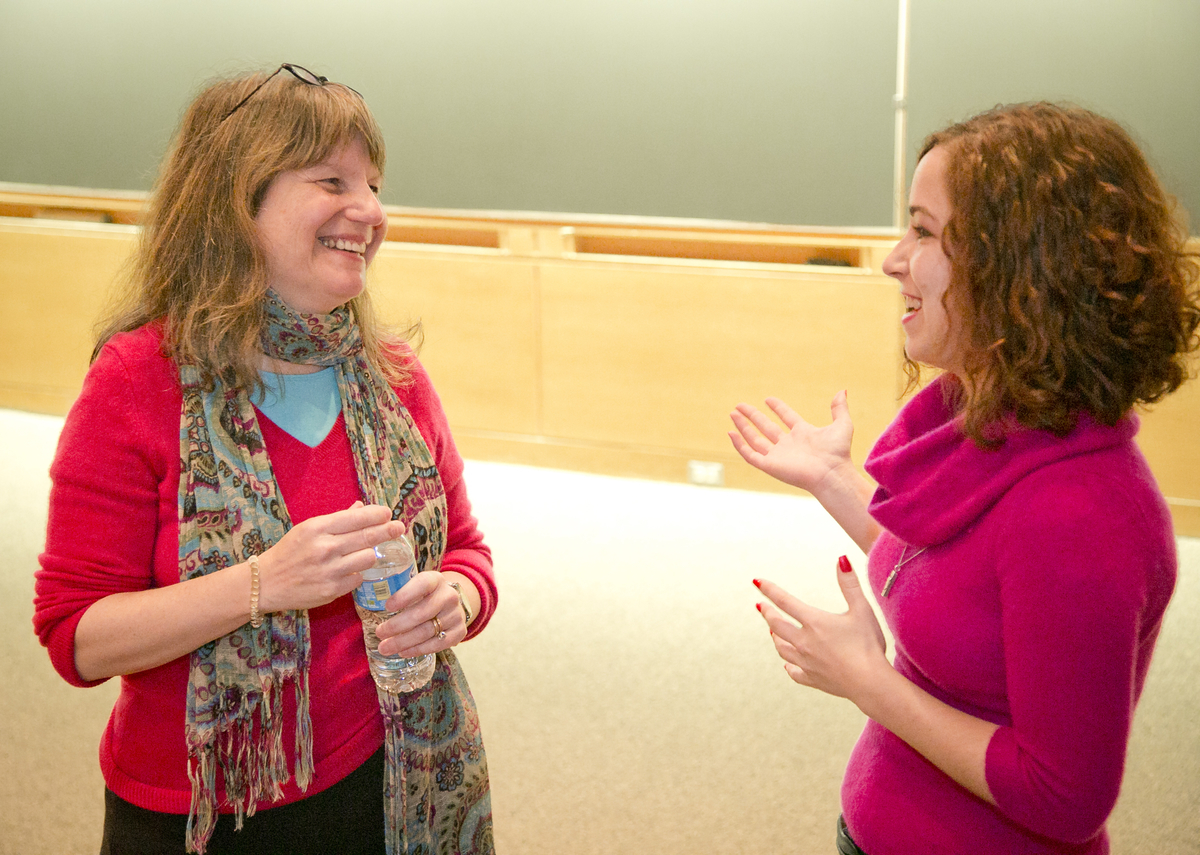
Alison Richard (left) and Lemur Center Director Anne Yoder (right) lead a discussion in the 'Beach House' at DLC.

Alison Richard (left) and Lemur Center Director Anne Yoder (right) lead a discussion in the ‘Beach House’ at DLC.

“What do I know about mouse lemurs?” she questioned a group that gathered at the Duke Lemur Center on March 3 as the first of three talks she held at Duke this week as part of the Von der Heyden Fellows Program. “Probably less than you do. But I am incredibly interested in what is going on with them at Beza Mahafaly.”

Everywhere else in Madagascar, mouse lemurs that look indistinguishable are classified as different species due to big variations at the genetic level. But at Beza Mahafaly, Richard is finding that mouse lemurs with major deviations in appearance are genetically the same.

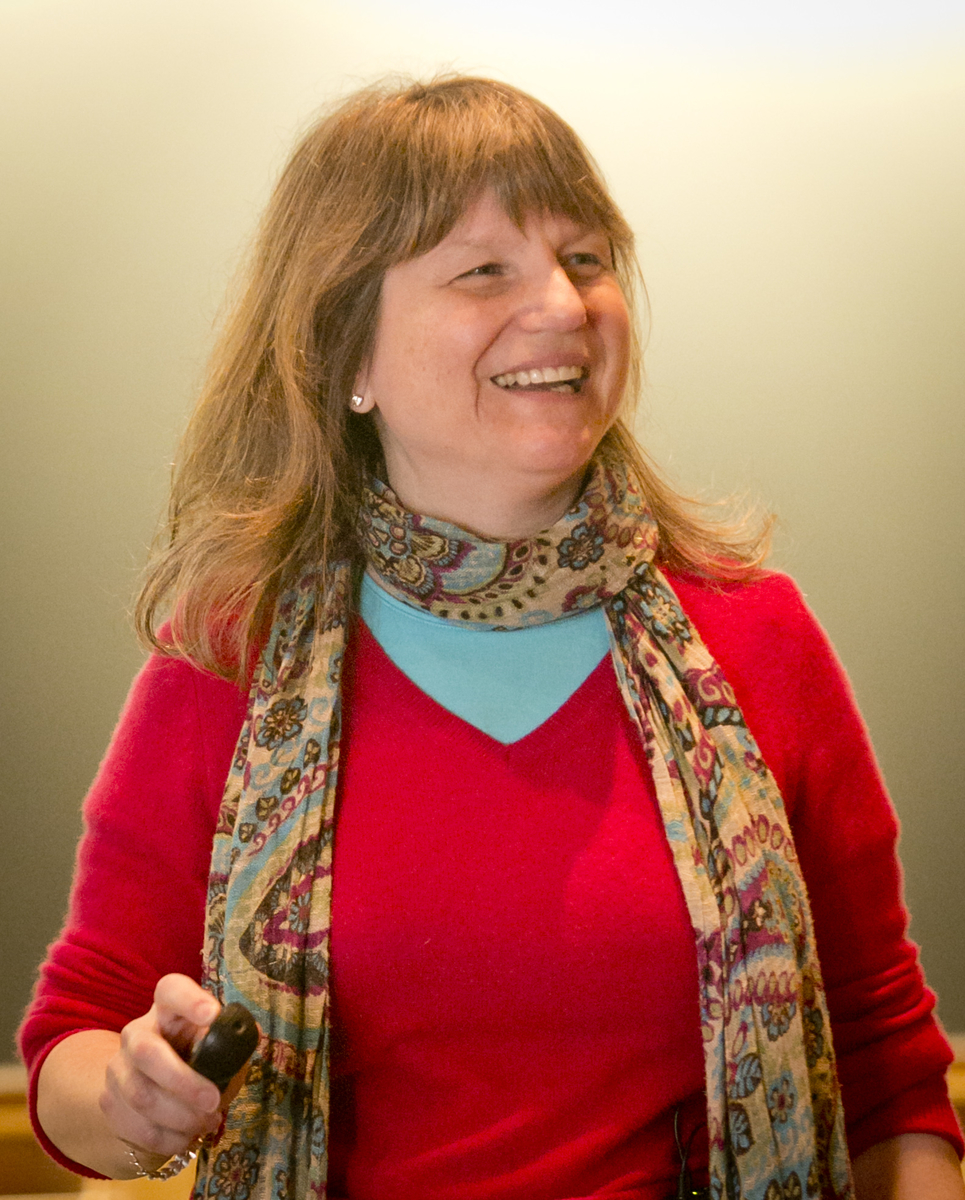
Dame Alison Richard (Photo: HHMI)

Dame Alison Richard (Photo: HHMI)

For a long time, the general view was that there were two species of mouse lemur in the forests of Beza Mahafaly : the gray-brown mouse lemur and the gray mouse lemur (both being exceptionally adorable).

A few studies in the mid-1990s and early 2000s compared the shapes of certain features such as jawbone shape and leg length, and confirmed this view. Then, researchers started noticing a few trapped animals that had very noticeable differences in coat coloration. These animals were redder than the other two known species. Was this a possible third species?

In 2006, Duke Lemur Center Director, Anne Yoder, and her former Ph.D. student Kellie Heckman examined this same population of mouse lemurs from a genetic standpoint. Comparing sequences of DNA they expected to find major genetic differences between the two known species, and possibly confirm the existence of a third species.

“The genetic data was a disaster for the mouse lemurs,” Richard said.

All the samples collected from animals at Beza Mahafaly, regardless of the animal’s outward appearance, sorted together and seemed to be one species.

Dame Alison and the bedeviled mouse lemur of Beza Mahafaly

Dame Alison and the bedeviled mouse lemur of Beza Mahafaly

“There’s a part of me that’s very distressed about this, but there’s a part of me that thinks this is great,” Richard said. “At Beza Mahafaly we swim upstream. We’re contrarians,” she said laughing. “But we still don’t know how to best explain the diversity that we do see.”

She offered up some suggestions: A glimpse of an ongoing process of change? A replacement by one species over another? The beginning of a new species?

Flashing a picture of a mouse lemur displaying ominous eye shine from a headlamp, she said: “The mouse lemurs are waiting with an evil gleam in their eye to be told the truth about themselves. The question is how should we take this forward?”

Is the "Wizarding Gene" Dominant or Recessive?

By Nonie Arora

Dr. Spana explains the wizarding gene to eager students. Credit: Arnab Chatterjee

Dr. Spana explains the wizarding gene to eager students. Credit: Arnab Chatterjee

How do recessive alleles and the world of Harry Potter connect? Some students found out last week from Dr. Eric Spana, a faculty member in the Biology department.

He started off by explaining how a mutation in the MC1R (melanocortin 1 receptor) gene causes red hair in humans because of the way it affects a pigment called eumelanin. He added that MC1R is a recessive gene, and showed a pedigree of the Weasley family tree. Professor Spana pointed out that J. K. Rowling had gotten the genetics right. The Weasley clan has red hair and so does Harry’s daughter Lily. This makes sense because Harry must have a recessive allele for red hair since his mother, also Lily, had red hair. Whether this is intentional or just fortuitous casting, who can really say?

He then explained some potential retroactive genetic “crosses” that could be done to determine whether the “wizarding gene” was dominant or recessive. As a quick refresher, recessive alleles require both the mom and dad to pass on the same genetic sequence to the child for the condition to occur, while dominant alleles require only one copy.

According to Professor Spana, Step 1 was to check whether a witch and a muggle who mated ould produce a wizard. Indeed, this is possible, and the evidence is Seamus Finnigan, a half-blood wizard. Due to these results, the gene could still be dominant or recessive.

In Step 2, he explained, you mate a wizard to someone who could not have the wizarding gene. Fridwulfa, the giantess, married Mr. Hagrid, a wizard, to produce our beloved Rubeus Hagrid, who was a wizard. Since giants cannot have the wizarding gene, but Hagrid is still a wizard, the wizarding gene must be dominant!

Crowd of students ask provocative questions about squibs and recessive vs. dominant inheritance. Credit: Arnab Chatterjee

Crowd of students ask provocative questions about squibs and recessive vs. dominant inheritance. Credit: Arnab Chatterjee

You’ll have to stop by Dr. Spana’s office to ask him more about where muggle-borns and squibs come from. There’s a few different genetic explanations, and I encourage you to do some thinking and exploration.

Outside of his work on the genetics of Harry Potter, Dr. Spana also researches and teaches Genetics & Developmental Biology at Duke.

The Science of Self-Agency: Dr. Nicolelis and the Walk Again Project

By Olivia Zhu

Screen grab from Univision of Juliano's robo-kick at the World Cup opening ceremony.

Screen grab from Univision of Juliano’s robo-kick at the World Cup opening ceremony.

Over the course of his 20-year career, Dr. Miguel Nicolelis has restored movement and self-agency to paraplegic patients.

On November 11th, as part of the Grand Challenge Seminar Series, Dr. Nicolelis captivated his audience by explaining the extensive process that culminated in Juliano, a Brazilian 29-year-old paralyzed from the chest downward in a car accident, performing the opening kick of the World Cup simply by using his mind.

Dr. Nicolelis has several faculty appointments in the Duke School of Medicine, Department of Psychology and Neuroscience, Institute for Brain Sciences, and Center for Neuroengineering. He has also written a book, Beyond Boundaries, about his work. His program, Walk Again, is supported by the Edmond and Lily Safia International Institute of Neuroscience in Brazil.

Dr. Nicolelis began making progress in 1999-2000 at Duke by developing electrodes that could record firing from multiple neurons. Using this technology, he determined which neurons were necessary for a monkey to move a joystick during a video game. Then, Dr. Nicolelis focused on creating a bypass that would bridge the mind directly to a computer, essentially removing the body as an intermediary.

He called this bypass a “Brain-Machine Interface,” or BMI, a term he coined at a cheese steak joint outside of Philadelphia. With the BMI, Dr. Nicolelis’s monkeys could play the video game without moving their arms or the joystick—they simply imagined themselves moving the joystick. The monkeys could even use their arms to do other tasks like eat or scratch themselves, creating a “third arm.”

Since then, with an extensive team of engineers, Dr. Nicolelis has implemented this technology by creating a IMG_1941hydraulically-powered exoskeleton that interprets a patient’s firing neurons and moves a patient’s legs accordingly.

He has also created artificial “skin,” which provides tactile feedback of movement to a patient’s upper body or, eventually, through an implant directly to the tactile cortex of the brain.

The technology is so accurate that patients report feeling “ghost limbs”—they believe that their legs are actually walking. The legendary Brazilian soccer player, Ronaldo, reportedly exclaimed “I’m moving!” with incredulity, when he was strapped to a chair testing Nicolelis’s technology.

Training with the exoskeleton also improves patients’ cardiovascular circulation, mental health, gastrointestinal health, and sensitivity in previously paralyzed areas.

Dr. Nicolelis is truly using science to stretch the boundaries of the human body.

All Ears for Corn Genetics

By Nonie Arora

“Technology is progress” and “new is better” seem to be mantras in some fields of research. However, when it comes to fields of genetically modified corn, we might be wise to think otherwise.

20141024_174347

Dr. Mary Eubanks and Students at the Campus Farm. Credit: Nonie Arora

Duke biology professor Dr. Mary Eubanks spoke to a group of Duke students, community members, and a farmer from Togo about corn genetics in a workshop held Friday, Oct. 24 at the Duke Campus Farm. Dr. Eubanks founded her own seed genetics company (Sun Dance Genetics LLC) and is a leading advocate for changing the way we grow corn.

Dr. Eubanks became intrigued by the origins of corn while studying the origins of agriculture and the start of American civilization in an archaeology PhD program. She realized that she wouldn’t be able to answer her questions about what she considered to be this “great botanical mystery” without an understanding of genetics. To uncover this mystery, she pursued a postdoctoral program in corn genetics. Based on her experimentation, she developed the hypothesis that maize domestication involved something called intergeneric hybridization, or crossing between plants in different genera.

European Corn Borner attacks Maize. Credit: Wikimedia commons

European Corn Borner attacks Maize. Credit: Wikimedia commons

During her career, Dr. Eubanks also worked in regulatory affairs and learned about the devastating effects of chemical pesticides. She became an advocate for sustainable agriculture: finding ways to develop pest-resistant corn without genetic engineering. She has successfully transferred natural resistance to the worst insect pests of corn — corn rootworm and European corn borer.

In contrast to using natural breeding methods to create new lines of corn, genetically modifying organisms could have negative effects on human health, according to Dr. Eubanks. Dr. Eubanks believes that the inserter and promoter sequences that are used to get the genes to express the foreign proteins can lead to antibiotic resistance and intestinal issues for humans.

The group was surprised by her description of her own anaphylactic shock reaction to Bt-corn, a GMO. Her own personal history of the allergic reaction made her think of the potential reactions our bodies could be having to GMOs. Dr. Eubanks described how it was problematic that genes being introduced to the crop came from other organisms and that humans haven’t evolved a tolerance to the proteins the genes encode. This could lead to potential allergenicity in humans. According to Dr. Eubanks, it is possible that there has been horizontal gene transfer between plasmids — small molecules used to insert genes from one organism to the next — and the human gut.

When asked about the regulations regarding GMOs, Dr. Eubanks explained that the FDA is in charge of the labeling and GMOs are generally regarded as safe so long as they are substantially equivalent to the other food product. The industry is very opposed to the labeling of GMOs and 90% of the corn, cotton, and soy available has some GMO product in it, according to Dr. Eubanks. She believes that not enough is being done to regulate the industry.

We were intrigued by her discussion of food security and funding for interventions. She described that a lot of international work on food security highly promotes technology and the big industry agricultural model. Dr. Eubanks believes we need to change our paradigm from thinking that the most advanced technological options are always best to considering an ecological intensification approach. Such an approach seeks to design more productive, sustainable production systems that are well suited to their environments by better understanding how nature functions. Her current work is helping bring food security to South Sudan through corn that is pest-resistant and drought-tolerant.


A scientist’s unlikely path, with Duke Provost Sally Kornbluth

By Robin Smith

Many scientists have an inkling of their path at an early age, having spent their childhoods breeding hamsters for fun, or conducting backyard experiments on earthworms.

Not so for Duke Provost and cell biologist Sally Kornbluth.

Provost Sally Kornbluth delivers her lecture, "What Makes Me a Scientist," at Love Auditorium.

Provost Sally Kornbluth delivers her lecture, “What Makes Me a Scientist,” at Love Auditorium.

“Science wasn’t a part of my upbringing at all,” said Kornbluth, who grew up in Fair Lawn, New Jersey, a small suburb 25 miles outside of New York City. Her mother was an opera singer.

“My mother once played Queen Elizabeth at the Metropolitan Opera. I can tell you she certainly wouldn’t have let us bring something like a worm or a hamster into the house.”

In an October 30 talk hosted by the Duke BioCoRE program, Kornbluth shared this story and the unlikely path she took to becoming a scientist and the lessons she learned along the way.

As an undergraduate at Williams College, Kornbluth majored in political science. She remembers leading a tour group through the science quad as a freshman tour guide and thinking, “I’ll never take a class here.”

“The only reason I signed up for my first science course — a class on human biology and social issues taught by a professor named Bill DeWitt — was I thought it would be a relatively painless way to satisfy the graduation requirements,” she said.

Things changed once she started the course. “That’s when I realized, wow, science is about asking interesting questions and solving puzzles and finding out how things work. Having a set of facts was only the starting point.”

She describes DeWitt as the best teacher she’s ever had. “The impact of teachers who influenced me along the way was really profound,” she said.

After graduating from college in 1982 she considered applying to medical school. But then she received a scholarship to go to Cambridge University in England for two years, where she earned a second bachelor’s degree in genetics.

148814_provstlec010“One of the formative things about that time was we were forced to read a lot of journal articles. The science textbooks I’d read gave the impression that experiments always work so cleanly and beautifully. But reading scientific papers helped me realize that things aren’t as neat, and not everyone agrees with each other.”

She also learned a lesson about remembering the big picture.

“Especially if you’re doing experiments that are long and involved, you have to be motivated by the idea behind the experiment, not by the actual physical things you’re doing every day,  because often they’re pretty mundane. When you’re doing lab work in molecular biology it’s hard to get excited about doing one hundred mini-preps.”

Kornbluth took these lessons with her to graduate school. She earned a Ph.D. in molecular oncology from Rockefeller University in 1989, and did postdoctoral training at the University of California, San Diego.

She joined the Duke faculty in 1994, along with her husband, Daniel Lew, Ph.D., both as professors of pharmacology and cancer biology at Duke Medicine.

“We got lucky because we both worked on aspects of the cell cycle, which was a super hot field at the time,” she said.

Her recent research aims to identify the molecular signals that tell tumor cells to divide or die, which may help explain why some cancers fail to respond to chemotherapy. The work could point to new ways of overcoming drug resistance in breast, pancreatic and other cancers.

For Kornbluth, one of the biggest joys of being a scientist is the camaraderie and the collaborative nature of the work. “Maybe that’s why I went into administration,” she says.

Kornbluth served as vice dean for basic science at Duke Medicine from 2006 to 2014.

This June, she succeeded 15-year-veteran Peter Lange as provost, the chief academic officer at Duke. She is the first woman to hold the post.

148814_provstlec015


Rationing is Not a Four-Letter Word

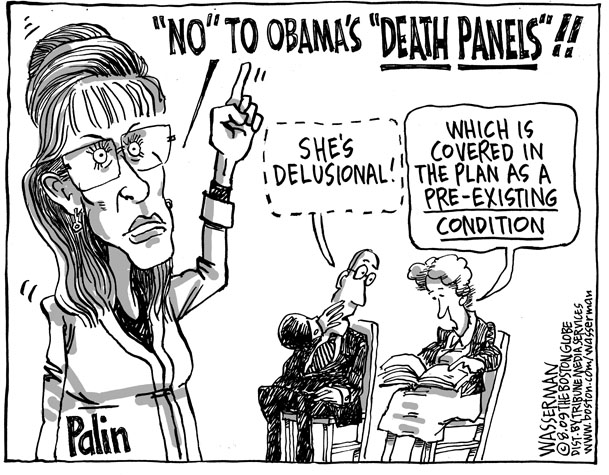
Wasserman Globe cartoon

Palin and “Death Panels” cartoon from the Boston Globe.

By Nonie Arora

Starting with a news clip of Sarah Palin talking about death panels on Fox News is a sure-fire way to gain the attention of your audience. That’s exactly what Dr. Phillip Rosoff did to ease into his more serious talk about the ethics of rationing health care in the United States. He spoke to a crowded audience of clinicians, ethicists, and students for the Trent Center for Bioethics, Humanities, & History of Medicine lecture series.

210_RosoffPhilip2011

Dr. Philip Rosoff. Source: pediatrics.duke.edu

Dr. Rosoff discussed both moral and economic reasons why we need to ration healthcare in the United States. For one, health care costs are bankrupting the nation and taking money from other social goods. According to Dr. Rosoff, our health care system is expensive, inefficient and has astounding disparities in access to quality care.

“Health care is not the only good. Other factors contribute to our ability to live a good life, including education and the arts,” he said.

“The key to rationing isn’t saying ‘no,’ but how it’s done,” he said.

He unveiled his vision for a better model of health care. In his eyes, a single-payer system that would eliminate the centralized profit motive – where physicians and hospitals have the perverse financial incentives to sell things – would decrease costs without compromising quality. He believes that a similar, expansive, generous benefit plan should be available to all, and those who make the rules ought to be bound by them. Problems arise when people make decisions for others without being affected by the outcomes, Dr. Rosoff explained.

He referenced the organ transplant waiting list, UNOS, as an accepted system where most patients do not complain about bias or unfairness because they realize that everyone has been given a fair shot. The same should be true of our reformed health care system: there should be no “VIPs” or “VUPS” (very unimportant people) and steps ought to be taken to ensure that everyone with a similar clinical prognosis should be bound by the same rules.

While it may seem impossible to increase coverage while lowering costs, other countries provide high quality care at a fraction of the cost, Rosoff explained. Twenty five percent of our spending in the U.S. goes towards unnecessary treatments or administrative expenses.

When asked what the rallying cry for such a major change in the health care system would be, Dr. Rosoff said that the system as it is will bankrupt us, so changes need to be made. At the same time, we need to avoid evoking the scarcity principle, drawing as little attention as possible to changes being made, he concluded.

Learn more specifics about the ethical principles underlying the rationing of healthcare in Dr. Rosoff’s latest book: Rationing is Not A Four-Letter Word: Setting Limits on Healthcare (Published by Basic Bioethics)

Studying patterns in bacterial organization

credit to Gerard Wong, of the California NanoSystems Institute

credit to Gerard Wong, of the California NanoSystems Institute

by Olivia Zhu

Bacterial biofilms, at first glance, may seem to be spontaneous, random phenomena from which we have no power to protect our environment or ourselves.

They’re potentially useful as an aid to wastewater treatment, but they also cause infections that account for $6 billion a year in health care costs. Biofilms are also more resistant to antibiotic drugs, making them difficult to eradicate.

Dr. Kun Zhao, of the California NanoSystems Institute at UCLA, refuses to see biofilms as arbitrary: he emphasizes the fact that biofilms are communities of bacteria in self-produced polymeric matrices of polysaccharides, and using a biophysical approach, he studies the pattern behind their organization.

Central questions in Zhao’s research include how bacterial colonies transition from reversible to irreversible attachment, how they migrate, and how they ultimately disperse. Specifically, Zhao examines the polysaccharide Psl, which poses a positive feedback loop because it is both secreted by moving bacteria and serves as a chemo-attractant for future bacteria movement. The positive feedback creates an inherent pattern, as bacteria are more likely to visit a location they have been to before.

Zhao and colleagues have also discovered that bacterial mutants that cannot produce Psl exhibit more random and uniform movement.

To better quantify bacterial movement,Zhao has created a computer algorithm that shows the full movement history of each individual bacterium on a dish, and that provides a “search engine” allowing researchers to find every bacterium performing specific life cycle activities, like division.

Zhao has postulated a “rich get richer” mechanism for biofilms. He compares bacterial organization to Wall Street because concentrated movement ensures that some cells become extremely enriched. In the future, he hopes to model colloidal structures for biological problems, like the growth of the bacterial cell wall. Zhao currently uses colloids, which in physics are used as models for atomic systems, to observe how shapes affect self-assembly. He also would like to look at cell-substrate interactions, which are implicated in bacterial territoriality and social interactions.

Discovering “CRISPR” methods for genetic recombination

Screen Shot 2014-03-27 at 9.54.19 PM

By Olivia Zhu

In a lecture to an overflowing auditorium in the Bryan Research Building on March 27th, Dr. Jennifer Doudna, of the University of California, Berkeley, unraveled her story of research into CRISPRs, or “clustered regularly interspaced short palindromic repeats.” Dr. Doudna specializes in RNA; she started her project on CRISPRs seven years ago, when CRISPRs were denounced as no more than junk.

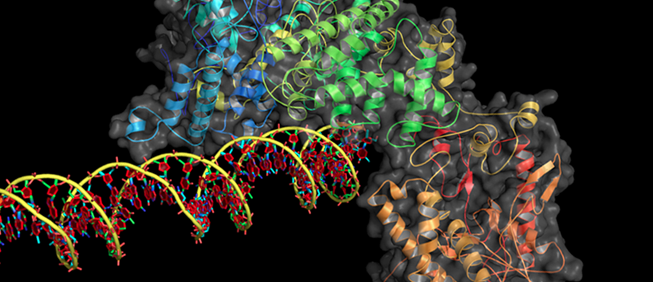
The CRISPR method includes a modifiable RNA sequence whose function is to recognize target sequences on DNA. The RNA also includes a target sequence that induces cleavage by the associated protein, CAS9. CAS9 introduces double-stranded breaks and represents an exciting improvement over the previous, less efficient collection of nine proteins used to cleave DNA; the breaks make room for insertion of new genes. The CRISPR-CAS9 system has inserted genes into a wide range of organisms, including bacteria, yeast, nematode worms, fruit flies, plants, fish, mice, and even human cells.

Jennifer Doudna

Jennifer Doudna of UC Berkeley and the Howard Hughes Medical Institute

While researchers are actively investigating the possibility of using CRISPR technology to alter genes, Doudna said the mechanism behind CRISPR gene editing remains unclear. For example, it seems extraordinary that the CRISPR-CAS9 system can locate and unwind specific DNA sequences in human cells, as the DNA there is highly condensed around histones and methylated.

Doudna’s lab is working to understand the details of the CRISPR process. One current hypothesis includes the idea that there is a spring mechanism that allows the CAS9 protein to effectively cleave DNA strands.

Nevertheless, CRISPR technology has been instrumental in allowing more precise and efficient genetic modification. What we once considered junk has spurred substantial advances across various fields of science.

Seeing may not be perceiving—the neurobiology of perception

The elephant-nosed electric fish

The elephant-nosed electric fish

By Olivia Zhu

Larry Abbott argues that sensation is not perception. In a lecture presented on March 25th to the Department of Neurobiology at Duke, Dr. Abbott, of the Center for Neurobiology and Behavior at Columbia University, presented his model of integrated perception.

Dr. Abbott went into particular depth about how an organism can tell itself apart from its surroundings. Though we may take it for granted, self-identification is extremely important in many instances: for example, when a young, male zebra finch learns how to sing by copying his tutor, he must be able to distinguish his own song from other birds’ songs in order to properly listen to it and refine it.

Dr. Abbott studies self-perception in elephant-nosed electric fish. Electric fish have an organ in their body that sends out strong electric pulses. However, the fish also have a sensory organ to detect electric pulses from potential prey, which are several orders of magnitude lower than their own signals. Their own electric fields should diminish their sensitivity to external electricity; this interference, though, is prevented because their electricity-generating organ sends impulses to the sensory organ to inform it when it is firing. Essentially, the fishes’ neural circuits are tuned to cancel out the input they receive from their own electric pulses.

Ultimately, Dr. Abbott claimed that when you look at your friend, you’re not exactly seeing your friend: your mental image is a product of various mental manipulations of the original sensory input your brain receives. His mathematical, model-based approach attempts to redefine the way in which we view ourselves and our relation to the world.

Jane Austen and Game Theory

game

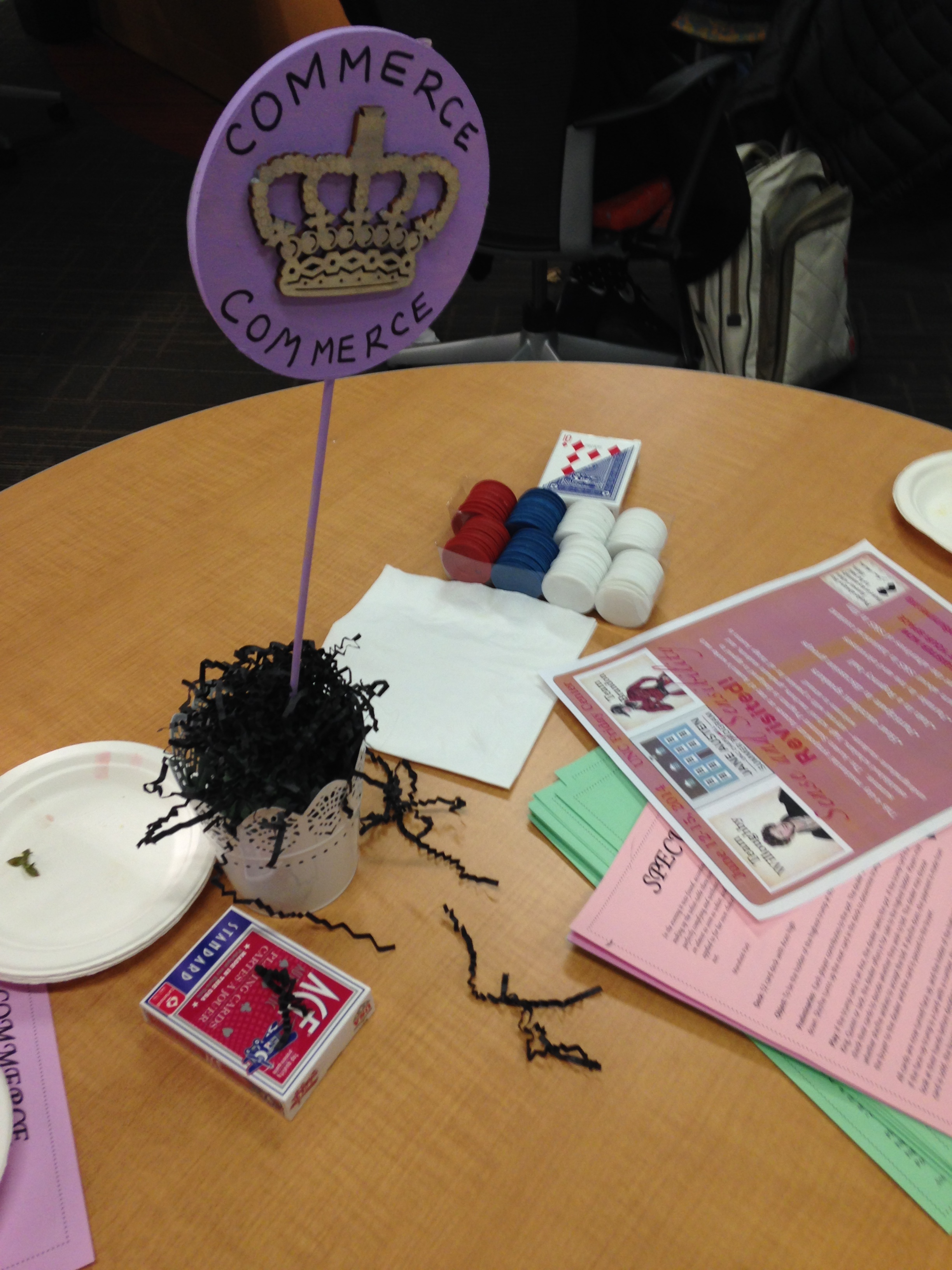
Attendees played Regency Era card games involving game theory before the talk

By Olivia Zhu

“It is a great deal better to choose than to be chosen.” –Jane Austen, in Emma.

Jane Austen — novelist, romantic, and social critic — can now add another title to her repertoire: game theorist.

This role has been bestowed upon her by Michael Chwe, a game theorist in the Department of Political Science at UCLA and author of the book Jane Austen, Game Theorist. Chwe claims that Austen acts as a social scientist by setting up a theoretical framework for game theory in her novels. In his talk to a lively crowd well-versed in Austen’s works on March 25th, Chwe explained Austen’s uncanny emphasis on choice, preference, and strategic thinking.

map

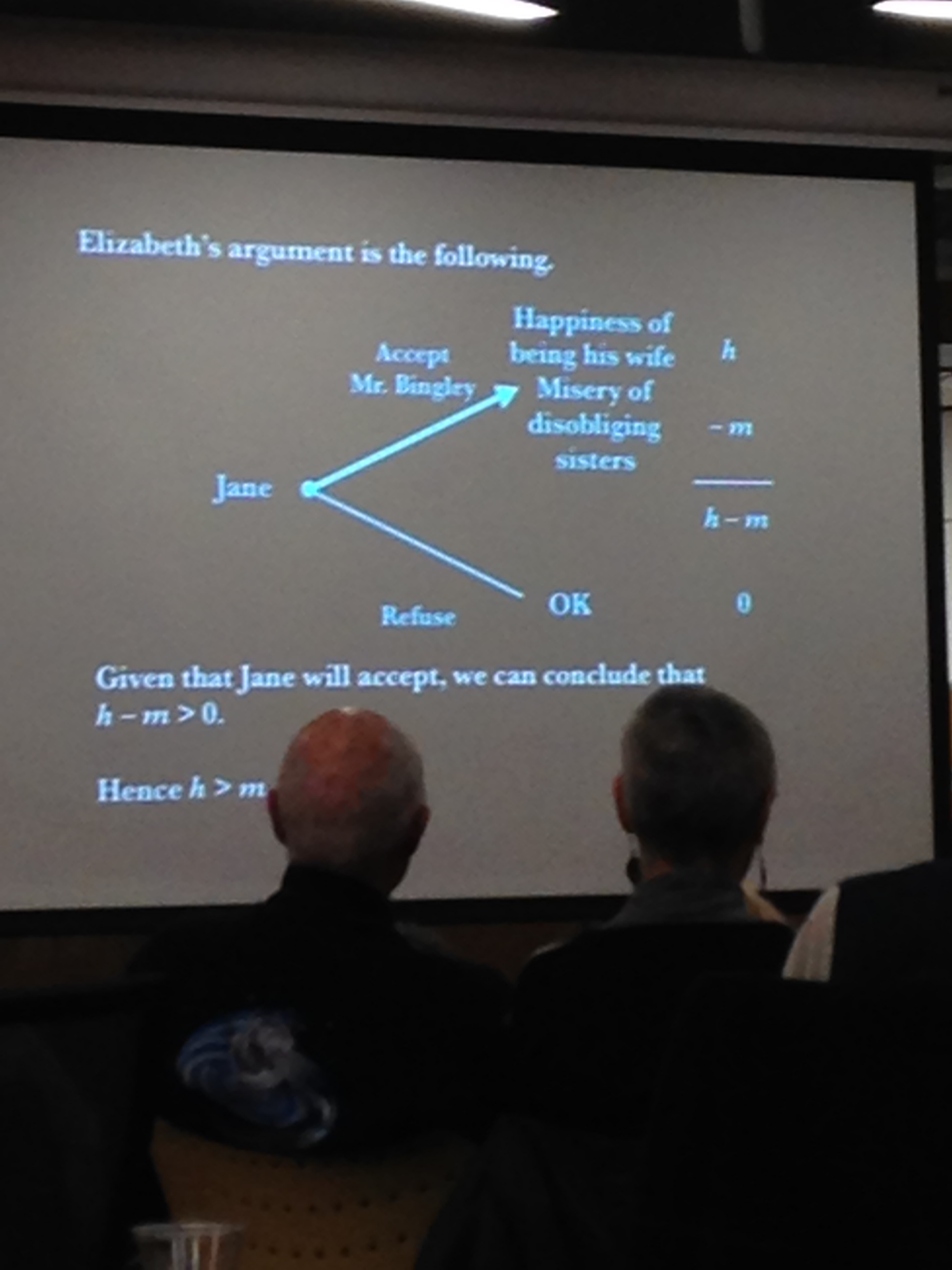
Chwe’s illustration of Jane’s choices and commensurability analysis in Pride and Prejudice

According to Chwe, Austen does not attribute actions to random variables, but rather to careful consideration of all alternatives. For example, Fanny Price in Mansfield Park chooses to refuse Henry Crawford’s offer of marriage after weighing her options; she does so entirely out of personal preference. Similarly, a major tenet in game theory is that the individual chooses what she wants to do without much consideration past her own wishes. Chwe said that Austen places a criticism on game theory here, when Fanny’s uncle, Sir Thomas, chastises Fanny being selfish instead of marrying Henry for the family’s financial security.

Chwe also introduced the game theory concept commensurability, in which negative factors are literally subtracted from positive factors in a decision to produce a single number of utility. He stated that Austen’s language, including phrases such as “finely checkered” happiness, “two

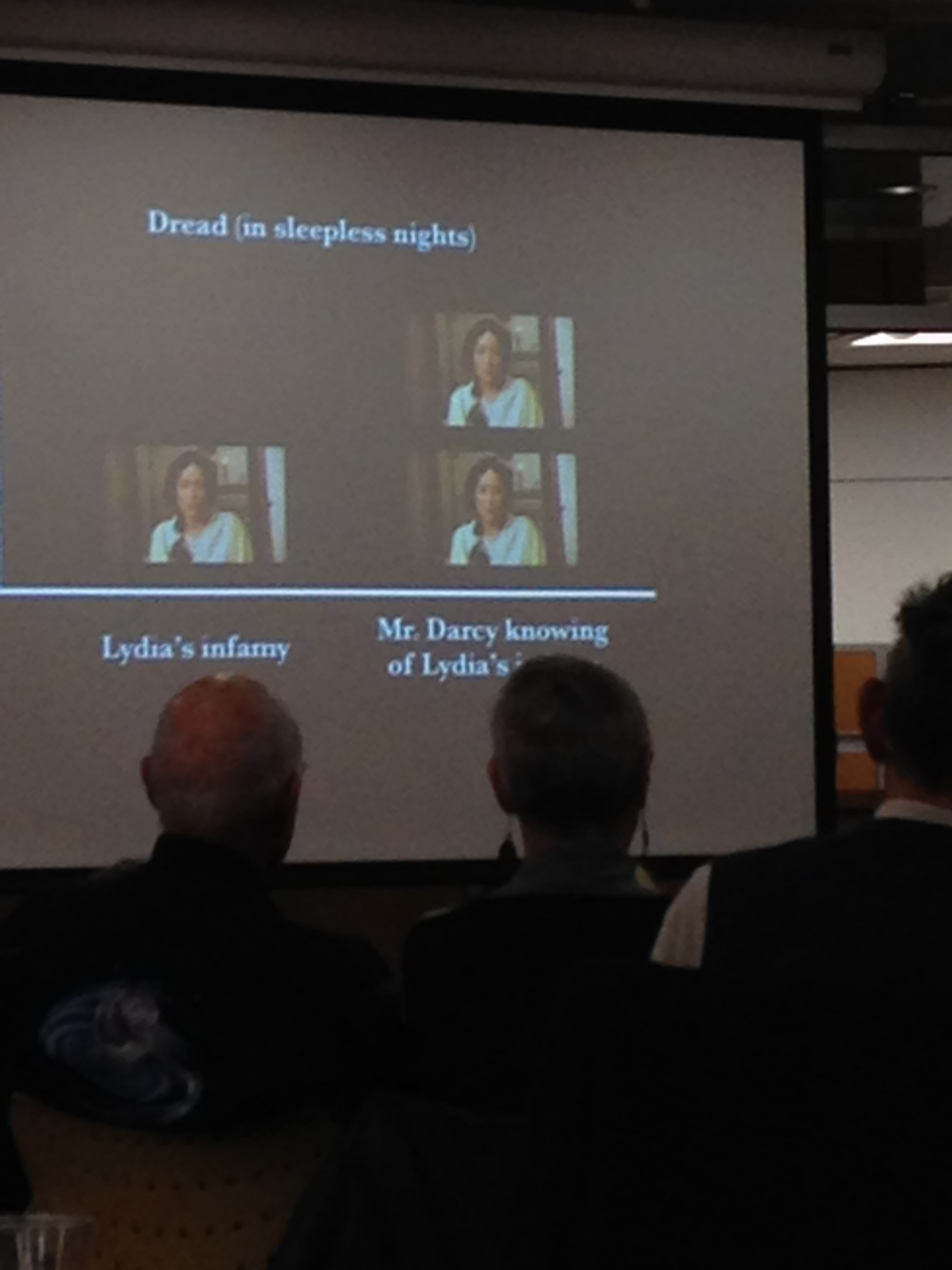
Chwe's playful histogram of Elizabeth Bennet's quantification of emotion.

Chwe’s playful histogram of Elizabeth Bennet’s quantification of emotion.

pleasures, however unlike in kind,” and “on the whole, no cause to repine,” clearly illustrate Austen’s intent to quantify emotions for commensurability.

Finally, Chwe pointed out the bounty of strategic thinking, another element of game theory, present in Austen’s novels. Austen does not portray calculation as unnatural or cold, he says. She mentions the word “scheme” 126 times, “contrive” 54 times, “foresight” 49 times, and “calculate” 41 times. Her strong, female characters often pride themselves on their ability to anticipate others’ actions.

Chwe concluded that though there is no direct evidence that Austen infused game theory into her novels, she clearly explores the concept of choice in her work.

Page 12 of 20

Powered by WordPress & Theme by Anders Norén