
Following the people and events that make up the research community at Duke

Students exploring the Innovation Co-Lab

Category: Biology Page 23 of 32

Pursuit Of Bird Brains Takes Researchers Back 66 Million Years

A handful of bird species survived the K-T extinction. Chicken genomes have changed the least since that terrible day.

A handful of bird species survived the K-T extinction. Chicken genomes have changed the least since that terrible day.

By Karl Leif Bates

In the beginning was the Chicken. Or something quite like it.

At that moment 66 million years ago when an asteroid impact caused the devastating Cretaceous–Tertiary (K-T) extinction, a handful of bird-like dinosaur species somehow managed to survive.

The cataclysm and its ensuing climate change wiped out much of Earth’s life and brought the dinosaurs’ 160-million-year reign to an end.

But this week, the genomes of modern birds are telling us that a few resourceful survivors somehow scratched out a living, reproduced (of course), and put forth heirs that evolved to adapt into all the ecological niches left vacant by the mass extinction. From that close call, birds blossomed into the more than 10,000 spectacularly diverse species we know today.

Erich Jarvis

Erich Jarvis

Not all birds are descended from chickens, but it’s true that chicken genes have diverged the least from the dinosaur ancestors, says Erich Jarvis, an associate professor of neurobiology in the Duke Medical School and Howard Hughes Medical Institute Investigator.

He’s one of the leaders on a gigantic release of scientific data and papers that tells the story of the plucky K-T survivors and their descendants, redrawing many parts of the bird family tree.

From giant, flightless ostriches to tiny, miraculous hummingbirds, the descendants of those proto-birds now rule over the skies, the forests, the cliff-faces and prairies and even under water. While other birds were learning to reproduce songs and sounds, hover to drink nectar, dive on prey at 230 miles per hour, run across the land at 40 miles per hour, migrate from pole to pole or spend months at sea out of sight of land, the chickens just abided, apparently.
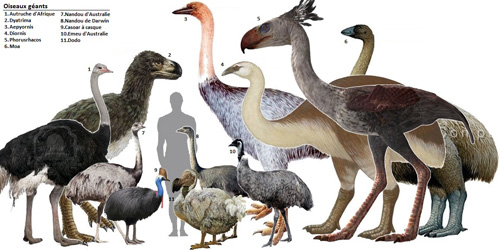
terror birds

Sweet little chickadees had a very big, very scary cousin. “Parrots and songbirds and hawks and eagles had a common ancestor that was an apex predator,” Erich Jarvis says. “We think it was related to these giant ‘terror birds’ that lived in the South American continent millions of years ago.”

The new analyses released this week are based on complete-genome sequencing done mostly at BGI (formerly Beijing Genomics Institute). and DNA samples prepared mostly at Duke. The budgerigar, a parrot, was sequenced at Duke. There are 29 papers in this first release, but many more will tumble out for years to come.

“In the past, people have been using 1, 2, up to 20 genes, to try to infer species relationships over the last 100 million years or so,” Jarvis says. But whole-genome analysis drew a somewhat different tree and yielded important new insights.

More than 200 researchers at 80 institutions dove into this sea of big data like so many cormorants and pelicans, coming up with new insights about how flight developed and was lost several times, how penguins learned to be cold and wet and fly underwater and how color vision and bright plumage co-evolved.

The birds’ genomes were found to be pared down to eliminate repetitive sequences of DNA, but yet to still hold microchromosomal structures that link them to the dinosaurs and crocodiles.

The sequencing of still more birds continues apace as the Jarvis lab at Duke does most of the sample preparation to turn specimens of bird flesh into purified DNA for whole-genome sequencing at BGI. (More after the movie!)


As one of three ring-leaders for this massive effort, Erich Jarvis is on 20 papers in this first set of findings. Eight of those concern the development of song learning and speech, but the other ones are pretty cool too:

Evidence for a single loss of mineralized teeth in the common avian ancestor. Robert W. Meredith, et al. Science. Instead of teeth, modern birds have a horny beak to grab and a muscular gizzard to “chew” their food. This analysis shows birds lost the use of five genes related to making enamel and dentin just once about 116 million years ago.

Complex evolutionary trajectories of sex chromosomes across bird taxa. Qi Zhou, et al. Science. The chromosomes that determine sex in birds, the W and the Z, have a very complex history and more active genes than had been expected. They may hold the secret to why some birds have wildly different male and female forms.

Three crocodilians genomes reveal ancestral patterns of evolution among archosaurs. Richard E Green, et al Science. Three members of the crocodile lineage were sequenced revealing ‘an exceptionally slow rate of genome evolution’ and a reconstruction of a partial genome of the common ancestor to all crocs, birds, and dinosaurs.

Evidence for GC-biased gene conversion as a driver of between-lineage differences in avian base composition. Claudia C. Weber, et al, Genome Biology. The substitution of the DNA basepairs G and C was found to be higher in the genomes of birds with large populations and shorter generations, confirming a theoretical prediction that GC content is affected by life history of a species.

Low frequency of paleoviral infiltration across the avian phylogeny. Jie Cui, et al. Genome Biology. Genomes maintain a partial record of the viruses an organism’s family has encountered through history. The researchers found that birds don’t hold as much of these leftover bits of viral genes as other animals. They conclude birds are either less susceptible to viral infection, or better at purging viral genes.

Genomic signatures of near-extinction and rebirth of the Crested Ibis and other endangered bird species. Shengbin Li, et al Genome Biology. Genomes of several bird species that are recovering from near-extinction show clues to the susceptibilities to climate change, agrochemicals and overhunting that put them in peril. This effort has created better information for improving conservation and breeding these species back to health.

Dynamic evolution of the alpha (α) and beta (β) keratins has accompanied integument diversification and the adaptation of birds into novel lifestyles. Matthew J. Greenwold, et al. BMC Evolutionary Biology.  Keratin, the structural protein that makes hair, fingernails and skin in mammals, also makes feathers. Beta-keratin genes have undergone widespread evolution to account for the many forms of feathers and claws among birds.

Comparative genomics reveals molecular features unique to the songbird lineage. Morgan Wirthlin, et al. BMC Genomics. Analysis of 48 complete bird genomes and 4 non-bird genomes identified 10 genes unique to the songbirds, which account for almost half of bird species today. Two of the genes are more active in the vocal learning centers of the songbird brain.

Reconstruction of gross avian genome structure, organization and evolution suggests that the chicken lineage most closely resembles the dinosaur avian ancestor. Michael N. Romanov, et al. BMC Biology. Of 21 bird species analyzed, the chicken lineage appears to have undergone the fewest changes compared to the dinosaur ancestor.

Two Antarctic penguin genomes reveal insights into their evolutionary history and molecular changes related to the cold aquatic environment. Cai Li, et al. Gigascience. The first penguins appeared 60 million years ago during a period of global warming. Comparisons of two Antarctic species show differences and commonalities in gene adaptations for extreme cold and underwater swimming.

Evolutionary genomics and adaptive evolution of the hedgehog gene family (SHH, IHH, and DHH) in vertebrates. Joana Pereira, et al. PLoS ONE. Whole-genome sequences for 45 bird species and 3 non-bird species allow a more detailed tracing of the evolutionary history of three genes important to embryo development.
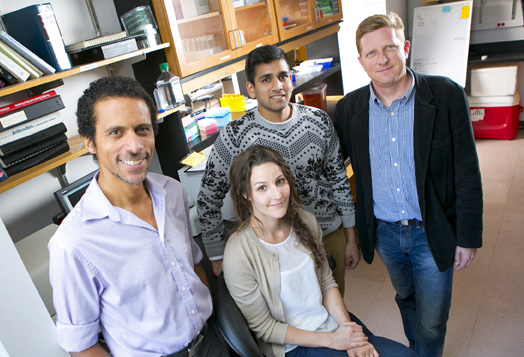
A Duke lab led the effort to isolate bird DNA for sequencing at BGI: (L-R) Erich Jarvis, associate professor of neurobiology and Howard Hughes Medical Institute investigator, lab research analyst Carole Parent, undergraduate research assistant Nisarg Dabhi, and research scientist Jason Howard. (Duke Photo, Les Todd)
A Duke lab led the effort to isolate bird DNA for sequencing at BGI: (L-R) Erich Jarvis, associate professor of neurobiology and Howard Hughes Medical Institute investigator, lab research analyst Carole Parent, undergraduate research assistant Nisarg Dabhi, and research scientist Jason Howard. (Duke Photo, Les Todd)
How To Get Your Foot In The Door At A Research Lab

By: Thabit Pulak

So now you are at Duke — one of the world’s best research universities — but now what? You might be taking cool classes, but how can you take advantage of the world-class research happening here? Roughly 50 percent of Duke undergrads do so at some point. Getting involved in research as a freshman might sound intimidating (I know it did to me!), but a little luck and perseverance can get you off to a strong start.

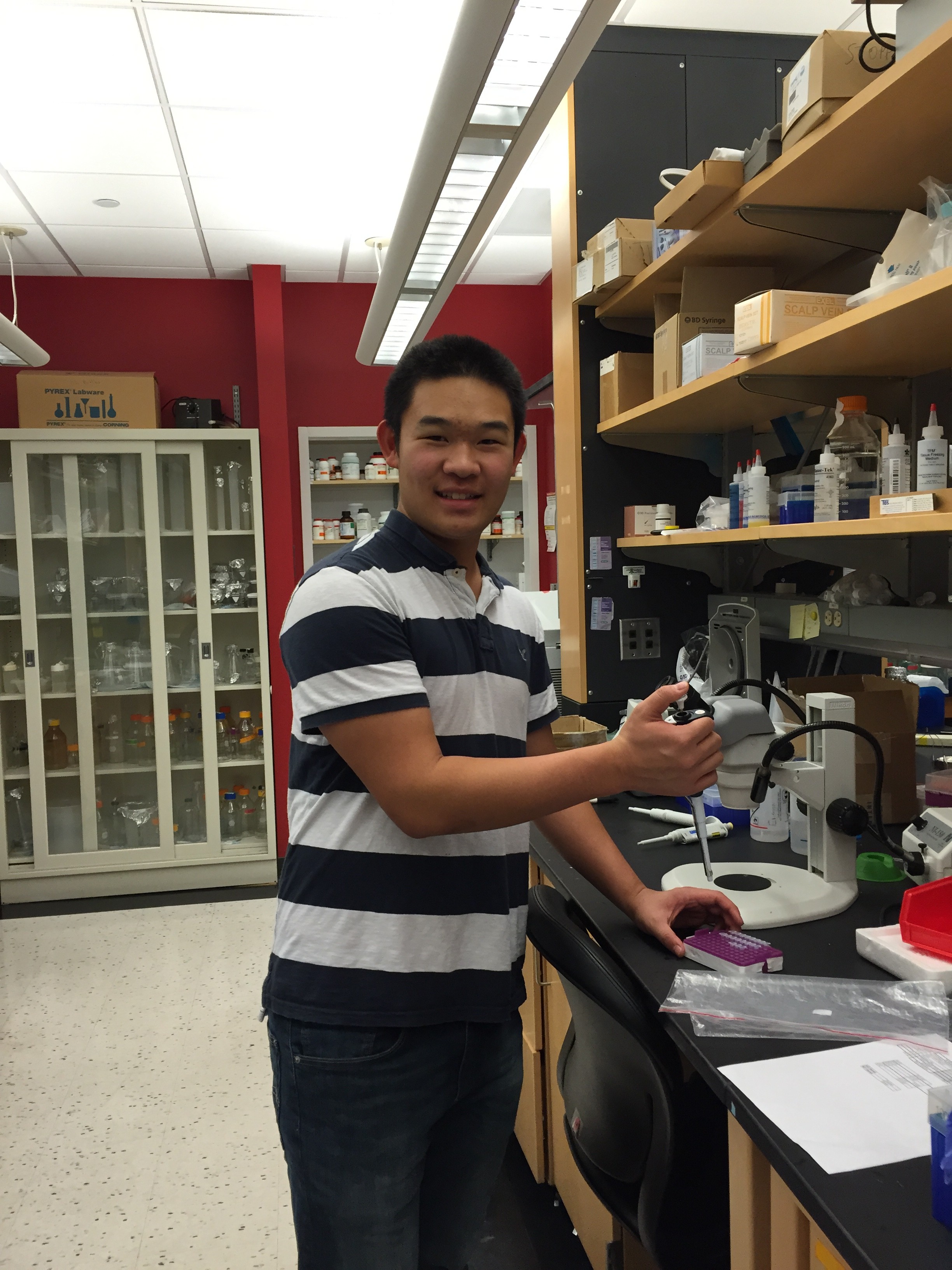
Alan working in Dr. Eroglu's laboratory.

Alan working in Dr. Eroglu’s laboratory.

I had the opportunity to talk with Duke freshman Alan Kong about his experiences trying to get into research labs, and how he successfully ended up finding one to join. Alan is considering majoring in biology whilst on the premed track.

He initially started to look into labs within a month of  starting classes at Duke. He spent about two months sending out emails to professors who were working on interesting projects.

“It was a very frustrating search, and initially difficult. I emailed five professors, and emailed each many times,” Alan said. “But perseverance ultimately paid off.”

Alan now works in the lab of Dr. Eroglu who is an assistant professor of cell biology, associated with the Duke School of Medicine. According to the Duke Institute of Brain Science website description, Eroglu’s laboratory “is interested in understanding how central nervous system (CNS) synapses are formed.”

Alan was also accepted into two others labs, but ultimately felt Dr. Eroglu was the best fit. “I picked Eroglu because her research was very interesting, and relevant to my interests,” Alan says. “I felt I could learn more interesting techniques in research, such as working with live animals.”

Now, Alan has been working in Dr. Eroglu’s lab for a month. When I asked him how it was going, with a smile he exclaimed, “It’s great!”

“Right now I am learning techniques such as genotyping, western blot. I even took out the retina of a rat!” Alan said. “I am learning the ropes of the lab, and my mentor said that down the road, if I learn properly, I can eventually work on my own independent project!”

When asked for any advice for other students thinking of getting into research, Alan said “Persistence is key — don’t give up! It’s a difficult process; don’t let small things get in the way. Keep trying until you find one.”

Alan

“Persistence is key – don’t give up!” Alan says

Learn more:

More information regarding Dr. Eroglu and her research: http://www.dibs.duke.edu/research/profiles/46-agla-eroglu

List of all Duke Faculty affiliated with Cell Biology with contact details: http://www.cellbio.duke.edu/all-faculty/

Summer research opportunities in math and statistics: http://bigdata.duke.edu/research/?field_project_topics_tid=19

Research opportunities in biology: http://cubr.biology.duke.edu/projects

For other research and summer opportunities visit https://biology.duke.edu/undergraduate/current-students/research-independent-study/summer-opportunities

For a list of research opportunities across the sciences, arts, humanities and social sciences visit: http://undergraduateresearch.duke.edu/uploads/media_items/summer-2015-funding-opps.original.pdf


More Elephants Means Fewer Trees in Kruger National Park

By Duncan Dodson

Imagine learning research methods while also getting charged by a rhino, observing a pride of lions hunting warthogs, and glimpsing a cheetah and her cub.

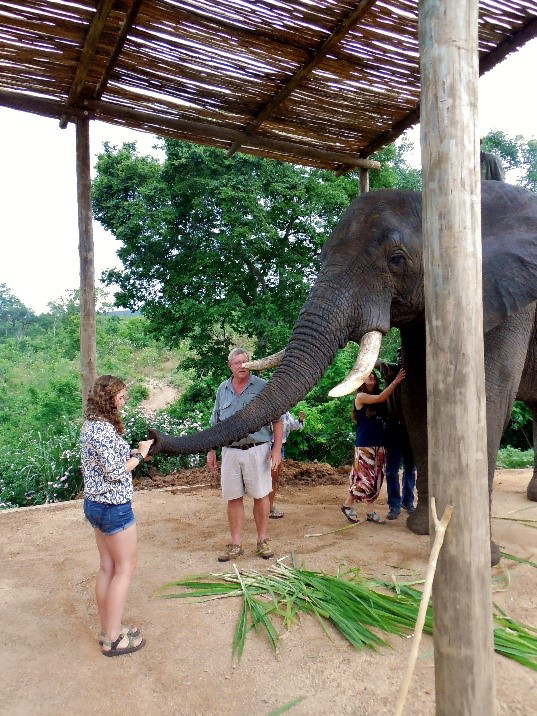
Lizzie feeding an elephant in Kruger National Park in South Africa. Her research attempted to map woody tree coverage in a section of the park since rising elephant populations has resulted in the destruction of woody trees.

Lizzie feeding an elephant in Kruger National Park in South Africa. Her research attempted to map woody tree coverage in a section of the park since rising elephant populations has resulted in the destruction of woody trees.

Elizabeth “Lizzie” Hoerauf experienced this last summer with five other students from Yale, Vanderbilt, Duke, and Reed Universities. The Organization for Tropical Studies (OTS) brought them to Kruger National Park in South Africa, charging them with researching various plants and animals in the park — with a primary focus on the effects of the park’s growing elephant population.

Culling of elephants – i.e., reducing their populations by selective slaughter — has been banned since 1994, resulting in a significant increase in the elephant population. This seems admirable, yet as the increasingly abundant massive animals roam the savanna they knock down more trees. Fewer trees across the park means lower habitat diversity for the park’s other plants and animals.

Lizzie’s project laid the groundwork for other students’ surveying efforts. To map woody cover, Lizzie took overhead images from previous park data of one of the four supersites that make up the park and overlaid them using Geographic Information Systems (GIS) software.

Her project did not come without its struggles. One moment she would emerge from her tent with a look of triumph telling her peers, “Guys look how amazing this is!” The next, disgruntled and lamenting, “Everything crashed….” However, her ultimately successful data consolidation demonstrated that less than ten percent of the area she studied was now populated with tall trees — a significant decrease from years past.

With some time to reflect Lizzie says that she learned more from this project than in the classroom. When I asked her if she had interests in returning to project in the future she noted a preference to pursue field research projects of her own. Lizzie did let me know that OTS is a wonderful program that Duke offers — it felt rewarding to be a small part of a massive and constantly evolving field research project.

Using Geographic Information Systems (GIS) software, Lizzie was able to map out and analyze woody tree cover for one of the supersites of the park. Her analysis found approximately 6 percent of the supersite to be covered by tall trees, much lower than previous years (12 percent in 1940 or 9 percent in 1974).

Using Geographic Information Systems (GIS) software, Lizzie was able to map out and analyze woody tree cover for one of the supersites of the park. Her analysis found approximately 6 percent of the supersite to be covered by tall trees, much lower than previous years (12 percent in 1940 or 9 percent in 1974).

His Lab Work Makes Organic Chem More than a "Weed-Out"

By Lyndsey Garcia

“Hey, I ran one of those tests in my lab!” Zach whispered to me during biology lecture. I give him a sideways look, because I definitely didn’t recall running a Southern blot in our assigned lab section. But then I realized that he was referring to the lab that he works in on campus.

Zachary Visco presenting research at the Duke Cancer Institute Annual Retreat

Zachary Visco presenting research at the Duke Cancer Institute Annual Retreat

Zachary Visco is a sophomore biomedical engineering major on the pre-health track. After hours of hunting through job listings and emailing lab managers, he finally landed a position of working in an ovarian cancer research lab on campus led by Dr. Susan Murphy and Dr. Andrew Berchuck this past summer.

Having only a year of undergraduate education under his belt, he found some of the concepts and techniques in his new job over his head.

“I had no idea what I was doing. I didn’t have any lab experience, but my boss, Dr. Zhiqing Huang, was very patient and walked me through everything,” Zach explained.

As Zach gained more experience in the lab, he started performing more experiments and gaining more responsibility. He would typically perform experiments that ranged from Western Blots, to cDNA preps, to real-time PCR. He was started to gain knowledge of how the pieces worked, but didn’t understand everything behind the science. However, Zach found in his class lectures, he was actually learning about concepts that pertained to his lab.

“Biology has helped explain some of the terminology and processes performed in lab, and organic chemistry has helped explain how and why some of the reactions occur,” he said.

For instance, he learned about the significance of cDNA and the information that can be determined from it. In his lab, he learned that running cDNA preps involved transcribing cDNA from mature RNA in order to perform a real-time PCR. In biology lecture, he learned why his lab would use cDNA instead of normal template DNA because mature RNA only expresses the exon, or the actual genes in our DNA, therefore the cDNA would only express the genes as well.

“I had hoped that I would eventually gain an understanding of the lab work during my undergrad, but when I first started, it all seemed very overwhelming,” Zach said. “I was pleasantly surprised when I found that I could actually apply knowledge from my classes to my work. It made it seem like I was finally learning material that could pertain to my career, not just trying to pass a weed-out class.”

Zach has found that working in the lab and the material taught in his classes has influenced his career path more than he realized. He had previously only imagined himself working in clinic-based research, but is now considering a path in lab-based research.

“I find lab research very interesting because it’s like a puzzle and you are trying to figure out the pieces as you go.”

Fruit flies get their close-up shot, Nobel style

By Robin Ann Smith

Any movie that begins with an extreme close-up of the back side of a fruit fly — the same kind found feeding on over-ripe tomatoes and bananas in your kitchen — may seem like an unlikely candidate for action blockbuster of the year. But this is no typical movie.

https://www.youtube.com/watch?v=fwzIUnKNw0s

Duke biologists Dan Kiehart and Serdar Tulu recorded this 3D close-up of a developing fly embryo using new super-resolution microscope technology developed by Eric Betzig, one of the winners of the 2014 Nobel Prize in Chemistry.

Cutting-edge microscopes available on many campuses today allow researchers to take one or two images a second, but with a new technique called lattice light-sheet microscopy — developed by Betzig and colleagues and reported in the Oct. 24, 2014, issue of Science — researchers can take more than 50 images a second, and in the specimen’s natural state, without smooshing it under a cover slip.

Kiehart and Tulu traveled to the Howard Hughes Medical Institute’s Janelia Farm research campus in Ashburn, Virginia, where the new microscope is housed, to capture the early stages of a fruit fly’s development from egg to adult in 3D.

Fruit fly embryos are smaller than a grain of rice. By zooming in on an area of the fly embryo’s back that is about 80 microns long and 80 microns wide — a mere fraction of the size of the period at the end of this sentence — the researchers were able to watch a line of muscle-like cells draw together like a purse string to close a gap in the fly embryo’s back.

The process is a crucial step in the embryo’s development into a larva. It could help researchers better understand wound healing and spina bifida in humans.

Their movie was assembled from more than 250,000 2D images taken over 100 minutes. The hundreds of thousands of 2D snapshots were then transferred to a computer, which used image-processing software to assemble them into a 3D movie.

“This microscope gives us the highest combination of spatial and temporal resolution that we can get,” Kiehart said.

Betzig won this year’s Nobel Prize for his work on techniques that allow researchers to peer inside living cells and resolve structures smaller than 200 nanometers, or half the wavelength of light — a scale once thought impossible using traditional light microscopes.

Even finer atomic-scale resolution has long been possible with microscopes that use beams of electrons rather than light, but only by killing and slicing the specimen first, so living cells and the tiny structures in motion inside them couldn’t be observed.

Betzig and collaborators Wesley Legant, Kai Wang, Lin Shao and Bi-Chang Chen of Janelia Farm Research Campus all played a role in developing this newest microscope, which creates an image using a thin sheet of patterned light.

The fly movie is part of a collection of videos recorded with the new technology and published in the Oct. 24 Science paper.

One video in the paper shows specialized tubes inside cells called microtubules — roughly 2,000 times narrower than a human  hair — growing and shrinking as they help one cell split into two.

Other videos reveal the motions of individual cilia in a single-celled freshwater creature called Tetrahymena, or cells of a soil-dwelling slime mold banding together to form multicellular slugs.

Kiehart and Tulu will be going back to Janelia Farm in January to use the microscope again.

“For this visit we’re going to zoom in to a smaller area to look at individual cells,” Tulu said.

“Waking up the morning of October 8 and hearing on the radio that our paper includes a Nobel Prize winner was pretty special,” Kiehart said.

CITATION: “Lattice light-sheet microscopy: Imaging molecules to embryos at high spatiotemporal resolution,” Chen, B.-C., et al. Science, October 2014. http://www.sciencemag.org/content/346/6208/1257998

The Science of Self-Agency: Dr. Nicolelis and the Walk Again Project

By Olivia Zhu

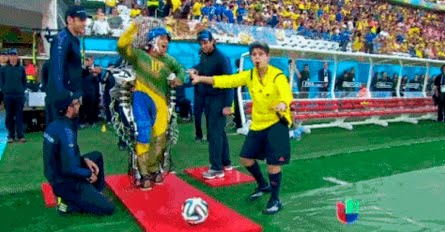
Screen grab from Univision of Juliano's robo-kick at the World Cup opening ceremony.

Screen grab from Univision of Juliano’s robo-kick at the World Cup opening ceremony.

Over the course of his 20-year career, Dr. Miguel Nicolelis has restored movement and self-agency to paraplegic patients.

On November 11th, as part of the Grand Challenge Seminar Series, Dr. Nicolelis captivated his audience by explaining the extensive process that culminated in Juliano, a Brazilian 29-year-old paralyzed from the chest downward in a car accident, performing the opening kick of the World Cup simply by using his mind.

Dr. Nicolelis has several faculty appointments in the Duke School of Medicine, Department of Psychology and Neuroscience, Institute for Brain Sciences, and Center for Neuroengineering. He has also written a book, Beyond Boundaries, about his work. His program, Walk Again, is supported by the Edmond and Lily Safia International Institute of Neuroscience in Brazil.

Dr. Nicolelis began making progress in 1999-2000 at Duke by developing electrodes that could record firing from multiple neurons. Using this technology, he determined which neurons were necessary for a monkey to move a joystick during a video game. Then, Dr. Nicolelis focused on creating a bypass that would bridge the mind directly to a computer, essentially removing the body as an intermediary.

He called this bypass a “Brain-Machine Interface,” or BMI, a term he coined at a cheese steak joint outside of Philadelphia. With the BMI, Dr. Nicolelis’s monkeys could play the video game without moving their arms or the joystick—they simply imagined themselves moving the joystick. The monkeys could even use their arms to do other tasks like eat or scratch themselves, creating a “third arm.”

Since then, with an extensive team of engineers, Dr. Nicolelis has implemented this technology by creating a IMG_1941hydraulically-powered exoskeleton that interprets a patient’s firing neurons and moves a patient’s legs accordingly.

He has also created artificial “skin,” which provides tactile feedback of movement to a patient’s upper body or, eventually, through an implant directly to the tactile cortex of the brain.

The technology is so accurate that patients report feeling “ghost limbs”—they believe that their legs are actually walking. The legendary Brazilian soccer player, Ronaldo, reportedly exclaimed “I’m moving!” with incredulity, when he was strapped to a chair testing Nicolelis’s technology.

Training with the exoskeleton also improves patients’ cardiovascular circulation, mental health, gastrointestinal health, and sensitivity in previously paralyzed areas.

Dr. Nicolelis is truly using science to stretch the boundaries of the human body.

World Domination in a Loaf of Bread

By Robin Smith

If baker’s yeast could take over the world, the bread leavener’s world domination might look like this time-lapse movie produced by a team led by Duke biologist Nicolas Buchler:

https://www.youtube.com/watch?v=bB331faPnJ0

Their report in the Nov. 5, 2014, issue of the journal Molecular Biology of the Cell shows time-lapse images of yeast cells under a microscope as one cell grows and divides into two, and two into four, and so on.

To watch the budding yeasts in action, the researchers inserted a gene for an enzyme that gives fireflies their characteristic yellow light into the yeasts’ DNA.

It normally takes one yeast cell about 90 minutes to grow and divide into two new cells. But in the time-lapse movie, the process is compressed into a few seconds.

The yellow dots show genes being turned on and off in the nucleus of each cell.

The approach allows scientists to track the activation and deactivation of genes over a tiny cell’s fast life cycle more accurately than standard labeling techniques using other glowing proteins, the researchers say.

CITATION: “Measuring fast gene dynamics in single cells with timelapse luminescence microscopy,” Mazo-Vargas, A., Park, H., Aydin, M. and N. Buchler. Molecular Biology of the Cell, November 5, 2014.

All Ears for Corn Genetics

By Nonie Arora

“Technology is progress” and “new is better” seem to be mantras in some fields of research. However, when it comes to fields of genetically modified corn, we might be wise to think otherwise.

20141024_174347

Dr. Mary Eubanks and Students at the Campus Farm. Credit: Nonie Arora

Duke biology professor Dr. Mary Eubanks spoke to a group of Duke students, community members, and a farmer from Togo about corn genetics in a workshop held Friday, Oct. 24 at the Duke Campus Farm. Dr. Eubanks founded her own seed genetics company (Sun Dance Genetics LLC) and is a leading advocate for changing the way we grow corn.

Dr. Eubanks became intrigued by the origins of corn while studying the origins of agriculture and the start of American civilization in an archaeology PhD program. She realized that she wouldn’t be able to answer her questions about what she considered to be this “great botanical mystery” without an understanding of genetics. To uncover this mystery, she pursued a postdoctoral program in corn genetics. Based on her experimentation, she developed the hypothesis that maize domestication involved something called intergeneric hybridization, or crossing between plants in different genera.

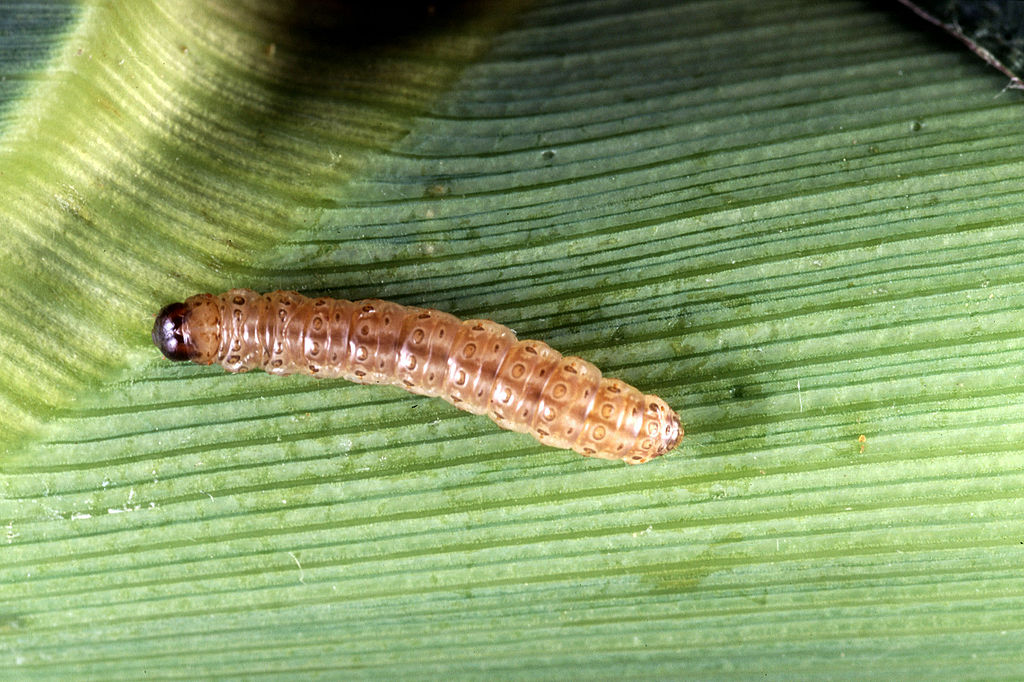
European Corn Borner attacks Maize. Credit: Wikimedia commons

European Corn Borner attacks Maize. Credit: Wikimedia commons

During her career, Dr. Eubanks also worked in regulatory affairs and learned about the devastating effects of chemical pesticides. She became an advocate for sustainable agriculture: finding ways to develop pest-resistant corn without genetic engineering. She has successfully transferred natural resistance to the worst insect pests of corn — corn rootworm and European corn borer.

In contrast to using natural breeding methods to create new lines of corn, genetically modifying organisms could have negative effects on human health, according to Dr. Eubanks. Dr. Eubanks believes that the inserter and promoter sequences that are used to get the genes to express the foreign proteins can lead to antibiotic resistance and intestinal issues for humans.

The group was surprised by her description of her own anaphylactic shock reaction to Bt-corn, a GMO. Her own personal history of the allergic reaction made her think of the potential reactions our bodies could be having to GMOs. Dr. Eubanks described how it was problematic that genes being introduced to the crop came from other organisms and that humans haven’t evolved a tolerance to the proteins the genes encode. This could lead to potential allergenicity in humans. According to Dr. Eubanks, it is possible that there has been horizontal gene transfer between plasmids — small molecules used to insert genes from one organism to the next — and the human gut.

When asked about the regulations regarding GMOs, Dr. Eubanks explained that the FDA is in charge of the labeling and GMOs are generally regarded as safe so long as they are substantially equivalent to the other food product. The industry is very opposed to the labeling of GMOs and 90% of the corn, cotton, and soy available has some GMO product in it, according to Dr. Eubanks. She believes that not enough is being done to regulate the industry.

We were intrigued by her discussion of food security and funding for interventions. She described that a lot of international work on food security highly promotes technology and the big industry agricultural model. Dr. Eubanks believes we need to change our paradigm from thinking that the most advanced technological options are always best to considering an ecological intensification approach. Such an approach seeks to design more productive, sustainable production systems that are well suited to their environments by better understanding how nature functions. Her current work is helping bring food security to South Sudan through corn that is pest-resistant and drought-tolerant.


A scientist’s unlikely path, with Duke Provost Sally Kornbluth

By Robin Smith

Many scientists have an inkling of their path at an early age, having spent their childhoods breeding hamsters for fun, or conducting backyard experiments on earthworms.

Not so for Duke Provost and cell biologist Sally Kornbluth.

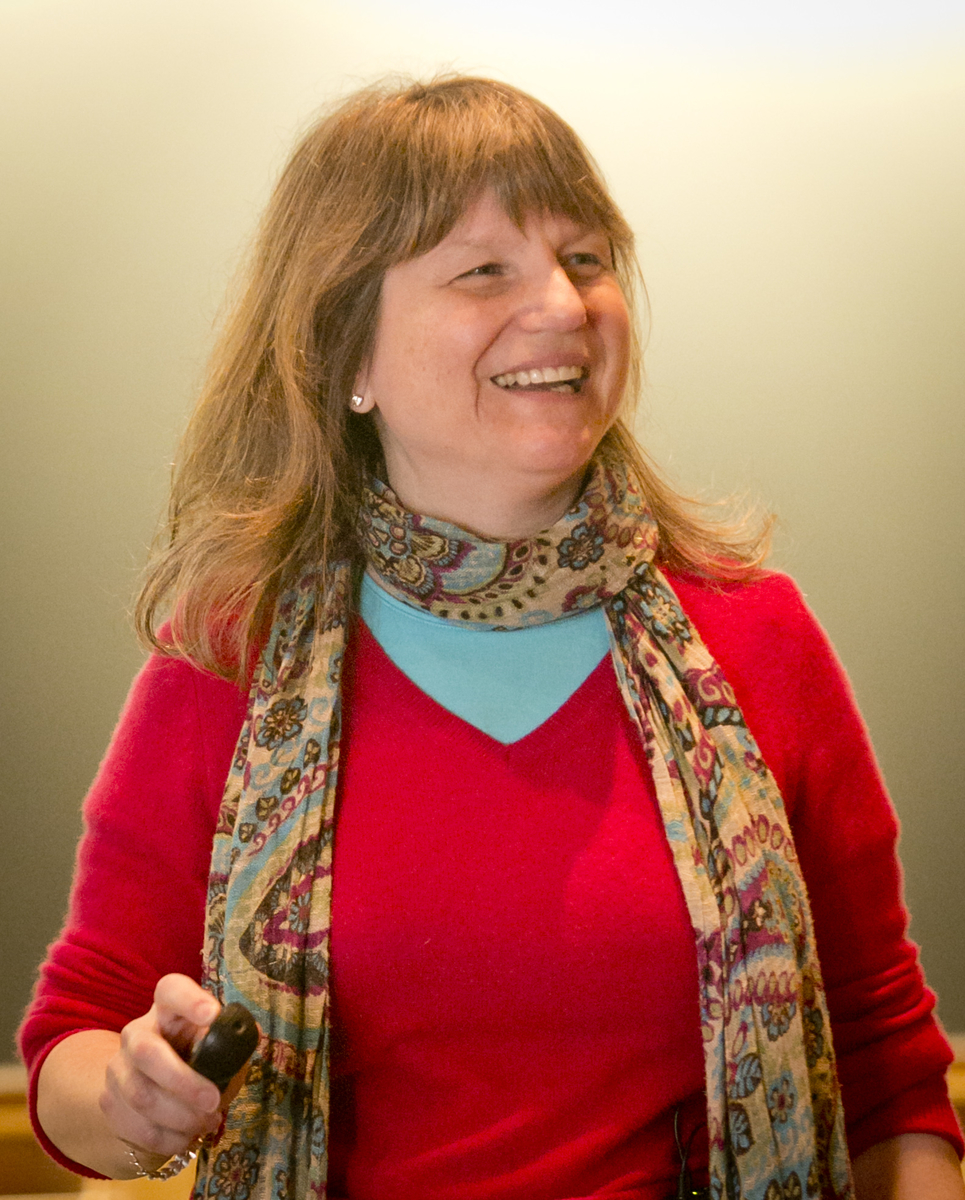
Provost Sally Kornbluth delivers her lecture, "What Makes Me a Scientist," at Love Auditorium.

Provost Sally Kornbluth delivers her lecture, “What Makes Me a Scientist,” at Love Auditorium.

“Science wasn’t a part of my upbringing at all,” said Kornbluth, who grew up in Fair Lawn, New Jersey, a small suburb 25 miles outside of New York City. Her mother was an opera singer.

“My mother once played Queen Elizabeth at the Metropolitan Opera. I can tell you she certainly wouldn’t have let us bring something like a worm or a hamster into the house.”

In an October 30 talk hosted by the Duke BioCoRE program, Kornbluth shared this story and the unlikely path she took to becoming a scientist and the lessons she learned along the way.

As an undergraduate at Williams College, Kornbluth majored in political science. She remembers leading a tour group through the science quad as a freshman tour guide and thinking, “I’ll never take a class here.”

“The only reason I signed up for my first science course — a class on human biology and social issues taught by a professor named Bill DeWitt — was I thought it would be a relatively painless way to satisfy the graduation requirements,” she said.

Things changed once she started the course. “That’s when I realized, wow, science is about asking interesting questions and solving puzzles and finding out how things work. Having a set of facts was only the starting point.”

She describes DeWitt as the best teacher she’s ever had. “The impact of teachers who influenced me along the way was really profound,” she said.

After graduating from college in 1982 she considered applying to medical school. But then she received a scholarship to go to Cambridge University in England for two years, where she earned a second bachelor’s degree in genetics.

148814_provstlec010“One of the formative things about that time was we were forced to read a lot of journal articles. The science textbooks I’d read gave the impression that experiments always work so cleanly and beautifully. But reading scientific papers helped me realize that things aren’t as neat, and not everyone agrees with each other.”

She also learned a lesson about remembering the big picture.

“Especially if you’re doing experiments that are long and involved, you have to be motivated by the idea behind the experiment, not by the actual physical things you’re doing every day,  because often they’re pretty mundane. When you’re doing lab work in molecular biology it’s hard to get excited about doing one hundred mini-preps.”

Kornbluth took these lessons with her to graduate school. She earned a Ph.D. in molecular oncology from Rockefeller University in 1989, and did postdoctoral training at the University of California, San Diego.

She joined the Duke faculty in 1994, along with her husband, Daniel Lew, Ph.D., both as professors of pharmacology and cancer biology at Duke Medicine.

“We got lucky because we both worked on aspects of the cell cycle, which was a super hot field at the time,” she said.

Her recent research aims to identify the molecular signals that tell tumor cells to divide or die, which may help explain why some cancers fail to respond to chemotherapy. The work could point to new ways of overcoming drug resistance in breast, pancreatic and other cancers.

For Kornbluth, one of the biggest joys of being a scientist is the camaraderie and the collaborative nature of the work. “Maybe that’s why I went into administration,” she says.

Kornbluth served as vice dean for basic science at Duke Medicine from 2006 to 2014.

This June, she succeeded 15-year-veteran Peter Lange as provost, the chief academic officer at Duke. She is the first woman to hold the post.

148814_provstlec015


Scents Are Key to Lemur Nightlife

LEMUR SUPERPOWER #457:  Some lemurs can safely digest cyanide in amounts sufficient to kill an elephant. Others can enter hibernation-like states to survive periods when food and water are in short supply. To add to their list of superpowers, lemurs also have especially keen powers of scent.

Buried in the nose of Fuggles the mouse lemur are specialized pheromone receptors that help her distinguish friend from foe in the dark of night, when mouse lemurs are active.

By Robin Ann Smith

If you could pick one superpower, consider taking inspiration from lemurs. Some lemurs can safely digest cyanide in amounts that would kill an elephant. Others can enter hibernation-like states to survive periods when food and water are in short supply. Still others have keen powers of scent, with the ability to find mates and avoid enemies in the darkness by smell alone.

Research by biologist and Duke Lemur Center director Anne Yoder suggests that the molecular machinery for sniffing out pheromones — much of which has gone defunct in humans and many other primates — is still alive and well in lemurs and lorises, our distant primate cousins.

Lemurs use scents to mark the boundaries of their territories, distinguish males from females and figure out whether another animal is friend or foe. When a lemur gets a whiff of another animal, specialized pheromone receptors in the lining of the nose transmit the information to the brain, triggering instinctive urges like mating, defense and avoiding predators.

The receptors are proteins encoded by a family of genes called V1Rs. First identified in rats in the mid-1990s, V1R genes are found in animals ranging from lampreys to humans. But the proportion of these pheromone-detection genes that actually functions varies greatly from one species to the next, Yoder said last week in a roundtable discussion hosted by Duke’s Science & Society program.

Randy the ring-tailed lemur scent-marks his territory. Photo by David Haring.

Randy the ring-tailed lemur scent-marks his territory. Photo by David Haring.

Studies suggest that as much as 90% to 100% of the pheromone-detection genes in humans consist of disabled pieces of DNA, called pseudogenes.

“Our pheromone-detection genes are so boring — we don’t have many of them, and almost all of them are broken,” Yoder said.

But in lemurs and lorises — whose ancestors split off from the rest of the primate family tree more than 60 million years ago — the proportion of pheromone-detection genes that is still intact is much higher.

In a study published this year, Yoder and colleagues analyzed the DNA of 19 species and subspecies of lemurs and lorises, looking for subtle differences in their V1R genes. They found that one group — the mouse lemurs — has the highest proportion of intact V1R sequences of any mammal yet studied.

To find out which genes are linked to which scents, Yoder and her colleagues plan to take DNA sequences from pheromone-detecting genes in lemurs, insert them into mice, and expose the mice to different scents to see how they respond.

An ability to sniff out the right mates — and avoid being seduced by the wrong suitors — may have served as a mating barrier that allowed lemur species to diverge after arriving in their island home of Madagascar, helping to explain how the more than 70 living species of lemurs came to be, Yoder says.

Page 23 of 32

Powered by WordPress & Theme by Anders Norén