Following the people and events that make up the research community at Duke

Students exploring the Innovation Co-Lab

Category: Biology Page 21 of 32

Outsmarting HIV With Vaccine Antigens Made to Order

AIDS vaccine researchers may be one step closer to outwitting HIV, thanks to designer antibodies and antigens made to order at Duke.

HIV was identified as the cause of AIDS in 1983. Despite decades of progress in understanding the virus, an effective vaccine remains elusive.

The lack of success is partly due to HIV’s uncanny ability to evade the immune system.

IMG_0674

Duke graduate student Mark Hallen and his advisor, Duke computer science and chemistry professor Bruce Donald. Hallen was awarded a 2015 Liebmann Fellowship for graduate studies.

Now, a team of researchers including Duke computer scientist Bruce Donald and graduate student Mark Hallen have published a 3-D close-up of a designer protein that, if injected into patients, could help the immune system make better antibodies against the virus — a step forward in the 30-year HIV vaccine race.

Led by structural biologist Peter Kwong at the Vaccine Research Center in Bethesda, Maryland, the team’s findings appeared online June 22 in the journal Nature Structural & Molecular Biology.

More than 35 million people worldwide are living with HIV, and about two million more people are infected each year.

Antiretroviral drugs can prevent the virus from reproducing in the body once someone is infected, but only a vaccine can stop it from spreading from one person to the next.

Vaccines work by triggering the immune system to make specialized proteins called antibodies, which prime the body to fight foreign substances. But in the case of HIV, not all antibodies work equally well.

One reason is that HIV is always mutating in the body.
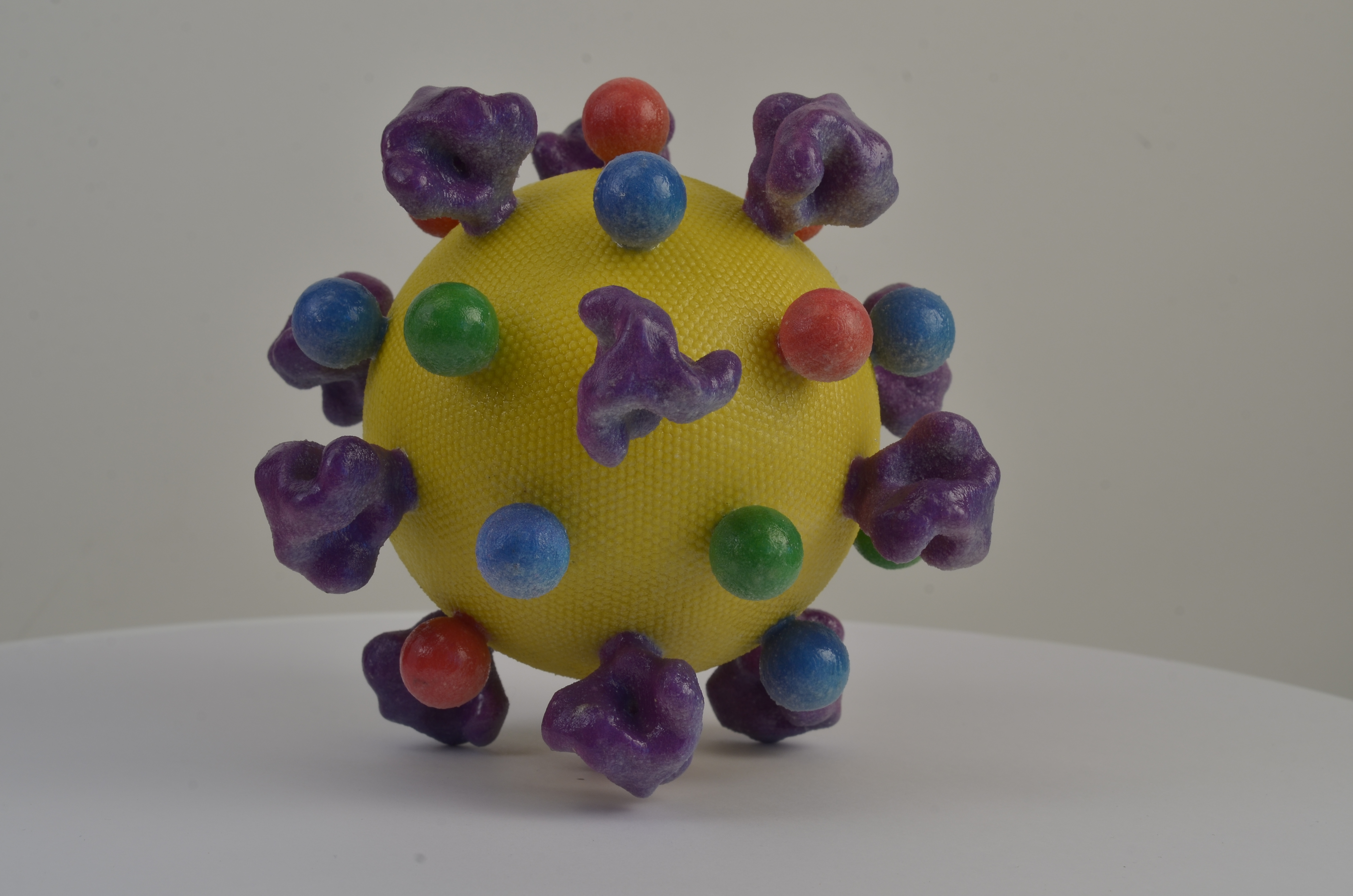
3D print of HIV. Thousands of times smaller than the width of a human hair, the virus is covered with proteins (purple) that enable it to enter and infect human cells. Photo by Daniel Mietchen via Wikimedia Commons.

3D print of HIV. In real life the virus is thousands of times smaller than the width of a human hair. HIV is covered with proteins (purple) that enable it to enter and infect human cells. Photo by Daniel Mietchen via Wikimedia Commons.

HIV incorporates its genetic material into the DNA of its host, hijacking the cell’s replication machinery and forcing it to make more copies of the virus. Each round of replication generates small genetic “mistakes,” resulting in slightly different copies that the host’s antibodies may no longer recognize.

Even before the body makes an antibody that works against one strain, the virus mutates again and makes a new one.

“It’s a race against a moving target,” said Hallen, who was also an undergraduate at Duke majoring in chemistry and mathematics.

In the early 1990s, researchers discovered that a tiny fraction of people infected with HIV are able to produce antibodies that protect against many different strains at once.

These “broadly neutralizing antibodies” fasten to the virus’s surface like a key in a lock and prevent it from invading other cells.

But HIV can evade detection by these powerful antibodies, as the part of its outer coat that is vulnerable to their attack is constantly changing shape.

To overcome this problem, first the researchers needed a close-up look at the region of interest — a spike-shaped virus protein known as Env — in its most vulnerable state.
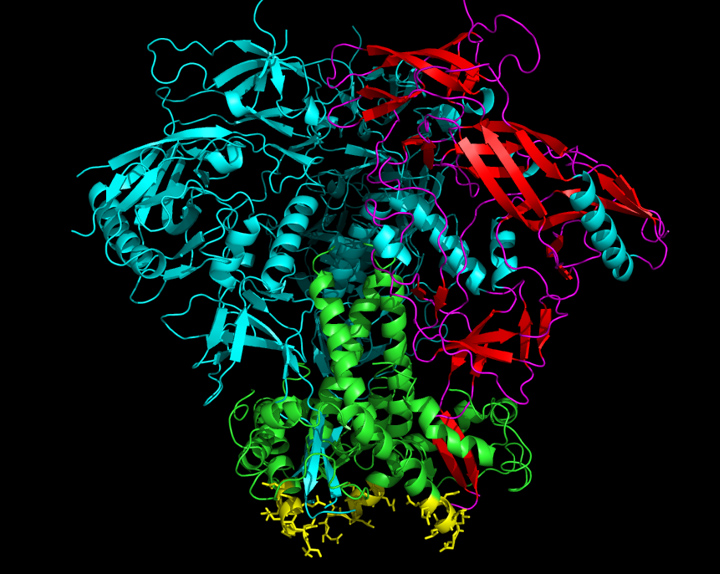
A 3-D closeup of a key virus protein frozen in a shape the researchers say could serve as a template for a vaccine. Image courtesy of Bruce Donald.

A 3-D closeup of a key virus protein frozen in a shape the researchers say could serve as a template for a vaccine. Image courtesy of Bruce Donald.

With this 3-D blueprint in hand, Hallen and former Duke PhD Ivelin Georgiev developed a scoring system and rated dozens of antibodies according to how well they bound to it. They confirmed that the specific conformation of the Env protein they identified was visible to effective antibodies but not ineffective ones.

The team then identified amino acid sequence changes that would freeze the protein in the desired shape.

Once locked in place, the researchers say, the protein could be injected into patients and used to coax their immune systems into preferentially churning out only the most effective antibodies.

“The idea is to ‘tie’ the protein so that it can’t transition to some other conformation and elicit ineffective antibodies as soon as the effective antibodies bind,” Donald said.

Support for this research included grants from the US National Institutes of Health, the US National Institutes of General Medical Sciences, the US National Institute of Heart, Lung and Blood, the US National Science Foundation and the Bill and Melinda Gates Foundation.

CITATION: “Crystal Structure, Conformational Fixation and Entry-Related Interactions of Mature Ligand-Free HIV-1 Env’,” Kwon, Y. et al. Nature Structural & Molecular Biology, June 22, 2015. DOI: 10.1038/nsmb.3051.

RobinSmith_hed100


Robin Smith joined the Office of News and Communications in 2014 after more than ten years as a researcher and writing teacher at Duke. She covers the life and physical sciences across campus.



Bird Consortium Wants to Run the Table

Just a few months after rolling out a huge package of studies on the genomics of 48 members of the bird family tree, an international consortium of scientists is announcing their new goal: sequencing all 10,000 species of birds in the next five years.

Erich Jarvis

Erich Jarvis is an associate professor of neurobiology in the medical school and a Howard Hughes Medical Institute investigator.

Called B10K for short, this effort should be the first attempt to sequence the genomes of all living species in a single class of vertebrates – and the most species-rich one at that.

The consortium announced their intentions in a letter appearing June 4 in Nature.

A genomic-level tree of life of the entire class should reveal links between genetic and phenotypic variation, perhaps reveal the evolution of biogeographical and biodiversity patterns across a wide-range of species, and maybe show the influences of ecology and human activity on species evolution.

But consortium co-leader, Erich Jarvis of Duke neurobiology, just loves birds for their minds. He is involved with the project to enhance his use of songbird brains as models of human speech.

Having proven the technical feasibility of the project and redrawn the bird phylogeny already, the consortium is now expanding to include experts in museum science, biogeography and ecology from the Kunming Institute of Zoology and Institute of Zoology of Chinese Academy of Science in Beijing; the Smithsonian Institution in the USA; and the Center of Macroecology, Evolution and Climate in Denmark. The complete list of contributing institutions and collaborators is listed on the B10K site.

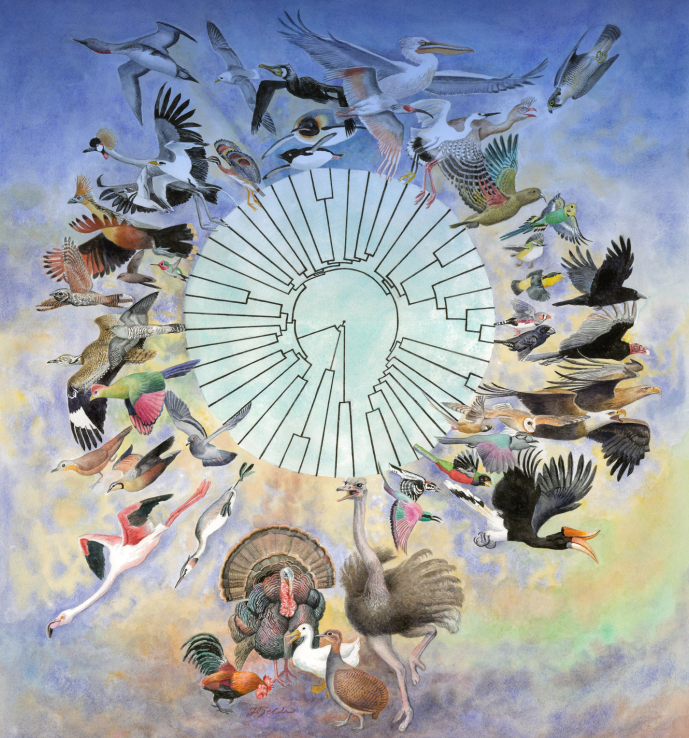
B10K bird phylogeny

The new bird family tree drawn on complete genome sequencing of 48 species representing each major order. Painting by Jon Fjeldså.

“Given the small size and less complex features of bird genomes relative to other vertebrates, the ongoing advances in sequencing technologies, and the extensive availability of high quality tissue samples from birds deposited in museums around the world, reaching this ambitious goal is not only possible but also practical,” the consortium said in a prepared statement.

We look forward to many more exciting findings from B10K, but hopefully not all at once like last time.

-By Karl Leif Bates

A Gutsy Approach to Lemur Science

By Sheena Faherty, biology Ph.D. candidate

Can the microorganisms living in a baby lemur’s gut help it grow up to be a vegetarian or an omnivore?

A new study appearing May 13 in Plos One shows that baby lemurs’ gut bacteria have different, diet-dependent strategies for reaching adult mixtures of microbes.  This, in turn, might contribute to why some lemurs are strictly leaf-eaters, while some nosh on just about everything.

lemur eating flowers

A black and white ruffed lemur (Varecia variegata) finds North Carolina’s vegetation as delicious as it is beautiful. (Duke Lemur Center, David Haring)

Erin McKenney, lead author on the study and a Ph.D. candidate in the Biology department, is looking at the patterns of how the bacteria colonize the gut of their lemur host and why this is essential for helping the adult lemurs navigate their environment — and their diets.

“This study is important because all mammals are born with basically sterile guts,” McKenney said. “But by the time we’re adult mammals, there are 20 trillion bacteria living in the gut. (The bugs are an) adaptive super organ that has co-evolved with the host and dictated the host’s evolution. We want to know more about how that happens.”

This “microbiome” of the gut is a jack-of-all-trades, performing jobs like protecting the host’s body from pathogens and helping it digest food. When the gut’s microbes digest foods that are high in fiber — like plant matter — some of the digestion by-products are absorbed by the intestine, which provides nutrition for the body. Humans get up to 10 percent of our daily nutritional requirements from fiber breakdown by bacteria.

Erin McKenney

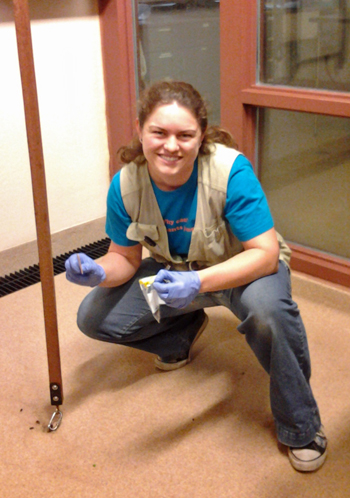
Erin McKenney scooping lemur poop for SCIENCE!

“Mammals don’t secrete the enzymes that are necessary, so no mammal can digest fiber on its own,” McKenney said. “These microbes are performing an incredibly important life process for us.”

At the Duke Lemur Center, McKenney collected fecal samples from three different species of lemur that evolved to eat different foods—a strict leaf-eater, and two omnivores. Using DNA sequencing, she determined the communities of bacteria that are living in their guts at different life stages from birth to adulthood.

Watching microbiomes through time may enable her to answer the question of how the microbiome of each species becomes teeming with 20 trillion bacteria, and if the patterns differ based on diet.

lemur eating pokeweed

Vegetarian lemurs can eat a surprising variety of stuff we’d find nasty, like pokeweed and even poison ivy. (Duke Lemur Center, David Haring)

The results suggest that all species of baby lemurs, when they are born and nursing from their mothers have similar microbiome profiles that are much less complex than adult profiles. But leaf-eaters that eat the most fiber show adult microbiome profiles as soon as solid foods are introduced, which is in contrast to the other two species that take longer to reach adult microbiome profiles. Additionally, leaf-eaters have more complex microbial communities, which allows them to digest fiber-rich foods.

“So when you start to think about the really big picture, beyond everything the gut microbes do for the hosts they live inside of, we find the microbes have done an incredible service to mammalian speciation. The only way that we have leaf-eaters is because of these gut microbes,” McKenney said.

Maintaining a Healthy Sex Life While Living with Cancer

By Nonie Arora

210_WeinfurtKevin

Dr. Kevin Weinfurt. Credit: DCRI

“In the last seven days, how much difficulty have you had with sexual activity?” Dr. Kevin Weinfurt asks his research participants. A psychologist by training who works in medical research for the the Duke Clinical Research Institute, Weinfurt studies the best ways to measure patient health using self-report.

His most recent collaborative project involved developing a self-report sexual health instrument funded by the National Cancer Institute (NCI) at the National Institutes of Health. Many cancer patients are struggling with serious sexual side effects from their cancer treatments, and we lacked a good self-report scale for sexual function, Weinfurt explained.

Weinfurt and his colleagues ask questions like, “In the past seven days (or 2 weeks, 2 months) how much difficulty have you had with X action?” They are finding that while people prefer to report long time periods and think they are more accurate, they actually can’t recall the specific details over a long period of time. It’s an open question whether people really remember what happened a month ago, Weinfurt said.

In a recent study, they had people participate in a 30-day diary of their sexual activity. Each time they engaged in an activity, they noted how well everything worked, he said. At the end of the 30 days, the researchers checked how well the average daily rating of participants matched what they remembered happening. Weinfurt agrees that asking patients to record their activity could change the activity itself or the quality of their recall, but he says that the scale should still be fairly accurate.

Sexual Health. Credit: NHS

Sexual Health. Credit: NHS

They found that the mood that the person is in when they complete the measure greatly affects what they report. Men in a positive mood recalled having excellent erectile function, even if that was not the case.

Measuring sexual function is important because it affects the quality of life for many patients, Weinfurt said. Many patients are eager to talk about sex-related issues because they feel isolated and alone with some of these struggles.

Overall, sexual health is not widely recognized as a priority by clinicians and clinical researchers and sexual ignorance is more common than we would think, so participants often require education before they can participate in studies successfully, he said.

Students Brief Senate, FDA, & Personalized Medicine Coalition

By Nonie Arora

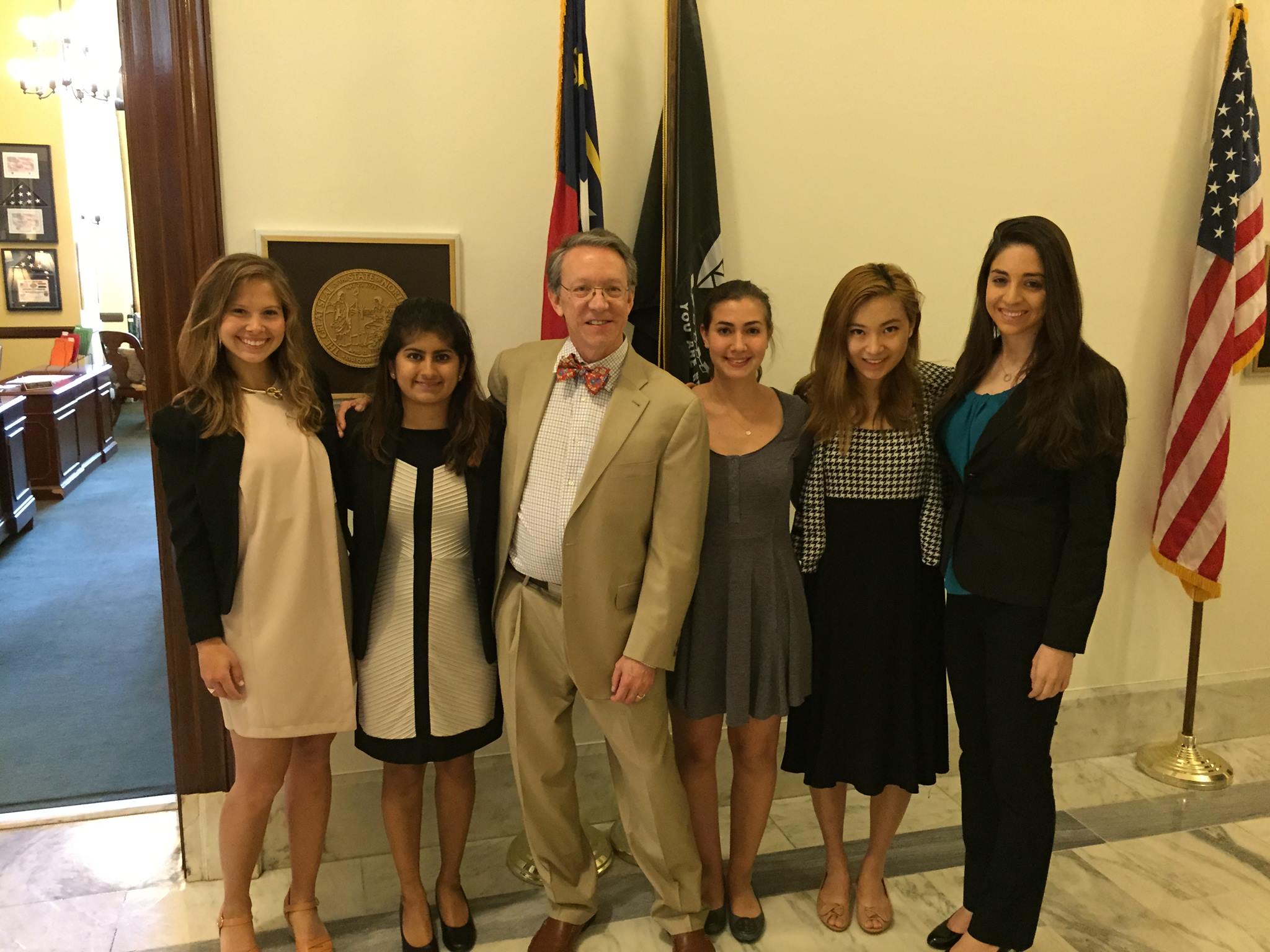
Duke students and faculty brief Senate staffers, Pictured left to right: Allison Dorogi, Nonie Arora, Robert Cook-Deegan, Samantha Phillips, Jenny Zhao, Elisa Berson. Credit: Robert Cook-Deegan

Duke students and faculty brief Senate staffers, Pictured left to right: Allison Dorogi, Nonie Arora, Robert Cook-Deegan, Samantha Phillips, Jenny Zhao, Elisa Berson. Credit: Robert Cook-Deegan

The week of April 13, at the height of cherry blossom season, Duke students traveled to Washington, D.C. to brief senior staff members of the Senate, Food and Drug Administration (FDA), and the Personalized Medicine Coalition (PMC). Over the spring semester, five students in the Genome Sciences & Policy Capstone course (including myself) studied the regulatory framework of laboratory developed tests (LDTs).

LDTs are tests developed for use in a single laboratory. The clinical laboratories that develop LDTs are considered to be medical device manufacturers and are therefore subject to FDA jurisdiction. The FDA exercises “enforcement discretion” over LDTs, which means they choose when to regulate these tests.

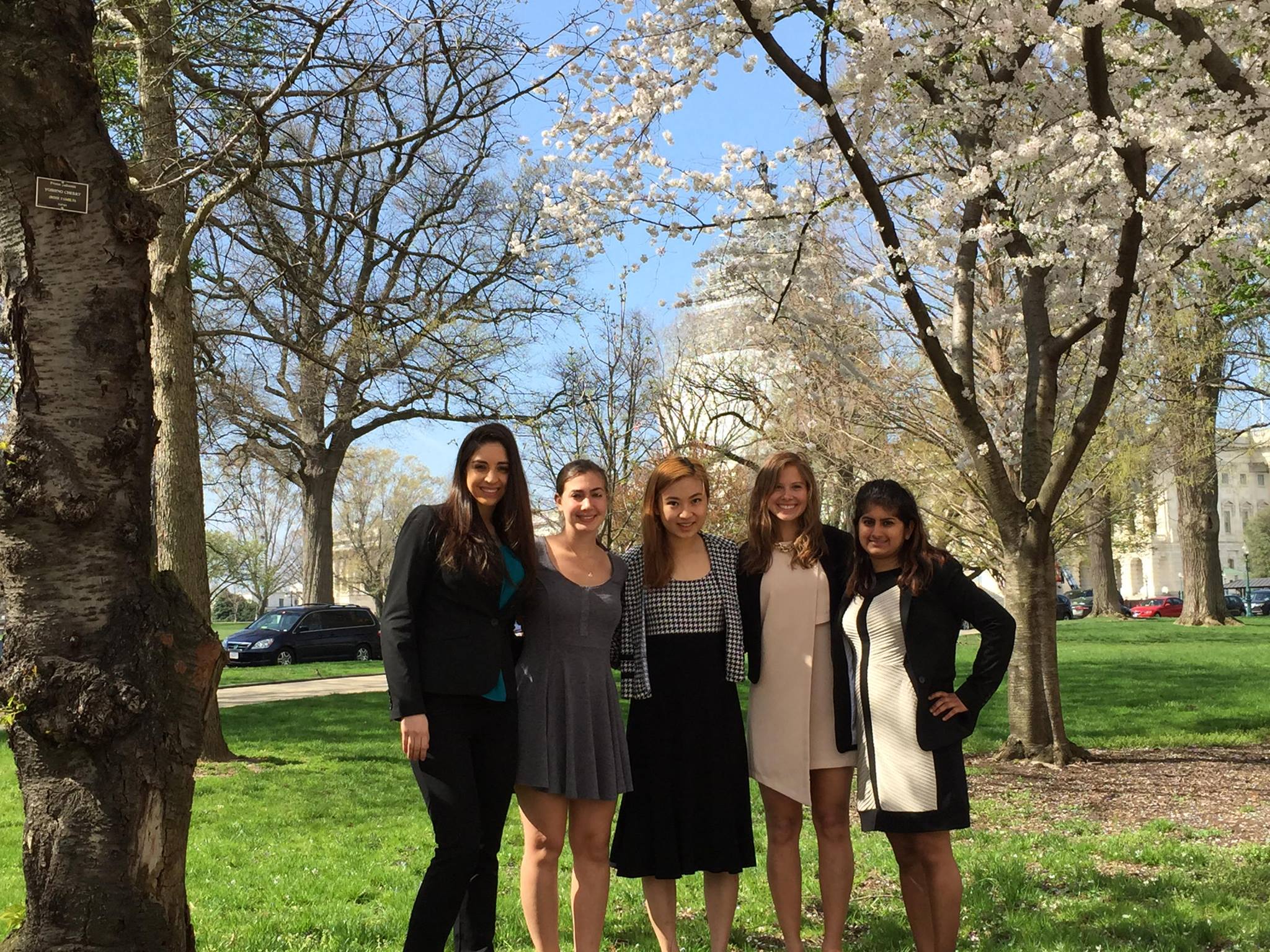
Duke students in Washington, D.C. Credit: Robert Cook-Deegan

Duke students in Washington, D.C. Credit: Robert Cook-Deegan

Under the supervision of Duke professor Robert Cook-Deegan, we dove into five case studies regarding different types of LDT tests.

The case study that I focused on was the differential regulation of two tests used for breast cancer patients. The two tests, MammaPrint and Oncotype Dx are regulated differently even though both aim to help doctors understand when patients should have follow-up chemotherapy after surgery. The company that markets MammaPrint, Agendia, chose to obtain FDA clearance for their test, but the company behind Oncotype Dx, Genomic Health, chose against it. Surprisingly, this decision did not substantially increase the number of patients who receive Oncotype Dx relative to MammaPrint.

Furthermore, the two tests do not always produce the same result, according to a research study. Several key question remain, such as:

  1. Is the FDA-regulated test more accurate?
  2. Does the more accurate test get more market share? Does FDA approval make a difference?
  3. How should these tests, and ones like them, be regulated to reduce harm to patients?

The students hope that their case studies will serve as illuminating examples for stakeholders and help guide the conversation regarding federal regulation of LDTs.


Science-Inspired Art

If you’ve ever walked into a biological or medical research lab you might have seen test tubes, pipettes, latex gloves and other gear. Artist and Duke graduate Jessica Johnson walks in and sees… beauty. Her art exhibit “Translating the Exome,” created in collaboration with professor Simon Gregory, PhD, is now on display in the Bryan Center through April 17.

Mouse Lemur Quandary Stumps Researchers

By Sheena Faherty, Ph.D. Candidate in Biology

What does famous lemur researcher, Dame Alison Richard, do when she has a burning question she can’t answer?

She visits Duke and appeals to a room full of lemur enthusiasts to help out.

Richard’s question concerns the curious case of the mouse lemurs at Beza Mahafaly in southwestern Madagascar, where she has been involved in a wildlife-monitoring program since the mid-1990s.

Alison Richard (left) and Lemur Center Director Anne Yoder (right) lead a discussion in the 'Beach House' at DLC.

Alison Richard (left) and Lemur Center Director Anne Yoder (right) lead a discussion in the ‘Beach House’ at DLC.

“What do I know about mouse lemurs?” she questioned a group that gathered at the Duke Lemur Center on March 3 as the first of three talks she held at Duke this week as part of the Von der Heyden Fellows Program. “Probably less than you do. But I am incredibly interested in what is going on with them at Beza Mahafaly.”

Everywhere else in Madagascar, mouse lemurs that look indistinguishable are classified as different species due to big variations at the genetic level. But at Beza Mahafaly, Richard is finding that mouse lemurs with major deviations in appearance are genetically the same.

Dame Alison Richard (Photo: HHMI)

Dame Alison Richard (Photo: HHMI)

For a long time, the general view was that there were two species of mouse lemur in the forests of Beza Mahafaly : the gray-brown mouse lemur and the gray mouse lemur (both being exceptionally adorable).

A few studies in the mid-1990s and early 2000s compared the shapes of certain features such as jawbone shape and leg length, and confirmed this view. Then, researchers started noticing a few trapped animals that had very noticeable differences in coat coloration. These animals were redder than the other two known species. Was this a possible third species?

In 2006, Duke Lemur Center Director, Anne Yoder, and her former Ph.D. student Kellie Heckman examined this same population of mouse lemurs from a genetic standpoint. Comparing sequences of DNA they expected to find major genetic differences between the two known species, and possibly confirm the existence of a third species.

“The genetic data was a disaster for the mouse lemurs,” Richard said.

All the samples collected from animals at Beza Mahafaly, regardless of the animal’s outward appearance, sorted together and seemed to be one species.

Dame Alison and the bedeviled mouse lemur of Beza Mahafaly

Dame Alison and the bedeviled mouse lemur of Beza Mahafaly

“There’s a part of me that’s very distressed about this, but there’s a part of me that thinks this is great,” Richard said. “At Beza Mahafaly we swim upstream. We’re contrarians,” she said laughing. “But we still don’t know how to best explain the diversity that we do see.”

She offered up some suggestions: A glimpse of an ongoing process of change? A replacement by one species over another? The beginning of a new species?

Flashing a picture of a mouse lemur displaying ominous eye shine from a headlamp, she said: “The mouse lemurs are waiting with an evil gleam in their eye to be told the truth about themselves. The question is how should we take this forward?”

Joining the Team: Anika Ayyar

By Anika Ayyar

Hi! My name is Anika Ayyar and I am currently a Duke freshman. I grew up in warm, lovely Saratoga, California, where I picked up my love for long distance running, organic farming, and the ocean. When I was 14, I moved to across the country to Exeter, New Hampshire to attend a boarding high school, and here I developed a deep interest in biology and medicine. Exeter’s frost and snow were far from the Cali weather I was used to, but my fascinating classes, caring teachers, and wonderful friends more than made up for the cold.

My sophomore semester abroad program at The Island School, on an island called Eleuthera in the Bahamas, certainly provided a welcome change to East coast weather as well. At the Island School I studied marine biology and environmental conservation, earned my SCUBA certification, and spent time with the local middle schoolers refurbishing a library and stocking it with books. I was also part of a research team that studied species richness and diversity on patch reefs off the coast of the island.

Dissecting fruit fly larvae under the microscope at the Seung Kim Lab at Stanford.

Dissecting fruit fly larvae under the microscope at the Seung Kim Lab at Stanford.

My marine research stint in the Bahamas drove me to join a molecular biology lab the summer after I returned; a decision that transformed my passion for science. At the Seung Kim Lab for Pancreas Development at Stanford University, I worked on a project that used binary systems to study the expression of specific genes related to insulin production and diabetes in fruit flies. I soon grew so immersed in my work that I wanted to share the project with others in the scientific community at Exeter, and my research mentors, biology professors, and I worked to create a novel course where other students could take part in the project as well. This unique research collaboration, called the “StanEx” project, proved to be a huge success, allowing other students to experience the trials and joys of real-world research while also generating Drosophila fly strains that were useful to the larger scientific community. If you are interested in reading more, check out my website about the StanEx project!

While my current interests lie more at the intersection of technology and medicine, I hope to be involved in equally compelling and fulfilling research here at Duke. Hearing about the various projects my professors are working on, and reading about the discoveries made in labs on campus, I have no doubt that this will be the case.

Outside of classes and research, I enjoy being part of the Duke Debate team, and Lady Blue, one of Duke’s all-female a cappella groups. You can often find me on the trails on a long run, or trying out a new dessert recipe I found on Pinterest. I am beyond excited to be a part of the research blogging team, and can’t wait to start attending talks and interviewing research personalities whose stories I can share with our readers!

Origami-Inspired Chemistry Textbook Brings Molecules To Life

by Anika Radiya-Dixit

Your college textbook pages probably look something like the picture below – traffic jams of black boats on a prosaic white sea.

blackAndWhiteText

Textbook without illustrations.

But instead of reading purely from static texts, what if your chemistry class had 3D touch-screens that allowed you to manipulate the colors and positions of atoms to give you visual sense of how crystal and organic structures align with respect to each other? Or what if you could fold pieces of paper into different shapes to represent various combinations of protein structures? This is the future of science: visualization.

Duke students and staff gathered in the Levine Science Research Center last week to learn more about visualizing chemical compounds while munching on their chili and salad. Robert Hanson, Professor in the Department of Chemistry at St. Olaf College, was enthusiastic to present his research on new ways to visualize and understand experimental data.

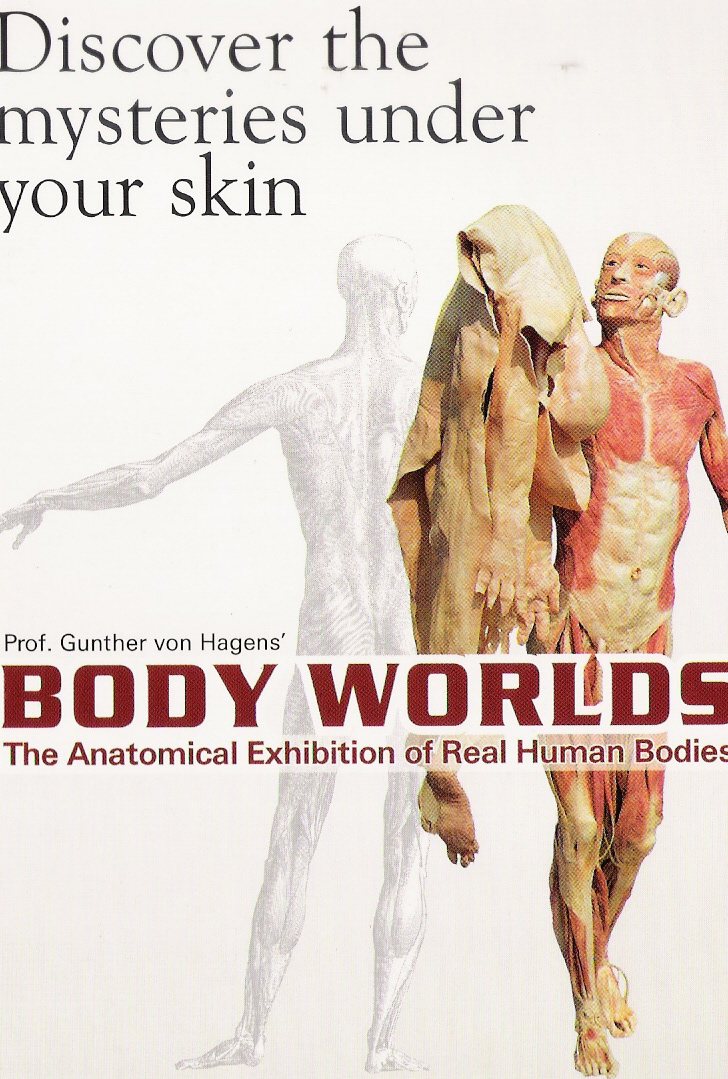
Exhibition poster of “Body Worlds”


Hanson opened his talk with various applications of visualization in research. He expressed a huge respect for medical visualization and the people who are able to illustrate medical procedures, because “these artists are drawing what no one can see.” Take “Body Worlds,” for example, he said. One of the most renowned exhibitions displaying the artistic beauty of the human body, it elicited a myriad of reactions from the audience members, from mildly nauseated to animatedly pumped.

Hanson also spoke about the significance of having an effective visualization design. Very simple changes in visualization, such as a table of numbers versus a labeled graph, can make a “big difference in terms of ease of the audience catching on to what the data means.” For example, consider the excerpt of a textbook by J. Willard Gibbs below. One of the earliest chemists to study the relationship between pressure and temperature, Gibbs wrote “incredibly legible, detailed, verbatim notes,” Hanson said. Then he asked the audience: Honestly, would one read the text fervently, and if so, how easy would it be to understand these relationships?

Gibbs'Text

Excerpt of J. Gibbs’ text.

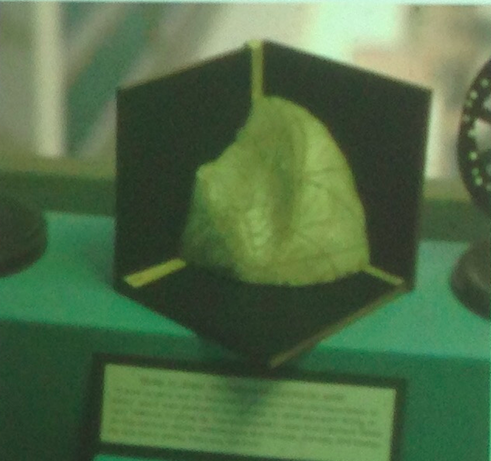
Not very, according to James C. Maxwell, a distinguished mathematician and physicist, who attempted to design a simpler mechanism with his inverted 3D plaster model.

Maxwell'sPlaster

Maxwell’s plaster model of Gibbs’ surface

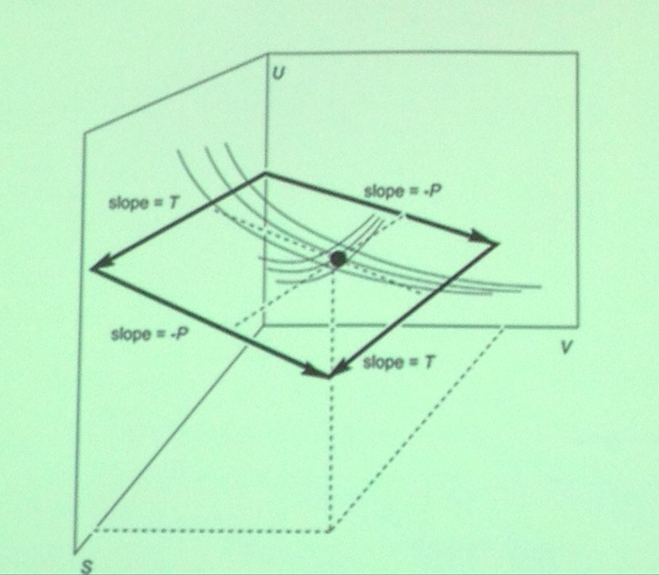
Subsequent scientists created the graph shown below to represent the relationships. Compared to the text, the diagram gives several different pieces of information about entropy and temperature and pressure that allow the reader to “simply observe and trace the graph to find various points of equilibrium that they couldn’t immediately understand” from a block of black and white text.

Graph

Graphical view of Gibbs’ theory on the relation between temperature and pressure.

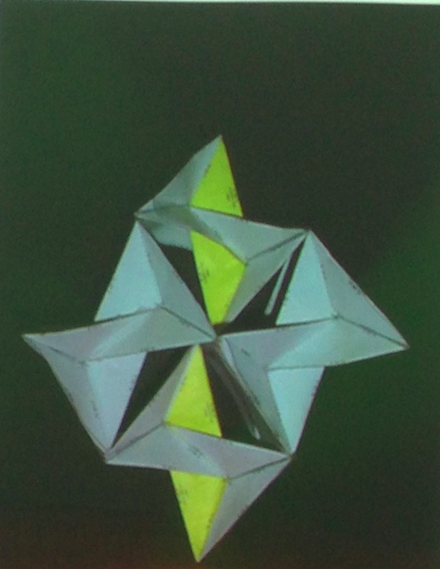
Hanson went further in his passion to bring chemistry to the physical realm in his book titled “Molecular Origami.” The reader photocopies or tears out a page from the book, and then folds up the piece of paper according to dotted guidelines in order to form origami molecular “ornaments.” The structures are marked with important pieces of information that allow students to observe and appreciate the symmetry and shapes of the various parts of the molecule.

origami

3D origami model of marcasite (scale: 200 million : 1)


One of his best moments with his work, Hanson recounted, was when he received a telephone call from some students in a high school asking him for directions on how to put together a 3D model of bone. After two hours of guiding the students, he asked the students what the model finally looked like – since he had knowledge of only the chemical components – and was amused to hear a cheeky “He doesn’t know.” Later that year, Hanson was rewarded to see the beautiful physical model displayed in a museum, and was overjoyed when he learned that his book was the inspiration for the students’ project.

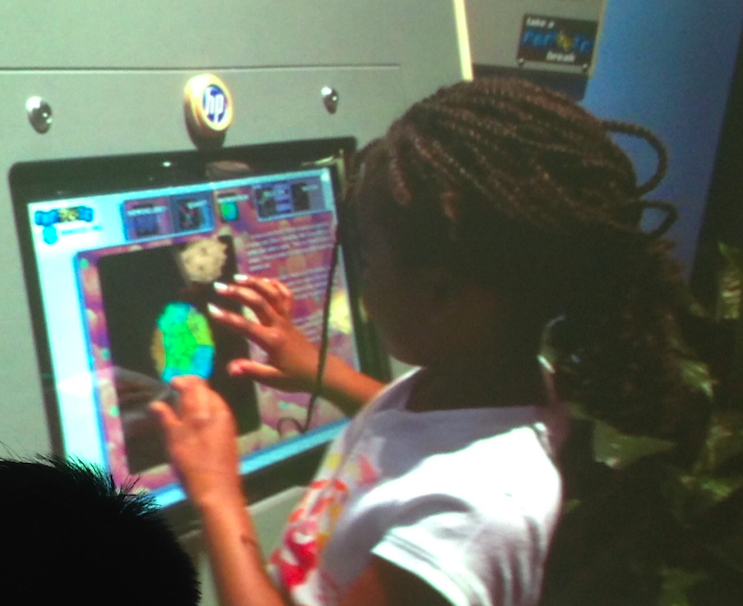
More recently, Hanson has worked on developing virtual software to view compounds in 3D complete with perspective scrolling. One of his computer visualizations is located in the “Take a Nanooze Break” exhibition in Disneyland, and allows the user to manipulate the color and location of atoms to explore various possible compounds.

TouchAMolecule

“Touch-A-Molecule” is located in the Epcot Center in Disneyland.

By creating images and interactive software for chemical compounds, Hanson believes that good visualization can empower educators to gain new insights and make new discoveries at the atomic level. By experimenting with new techniques for dynamic imagery, Hanson pushes not only the “boundaries of visualization,” but more importantly, the “boundaries of science” itself.

Hanson

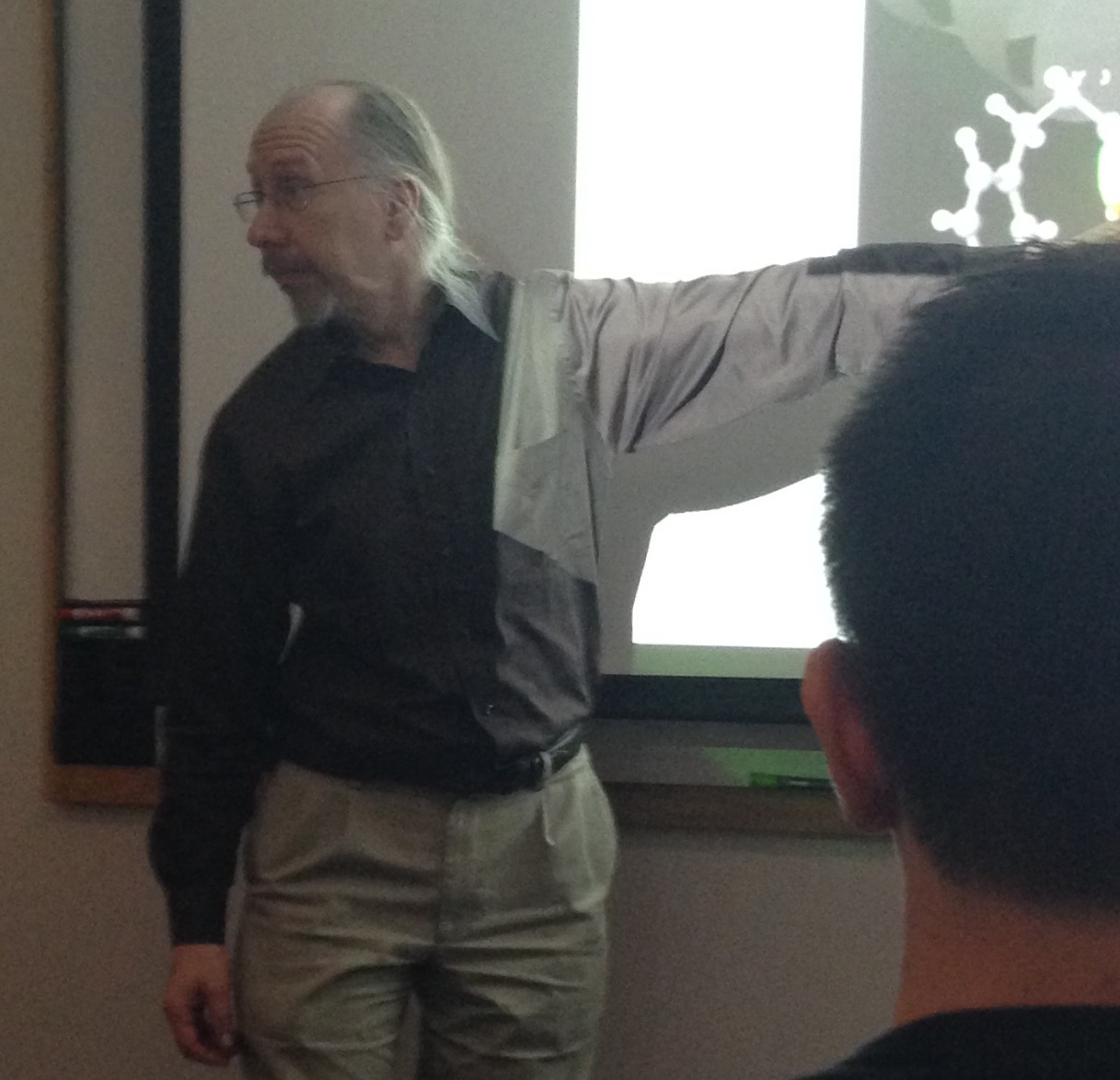
Professor Hanson explains how to visualize points of interaction on a molecule.


Contact Professor Hanson at hansonr@stolaf.edu

Read more about the event details here.

View Hanson’s book on “Molecular Origami” or buy a copy from Amazon.

Ben Wang: Food lover and undergraduate researcher

Ben Wang in rural Appalachia Credit: Ben Wang

Ben Wang in rural Appalachia Credit: Ben Wang

By Nonie Arora

Ben Wang, a senior Evolutionary Anthropology major from New Jersey, strongly believes we are what we eat. A foodie, scientist, and future health care practitioner, he thinks that changing food habits can improve our nation’s health.

“When we came to Duke, our summer reading book was Eating Animals,” he said.  “I felt so many emotions while I was reading the book. It really impacted the way I think about food. In fact, I became a pescetarian (a fish-eating vegetarian).”

Freshman year, Wang knew he had this interest in food, but he didn’t know how to incorporate it into his academic world.

During his second year, Wang started to find his way. “I remembered the topic when I was hunting for a research lab, and started working in Dr. Tso-Pang Yao’s metabolism lab so that I could learn more about how nutrition directly impacts health,” he said.

Wang spent time investigating proteins that increase or decrease the amount of “mitochondrial fusion” that happens in cells. Wang explained that metabolism is how our bodies process food and distribute nutrients, and these compounds help in that process.

“I really enjoyed this lab because the topic was directly related to patient care and our research had direct pharmacologic applications,” Wang said.

Farm Fresh tomatoes! Credit: Ben Wang

Farm Fresh tomatoes! Credit: Ben Wang

In the summer of 2014, he pursued a Bass Connections fellowship in rural Appalachia, in one of the most impoverished counties in the US.

He participated in a Farm-to-Table partnership between local Appalachian farms and a middle school. This partnership was part of a broader program for Appalachian girls. He coordinated the logistics and ended up doing much of the culinary work for the partnership, cooking up delicacies with ingredients like swiss chard, beets, and kale.

“I really wanted to go all the way in introducing a fresh perspective to these women,” Wang said, “I had to convince the girls that these veggies would taste good.”

Farm to Table initiative in action. Credit: Ben Wang

Farm to Table initiative in action. Credit: Ben Wang

They did not always like his creations.
He says one student told him, “I’m not going to eat this hippie food.”

But he persevered, and ultimately most of the girls were excited about what they had learned and reevaluated the way they ate.

Maintaining lasting gains will be difficult because much of the food would have been unaffordable to the girls on their own. In the town that they live in, the closest supermarket is a Walmart a half hour away. Other than that, there is a Dollar General and Hillbilly Market, neither of which stock fresh produce, according to Wang.

However, Wang thinks that showing these girls there are food options beyond those that they have experienced was valuable, and that they can choose to strive for them if they want to.

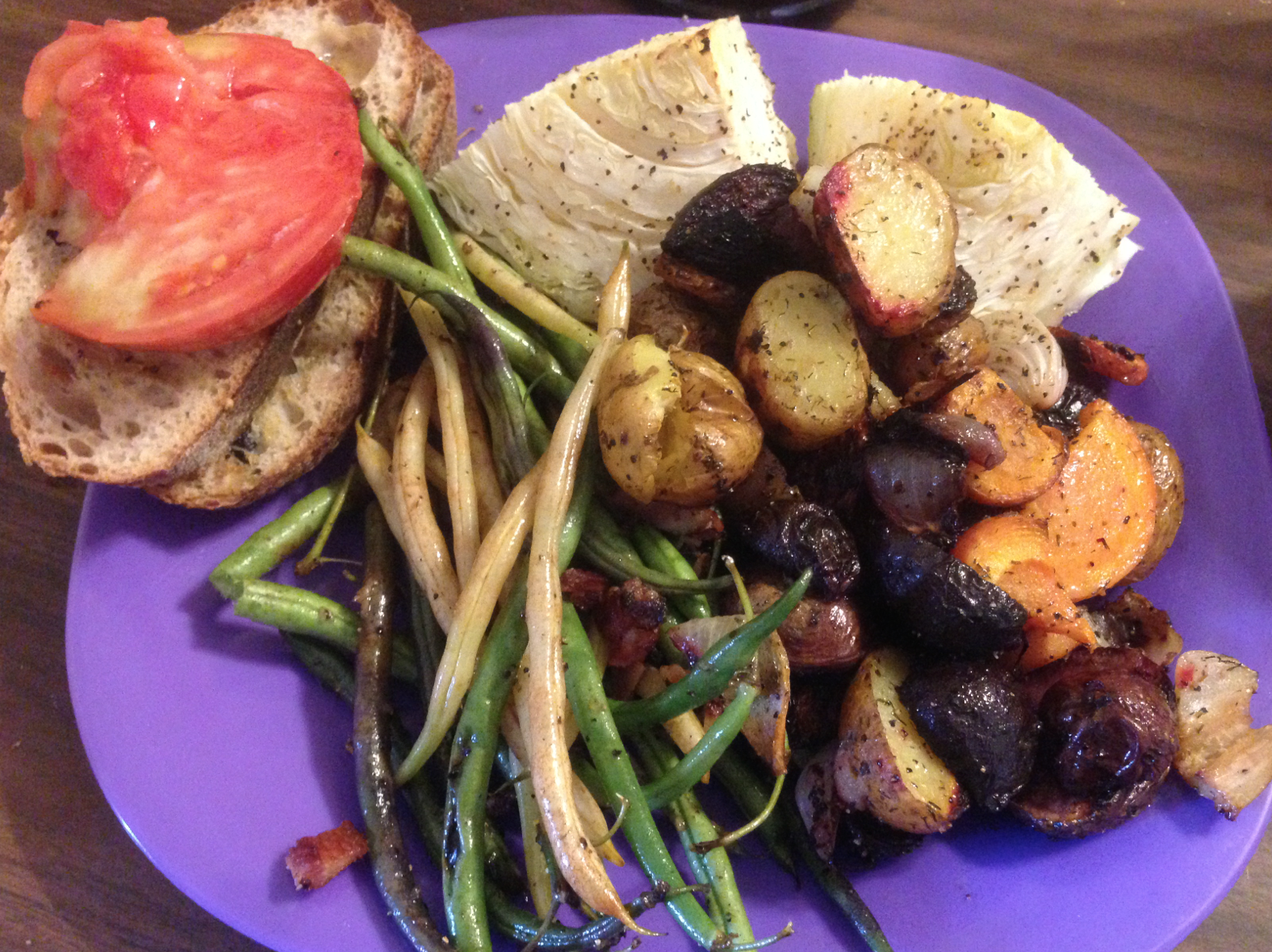
Changing eating habits, one delicious meal at a time. Credit: Ben Wang

Changing eating habits, one delicious meal at a time. Credit: Ben Wang

As for Wang, he is headed to dental school in the fall and hopes to include nutritional awareness in his future practice to help his patients achieve better systemic health.


Page 21 of 32

Powered by WordPress & Theme by Anders Norén