The Duke Campus Farm typically sees more visitors than usual on Fridays, when it holds Community Work Days and welcomes students, faculty, and community members to help run tasks and learn more about its sustainable agriculture practices.
However, this particular Friday, April 11, was a bit special. Instead of us volunteers driving wheelbarrows back and forth, mulching or weeding, several members of the Vilgalys Lab at Duke instructed participants on how to grow our own mushrooms.
Shiitake Logs
The process begins with inoculation: placing the mushroom spawn into substrate, which provides it a suitable environment to live in. It turns out there’s two common ways to do this, so we split ourselves into two groups. I headed over to the right side first, where Dr. Rytas Vilgalys awaited us with a bag of shittake spawn. A Duke biology professor, Vilgalys is an expert on mycology, the study of fungi. He was joined by undergraduate senior Mira Polishook, who is both part of the Vilgalys lab and the farm’s programming crew.
They introduced us to our substrate, sweetgum logs, which sat neatly stacked in a pile to the side. Like these, suitable logs will be from hardwood trees and recently cut. (Many softwoods, like pines, have anti-fungal properties, and old logs are often already colonized by other fungi.)
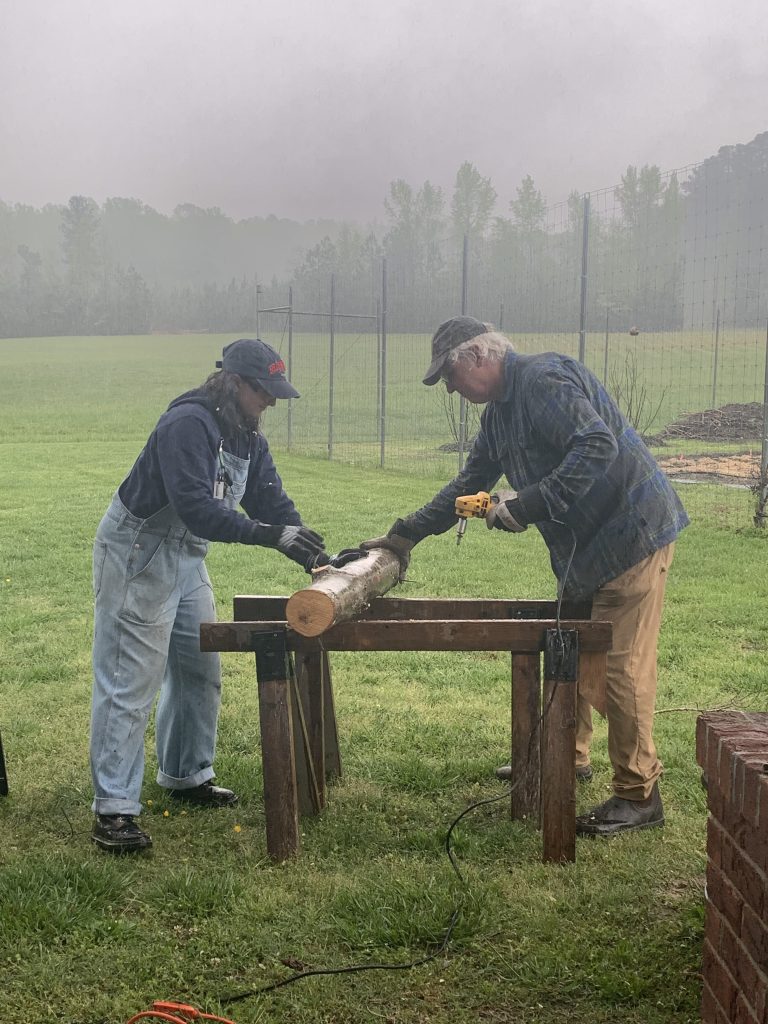
The first task was to create holes in the logs for the spawn. After a quick demonstration, Vilgalys handed off the drill, encouraging those of us who hadn’t used power tools before to do so.
A friend and I quickly formed a system–I drilled holes as uniformly as I could while they rotated the log after every row. Though the day was dreary and wet around us, it soon became lively with movement and chatter underneath the pavilion as everyone began carrying out their roles.
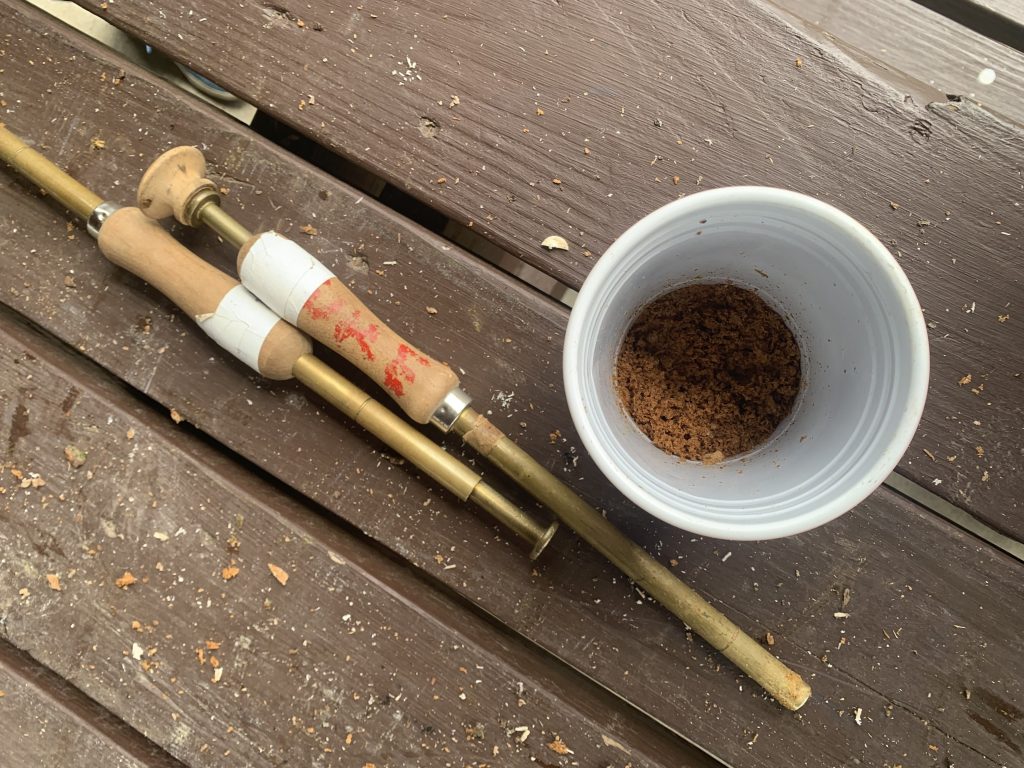
After a few turns, I relinquished the drill to someone else and instead picked up the inoculation thumb tool. With narrow metal cylinders, these made it easy to pick up an appropriate amount of our sawdust spawn and release it into the holes we drilled. (These aren’t always necessary with other methods; plug spawn comes in pellet form and can be simply placed into the holes by hand.)
Mycelium is present inside of the sawdust spawn in the cup. Author photos.
A few tables over, others did the finishing touches via paintbrush. Fungi require a moist environment to grow, meaning mycelium in open holes are at risk of drying out. Dripping hot wax over the holes seals moisture inside and prevent insects from getting inside, until the wax eventually breaks off as the fungi grows outward.
Oyster Bags
The mycelium is visible as the white substance surrounding the grain.
On the other side of the pavilion, Duke mycologist Khalid Hameed was leading workshop participants through creating oyster mushroom bags, using a different type of substrate and spawn.
“Substrate is any lignin or cellulose. This is wheat straw. You can use rice straw, you can use peanut straw…any lignin, cellulose material,” Hameed said. From the bags that he had prepared for us, we took fistfuls of damp wheat straw and created the first layer in our own clear bags. Over this went a sprinkle of grain spawn. Repeatedly, we built up layers of straw and spawn until our bags were full.
“The first stage of this, we call pinhair. It [the fungus] makes little tiny pinhairs,” Hameed said. For a couple of weeks, there’s essentially no maintenance required. As long as there’s some humidity in the air, the bag can sit in a dark cellar or room. “If the moisture is not enough, those pinhairs then will dry.”
An oyster mushroom bag after 2 weeks. Courtesy of Angela Zhao.
This method is relatively quick, and we soon arrived at Hameed’s final instruction. Using a small razor edge, we pricked the bags evenly all over, creating small tears in the shape of crosses. The edible parts of fungi–the outward visible parts–are called “fruit,” and it’s out of these holes that the oysters will eventually fruit.
Good Mushrooms Come to Those That Wait
By the end of the workshop, the evidence of our work surrounded us: the tables lay covered in sawdust, wax drops, and stray wheatgrass.
Now, we wait for the (literal) fruit of our labor. I’ll be checking on my oyster bag, which will appear more and more white as the fungus colonizes the straw. These will only need around three weeks to begin fruiting, at which point they need to be moved into a room with light. However, the logs we inoculated likely won’t fruit for at least a year. When that time approaches, the fungi will need disturbing or “shocking”, which can involve soaking the logs in water, knocking them down, or as they do in Japan, hitting them with hammers. It’s theorized that this shocking promotes rapid growth by stimulating natural conditions like the falling of a tree or change of weather.
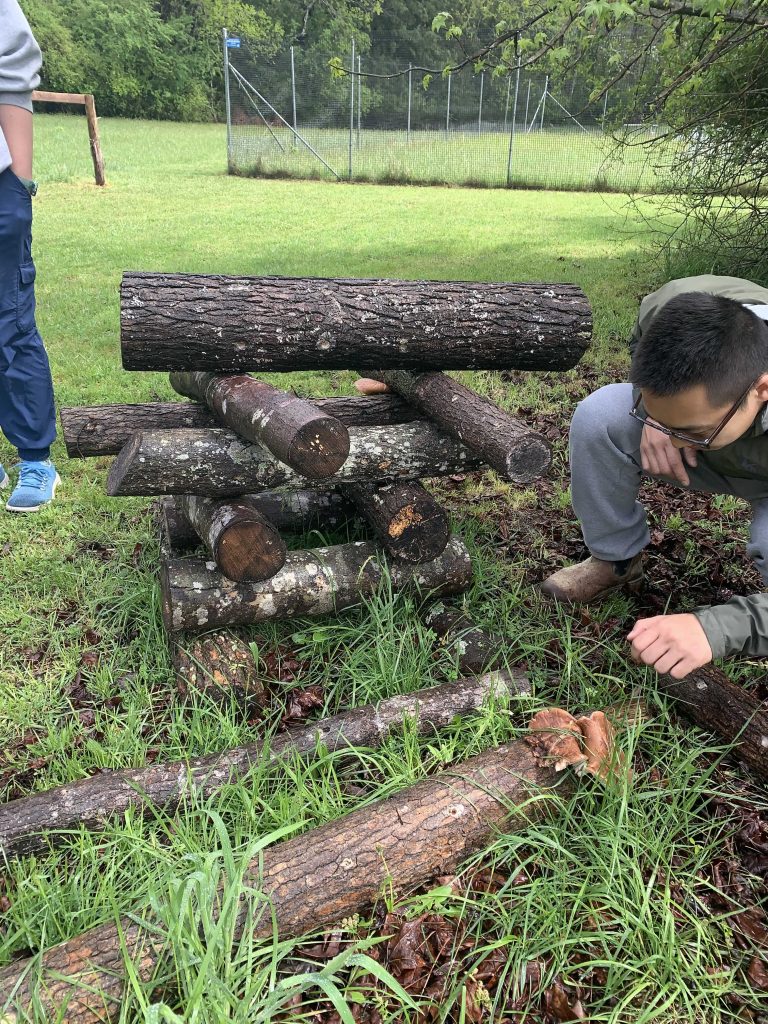
Otherwise, nothing more that needs to be done. Once inoculated, logs can continue to fruit year after year. The logs above, which were inoculated last year at Duke Campus Farm, have since fruited, though not to their fullest extent. For the work of one afternoon, the payoff is significant–an easy, sustainable way to farm food.
Forests and farmland meet in the SAVA region of northern Madagascar. New research suggests that wildlife-human interactions in such areas could spread disease. Credit: James Herrera, Duke Lemur Center
COVID-19 continues to plague us, Mpox is an emerging global threat, and the avian flu is decimating industrial poultry as well as endangered wildlife. What do all these epidemics have in common? They originated in wild animals and spread to domestic animals and people.
This pattern of spread is a trademark of many diseases, termed zoonoses or zoonotic diseases. Our new research shows that in rural settings of Madagascar where forested landscapes were converted to agriculture and settlements, the potential transmission of a deadly virus, Hantavirus, is likely facilitated by invasive rodents, especially the black rat. Also responsible for cyclically occurring plague events in Madagascar, the black rats could be transmitting multiple diseases to people in rural communities, based on our studies.
The work was published April 7 in the journal Ecology and Evolution.
People can get Hantavirus from the droppings or urine of rodents like rats and mice. Credit: Wikimedia Commons
Hantavirus is mainly spread from rodents to people via exposure to their urine and feces in the environment, and being bitten. It can cause severe and deadly disease of the lungs and kidneys, resulting in fever, fatigue, aches and pains, followed later by coughing, shortness of breath, and fluid in the lungs, causing death in almost 40% of people who experience later-stage symptoms. In rural settings like in Madagascar, there are no tests available to diagnose Hantavirus, and the generalized symptoms are often confused for influenza or other diseases. With no specific treatment, either, Hantavirus is an important, though neglected, zoonotic pathogen.
This research, funded by the U.S. National Institute of Health and National Science Foundation, as well as Duke University, connects scientists from around the world with diverse specialties, including field biology, infectious disease epidemiology, social sciences, veterinary health, and more. Over the last eight years, our international and interdisciplinary team studied zoonotic pathogens in wildlife, domestic animals, and people. We compare how pathogens vary among different animals and in different landscapes.
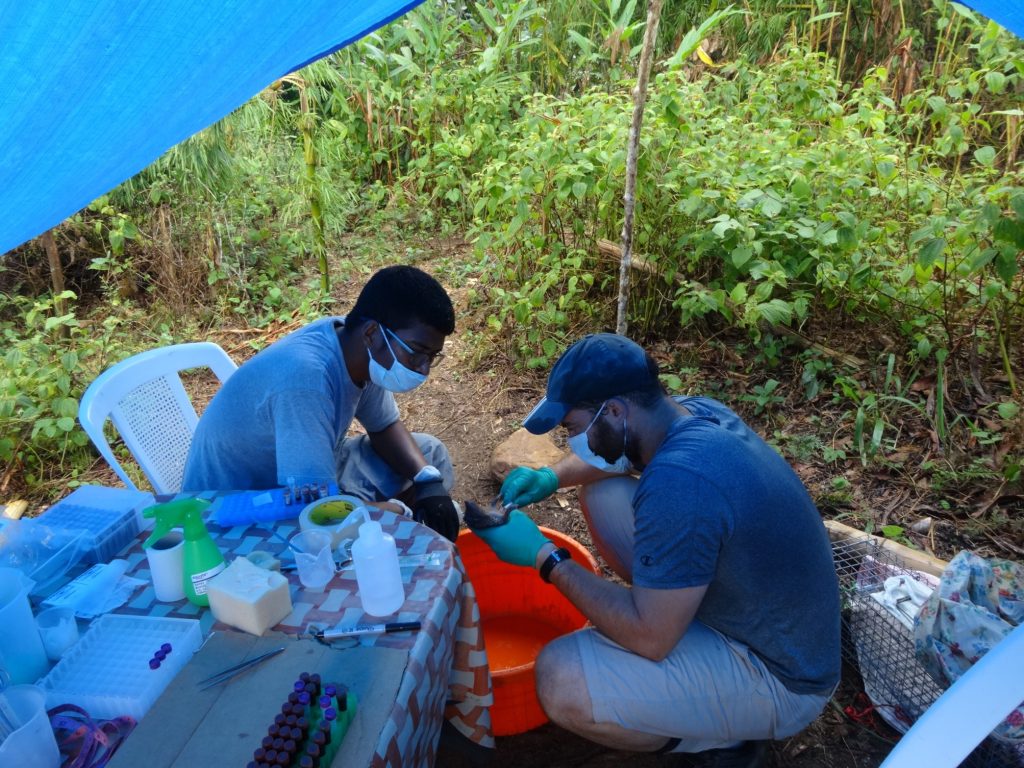
Herrera and Malagasy student Tamby Ranaivoson check local mammals for pathogens.
There are more than 29 species of small mammals and another 12 species of bats in these wildlife communities, including native rodents and animals that look like hedgehogs and shrews but are a unique group from Madagascar, the tenrecs. There are also ubiquitous introduced mammals, including black rats, the house mouse, and the shrew, which have spread around the world wherever almost everywhere people go. We studied natural, pristine rainforests and compared to different features of the agroecosystem including regenerating forests, agroforests, and rice fields. We captured rodents and shrews in people’s households, as well, to compare how small mammals and zoonotic pathogens change over this gradient of human land use.
Our results show that black rats were the only species in our system that were infected with Hantavirus, with 10% of sampled individuals infected. Rat abundance and infection were higher in agricultural settings, including rice fields and agroforests, where rats were larger. While some rats in people’s homes were infected, no infected individuals were found in the more mature forests. Hantavirus infection was lower in the homes than in the agricultural fields, but exposure to infected rats is likely higher in homes because of the close contact in enclosed settings. The results highlight how infectious disease risk varies across the landscape because of complex impacts of human land use on natural ecosystems.
The Hantavirus results closely mirror those our team have shown for other disease-causing emerging pathogens, including Astroviruses and Leptospira. Rats and the house mouse were the most commonly infected species, and in the case of Astrovirus, only a single individual of a native species was infected. While Astrovirus infection was more common in the regenerating scrubby environments, Leptospira infection was most common in seasonally flooded rice fields. These varying landscapes of disease risk have important implications for the emergence of zoonotic diseases as well as applications to policy for public health.
Preserving natural forest and facilitating the regeneration of transformed forests may decrease disease risk because infected individuals were rarely captured in natural forests. This may be because there are natural predators to keep rodent populations in check, though further research is needed. Calls to eradicate black rat populations have seldom been successful, but through nature-based solutions like restoration to encourage natural predators, it may be possible to decrease abundance of nuisance rodents. Awareness-raising campaigns to teach about the signs and symptoms of common rodent-borne diseases for rural communities will also be rolled out, and encouraging local health care workers to check for these symptoms in the community members they serve.
We share our results with the Ministry of Public Health and Ministry of Environment and Sustainable Development, and will be organizing more think-tank meetings with relevant actors to co-design intervention strategies that can address these potentially emerging threats to human well-being.
By James Herrera, Ph.D., Duke Lemur Center SAVA Conservation Initiative
I had just spent the weekend at the Duke Marine Lab, listening to my classmates discuss solutions to the shrinking population of a critically endangered porpoise species. So when I attended the March 25 Oceans Week panel immediately after, marine megafauna were already at the forefront of my mind.
Image from Florida Fish and Wildlife Conservation Commission, CC BY-NC-ND 2.0
The open and interconnected nature of the ocean already presents unique conservation issues compared to terrestrial ecosystems, but it’s even more difficult to work on policies for marine megafauna that regularly traverse oceans. Countries establishing coastal estuaries or coral reefs as Marine Protected Areas (MPAs) can be effective for inhabitants like reef sharks that have limited ranges. However, protecting highly migratory animals like whale sharks and blue whales often requires international agreements and collaboration between countries.
To better protect these species, Dr. César Peñaherrera launched the nonprofit MigraMar, which researches them through extensive tagging in the Eastern Pacific and partners with a large network to share and aggregate data. They’ve tagged 642 hammerhead sharks so far, according to their website, and this is just one of the migratory species they work with. Peñaherrera, whose background is in quantitative marine science, spends much of his time when he isn’t in the field making sense of the vast sets of data points. One of MigraMar’s main goals is to provide evidence for greater connectivity between Marine Protected Areas. Think wildlife corridors, but underwater. By mapping out the most predictable migration routes for marine megafauna, they can inform the best routes for these “Swimways.”
Peñaherrera shared an image of a diver approaching hammerhead sharks with a pole spear, which helps them attach an acoustic tag to a shark.
Conserving sea turtles is a little different than other species–they face different threats throughout life as they go from land to sea and back to land to lay eggs. Carlos Diez, who researches turtles extensively at the Puerto Rico Department of Natural and Environmental Resources, outlined four “unresolved” main threats within terrestrial ecosystems: coastal development, light pollution, exotic species, and conflicts over habitat use.
Climate change also poses a potential threat, since sex determination in sea turtles is dependent on temperatures. As many parts of their range warm, the sex ratio of turtles in some locations has leaned increasingly female. That’s one area that Diez has conducted research in: determining when, where, and how much the balance of turtle sexes is changing.
While collecting accurate data on wildlife is necessary, the complexity of marine conservation hinges as much on the behavior of people as it does wildlife.
Perhaps that’s why shark researcher, science communicator and Puerto Rican native Melissa Cristina Márquez said one of her focuses is on the “human dimensions of shark conservation.”
Deep connection to the inhabitants of the oceans leads to more active conservation. Indigenous cultures, for example, have fished sustainably for ages. Márquez, who is currently based in Australia, said, “We’ve seen that a lot in Fiji, in Papua, New Guinea, with sharks and their cultural connection to sharks, and how that kind of spurred forward a bit more protection of those animals.”
“The cultural, historic and political contexts in conservation… these factors really shape the value placed on marine biodiversity, the policies that are developed and the resources that are allocated for conservation efforts,” she said.
As a fisheries officer for the Food and Agriculture Organization of the United Nations, Carlos Fuentevilla has a more specific focus when it comes to the human dimension: reconciling sustainable management with the need to feed people.
“We currently now eat around 20.7 kilograms per capita per day of food,” said Fuentevilla, pointing out that the world would have to ramp up production if this rate is to remain the same at 2050. “So it’s not a question of we have to eat less… It’s a question that we have to produce more–how can we do it sustainably?”
Much of it will have to come down to how we manage our fisheries. While most fish aren’t technically megafauna, Fuentevilla pointed out that marine megafauna regularly interact with, and are affected by, our fishing activities.
Fishery scientists will tell you they don’t manage fish, they manage people.
Scientists like Fuentevilla and those in government use ecosystem based management, which considers the species in an area as well as the stakeholders and competing interests that affect them, including fishermen and coastal developers. “You know, fishery scientists will tell you they don’t manage fish, they manage people, and that’s right,” Fuentevilla said.
The overarching theme is that the ocean is an open system, and nothing in marine conservation occurs in a vacuum. Fulfilling this work means having to go beyond national policy to international frameworks and understanding the other key players in sea and on land.
A long time ago in a galaxy far, far away… Or should I say, January 23 at the Rubenstein Arts Center…? That is where biomedical engineer Nina Tandon showed us the almost magical, yet extremely precise, science of EpiBone–where personalized bones and cartilage are grown from stem cells.
Photo credit: Brown Girl Magazine
But first, it would be completely inappropriate of me to discuss Tandon’s revolutionary work without first sharing her stories from her childhood and adolescent years; that was one of the many aspects I admired about her talk–how much love Tandon shared for those who helped spark her passion for science.
First, there was her grandmother, Dadi Ma, who at a young age wanted to study math, but unfortunately, due to the time she grew up in, was pushed away from any STEM-related field. Tandon helped complete her Dadi Ma’s dreams to pursue a STEM education. And there were the late nights in the research library with her mother; Tandon told us how she would often use her class as a group to “test how people’s memories worked, and test our (Tandon’s) classmate’s depth perception.” Then, Tandon met Dr. Maria Musarella, who helped identify her brother’s retinitis pigmentosa. And while no cure for it at the time, Dr. Musareli told Tandon how there was a team at MIT working on it–to which Tandon thought, “Maybe I’ll join that team one day.”
Little did young Nina Tandon know just what she would do one day.
After going to school for electrical engineering, Tandon found herself working at a Bell Labs spin-off, where she learned one of the most important lessons of her life: One’s choice of job should always be “content secondary, people primary.” However, because of the new suburban area she found herself in post-9/11, Tandon felt isolated. But within this time of solace, she was able to connect the similarities between genes and data: “The axon conduction in a nerve–that’s a lot like those same equations that govern the transatlantic cable… cell membranes are 20 times higher capacitance than the best capacitors that we could build with our human hands.”
Through these observations, Tandon was able to conclude that “our bodies are the most exquisite technology we have ever been familiarized with.”
Photo credit: London College of Osteopathy
So she decided to apply to the team at MIT that Dr. Musarella had told her about years before, in which she was accepted and then joined. It was a full circle moment; Tandon was seeing herself living the dreams of the girl who would conduct experiments on her elementary school class. It should have been perfect, right?
“And I had made a mistake… I made a mistake.” She had not chosen people first and content secondary. However, as Tandon noted many times throughout her talk, it is her failures that showed her what it was she needed to do in order to succeed.
I found this aspect of the talk truly inspiring. Usually, when an extremely accomplished person talks to an eager room, they spend most of their time highlighting what they have done correctly. But here Tandon was, taking her time telling us all of the ways in which she had failed. And how those were the moments that led to her largest lessons learned. Although I can’t speak for everyone in that room, as a college student myself, there was a comfort in seeing such a successful, powerful, and kind woman telling us that we will fail… And showing us that that is the beauty in success.
So, to make an extremely long story short, Tandon then proceeded to join Robert Langer’s lab at MIT for five years, studying “how electrical signals could coax stem cells into becoming tissue,” work in a management consulting job at McKinsey & Company to learn more about entrepreneurship, and then attend Columbia for her EMBA and PhD (at the same time!). Phew, that’s a lot.
In 2014, Tandon co-founded EpiBone, in which she and her team began working in a candy factory-converted lab in Harlem. By starting with CT scans, EpiBone can make a “perfect puzzle piece-shaped biome material scaffold and a perfect puzzle piece bioreactor.” In other words, “an environment that simulated the natural conditions for tissue development.” Within two to four weeks, Tandon and her team can grow any cartilage, bone, and joints needed throughout the body.
Photo credit: EpiBone
Since starting her company, EpiBone has been able to grow jaw bones for six patients, which “fit perfectly and were integrated within four to six months.” This is just the beginning. EpiBone’s technology could change how we view medicine and treatment–giving patients a promise of more active lives instead of just a prescription of pain medicines.
However, as much of a miracle as this is, Tandon had to move her business’s location because of the restraining process of clinical trials within the United States, where the limited funding cannot match the necessary costs of clinical trials. Now in Abu Dhabi, Tandon has found a home for her and her family to live happily while also being in a place where she feels like EpiBone is finally starting to see a future where it can be implemented into medicine and used in patients.
Photo credit: EpiBone
Ending her talk, Tandon noted how she has learned to count her blessings, even in times when she felt like her work was not being appreciated for what it was. “It’s a shortcut for me because I’ve studied biology to be grateful… Oh my god, my heart just beat five times–that’s like a million miracles.”
Tandon has shown us that true success is not viewed from the top of the mountain, looking down at all that you have climbed, but instead, learning to appreciate and find joy in the trek to the top. I thank her, on behalf of all of the people at Duke and all who she will help in the future, for her revolutionary work in science and her honest words of inspiration.
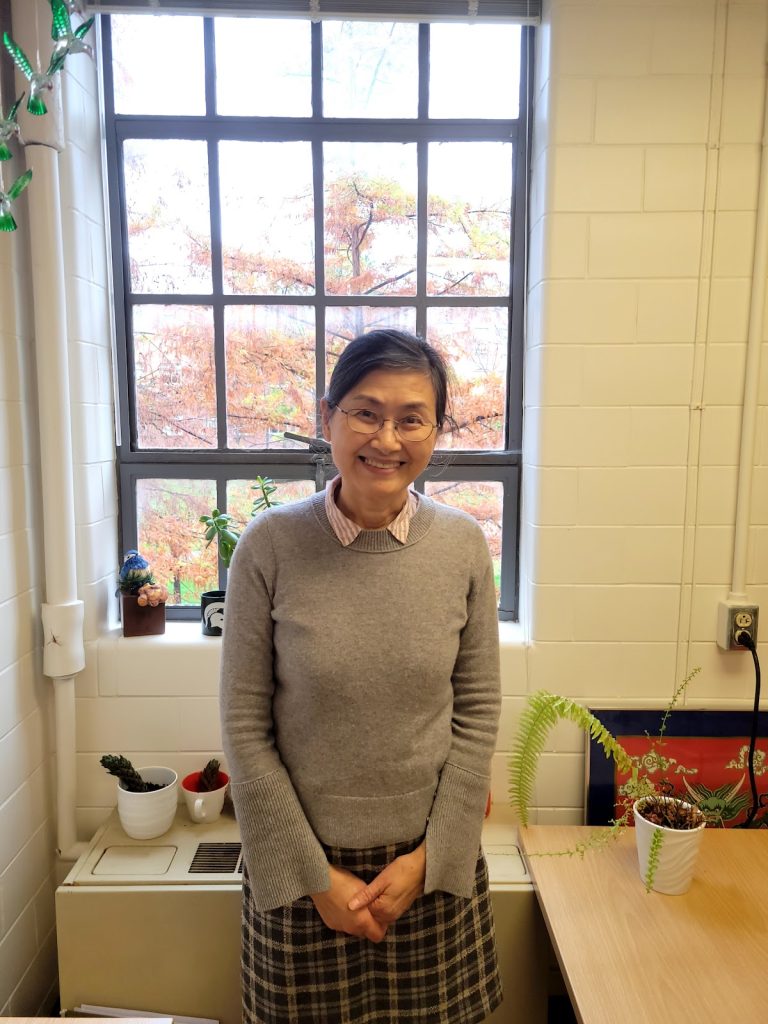
Meet Ke Dong, a biology professor at Duke University. She’s a lover of nature, a great cook, and a Lupus survivor. About 20-25 years ago, she developed Lupus during her research years at Michigan State University. Her time with this autoimmune disease was not kind. “The Lupus brought depression,” she said.
Fortunately, she was surrounded by amazing peers and her passion: research. Dong’s research focuses on ion channels and their reaction to various toxins and stimuli. These ion channels are incredibly important to the physiology of insects because of their impact on neuronal activity.
Duke biology professor Ke Dong.
However, her passion didn’t develop from thin air. Dong grew up on a college campus in southeastern China. With both parents leading careers as professors — her father in history and her mother in biochemistry — she had the amazing opportunity to develop her passions early in childhood.
Growing up, she “had never been afraid of insects” as her mother’s work focused on the development of an increased production rate of silk in silkworms. However, it was the incidents in the area around her that sparked her passion. People in the area were often poisoned from the consumption of insecticides from the rice they were growing. This piqued her interest in toxicology as she was curious about how these insecticides were toxic to the townspeople.
Combining her fearlessness in the face of insects and her interest in toxicology, Dong has found the best of both worlds.
Dong also loves to dabble in the culinary worlds of a diverse range of cultures. As she travels from country to country, she brings with her the memorable flavors of each dish she tastes. Once arriving back home, she immediately purchases cookbooks from those countries to add to her rolodex of culinary skills. As she reads each recipe on her nightstand, she dreams of ways to introduce various flavors and techniques into her dishes. A creative cook, she has no time for following measurements. Her kitchen is her sandbox and allows her to dance with each flavor in her pot, adding less sugar but a little more salt.
Dong has been through ups and downs in her life, but there’s nothing that’s going to stop her from her passion: research.
The Web of Science ranking of the world’s most highly-cited scientists was released this morning, telling us who makes up the top 1 percent of the world’s scientists. These are the authors of influential papers that other scientists point to when making their arguments.
EDITOR’S NOTE! — Web of Science shared last year’s data! We apologize. List below is now corrected, changes to copy in bold. We’re so sorry.
Twenty-three of the citation laureates are Duke scholars or had a Duke affiliation when the landmark works were created over the last decade.
A couple of these Duke people disappeared from this year’s list, but we’re still proud of them.
Dan Scolnic of Physics returns as our lone entry in Space Science, which just makes Duke sound cooler all around, don’t you think?
This is a big deal for the named faculty and an impressive line on their CVs. But the selection process weeds out “hyper-authorship, excessive self-citation and anomalous citation patterns,” so don’t even think about gaming it.
Fifty-nine nations are represented by the 6,636 individual researchers on this year’s list. About half of the citation champions are in specific fields and half in ‘cross-field’ — where interdisciplinary Duke typically dominates. The U.S. is still the most-cited nation with 36 percent of the world’s share, but shrinking slightly. Mainland China continues to rise, claiming second place with 20 percent of the cohort, up 2.5 percent from just last year. Then, in order, the UK, Germany and Australia round out the top five.
In fact, five Duke NUS faculty made this year’s list: Antonio Bertoletti, Derek Hausenloy and Jenny Guek-Hong Low for cross-field; Carolyn S. P. Lam for clinical medicine, and the world famous “Bat Man,” Lin-Fa Wang, for microbiology.
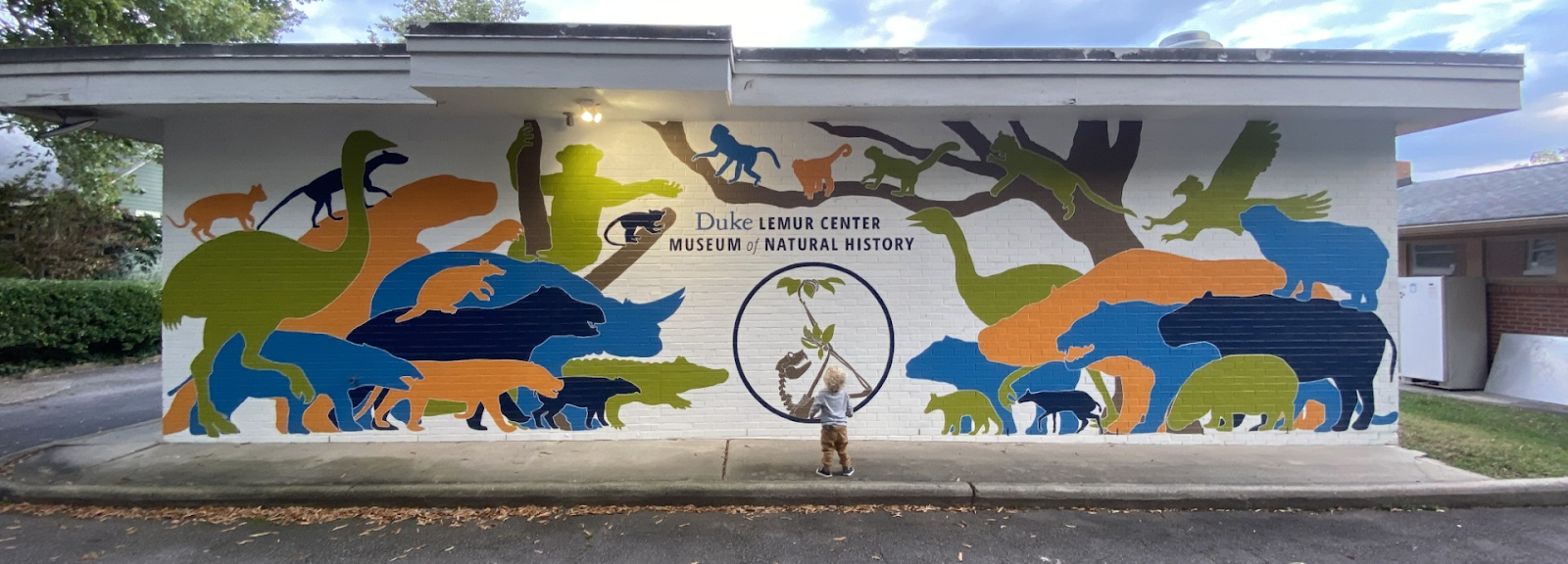
A few blocks from Duke’s East Campus, there is a small building whose past lives include a dentist office, a real estate office, and a daycare. Now it is a museum.
A mural on the back wall of the museum, showing animals like the elephant bird at full size. Photo courtesy of Matt Borths, Ph.D.
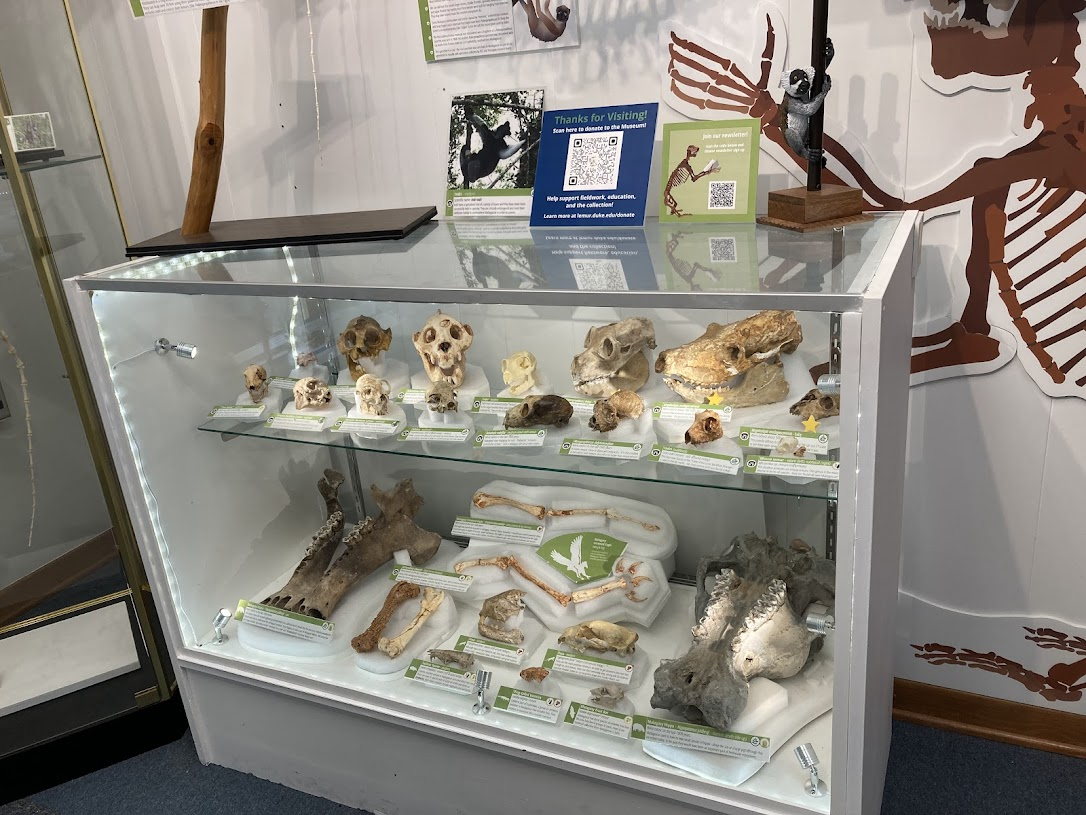
Glass cases in the front room are lined with ancient fossils and more recent specimens less than 10,000 years old. Take Lagonomico, a creature that lived some 12-15 million years ago and whose name means “pancake,” in reference to the smashed shape of its remains. Or the tiny skull of a modern-day cotton-top tamarin. Even the enormous egg of an elephant bird, a ten-foot-tall bird that lived in Madagascar until it went extinct sometime in the last 1000 years.
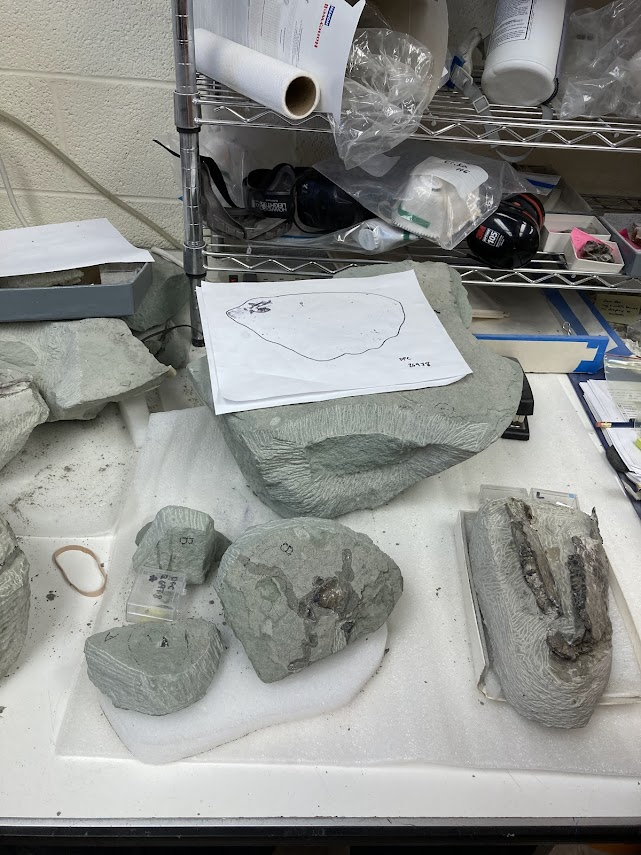
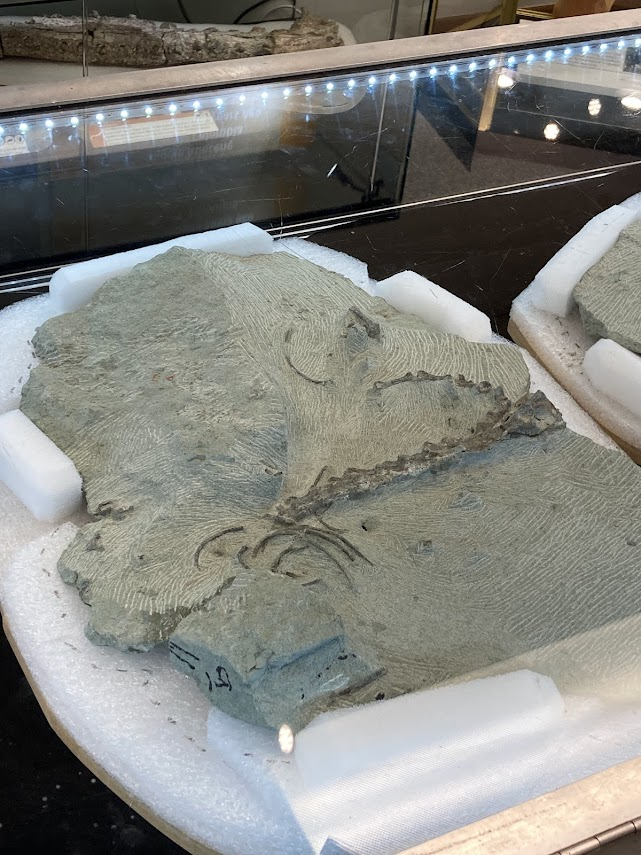
A back room holds fossil discoveries still encased in rock. Special tools and scanning technology will reveal the creatures inside, relics of a very different world that can still yield revelations millions of years after their deaths.
These fossils are still partly encased in rock. Special technology like CT scans can reveal which part of a rock contains a fossil. The marks on the paper indicate where a fossil is located.
Matt Borths, Ph.D., curator of the Duke Lemur Center’s fossils, explained that while many fossil collections focus on a particular location, this one has a different theme: the story of primate evolution.
Lemurs, Borths said, are our most distant primate relatives. About 60 million years ago, soon after the extinction of the dinosaurs, the “lemur line and monkey-ape-human line split.” Studying both modern lemurs and their ancestors can give us a “glimpse of a distant past.”
An ancient lemur ancestor from Wyoming. Primates went extinct in North America over 30 million years ago.
Primates are a group of mammals that include humans and other apes, monkeys, lemurs, lorises, bushbabies, and tarsiers. Many primates today live in Africa and South America, but they did not originate on either continent. Primates are believed to have evolved further north and migrated into Africa about 50 million years ago. As the global climate grew cooler and dryer, equatorial Africa remained warm and wet enough for primates. Over time, apes, monkeys, and lemurs diverged from their shared primate ancestors, but not all of them stayed in Africa.
Africa is currently home to bushbabies and lorises, which are both lemur relatives, but most of lemur evolution and diversification took place in Madagascar, the island nation where all of the world’s 100 species of lemurs live today. “New World monkeys,” meanwhile, are found in South America. How did lemurs and monkeys get from Africa—which was at the time completely surrounded by water—to where they live today? Both groups are believed to have crossed open ocean on rafts of plant material.
Scientists have direct evidence of modern animals rafting across bodies of water, and they believe that ancient lemur and monkey ancestors reached new land masses that way, too. Mangrove systems, adapted to ever-changing coastal conditions, are particularly prone to forming rafts that break away during storms. Animals that are on the plants when that happens can end up far from home. Not all of them survive, but those that do can shape the history of life on earth.
“Given enough time and enough unfortunate primates,” Borths said, “eventually you get one of these rafts that goes across the Mozambique Channel” and reaches Madagascar. Madagascar has been isolated since the time of the dinosaurs, and most of its species are endemic, meaning they are found nowhere else on earth. When lemur ancestors reached the island, they diversified into dozens of species filling different ecological niches. A similar process led to the evolution of New World monkeys in South America.
Some of the species in this case went extinct within the past few centuries.
The history of primate evolution is still a work in progress. The Duke Lemur Center Museum of Natural History seeks to fill in some of the gaps in our knowledge through research on both living lemurs and primate fossils. This museum, Borths said, “brings basically all of primate evolution together in one building.” Meanwhile, living lemurs at the Lemur Center can help researchers understand how primate diets relate to teeth morphology, for example.
Paleontology is the study of fossils, but what exactly is a fossil? The word “fossil,” Borths said, originally referred to anything found in the ground. Over time, it came to mean something organic that turns to stone. Some ancient organisms are not fully fossilized. They can still preserve bone tissue and even proteins, evidence that they have not yet transformed completely into stone. The current definition of a fossil, according to Borths, is “anything from a living organism that is older than 10,000 years old.” Specimens younger than that are called subfossils.
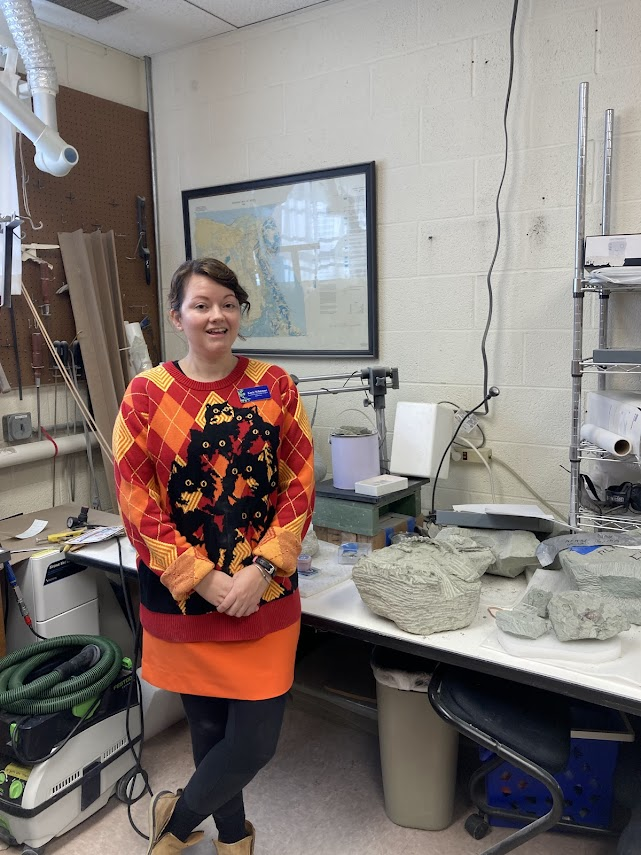
Fossil Preparator Karie Whitman in the Duke Lemur Center Museum of Natural History. The grooves in the stones are made by air scribe tools, which are used to separate fossils from surrounding rock.
The Lemur Center does important research on fossils, but that is not the only component of its mission. Education Programs Manager Megan McGrath said that the Lemur Center weaves together research, conservation, and education in an “incredibly unique cocktail” that “all forms a feedback loop.” McGrath and Borths also co-host a Duke Lemur Center podcast.
Conservation is a crucial component of the study of lemurs. Lemurs are the most endangered mammals on the planet, and some are already gone.
Human and wildlife survival are interlinked in complex ways, and conservation solutions must account for the wellbeing of both. Subsistence agriculture and other direct human activities can decimate ecosystems, but extinctions are also caused by broader issues like climate change, which threatens species on a global scale. Humanity’s impact on Madagascar’s wildlife over the last several thousand years is a “really complicated puzzle to tease apart,” McGrath said.
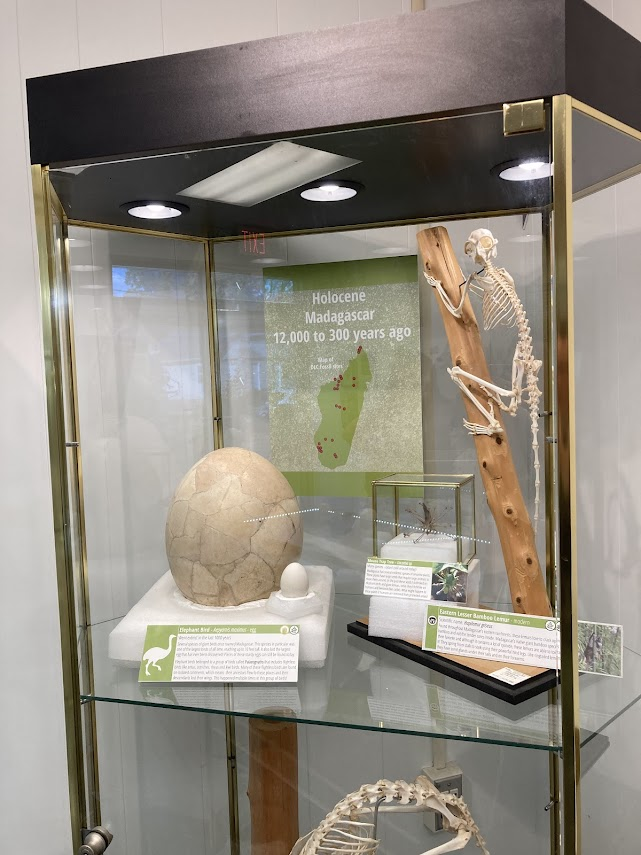
A display case in the museum, including an egg from the extinct elephant bird and a seed from a mousetrap tree. The mousetrap tree relies on large animals to disperse its seeds. That role was once filled by now-extinct species like the elephant bird. Now humans and cattle disperse the seeds instead.
Some of the museum’s specimens are truly ancient, but others are from modern animals or species that went extinct only recently. Giant elephant birds roamed Madagascar as recently as a thousand years ago. The sloth lemur may have survived until 400 years ago. Borths puts the timescale of recent extinctions into perspective. At a time when modern species like the white-tailed deer were already roaming North America, Madagascar was still home to creatures like sloth lemurs and ten-foot elephant birds.
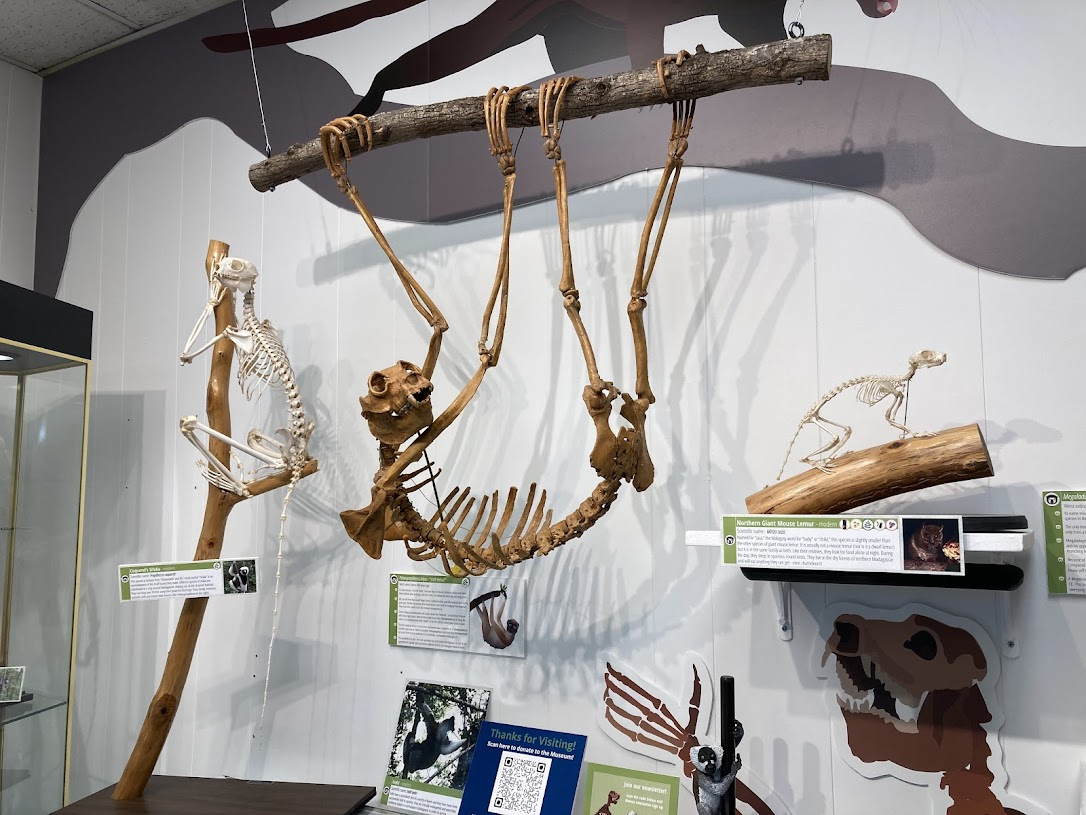
A model of a sloth lemur skeleton (center, hanging from branch). Sloth lemurs lived in Madagascar until they went extinct about 400 years ago.
A model of a sloth lemur hangs in the museum, but no one alive has ever seen one breathing. No one will ever see or hear one again. But a ghost of it may exist in Malagasy stories about the tretretre, a monster that was said to have long fingers and a short tail. The word tretretre is thought to be an onomatopoeia of the call of a sloth lemur, an animal whose own voice is gone forever.
Learn about these and other stories of our evolutionary cousins at the museum’s next open house on Saturday, November 23, from 1-4 PM.
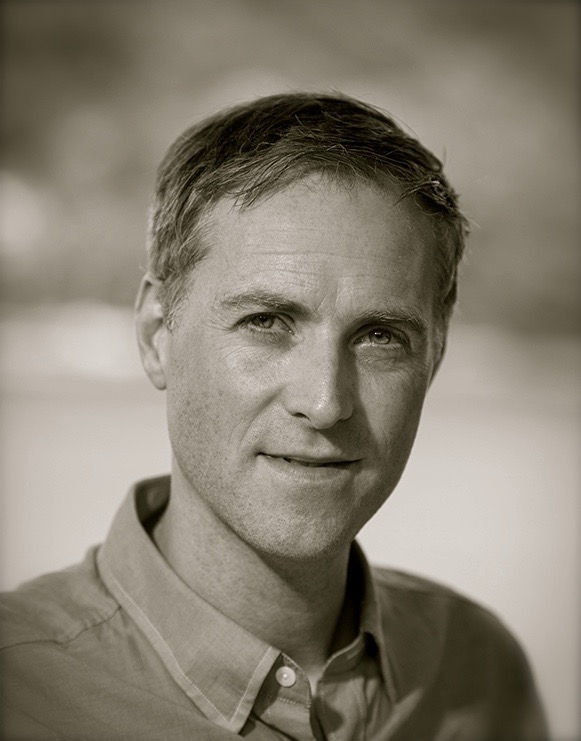
Richard Sever, Assistant Director of Cold Spring Harbor Laboratory Press in New York and Executive Editor for the Cold Spring Harbor Perspectives journals. Sever spoke at Duke about the benefits of sharing preprints of scientific papers. Photo courtesy of Sever.
Quality is of utmost importance in the world of scientific publishing, but speed can be crucial, too. Early in the COVID-19 pandemic, for instance, researchers needed to share updates quickly with other scientists. One solution is disseminating preprints of studies that have not yet been peer reviewed or published in a traditional academic journal. Richard Sever, Assistant Director of Cold Spring Harbor Laboratory Press in New York and Executive Editor for the Cold Spring Harbor Perspectives journals, recently visited Duke to discuss his work as the co-founder of bioRxiv and medRxiv, two of a number of servers that post preprints of scientific papers.
In traditional publishing, Sever says, “When you submit a paper to a good journal… most of the time it’s immediately rejected.” Of the papers that are considered by the journal, about half will ultimately be rejected by editors. Even for successful papers, the entire process can take months or years and often ends with the paper being placed behind a paywall.
Posting preprints on servers like bioRxiv, according to Sever, doesn’t preclude the studies from eventually being published in journals. It just “means the information is public much more quickly.”
In 2013, Cold Spring Harbor Laboratory released bioRxiv. In the time since, there has been a “proliferation of discipline-specific servers” like chemRxiv, socarXiv, NutriXiv, and SportRxiv.
How do these preprint servers work? Scientists submit a study to an Rxiv server, and then after a brief screening process the paper is made visible to everyone within hours to days. A frequent concern about these servers is that they could be used to disseminate poor-quality science or false information. Since the priority is to share information rapidly, the staff and volunteers in charge of screening cannot perform extensive peer review of every submission. Instead, the screening process focuses on a few key criteria. Is the information plagiarized? Is it actual research? Is it science or non-science? And most importantly, could it be dangerous?
In 2019, Sever and his colleagues at Cold Spring Harbor collaborated with Yale and the BMJ Group to launch medRxiv, a server that focuses on health research. Since the consequences of posting misleading clinical information could be more severe, it uses enhanced screening for the papers that are submitted.
Papers can also be revised after being uploaded to a server like bioRxiv. A scientific journal, on the other hand, may occasionally publish a correction for a published article but not a completely new version.
What are the benefits of preprint servers? Releasing preprints allows scientists to transmit study results more quickly. It can also increase visibility, especially for scientists early in their careers who don’t have extensive publishing records. Grant or hiring committees can look at preprints months before a paper would be published in a journal. This emphasis on speed also accelerates communication and discovery, and the lack of paywalls could make science more accessible. Additionally, preprint servers can give researchers an opportunity to get broader feedback on their work before they submit to journals.
So why submit to scientific journals at all? Traditional publishing is slower, but it aims to assess scientific rigor and quality and, critically, the importance of the work. “The currency of academic career progression,” Sever says, “is journal articles.” Another attendee of Sever’s lecture brought up the value of curation, using the example of movie reviews on Rotten Tomatoes. Sever believes that the sort of curation performed by journals is different. Movie reviewers give their opinions later in the process; they don’t stop production of a movie halfway through, saying “I want a happy ending.” Sever believes preprint servers allow science to be shared more widely without putting the final decision in the hands of editors.
What are the concerns regarding preprint servers? One concern scientists may have is being “scooped,” or sharing information only for another researcher to claim it as their own. Sever does not find the scooping argument to be very persuasive. “How can you be scooped if you’re using an anti-scooping device?” He believes that Rxiv servers, since they allow rapid dissemination of results, actually provide a safeguard against people passing ideas off as their own because the preprint author is in control of the timing. Another concern occasionally expressed is that having a paper on an Rxiv server may make it harder to get it accepted by a journal. Sever is unconvinced, pointing out that most papers are rejected by journals anyway.
A more pressing concern may be the potential for preprint servers to disseminate bad science, though Sever notes that there are “a lot of not-very-good papers in traditional publishing” as well. Besides, academics’ careers depend on producing high-quality work, which should be an incentive not to share bad work, whether on preprint servers or in scientific journals.
Nonetheless, people do sometimes submit pseudoscience to preprint servers. “We have been sent HIV denialism, we have been sent anti-vaxx things,” Sever says. Some people, unfortunately, are motivated to share false information disguised as legitimate science. That is why bioRxiv screens submissions—less for accuracy and more for outright misinformation.
A more recent concern is the potential for AI-generated “papers.” But like journal articles, all papers posted on bioRxiv are kept there permanently, so even a fake paper that makes it through the screening process could be caught later. Anyone doing this risks future exposure. A more insidious form of this problem, Sever says, is “citation spam,” where someone generates papers under another person’s name but cites themselves in the references to improve their own citation record.
“Like anything,” Sever says, “we’ll have to accept that there’s some garbage in there, there’s some noise.” The vessel, he says, is no guarantee of accuracy, and “at some point you have to trust people.”
Sever believes preprint servers play an important role by “decoupling dissemination from certification.” He hopes they can open the door to “stimulating evolution of publishing.”
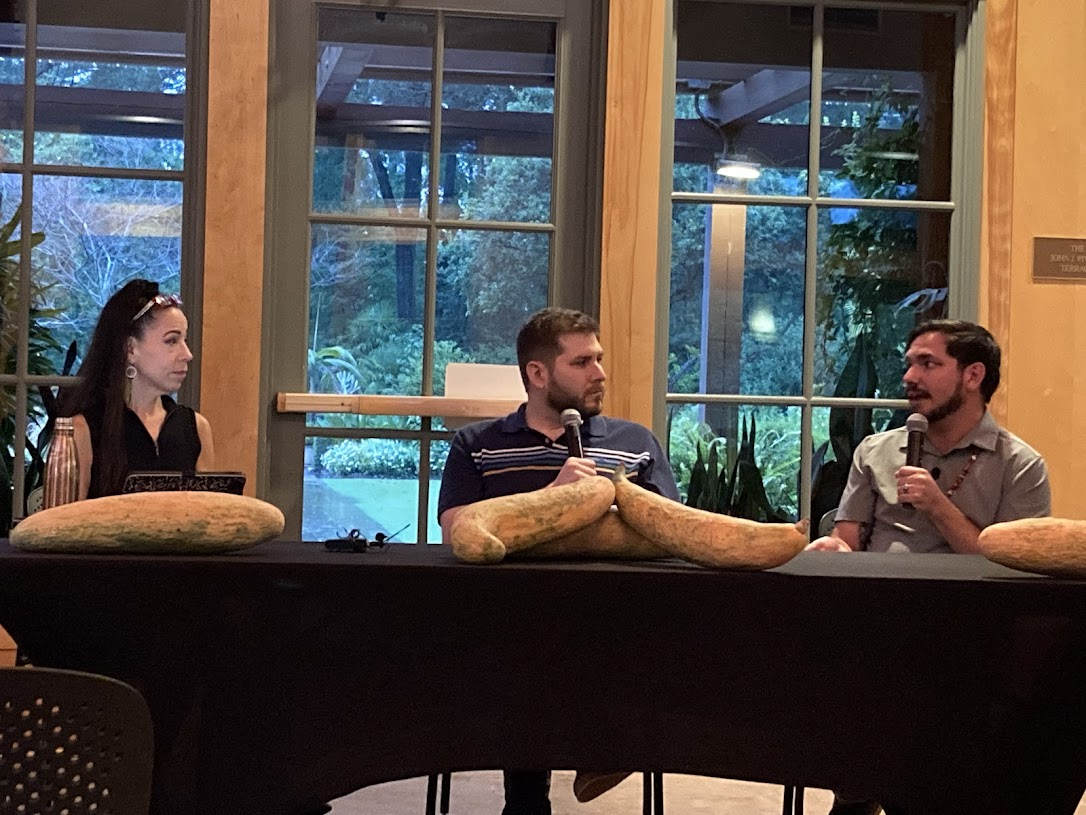
From left: Courtney Lewis, Roo George-Warren, and Aaron Baumgardner at a Duke Gardens panel about food sovereignty.
“Larger mainstream society is so removed from their food,” says Courtney Lewis, a Duke professor and Cherokee Nation citizen. She recently moderated a discussion at the Duke Gardens about food sovereignty with two Catawba Nation citizens.
Roo George-Warren is an artist, educator, and eco-cultural restorationist, and Aaron Baumgardner is a basket maker, seed steward, and plant ecologist. Their conversation was moderated by Lewis, who is the Crandall Family Associate Professor of Cultural Anthropology and Inaugural Director of the Native American Studies Initiative at Duke University.
What is food sovereignty?
“Most people… are more familiar with the term food security,” says George-Warren, but he considers that term insufficient “because technically that can be solved through Walmart gift cards.” Food sovereignty, in George-Warren’s view, encompasses bigger questions about cultural value, rights to seeds, and who performs labor involving food.
“How are we going to take control of our food systems on a systematic level?” he asks.
Baumgardner thinks about food sovereignty as a “community’s ability to take control of the entire food system and not have to rely on any outside factors.” That means asking questions like “Where’s the food coming from, and how’s the food getting to people’s tables?” as well as what food is on people’s tables.
Food sovereignty, Baumgardner says, is about the ability to take care of ourselves, even in a crisis, by controlling food production and distribution. “If we aren’t a food-sovereign nation, are we really a sovereign nation?”
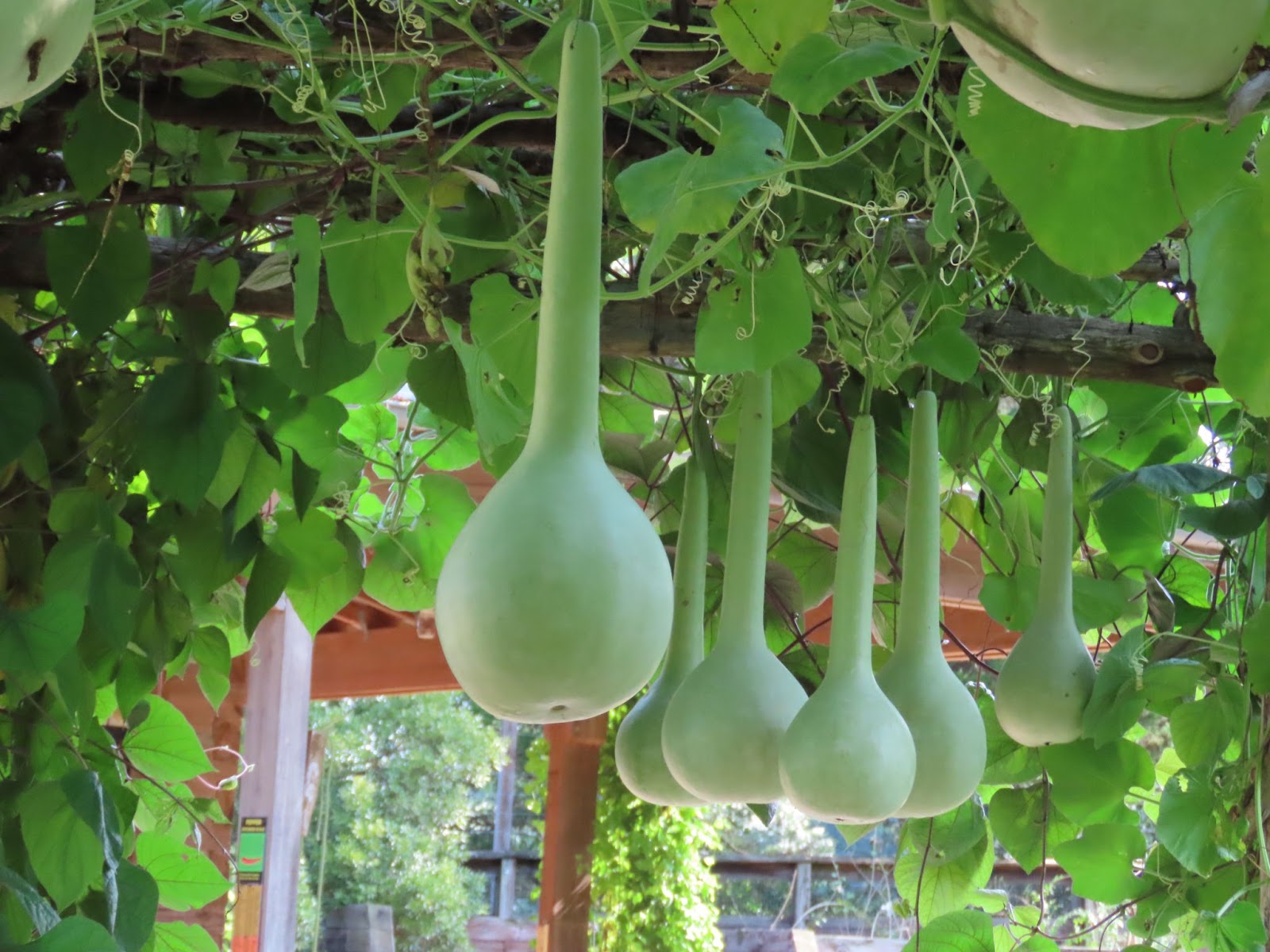
Gourds in the Southeastern Indigenous Peoples’ Garden seasonal display area at the Duke Gardens. Some of the seeds in this garden were shared by Lewis, who got them from the Eastern Band of Cherokee, Cherokee Nation seed banks, community members, and her own garden. Photo by Duke Gardens volunteer photographer Sue Lannon.
How does seed stewardship relate to food sovereignty?
“The seeds are our relatives, and those seeds need to grow,” Baumgardner says. Certain plants hold great importance to the Catawba people, and efforts to “rematriate” their seeds helps ensure the plants’ survival now and in the future.
Seed stewardship, Baumgardner says, is about more than preserving seeds. It also involves actively using the plants that have been important to Catawba culture for generations, restoring a “relationship… of seed-saving.”
Corn, George-Warren says, has been grown by the Catawba for millennia. “We’re standing at one end of the last 500 years,” he says, “looking back at everything that has been lost and taken from us.” That requires mourning but also efforts to move forward.
Baumgardner sees value in blending traditional knowledge and western science. He mentions a partnership with Davidson College in which Catawba citizens and researchers at the college are collaborating on experiments with corn. There are records of Catawba people bending corn stalks back at a certain point in their development, and the work at Davidson is exploring whether that practice could help protect corn from fungus.
George-Warren discusses another program that distributes local produce to tribal families, serving 250-300 families per month. Such programs aim to increase access to local food and restore relationships between people and plants.
How does natural resource management relate to your work?
“I don’t think that that accurately reflects how our people see the world or our relationship to it,” Baumgardner says about the term “natural resources.” He explains that the Catawba language does not have a word that directly translates to “natural” or “resources.” The term resources, he says, “implies that something is to be used… that it has a finite purpose,” which is not how the Catawba have historically viewed the environment. And in a world not divided into “natural” and “unnatural,” that linguistic distinction wasn’t needed, either.
Baumgardner believes that natural and cultural resources should be intertwined and that relationships to food should “create space for ceremony, create space for thanksgiving.”
Land can be nurtured without viewing it as an expendable, finite “resource.” European settlers, Lewis says, viewed the Appalachian region as a garden of Eden. “The reason it was that beautiful,” she says, “is you had entire nations actually managing that forest.”
George-Warren references a false narrative that native peoples just have an intuitive or magical knowledge of the earth. That is “ludicrous,” he says—knowledge comes from experimentation, observation, and having lived in a place for a long time.
George-Warren describes himself and Baumgardner as “ecocultural restorationists,” working to preserve both culture and ecology. The idea that humans and nature are inherently divided, he says, plays into dangerous narratives: that humans are a “virus” whose “only role is a damaging one” and that we should “put nature in a glass box” to protect it.
“I hate both of those views,” George-Warren says, “because the reality is we are a part of nature… we can help it flourish.”
“We have to create the culture of caring about those things,” George-Warren says. “We want people to work toward that interspecies flourishing.”
Look at the nearest window. What did you see first—the glass itself or what was on the other side? For birds, that distinction is a matter of life and death.
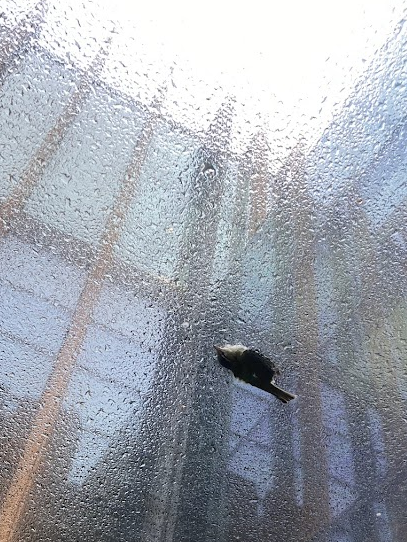
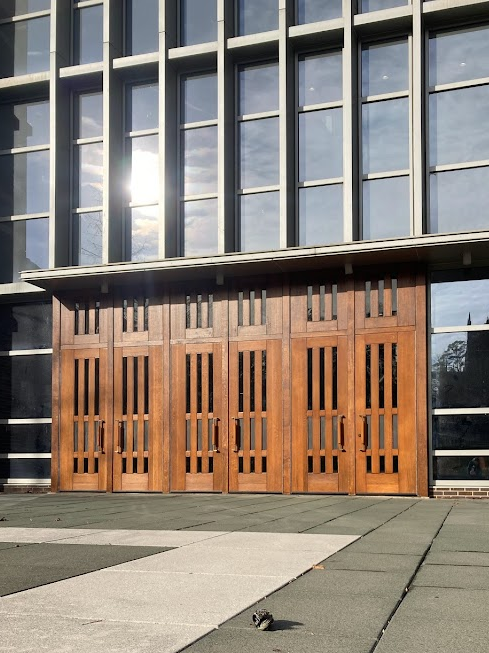
A dead red-eyed vireo above the entrance to the Brodhead Center at Duke. Every year, millions of birds die after colliding with windows. Buildings with lots of glass are particularly dangerous.
Every year, up to one billion birds die from hitting windows. Windows kill more birds than almost any other cause of human-related bird mortality, second only to feral and domestic cats. Both the transparency and reflectiveness of glass can confuse flying birds. They either don’t see the glass at all and try to fly through it, or they’re fooled by reflections of safe habitat or open sky. And at night, birds may be disoriented by lit-up buildings and end up hitting windows by mistake. In all cases, the result is usually the same. The majority of window collision victims die on impact. Even the survivors may die soon after from internal bleeding, concussions, broken bones, or other injuries.
Madison Chudzik, a biology Ph.D. student in the Lipshutz Lab at Duke, studies bird-window collisions and migrating birds. “Purely the fact that we’ve built buildings is killing those birds,” she says.
Every spring and fall, billions of birds in the United States alone migrate to breeding and wintering grounds. Many travel hundreds or thousands of miles. During peak migration, tens of thousands of birds may fly across Durham County in a single night. Not all of them make it.
Chudzik’s research focuses on nocturnal flight calls, which migrating birds use to communicate while they fly. Many window collision victims are nocturnal migrants lured to their deaths by windows and lights. Chudzik wants to know “how we can use nocturnal flight calls as an indicator to examine collision risks in species.”
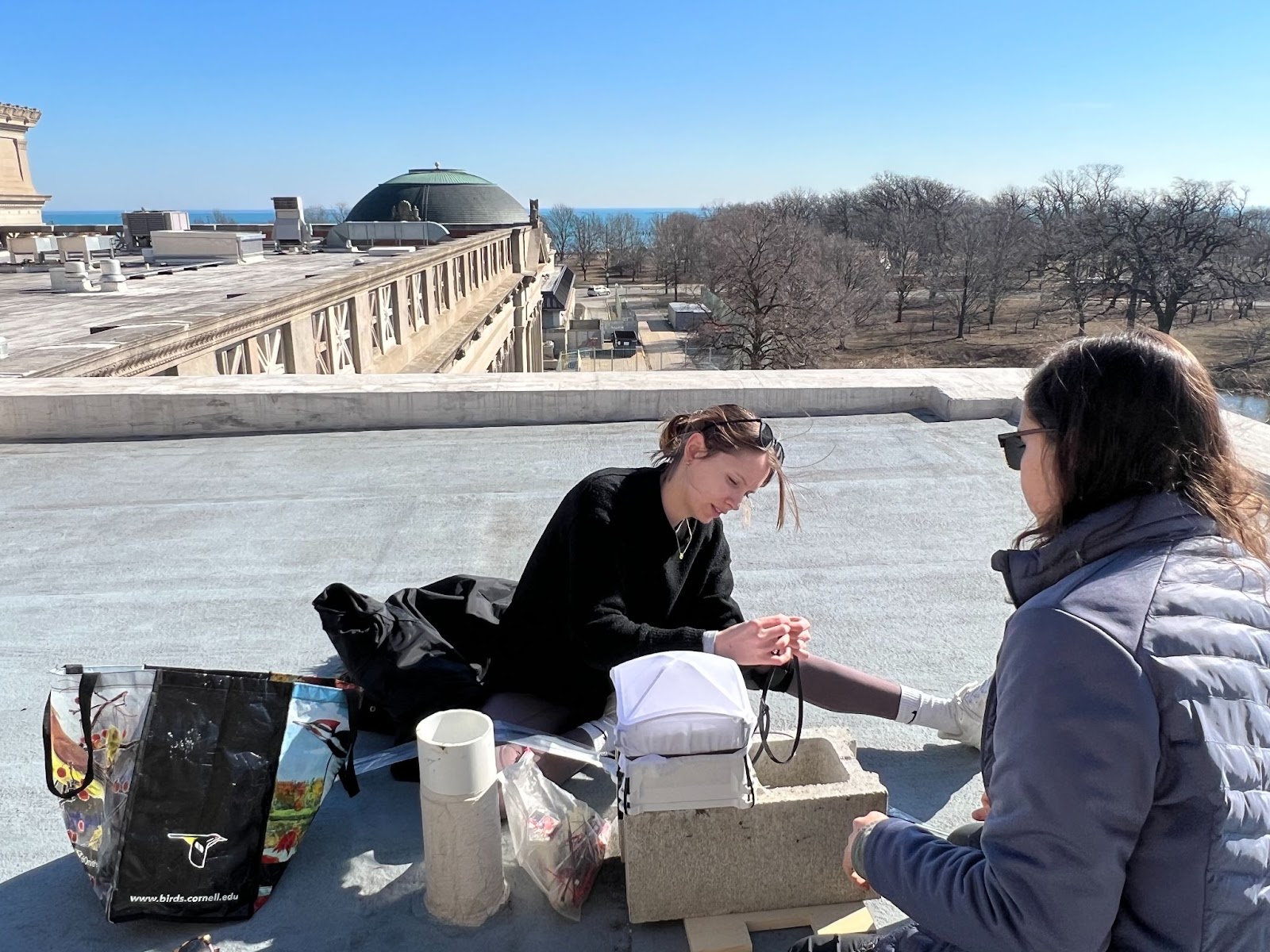
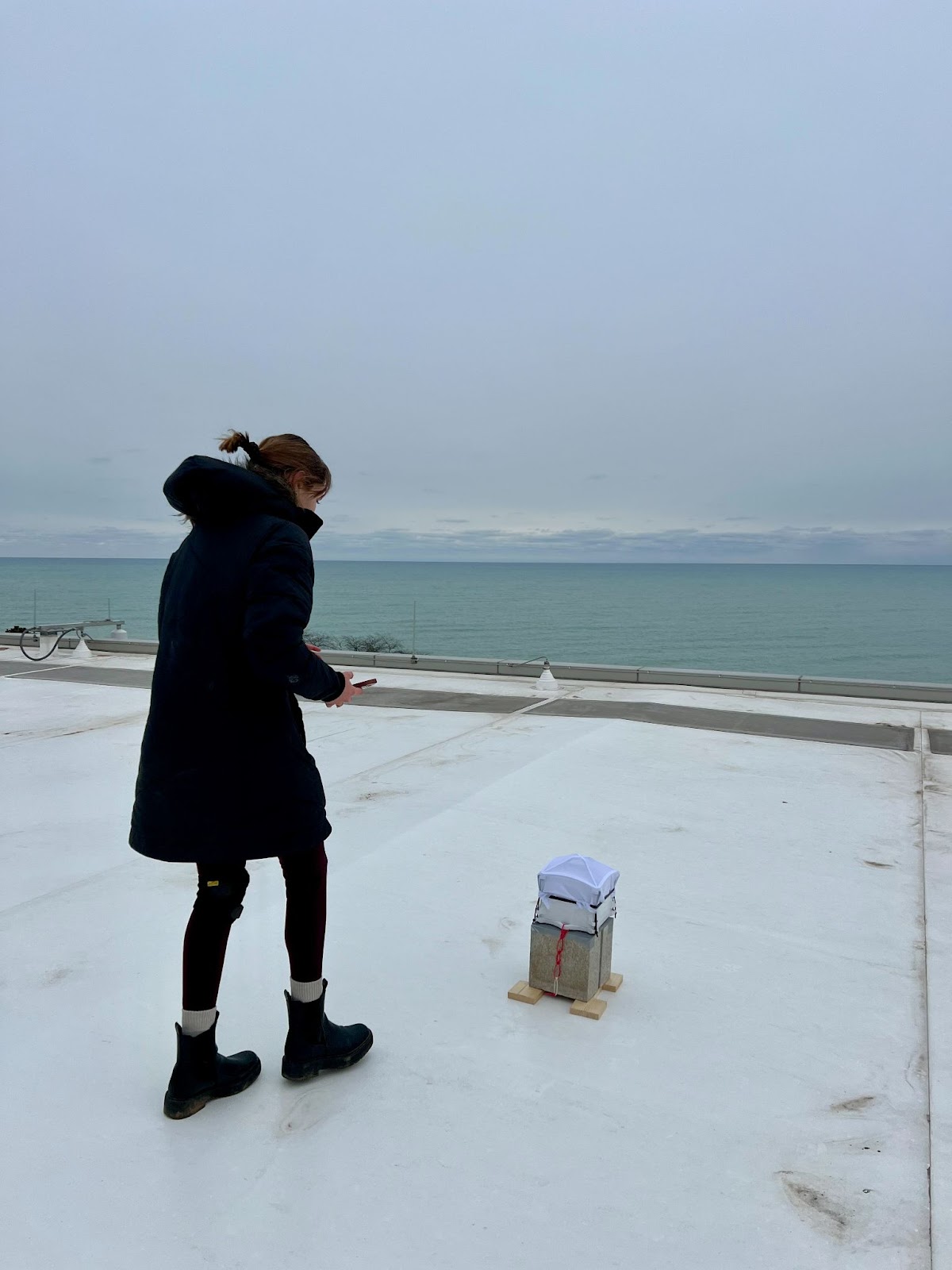
Chudzik (back) setting up one of her recording devices on the Museum of Science and Industry in Chicago. The devices record flight calls from birds migrating at night. Image courtesy of Chudzik.
Previous research, Chudzik says, has identified a strong correlation between the number of flight calls recorded on a given night and the overall migration intensity that night. “If sparrows have a high number of detections, there is likely a high number migrating through the area,” Chudzik explains. But some species call more than others, and there is “taxonomic bias in collision risk,” with some species that call more colliding less and vice versa. Chudzik is exploring this relationship in her research.
Unlike bird songs, nocturnal flight calls are very short. The different calls are described with technical terms like “zeep” and “seep.” Chudzik is part of a small but passionate community of people with the impressive ability to identify species by the minute differences between their flight calls. “It’s a whole other world of… language, basically,” Chudzik says.
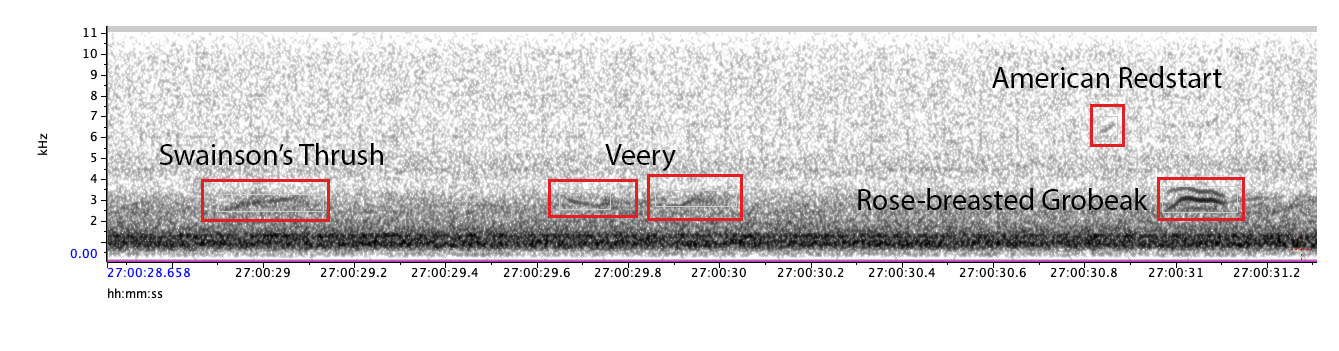
Chudzik can identify a species not only by hearing its flight call but also by seeing its spectrogram, a visual representation of sound. This spectrogram, from a recording on Adler Planetarium, has flight calls from four species. The x-axis represents time, while the y-axis shows frequency. The brightness or intensity indicates amplitude. Image from Chudzik.
She began studying nocturnal flight calls for research she did as an undergraduate, but her current project no longer needs to rely on talented humans to identify every individual call. A deep learning model called Nighthawk, trained on a wealth of meticulous flight call data, can identify calls from their spectrograms with 95% accuracy. It is free and accessible to anyone, and much of the data it’s been trained on comes from non-scientists, such as submissions from a Facebook community devoted to nocturnal flight calls. Chudzik estimates that perhaps a quarter of the people on that Facebook page are researchers. “The rest,” she says, “are people who somehow stumbled upon it and… fell in love with nocturnal flight calling.”
In addition to studying nocturnal flight calls, Chudzik’s research will investigate how topography, like Lake Michigan by Chicago, affects migration routes and behavior and how weather affects flight calls. Birds seem to communicate more during inclement weather, and bad weather sometimes triggers major collision events. Last fall in Chicago, collisions with a single building killed hundreds of migratory birds in one night.
Chudzik had a recorder on that building. It had turned off before the peak of the collision event, but the flight call recordings from that night are still staggering. In one 40-second clip, there were 300 flight calls identified. Normally, Chudzik says, she might expect a maximum of about seven in that time period.
Nights like these, with enormous numbers of migrants navigating the skies, can be especially deadly. Fortunately, solutions exist. The problem often lies in convincing people to use them. There are misconceptions that extreme changes are required to protect birds from window collisions, but simple solutions can make a huge difference. “We’re not telling you to tear down that building,” Chudzik says. “There are so many tools to stop this from happening that… the argument of ‘well, it’s too expensive, I don’t want to do it…’ is just thrown out the window.”
A yellow-bellied sapsucker collision casualty in front of the French Family Science Center last year.
What can individuals and institutions do to prevent bird-window collisions?
Turn off lights at night.
For reasons not completely understood, birds flying at night are attracted to lit-up urban areas, and lights left on at night can become a death trap. Though window collisions are a year-round problem, migration nights can lead to high numbers of victims, and turning off non-essential lights can help significantly. One study on the same Chicago building where last year’s mass collision event occurred found that halving lighted windows during migration could reduce bird-window collisions by more than 50%.
Chudzik is struck by “the fact that this is such a big conservation issue, but it literally just takes a flip of a switch.” BirdCast and Audubon suggest taking actions like minimizing indoor and outdoor lights at night during spring and fall migration, keeping essential outdoor lights pointed down and adding motion sensors to reduce their use, and drawing blinds to help keep light from leaking out.
Use window decals and other bird-friendly glass treatments.
There are many products and DIY solutions intended to make windows safer for birds, like window decals, external screens, patterns of dots or lines, and strings hanging in front of a window at regular intervals. For window treatments to be most effective, they should be applied to the exterior of the glass, and any patterning should be no more than two inches apart vertically and horizontally. This helps protect even the smallest birds, like kinglets and hummingbirds.
It can be hard to see from a distance, but these windows on Duke’s Fitzpatrick Center have been retrofitted with tiny white dots, an effective strategy to reduce bird-window collisions.
A 2016 window collision study at Duke conducted by several scientists, including Duke Professor Nicolette Cagle, Ph.D., identified the Fitzpatrick Center as a window collision hotspot. As a result, Duke retrofitted some of the building’s most dangerous windows with bird-friendly dot patterning. Ongoing collision monitoring has revealed about a 70% reduction in collisions for that building since the dots were added.
One obstacle to widespread use of bird-friendly design practices and window treatments is concerns about aesthetics. But bird-friendly windows can be aesthetically pleasing, too, and “Dead birds hurt your aesthetic anyway.”
If nothing else, don’t clean your windows.
Bird-window collisions don’t just happen in cities and on university campuses. In fact, most fatal collisions involve houses and other buildings less than four stories tall. Window treatments like the dots on the Fitzpatrick building can be costly for homeowners, but anything you can put on the outside of a window will help.
“Don’t clean your windows,” Chudzik suggests—smudges may also help birds recognize the glass as a barrier.
Window collisions at Duke
The best thing Duke could do, Chudzik says, is to be open to treating more windows. Every spring, students in Cagle’s Wildlife Surveys class, which I am taking now, collect data on window collision victims found around several buildings on campus. Meanwhile, a citizen science iNaturalist project collects records of dead birds seen by anyone at campus. If you find a dead bird near a window at Duke, you can help by submitting it to the Bird-window collisions project on iNaturalist. Part of the goal is to identify window collision hotspots in order to advocate for more window treatments like the dots on the Fitzpatrick Center.
Spring migration is happening now. BirdCast’s modeling tools estimate that 260,000 birds crossed Durham County last night. They are all protected under the Migratory Bird Treaty Act. However, Chudzik says, “We haven’t thought to protect them while they’re actually migrating.” The law is intended to protect species that migrate, but “it’s not saying ‘while you are migrating you have more protections,’” Chudzik explains. Some have argued that it should, however, suggesting that the Migratory Bird Treaty Act should mandate safer windows to help protect migrants while they’re actually migrating.
“This whole world comes alive while we’re asleep, and… most people have no idea,” Chudzik says about nocturnal flight calls. She is shown here on Northwestern University, one of the Chicago buildings where she has placed recorders for her research. Photo courtesy of Chudzik.
We can’t protect every bird that passes overhead at night, but by making our buildings safer, we can all help more birds get one step closer to where they need to go.