Research Blog

Following the people and events that make up the research community at Duke

Students exploring the Innovation Co-Lab

How To Get Your Foot In The Door At A Research Lab

By: Thabit Pulak

So now you are at Duke — one of the world’s best research universities — but now what? You might be taking cool classes, but how can you take advantage of the world-class research happening here? Roughly 50 percent of Duke undergrads do so at some point. Getting involved in research as a freshman might sound intimidating (I know it did to me!), but a little luck and perseverance can get you off to a strong start.

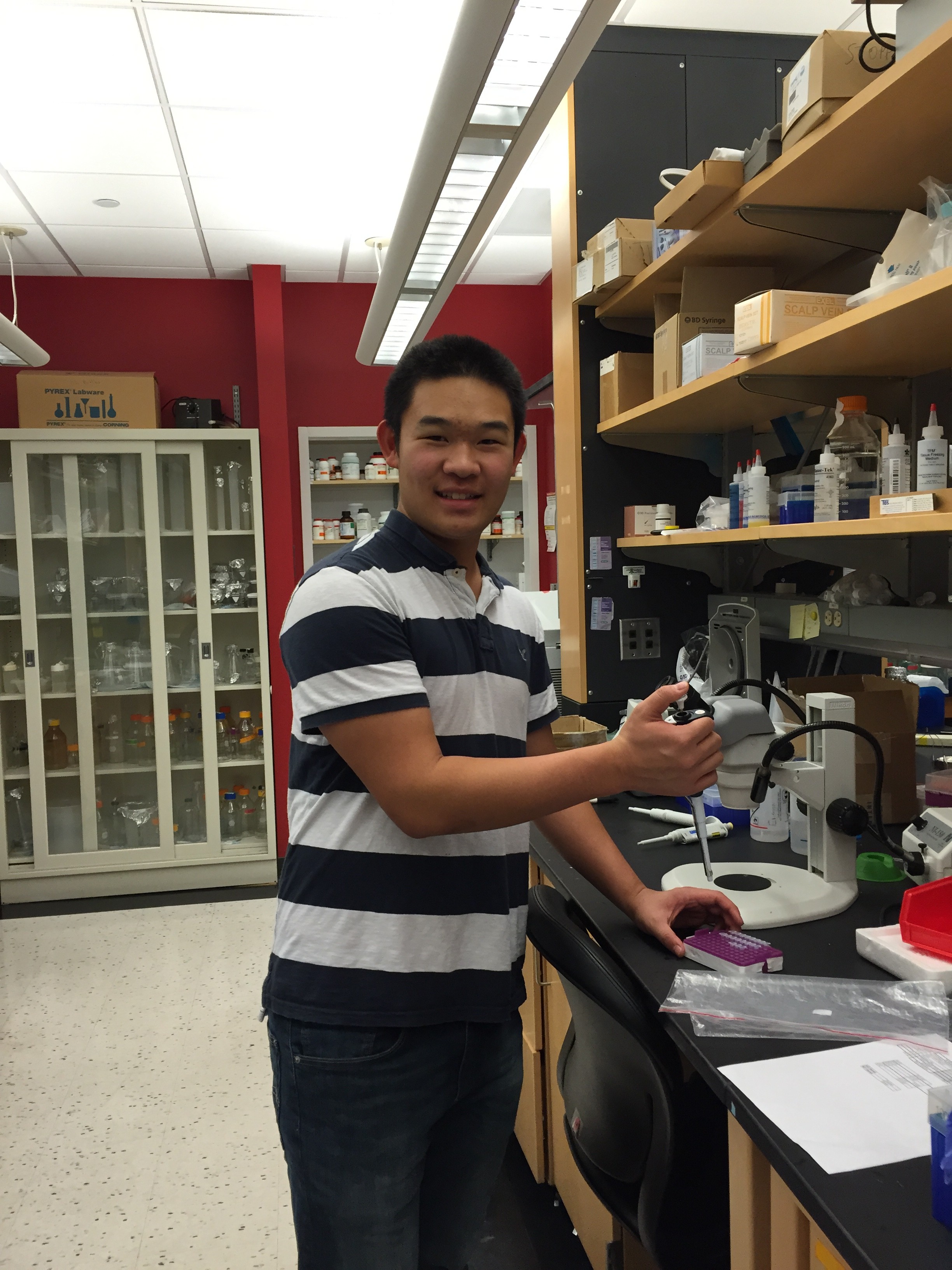
Alan working in Dr. Eroglu's laboratory.

Alan working in Dr. Eroglu’s laboratory.

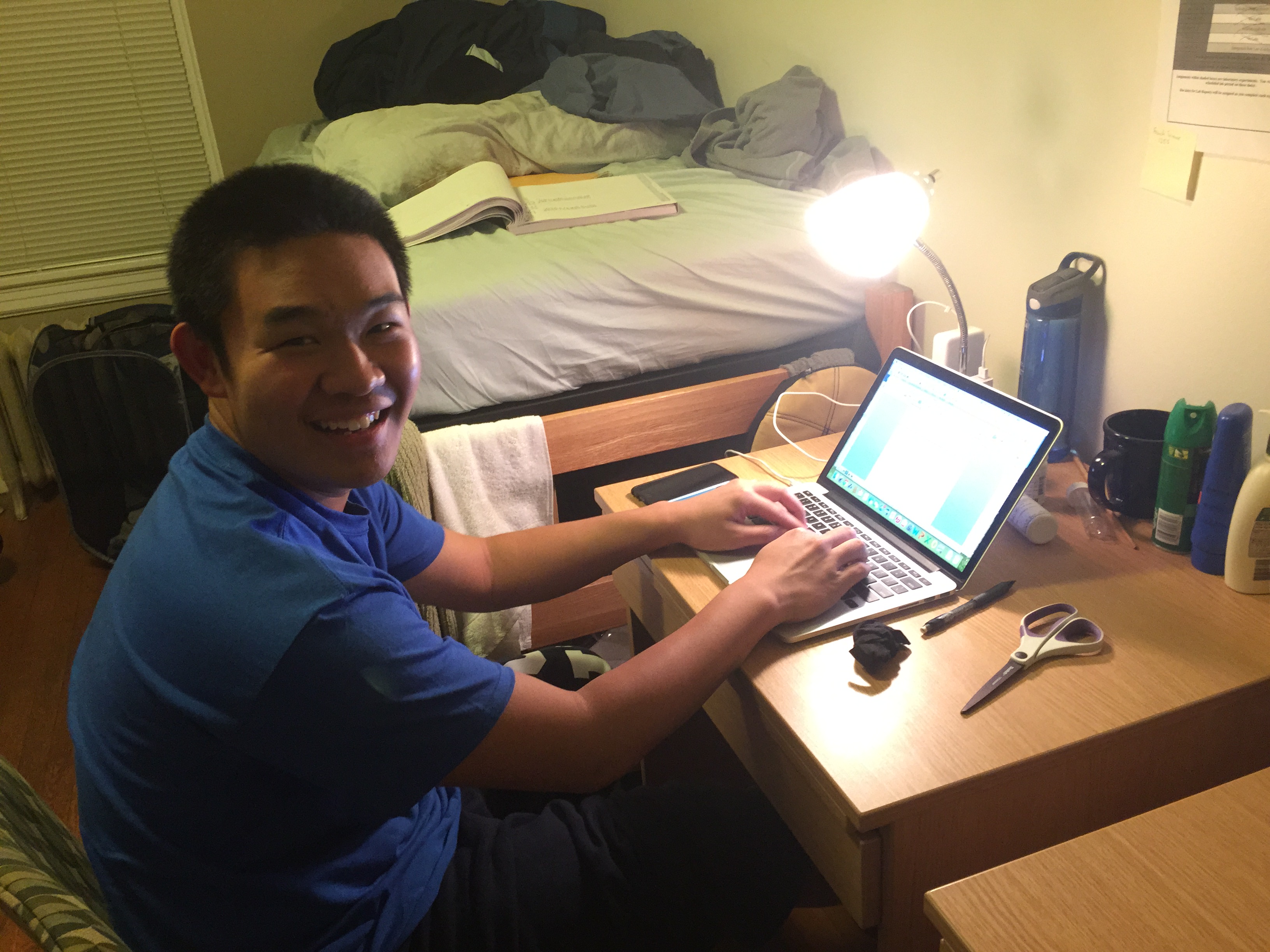
I had the opportunity to talk with Duke freshman Alan Kong about his experiences trying to get into research labs, and how he successfully ended up finding one to join. Alan is considering majoring in biology whilst on the premed track.

He initially started to look into labs within a month of  starting classes at Duke. He spent about two months sending out emails to professors who were working on interesting projects.

“It was a very frustrating search, and initially difficult. I emailed five professors, and emailed each many times,” Alan said. “But perseverance ultimately paid off.”

Alan now works in the lab of Dr. Eroglu who is an assistant professor of cell biology, associated with the Duke School of Medicine. According to the Duke Institute of Brain Science website description, Eroglu’s laboratory “is interested in understanding how central nervous system (CNS) synapses are formed.”

Alan was also accepted into two others labs, but ultimately felt Dr. Eroglu was the best fit. “I picked Eroglu because her research was very interesting, and relevant to my interests,” Alan says. “I felt I could learn more interesting techniques in research, such as working with live animals.”

Now, Alan has been working in Dr. Eroglu’s lab for a month. When I asked him how it was going, with a smile he exclaimed, “It’s great!”

“Right now I am learning techniques such as genotyping, western blot. I even took out the retina of a rat!” Alan said. “I am learning the ropes of the lab, and my mentor said that down the road, if I learn properly, I can eventually work on my own independent project!”

When asked for any advice for other students thinking of getting into research, Alan said “Persistence is key — don’t give up! It’s a difficult process; don’t let small things get in the way. Keep trying until you find one.”

Alan

“Persistence is key – don’t give up!” Alan says

Learn more:

More information regarding Dr. Eroglu and her research: http://www.dibs.duke.edu/research/profiles/46-agla-eroglu

List of all Duke Faculty affiliated with Cell Biology with contact details: http://www.cellbio.duke.edu/all-faculty/

Summer research opportunities in math and statistics: http://bigdata.duke.edu/research/?field_project_topics_tid=19

Research opportunities in biology: http://cubr.biology.duke.edu/projects

For other research and summer opportunities visit https://biology.duke.edu/undergraduate/current-students/research-independent-study/summer-opportunities

For a list of research opportunities across the sciences, arts, humanities and social sciences visit: http://undergraduateresearch.duke.edu/uploads/media_items/summer-2015-funding-opps.original.pdf


More Elephants Means Fewer Trees in Kruger National Park

By Duncan Dodson

Imagine learning research methods while also getting charged by a rhino, observing a pride of lions hunting warthogs, and glimpsing a cheetah and her cub.

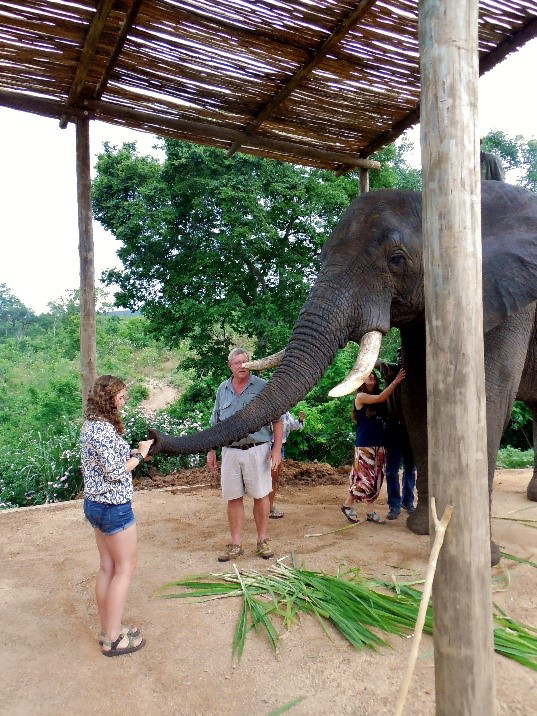
Lizzie feeding an elephant in Kruger National Park in South Africa. Her research attempted to map woody tree coverage in a section of the park since rising elephant populations has resulted in the destruction of woody trees.

Lizzie feeding an elephant in Kruger National Park in South Africa. Her research attempted to map woody tree coverage in a section of the park since rising elephant populations has resulted in the destruction of woody trees.

Elizabeth “Lizzie” Hoerauf experienced this last summer with five other students from Yale, Vanderbilt, Duke, and Reed Universities. The Organization for Tropical Studies (OTS) brought them to Kruger National Park in South Africa, charging them with researching various plants and animals in the park — with a primary focus on the effects of the park’s growing elephant population.

Culling of elephants – i.e., reducing their populations by selective slaughter — has been banned since 1994, resulting in a significant increase in the elephant population. This seems admirable, yet as the increasingly abundant massive animals roam the savanna they knock down more trees. Fewer trees across the park means lower habitat diversity for the park’s other plants and animals.

Lizzie’s project laid the groundwork for other students’ surveying efforts. To map woody cover, Lizzie took overhead images from previous park data of one of the four supersites that make up the park and overlaid them using Geographic Information Systems (GIS) software.

Her project did not come without its struggles. One moment she would emerge from her tent with a look of triumph telling her peers, “Guys look how amazing this is!” The next, disgruntled and lamenting, “Everything crashed….” However, her ultimately successful data consolidation demonstrated that less than ten percent of the area she studied was now populated with tall trees — a significant decrease from years past.

With some time to reflect Lizzie says that she learned more from this project than in the classroom. When I asked her if she had interests in returning to project in the future she noted a preference to pursue field research projects of her own. Lizzie did let me know that OTS is a wonderful program that Duke offers — it felt rewarding to be a small part of a massive and constantly evolving field research project.

Using Geographic Information Systems (GIS) software, Lizzie was able to map out and analyze woody tree cover for one of the supersites of the park. Her analysis found approximately 6 percent of the supersite to be covered by tall trees, much lower than previous years (12 percent in 1940 or 9 percent in 1974).

Using Geographic Information Systems (GIS) software, Lizzie was able to map out and analyze woody tree cover for one of the supersites of the park. Her analysis found approximately 6 percent of the supersite to be covered by tall trees, much lower than previous years (12 percent in 1940 or 9 percent in 1974).

RISK: The Adolescent Mind

By Anika Radiya-Dixit

Have you ever been labeled an out-of-control teenager? A risky driver? An impulsive troublemaker? Here’s the bad news: That’s partially correct. The good news? It’s not your fault: blame the brain.

On November 18, the department of Psychology and Neuroscience introduced students to “The Origins of Heightened Risk Behavior in Adolescence.” The presenter, Dustin Albert, is a PhD research scientist at the Center for Child and Family Policy here at Duke University, who is interested in cognitive neuroscience, problem behaviors, and peer influence.

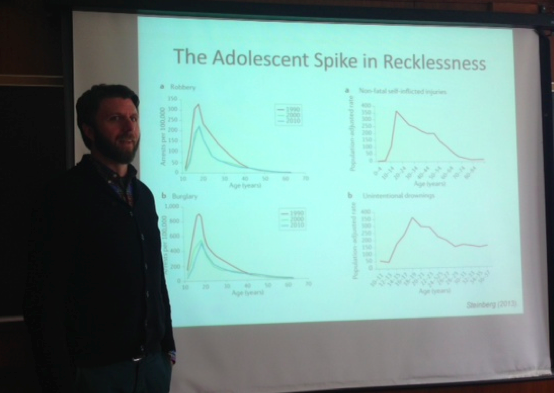
Researchers have identified the stage of adolescence as the peak time of health and performance, but at the same time, they noticed a jump in morbidity and mortality as children approached teen years, as seen in the graphs below. Specifically, adolescents show increased rates of risky behavior, alcohol use, homicide, suicide, and sexually transmitted diseases. However, as Allen tells the audience, “These are only the consequences.” In other words, what teenagers are stereotypically ridiculed for is actually the result of something else. If that’s the case, then what are the causes?

Professor Albert

Professor Albert explaining the spike in risky behavior during teenage years.

Psychologically speaking, researchers believed that these behaviors are caused by a lack of rational decision, perhaps because adolescents “are unable to see their own vulnerability” to the outcomes, meaning that teens are apparently inept at identifying consequences to their actions. However, the studies they took demonstrated that adolescents are not only able to see their own vulnerability, but are also able to intelligently evaluate costs and effects to a certain decision. If teenagers are so smart, then what is actually causing this “risky behavior”?

One important reason Professor Albert discussed is brain activity and maturation before, during, and after adolescence. As a child ages from early to middle adolescence, fast maturation of incentive processing circuitry drives sensation seeking – in other words, the willingness to take risks in order to gain a reward increases as the child approaches teen years. In the brain, this occurs due to increased dopamine availability in reward paths as well as heightened sensitivity to monetary and social reward cues. In one interesting study, adolescents were instructed to press a button only when they saw an angry face. However, the researchers noticed that when the teens saw a happy face, they had a “particularly difficult time restraining themselves” to not press the button. Essentially, the happy-angry face study demonstrates that adolescents have more struggle in restraining themselves against impulsive actions, which often translates into responses during driving, alcohol use, and the other aforementioned risky behaviors.

Later in their life, there is a slower maturation of cognitive control circuitry that leaves a window of imbalance in the teen’s life. In the brain, this period is noted by thinning of gray matter and increasingly efficient cortical activation during inhibition tasks. In other words, older people “use smaller parts of [their] cortex to stop inappropriate responses.” Essentially, due to the way the physical and hormonal brain matures, adolescents are more prone to impulsive behavior. The take away: it’s not your fault.

Another influence on teens’ risky behavior is called the peer presence effect, commonly known as “peer pressure.” Based on arrest records, “adolescents, but not adults, [are] riskier in the presence of peers,” pointing out that the percentage of co-offenders arrested for the top eight crimes decreased with age after teenage years (Gardner & Steinberg, 2005). Perhaps the need to “establish their status,” Albert speculated, decreases with age as they gain more experience about living in the real world.

The test to evaluate the result of peer presence simulates the effect of teens taking a driving exam when in the car alone as compared to when with peers. In terms of peer influence, the study shows that adolescents ran more intersections when sitting with a peer than when sitting alone. In terms of risky behavior compared with adults, adolescents when watched by peers showed over 20% increase in risky behavior of running through intersections, as opposed to the 5-10% increase seen for adults in peer presence. Albert partially attributed this effect to the fact that “teens driving the first time could assess the probability of crashing less than adults do,” but he doesn’t have specific evidence for this claim.

While Albert claimed that the study was valid because the adolescents participating were made aware of the outcome of driving recklessly – damage to the car, injury, time it would take to get a new car, insurance problems – I believe that the study should have taken into account the fact that the teens may have subconsciously known the simulated driving test wasn’t real – viewing it as a mere video game – and so may have succumbed more into peer pressure as the true fear of dying in a crash would not have been present.

Albert ended his talk by giving one last piece of advice to people working with teens: It’s “not enough to [simply] increase their knowledge,” but rather to “understand and work towards developing impulse control and reward sensitivity.”

Below are some of the thought-provoking questions raised by audience members during the Q&A session:

Q: What would be the result of peer presence effect for same-sex peers as compared to peers of the opposite sex?

A: While Albert admitted that this particular situation has not been tested yet, he believes it may be based on personal perceptions of what the peer thinks, and what the opposite person likes.

Q: What would be the result of risky behavior for the simulated driving test if the participant’s parent(s) and peer(s) were both present in the car?

A: On one hand, the participant might drive more carefully due to the presence of an authoritative figure. However, if the participant opinionates the peer as a stronger influence, he / she would effectively neutralize the effect the parent has and drive more recklessly. Other audience members claimed that they would drive more cautiously irrespective of who was sitting with them in the car because they are aware there is another life at stake for every decision they made behind the wheel. “It would be interesting to see the [results of the study] based on this internal conflict,” the audience member who posed this question said. Overall, Albert said the results would be primarily influenced by the type of person participating – whether they would “take the small amount of money or be willing to wait for the big amount” in front of peers – that would determine whether the parent or peer becomes a stronger influence in risky behavior.

Q: How could someone going into education help keep high school students away from risky behaviors?

A: Albert noted that these behaviors are more the result of personal experience rather than something that can be quickly taught. In a school setting, teachers could introduce the practice of challenging situations to help the kids acting ‘in-the-moment’ recognize and understand “changes in their own thought patterns for decision making,” but simply giving them a “lesson in health class is not necessarily going to translate into the Friday night situation.”

If you are interested in these type of topics, Professor Albert is teaching PUBPOL 241: METHODS SOCIAL POLICY RESEARCH  this Spring (2015).

More details about the presenter can be read at: http://fds.duke.edu/db/Sanford/ccfp/william.albert

Why Airport Scanners Catch the Water Bottle but Miss the Dynamite

Guest post by Caroline Drucker

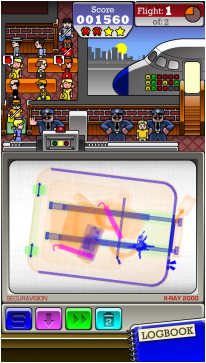
A screenshot of the Airport Scanner game, with a suitcase containing two dynamite sticks. Courtesy of the Mitroff Lab and the Kedlin Company.

A screenshot of the Airport Scanner game, with a suitcase containing two dynamite sticks. Courtesy of the Mitroff Lab and the Kedlin Company.

You’re at the airport waiting to pass through security and board your flight. The security agent stops the person in line ahead of you: there was a full water bottle in his carry-on bag. He throws out the bottle and proceeds through the airport. Later that evening, you see that person’s face on the news, for having pulled out dynamite on their flight. Why did the TSA agent overlook the dynamite?

A team of researchers at Duke led by Dr. Stephen Mitroff is using a cell phone game to provide answers to this and other questions about airport baggage screenings. Last year, they reported that luggage screeners are likely to miss extremely rare illegal items. In a new study which will appear in the Journal of Experimental Psychology: Human Perception and Performance, Dr. Mitroff’s team once again leverages the power of big data to address a different issue: what happens when a carry-on suitcase contains multiple illicit items?

Baggage screening is an example of what cognitive scientists refer to as visual search: attempting to locate a target among a crowded visual display. Many laboratory studies have demonstrated that when more than one target is present in the display, people are less likely to find additional targets once they have spotted a first target. One possible reason for this “subsequent search misses” phenomenon is that people become biased toward searching for targets that match the first target. That is, a baggage screener who finds a water bottle might enter “water bottle” mode and be unprepared to see dynamite. This theory is most likely to hold in situations with large and unpredictable sets of targets – which is precisely why it has been difficult to test in the lab, where the relatively small amount of trials that subjects can perform has limited the possible target numbers and frequencies.

A smartphone game called Airport Scanner circumvents this problem. In the game, players act as TSA agents and view X-ray images of carry-on luggage, earning points for correctly tapping illegal items. More than 200 possible illegal items can appear, and each bag can contain between zero and three illegal items among up to twenty legal items. The game is available as a free download from the Kedlin Company, who share the data with the Mitroff lab. They have now collected close to two billion trials (bags searched) from over seven million people, which would take centuries to collect in the lab.

Using these data, Dr. Mitroff and his colleagues were able to make an important discovery about subsequent search misses. When two identical targets are present in a bag, it is more likely that both will be found than when two different targets are present. In other words, if someone first spots a water bottle, it is more likely that they will also find a second item if it is a water bottle than if it is dynamite.

This result supports the theory that finding a visual target biases a person’s perceptions. We become better prepared to find another instance of the same item, rather than a different item. According to Dr. Mitroff, “Knowing this fact can help create search environments and standard operating procedures to overcome this priming effect.”

Suburbs Make it Harder to Walk

By Karl Leif Bates

Walking's healthier than driving, if you look both ways. (Karin Beate Nøsterud, norden.org via wikimedia commons)

Walking’s healthier than driving, if you look both ways. (Karin Beate Nøsterud, norden.org via wikimedia commons)

Walking as you go to school, shopping or work is good for your health and it saves money and carbon emissions. But the way American cities are built, some of the folks who would benefit most from a little bipedalism live in the areas that make walking the hardest.

That’s the upshot of a complete analysis of the nation’s “built environment,” by a pair of researchers from Duke and the University of Michigan.

Katherine King, a visiting assistant professor in Community and Family Medicine at Duke, worked with Philippa Clarke, an associate research professor in epidemiology at U-M, to examine more than 63,000 census tracts in 48 states and the District of Columbia from the 2000 census.

They used linear regression analysis to look for relationships between five neighborhood characteristics (income, education, race/ethnic composition, age distribution and gender) and five factors that contribute to “walkability,” such as the presence of intersections and building density.

The poorest neighborhoods, and those with the highest education levels — downtown areas of cities –were found to be the most walkable. But census tracts with a higher proportion of children and older adults, the suburbs, were apparently less walkable, with fewer intersections and lower density of street segments.

The authors suggest that urban planners — make that SUB-urban planners —  should give careful thought to the health implications of the living spaces they’re designing. King’s work was supported by the US EPA’s environmental public health division.

Citation – A Disadvantaged Advantage in Walkability: Findings From Socioeconomic and Geographical Analysis of National Built Environment Data in the United States Katherine King and Philippa Clarke. American Journal of Epidemiology, Online Nov. 19, 2014.

Read the paper – http://bit.ly/1AIdi8g

Kumbaya and All That… Until Thursday!

By Karl Leif Bates

You wouldn’t know it from the war drums banging over at ESPN this week in advance of Thursday night’s football showdown, or the hairy eyeball the frat boys give you for wearing the wrong shirt in Chapel Hill, but our two fine institutions, Duke and UNC-Chapel Hill, are actually very good friends and close collaborators. …At the faculty level, at least.

A February 2013 map showing which blue Facebook users follow during March Madness. (We're huge in NW Arizona, okay?)

A February 2013 map showing which blue Facebook users follow during March Madness. (We’re huge in NW Arizona, okay?)

It’s quite common for a major research paper coming out of either campus to include collaborators from the other Tier 1 research university just 10 miles away. It only makes sense. When the ARRA Stimulus funding was on the table a few years ago, the two pulled together on all sorts of projects to bring about $400 million in federal tax dollars back to the Triangle.

And now, a new program announced just a few weeks ago will actually pay researchers from both schools to be friends! Can you imagine?

A Chapel Hill taunt. (Not actually supported by the data, but whatever.)

A Chapel Hill taunt. (Not actually supported by the data, but whatever.)

Duke’s Translational Medicine Institute (DTMI) and the North Carolina Translational and Clinical Sciences Institute (NC TraCS) are awarding $50,000 grants to research projects that are trying to speed laboratory medical findings into the clinic or the population. (That’s what “translation” means.) The only catch is that the application has to include one co-investigator from each school.

“I think that although we come from different ends of Tobacco Road and our different shades of blue compete passionately in sports, when it comes to translating medical progress and health care to the community, we can be very collaborative,” Jennifer Li of the Duke Translational Medicine Institute told the DTMI newsletter.

Just look at those long faces! Poor kids. A Duke buzzer-beater will do that to you.

Just look at those long faces! Poor kids. A Duke buzzer-beater will do that to you.

Naturally, the newsletter then had to quote a Tarheel: “On a scientific basis, collaborative teams are formed based on shared interests and complimentary resources, skills and experiences,” said John Buse, deputy director of the NC Translational and Clinical Sciences Institute. “The hope (is) that the sum is greater than the parts.”

Perhaps, Dr. Buse, perhaps. But what’s the fun in that?

GO DUKE !

500+ Students Code Around The Clock For Social Causes

Tech lovers pull all-night codefest for social good, Nov. 15-16, 2014

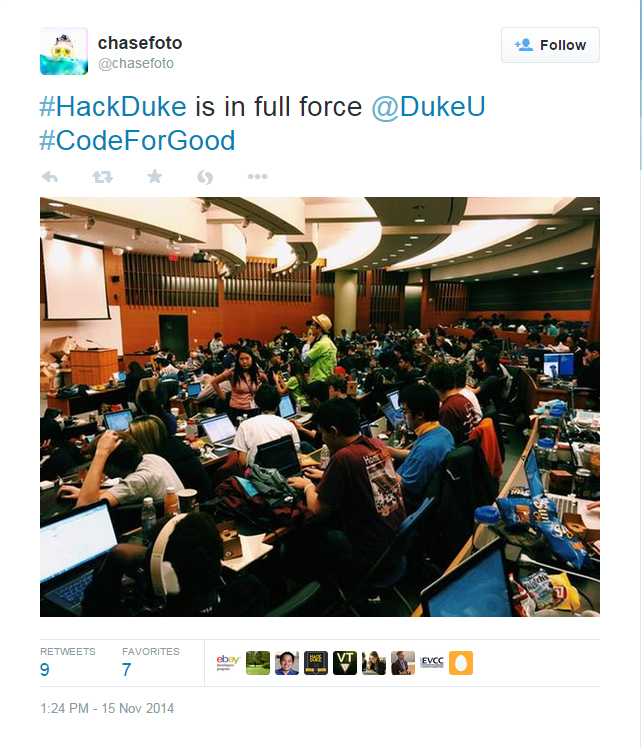
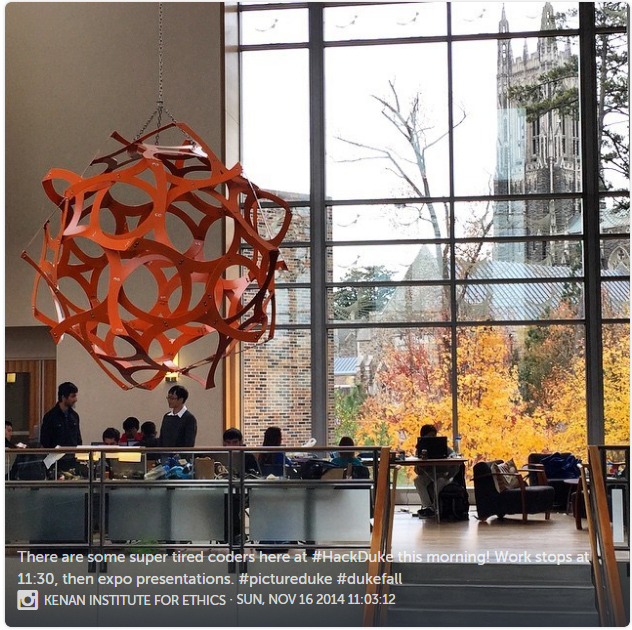
More than 500 students converged on Duke’s Fitzpatrick Center for an unusual all-nighter this weekend. No term papers, no problem sets. Their mission: to collaborate on software or hardware projects related to social good. The students were participating in “HackDuke,” the third in a series of 24-hour hackathons held at Duke since 2013.

Read more in The Chronicle and The Herald-Sun.

Checking in at HackDuke: Code for Good

Hacking = Hack + Marathon

To some, “hacking” conjures up images of breaking into bank accounts. But these tech-savvy students are no cyber criminals. The event, dubbed “Code for Good,” challenged them to work in teams to propose tech solutions to problems in any one of four themes — poverty and inequality, health and wellness, education and energy and environment.h2

No experience? No problem

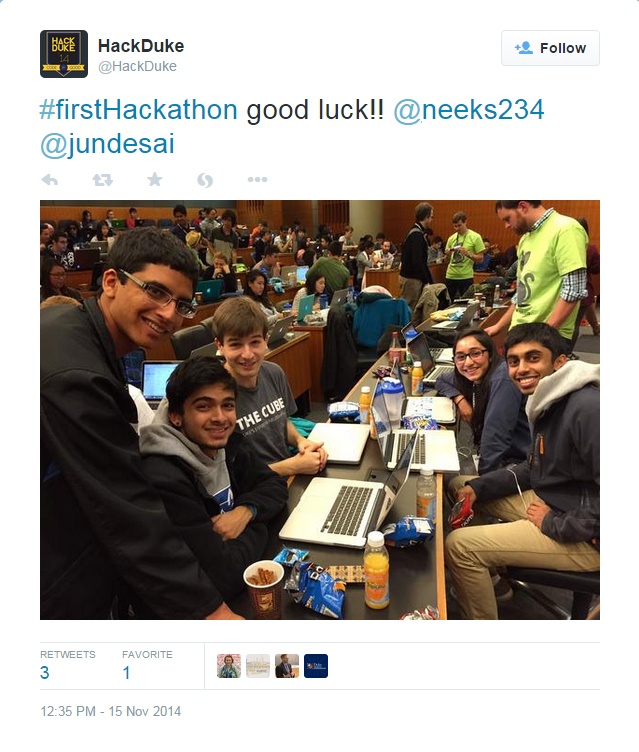
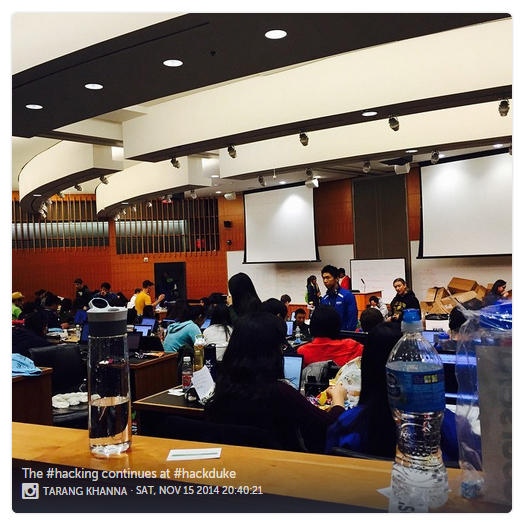
The hacking got rolling around 2 p.m. on Saturday, Nov. 15. Armed with laptops and Ethernet cables, the students fanned out across three floors of the Fitzpatrick Center atrium and got to work. First-time hackers and novice programmers were welcome. Roughly half of this year’s participants were from Duke, and half were from other universities across the United States and Canada. More than 20 percent of the participants were women.h3 h4 h5 h6

A caffeine- and sugar-fueled coding frenzy

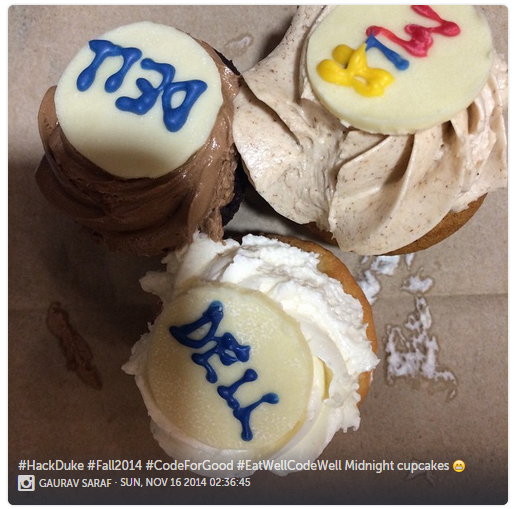
The hackers worked non-stop for 24 hours, many with little sleep and no showers. Vast quantities of caffeine and sugar helped. Back by popular demand, after 10 p.m. the CIEMAS basement became a foam-filled battlefield for hackers in need of a nerf gun break:h7 h8 h9

h10 h11 h12

Day 2

Bleary-eyed hackers started presenting their solutions to the judges around 12:30 p.m. on Sunday. One team developed a cloud-based temperature sensor for monitoring premature newborns who are born at home and can’t make it to a clinic. Another team developed an app called “Ananda,” or bliss,which measures the relationship between a range of personal habits and a person’s self-reported happiness score. The winning team from each track received a $750 donation in their name to the nonprofit of their choice. Judge and IBM Program Director Ginny Ghezzo tweeted her favorites:h13 h14h15 h16 h17 h18

His Lab Work Makes Organic Chem More than a "Weed-Out"

By Lyndsey Garcia

“Hey, I ran one of those tests in my lab!” Zach whispered to me during biology lecture. I give him a sideways look, because I definitely didn’t recall running a Southern blot in our assigned lab section. But then I realized that he was referring to the lab that he works in on campus.

Zachary Visco presenting research at the Duke Cancer Institute Annual Retreat

Zachary Visco presenting research at the Duke Cancer Institute Annual Retreat

Zachary Visco is a sophomore biomedical engineering major on the pre-health track. After hours of hunting through job listings and emailing lab managers, he finally landed a position of working in an ovarian cancer research lab on campus led by Dr. Susan Murphy and Dr. Andrew Berchuck this past summer.

Having only a year of undergraduate education under his belt, he found some of the concepts and techniques in his new job over his head.

“I had no idea what I was doing. I didn’t have any lab experience, but my boss, Dr. Zhiqing Huang, was very patient and walked me through everything,” Zach explained.

As Zach gained more experience in the lab, he started performing more experiments and gaining more responsibility. He would typically perform experiments that ranged from Western Blots, to cDNA preps, to real-time PCR. He was started to gain knowledge of how the pieces worked, but didn’t understand everything behind the science. However, Zach found in his class lectures, he was actually learning about concepts that pertained to his lab.

“Biology has helped explain some of the terminology and processes performed in lab, and organic chemistry has helped explain how and why some of the reactions occur,” he said.

For instance, he learned about the significance of cDNA and the information that can be determined from it. In his lab, he learned that running cDNA preps involved transcribing cDNA from mature RNA in order to perform a real-time PCR. In biology lecture, he learned why his lab would use cDNA instead of normal template DNA because mature RNA only expresses the exon, or the actual genes in our DNA, therefore the cDNA would only express the genes as well.

“I had hoped that I would eventually gain an understanding of the lab work during my undergrad, but when I first started, it all seemed very overwhelming,” Zach said. “I was pleasantly surprised when I found that I could actually apply knowledge from my classes to my work. It made it seem like I was finally learning material that could pertain to my career, not just trying to pass a weed-out class.”

Zach has found that working in the lab and the material taught in his classes has influenced his career path more than he realized. He had previously only imagined himself working in clinic-based research, but is now considering a path in lab-based research.

“I find lab research very interesting because it’s like a puzzle and you are trying to figure out the pieces as you go.”

Duke Forest is Healthy But Vigilant

By Karl Leif Bates

Duke Forest director Sara Childs, left, got into the trees a ways with some of the annual gathering guests.

Duke Forest director Sara Childs, left, got into the trees a ways with some of the annual gathering guests.

The map that Kelly Oten showed at the Duke Forest annual gathering Thursday night could have been a metaphor for the 7,000-acre research and teaching forest itself .

Her map showed the entire state with Duke Forest in the  middle, and advancing legions of forest-killing pests approaching from all sides. In this case, Oten, a forest health monitoring coordinator for the North Carolina Forest Service, was talking about bugs that kill native trees in various horrible ways.

But it might just as well have been a map of encroaching development, rapacious deer, unleashed, freely pooping dogs or any of the dozens of other things that threaten to change the face of  this forested oasis on a daily basis.

In a two-hour meeting with snacks and wine, forest director Sara Childs, her staff and Oten brought a room full of forest-lovers up to date on the current health of Duke’s forested reserve and the status of all kinds of invasive species.  Things are going well, said Childs, who took over this year after the retirement of Judd Edeburn, but the challenges never go away.

Childs said the forest hosted 84 research projects from 23 institutions in the last year. More than 500 students attended class activities — probably a dramatic undercount — and 827 person-hours went into the ambitious overhaul of the heavily used trails and bridges in the Korstian Division.

The biggest blow of the year was the back-to-back ice storms in February and March that disturbed 187 acres in all, 22 of which simply had to be salvage-cut because they were beyond repair, Childs said.

Deer management seems to be helping, Childs said. Ideally, they’d like to see 15-20 of the giant herbivores per square mile, but the count was more like 80 per mile when they started fall culling operations five years ago. The cull is on right now, by the way, closing the Durham, Korstian and Blackwood Divisions Monday through Friday. That’s in effect until Dec. 19, so stay safely away.

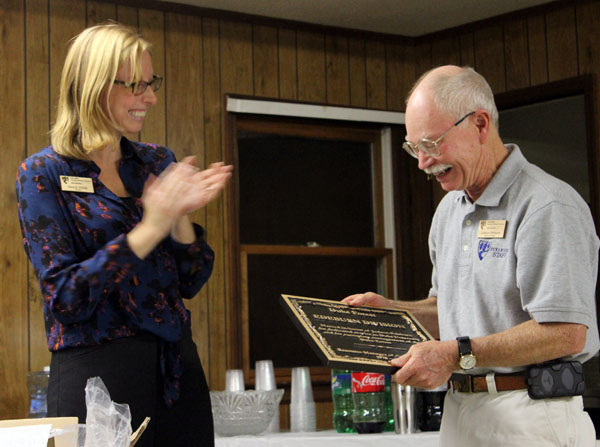
Sara Childs presents Judd Edeburn with the plaque for a new division named in his honor. He doesn't get to keep it; it'll be bolted to a very big rock.

Sara Childs presents Judd Edeburn with the plaque for a new division named in his honor. He doesn’t get to keep it; it’ll be bolted to a very big rock.

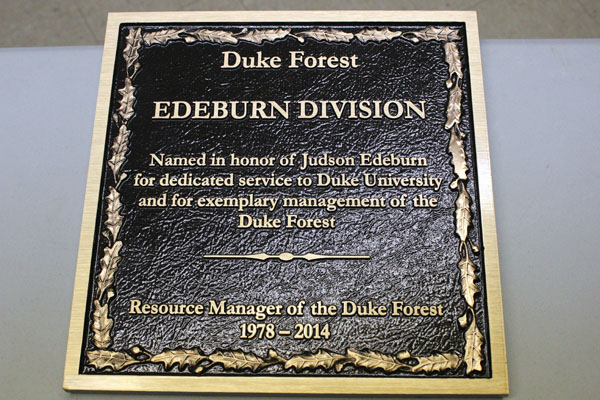
At the end of the evening, Childs and the Duke Forest staff showed Edeburn a handsome new brass plaque that will be installed at the entrance to the former Eno division to rename that section of the forest in his honor.

And while we’re learning about and admiring the Duke Forest, check out these ten fun facts. https://dukeforest.spotlight.duke.edu/

Judd Edeburn Division plaque will be installed at an entrance to the former Eno Division.

Judd Edeburn Division plaque will be installed at an entrance to the former Eno Division.

A Made-to-Order Materials Menu

Guest Post by Ken Kingery, Pratt School of Engineering

If you think ordering a drink from Starbucks can be a tall order, try picking out the right material for a new product or experiment. An iced, half-caff, four-pump, sugar-free, venti cinnamon dolce soy skinny latte may be a mouthful, but there are hundreds of thousands of known—and unknown—compounds to choose from, each with their own set of characteristics.

Screenshot of the AFLOW library search interface. The software combs through four giant databases of chemical compounds.

Screenshot of the AFLOW library search interface. The software combs through four giant databases of chemical compounds.

For example, take the family of materials Bi2Sr2Can-1CunO2n+4+x, or bismuth strontium calcium copper oxide for short, if you can call it that. These compounds have the potential to change the world because of their ability to become superconducting at relatively high temperatures. But each sibling, cousin or distant relative has its own physical variations…so how to choose which to pursue?

Thanks to Stefano Curtarolo and his research group, now there’s an app for that.
Curtarolo leads a collection of research groups from seven universities specializing in something they call materials genomics. The group—called the AFLOW consortium—uses supercomputers to comb databases for similar structures and builds theoretical models atom-by-atom to predict how they might behave.

With help from several members of the consortium, Pratt School of Engineering postdocs Cormac Toher, Jose Javier Plata Ramos and Frisco Rose, along with Duke student Harvey Shi, have spent the past few months building a system that combs through four materials databases. Users can choose the elements and characteristics they want a material to have—or not to have—and the website will play matchmaker.

Want a two-element compound containing either silicon or germanium—but not gallium—that is stable enough to withstand high temperatures? Not a problem. How about an electric insulator made from transition metals with a certain crystal structure? AFLOW has you covered.

Stefano Curtarolo

Stefano Curtarolo is a professor of mechanical engineering and materials science at Duke

One of the four databases searched by the program draws from an international collection of compounds with structures known from experimentation. The other three contain single- double- or triple-element compounds, and are not limited to previously explored materials. Through their molecule-building algorithms, the AFLOW consortium is constantly adding prospective materials to these four libraries.

The search engine currently can sort through more than 622,000 known and unknown compounds, and more than 1,000 new ones are added each week. Curtarolo, a professor of materials science and physics, hopes that the open-source program will continue to grow in materials and searchable characteristics to help scientists connect to their ideal material. To see how it works for yourself, take it for a test drive here.

As for an equivalent database of coffee drinks, that has yet to be built. So if you’re looking through AFLOW for a hot, lactose-free drink featuring 150 to 200 mg of caffeine and less than 200 calories made with beans from South America, you’re out of luck.

Page 80 of 111

Powered by WordPress & Theme by Anders Norén