Following the people and events that make up the research community at Duke

Students exploring the Innovation Co-Lab

Category: Guest Post Page 13 of 14

Turtle Sexes are Temperamental

Guest post by Lauren Burianek, doctoral candidate in cell biology

A pair of one-week-old red-eared sliders. The one on the right looks a little cranky. (Tadpole667 via Wikimedia Commons)

A pair of one-week-old red-eared sliders. (Tadpole667 via Wikimedia Commons)

When humans are developing, they snuggle in a warm environment and everything is provided by the mother. The sex of this developing fetus is determined by its individual genetic makeup, particularly the presence of the X and Y chromosomes.

But laid as an egg in a hole on a riverbank, the sex of a red-eared slider turtle is determined by the temperature at which the egg is developed.

At temperatures above 84.6°F, the hatchling will develop into a female, but at lower temperatures, the hatchling will develop into a male. However, at exactly this temperature (called the pivotal temperature), half of the hatchlings will be female and the other half will be male.

Scientists have no idea how temperature affects the sex of the turtle hatchlings, but researchers in Blanche Capel’s lab at Duke are trying to find out.

Red-eared sliders breed in late spring near riverbanks in Louisiana. Researchers carefully collect the eggs from common nesting spots and send the eggs to Duke University. In the Capel lab, graduate student Mike Czerwinski then buries the eggs in sand and places them into incubators at different temperatures. From here, he will analyze the gonads, or sexual organs, of the turtle embryos incubated at the different temperatures.

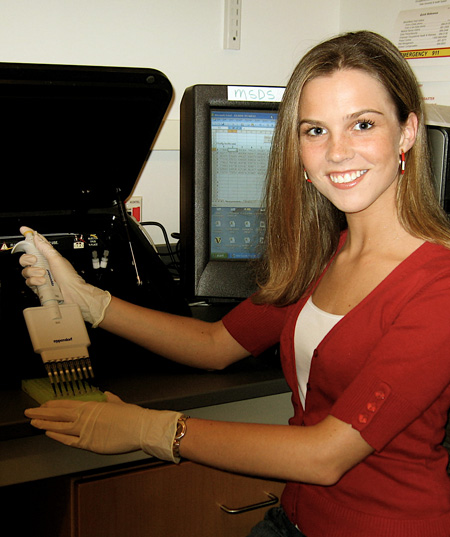
Grad student Mike Czerwinski in the Capel lab.

Grad student Mike Czerwinski in the Capel lab.

Czerwinski and his colleague Lindsey Mork discovered that when the turtle embryos were incubated at the pivotal temperature, both gonads developed into either testes or ovaries, but rarely did the two gonads develop into one of each.

Then, they incubated the turtle embryos at the pivotal temperature, dissected the two gonads and incubated each of them at different temperatures, either male-developing or female-developing temperatures. Surprisingly, the separated pairs of gonads still attempted to develop into the same sex regardless of the incubation temperature.

Tyrannosaurus Rex may have had temperature-sensitive eggs too. (tlcoles via Wikimedia Commons)

Tyrannosaurus Rex may have had temperature-sensitive eggs too. (tlcoles via Wikimedia Commons)

For example, if one of the gonads incubated in the male-developing temperature readily turned into a testis, the other gonad of the embryo, even though it was incubated in female-developing temperatures, is slower to develop into an ovary than expected, suggesting that it was genetically predisposed to be a testis.

“The results are exciting because it shows that there is a global mechanism beyond temperature dependence that allows for sex determination,” said Czerwinski. “All we’ve known up until now is that temperature is important for these turtles, but now we know that there also has to be a genetic component. Sex determination is so varied between different species, but this might give us insight into how we’re all connected.”

Climate change could definitely be a factor in the survival of these turtles and other temperature-dependent species. After all, the dinosaurs are thought to have exhibited temperature-dependent sex determination.

With increasing temperatures, a higher proportion of hatchlings will be females. Snapping turtles, however, have found a way to combat this – by moving north. The same species of snapping turtles exhibit different pivotal temperatures at different latitudes.

Evolution truly is an amazing process.
Stem Cells Might Tell Us Why Chimps Can't Blush

Guest post by graduate student Sheena Faherty

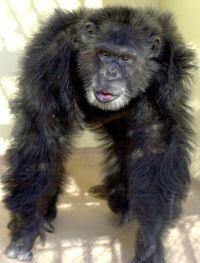
Clint the Chimpanzee

Clint the chimpanzee was the first member of Pan troglodytes to have his DNA sequenced. Thanks, dude. (Photo from Yerkes National Primate Research Center.)

Clint the chimpanzee is at it again.

The first chimpanzee to have his genome sequenced in 2005 has now made another mammoth contribution to science, this time with his stem cells.

Using these stem cells, Greg Wray, professor in Biology and Evolutionary Anthropology and his former Ph.D. student, Lisa Pfefferle, recently published an article detailing an exciting new genomic tool that provides a sneak peek into how fundamental differences at the genetic level can lead to drastic differences we see at the outward level between humans and chimpanzees.

This fascinating new approach is based on a specific type of adult stem cells, known as adipose derived stromal cells (ASC). The beauty of ASCs is that they can be manipulated to morph into different types of mature cells. These cells can then be poked, prodded, and scrutinized under the microscope as a means to delve into fundamental questions regarding the molecular basis of human origins.

This work adds a powerful new tool to the field of comparative primate genomics. The goal is to discover the source of traits that set humans apart from other animals, like spoken language or the sole ability to blush when embarrassed.

By comparing humans with our closest genetic cousin, the chimpanzee, we can begin to uncover qualities unique to both humans and chimpanzees. These discoveries might lie within the genome.

Lisa Pfefferle developed a new technique, based on Clint's stem cells, to get at human-chimp differences. (Photo courtesy of Lisa Pfefferle.)

Lisa Pfefferle developed a new technique, based on Clint’s stem cells, to get at human-chimp differences. (Photo courtesy of Lisa Pfefferle.)

In a beautifully designed experiment, Wray and Pfefferle obtained a precious stock of Clint’s frozen ASCs, manipulated them into fat cells, known as adipocytes, and then compared his adipocytes with three different populations of human ASCs. (Clint, a resident of the Yerkes National Primate Research Center in Georgia, died at age 24 a few months before his genome was published.)

Using next-generation sequencing approaches, the researchers were then able to compare over 10,000 genes between human and chimpanzee. The results of this comparison show central differences within the set of genes that may be contributing to the obvious dissimilarities between humans and chimpanzees.

For example, genes controlling the development and function of the immune system were significantly higher in chimpanzees than in humans. It is well documented that chimpanzees are able to heal wounds faster than humans. This may be why.

In contrast, genes involved in the cell cycle and DNA processing, important for passing on genetic information and repairing DNA damage within cells, were expressed at a higher level in humans.

This novel approach of using ASCs in a controlled laboratory setting will undoubtedly be a valuable complement to existing studies on comparative primate genomics.

CITATION: Pfefferle, LW and Wray GA. Insights From a Chimpanzee Adipose Stromal Cell Population: Opportunities for Adult Stem Cells to Expand Primate Functional Genomics. October 2013: 1–18, doi:10.1093/gbe/evt148

Keely Glass, the Omni-Chemist

Guest post by Addie Jackson, North Carolina School of Science and Mathematics

Keely's picture from Linked-In

Keely’s picture from Linked-In

Ask Keely Glass how she would describe her research to a third grader, and she laughs while thinking of the best way to explain.

“So, say you’re sitting next to your friends. One has really black hair and one has red hair. They have different hair colors, because their hair colors come from the different pigments. Your friend with black hair has more eumelanin, while your friend with red hair has pheomelanin.”

A PhD candidate in the chemistry department at Duke, Glass currently does research on analytical methods to analyze these pigments in biological and historical samples. She’s also using those skills to provide direct chemical evidence for the presence and preservation of eumelanin in the fossil record.

Trust us, that's a fossil squid. (Courtesy of Willsquish on Wikimedia Commons.)

Trust us, that’s a fossil squid. (Courtesy of Willsquish on Wikimedia Commons.)

Glass elaborates by describing a common fascination with squids, also known as cephalopods, who release pure black eumelanin when faced with a predator. Two kinds of melanin are present in nature: eumelanin (brown to black in color) and pheomelanin (yellow to red). Through her work, she and her team have verified that eumelanin is preserved in the fossil record, and showed that it can be identified directly using its known chemical signature. They have also found that the eumelanin identified in the fossil record is not significantly different from the modern eumelanin, meaning it hasn’t evolved in the more than 160 million years since.

Another lab at Duke, run by Professor Warren S. Warren, uses a pump-probe microscopy system to characterize melanins to attempt to find statistically significant variations between melanomas (skin cancers) that do not develop metastases. The hope for this project is to improve diagnostic accuracy for these metastatic melanomas, through analyzing the melanin distribution in “old” archived (stored for >10 years) tissue samples. Glass says, “The paper I wrote with them essentially says if melanin resists degradation (stays intact and doesn’t alter) over more than 160 million years, it’s fairly clear that it will resist degradation in storage for 10 years. In other words, it’s pretty clear that these archived tissue samples are still viable for melanin analysis.”

Fourteen months in the life of one man's nodular melanoma. (Courtesy of 0x6adb015 via Wikimedia commons.)

Fourteen months in the life of one man’s nodular melanoma. (Courtesy of 0x6adb015 via Wikimedia Commons.)

Working with the Warren group, Glass also found that the pump-probe system was sensitive to the higher iron-concentration fossilized squid melanin as compared with modern cephalopod melanin. They were able to mirror the iron-independent signal by adding iron to modern cephalopod melanin. This proved to be interesting because metastatic melanomas have increased iron levels, which may or may not be responsible for signature variations.

The classical fields of chemistry (analytical, organic, physical, theoretical, inorganic, and biological) have become more integrated over time, making the labels themselves increasingly obsolete. To better label themselves, most chemists mix and match:  “I’ve called myself at various times a ‘Bioanalytical Chemist,’ ‘Biophysical Organic Chemist,’ ‘Analytical Biochemist,’ ‘Organic Geochemist’ etc. to emphasize that the systems I’ve worked on, the techniques I’ve used, and the skills I’ve obtained are diverse and dependent on the project I’m defining.”

Glass says, “When I think that the names have gone a little haywire, I jokingly call myself an omni-chemist. Like most chemists I work on diverse array of projects that require techniques and knowledge from many fields.”

Addie Jackson interviewed Keely Glass and wrote this post as part of a Science Communication seminar led by NCSSM Dean of Science Amy Sheck.

Passion, Determination Drive Liu's Research Forward

Guest post by Madeleine Gonzalez, NC School of Science and Math

Long before she was a scientist, Irene Liu was an animal lover, cutting coupons for food for the cats and dogs that she wished she had, admiring birds, and even subscribing to the famous Ranger Rick magazine. Naturally her interest would stem from this passion, leading to her exciting career in evolutionary biology.

Irene Liu

Irene Liu gently handling a captured bird during some fieldwork in a mangrove swamp. (Photo courtesy of Irene Liu)

Today she uses birds to answer questions that are applicable across different systems and organisms.  At the University of Maryland, she began with questions like, “Do birds have dialects?” and today, as a graduate student at Duke University, she investigates the extra-pair mating habits of blackbirds.

“We know that birds are famous for infidelity,” she says. ” Within one breeding season you can see mom and dad and baby birds.  They look like they are one family, but actually mom and dad are off mating with other individuals and will then raise together these chicks in this nest,” she describes.  Irene Liu works to understand the benefits of infidelity in bird populations, exploring how patterns vary on frequency.

Between the fieldwork, the lab work, and the occasional, tedious computational work, Irene Liu has had some extraordinary experiences.

Working around the people with similar drive and interests, she has thrived as a young scientist.

She loves her field work. “Getting out to these isolated places that most people don’t get to see is a real privilege, and seeing nature just happening as if I am not even there.”  She plays a fun game of catching and outsmarting the birds as she collects samples and records her observations, which may not always be particularly easy.  In fact, certain obstacles have been particularly devastating.

One time while returning from the Bahamas, her summer collections were seized and incinerated at the airport after failing to comply with US regulations and not being informed of the necessary permits beforehand. However, she returned in the following year to collect an even better sample, thoroughly learning a lesson the hard way.

A redwing blackbird that fell into Irene's clutches sports his new ankle band.

A redwing blackbird that fell into Irene’s clutches sports his new ankle band.

“I have become the obsessive person that will call the government agencies and check,” she says.  It has made her the permit expert within the department and inspired a seminar.

For other young or aspiring scientists, Liu advises, “Pick something that makes you want to get out of bed every morning, but being happy does not mean denying that there are going to be challenges and obstacles in the way.”

Even though an event such as her experience in the Bahamas can be utterly discouraging and disappointing, it is the passion that will drive the progress and ambition.  It is important to remember that there is a time to worry about the future and there is a time to work, Liu said. The future is overwhelming sometimes with a given task at hand, but it’s important to not lose perspective.  Even for basic research, sometimes people demand tangible immediate benefits, but that is not guaranteed.

“Our solutions to the world’s greatest problems will surely come from the most unexpected places.  You don’t have linear consequences,” Liu said.

Mady Gonzales interviewed Irene Liu and wrote this post as part of a Science Communication seminar led by NCSSM Dean of Science Amy Sheck.


Schmitt Blends Locomotion and Arthritis

Guest post by Joseph Kirollos, NC School of Science and Math

Walking up to the Trent Semans Center at Duke University to interview Dr. Daniel O. Schmitt, professor of Evolutionary Anthropology and teacher of anatomy at Duke University, I couldn’t help but wonder why he would pursue seemingly unrelated interests. On one hand, he studies the locomotion and evolution of primates while at the same time, he but he also has a strong clinical interest in both human functional anatomy and osteoarthritis.

Dan Schmitt with his wife, Christine Wall, who is also an evolutionary anthropologist at Duke. (Duke Chronicle photo)

Dan Schmitt with his wife, Christine Wall, who is also an evolutionary anthropologist at Duke. (Duke Chronicle photo)

How did these interests come about? Which came first? These were the questions that ran through my head as I read through his papers and prepared for the interview. Though as Dr. Schmitt sat down and began to tell his story, it didn’t take long for all of my doubts and confusions to quickly fade away. Everything began to blend, and it all made sense.

As it turns out, Dr. Schmitt was actually a latecomer to clinical research and it was through natural variance and human evolution that science first captivated his interest. Although he was somewhat of a “terrible college student,” he quickly developed a genuine curiosity in the vast physical differences between species. It was later during his graduate studies at SUNY Stony Brook, where he worked with live animals, that he became a post-doc drill associate in anatomy and began to wonder how factors such as leg design, pelvis width, or even high metabolism affected how humans and animals move. By asking these questions, he expanded his interests to the next level and created a stepping stone that would lead him into both his evolutionary and clinical research.

[youtube http://www.youtube.com/watch?v=VA8diXNvffY?rel=0]

At the locomotion lab at Duke University, where he continues to research today, he was able to delve headfirst into Evolutionary Anthropology as he studied the selecting factors that govern limb design, gait mechanisms, and energy efficiency of locomotion in primates and humans. One of his main interests even today is the origin of human’s unique design and bipedal locomotion.

Daniel Schmitt

Schmitt, who teaches anatomy to medical students, went to the Duke-NUS graduate medical school in Singapore in 2012 to talk about medical education with colleagues. (Duke-NUS)

In fact, the first of his papers that caught my attention dealt with this very topic. It was a paper refuting the commonly accepted theory that humans evolved from terrestrial knuckle-walking primates such as gorillas and chimpanzees rather than tree-climbing ancestors (see the paper here). As I discussed the paper with Dr. Schmitt, he revealed that he normally preferred to avoid controversy, yet, in this case, he felt that he couldn’t “buy into” the fact that humans would evolve from terrestrial knuckle-walking ancestors. He said, “I couldn’t think of one good reason for them to stand up.” Interestingly, the paper analyzes features from the human wrist that previously supported knuckle-walking ancestors and turns it around and says that in fact these features actually may support that we had tree-climbing ancestors. However, in person, Dr. Schmitt referred to this argument as being rather “nihilistic” as it challenges an idea but doesn’t really propose an alternative.

Of course, it was only a matter of time before these interests in both human anatomy and the evolution of biomechanics in primates naturally brought him to wonder how human joints have so uniquely and efficiently adapted. Working with Dr. Ershela Sims, he has studied osteoarthritis in humans, a debilitating and widespread disease of the joints, and today he still explores the factors that cause it.

I found this quite interesting as my family has a long history with severe osteoarthritis. Interestingly Dr. Schmitt said that it was not intervention and treatment that he cared about, but rather he was interested in the basic science, the deeper causes that lead to osteoarthritis. Is there more than just obesity and wear and tear that leads to osteoarthritis and how does it affect human movement? These were the questions that he would ask. Naturally this blended quite well with his gait studies with primates as osteoarthritis affects the gait mechanisms and energy efficiency of humans. So by the time our discussion had finished, I felt a little dumb that I previously felt as though Dr. Schmitt had an unusual range of interests. I realize now that they blend in perfect harmony, each inspiring the other, leading to amazing discoveries.

Joseph Kirollos interviewed Dan Schmitt and wrote this post as part of a Science Communication seminar led by NCSSM Dean of Science Amy Sheck.

Fish Need Hugs Too!

Guest post by Lauren Burianek, Doctoral Candidate in Cell Biology

In humans, massages are used for stress relief and relaxation. Tight wraps called Thundershirts can be used on dogs to reduce anxiety from thunderstorms or separation, and giant rolling brush machines are used in the milk industry to calm and comfort dairy cows. Physical touch can have some beneficial roles, but who knew that fish respond to touch, too?

Researchers at the Duke-NUS Graduate School in Singapore studied the effects of physical sensations on fear behaviors in zebrafish.

The zebrafish Danio rerio, workhorse of the lab, is the sensitive type. (public domain photo from Wikimedia Commons)

The zebrafish Danio rerio, workhorse of the lab, is the sensitive type. (public domain photo from Wikimedia Commons)

Zebrafish become afraid when they smell pheromones released by injured fish, and they respond by freezing in place, darting around quickly, or sinking. Why do the fish respond this way? Researcher Annett Schirmer explains, “species develop a sensitivity to these chemicals throughout the course of evolution such that these chemicals can trigger an automatic response, such as fear.”

In other words, by becoming afraid when a nearby fish is injured, the fish can escape or hide from predators more quickly, leading to an increased chance of survival.

Schirmer said that as a kid, her father would claim that his fish enjoyed being petted. “I never believed him,” she said. Instead of petting the fish, however, the scientists used moving water as a non-social physical touch. They wanted to see if physical touch could reduce fear responses in fish, similar to how physical touch can comfort humans and other animals.

[youtube http://www.youtube.com/watch?v=Hxzl54tUi2U?rel=0]

The zebrafish were exposed to the fear-inducing pheromone and then were either placed in a tank with still water or a tank with a water current for two minutes. The fish exposed to the water current showed fewer fear behaviors and lower levels of cortisol, a stress hormone, than the fish that were placed in the non-moving water.  It seemed that the moving water helped to calm and reduce anxiety in the fish.

Fish have a sense of touch for feeling movement and changes in water pressure that comes from cells along the sides of their body called lateral line cells.  When fish with damaged lateral line cells were put through the same study, the fish exposed to the water current did not show as large of a decrease in fear behaviors, suggesting that they really are responding to physical sensations from their sense of touch.

Fish swimming in schools feel movement from nearby fish and the current of the water as they are swimming through it. These sensations may reduce fear responses in a similar manner. Schirmer adds, “Current stirs up water and brings nutrients and oxygen. So I think that in the water, touch is a rich emotional stimulus that is, to some degree, also socially relevant.”

CITATION:  Tactile Stimulation Reduces Fear in Fish, Annett Schirmer, Suresh Jesuthasan, and Ajay S. Mathuru. Frontiers in Behavioral Neuroscience. Online Nov. 22, 2013. doi:  10.3389/fnbeh.2013.00167  

Pretty pictures show lemurs responding to changing climate

Guest Post by Sheena Faherty, Biology Graduate Student 

Madagascar’s much-adored and fuzzy lemurs might be “sweated out” of habitats by warming environments under global climate change. Or will they?

A team of researchers at the Duke Lemur Center is employing high-tech heat cameras used in  fire fighting, sports medicine and cancer diagnostics to take “glowing” rainbow pictures of lemurs and their forest surroundings. The results look similar to a child’s coloring project gone rogue.

A mother and baby Coquerel's Sifaka at the Lemur Center in thermograph and visible light. (Leslie Digby)

A mother and baby Coquerel’s Sifaka at the Lemur Center in thermograph and visible light. (Leslie Digby)

This technology, known as infrared thermography, is a camera that allows researchers to detect surface temperatures of lemurs and their hang-outs in the forest—at different depths and heights—and on varying surfaces such as the ground, leaves, and tree trunks.

Combining these data with records of where an animal prefers to spend time, the researchers can begin to determine what temperatures make lemurs most happy.

Leslie Digby, an associate professor in the Department of Evolutionary Anthropology, and her students want to see  how the lemurs are changing their behavior to warm-up on cool days, and cool-down on warm days without having to shiver or sweat.

This sounds rather like a lizard basking on a rock during a sunny day to warm his cold-blooded body up, but lemurs aren’t cold-blooded. They shouldn’t have to do this.

It turns out that even though lemurs are warm-blooded, they can conserve precious energy by channeling their inner Buddha — using sunning behaviors, just like lizards, to fine-tune core body temperatures.

Digby’s team is trying to understand why some species have seemingly restricted territories, even without obvious geographical barriers like mountain ranges or rivers. They suspect temperature plays a part.

“We know that primate species ranges have been very different in the past, so understanding how flexible these animals are, or [are] not, to temperatures can help us understand these larger scale impacts [of changing climate]”, says Digby.

Figuring out how animals respond to alterations in their environment, like rising temperatures, can help scientists anticipate species’ survival in the face of globally changing climates. And knowing which areas of the forest are preferred by lemurs, could help direct conservation efforts, like reforesting parts that have been cut down, or preserving those areas that have not.

Changing temperatures will undoubtedly have major impacts on lemur home ranges in the future, potentially altering them until the animals  are forced into an area outside their thermal limits. By gearing her research toward understanding the thermal tolerances of lemurs, Digby is doing her part to protect the vulnerable lemurs.

A ringtailed lemur striking the classic belly-warming Buddha pose in one of the natural enclosures at Duke Lemur Center. (David Haring)

A ringtailed lemur striking the classic belly-warming Buddha pose in one of the natural enclosures at Duke Lemur Center. (David Haring)

Lemurs' neck bling tracks siestas, insomnia

Guest post by Robin A. Smith, Duke Lemur Center

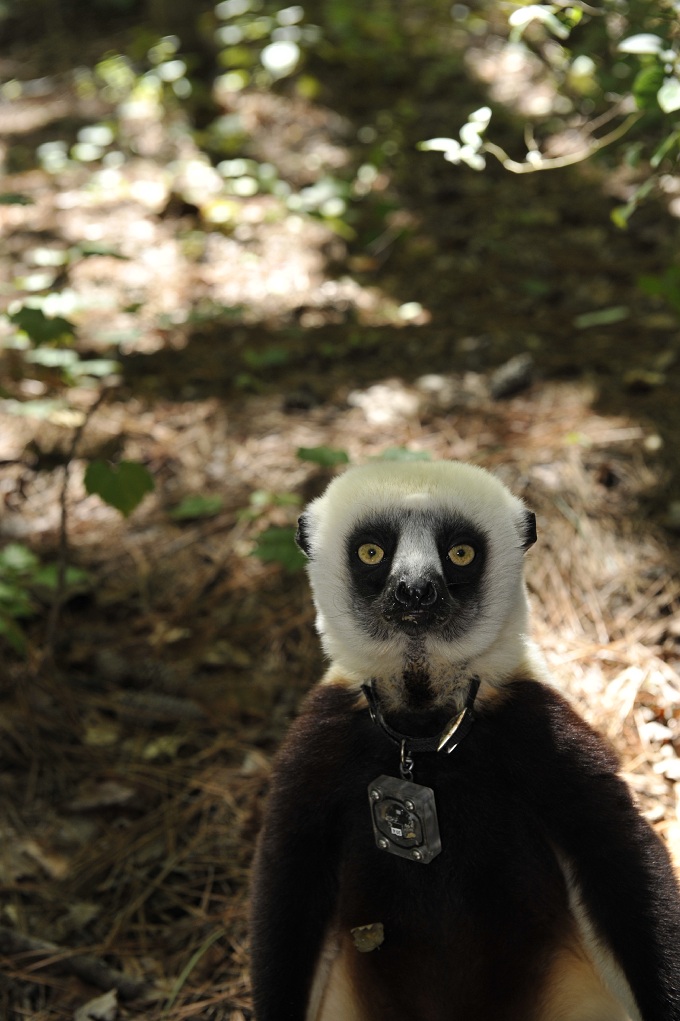
The fancy neck charm this lemur is wearing is no fashion accessory. Weighing in at just under an ounce, it’s a battery-powered data logger that measures light exposure and activity levels continuously over many days.

In a study to appear in the American Journal of Physical Anthropology, Duke researcher Ken Glander and colleagues  at  Rensselaer  Polytechnic  Institute’s  Lighting  Research  Center  (LRC)  outfitted twenty lemurs at the Duke Lemur Center with the special gadgets — called Daysimeters — to study the animals’ daily ups and downs.

The five species in the study — mongoose lemurs, Coquerel’s sifakas, ringtail lemurs, red-ruffed lemurs and black-and-white lemurs — wore their new jewelry around the clock for a week while they went about their regular routine of lounging, leaping, napping and climbing trees.

Sifaka with dosimeter

Sifaka with a light-and-motion dosimeter looks like Flava Flav

Lemurs in this study are generally more active during the day than at night. But when the researchers downloaded the data, they found that several species also stirred after dark, and all of them took periodic rests during the day — often retreating to a shady spot for a midday siesta.

The results could help researchers understand the sleep disturbances common among people with Alzheimer’s or other forms of dementia, and whether light therapy could help reset their internal clock for a more solid night’s sleep.

For their next experiment, they’ll use a lighting fixture custom-built by the Lighting Research Center to find out how different light-dark cycles — similar to seasonal changes in day length or the waxing and waning of the moon — affect patterns of rest and activity in two groups of ringtail lemurs:  one consisting of younger animals that are less than two years old, and another over twenty.

“We’re not saying that lemurs have dementia,” Glander said. “But we think that lemurs can tell us something about how some animals manage to stay healthy despite having segmented sleep.”

CITATION: “Measured daily activity and light exposure levels for five species of lemurs,” Rea, M., et al. American Journal of Physical Anthropology, 2013.

Social Networks for Sharing Science and Health

Guest post by David Jarmul

Facebook, Twitter and other new social networks are making it easier than ever for people to share useful information about medicine and science, whether it’s about choosing a good physician or reducing one’s carbon footprint.

Adjunct professor Brian Southwell cautions in a new book, however, that the emergence of these forums doesn’t mean people will benefit from them equally. There are some significant disparities in how people use the forums – and not all can access them.

Cover of Southwell book“This book reflects a sense of urgency that I developed over several years as it became apparent that our networked future won’t guarantee the equity that some suggest it will,” writes Southwell, a senior research scientist at RTI International in the Research Triangle Park and an adjunct professor with Duke University’s Energy Initiative. “Despite enthusiasm about 21st century possibilities for social contagion as a mechanism for public education, we have distinct reasons to expect not only inequality but also inequity.”

Southwell says disparities in information access present a host of ethical and policy challenges. “People involved in educating large masses of people about the latest research on topics like healthy behavior or the natural environment do not typically have access to bullhorns that can reach everyone at once,” he writes. “By acknowledging and addressing the reality of existing disparities between people and between communities in information sharing, we can work toward a future in which more people can participate in (and benefit from) ongoing dialogues, which in turn may help to craft healthier communities and even a healthier planet.”

At Duke, Southwell is exploring ways to engage low-income populations in a project he is pursuing with Dan Vermeer of the Fuqua School of Business and Laura Richman of the psychology department. Working with partners at Clean Energy Durham and the Bass Connections initiative, they will assess how innovative communication strategies might enhance household energy conservation efforts.

Social Networks and Popular Understanding of Science and Health: Sharing Disparities is published by RTI Press and Johns Hopkins University Press.

A Clearer View of How to Block Infections

By David Jarmul

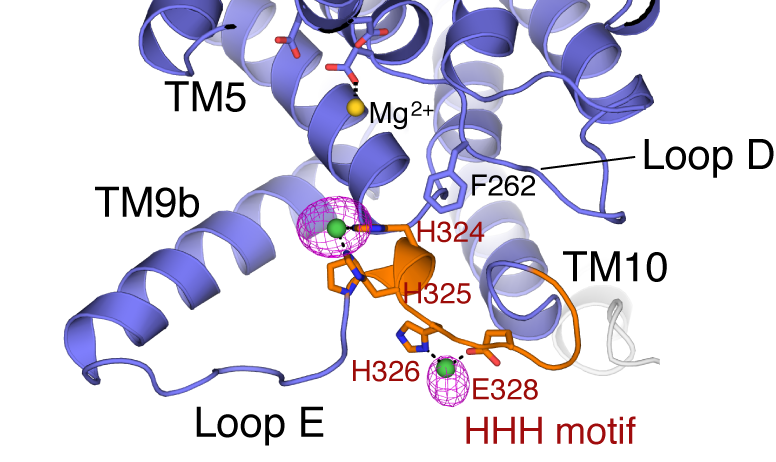
For years, scientists looking to develop better antibiotics have had their eye on an enzyme that lies just within the membrane of potentially deadly bacteria. The enzyme, MraY, plays a critical role in the process by which the bacteria build the walls of their own cells as they develop.

Penicillin and related drugs such as amoxicillin block this process, thereby preventing the bacteria from going on to infect humans with everything from strep throats to ear infections. Scientists around the world have been working to improve or replace these drugs, especially as bacteria develop resistance to them. But progress has been slow, in part because researchers have lacked a clear view of MraY’s shape and how exactly it works.

Now the enzyme has come into clearer view. Writing in Science, Seok-Yong Lee and his colleagues at Duke University School of Medicine have published the crystal structure of MraY, which they describe as “an essential membrane enzyme for bacterial cell wall synthesis.”

Crystal structure of MraY

Crystal structure of MraY

The structure, at a resolution of 3.3 angstroms, provides the most detailed picture yet of the enzyme’s architecture. It offers new insights to guide drug developers who seek to expand the clinical options available to physicians and their patients. The image below represents a key part of the structure.

Lee, a researcher in Duke’s biochemistry department, and his team worked with colleagues to analyze data they gathered at the Advanced Photon Source at Argonne National Laboratory. Their research was supported primarily with start-up funds from the Duke University Medical Center.

CITATION: “Crystal Structure of MraY, an Essential Membrane Enzyme for Bacterial Cell Wall Synthesis,” Ben C. Chung, Jinshi Zhao, Robert A. Gillespie, Do-Yeon Kwon, Ziqiang Guan, Jiyong Hong, Pei Zhou, Seok-Yong Lee. Science, Aug. 30, 2013.

Page 13 of 14

Powered by WordPress & Theme by Anders Norén