Following the people and events that make up the research community at Duke

Students exploring the Innovation Co-Lab

Category: Animals Page 15 of 19

Schmitt Blends Locomotion and Arthritis

Guest post by Joseph Kirollos, NC School of Science and Math

Walking up to the Trent Semans Center at Duke University to interview Dr. Daniel O. Schmitt, professor of Evolutionary Anthropology and teacher of anatomy at Duke University, I couldn’t help but wonder why he would pursue seemingly unrelated interests. On one hand, he studies the locomotion and evolution of primates while at the same time, he but he also has a strong clinical interest in both human functional anatomy and osteoarthritis.
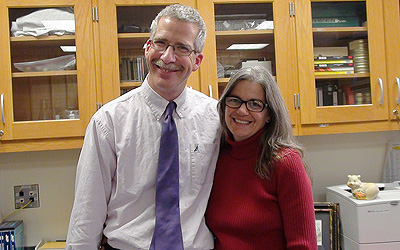
Dan Schmitt with his wife, Christine Wall, who is also an evolutionary anthropologist at Duke. (Duke Chronicle photo)

Dan Schmitt with his wife, Christine Wall, who is also an evolutionary anthropologist at Duke. (Duke Chronicle photo)

How did these interests come about? Which came first? These were the questions that ran through my head as I read through his papers and prepared for the interview. Though as Dr. Schmitt sat down and began to tell his story, it didn’t take long for all of my doubts and confusions to quickly fade away. Everything began to blend, and it all made sense.

As it turns out, Dr. Schmitt was actually a latecomer to clinical research and it was through natural variance and human evolution that science first captivated his interest. Although he was somewhat of a “terrible college student,” he quickly developed a genuine curiosity in the vast physical differences between species. It was later during his graduate studies at SUNY Stony Brook, where he worked with live animals, that he became a post-doc drill associate in anatomy and began to wonder how factors such as leg design, pelvis width, or even high metabolism affected how humans and animals move. By asking these questions, he expanded his interests to the next level and created a stepping stone that would lead him into both his evolutionary and clinical research.

[youtube http://www.youtube.com/watch?v=VA8diXNvffY?rel=0]

At the locomotion lab at Duke University, where he continues to research today, he was able to delve headfirst into Evolutionary Anthropology as he studied the selecting factors that govern limb design, gait mechanisms, and energy efficiency of locomotion in primates and humans. One of his main interests even today is the origin of human’s unique design and bipedal locomotion.
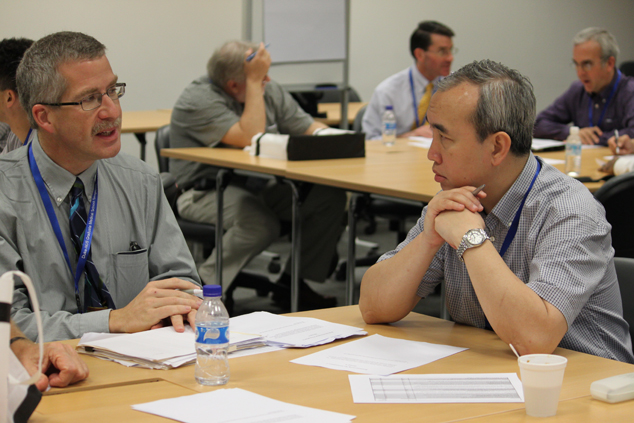
Daniel Schmitt

Schmitt, who teaches anatomy to medical students, went to the Duke-NUS graduate medical school in Singapore in 2012 to talk about medical education with colleagues. (Duke-NUS)

In fact, the first of his papers that caught my attention dealt with this very topic. It was a paper refuting the commonly accepted theory that humans evolved from terrestrial knuckle-walking primates such as gorillas and chimpanzees rather than tree-climbing ancestors (see the paper here). As I discussed the paper with Dr. Schmitt, he revealed that he normally preferred to avoid controversy, yet, in this case, he felt that he couldn’t “buy into” the fact that humans would evolve from terrestrial knuckle-walking ancestors. He said, “I couldn’t think of one good reason for them to stand up.” Interestingly, the paper analyzes features from the human wrist that previously supported knuckle-walking ancestors and turns it around and says that in fact these features actually may support that we had tree-climbing ancestors. However, in person, Dr. Schmitt referred to this argument as being rather “nihilistic” as it challenges an idea but doesn’t really propose an alternative.

Of course, it was only a matter of time before these interests in both human anatomy and the evolution of biomechanics in primates naturally brought him to wonder how human joints have so uniquely and efficiently adapted. Working with Dr. Ershela Sims, he has studied osteoarthritis in humans, a debilitating and widespread disease of the joints, and today he still explores the factors that cause it.

I found this quite interesting as my family has a long history with severe osteoarthritis. Interestingly Dr. Schmitt said that it was not intervention and treatment that he cared about, but rather he was interested in the basic science, the deeper causes that lead to osteoarthritis. Is there more than just obesity and wear and tear that leads to osteoarthritis and how does it affect human movement? These were the questions that he would ask. Naturally this blended quite well with his gait studies with primates as osteoarthritis affects the gait mechanisms and energy efficiency of humans. So by the time our discussion had finished, I felt a little dumb that I previously felt as though Dr. Schmitt had an unusual range of interests. I realize now that they blend in perfect harmony, each inspiring the other, leading to amazing discoveries.

Joseph Kirollos interviewed Dan Schmitt and wrote this post as part of a Science Communication seminar led by NCSSM Dean of Science Amy Sheck.

Fish Need Hugs Too!

Guest post by Lauren Burianek, Doctoral Candidate in Cell Biology

In humans, massages are used for stress relief and relaxation. Tight wraps called Thundershirts can be used on dogs to reduce anxiety from thunderstorms or separation, and giant rolling brush machines are used in the milk industry to calm and comfort dairy cows. Physical touch can have some beneficial roles, but who knew that fish respond to touch, too?

Researchers at the Duke-NUS Graduate School in Singapore studied the effects of physical sensations on fear behaviors in zebrafish.

The zebrafish Danio rerio, workhorse of the lab, is the sensitive type. (public domain photo from Wikimedia Commons)

The zebrafish Danio rerio, workhorse of the lab, is the sensitive type. (public domain photo from Wikimedia Commons)

Zebrafish become afraid when they smell pheromones released by injured fish, and they respond by freezing in place, darting around quickly, or sinking. Why do the fish respond this way? Researcher Annett Schirmer explains, “species develop a sensitivity to these chemicals throughout the course of evolution such that these chemicals can trigger an automatic response, such as fear.”

In other words, by becoming afraid when a nearby fish is injured, the fish can escape or hide from predators more quickly, leading to an increased chance of survival.

Schirmer said that as a kid, her father would claim that his fish enjoyed being petted. “I never believed him,” she said. Instead of petting the fish, however, the scientists used moving water as a non-social physical touch. They wanted to see if physical touch could reduce fear responses in fish, similar to how physical touch can comfort humans and other animals.

[youtube http://www.youtube.com/watch?v=Hxzl54tUi2U?rel=0]

The zebrafish were exposed to the fear-inducing pheromone and then were either placed in a tank with still water or a tank with a water current for two minutes. The fish exposed to the water current showed fewer fear behaviors and lower levels of cortisol, a stress hormone, than the fish that were placed in the non-moving water.  It seemed that the moving water helped to calm and reduce anxiety in the fish.

Fish have a sense of touch for feeling movement and changes in water pressure that comes from cells along the sides of their body called lateral line cells.  When fish with damaged lateral line cells were put through the same study, the fish exposed to the water current did not show as large of a decrease in fear behaviors, suggesting that they really are responding to physical sensations from their sense of touch.

Fish swimming in schools feel movement from nearby fish and the current of the water as they are swimming through it. These sensations may reduce fear responses in a similar manner. Schirmer adds, “Current stirs up water and brings nutrients and oxygen. So I think that in the water, touch is a rich emotional stimulus that is, to some degree, also socially relevant.”

CITATION:  Tactile Stimulation Reduces Fear in Fish, Annett Schirmer, Suresh Jesuthasan, and Ajay S. Mathuru. Frontiers in Behavioral Neuroscience. Online Nov. 22, 2013. doi:  10.3389/fnbeh.2013.00167  

Pretty pictures show lemurs responding to changing climate

Guest Post by Sheena Faherty, Biology Graduate Student 

Madagascar’s much-adored and fuzzy lemurs might be “sweated out” of habitats by warming environments under global climate change. Or will they?

A team of researchers at the Duke Lemur Center is employing high-tech heat cameras used in  fire fighting, sports medicine and cancer diagnostics to take “glowing” rainbow pictures of lemurs and their forest surroundings. The results look similar to a child’s coloring project gone rogue.

A mother and baby Coquerel's Sifaka at the Lemur Center in thermograph and visible light. (Leslie Digby)

A mother and baby Coquerel’s Sifaka at the Lemur Center in thermograph and visible light. (Leslie Digby)

This technology, known as infrared thermography, is a camera that allows researchers to detect surface temperatures of lemurs and their hang-outs in the forest—at different depths and heights—and on varying surfaces such as the ground, leaves, and tree trunks.

Combining these data with records of where an animal prefers to spend time, the researchers can begin to determine what temperatures make lemurs most happy.

Leslie Digby, an associate professor in the Department of Evolutionary Anthropology, and her students want to see  how the lemurs are changing their behavior to warm-up on cool days, and cool-down on warm days without having to shiver or sweat.

This sounds rather like a lizard basking on a rock during a sunny day to warm his cold-blooded body up, but lemurs aren’t cold-blooded. They shouldn’t have to do this.

It turns out that even though lemurs are warm-blooded, they can conserve precious energy by channeling their inner Buddha — using sunning behaviors, just like lizards, to fine-tune core body temperatures.

Digby’s team is trying to understand why some species have seemingly restricted territories, even without obvious geographical barriers like mountain ranges or rivers. They suspect temperature plays a part.

“We know that primate species ranges have been very different in the past, so understanding how flexible these animals are, or [are] not, to temperatures can help us understand these larger scale impacts [of changing climate]”, says Digby.

Figuring out how animals respond to alterations in their environment, like rising temperatures, can help scientists anticipate species’ survival in the face of globally changing climates. And knowing which areas of the forest are preferred by lemurs, could help direct conservation efforts, like reforesting parts that have been cut down, or preserving those areas that have not.

Changing temperatures will undoubtedly have major impacts on lemur home ranges in the future, potentially altering them until the animals  are forced into an area outside their thermal limits. By gearing her research toward understanding the thermal tolerances of lemurs, Digby is doing her part to protect the vulnerable lemurs.

A ringtailed lemur striking the classic belly-warming Buddha pose in one of the natural enclosures at Duke Lemur Center. (David Haring)

A ringtailed lemur striking the classic belly-warming Buddha pose in one of the natural enclosures at Duke Lemur Center. (David Haring)

Battling Doubt and Danger in the Amazon

Patricia Wright's interest in owl monkeys was the launchpad for her renowned career in primatology.

Patricia Wright’s interest in owl monkeys was the launchpad for her renowned career in primatology (Photo: Steven Walling)

By Erin Weeks

One night, during her routine survey of nocturnal monkeys in the Peruvian rainforest, Patricia Wright came nose to nose with a large, male jaguar. She edged slowly off the trail, but she knew the big cat was the one who would decide if she would live to see daylight. He could either jump toward or away from her, Wright says. This time, he jumped away.

Wright’s encounter with the elusive jaguar is just one of many adventures recounted in High Moon Over the Amazon, a memoir covering her early life and research on South American monkeys.

Though best known these days for her pioneering work on Madagascar’s lemurs, Wright’s path to science wasn’t always so clear. In the late 1960s, when her contemporaries were getting PhDs, Wright worked in social services before quitting to raise her daughter. The chance purchase of an owl monkey–and Wright’s insatiable curiosity about the mysterious species’ habits–set her off on a remarkable journey from hippie housewife to groundbreaking researcher.

Wright told that story last night at an event sponsored by the Duke Lemur Center, which was the first place she worked after eventually obtaining her own PhD in her 40s. She read passages about the time army ants ate through her camp’s storehouse and about the difficulties of balancing single motherhood and doctoral work. Wright’s tenacity in the face of doubt and danger kept surfacing in her talk and is something she’s said she hopes to inspire in young women interested in scientific careers.

“Not giving up is the key, and I think young women of today should know that it might not be easy, but they should not get discouraged, because in the long run the struggle is worth it,” she said in an interview with NPR.

Patricia Wright

Dr. Patricia Wright (Photo: Noel Rowe)


Post-Doc Named Pew Scholar of the Month

Natalia Martin, Ph.D.

Natalia Martin, Ph.D.

Natalia Martin, a post-doctoral researcher in the lab of Alejandro Aballay in Molecular Genetics and Microbiology, has been named the biomedical researcher of the month by the Pew Charitable Trusts.

Martin is examining the role nerve cells play in innate immunity against bacterial infections in the worm Caenorhabditis elegans as a member of Pew’s Latin American fellows program. Pew has provided funding to more than 200 young scientists from Latin America since 1991 to receive postdoctoral training in the United States. Martin’s mentor, Aballay, was a Pew fellow himself in 1998. Both scientists are from Argentina.

C. elegans image by Dan Dickinson, Goldstein lab, UNC Chapel Hill - http://wormcas9hr.weebly.com/

C. elegans image by Dan Dickinson, Goldstein lab, UNC Chapel Hill – http://wormcas9hr.weebly.com/

You can see videos of Martin talking  about her work in English and in Spanish here: Immunity Studies Cross Scientific and Continental Borders.


The Congolese Jane Goodall

By Ashley Mooney

The bonobos have found their Jane Goodall, and this time she’s from the Congo.

Photo by Ashley Mooney.

Suzy Kwetuenda visiting Duke. Photo by Ashley Mooney.

Although bonobos are native to the Congo, Suzy Kwetuenda is the first Congolese person to study them. Kwetuenda is a Congolese scientist who runs bonobo care and conservation programs at the Lola ya Bonobo sanctuary in the Democratic Republic of Congo. The sanctuary provides rehabilitation and protection for young bonobos who are orphaned by the bushmeat trade.

She was at Duke this semester to work with members of the Brian Hare Lab, with whom she has worked for about 10 years. She also coordinates field research for the Duke students and faculty who study bonobos at Lola ya Bonobo, said Postdoctoral Associate Jingzhi Tan.

“My role is first to learn more about [bonobos]. After that is about my country,” Kwetuenda said. “I want to help bonobos [become] a symbol of my country, just like you can see pandas from China.”The greatest threats to the endangered apes are the bushmeat trade and habitat destruction. Kwetuenda noted that in order to save bonobos, one must first take care of the people who live near them.

“They are still looking for bushmeat, because they are poor and the only big resource is the forest,” she said. “They go in to find any animal they can find, they don’t care about how it is or the population, because they are poor and they need to survive.”

Kwetuenda added that teaching people about bonobos and alternative food sources will help them be more cooperative with conserving bonobos and their habitats.

Courtesy of Jingzhi Tan, taken at Lola ya Bonobo Sanctuary.

Courtesy of Jingzhi Tan, taken at Lola ya Bonobo Sanctuary.

“My concern is really to let people—especially Congolese people—be aware that this is the closest [related] ape to humans and is really endangered,” she said. “They are only found in the forest at the center of Congo, and if nobody takes care of them, they will disappear forever.”

Since she is from the Democratic Republic of Congo, Kwetuenda believes that her voice will have more power in her country than if a non-Congolese person were attempting to save the bonobos.

“I think as a Congolese woman, it’s much easier to have trust of other Congolese. Because we’re still from the same origin, same root,” she said. “So I think it’s much easier that they can be aware that it’s a local concern and isn’t coming from somewhere else. “

What is a bonobo?

Bonobos are sometimes called pygmy chimpanzees, due to their strong physical similarities to chimpanzees but smaller size. But the small apes are not to be confused with the larger cousins.

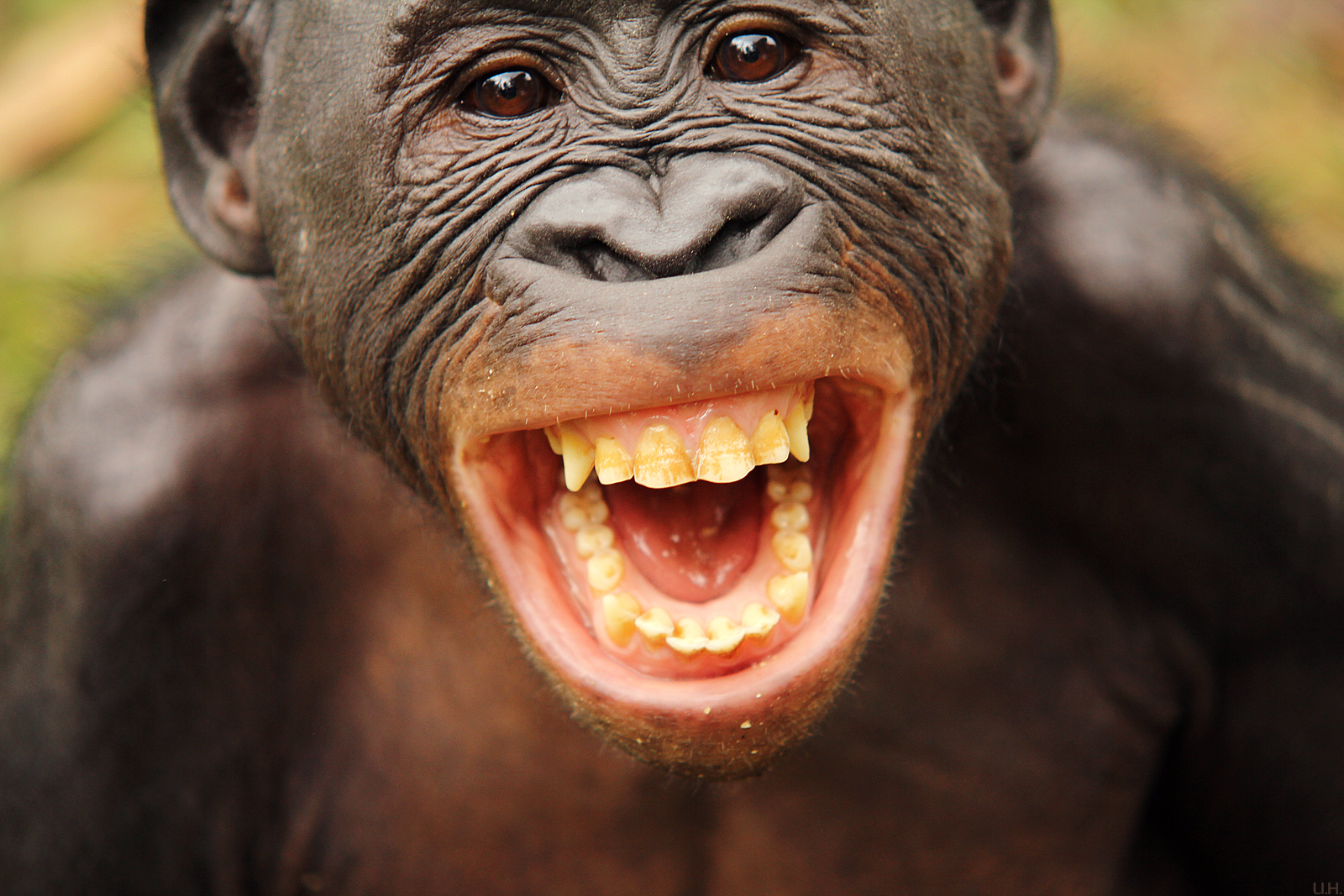
Kwetuenda noted that bonobos have darker faces and longer hair “that will cover their small ears,” compared to chimps who have white faces and pink, visible ears. Bonobos also have webbing between their second and third fingers.

Beyond the physical differences, bonobos are much less aggressive than chimpanzees.

“The model they have for life [is] peace and no war,” Kwetuenda said. “So they make a lot of sex to solve any problem, any stress, any dispute. That’s why they are so kind and so social with each other.”

Back to the wild

Courtesy of Jingzhi Tan, taken at Lola ya Bonobo Sanctuary.

Courtesy of Jingzhi Tan, taken at Lola ya Bonobo Sanctuary.

Since 2009, Lola ya Bonobo has reintroduced dozens of bonobos to the wild. The bonobos who were released were picked because of their immunity and independence, Kwetuenda said.

“They are like humans, there are some who are weak and [get sick easily]. The first thing is who has more immunity and will survive the longest,” she said. “The second thing is… who is able to take care of themselves?”

Before bonobos are released, Kwetuenda noted that she wants to be sure that they will not try to return to humans.

“Most of them are orphans, so they really need to trust each other,” she said.

Some of the released bonobos had lived in captivity for up to 10 years, and Kwetuenda noted that how they will adapt to the wild is one of her biggest concerns. One bonobo, however, has stepped up to help newly released ones readapt to the wild.

“We had one teenager in the first group who was like a substitute mother, she was like the angel of the group,” Kwetuenda said. “She was taking care of the new ones, trying to give them food, and teaching them how to look for food on their own.”

Courtesy of Jingzhi Tan, taken at Lola ya Bonobo Sanctuary.

Courtesy of Jingzhi Tan, taken at Lola ya Bonobo Sanctuary.

Kwetuenda described this bonobo’s actions as empathy. When the bonobo first arrived in the forest, it was often lost and got into trouble. She said she believes the bonobo used its own experiences with reintroduction to help the others.

“She understood how it was tough to be wild,” Kwetuenda said.

Saving bonobos

She noted that while Congo and the bonobos seem far away, Duke students can help by joining the research effort.

“We just need to have more studies and try to let people understand how amazing bonobos are, how clever bonobos are,” she said. “Bonobos have different personalities. There are some who are shy, you have kind ones [and] you have bad ones. “

Collaborating with American or European researchers, she added, can also help increase the credibility of her research. This collaboration provides the sanctuary with resources and access to labs, which would be very difficult to get otherwise.  There is currently a large war in another area in the Democratic Republic of the Congo, and Kwetuenda said authorizes are mostly interested political problems, not saving bonobos.

“Even though the economy in the world is very tough, we need to help them. We need to find money… to help the orphans,” she said.

High School Project Lands Freshman in Top Journal

GriffinBy Pranali Dalvi

Hayes Griffin is no ordinary freshman at Duke. He hasn’t even been in college for one semester and he’s already published in the top-tier science journal Evolution. During his junior year in high school, Griffin worked alongside his classmate Dalton Chaffee and used mathematical models to forecast what happens when sexual imprinting is introduced. Sexual imprinting is when individuals prefer mates with traits similar to those of their mother, father, or another adult member of their population.

While most research in this area examines how imprinting changes the population, Griffin focused on how imprinting itself evolves.

“Our model suggests that paternal imprinting is superior to other types. In other words, it is more advantageous for animals to mate with individuals similar to their fathers,” Griffin explained. On the same note, other types of imprinting, including maternal and oblique – the latter one meaning imprinting on a non-parental adult – are more favorable than random mating.

Even though sexual imprinting is common in nature, it is not well understood and there is much variation from one species to the next. What is known is that females are choosier mating partners than males are. If females require a complex mechanism to select mates, then sexual imprinting will not evolve. However, if imprinting does evolve, a female is more likely to choose a mate similar to her father.

Griffin admits that doing research was very strenuous and time consuming. He spent about 25 hours a week on the project under the guidance of R. Tucker Gilman, a post-doc working with the National Institute for Mathematical and Biological Synthesis (NIMBioS) at the University of Tennessee.

“Reading the background information was also extremely difficult, because neither of us had any experience with scientific papers or evolutionary theory,” Griffin said.

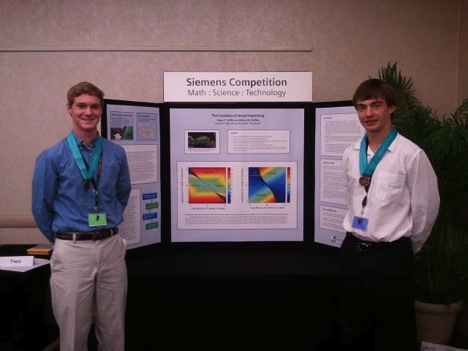
Hayes Griffin (left) with Dalton Chaffee (right) at the Siemens Competition for Math, Science, and Technology.

Hayes Griffin (left) with Dalton Chaffee (right) at the Siemens Competition for Math, Science, and Technology.

His hard work did not go unnoticed though. Griffin and Chaffee were declared Regional Finalists in the Siemens Competition for Math, Science, and Technology. They also were invited to present their findings at the annual conference of the Society for Mathematical Biology.

“Overall, it was a good experience that pushed my limits, and I would definitely do it again,” said Griffin.

Griffin hopes his model will further the scientific community’s understanding of imprinting and selection in general.

For now, though, Griffin is excited about his time at Duke and is considering a major in mechanical engineering.

Lemurs' neck bling tracks siestas, insomnia

Guest post by Robin A. Smith, Duke Lemur Center

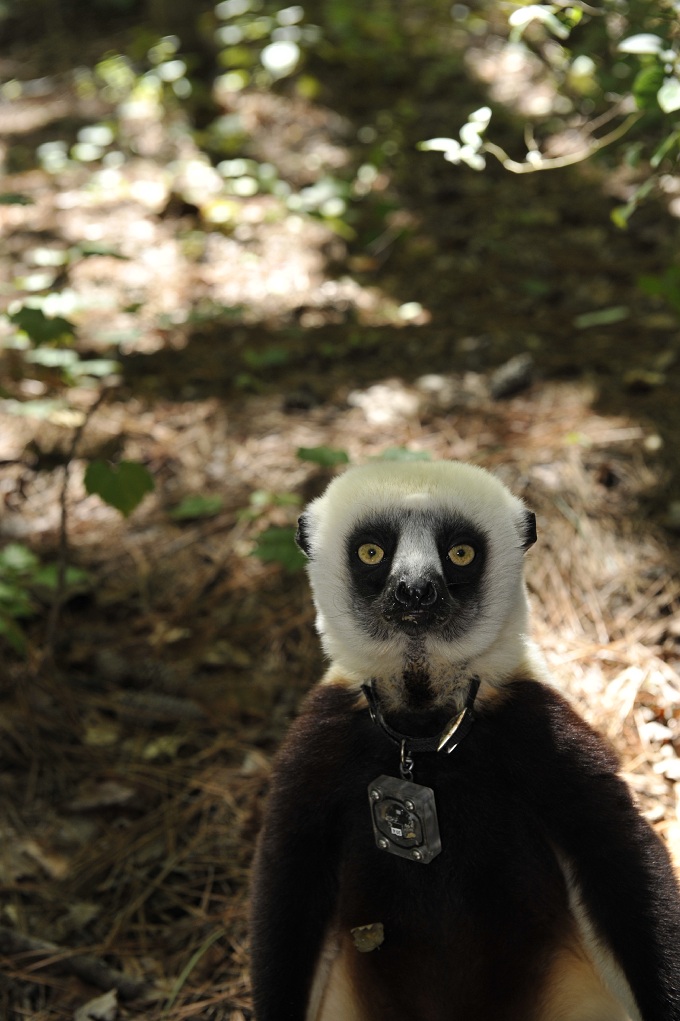
The fancy neck charm this lemur is wearing is no fashion accessory. Weighing in at just under an ounce, it’s a battery-powered data logger that measures light exposure and activity levels continuously over many days.

In a study to appear in the American Journal of Physical Anthropology, Duke researcher Ken Glander and colleagues  at  Rensselaer  Polytechnic  Institute’s  Lighting  Research  Center  (LRC)  outfitted twenty lemurs at the Duke Lemur Center with the special gadgets — called Daysimeters — to study the animals’ daily ups and downs.

The five species in the study — mongoose lemurs, Coquerel’s sifakas, ringtail lemurs, red-ruffed lemurs and black-and-white lemurs — wore their new jewelry around the clock for a week while they went about their regular routine of lounging, leaping, napping and climbing trees.

Sifaka with dosimeter

Sifaka with a light-and-motion dosimeter looks like Flava Flav

Lemurs in this study are generally more active during the day than at night. But when the researchers downloaded the data, they found that several species also stirred after dark, and all of them took periodic rests during the day — often retreating to a shady spot for a midday siesta.

The results could help researchers understand the sleep disturbances common among people with Alzheimer’s or other forms of dementia, and whether light therapy could help reset their internal clock for a more solid night’s sleep.

For their next experiment, they’ll use a lighting fixture custom-built by the Lighting Research Center to find out how different light-dark cycles — similar to seasonal changes in day length or the waxing and waning of the moon — affect patterns of rest and activity in two groups of ringtail lemurs:  one consisting of younger animals that are less than two years old, and another over twenty.

“We’re not saying that lemurs have dementia,” Glander said. “But we think that lemurs can tell us something about how some animals manage to stay healthy despite having segmented sleep.”

CITATION: “Measured daily activity and light exposure levels for five species of lemurs,” Rea, M., et al. American Journal of Physical Anthropology, 2013.

Humans, Whales and Taylor Swift

by Ashley Mooney

The similarities between chromium workers and whales are greater than one might think.

Environmental toxicology researcher John Wise has been studying the connection between exposure to pollutants and the onset of cancer in humans. To understand the link, he said one must take into account all species, especially whales. Wise spoke at Duke Oct. 25 at the Inaugural Duke Distinguished Lecture in Cancer and the Environment.

800px-Chromium_crystals_and_1cm3_cube

Chromium crystals. Courtesy of Wikimedia Commons.

“For environmental health for me, [the Earth] is the big picture,” Wise said. “This is home and we only have one, so we have to think pretty hard about environmental health.”

Wise studies the effect of pollutants—specifically forms of chromium—on genetic material in humans, marine mammals, and birds and other marine species.  While the standard approach to environmental toxicology research is to conduct epidemiology studies on highly exposed populations and then expose animals to high doses of the toxin, Wise has adopted a new method of study.

“We don’t really know what high-dose exposures mean on a day-to-day basis,” he said.

To understand the relationship between chromium exposure and the onset of cancer, Wise looks at the personal factors that affect one’s health, such as an individual’s body and genome, lifestyle, daily exposures and what kind of environment one lives in.

“We need to know mechanism: how does a normal cell become a tumor cell?” he said. “For a long time that is where the field has been hung up, trying to identify the ultimate carcinogen.”

Most forms of naturally occurring chromium are not toxic. Man-made hexavalent chromium, however, has been shown to cause lung cancer in those who are regularly or heavily exposed to it. Prolonged exposure induces an altered chromosome number and structure, as well as DNA double strand breaks.

Chronic exposure to chromium also causes a shift from more a protective form of DNA repair called homologous recombination to a less stable and error-prone pathway called non-homologous end joining. This means that cells will have permanently deficient repair mechanisms.

Wise applies his research in the context of ocean health, namely how chromium exposure might harm whale DNA.

Most ocean pollutants, including the toxic form of chromium, are in the ocean sediment. As the ocean becomes increasingly more acidic, the sediment breaks off and poses a growing threat to marine species.

Wise measured chromium levels in baleen whale skin, and found that Atlantic seaboard species—the northern right whale, fin whale and humpback whale—have 16- to 41-fold higher levels than other baleen whales.  Toothed whales living in the Gulf of Mexico exhibited levels that resembled those found in chromium workers who died of lung cancer.

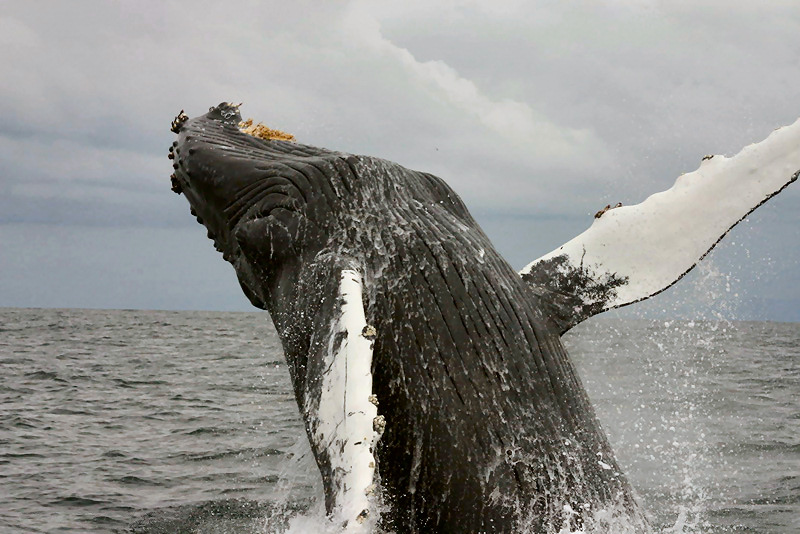
A humpback whale surfacing for air. Courtesy of: Protected Resouces Division, Southwest Fisheries Science Center, La Jolla, California. swfsc.nmfs.noaa.gov/PRD/.

A humpback whale surfacing for air. Courtesy of: Protected Resouces Division, Southwest Fisheries Science Center, La Jolla, California. swfsc.nmfs.noaa.gov/PRD/.

In whales, chromium can lead to DNA damage and reproductive suppression.

“There’s only 400 [northern right whales] left in existence,” Wise said. “If you only have 400 animals, you need every single one of them [to be able to reproduce].”

Wise said he hopes his research will encourage people to think more about habitat degradation and climate change, and how they affect all species.

taylor-conor-sailing-team, courtesy of popdust.com

Wise (back right) photographed with his lab and Conor Kennedy (back left). Courtesy of popdust.com.

His lab, however, has recently gained publicity not for its research, but for the public figures that have worked with it. Conor Kennedy, a member of the influential Kennedy family, worked with Wise’s team and Ocean Alliance last year. At the time he was dating pop-star Taylor Swift.

“[He was], like any other high school student, constantly texting on his phone and I would do what I did with my kids and the other students, and say ‘put the girl down, we have to go to work,’ not knowing the girl was Taylor Swift,” Wise said. “It really hit home that we were traveling in very different circles.”

Tigers may still come roaring back

by Ashley Mooney

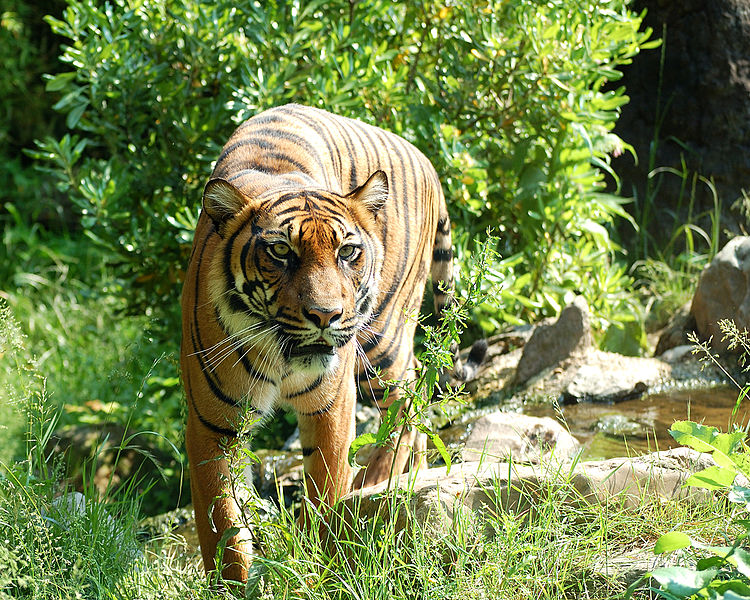
Although tigers have been threatened with near extinction for decades and some extinction narratives in the 1990s predicted they’d disappear by 2000, they might actually be making a comeback.

Indian conservationist Ullas Karanth thinks tigers can be saved, and the key to saving them is optimism.

“Conservation is about being optimistic, but rationally optimistic,” said Karanth, the Wildlife Conservation Society’s director of science for Asia and founding director for the Centre for Wildlife Studies in India. He spoke at Duke Oct. 22 for the Ferguson Family Distinguished Lectureship in the Environment and Society.

At one point, tigers occupied about 30 present-day countries, but that range has shrunk by 93 percent to a mere 115,000 square miles of forest, Karanth said.

Courtesy of Wikimedia Commons.

Courtesy of Wikimedia Commons.

As India continues to rise through developmental pathways, Karanth said it is crucial to preserve land for all animals, not just tigers. India is about a third of the size of the United States, but has four times as many people. As India’s economy continues to grow, urban areas continue to creep into and to destroy wildlife habitats.

“When I say tiger conversation, I mean all this,” he said referencing all of the animals that coexist in the tiger habitat. “In India, the idea that you can have space for nature and that other creatures need space is accepted. It provides a positive platform on which you can build more knowledge.”

Wanting to save tigers isn’t enough, he said, adding that conservation must be science driven.

Since Karanth began studying tigers in 1986, his program has grown from a small tiger study to a “pretty substantial intervention.” He identifies and studies animals using photographic capture-recapture sampling, in which he places cameras throughout the tigers’ range and occasionally captures and tracks them using collars.

Ullas Karanth in the field. Courtesy of Wikimedia Commons.

Ullas Karanth in the field. Courtesy of Wikimedia Commons.

“It started as a small project and took time,” Karanth said. “You can’t be Usain Bolt and do conservation. It’s a marathon.”

Throughout this marathon, conservationists must also utilize human networks to preserve a species. Karanth uses his relationships with a number of people within the government system, religious leaders and the media to promote tiger conservation. He also writes books and articles in the local languages to reach rural populations.

“We don’t have a lot of time for experiments or romantic ideas, we need to make sure this species survives,” Karanth said. “Solutions that are greatly rewarding [in other countries] just don’t work in this context.”

By reaching out to as wide of an audience as possible, Karanth said he was optimistic about the future for the tigers.

“I truly believe that we can at sometime have over 50,000 tigers in India again,” he said.

Page 15 of 19

Powered by WordPress & Theme by Anders Norén