
Following the people and events that make up the research community at Duke

Students exploring the Innovation Co-Lab

Author: Sophie Cox

Remembrance of Wordles Past

Devang Thakkar, a fourth-year PhD candidate at Duke University, recently created an archive  for Wordle that gives users unlimited access to past Wordle games. Gray tiles indicate letters not found anywhere in the correct word, yellow indicates letters that are in the word but not in the right place, and green indicates correctly placed letters.

Writing this story was dangerous. Before, I was only vaguely aware of the existence of Wordle, a wildly popular online word game created by Josh Wardle and recently bought by the New York Times. Now I can’t stop playing it. The objective of the game sounds deceptively simple: try to guess the right five-letter word in six attempts or fewer.

Thanks to Devang Thakkar, a fourth-year PhD student in Computational Biology and Bioinformatics at Duke, the 200+ Wordle games released before I discovered its charms are readily accessible online. So now I’m making up for lost time.

Thakkar recently spent a weekend building an archive of every Wordle game in existence. You can play them in any order. You can start at the beginning. You can start with today’s Wordle and work backward. You can sit down and play eight in a row. Just hypothetically, of course.

Devang Thakkar became hooked on Wordle when his roommate introduced it to him, but he wanted a way to access old Wordles as well. First, he experimented with manually changing the date on his browser to trick the computer into showing him old Wordles. However, his browser gave him an error message if he tried to go back more than fourteen days. To get around that, Mr. Thakkar wrote a Python script using a Python library called Selenium, which allowed him “to basically go back as much as you want.” 

Thakkar combined his own data with an open-source Wordle project called WordMaster created by Katherine Peterson. With an open-source project, Thakkar says, “You put your work out there, and then someone else adds to it.”
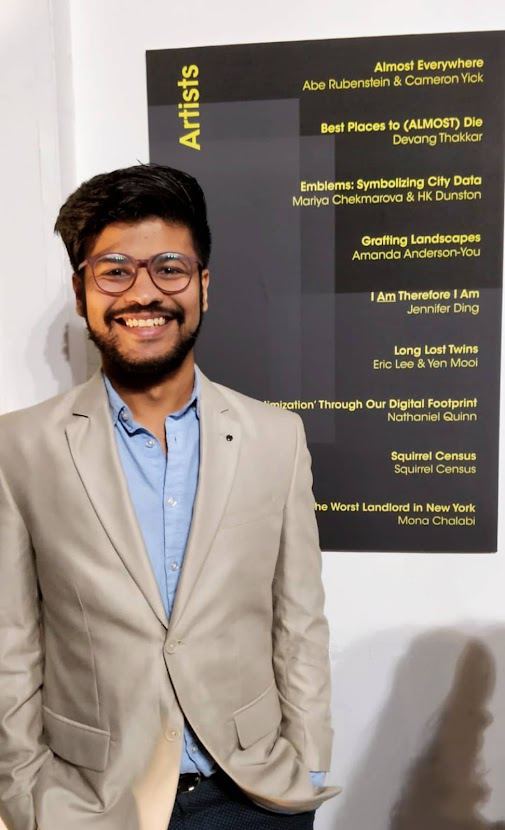
Devang Thakkar at the 2020 Data Through Design exhibition in New York.
Photograph courtesy of Devang Thakkar.

Whereas WordMaster randomly generates new five-letter words, Thakkar’s archive provides access to “official” Wordle games from the past. While there were many random Wordle generators already in existence, it was the usage of the official Wordle list and the ability to go back to a particular Wordle that set this archive apart. Thakkar also added features like the ability to share your answers with others and an option that lets users access Wordle games in a random order.

Thakkar tells me the project was “just for fun.” “I was bored… so I was like, ‘let’s make something!’” he says. Nevertheless, “That is essentially what I do for my work as well; I write code.” In the Dave Lab, Devang Thakkar uses sequencing data to study the origins of different types of lymphomas.
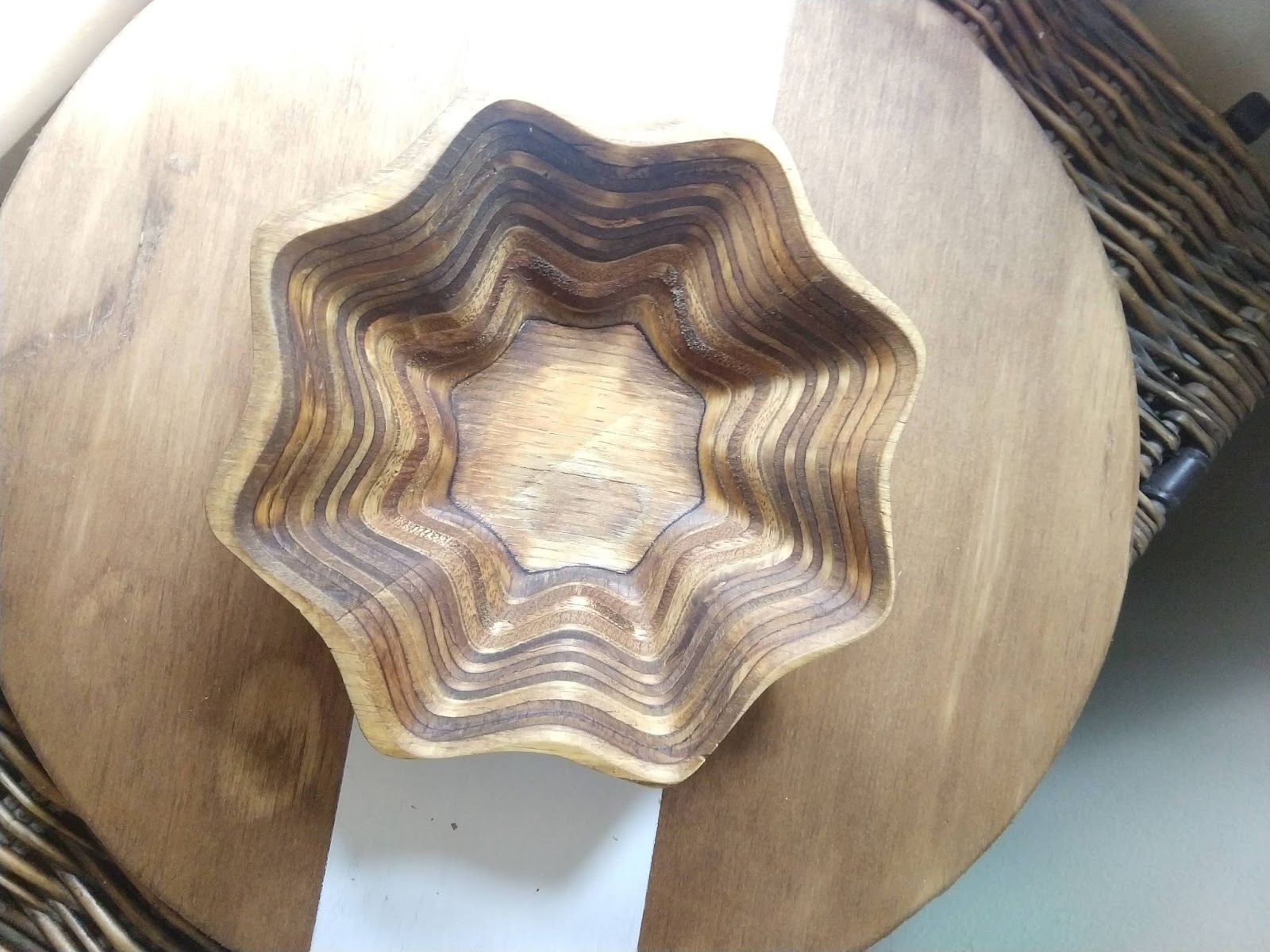
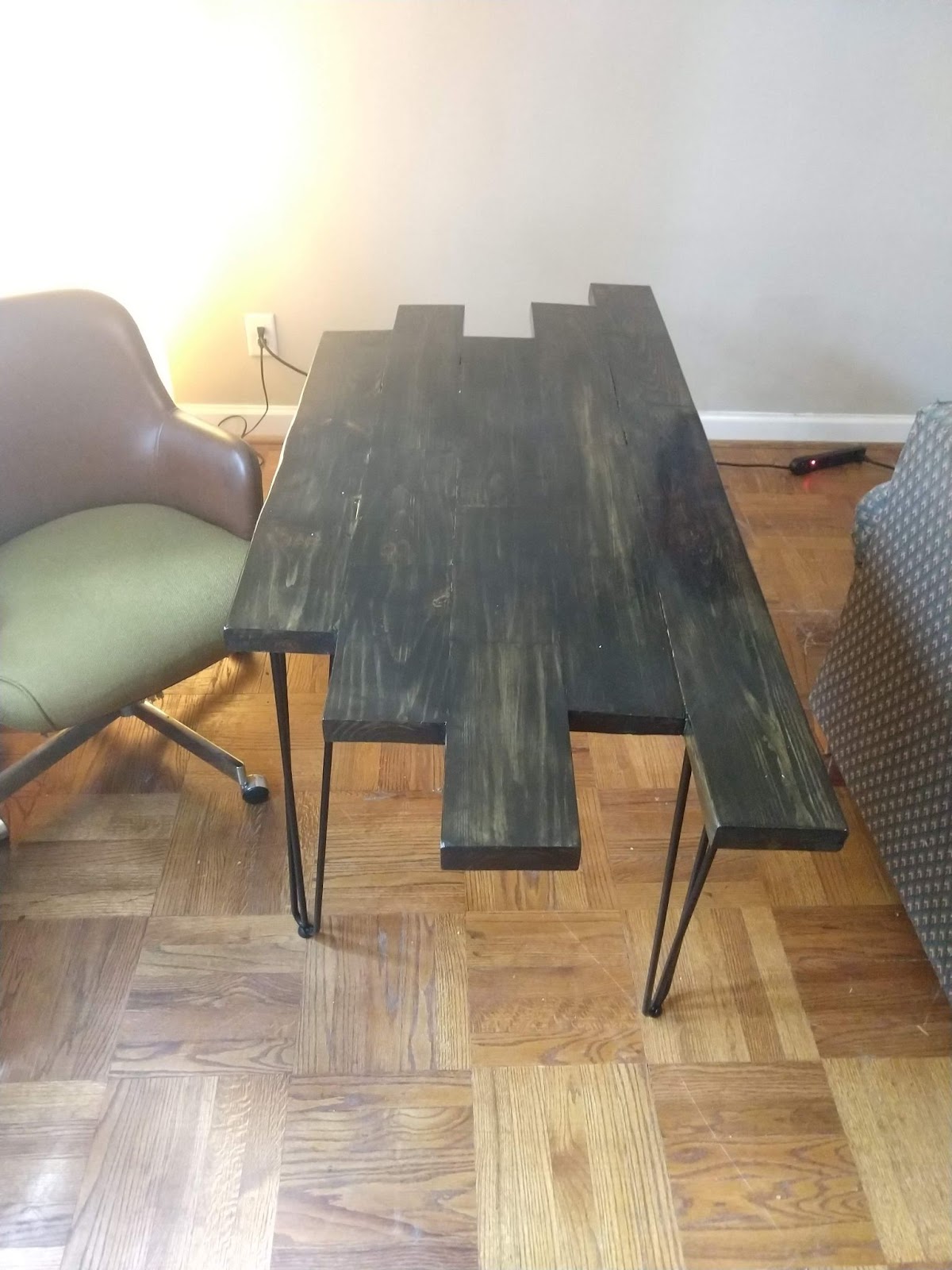
In his free time, Devang Thakkar enjoys woodworking and metalworking. Pictured here are two of his projects, a wooden bowl and his own dining room table.
Photographs courtesy of Devang Thakkar.

When he’s not working or making Wordle archives, Devang Thakkar can often be found in Duke’s Innovation Co-Lab, where he enjoys woodworking and metalworking. His projects range from creations intended as gifts, like a laptop stand and beer caddy, to his own dining room table. Thakkar says the hobby, being very different from his normal work, helps him maintain work-life balance.

The Wordle project, on the other hand, required coding skills Thakkar uses daily. “This is just like work for me, but for fun.” He enjoys graphic design and board games and has “a special affection for board games with words.”

As for the Wordle archive, Mr. Thakkar says he never expected it to become so popular. He thought it would mostly be used by his friends, but the archive quickly accumulated millions of weekly users. “People keep sending me screenshots of their friends sending them this website,” he says.

Meanwhile, I’ve started noticing Wordle references everywhere. Just after I spoke to Thakkar about his project, I happened to stumble across a link to BRDL, a delightful Wordle spinoff that uses four-letter birding codes instead of words. By blind luck, I guessed the right code on my second try: AMGO, American goldfinch. A few days later, I overheard two students talking about the daily Wordle. Clearly, I’m not the only one who’s become hooked on the game. Fortunately for everyone who is, Devang Thakkar’s Wordle archive, which he called “Remembrance of Wordles Past,” offers unlimited access.

By Sophie Cox, Class of 2025

“Rainforest Radio”: Linguistic Ecology in the Western Amazon

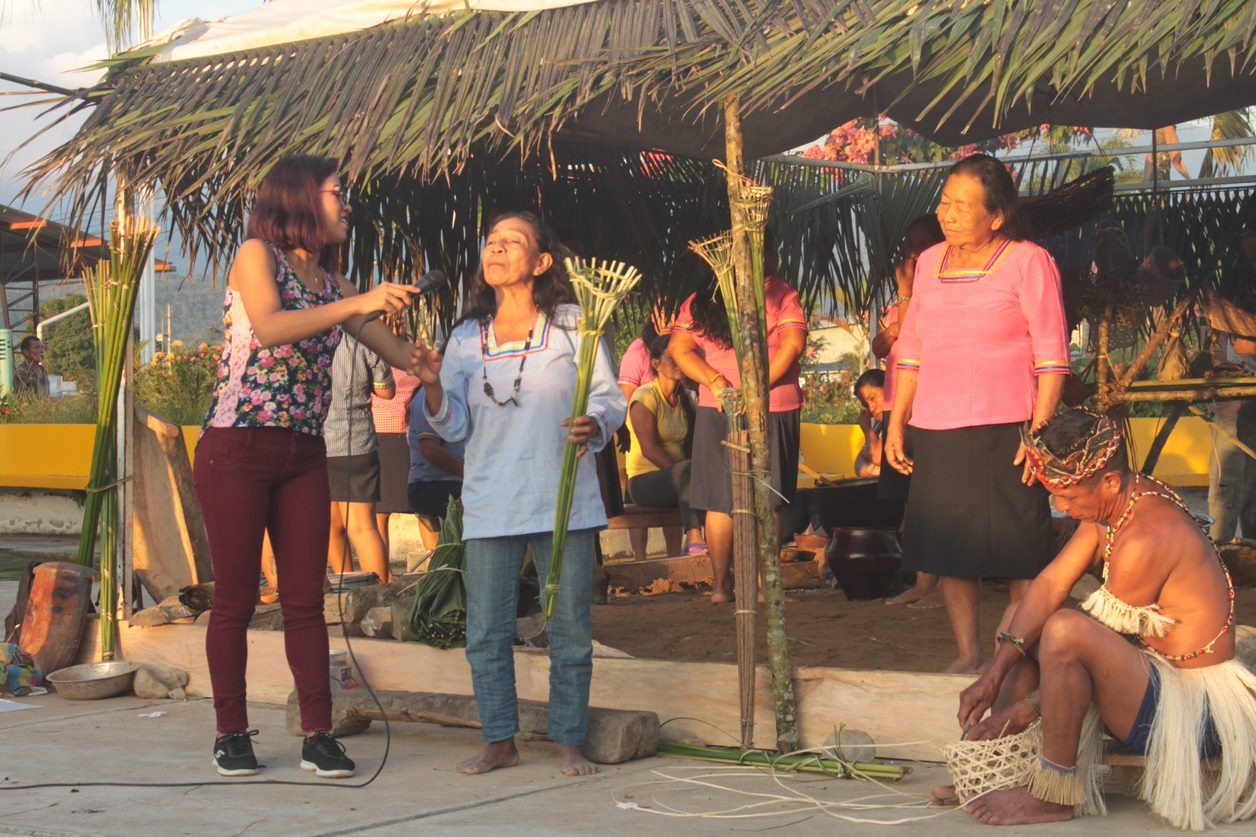
Radio host Rita Tunay interviews a local elder on the Kichwa-language radio program “Mushuk Ñampi” [A New Path].
Photographs from Dr. Georgia Ennis.

Starting at the pre-dawn hours of 3 or 4 AM, the Kichwa people of Napo, Ecuador, gather with family and spend time talking and listening and drinking tea, in a tradition known as Wayusa Upina.

In Kichwa, the verb “to listen” also means “to understand,” says Penn State anthropologist Georgia Ennis, who spoke at Duke last week. Wayusa Upina provides natural opportunities for children to learn from parents and grandparents, aunts and uncles. Kichwa pedagogies, Ennis explains, “have a lot less to do with a traditional classroom.”

But as multigenerational households become less common and Kichwa children spend more time in schools, the tradition has become less widespread. Meanwhile, other traditions, like radio programs in Kichwa, are becoming more common, and “the radio ends up filling the space” that multigenerational conversation might otherwise fill. Through music videos, social media, live performances, books, and radio programs, the people of Napo are finding new roles for an old language.

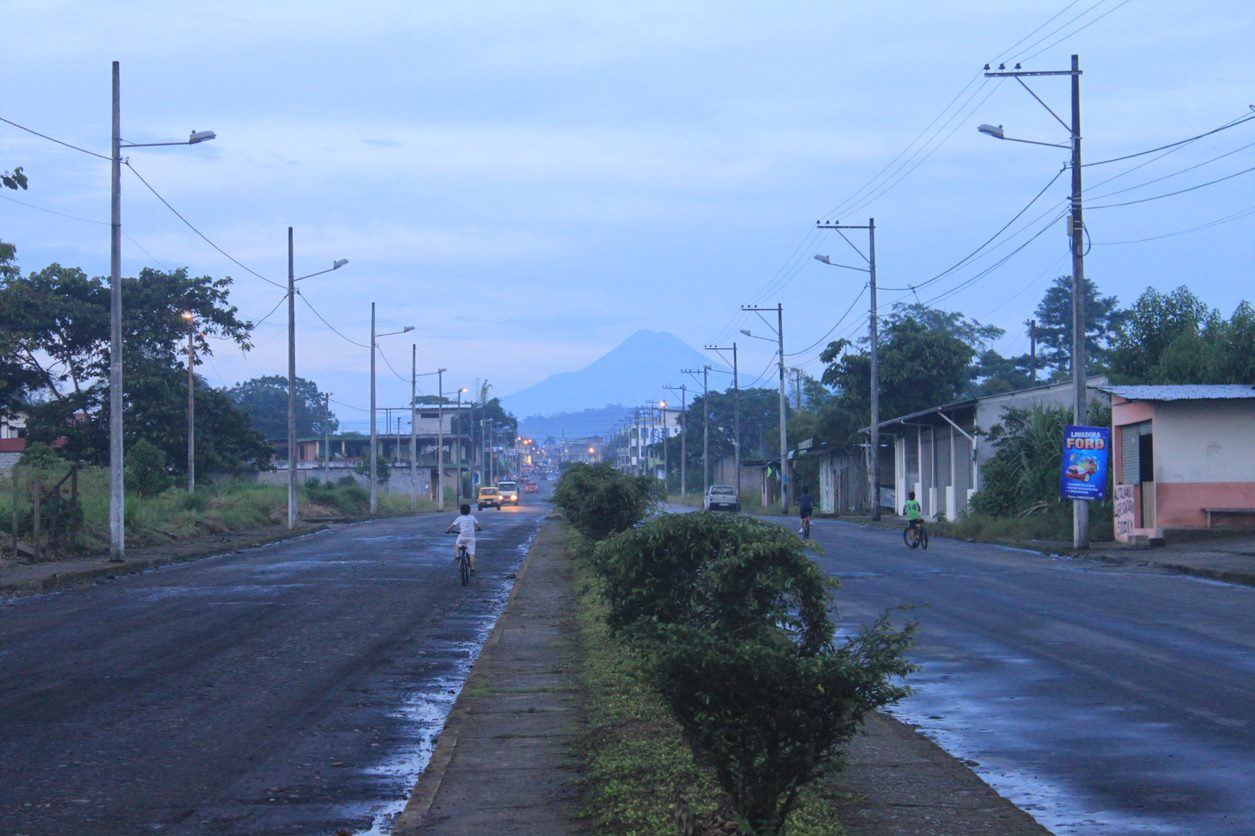
The town of Archidona, Ecuador, located in the Western Amazon.

Ennis studies language oppression and reclamation and is broadly interested in the relationship between ecological and linguistic change. “How can we bring language and the environment together?” she asks. While her work was initially focused on language standardization, she became interested in the environmental aspects during her research. The two issues aren’t separate; they are linked in complex ways. To explain ecology in a linguistic sense, Dr. Ennis offers a definition from Einar Haugen: “Language ecology may be defined as the study of interactions between any given language and its environment… The true environment of a language is the society that uses it as one of its codes.”

Many scientists believe we are witnessing a sixth mass extinction, and extinction is occurring at unprecedented rates, but Dr. Ennis says we are losing another kind of diversity as well: the diversity of languages. Her own work focuses on Upper Napo Kichwa in the Ecuadorian Amazon. Though there are 47,000 speakers, there has been a language shift toward Spanish among younger generations. “Spanish really remains the dominant language of social life,” she says, even though the majority of the residents are Kichwa.

The concept of “language endangerment,” or the rapid loss of marginalized languages as speakers adopt dominant languages instead, is complex and not without its critics. Dr. Ennis believes languages like Kichwa are “actively oppressed,” not passively endangered.

There are eight varieties of Kichwa in the Andean highlands and the Amazon. “Unified Kichwa,” which Dr. Ennis says is based on reconstruction of Andean varieties, was adopted as an official language of Ecuador in 2008, but this standardized version fails to capture local variation. In Napo, Dr. Ennis found that “the regional linguistic varieties were understood to be inherited from your elders.” Initially, she had “a much stronger stance” against standardized language, but she now sees certain benefits to Unified Kichwa. It can, for instance, help encourage bilingual education. Still, it risks outcompeting local dialects. Many of the people she worked with in Napo are actively trying to prevent that.

The reverse of language endangerment or oppression is language revitalization or reclamation, which aims to preserve linguistic diversity by increasing the number of speakers and broadening the use of language. Media production, for instance, can help create social, political, and economic value for Upper Napo Kichwa.

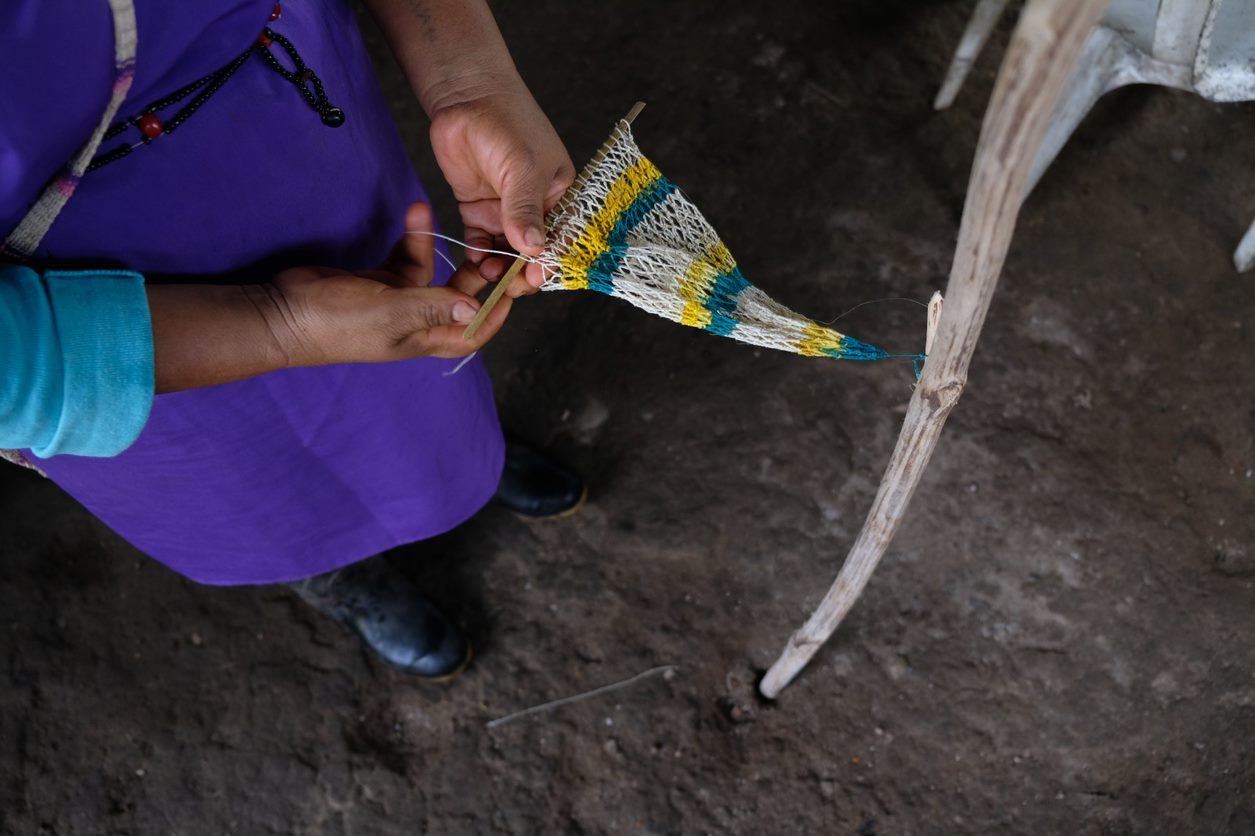
Ofelia Salazar of the Association of Upper Napo Kichwa midwives weaves a shigra bag from the natural fiber pitak.

In Napo, Dr. Ennis realized that many Kichwa are interested in reclaiming more than just language. They are also working to preserve traditional environmental practices and intergenerational pedagogies. None of these issues exist in a vacuum, and recognizing their links is important. Dr. Ennis wants people to realize that “ecologies are more than just biological ecosystems.” Through the course of her work, she’s become more aware of the ties between linguistic and environmental issues. Environmental issues, she says, are present in daily life; they shape what people talk about. Conversations like these are essential. Whether in radio programs or casual discussions, political debates or household conversations before the sun has risen, the things we talk about and the stories we tell affect how we view the world and how we respond to it.

By Sophie Cox, Class of 2025

Leadership As ‘Groundskeeping,’ Not ‘Gatekeeping,’ and Other “Lessons From Plants”

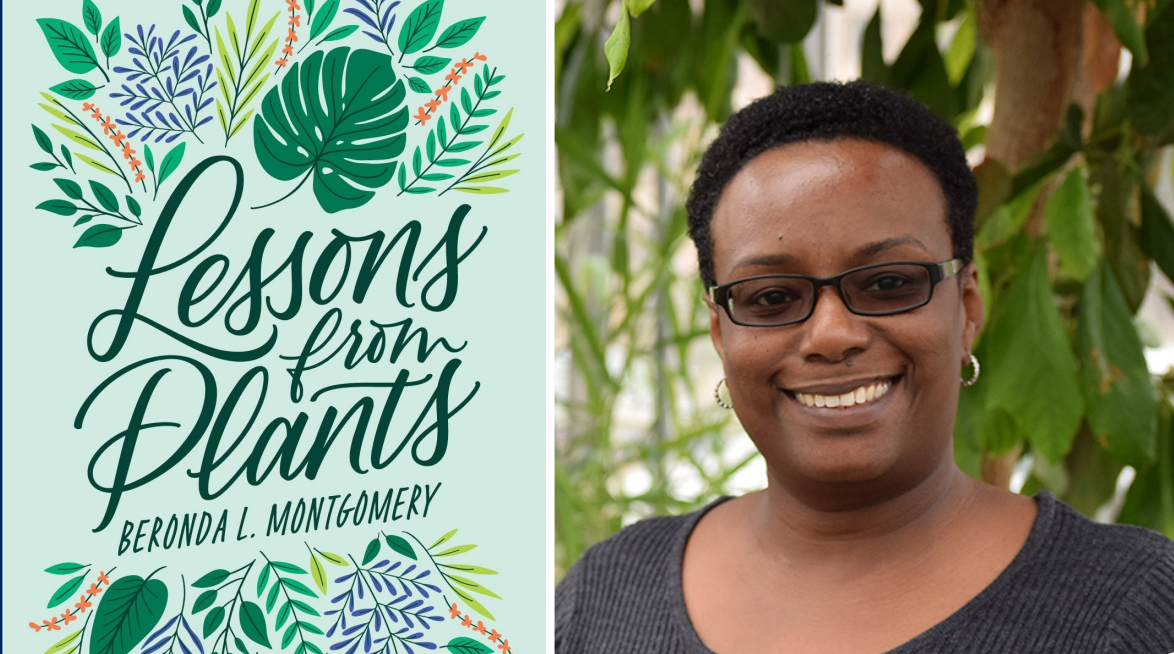
Dr. Beronda Montgomery, author of Lessons from Plants, recently spoke at Duke University. (Photos: Marie Claire Chelini, Biology Dept.)

Plants do not passively exist, leaving their survival to the whims of fate; they notice their environments and respond accordingly, says Dr. Beronda Montgomery, a professor, writer, science communicator, and researcher from Michigan State University who studies plants and what we can learn from them.

She visited Duke last week to talk about her recently published book, Lessons from Plants, and the inspiration behind it.

Plants perceive and respond to their surroundings in myriad ways, from turning toward a light source to reacting to differences in temperature, humidity, and nutrient availability. Even the same stimulus can cause different reactions in different situations, said Montgomery, whose research involves photosynthetic organisms, especially Arabidopsis plants and cyanobacteria. She is broadly interested in how organisms respond to and are affected by their environments.

For example, light can serve as either a “go signal” or a “stop signal,” depending how much of it is available. In low light conditions, plants invest more energy in stem elongation as they seek light. When they have sufficient light, on the other hand, plants undergo “de-etiolation,” creating shorter stems and better developed leaves.

Montgomery doesn’t just learn about plants; she learns from them as well. And in some cases, she says, plants might make better teachers than humans.

Montgomery spoke in the Penn Pavilion at Duke.

One area Montgomery has written about extensively, both in Lessons from Plants and elsewhere, is equity. As she points out, “Equal aptitude can result in different outcomes depending on environment.” According to Montgomery, “Humans, by and large, have an expectation of growth for plants,” so when something goes wrong, we look to external factors. We blame the caretaker, not personal defects in the plant. With humans, on the other hand, “We recruit people… who have demonstrated success elsewhere,” fueling a vicious cycle that can exacerbate inequities and limit opportunities. Montgomery talks about “the need to move from leadership as gatekeeping to groundskeeping.”

When students or employees struggle, she believes we should scrutinize mentors and caregivers instead of automatically attributing failure to personal defects. After all, “We would never say… ‘let me teach you to have turgid leaves’ to a plant” or tell it to simply try harder. We don’t eliminate houseplants that aren’t thriving. We ask ourselves what they need—whether it’s light, fertilizer, or water—and make changes accordingly.

“What would happen,” Montgomery asks, “if we saw things like equity as essential to our existence?” She stresses that questions like these can’t remain hypothetical. She points to a quote in Breathe, a book by Imani Perry, that captures the importance of applying what we learn: “Awareness is not a virtue in and of itself, not without a moral imperative.”

Nevertheless, Montgomery believes that “We have to live in the system we have while we transform it.” Sometimes, just as managed fires can make forests healthier and safer, there is a need for “intentional disruption” in the human world. “We seem to want change without change,” when we should instead be embracing the process of change as well as the result. “Change doesn’t mean that what happened in the past was all evil. It just means that we have to keep moving.” Moving forward is something plants do well. Season by season, year by year, they keep growing. Montgomery speaks of the tulips that helped bring her peace during a period of personal and collective grief. In spite of everything, the tulips she had planted in the fall came up in the springtime, ready for warmer weather.

Plants don’t just respond to change; they prepare for it. In the fall, when deciduous trees lose their leaves, they are “actively prepar[ing] for rest,” something Montgomery thinks we could all learn from.

Hope, according to Montgomery, means that “some things have to die, and some live,” and that “despite what’s going on around you, you have to find the power and strength to go on.”

“I aspire to hope,” she says.

Montgomery also did a book signing for Lessons from Plants which was published in April of this year.

Montgomery says her guiding life principle is reciprocity. It seems fitting, then, that she has taught her son to appreciate plants from an early age, just as her mother did for her. When Montgomery’s son was nine months old, she planted a tree in his honor with the idea that he would be its steward. Sometimes, her son was taller than the tree. Other times, it was the other way around. When Montgomery’s son was seven, the tree became ill, but they treated it successfully, prompting conversations about sickness and recovery and what it means to care for something. Throughout his childhood, her son’s tree remained a valuable conversation starter. It still is.

“He’s a second-year student in college, and he still asks about his tree.”

Post by Sophie Cox, Class of 2025

How To Hold a Bee and Not Get Stung

Pictured from left to right are Lindsey Weyant, Andrew McCallum, and Will Marcus.

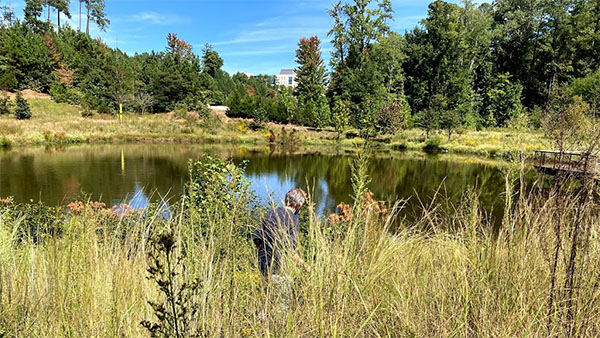
On Saturday, September 25, the Wild Ones club hosted an insect-themed outing with Fred Nijhout, an entomology professor at Duke. We visited a pond behind the Biological Sciences Building bordered by vegetation. Apparently, the long grasses and flowers are prime habitat for insects, which are often attracted to sunny areas and edge habitat. Along with several other students, I practiced “sweeping” for insects by swishing long nets through vegetation, a delightfully satisfying activity, especially on such a gorgeous fall day.

A species of skipper feeding on a flower. According to Fred Nijhout, the best way to distinguish butterflies (including skippers) from moths is by looking for knobbed antennae, characteristic of butterflies but not moths.

Professor Nijhout says much of his research focuses on butterflies and moths, but the insect biology class he teaches has a much broader focus. So does this outing. In just a couple hours, our group finds a wide array of species.

A milkweed bug (left) and a soldier beetle, two of the species we saw on Sunday.

Many of the insects we see belong to the order Hemiptera, a group sometimes referred to as “true bugs” that includes more than 80,000 species. We find leafhoppers that jump out of our nets while we’re trying to look at them, a stilt-legged bug that moves much more gracefully on its long legs than I ever could on stilts, spittlebugs that encase themselves in foam as larvae and then metamorphose into jumping adults sometimes called froghoppers, and yet another Hemipteran with a wonderfully whimsical name (just kidding): the plant bug.

Professor Nijhout shows us a milkweed leaf teeming with aphids (also in the order Hemiptera) and ants. He explains that this is a common pairing. Aphids feed on the sap in leaf veins, which is nutrient-poor, so “they have special pumps in their guts that get rid of the water and the sugars” and concentrate the proteins. In the process, aphids secrete a sugary substance called honeydew, which attracts ants.

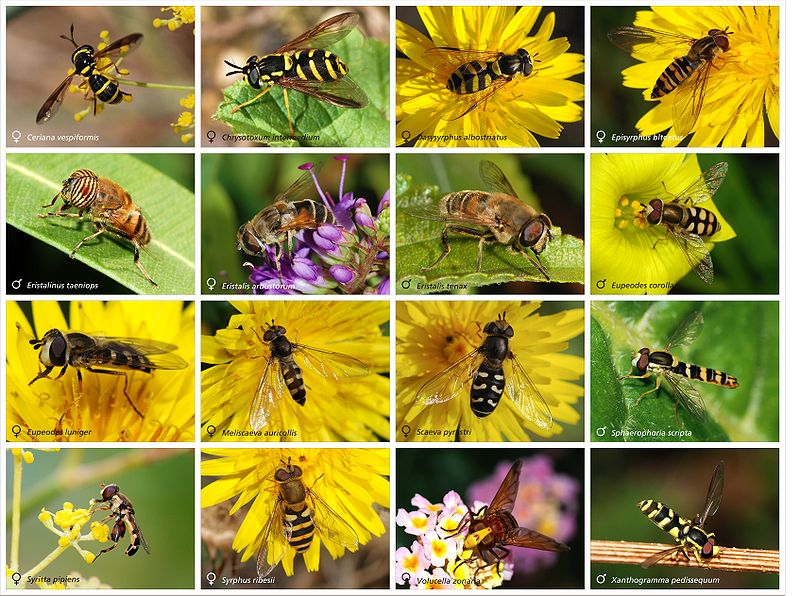
The honeydew excreted as a waste product by the aphids provides the ants with a valuable food source, but the relationship is mutualistic. The presence of the ants affords protection to the aphids. Symbiosis, however, isn’t the only means of avoiding predation. Some animals mimic toxic look-alikes to avoid being eaten. Our group finds brightly colored hoverflies, which resemble bees but are actually harmless flies, sipping nectar from flowers. Professor Nijhout also points out a brightly colored milkweed bug, which looks toxic because it is.

Sixteen species of hoverfly, all of which are harmless. Note that hoverflies, like all flies, have only one pair of wings, whereas bees have two.
Image from Wikipedia user Alvesgaspar (GNU Free Documentation License, Creative Commons license).

Humans, too, can be fooled by things that look dangerous but aren’t. As it turns out, even some of our most basic ideas about risk avoidance—like not playing with bees or eating strange berries—are sometimes red herrings. When we pass clusters of vibrant purple berries on a beautyberry bush, Professor Nijhout tells us they’re edible. “They’re sweet,” he says encouragingly. (I wish I could agree. They’re irresistibly beautiful, but every time I’ve tasted them, I’ve found them too tart.) And on several occasions, to the endless fascination of the Wild Ones, he catches bees with his bare hands and offers them to nearby students. Male carpenter bees (which can be identified by the patch of yellow on their faces) have no stinger, and according to Professor Nijhout, their mandibles are too weak to penetrate human skin. It’s hard not to flinch at the thought of holding an angry bee, but there’s a certain thrill to it as well. When I cup my hands around one of them, I find the sensation thoroughly pleasant, rather like a fuzzy massage. The hard part is keeping them from escaping; it doesn’t take long for the bee to slip between my hands and fly away.

Professor Nijhout in his element, about to capture a male carpenter bee (below) by hand.

The next day, I noticed several bees feeding on a flowering bush on campus. Eager to test my newfound knowledge, I leaned closer. Even when I saw the telltale yellow faces of the males, I was initially hesitant. But as I kept watching, I felt more wonder than fear. For perhaps the first time, I noticed the way their buzzy, vibrating bodies go momentarily still while they poke their heads into blossoms in search of the sweet nectar inside. Their delicate wings, blurred by motion when they fly, almost shimmer in the sunlight while they feed.

Gently, I reached out and cupped a male bee in my hands, noticing the way his tiny legs skittered across my fingers and the soft caress of his gossamer wings against my skin. When I released him, his small body lifted into the air like a fuzzy UFO.

I realize this new stick-my-face-close-to-buzzing-bees pastime could backfire, so I don’t necessarily recommend it, especially if you have a bee allergy, but if you’re going to get face-to-face with a carpenter bee, you might at least want to check the color of its face.

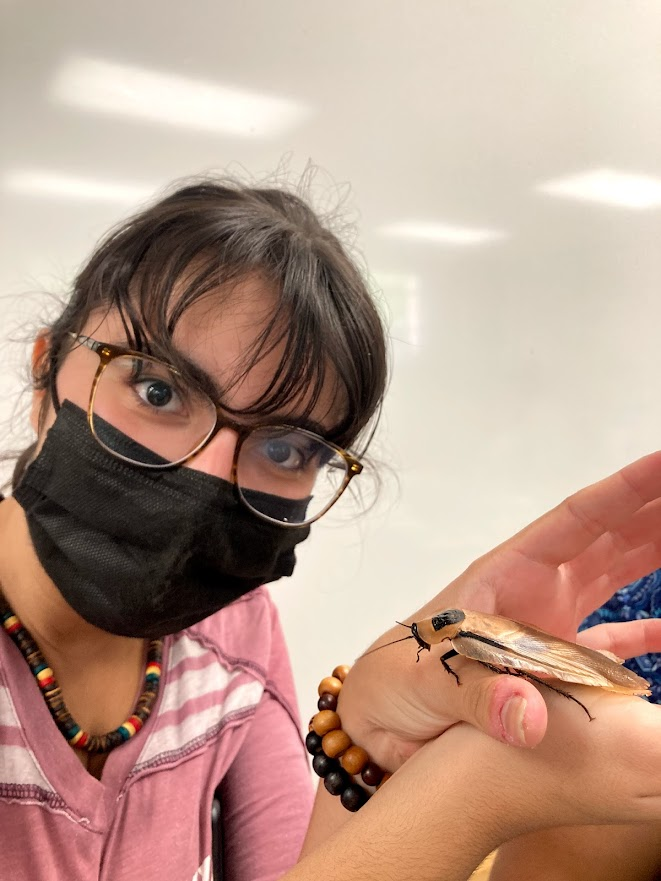
Damla Ozdemir, a member of the Wild Ones, with a giant cockroach in Professor Nijhout’s classroom.

If you could hold all the world’s insects in one hand and all the humans in the other, the insects would outweigh us. More than 900,000 species of insects have been discovered, and there may be millions more still unknown to science. Given their abundance and diversity, even the experts often encounter surprises.“Every year I see things I’ve never seen before,” Professor Nijhout told us. Next time you step outside, take a closer look at your six-legged company. You might be surprised by what you see.

By Sophie Cox, Class of 2025

Carrying On a Legacy of “Whimsical” Gardening

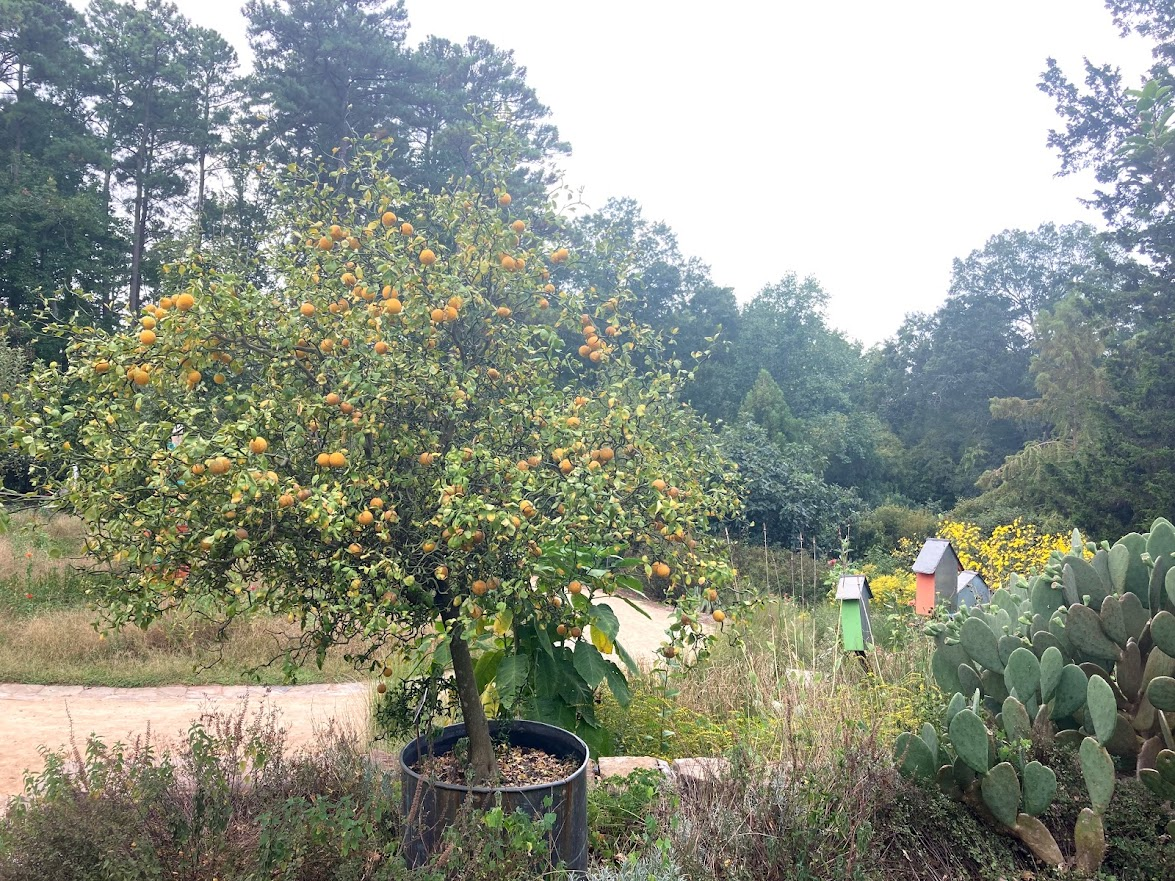
A contorted hardy orange tree (Poncirus trifoliata) in the Charlotte Brody Discovery Garden. The brightly colored structures in the background are pollinator houses.

On Wednesday, September 15, the Sarah P. Duke Gardens hosted a drop-in event in the Charlotte Brody Discovery Garden, an area near the main entrance with a focus on organic and sustainable gardening. This part of Duke Gardens is almost ten years old, but Wednesday’s event, led by curator Jason Holmes and horticulturist Nick Schwab, showcased what makes it unique.

The entrance to the Charlotte Brody Discovery Garden is marked by a lovely arbor draped with vines. Inside, the winding paths are lined with flowers, fruiting trees, and beds of herbs and vegetables. Bees and butterflies flit here and there, bright against the rainy sky.

Holmes finds me admiring a display of carnivorous plants. He introduces himself and shows me around.

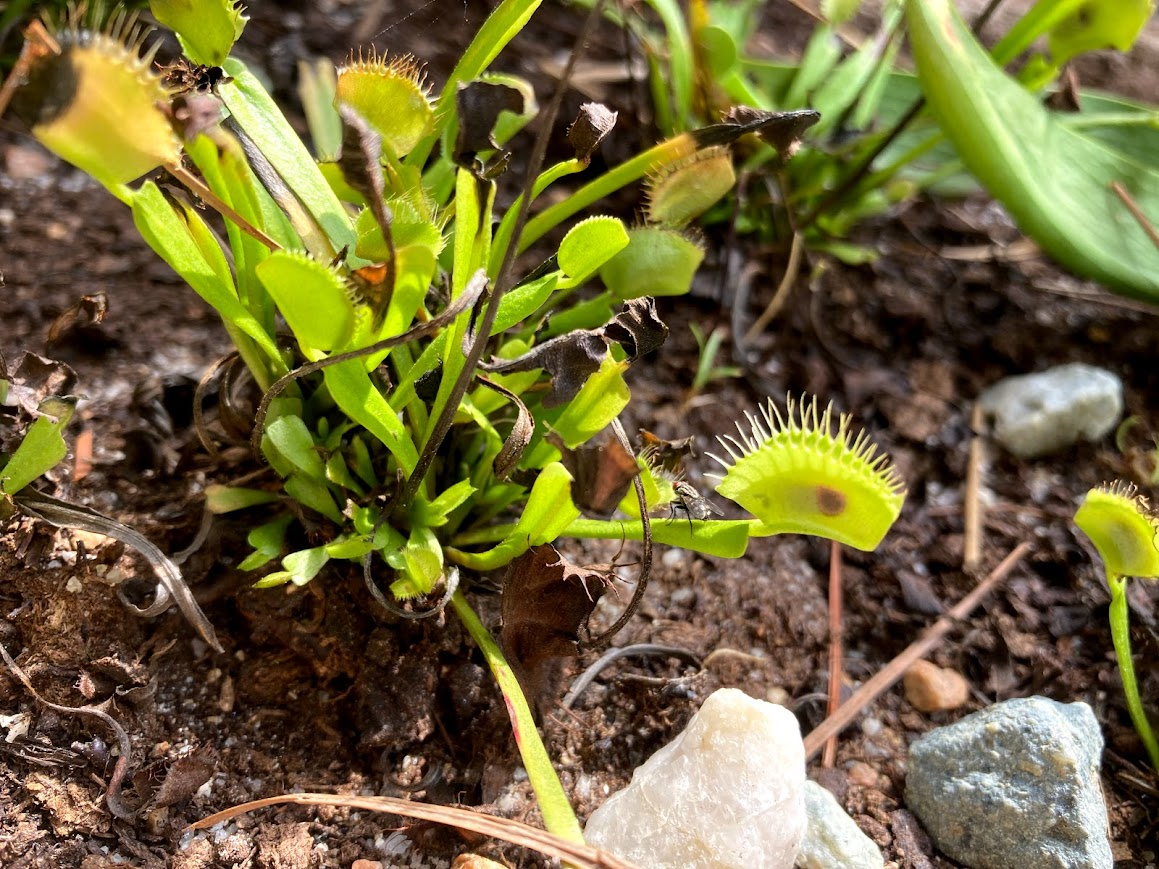
Flirting with danger: a fly perches on a Venus flytrap. The Venus flytrap is a carnivorous plant native only to parts of the Carolinas.

One of the first things I notice is the array of pollinator houses scattered amongst flowers and attached to wooden structures. Many plants rely on pollinators to reproduce, and the pollinator houses can help attract native species like mason bees and leaf-cutter wasps, but Holmes says they have another purpose as well: bringing awareness to the importance of pollinators.

Along with the pollinator houses, which are designed to attract native bees, the Charlotte Brody Discovery Garden has beehives for honey bees. Though honey bees are not originally native to the New World, they are important pollinators, and their populations are declining. Like many native bees, honey bees are threatened in part by habitat loss and pesticide use, but gardeners and landowners can help.

The Charlotte Brody Discovery Garden is only about an acre in size, but exploring it feels like walking through a museum, a new exhibit around every corner. Over here, raised beds of hot peppers, organized by level of spiciness. (“I don’t do spicy,” says Holmes, but even Schwab, who has sampled the garden’s hottest peppers, tells me he often finds the less spicy ones to be more enjoyable.) Over there, clusters of pumpkins. Despite the steamy day, the pumpkins are a reminder that fall is coming. I’ve been noticing subtle hints of fall for weeks—brisk mornings, breezes that send dry leaves skittering across pavement—but despite these tantalizing harbingers of autumn, some days still seem distinctly summery. As it turns out, this garden is experiencing a similar transition.

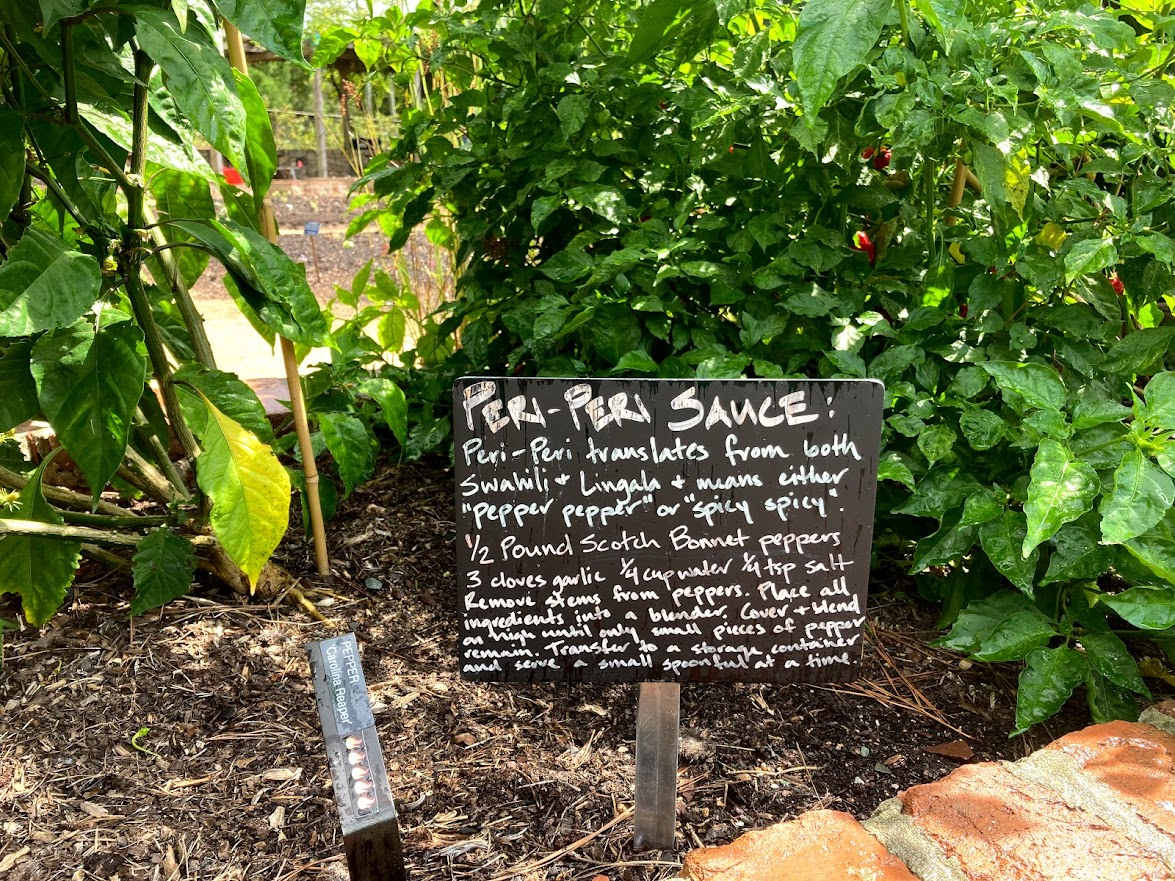
A recipe for “Peri-Peri Sauce” within a display of hot peppers. Peppers are common in many cuisines, but they are originally native to tropical America.

Holmes and Schwab, along with other dedicated gardeners, are in the process of phasing out summer vegetables like okra, melons, cucumbers, zucchini, and eggplant and planting crops like cabbage, broccoli, and cauliflower in anticipation of cooler weather.

Change is something of a constant in the garden. Holmes likes to tell everyone who works with him that “every day’s going to be different.” When I ask if he has a favorite season in the garden, Holmes mentions two: “I love the cool-down of fall, and I love the rebirth of spring.” As for winter, Holmes describes it as a period of much-needed rest—for both the garden and the gardeners.

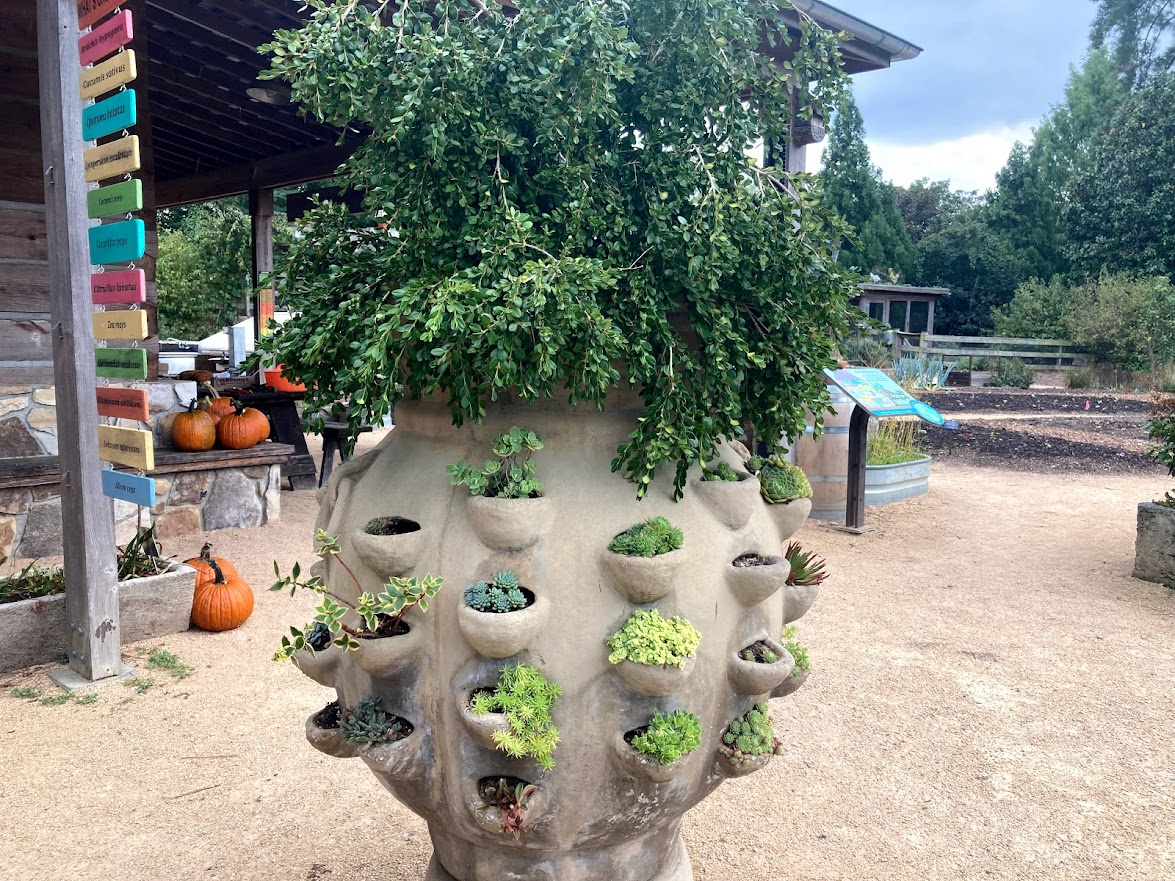
Potted succulents and clusters of bright orange pumpkins add to the garden’s whimsical feel.

The Charlotte Brody Discovery Garden is a fully functioning garden, donating most of its produce to the Food Bank of Central and Eastern North Carolina, but it is also a space for discovery. Since its inception in 2012, the garden has sought to foster curiosity about gardening and the natural world.

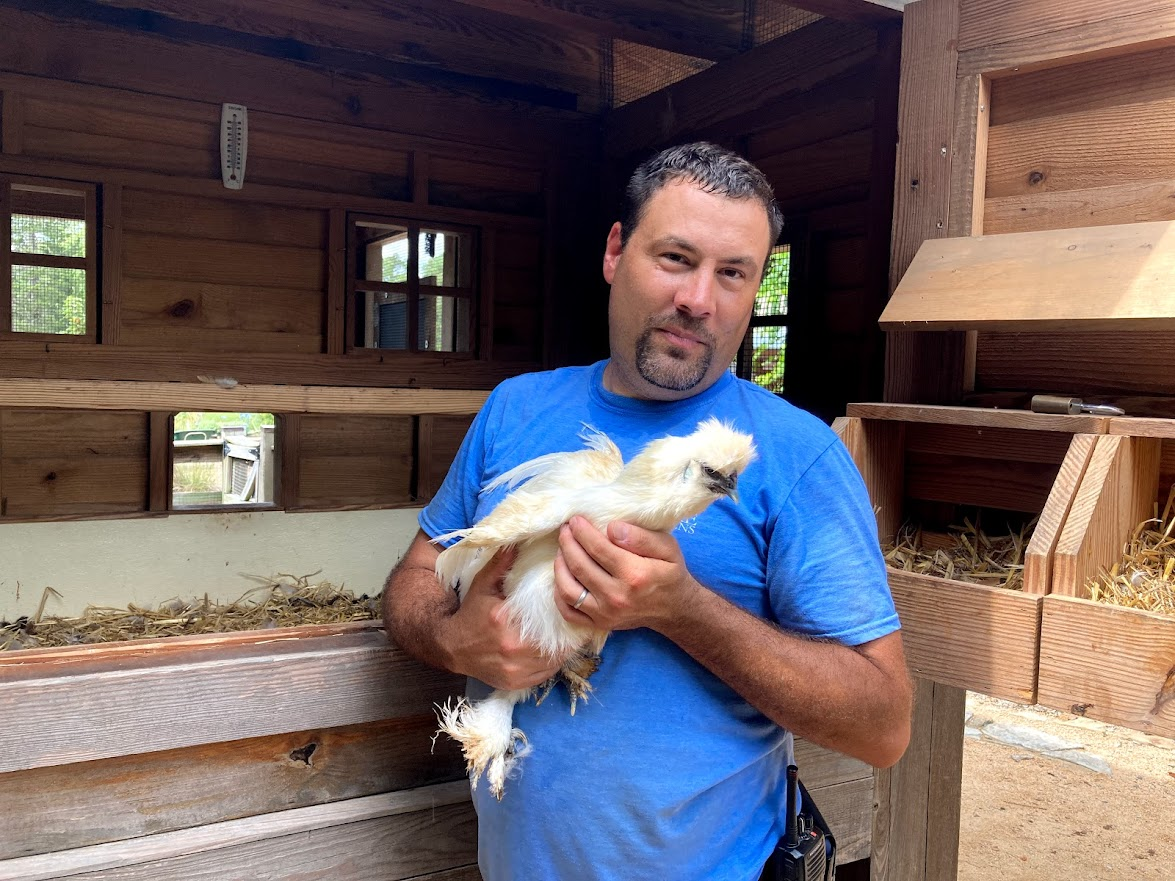
The garden also houses a chicken coop, which Holmes says is constructed out of recycled materials from local factories. Holmes picks up a white silkie chicken, holding her gently before prompting her to join the others in the enclosure outside. He tells me she’s acting “broody,” exhibiting a tendency to behave as though she is incubating eggs.

Jason Holmes with one of the chickens. Holmes also cares for chickens at his home, but not because he wants to eat their eggs. He considers them “companions” instead.

When I ask Holmes about Charlotte Brody, he describes a woman who lived in Kinston, North Carolina, and invited kids to her home to learn about organic gardening and discover its joys for themselves. Holmes says Brody had a “whimsical, free approach” to gardening.

“Whimsical” describes this garden well. Tiny, orange spheres dangling from bushes. A tree frog peering out from a pollinator house. Hand-written signs nestled amongst peppers, offering recipes for “Peri-Peri Sauce” and “Hot Honey.” Everything from cacti to chickens to oranges coexisting peacefully in the same garden.

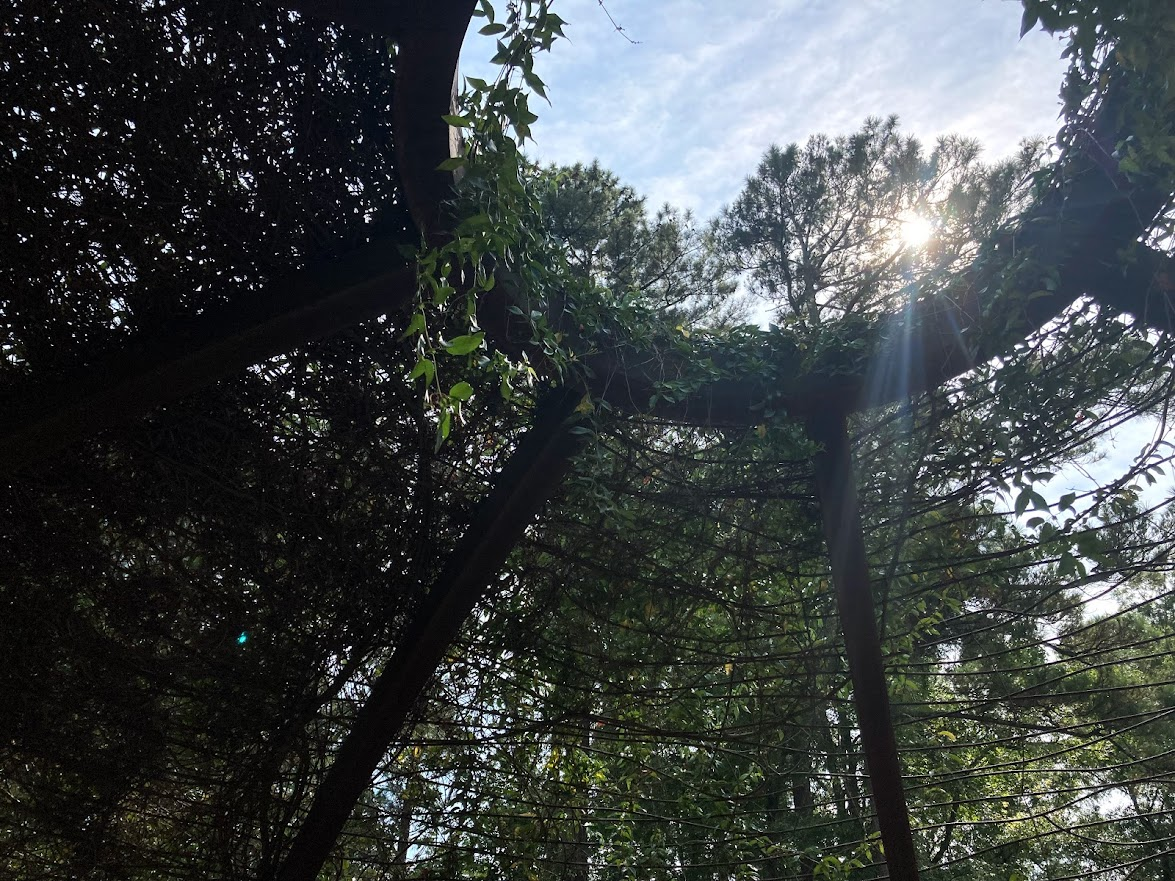
Before I leave, I linger under the arbor. The sun streams through the dome above me. The frog is still hiding in the same pollinator house as before. Looking around, I see more than a small garden. I see the legacy of a woman who devoted her time to gardening joyfully and sustainably and teaching others to do the same.

The arbor at the entrance to the Charlotte Brody Discovery Garden. Despite the rain earlier in the afternoon, the sun had come out again by the time I left.

Jason Holmes, Nick Schwab, and the many workers and volunteers who have put their time and effort into this garden are continuing that legacy. Holmes hopes that visitors will find inspiration here, whatever that means to them. I know I did, and next time I come back, I’ll wander the paths and notice the changing seasons, ready to be inspired again.

By Sophia Cox, Class of 2025

New Blogger Sophie Cox: Keep Asking Questions

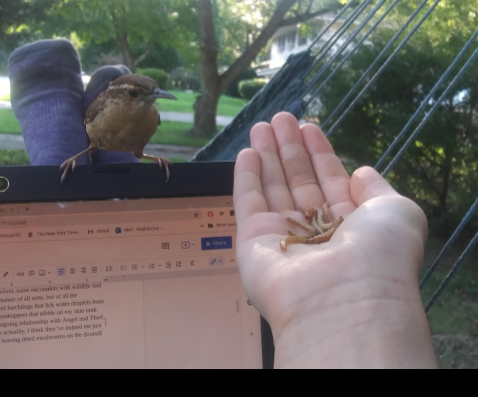
Typing with one hand, especially my left hand, is not easy, but my right hand is currently occupied by freeze-dried mealworms and, momentarily, by a chittering wild bird.

My eagle-eyed supervisor is a Carolina wren, South Carolina’s official state bird.

“You have babies, don’t you?” I mutter as a small, brown bird with a white eyestripe wraps her long toes around my fingers.

She doesn’t answer–she never does–but she flutters repeatedly to my socked feet and from there to my hand, where she selects a mealworm and then flies to a flower box on my neighbor’s mailbox.

This bird and her mate are the pair of Carolina wrens who have spent the past year training me to hand-feed them. Life hack: if you’re being cornered by wild birds every time you step outside, I suggest keeping a bag of dried mealworms in your pocket.

I want to investigate the flower box, but I don’t want to betray the trust I’ve worked so hard to build. Instead, I wait until my little friend finishes her ritual before approaching the mailbox.

Among the fake hydrangea blossoms, I see a scruffy head poking out. Judging by its size, the youngster looks about ready to leave the nest. With a smile, I turn and walk away.

Along with observing wildlife, I enjoy reading, writing, playing board games, and spending time outside.

My name is Sophie, and I’m a freshman at Duke. At home in upstate South Carolina, I can often be found smearing fruity, fermenting moth bait onto tree trunks at dusk or curled up in a hammock swing with a good book while the Carolina wrens do their best to distract me.

They each have their own personalities (which is partly how I tell them apart), but both birds strike me as curious and even intelligent.

Lately, I’ve been wondering if Carolina wrens belong on the growing list of animals believed to possess theory of mind, the ability to understand mental states and to recognize that others’ thoughts and beliefs can differ from one’s own.

I have always associated the natural world with a sense of wonder that borders on enchantment.

Perhaps unsurprisingly, I plan to major in biology. My lifelong aspiration to study science hasn’t faded, but science should be accessible to everyone, scientists or not. That is partly why I want to work for Duke’s research blog.

If the coronavirus pandemic has taught us anything, it’s the importance of having access to accurate information we can trust. Too often, data is manipulated and obscured, twisting facts and turning science into a political minefield. That should never be acceptable. My favorite news
sources are those that effectively bridge the gap between academia and the general public, providing information that is digestible and engaging without sacrificing scientific integrity.

Judging by the articles I have read, Duke’s research blog has a similar mission, and it’s a mission I firmly believe in.

Science is full of unanswered questions. At its simplest, my goal for the future is the same as it was ten years ago: to answer some of those questions.

This summer, I worked as a counselor and nature instructor at a residential summer camp. Campers often approached me throughout the day to enthusiastically describe their encounters with click beetles, squirrels, and frogs. I saw in their eyes the same exhilaration I feel when the Carolina wrens’ amber eyes meet mine or when a shimmery, pale golden moth flutters across my pajamas and then disappears soundlessly into the night, as beautiful and ephemeral as a
moonbeam.

One young boy, a seven-year-old who reminded me of myself at his age, was fascinated by my field guide to insects and spiders of North America. Again and again, he’d point to an insect or spider or worm, then hand the field guide to me and wait for me to find the right page. At one point, he even retrieved the book from my backpack. I don’t know if he could read, but he knew what the book was for, and he cared. He could neither hear nor speak, but maybe, in the end, it didn’t matter. You don’t need words to flip over stones and marvel at the life hidden beneath.

People want scientific knowledge. Studying science — and not just as scientists — brings us so tantalizingly close to the mysterious, the undiscovered, the unknown. Science is more than petri dishes, graphs, and Latin jargon. It is a world full of questions waiting to be asked. In my own scientific writing, mostly in the form of nature journals, I strive to be methodical but not impersonal. My goal as a blogger is similar: to be accurate and objective without sacrificing the mystery and excitement that makes science so engaging to begin with.

After college, I hope to pursue ecological field research. In the meantime, I’ll keep exploring. I’ll keep flipping over stones. I’ll keep talking to the wrens, even if they never talk back, and wondering what they’re thinking when their gaze meets mine. In short, I’ll keep asking questions. I think you should, too.

Post by Sophie Cox, Class of 2025

Page 4 of 4

Powered by WordPress & Theme by Anders Norén