Following the people and events that make up the research community at Duke

Students exploring the Innovation Co-Lab

Category: Climate/Global Change Page 10 of 11

Humans, Whales and Taylor Swift

by Ashley Mooney

The similarities between chromium workers and whales are greater than one might think.

Environmental toxicology researcher John Wise has been studying the connection between exposure to pollutants and the onset of cancer in humans. To understand the link, he said one must take into account all species, especially whales. Wise spoke at Duke Oct. 25 at the Inaugural Duke Distinguished Lecture in Cancer and the Environment.

800px-Chromium_crystals_and_1cm3_cube

Chromium crystals. Courtesy of Wikimedia Commons.

“For environmental health for me, [the Earth] is the big picture,” Wise said. “This is home and we only have one, so we have to think pretty hard about environmental health.”

Wise studies the effect of pollutants—specifically forms of chromium—on genetic material in humans, marine mammals, and birds and other marine species.  While the standard approach to environmental toxicology research is to conduct epidemiology studies on highly exposed populations and then expose animals to high doses of the toxin, Wise has adopted a new method of study.

“We don’t really know what high-dose exposures mean on a day-to-day basis,” he said.

To understand the relationship between chromium exposure and the onset of cancer, Wise looks at the personal factors that affect one’s health, such as an individual’s body and genome, lifestyle, daily exposures and what kind of environment one lives in.

“We need to know mechanism: how does a normal cell become a tumor cell?” he said. “For a long time that is where the field has been hung up, trying to identify the ultimate carcinogen.”

Most forms of naturally occurring chromium are not toxic. Man-made hexavalent chromium, however, has been shown to cause lung cancer in those who are regularly or heavily exposed to it. Prolonged exposure induces an altered chromosome number and structure, as well as DNA double strand breaks.

Chronic exposure to chromium also causes a shift from more a protective form of DNA repair called homologous recombination to a less stable and error-prone pathway called non-homologous end joining. This means that cells will have permanently deficient repair mechanisms.

Wise applies his research in the context of ocean health, namely how chromium exposure might harm whale DNA.

Most ocean pollutants, including the toxic form of chromium, are in the ocean sediment. As the ocean becomes increasingly more acidic, the sediment breaks off and poses a growing threat to marine species.

Wise measured chromium levels in baleen whale skin, and found that Atlantic seaboard species—the northern right whale, fin whale and humpback whale—have 16- to 41-fold higher levels than other baleen whales.  Toothed whales living in the Gulf of Mexico exhibited levels that resembled those found in chromium workers who died of lung cancer.
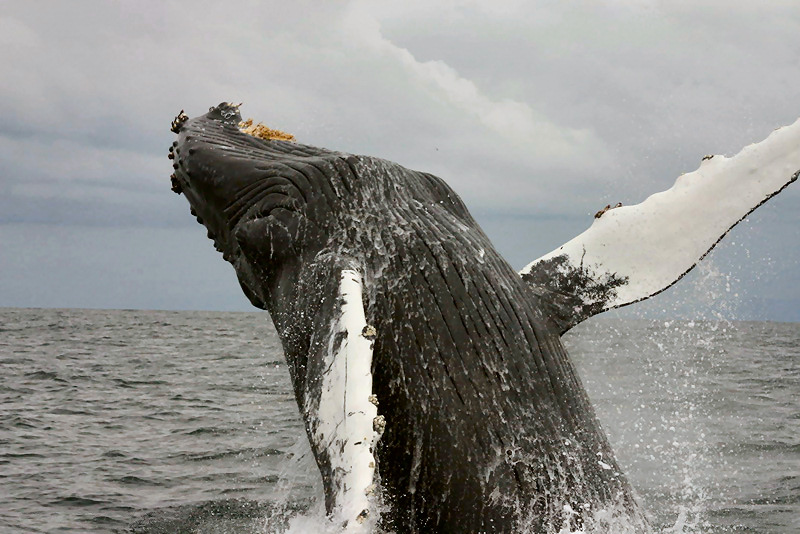
A humpback whale surfacing for air. Courtesy of: Protected Resouces Division, Southwest Fisheries Science Center, La Jolla, California. swfsc.nmfs.noaa.gov/PRD/.

A humpback whale surfacing for air. Courtesy of: Protected Resouces Division, Southwest Fisheries Science Center, La Jolla, California. swfsc.nmfs.noaa.gov/PRD/.

In whales, chromium can lead to DNA damage and reproductive suppression.

“There’s only 400 [northern right whales] left in existence,” Wise said. “If you only have 400 animals, you need every single one of them [to be able to reproduce].”

Wise said he hopes his research will encourage people to think more about habitat degradation and climate change, and how they affect all species.
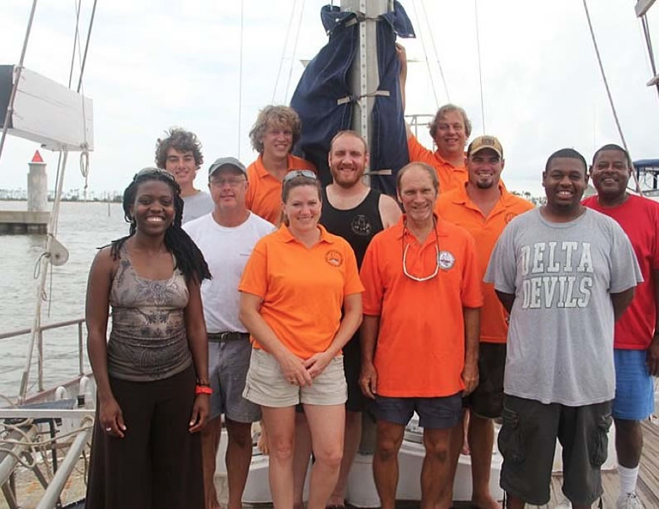
taylor-conor-sailing-team, courtesy of popdust.com

Wise (back right) photographed with his lab and Conor Kennedy (back left). Courtesy of popdust.com.

His lab, however, has recently gained publicity not for its research, but for the public figures that have worked with it. Conor Kennedy, a member of the influential Kennedy family, worked with Wise’s team and Ocean Alliance last year. At the time he was dating pop-star Taylor Swift.

“[He was], like any other high school student, constantly texting on his phone and I would do what I did with my kids and the other students, and say ‘put the girl down, we have to go to work,’ not knowing the girl was Taylor Swift,” Wise said. “It really hit home that we were traveling in very different circles.”

Students Create Multimedia Ocean Conservation Text

By Ashley Yeager

This screenshot shows one of the opening page of of Johnston's new iBook. Image courtesy of Dave Johnston, Duke.

This screenshot shows one of the opening pages of a chapter in Johnston’s new iBook. Image courtesy of Dave Johnston, Duke.

Duke marine biologist Dave Johnston and his students are back in business on iTunes.

They’ve just released The View From Below, a free iBook for middle school students and teachers that uses multimedia and classroom exercises to discuss overfishing, marine debris, climate change, invasive species and other issues related to marine conservation.

This is Johnston’s second digital textbook. His first was Cachalot, an iPad textbook covering the latest science of marine mammals like whales, dolphins and seals. Experts contributed the text, images and open-access papers.

The View From Below, however, is a bit different.

Undergraduate students in Johnston’s Marine Conservation Service Learning class wrote the book using Apple’s iBooks authoring tool. Johnston and Tom Schultz, Director of the Marine Conservation Molecular Facility at Duke’s Marine Lab, edited it.

“There are a lot of people exploring the use of the iBooks platform for student-generated content, among other development platforms,” Johnston says. “I don’t think we’ve seen many that focus on marine science yet though, and I’m pretty sure it’s the first marine conservation textbook written by students on the iTunes store.”

Johnston says the class chose to use the iBooks software because the technology is free, easy to use and provides “great templates to get things going quickly.” The software also works well because Duke’s Marine Lab has an iPad loaner program, making the tablet the platform of choice for developing and testing the textbook.

The middle school that the service learning class works with also has access to iPads for students and instructors, so the audience was there for the iPad format, Johnston adds.

His students chose to write the book as the class project to spur learning and discussion about some of the most serious problems facing Earth’s oceans.

“As the text indicates, all life on earth is ultimately supported by the ocean, so we need to take care of it,” he says.

Activist targets inner child not 'target audience'

By Ashley Yeager

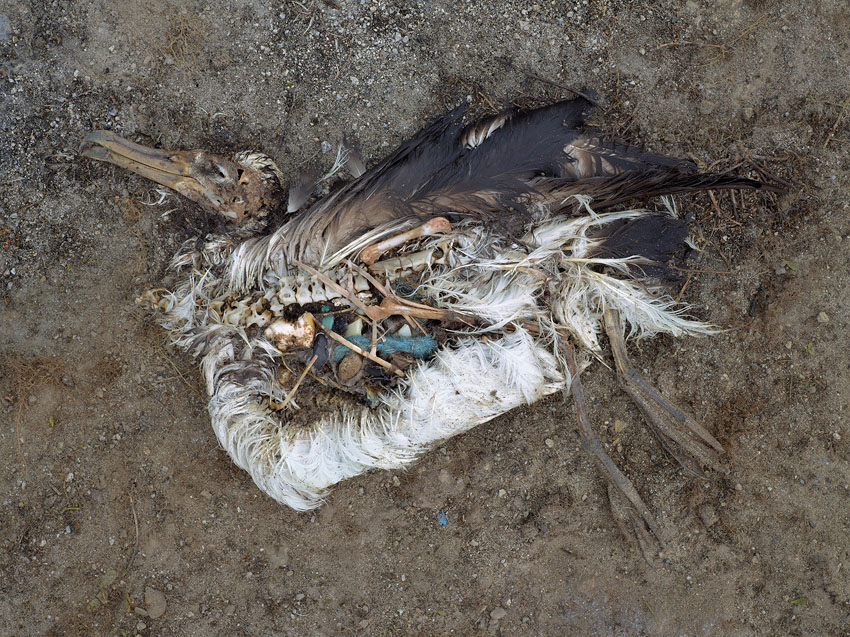
A baby albatross carcass full of plastic “food.” Credit: Chris Jordan.

When artist Chris Jordan works on a photograph or film, he doesn’t think about his audience. He said he thinks the phrase “target audience” is a disrespectful, manipulative business concept.

“I want to be as authentic as possible with my work,” Jordan said, explaining that each of his pieces instead taps into that “universality in us that we all carry, a deep appreciation for the abiding beauty of our world and the miracle of our own lives.”

An environmental activist as well as an artist, Jordan is challenging others to target that universality too as they convey messages about the issues that affect the planet.

Jordan spoke March 1 as part of a working group to discuss questions about how environmentalists, neuroscientists and artists can work together to better communicate about issues affecting the planet. The Nicholas School of the Environment and the Duke Institute for Brain Sciences sponsored the discussion.

Duke ecologist Nicole Heller moderated the discussion, opening it with the idea that scientists are frustrated with their inability to communicate with politicians and the public about the environment.

“In the ’70s, yucky or scary images might have worked, but now they don’t. That’s no longer appealing. We need different kinds of imagery to reach across people’s biases,” Heller said. She invited Jordan to speak because of his reputation for being able to move audiences from diverse backgrounds and education levels.

“Second graders are some of the most passionate and responsive to these issues,” Jordan said, adding that perhaps the best thing we can do is to appeal to an individual’s inner child – that curious spirit we have to understand how the world works.

One example of this approach is the film Jordan is working on to explore the mating dance of albatrosses on Midway Atoll in the Pacific Ocean. He’s photographed dead baby albatrosses, whose stomachs are full of plastic trash their parents fed to them because they mistake the plastic for food. The work was to make people aware of the plastic vortex, or Great Pacific Garbage Patch, swirling beyond the horizon and therefore beyond our conscious concern.

Jordan decided to capture the wonder of the albatrosses as they mate, rather than just their rotting carcasses, hoping to feed his audiences — no matter their background — with life, rather than depress them with death.

“Like the albatross, we first-world humans find ourselves lacking the ability to discern anymore what is nourishing from what is toxic to our lives and our spirits. Choked to death on our waste, the mythical albatross calls upon us to recognize that our greatest challenge lies not out there, but in here,” Jordan writes on his Web site.

Culture shapes bird communication, too

SingingSwampSparrow_RL

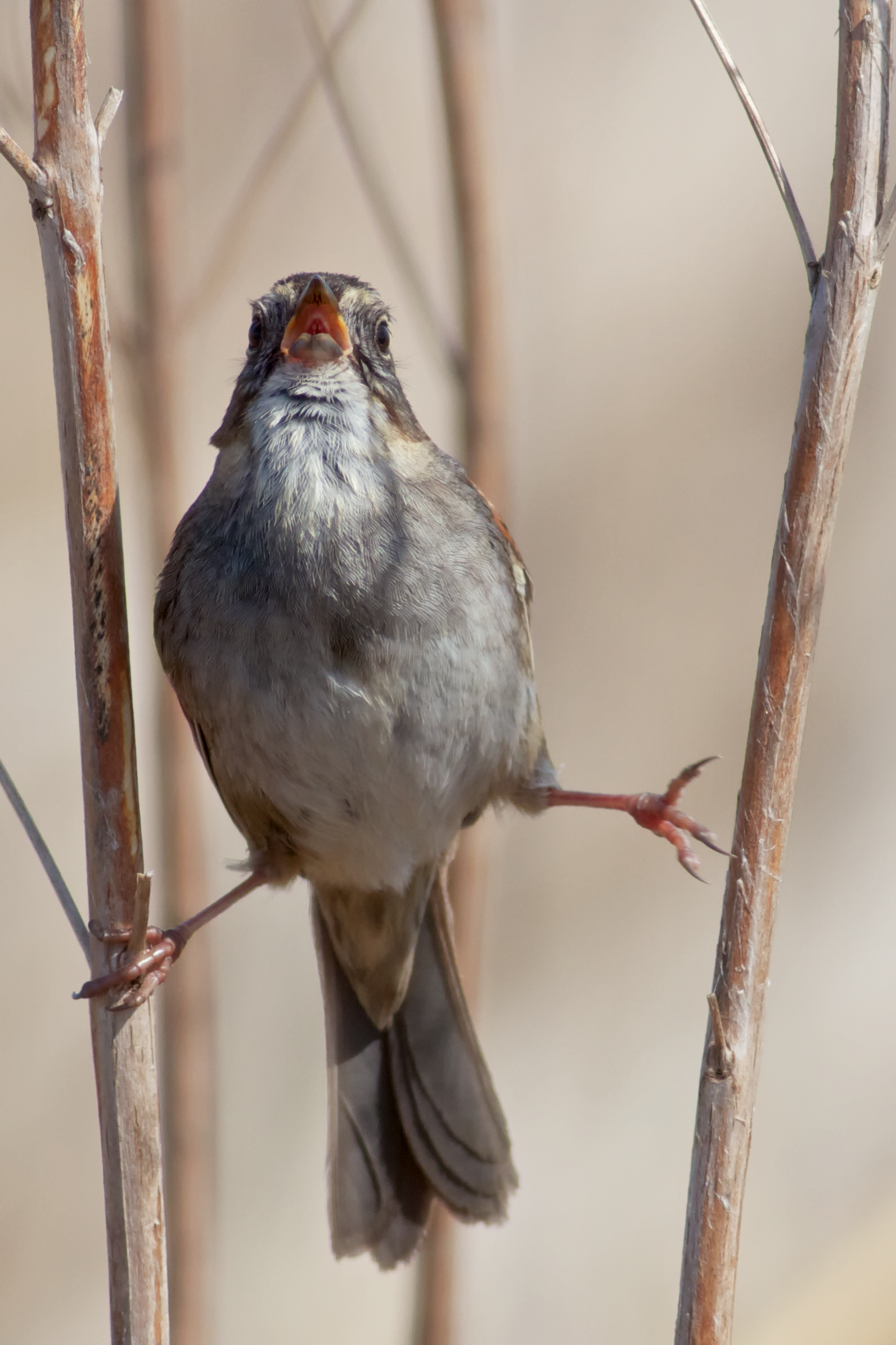
A male swamp sparrow switches branches as he sings.Credit: Robert Lachlan, Duke.

Guest post by: Eugene Morton, York University

Bird song is one of the most fascinating and complex examples of animal communication, and the quest to understand its evolution and function has fueled the careers of many behavioral ecologists, psychologists and neurophysiologists.

Recently, scientists in the Departments of Biology and Neurobiology at Duke University have made incredible advances in this field. In “Songbirds learn songs least degraded by environmental transmission,” Susan Peters, Elizabeth P. Derryberry, and Stephen Nowicki show how a youngster chooses which songs to learn from the huge number they may be exposed to during their learning period.

Their simple but elegant experiment offered the birds a choice to learn songs that contained echoes versus no echoes and the birds chose to learn only those with no echoes. The rejected songs had been transmitted and re-recorded through 25 meters of habitat, and picked up reverberations and a few other changes along the way, but they were equally loud to the learned versions.

This says a great deal about how birds put to use their extraordinary ability to hear small time differences. What’s so great about hearing echoes?

Compared to our ability, where we hear only echoes from distant large objects, birds can hear echoes from tree trunks and vegetation. They use this ability to learn songs that transmit with the least amount of echoes or, more generally, degradation.

In this way, the birds themselves reject songs less well suited to their environment; cultural selection. As the birds were housed together while learning the songs it is not surprising that they came up with two that were never presented to them; they must also have learned from each other.

SingingSwampSparrow

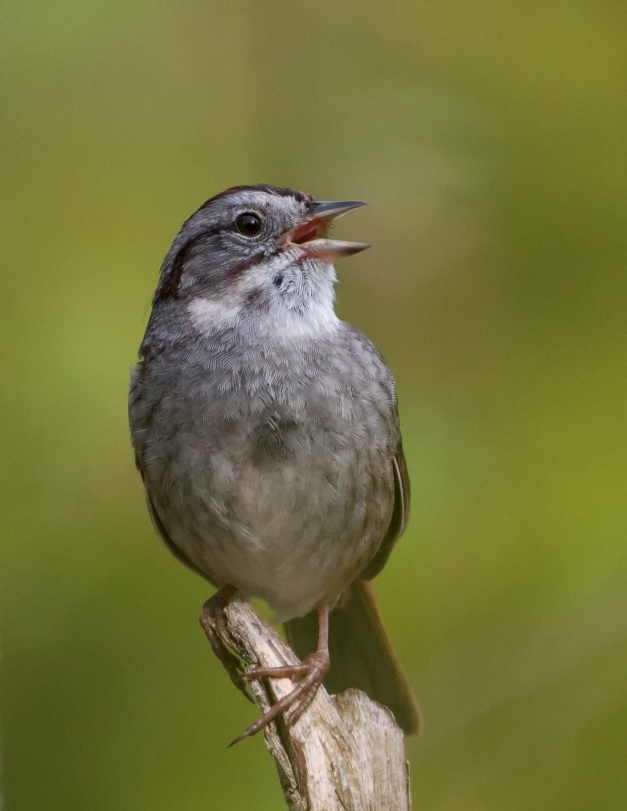
A male swamp sparrows sings to his neighbors.Credit: Robert Lachlan, Duke.

Why is it important to understand the criteria birds use to choose songs to learn? I would answer because then we can understand how cultural and natural selection interact. Cultural selection favors birds that learn songs that will propagate for the greatest distance and remain undegraded.

These songs must function better than a random selection of songs would. The function must related to how the listeners of these songs are affected by them: are they more efficiently repelled if they are competitors and attracted if they are potential mates? Natural selection will favor the birds whose songs do this the best.

And it turns out that this interplay is helping birds cope with increasingly human-influenced environments. The traffic noise we generate can favor learning songs that are higher or lower in than the frequency of this noise. This ability is based upon the same cultural choice of songs described here for swamp sparrows.

It is hoped that this excellent study will stimulate others to assess the role of learning in adapting songs, not only to habitats, but to the social functions songs have. Songs function over distance and this study describes how song learning can strengthen this role and the importance of distance in song evolution.

Eugene S. Morton
Hemlock Hill Field Station, Pennsylvania
York University, Ontario, Canada
mortone@si.edu

Forgotten Deserts

By Ashley Yeager

A cheetah walks through the African desert. Credit: Martin Harvey, ARKive.org

Deserts get a bad rap. They seem dry and, well, deserted.

“With perceptions such as these, it’s not hard to see why deserts are neglected,” says Andrew Jacobson, coordinator of the Big Cats Initiative intern team at Duke University and the National Geographic Society.

In a June 15 Letter to the Editor in Science, Jacobson and an international list of authors point out the neglect of deserts and argue that the ecosystem has disproportionally little funding or research interest when compared with forests and other habitats that are similar in size and biodiversity.

“Deserts are not barren, empty wildernesses. Many interesting species live there. They are just sparsely distributed,” says Jacobson, who is a research associate in the Nicholas School of the Environment. He studies and works to protect cheetahs, which live and rely on the sandy, barren stretches of land. “If we care about cheetahs, then we should care about deserts,” he says.

In the letter, the authors call on the United Nations Conference on Sustainable Development, Rio+20,  to support the UN Convention to Combat Desertification (UNCCD) and take steps to meet its minimum target of halting land degradation. A statement of support should also include steps to ensure the restoration of desert ecosystems, Jacobson says.

“We want Rio+20 to help ensure that deserts are considered in global priority-setting exercises and consequently receive the attention and funding they deserve,” he says.

In the run-up to the group’s next meeting June 20-22, however, Rio+20 has received heavy criticism for failing to fulfill its initial pledges — reducing poverty, advancing social equity and ensuring environmental protection as population grows. In a June 14 editorial,  Nature cautions Rio+20 that if the meeting is to be “a platform for major new treaties and commitments — the world is awash with both, and to no avail.”

Jacobson says one of the main benefits of getting Rio+20 to support the anti-desertification goals would be to raise consciousness about the issue. Desertification was originally identified as one of three great challenges to sustainable development at the original Rio conference in 1992. “Achieving the UNCCD goal will not be easy and success will depend on many factors, but for momentum to continue, we need high-level support that can only be achieved here,” he says, adding that “you never quite know the power of a global agreement until you travel around a bit.”

Citation:
“Forgotten Biodiversity: The Empty Desert.” S. Durant, et. al. Science. June 15 2012. 336: 1379-1380.

Fracking

Source: Marcellus Effect

By Becca Bayham

You may wonder: what the frack is fracking?

Hydraulic fracturing, or fracking, is the process by which water, sand, and chemical additives are pumped into a well to fracture deep underground formations and allow natural gas to flow to the surface. Fracking has reduced our dependence on foreign oil, decreased carbon emissions and made significant contributions to our nation’s economy. However, the technology can have significant social and environmental impacts, according to Duke professor Avner Vengosh.

Vengosh joined Brooks Rainey Pearson from the Nicholas Institute, David Burnett from Texas A&M’s Global Petroleum Research Institute and Keith McLeroy from Texas’ Engineering Extension Service for an in-depth discussion about fracking, April 9. The event was sponsored by Environmental Alliance and the Drilling, Environment, and Economics Network, two on-campus student groups.

Vengosh described how shale gas drilling and fracking can disturb residents of formerly quiet towns with nearly-constant noise, odor and truck traffic.

“This is changing the dynamics of small towns in Pennsylvania [and other states] pretty significantly,” he said.

Vengosh said that fracking can also impact air and water quality — and thus human health. Earlier this year, he published the first peer-reviewed paper to examine well-water contamination from shale-gas drilling and hydrofracking. He and his colleagues found that drinking water wells within 1 km of a drilling operation were more likely to have high concentrations of methane, the primary component of natural gas.

Fracking is also very water-intensive, requiring millions of gallons of water at drilling each site. In areas experiencing drought conditions, this presents a serious problem, Vengosh said.

Many companies recycle the water they produce. However, the water that flows out differs significantly from water that went in, often containing high levels of salts, heavy metals and naturally-occurring radionuclides that can be difficult to remove. According to Vengosh, some companies bypass that difficulty by discharging their wastewater to nearby rivers or streams.

“It’s not nice, but it’s done,” he said.

According to Pearson, fracking exists within a unique regulatory environment. The technology is exempt from several national environmental policies that regulate hazardous waste disposal and environmental cleanup, among other things. Environmentalists often cite the so-called “Halliburton loophole,” which exempts fracking from the Safe Drinking Water Act.

Pearson insists that “these exclusions occurred over time — there’s no one bad guy.”

Many states include fracking under the umbrella of their existing oil and gas regulations, but those regulations aren’t necessarily sufficient, Pearson said.

“States are retroactively seeing the unique regulatory needs of shale gas production, such as the need for baseline water quality data.”

Baseline data — such as air and water quality information — is collected before drilling begins and allows researchers to assess the direct environmental impacts of fracking.

“Without baseline data, it’s very hard for regulatory agencies to say ‘the industry caused this contamination,'” Pearson said.

Burnett discussed efforts to “reach across the aisle between the environmentalists and the oilmen” to develop environmentally-friendly drill programs. The first step is measurement, he said.

“You’ve got to find out what you’re doing wrong, then you’ve got to fix it.”

The panel concluded by emphasizing that, for all its problems, natural gas will help us reduce our reliance on oil and coal and transition to an an era of cleaner energy.

“The effects are there, but you have to see the environmental impacts of the alternatives, which perhaps are worse,” Vengosh said.

Solving the world's humanitarian problems

By Becca Bayham

What will the world of 2050 look like?

Popular fiction tells us we’ll have hoverboards, spaceships and artificial intelligence. According to USAID advisor (and Duke alum) Alex Dehgan, we’ll also have new ways of addressing humanitarian challenges — and we’ll need them. Dehgan kicked off the Student International Discussion Group‘s Water & Energy Symposium, Feb. 10.

“We know that climate change is going to affect the U.S., the Middle East, Central Asia and North Africa. This is actually a national security issue for us,” Dehgan said. “One thing that I think has been forgotten is, it’s not just climate, it’s climate times the environment. It’s the interaction of these two pieces.”

Dehgan described a patch of tropical forest where all the trees had been cut down. Trees send moisture back to the atmosphere via transpiration. No trees, no rain. The ground dried up, and the area is now 30 degrees warmer than it was before.

The world of the future may look different in other ways. According to Dehgan, 51 countries will lose population between now and 2050, largely due to declining birth rates. Other countries such as India, Pakistan, Nigeria, Bangladesh, the Democratic Republic of the Congo, China, Uganda, Ethiopia and the U.S. will experience massive population growth. Some of those countries already face problems providing their people with sufficient food, energy and clean water.

“[USAID] sees the developing world as the future of the U.S. economy,” Dehgan said. “Many of these challenges aren’t just bad news. They’re challenges we can take on to develop our markets.”

To that end, Dehgan cited five trends that will help organizations tackle humanitarian challenges in the future:

  1. Democratization of Science
    It took researchers 13 years and 2.7 billion dollars to sequence a single human genome for the first time. Now a company can sequence 100 genomes a day for less than $100 each. Lower costs allow humanitarian groups to deploy innovative technologies (such as vaccines) on a large scale.
  2. Increase in Computing Power
    “The power of computing is increasing exponentially, while the cost is decreasing exponentially. This provides us with exceptional ability to use computer power to help understand and solve problems,” Dehgan said.
  3. Data, Data, Data
    “A kid in Africa has more power and knowledge in his hand with a smart phone than President Clinton had 15 years ago,” Dehgan said. Technologies such as remote sensing, crowd sourcing and bioinformatics will add new types of data to our pool of knowledge.
  4. Connectivity
    Cellphones act as gateways to human knowledge, providing people with access to information they didn’t have before.
  5. Decentralization of Manufacturing
    Certain 3D printers, for example, now have the ability to produce 70 percent of the parts needed for another 3D printer. Online course materials such as iTunesU and MIT OpenCourseWare help support individuals that are trying to solve their own problems.

Dehgan also says he hopes that a sort of “humanitarian X Prize” could identify solutions to our changing world by catalyzing new research.

In 1996, the X Prize Foundation announced a $10 million reward for the first group to launch a manned, reusable vehicle into space twice within two weeks. The foundation hoped to spur innovation that would make low-cost space flight possible, and they succeeded. The winning team claimed the prize in 2004, after investing $100 million in new technologies.

“With grants, you don’t know what you’re going to get,” Dehgan said. “If you have a prize, you only win the prize once you’ve actually solved the problem. And one of the great things about it is that you get more than one solution.”

Steve Koonin to speak March 8

Official portrait of Steven E. Koonin, former Under-Secretary for Science of the United States Department of Energy. Credit: DOE.

Want to know what we should do to address America’s energy challenges?

Come hear the ideas of  Steve Koonin, a former chief scientist at British Petroleum and more recently the Under Secretary for Science at the Department of Energy. He’ll speak at Duke at 5:15 p.m. on March 8, 2012. The lecture will be held in room 2231 of the French Family Science Center.

Koonin, an MIT-minted theoretical physicist and currently a researcher at the Institute for Defense Analyses in Washington D.C., will talk about strategies to incorporate alternative and renewable energy sources into our energy profile. The lecture is free and open to the public.

The talk is part of the university-hosted Symposium on Electroweak Nuclear Physics, a two-day science conference to explore the latest experiments and ideas on matter and how it behaves at ordinary temperatures — quite the opposite of what’s being studied at the Large Hadron Collider and other high-energy particle accelerators.

The symposium is being held in honor of Jefferson Lab deputy director for science R. D. McKeown’s sixtieth birthday.

'Knowsphere' could solve climate problems, Revkin argues

By Becca Bayham

Does the world seem a little angsty-er to you? It should, it’s got way more adolescents.

“There were only a billion people [on Earth] in 1800; now we have a billion teenagers,” said Andrew Revkin, a prize-winning journalist and New York Times blogger, during a lecture on Jan. 18.

“Is this a sign of overpopulation?” someone in the audience joked, referring to the jam-packed classroom.

Likely not, but, as Revkin discussed, resource limits and an explosive human population growth may eventually cause population or economic declines.

“We don’t seem to have distinguished ourselves from bacteria on a plate of agar yet,” Revkin said. “Science is saying hey, hey, there’s an edge to the dish! But we’re still in go-go-go mode.”

The fact that we will reach the edge of the dish is undeniable — and it won’t be pretty. To illustrate, Revkin showed a picture of Black Friday shoppers fighting over a sale item.

“Can you imagine everyone doing this?” he said.

Unfortunately, we humans are historically bad at confronting problems that don’t affect us here-and-now. If in doubt, see our lackluster response to the national debt. Or global climate change, for that matter (a topic Revkin often blogs about).

“There’s a big chunk of everyone who just doesn’t want to deal with global warming, to tell you the truth… it’s hard, it’s complex, it’s laden with layers of complicit uncertainty. What is it and what do you do about it?”

Revkin believes that global connectedness, powered by the internet, offers a solution to the many problems humanity will face in coming years.

Communication between people — sharing information and exchanging ideas — has long fueled our economy and fostered human progress. According to Revkin, a network of collaborating schools, libraries, businesses and other institutions (a “knowsphere”) could help combat problems ranging from natural disaster preparedness to the treatment of diseases.

“Much of human progress can be charted in relation to our linkages with others,” he said.

In the 1920s, philosophers Vladimir Vernadsky and Teilhard de Chardin conceptualized the idea of a “noosphere” (from the Greek “nous”, mind and sphaira, “sphere”), a philosophical sphere of intelligence around the Earth that humans could draw from — a planet of the mind. Back then, it was just an idea.

“But now, it’s happening,” Revkin said.

EPA regulation adds jobs, despite partisan myths

By Becca Bayham

“Environmental and health threats are unambiguously non-partisan concerns,” EPA administrator Lisa Jackson said during a Dean’s Series lecture at Duke, Dec. 6. “The quality of our air and our water has an effect on our way of life whether we live in a red state or a blue state.” (View Jackson’s talk at Duke on Demand)

And yet, Republican leadership has orchestrated 170 votes against environmental protection laws since the beginning of this year. According to Jackson, these votes were mostly in response to myths. She cited one false, but commonly used statistic that the EPA plans to triple its budget and hire 230,000 new regulators (a 1,200% increase over its current 17,000).

“It’s striking how easy it is to get information to the American public that is scary or misleading,” Jackson said.

Back in 2009, an anonymous source leaked a series of emails exchanged between British climate researchers, setting off a controversy dubbed “Climategate” by one climate skeptic blogger. The emails were the subject of intense media coverage, even though later investigations found no evidence of fraud. However, when a leading climate skeptic recanted his beliefs earlier this year, the event received very little media attention.

“Right now there are two visions competing for the future of our country and our economy,” Jackson said.

The first is a trust in science and a belief that our country can institute changes that will both protect the environment and create a surge of new jobs. The second vision, according to Jackson, is that “moving forward requires rolling back.” Namely, that the U.S. should maintain policies that protect polluters, thereby preserving a small number of jobs.

But, “a strategy to grow our economy by doing less is not sufficient to deal with the problems we have now,” Jackson said.

Furthermore, actions that benefit the environment can also benefit the economy, she argued. Contrary to belief, smart regulations generate jobs rather than eliminate them. Congress will soon pass a mercury standards act to limit toxic emissions from smokestacks. This legislation will create an estimated 31,000 short-term construction jobs and 9,000 long-term jobs. The EPA predicts that the standards will save 17,000 lives a year (via reduced incidence of heart attacks, asthma and acute bronchitis).

Most Americans have grown up in a country regulated by the EPA. Thus, people may underestimate how much the agency has done during its 40-odd years of existence, Jackson said. Americans enjoy clean air and water, things that are not a given in other countries. However, budget cuts threaten enforcement while toxic substances such as mercury, lead, VOCs and nitrous oxides still pose a threat.

“The future of the environmental movement is educating the public that the threat is not done,” Jackson said.

However, she finds ample reason for hope in the actions that communities — red and blue alike — are taking to improve efficiency and reduce their environmental impact.

“I think that if we do our jobs right, we will keep moving forward,” she said. Not quickly, “but we’re not moving backwards either.”

Page 10 of 11

Powered by WordPress & Theme by Anders Norén