Many of us enter the Duke library complex through the Rubenstein doors, especially on rainy days. However, despite passing countless times, most have never ventured into the Rubenstein Rare Book & Manuscript Library or checked out its artifacts – including some eye-catching items featured at the annual Engineering Expo on September 18.
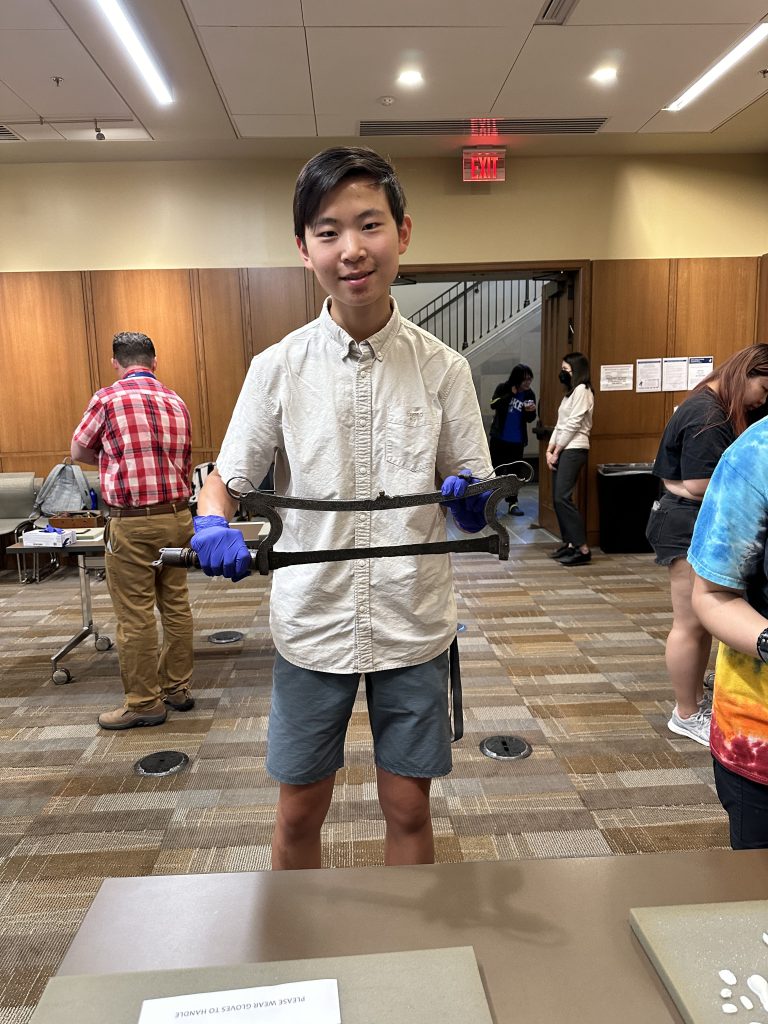
How could I not start by describing the 16th-century amputation saw? The magnificent artifact was handled by many impressed visitors, including myself (see adjacent photo). The embroidery was exuberant, and Rachel Ingold, the Curator of the History of Medicine Collections, informed me that the saw was of European descent. She also pointed out that the blade is removable and appears different from the rest of the artifact, suggesting that the instrument has been so frequently used that the blade had to be replaced. I curiously asked whether historians know how many patients have been victimized by this gruesome, two-person saw… sadly, the answer is we don’t know. Merely the thought of the procedure makes me shudder.
While the saw was the headline artifact, it was by no means the only spotlight! Brooke Guthrie, a Research Services Librarian staffing the event, suggested that I examine Robert Hooke’s “Micrographia,” her personal favorite. In particular, she pointed out the exquisite scientific illustration of a flea, which was recorded using an early microscope. The level of detail (such as the hairs and claws) captured by Hooke in the drawing was fascinating – and spooky! What’s more amazing was that the copy we were looking at was the first edition, now more than 350 years old.
From my conversation with Guthrie, I learned that the Rubenstein Library boasts an expansive portfolio, ranging from the History of Medicine Collections to the Hartman Center for Advertising and Marketing History and the John Hope Franklin Research Center for African and African American History and Culture. While the library is interested in the areas correlated to its existing centers, the acquisition of materials is also heavily guided by student and faculty interests, which is evident in the diversity of Rubenstein collections. For instance, did you know that you could spend an afternoon with historically significant comic books? If that’s not your thing, you could opt to bring a few friends and spend some time playing ancient board games instead.
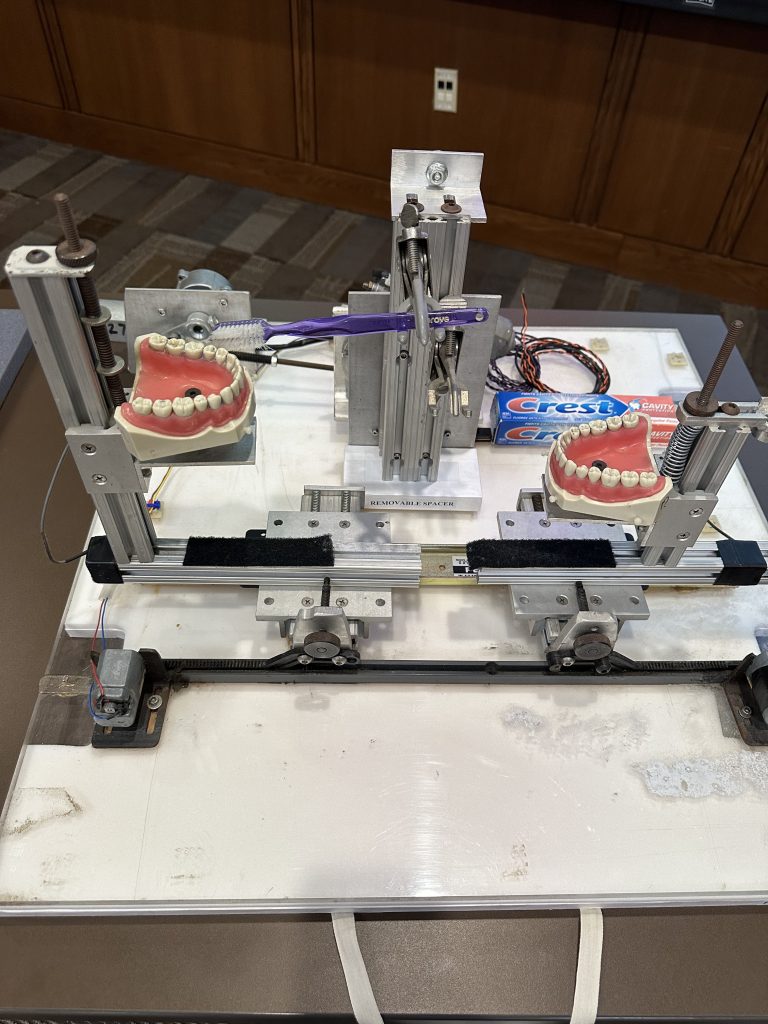
During my visit, I also spoke to Andy Armacost, Head of Collection Development at the Rubenstein. He introduced me to my favorite artifacts at the event, both hailing from the Hartman Center’s Consumer Reports Collection. The first was an apparatus testing the quality of razor blades: the wood frame was covered with meandering strings and fixtures, with the experimental blade placed adjacent to the test material, positioned in the center of the entire object. The second was a newer device, the structure composed of metal and testing toothpaste, which was applied by a toothbrush onto a grimy dental fixture. Both Armacost and I chuckled at the thought of making the fake teeth “dirty” before each trial… it must have been a sight for the experimenters!
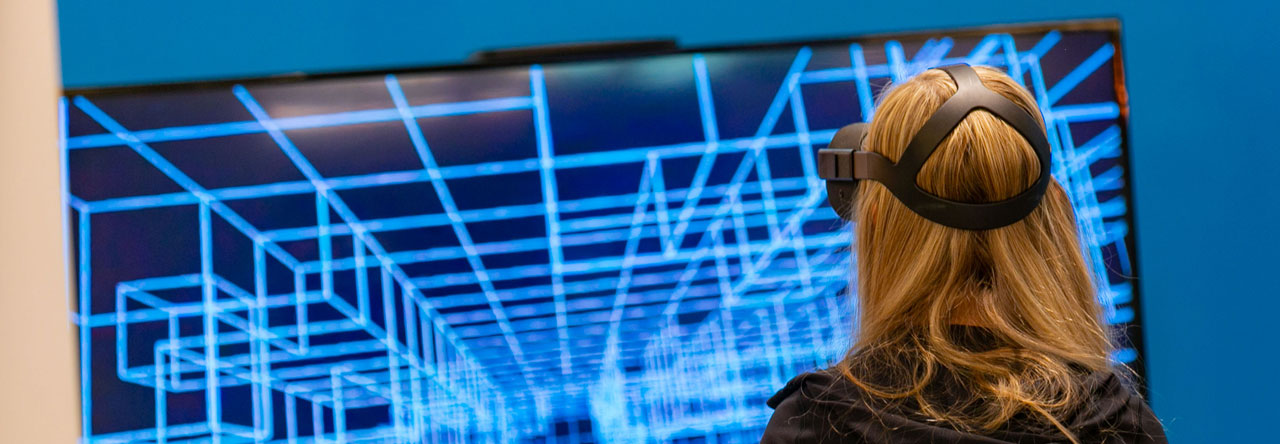
Duke community members continued to stream in to event. Right as I was about to visit the “make a button” station, I spotted Pratt Dean Jerome Lynch in the room as well, testing out visual perception glasses that turned 2D images into 3D scenes. As a Biomedical Engineering student, I could not help walking over to him and asking a few questions regarding his perspective on the exhibition. Lynch was extremely welcoming to my questions and offered many words of advice to Pratt students regarding utilizing the libraries’ rich resources. He encouraged engineering students to frequent the Rubenstein collections, arguing that the artifacts illuminate the evolution of the role of engineers and how previous engineers creatively addressed the great contemporary challenges. He also expressed his personal interest in history… thus defeating any claims that engineers could not simultaneously enjoy the humanities.

Before leaving, I made sure to speak to Ingold again, given that she was a leading organizer of the event. Well, she maintains that it was a group effort, so perhaps I should edit “leading organizer” into “co-organizer.” Anyhow, she expressed strong enthusiasm for student involvement in the Rubenstein collections, calling for those interested in exhibit curation to reach out and seek opportunities to do so. She also touted an upcoming Spring exhibition and the likely return of the extravaganza next Fall… Keep vigilant on more information for these events!
Next time you enter through Rubenstein doors, take a moment to check out the storied collections. I promise you will not be disappointed!